Prickly Sow-thistle
Prickly Sow-thistle - Sonchus asper
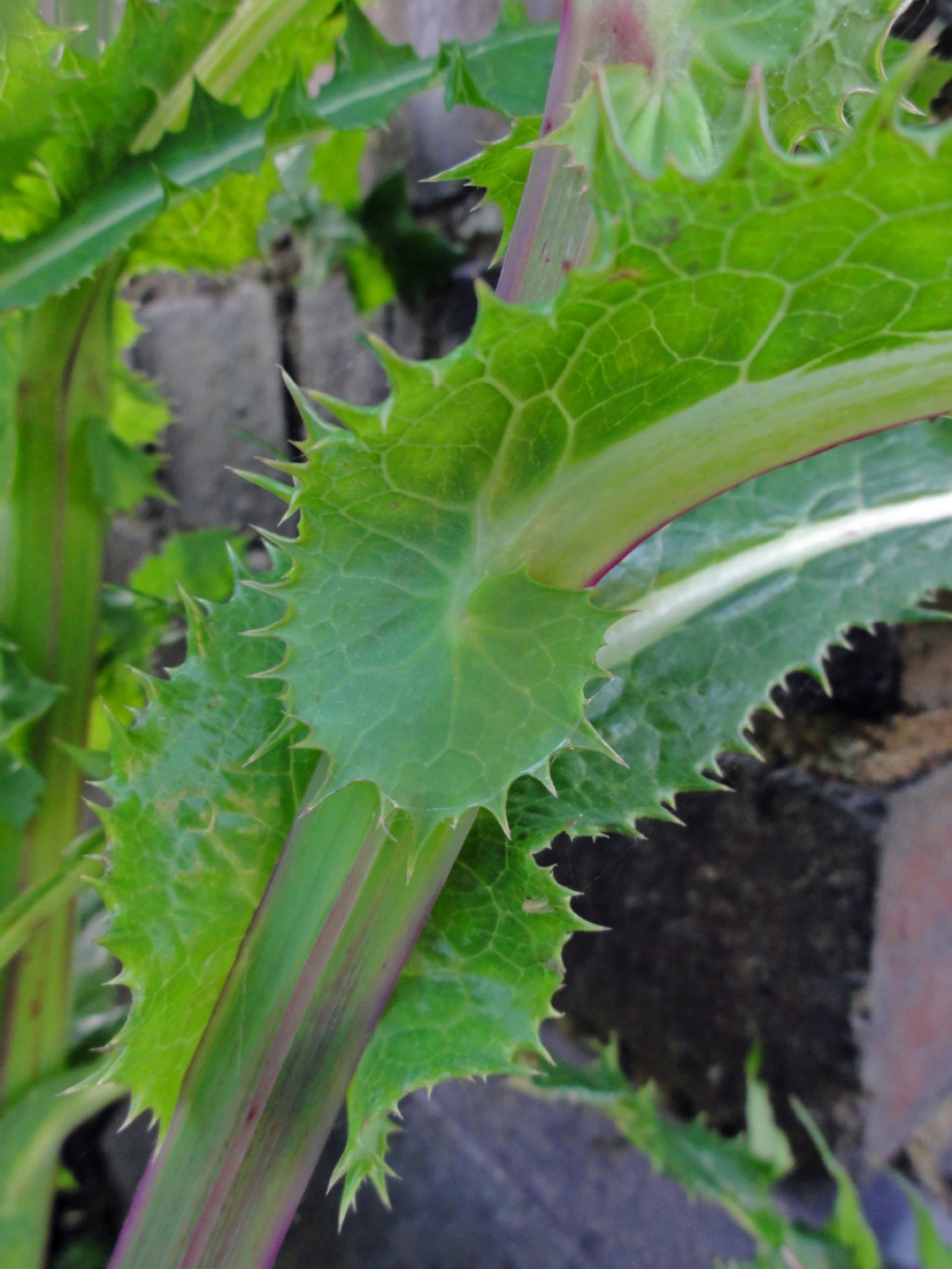
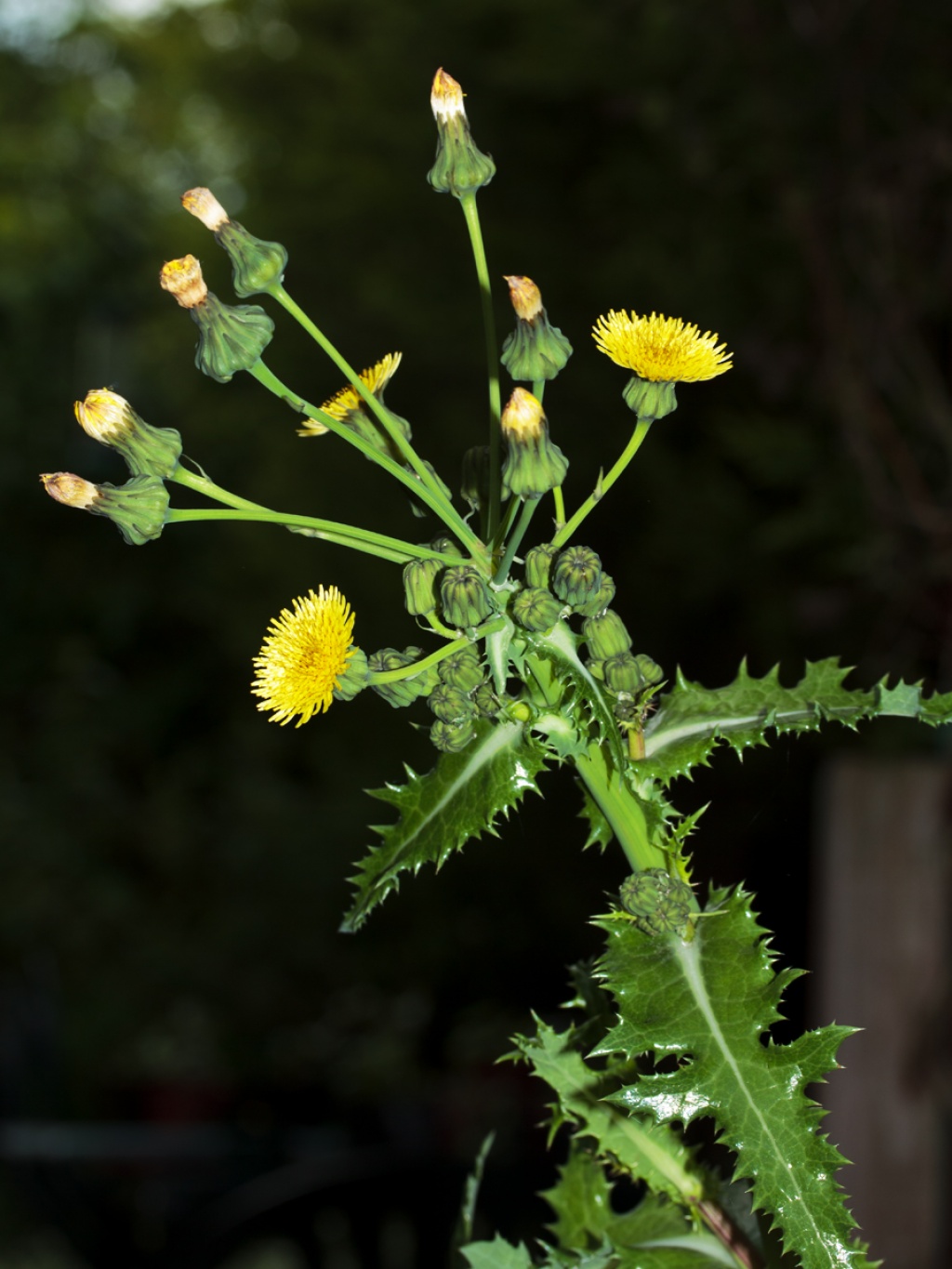
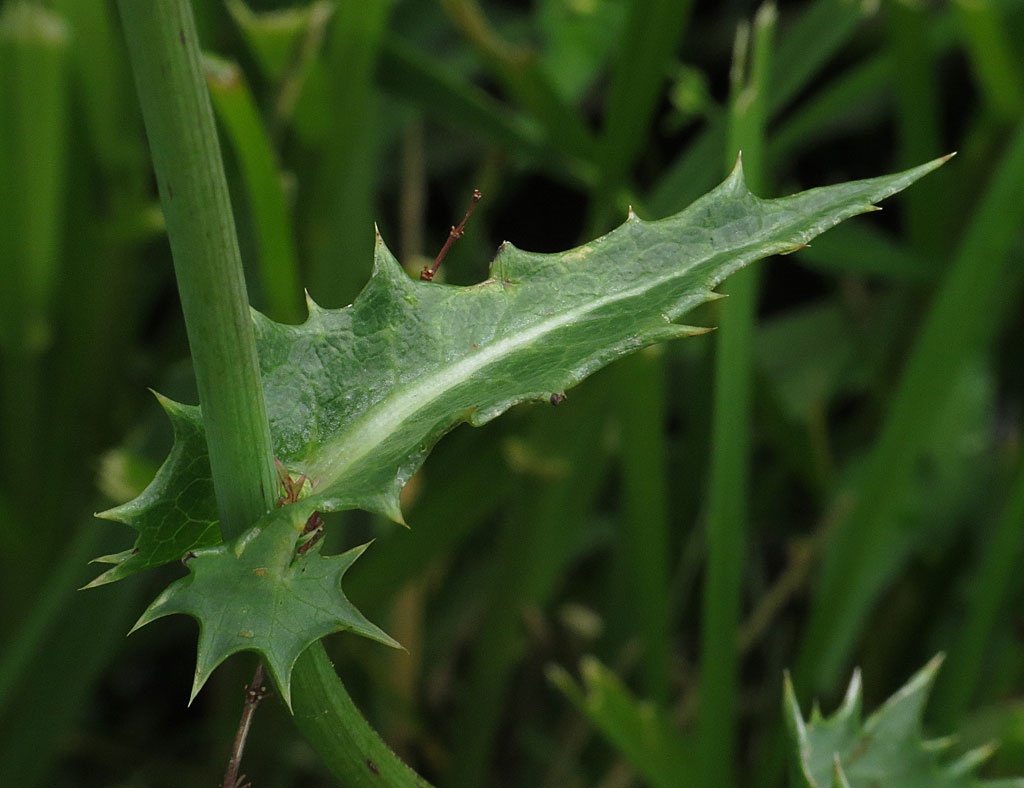
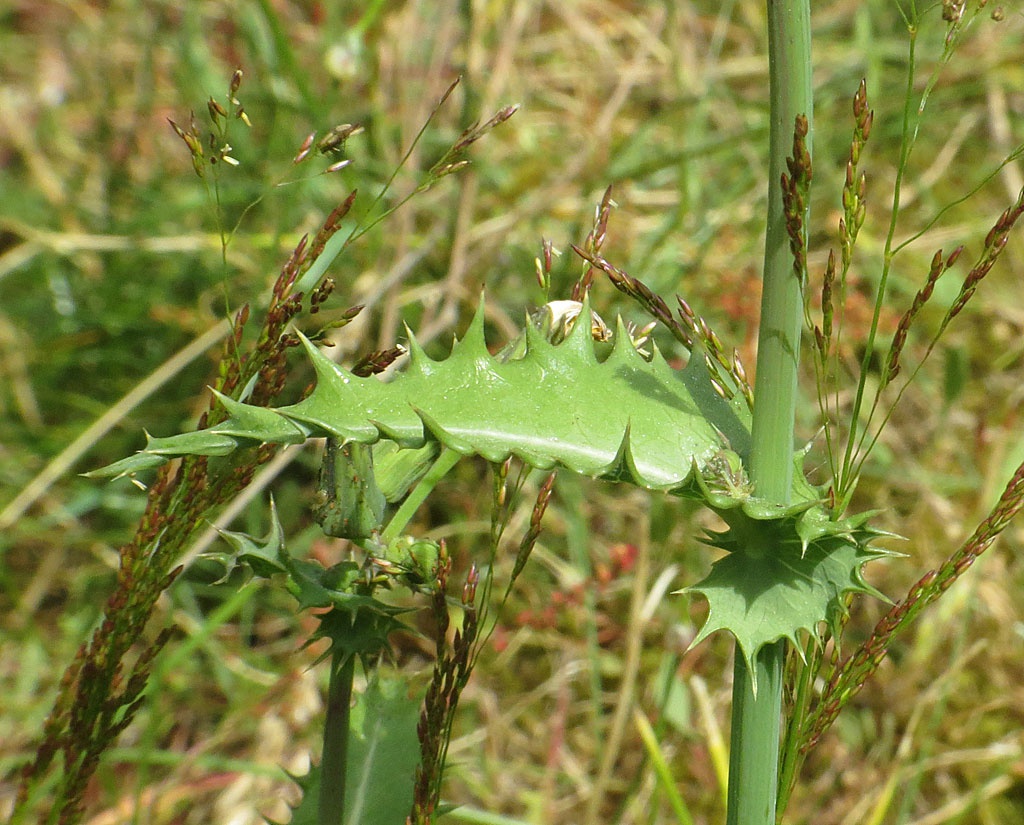
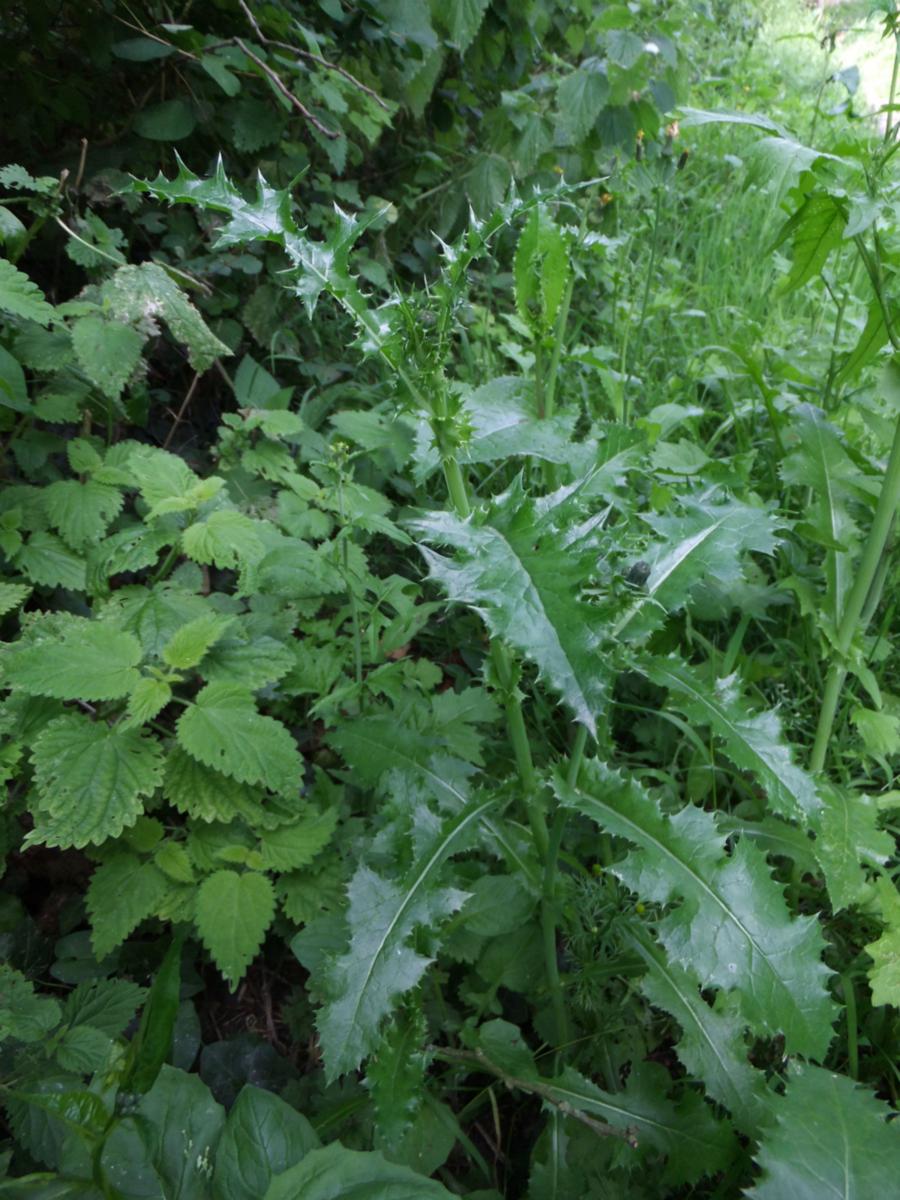
Short to tall plant, hairless except for a few glandular hairs on the upper stem. Stem angled, often reddening, sometimes branched to 1.2 metres. The upper leaves are shiny green and prickly they clasp the stem with rounded basal lobes. Flowerheads golden yellow, 20 to 25 mm in lax clusters, bracts without glandular hairs.
Smooth Sow-thistle

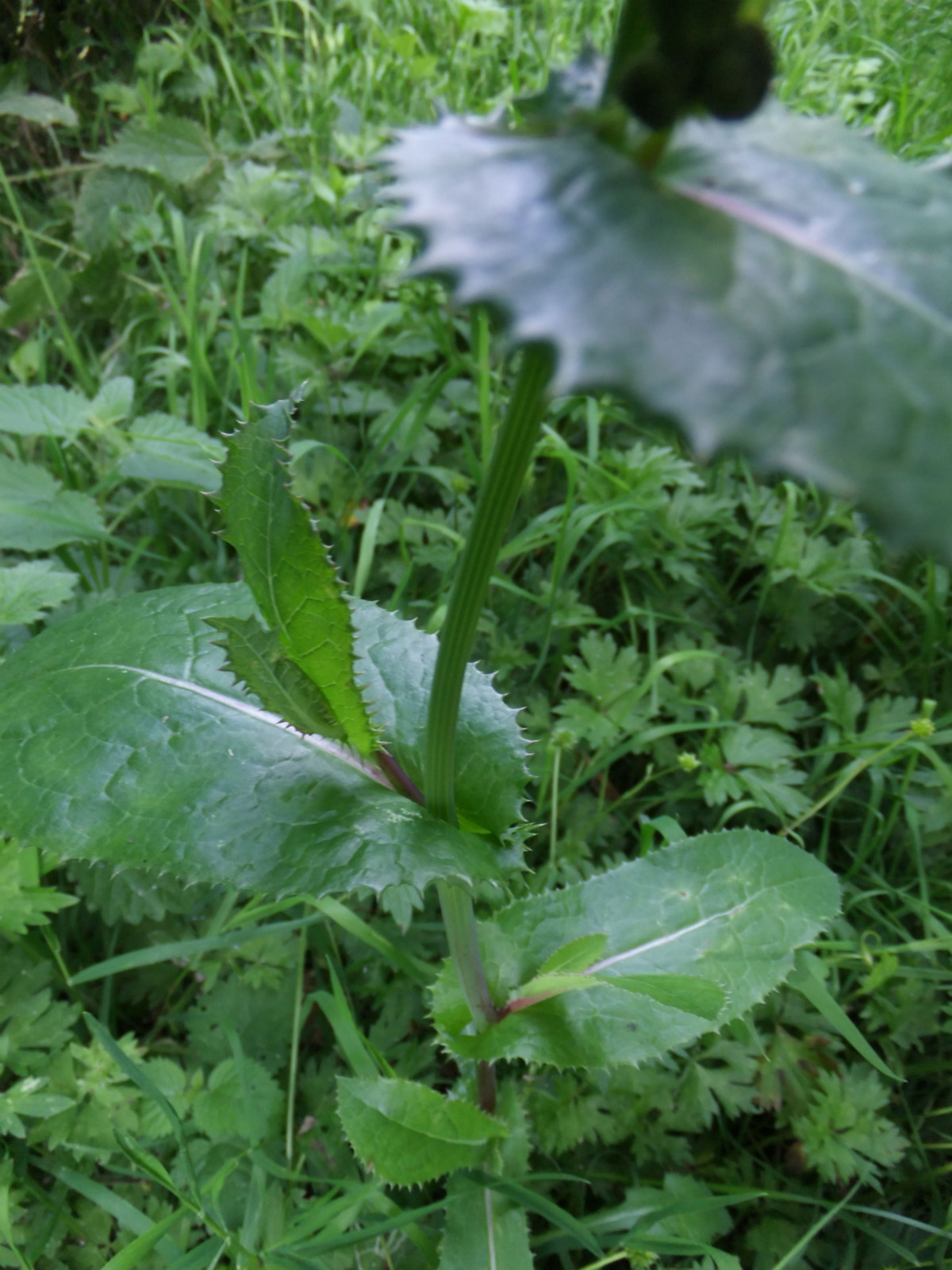
Auricles of stem-leaves rounded. Achenes not rugose. Leaves can be very similar to S oleraceus but usually more sharply toothed
Photograph of stem and leaves, showing auricles
Cultivated and waste land, roadsides.
June to August.
Annual.
Very common throughout Britain except in some parts of the Scottish Highlands.
Very common in Leicestershire and Rutland. In the 1979 Flora survey of Leicestershire it was found in 583 of the 617 tetrads.
 Old Fosse Sapcote SP 4909 9166 (taken 2.6.2006)..JPG) Graham Calow
Graham Calow
Sapcote
02 June 2006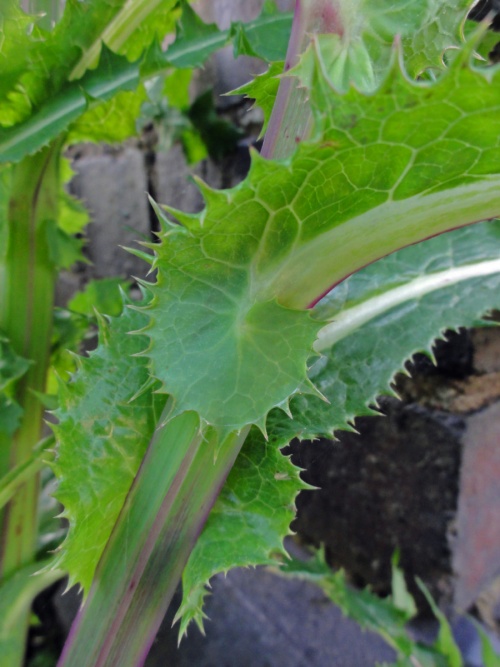 Peter Smith
Loughborough Big Meadow
26 May 2012
round auricle at base of leaf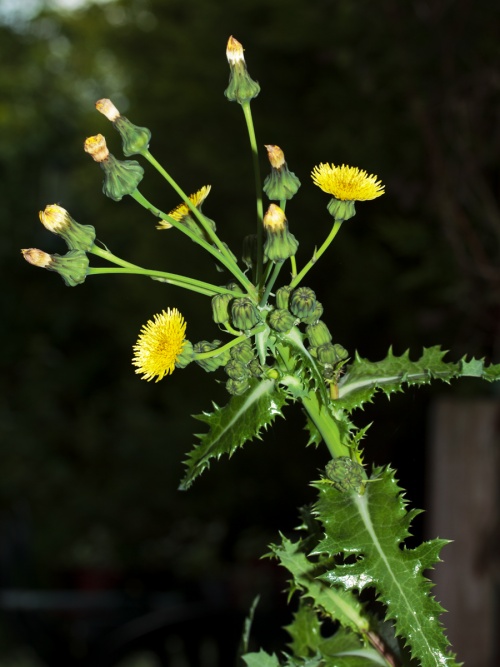 HAPeacock
Leicester Garden
10 June 2012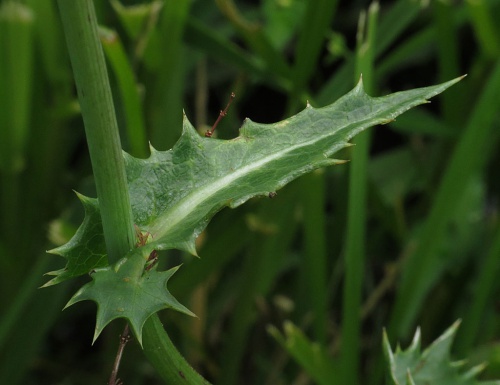 David Gould
Aylestone Meadows
15 August 2014
leaf with rounded basal lobe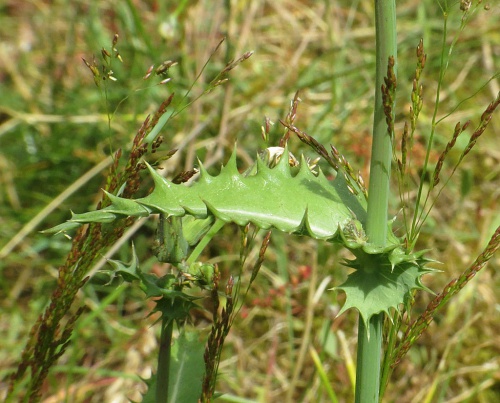 David Gould
Croft Pasture
26 June 2014
 Old Fosse Sapcote SP 4909 9166 (taken 2.6.2006)..JPG)
Leicestershire & Rutland Map
Enter a town or village to see local records
MAP KEY:
Yellow squares = NBN records (all known data)
Coloured squares = NatureSpot records: 2025+ | 2020-2024 | pre-2020
UK Map
Additional images
All NatureSpot records
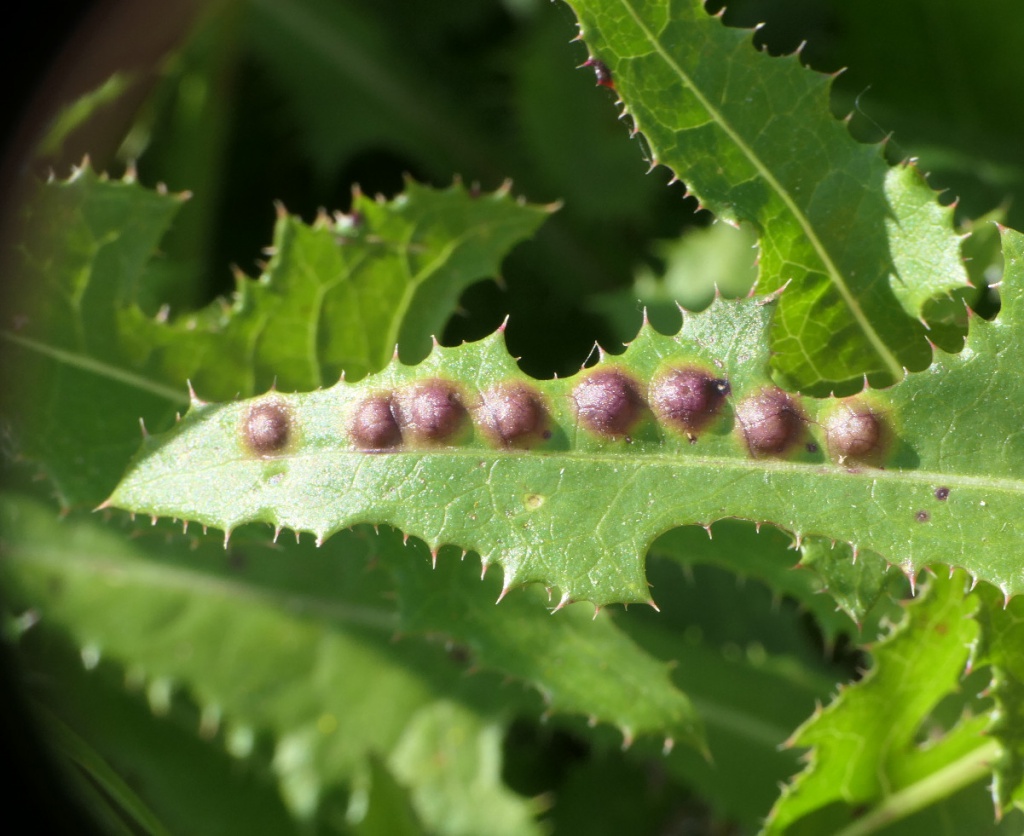
Cystiphora sonchi
These blisters on sowthistle leaves are galls caused by the midge Cystiphora sonchi. They are most commonly found on Smooth Sow-thistle but may also be found on Prickly and Perennial Sow-thistle.
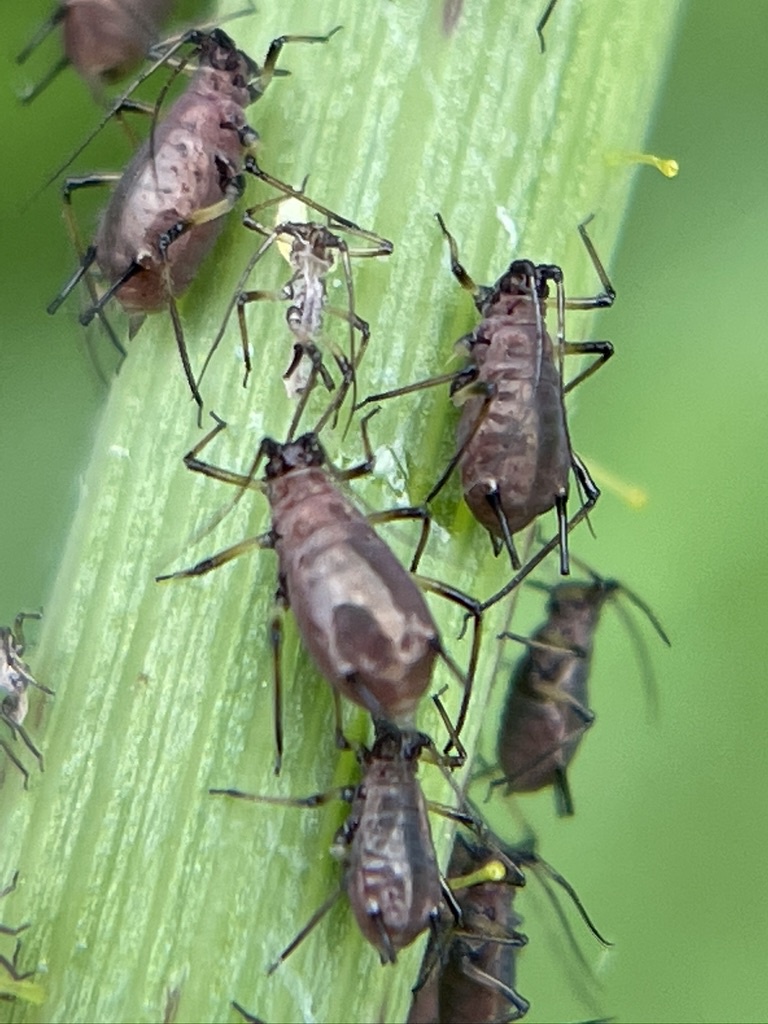
Uroleucon sonchi
Uroleucon sonchi is a large, dark brownish aphid with a glossy shine. It is associated with Sow-thistle species.
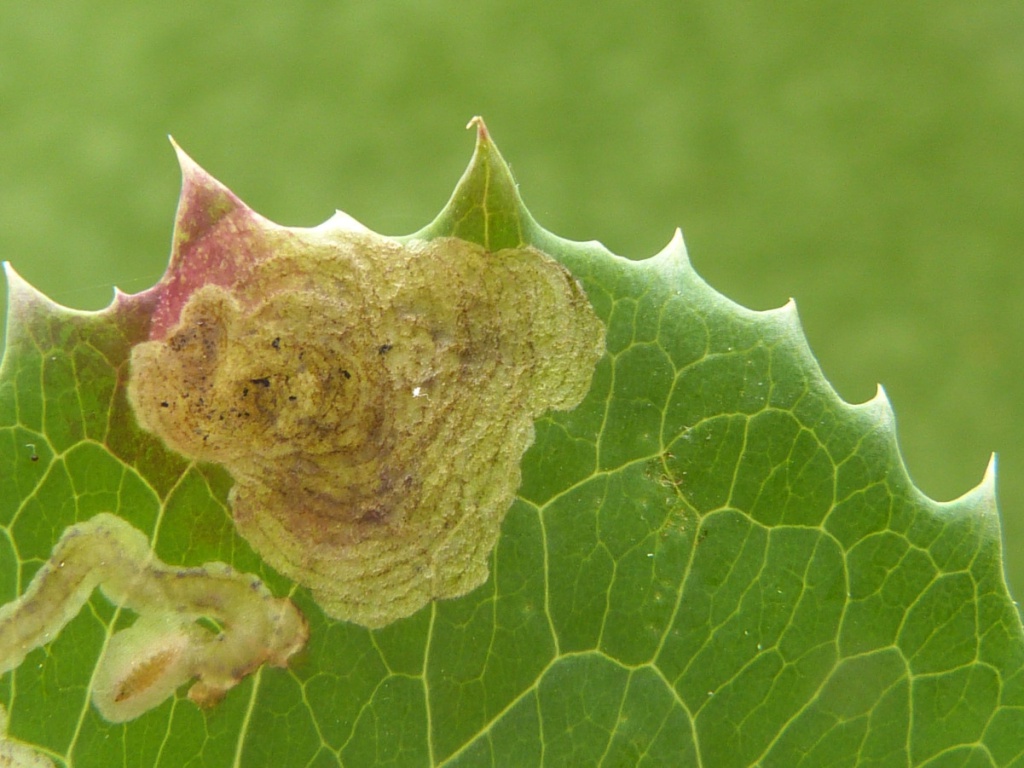
Liriomyza sonchi
The larvae of the fly Liriomyza sonchi form large upper surface blotch mines on the leaves of sow-thistle species. Secondary feeding corridors are often present. Scattered frass can be seen in the mine. Several larvae may feed together in the mine.