Yellow Loosestrife
Yellow Loosestrife - Lysimachia vulgaris
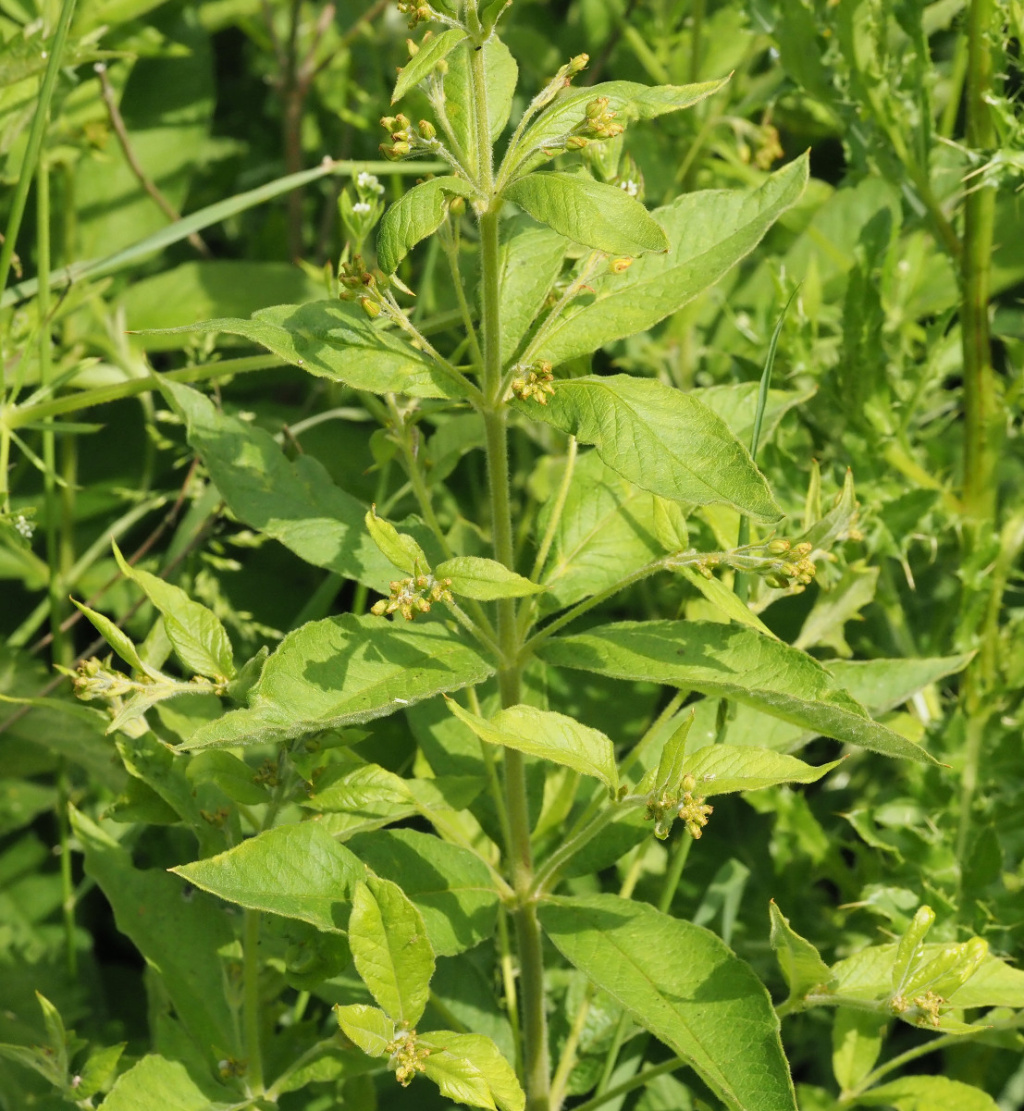
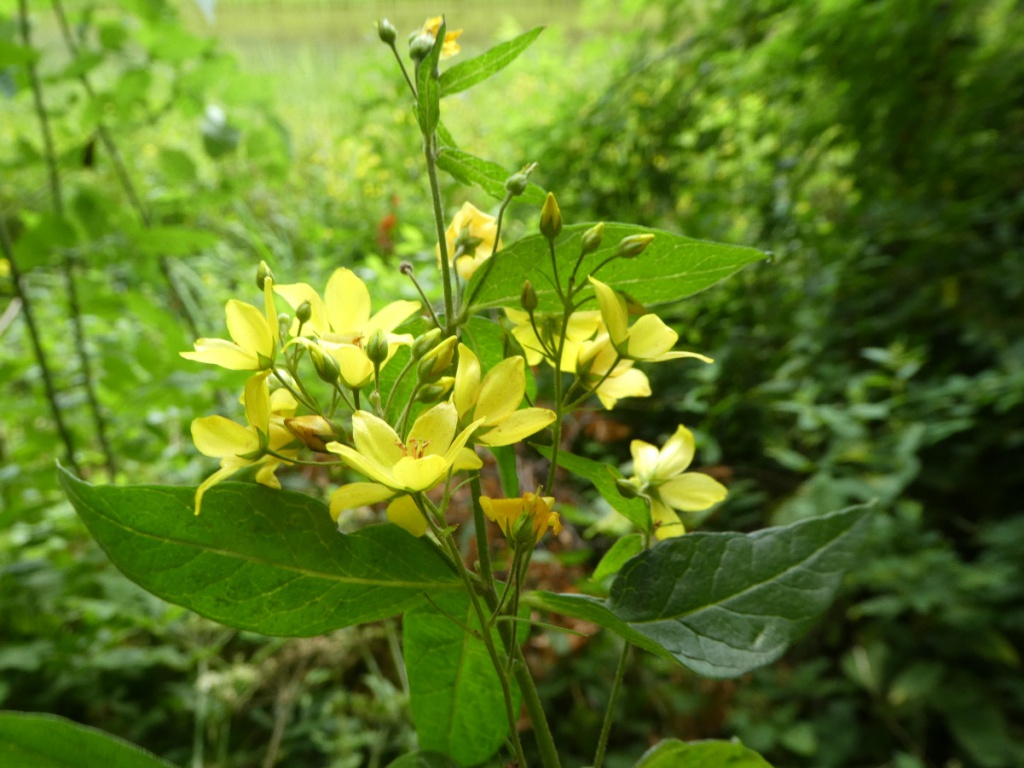
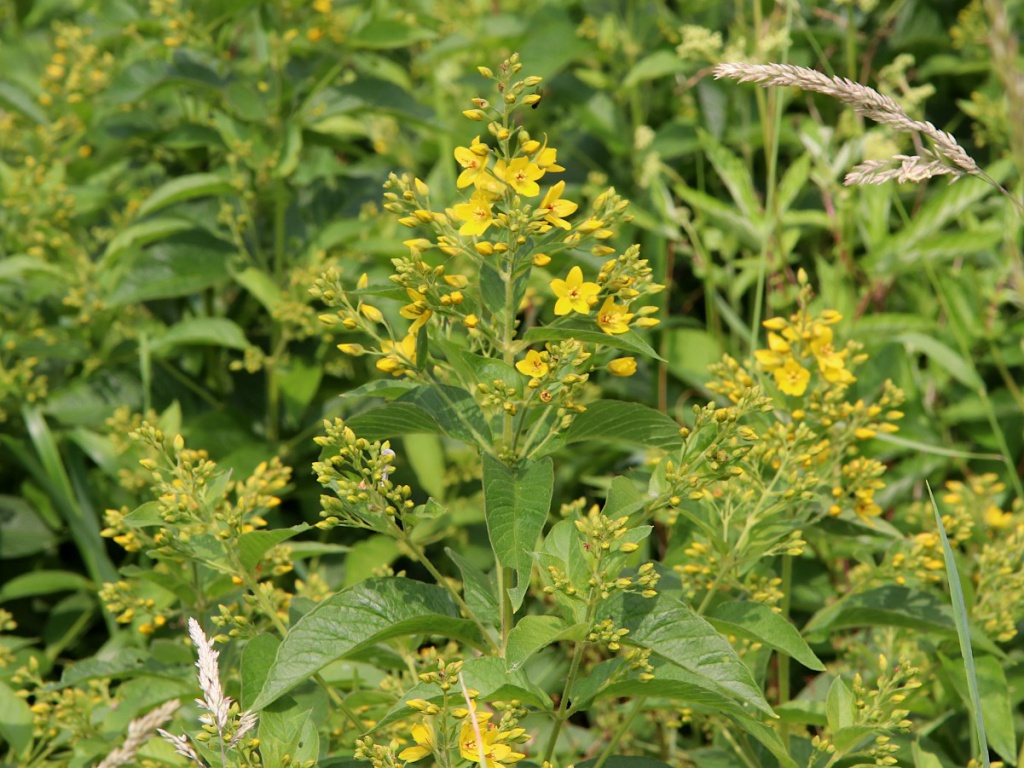
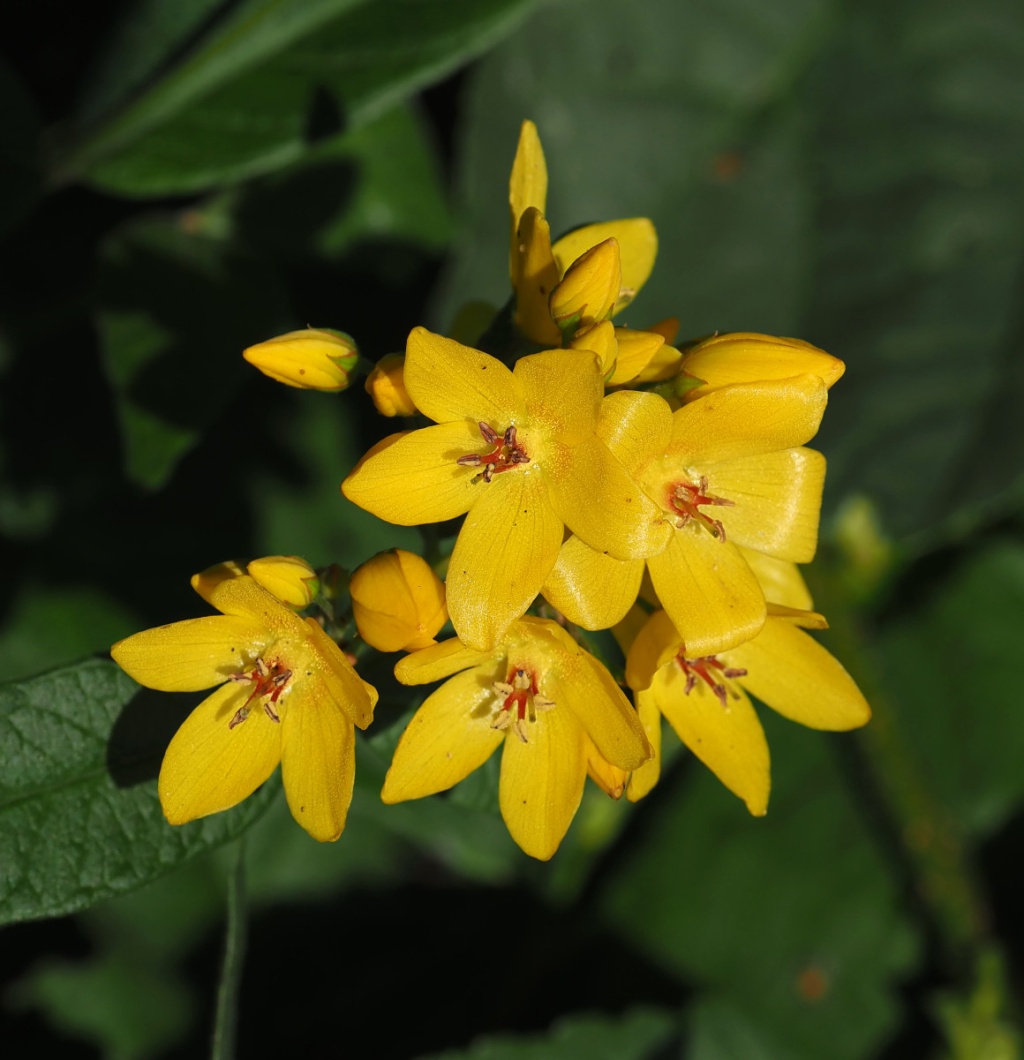
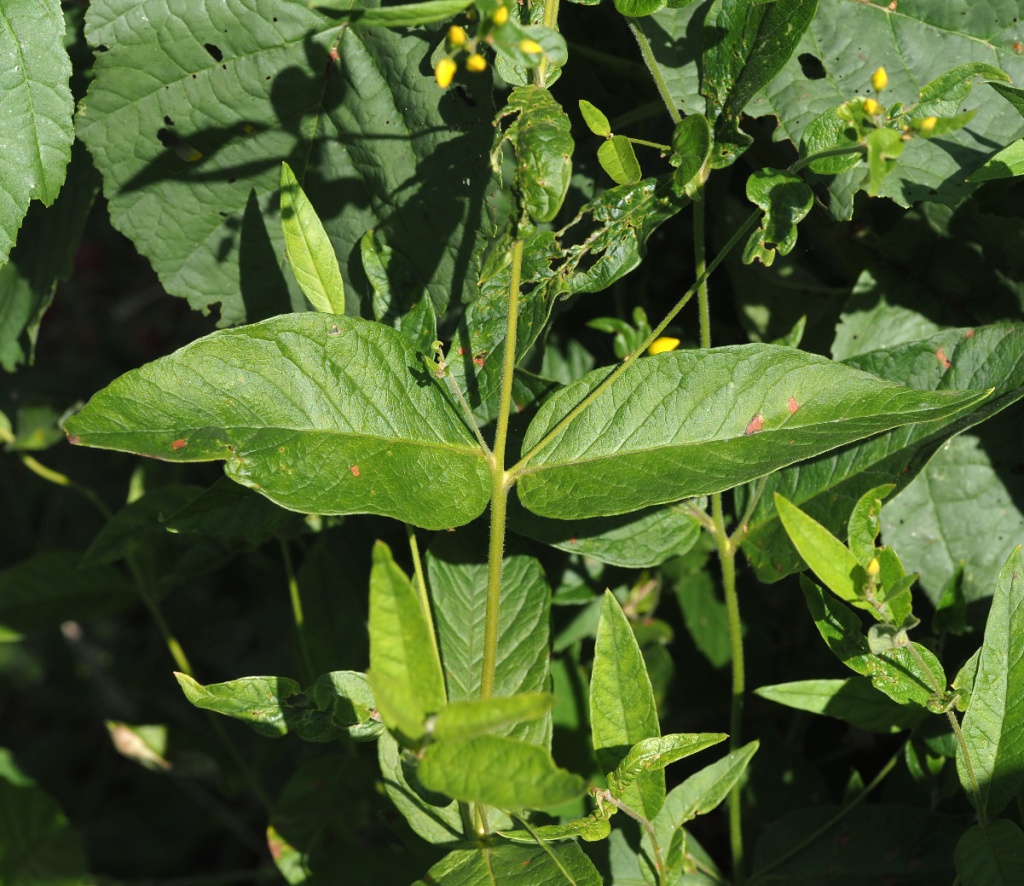
A tall, (to 1.5 m high) herb with an unbranched stem except for branches of the terminal inflorescence. The leaves, except for the very lowest, are in whorls of 3 to 4. These leaves are narrowly ovate, without distinct teeth, but with a slightly wavy margin. The petioles are short and some leaves may appear sessile. The flowers are about 1.5 cm across and bright yellow. Their stalks (pedicels) are 1 cm or less, which distinguishes them from L. ciliata, which has longer flower stalks (2 to 4 cm).

Photos of the whole plant in habitat, showing leaves as well as flowers
Lysimachia vulgaris is a marginal plant and thrives in wet peaty soil beside rivers, lakes and in other marshy places.
In flower during July, August and September.
A semi-evergreen perennial spreading vegetatively by very long thin rhizomes to form large colonies in permanently wet places.
A rather localised distribution in Britain with most records coming from the north and west plus East Anglia.
Probably rare as a native in Leicestershire and Rutland, but often planted or escaped form cultivation.
It was on the 2011 VC55 Rare Plant Register (Jeeves, 2011) but is not on the current RPR (Hall & Woodward, 2022); it is listed as 'data deficient' because it is not clear whether records are of introduced/escaped plants or natives.
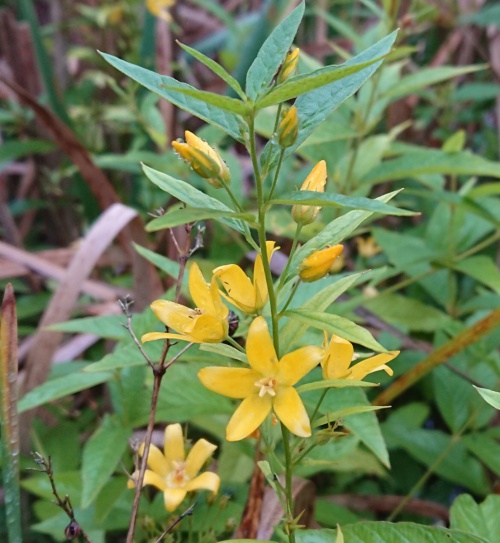 steven lewis
Stapleford Park
22 September 2019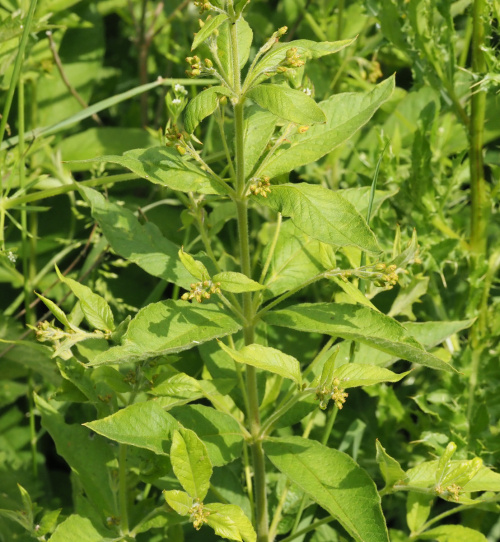 David Nicholls
North Kilworth, Millennium Green Pond
14 June 2025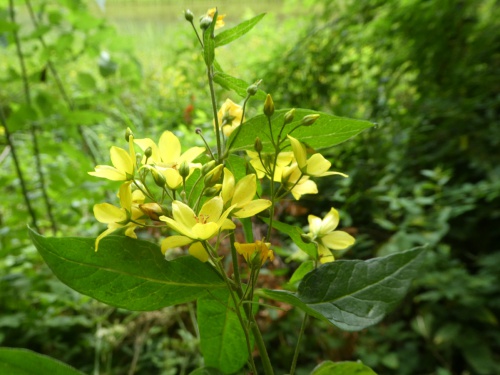 Melinda Bell
New Lount
25 July 2020
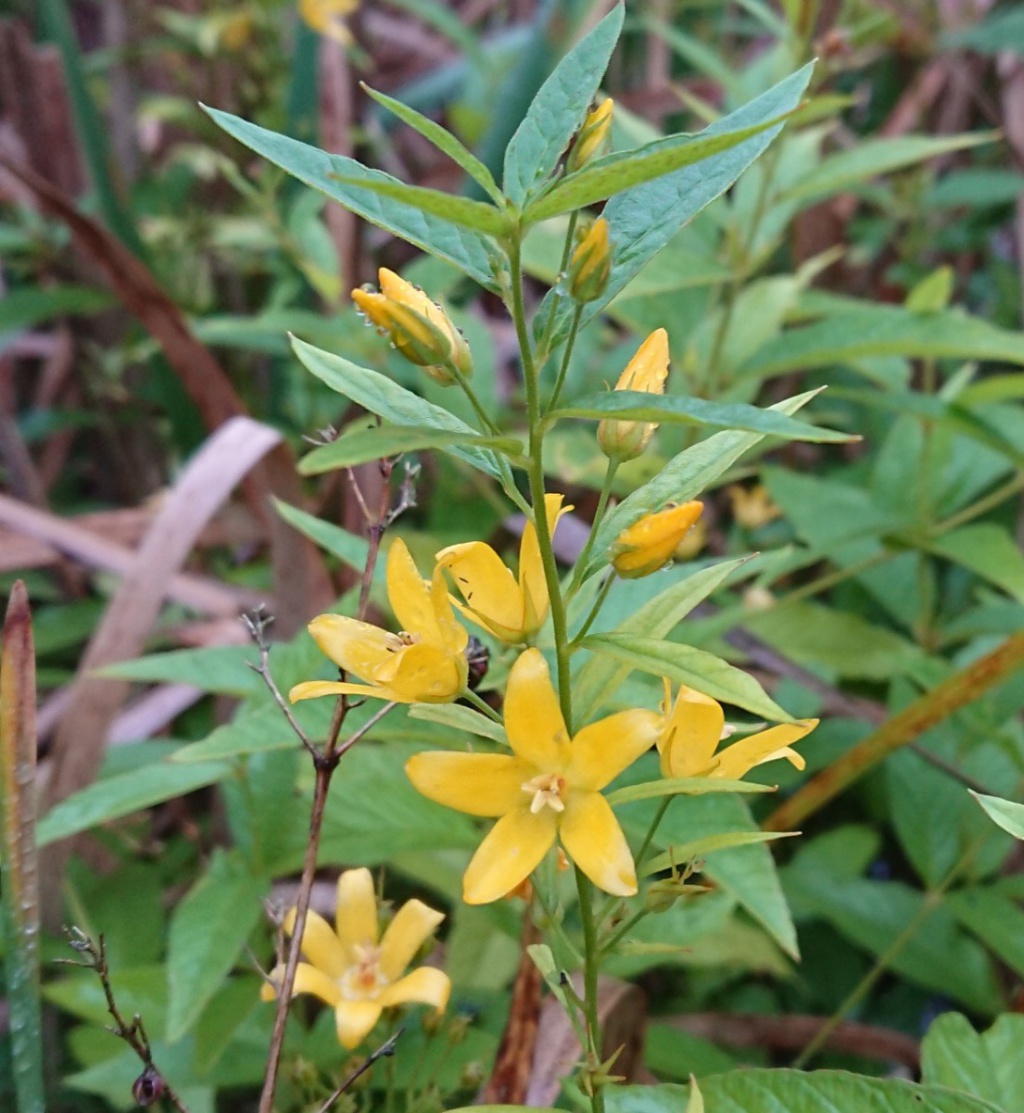
Leicestershire & Rutland Map
Enter a town or village to see local records
MAP KEY:
Yellow squares = NBN records (all known data)
Coloured squares = NatureSpot records: 2025+ | 2020-2024 | pre-2020
UK Map
Additional images
All NatureSpot records
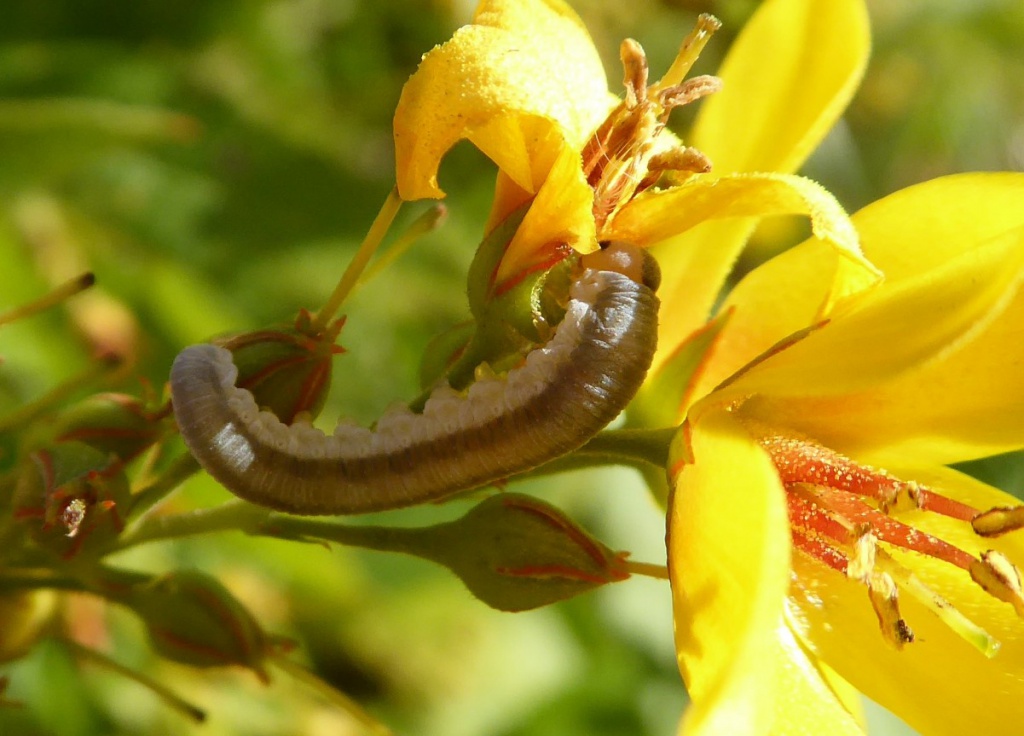
Monostegia abdominalis
The larva of the sawfly Monostegia abdominalis is associated with Yellow Loosestrife – the only sawfly to feed on this plant. It has been recorded on a few other plants including Creeping-Jenny and Scarlet Pimpernel. The larva is similar to some other sawfly larvae, but has a diagnostic black mark on the head, in the centre above the eyes.
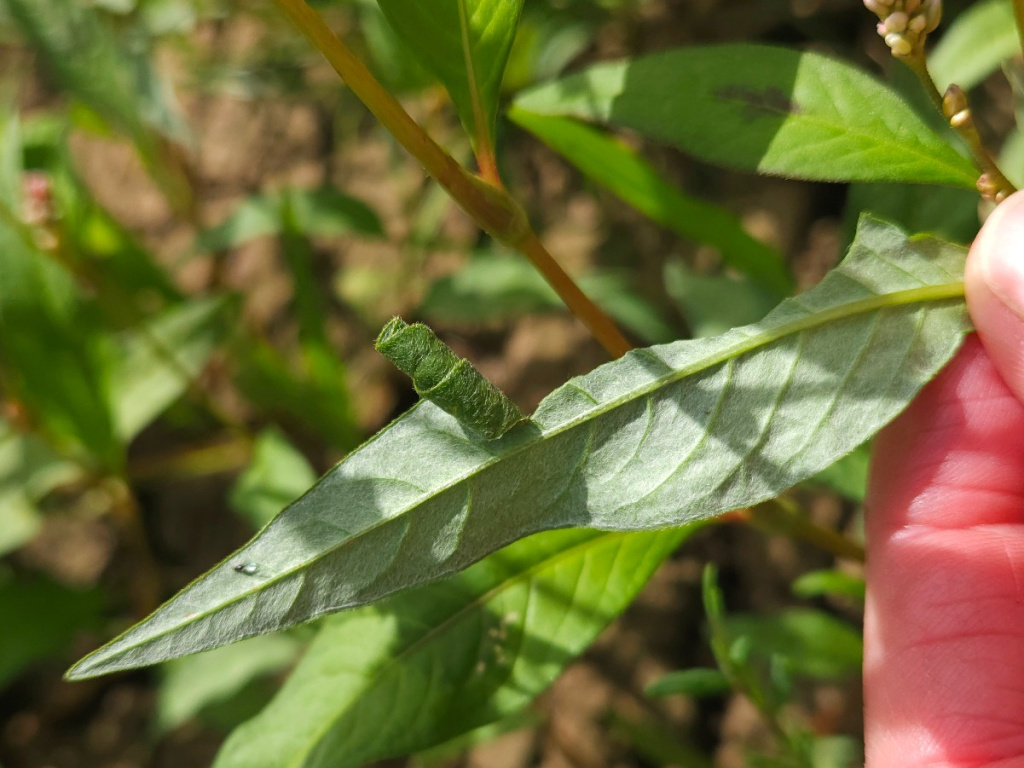
Calybites phasianipennella
The larva of the moth Calybites phasianipennella mines the leaves of various plants including Dock species, Yellow Loosestrife,Water-pepper, Black Bindweed and Redshank. An initial gallery leads to a blotch; later instars leaves the mine and feeds inside a cone-shaped leaf-roll, made by cutting a strip out of the leaf the leaf alongside the midrib.