Yellow Brain
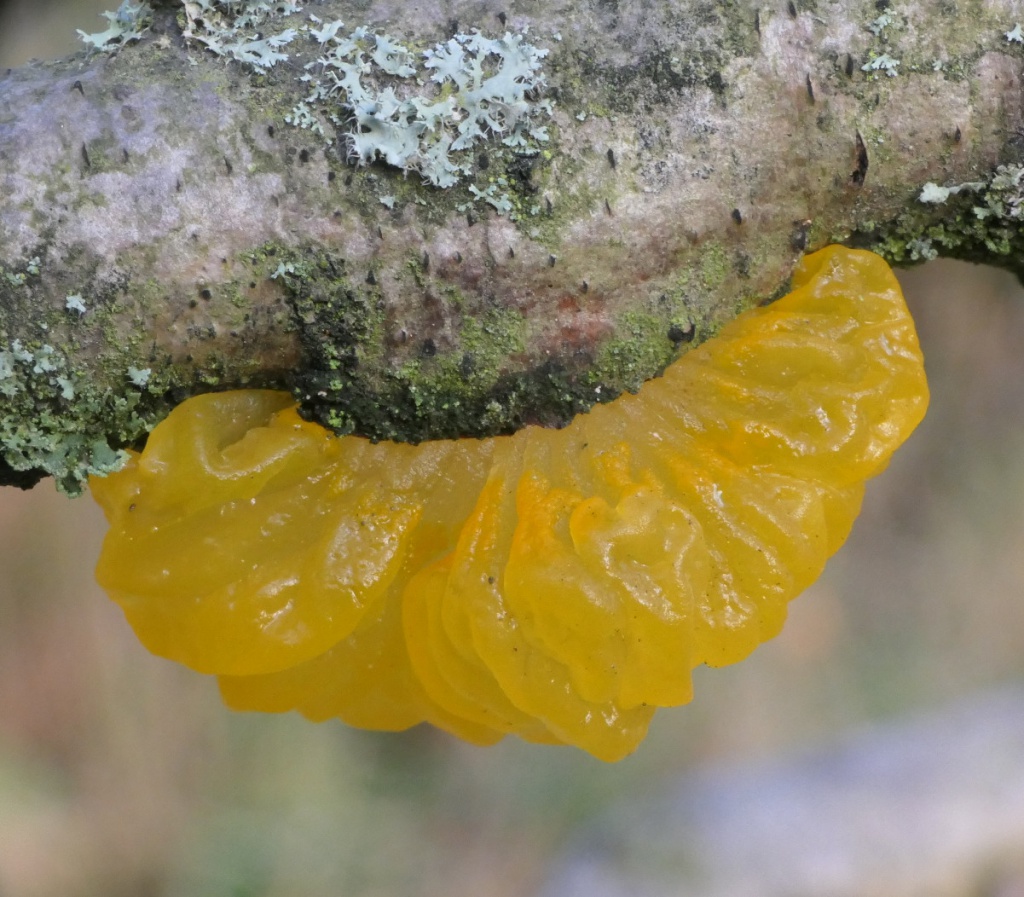
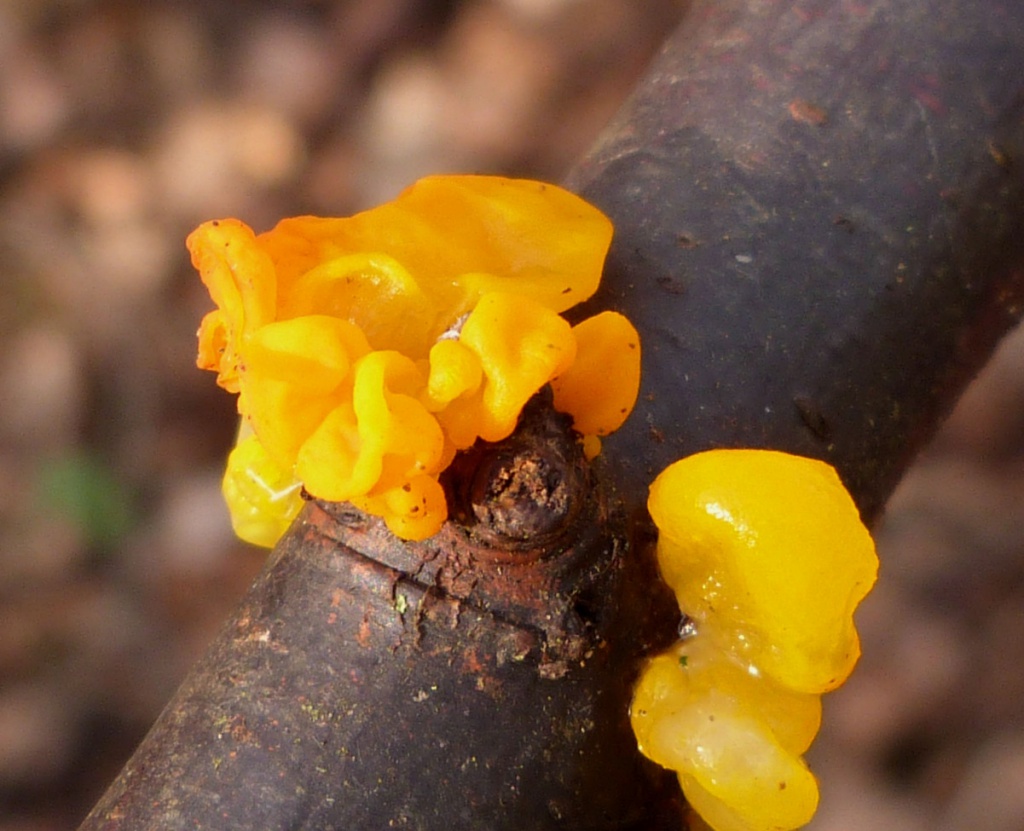
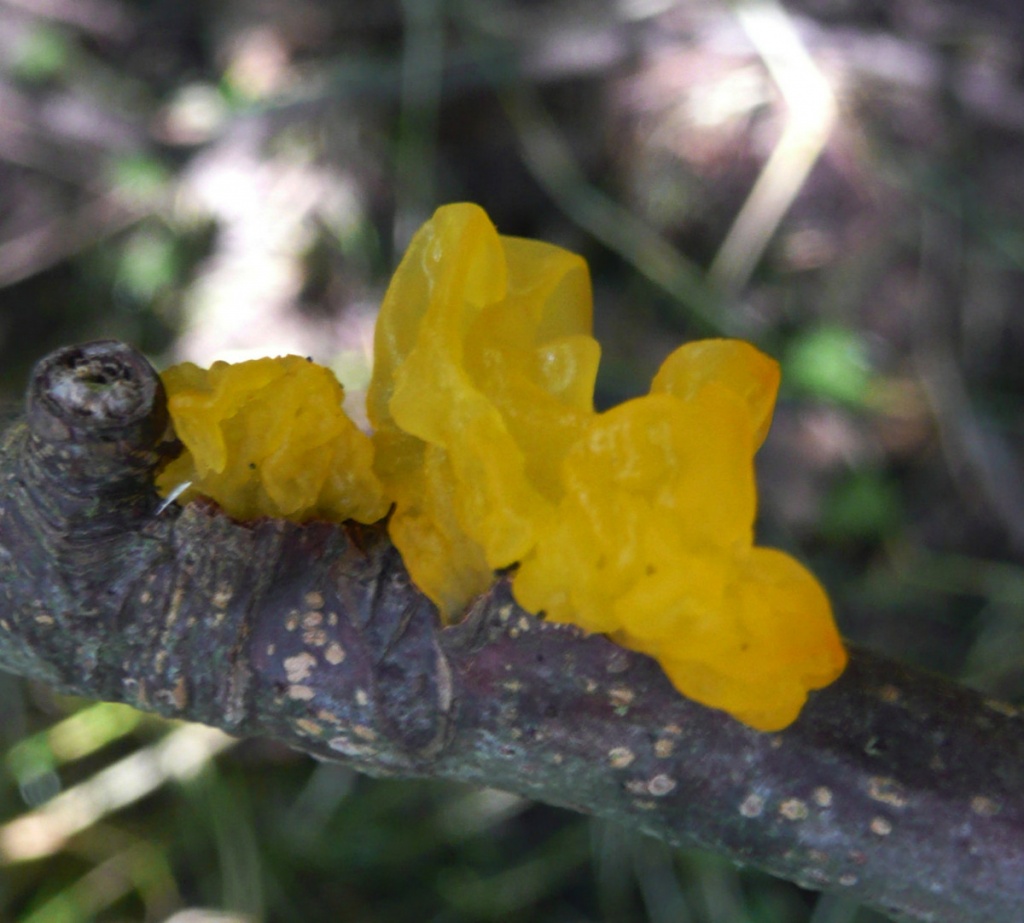
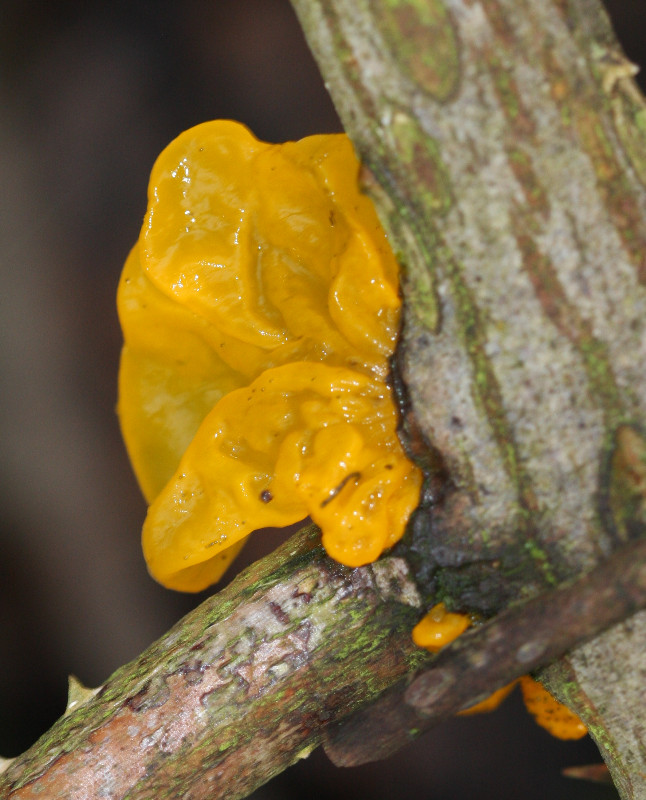
Yellow Brain - Tremella mesenterica
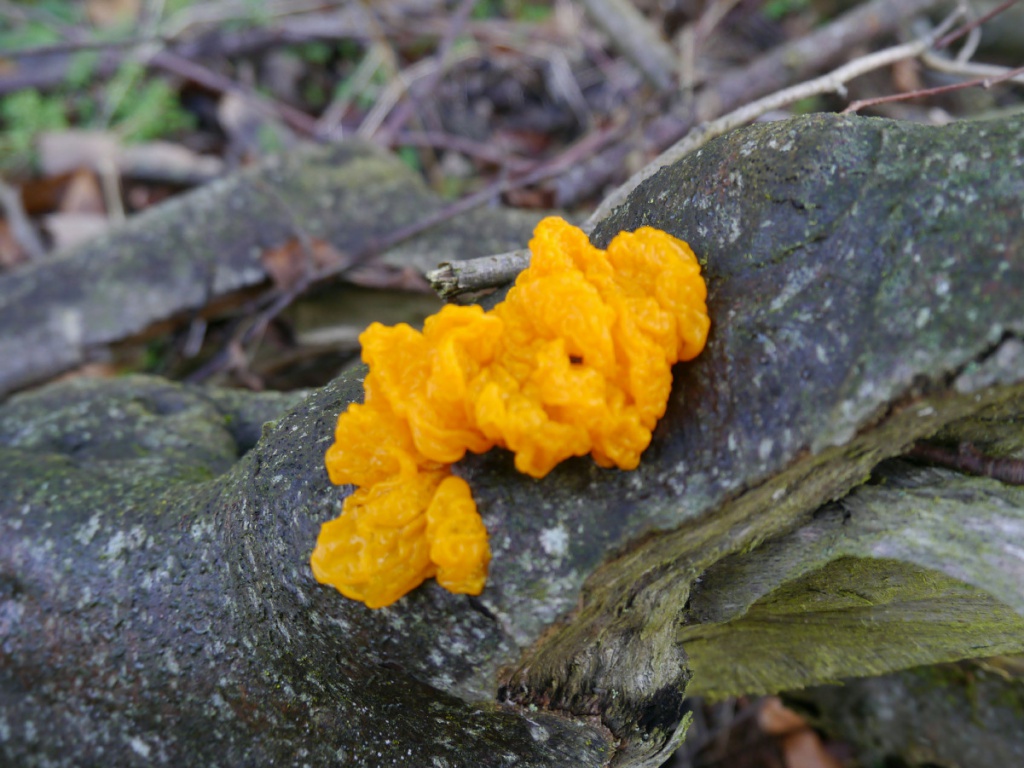
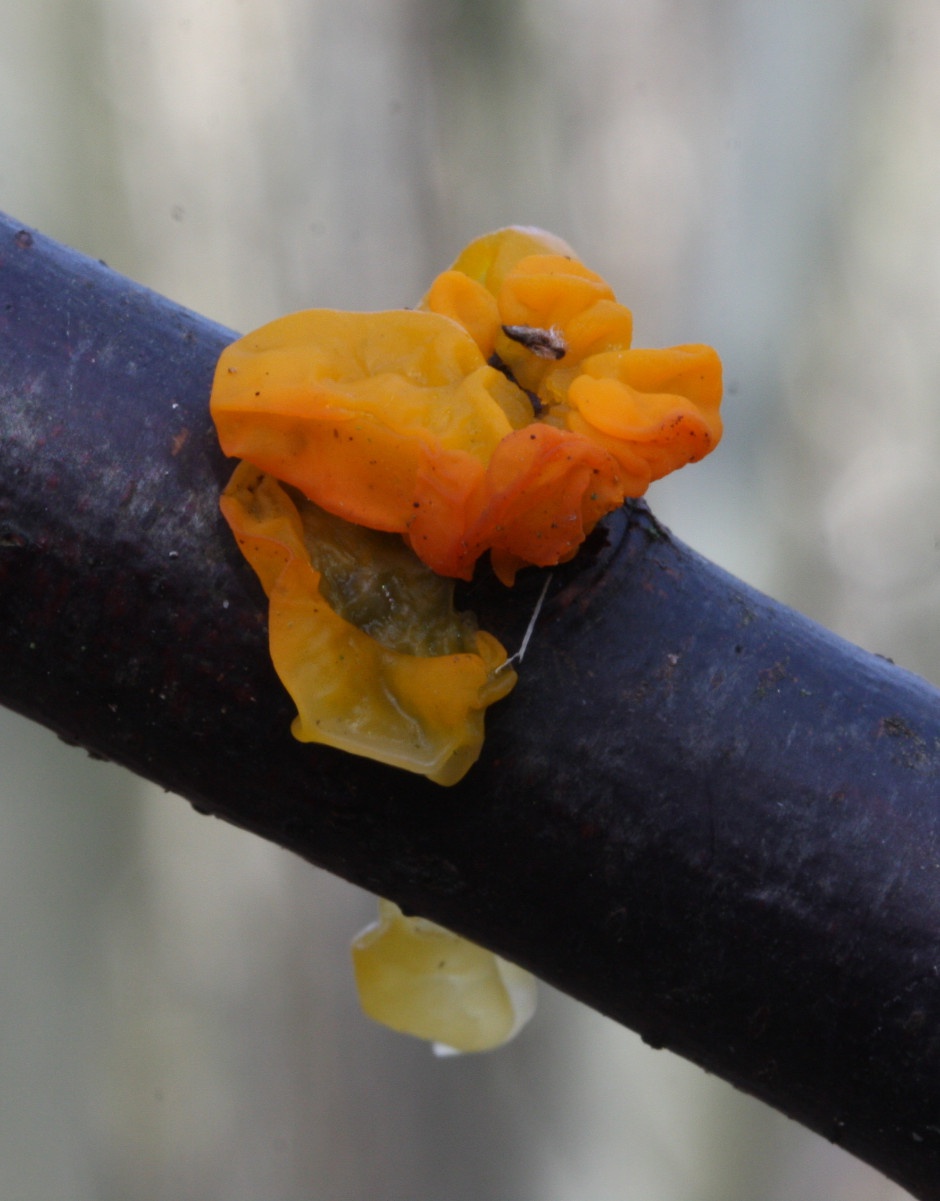
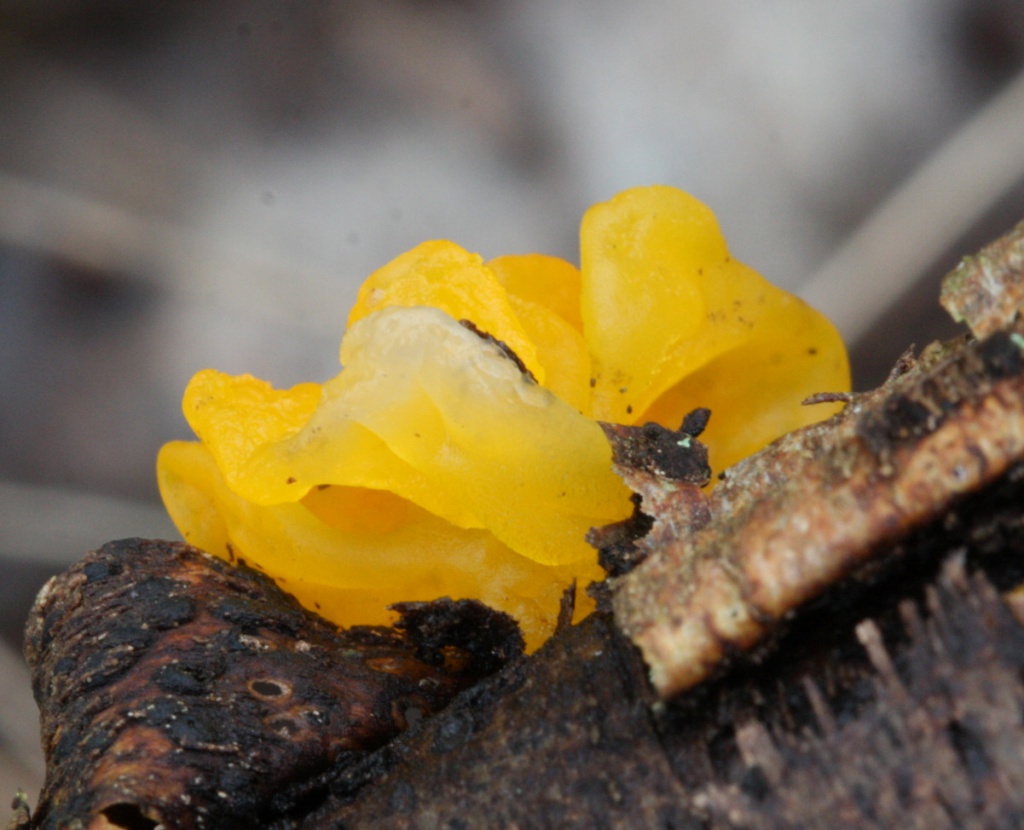
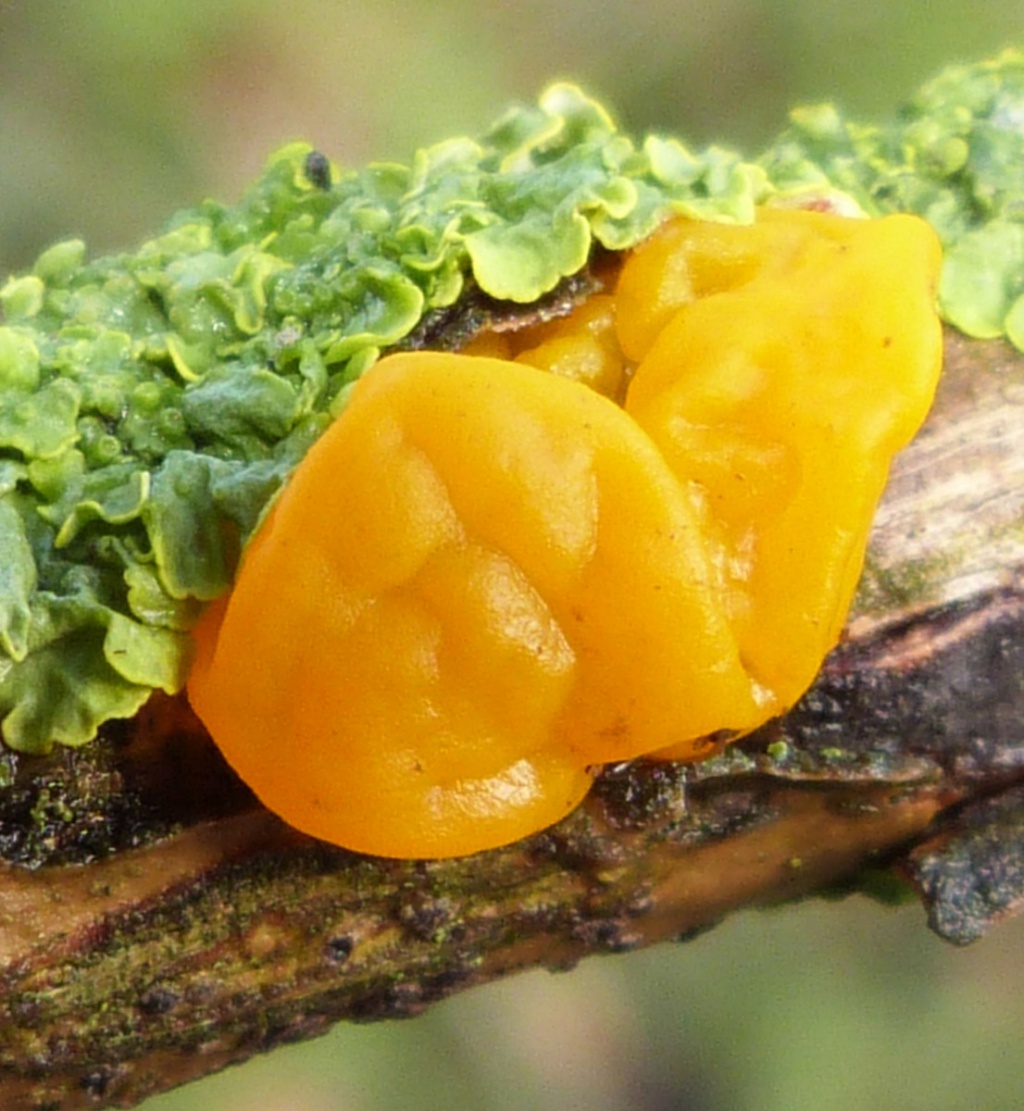
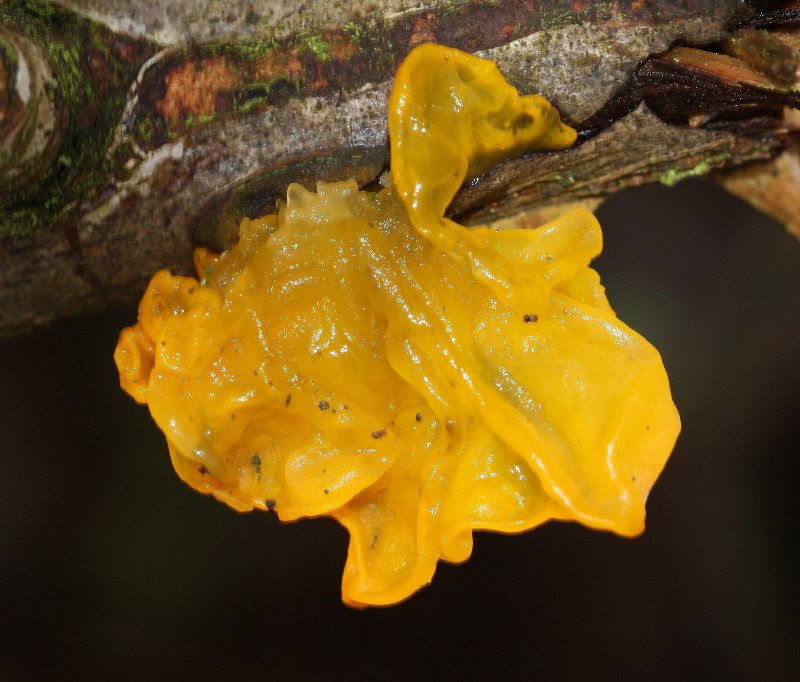
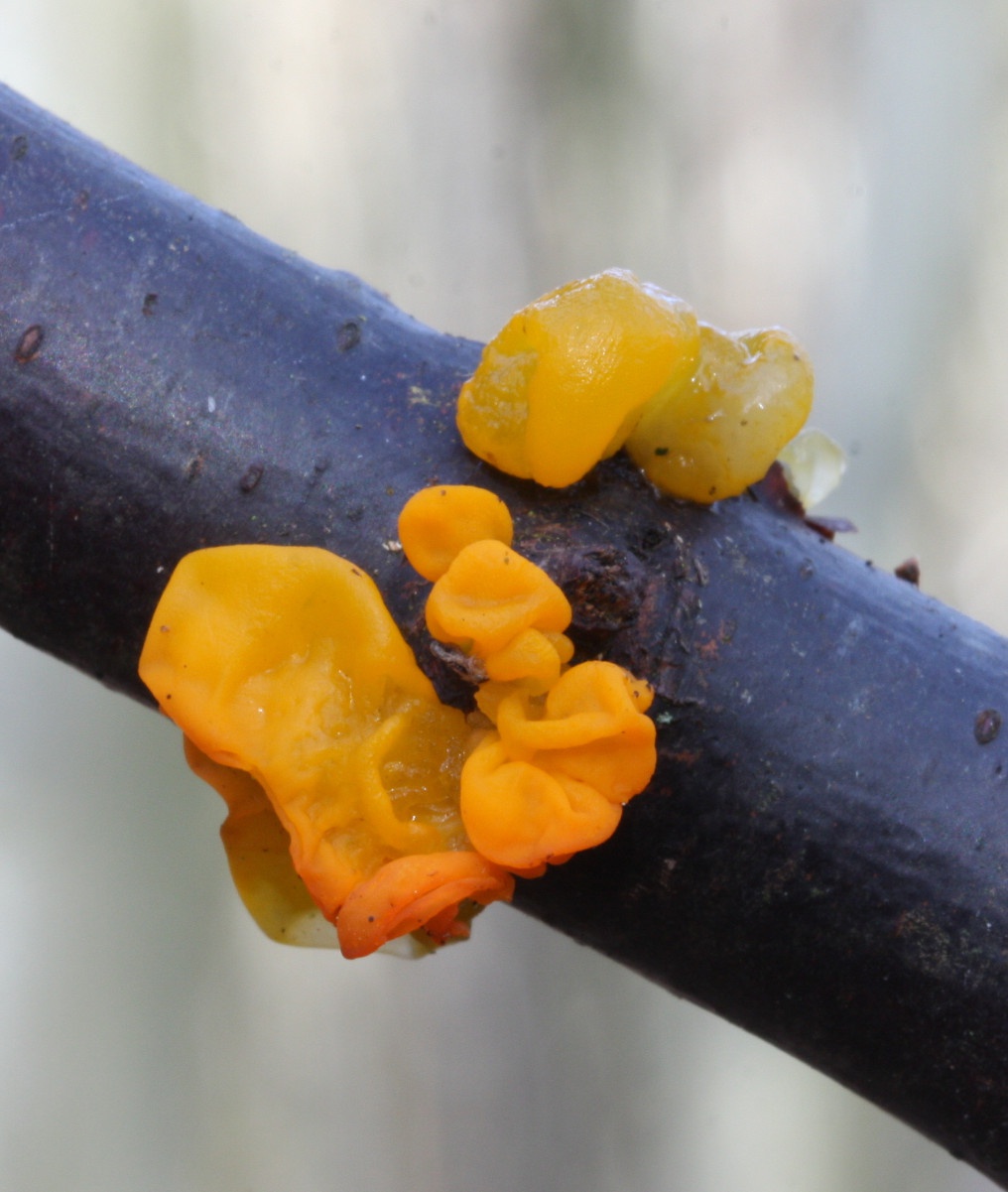
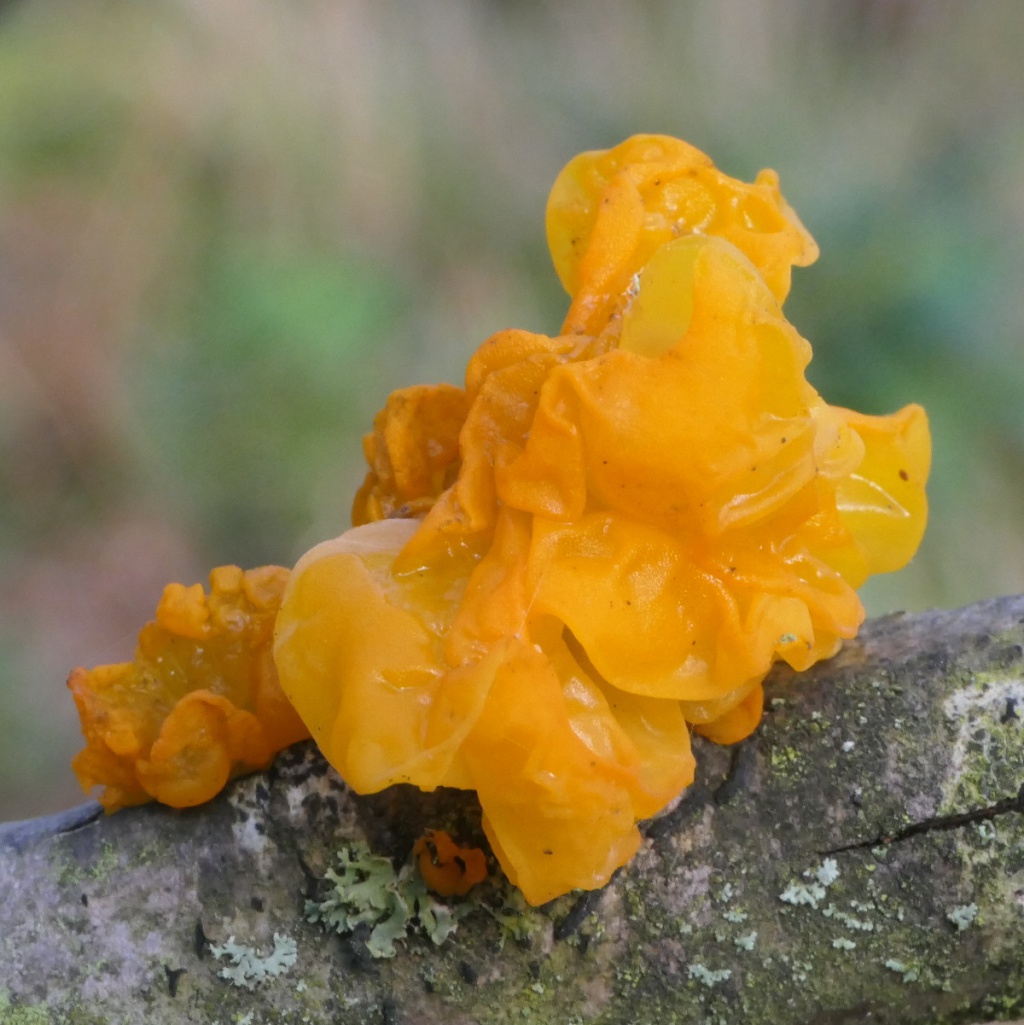
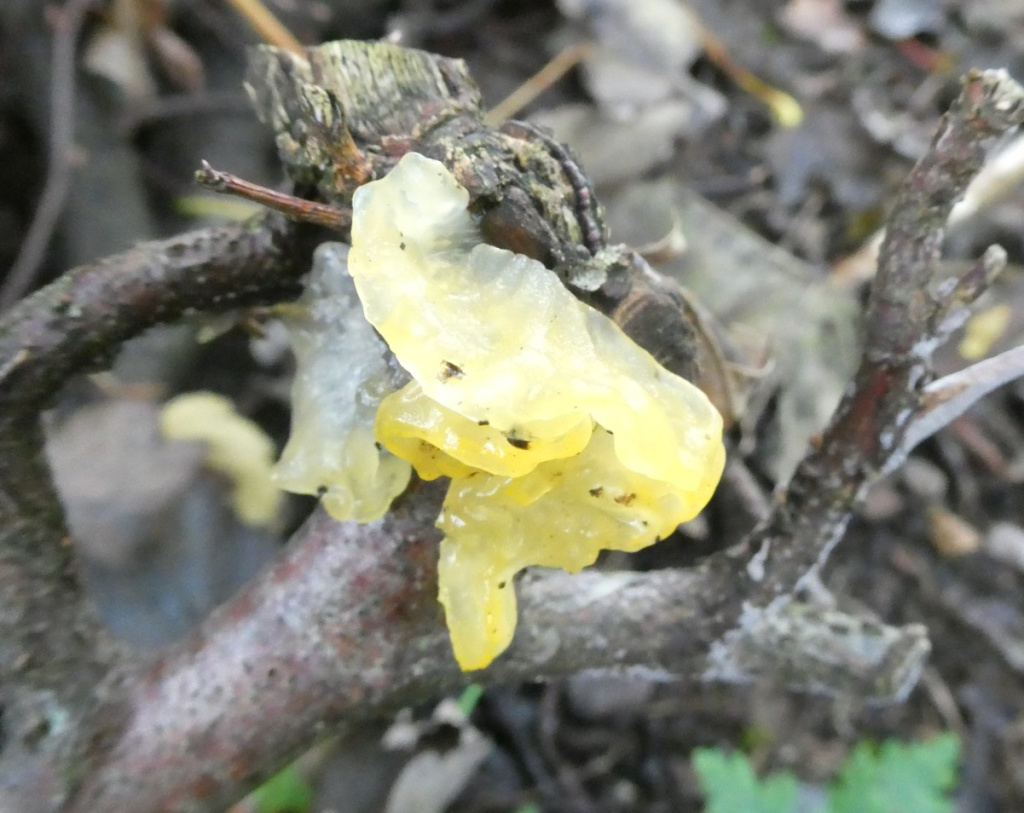
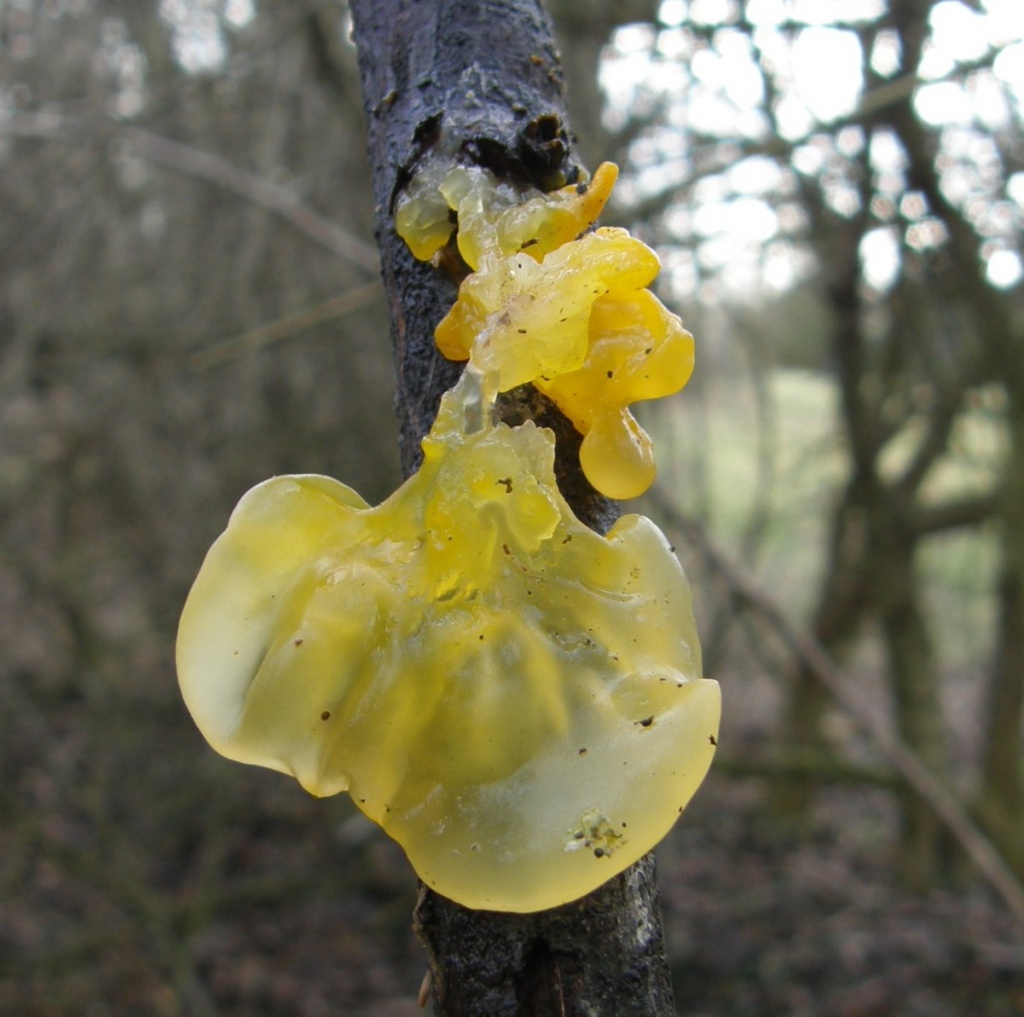
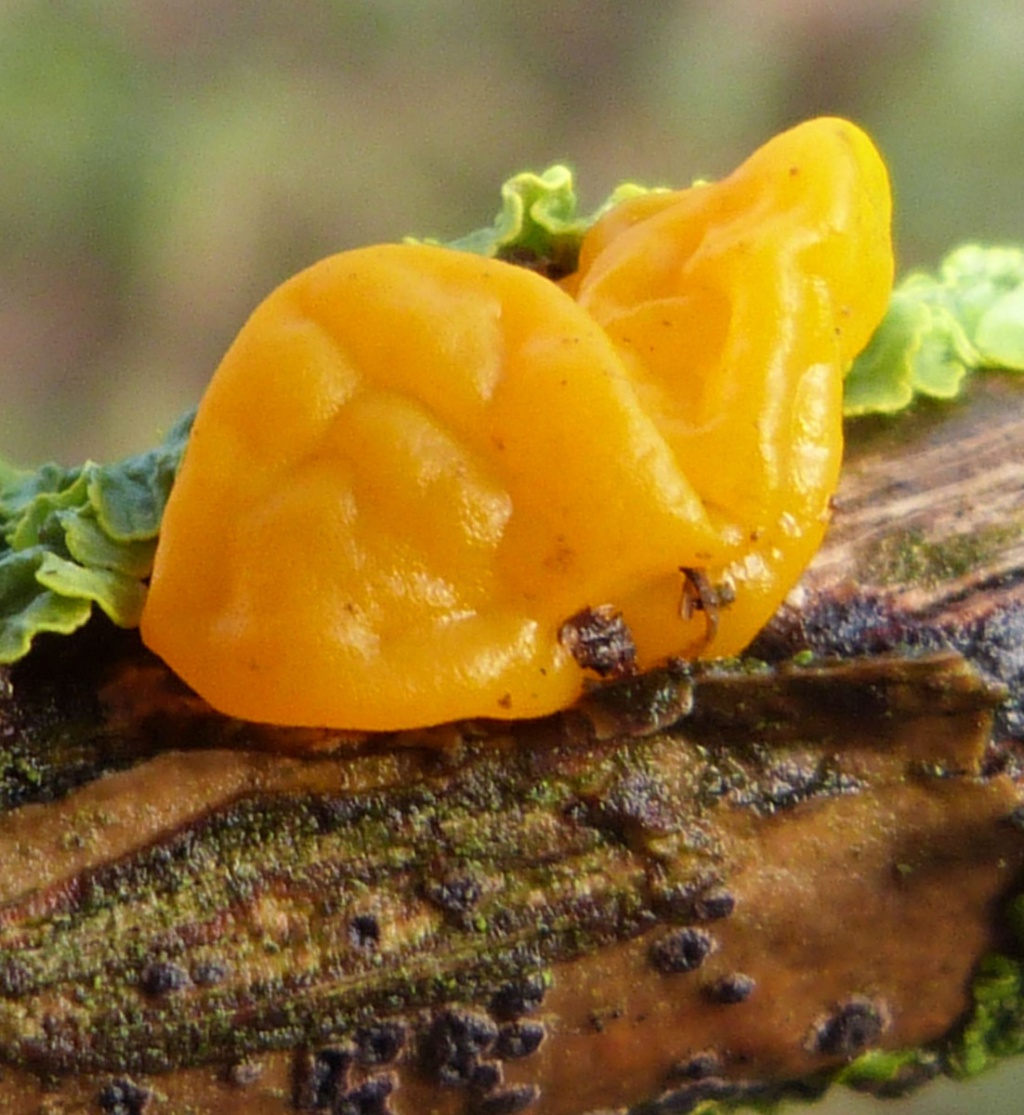
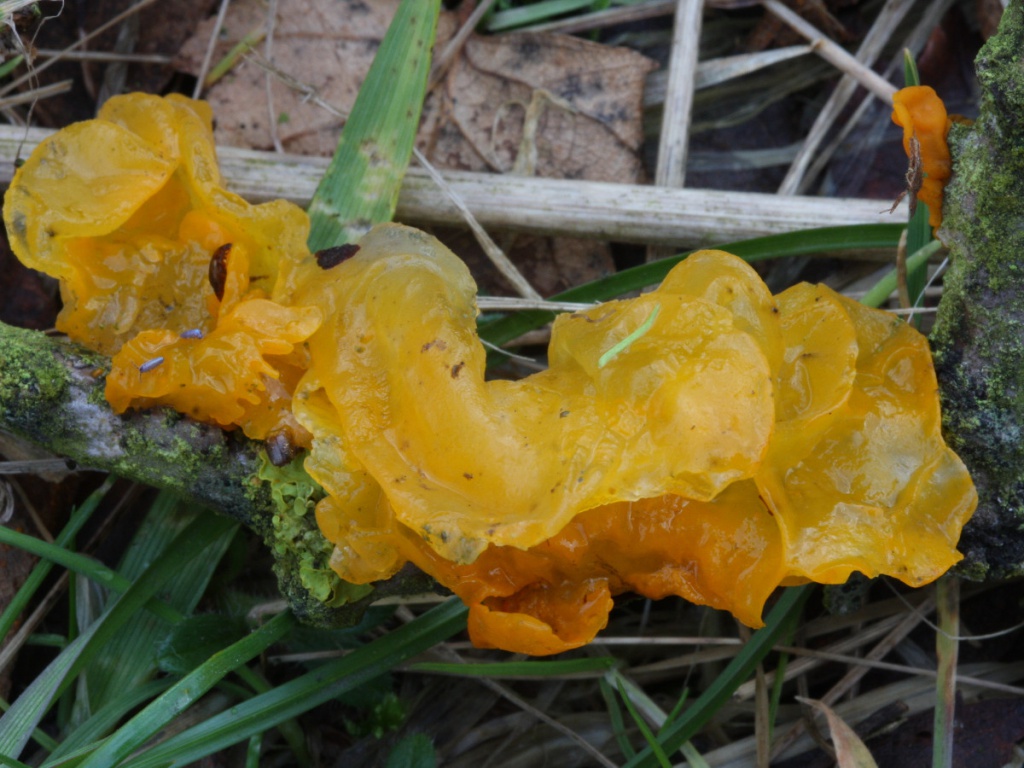
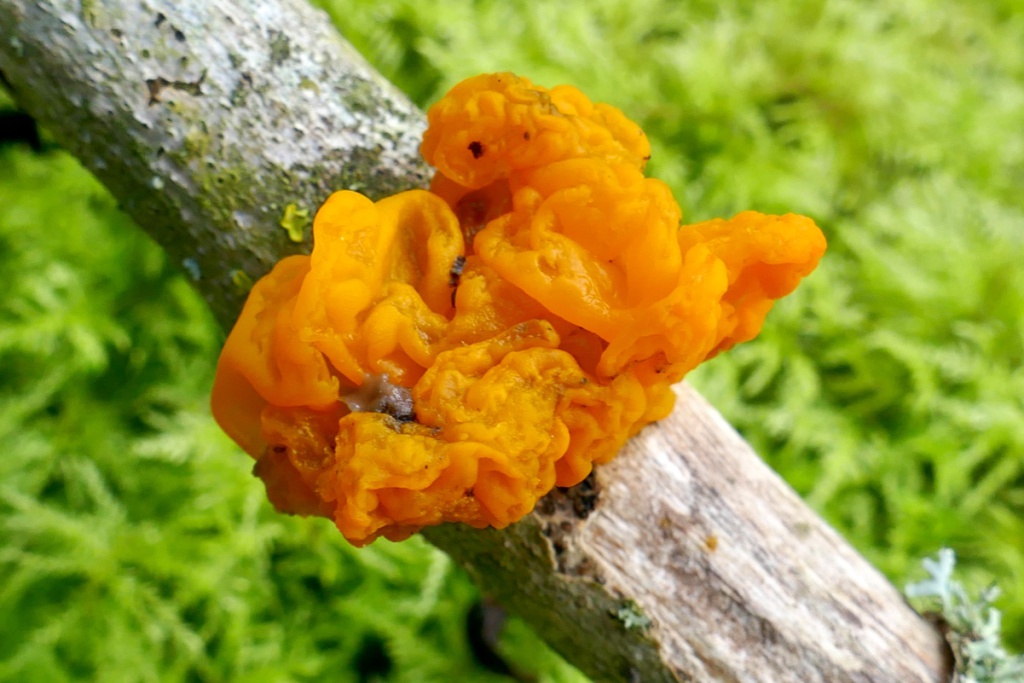
A yellow gelatinous mass of lobes and folds. Pale forms are occasional. It becomes more orange and shrivelled if it dries out, but rehydrates. It is parasitic on Peniophora species of crust fungi that grow on dead deciduous timber, such as birch, hazel and gorse. The host Peniophora is not usually evident because Yellow Brain feeds on the mycelium - so it looks as though it is erupting directly from the wood.
Naematelia aurantia (formerly Tremella aurantia) is a very similar fungus that is parasitic on Stereum hirsutum, the Hairy Curtain Crust - a very common fungus on dead hardwood such as oak or beech.

Photograph in habitat; note substrate and associated tree species
Appearing on fallen deciduous branches where they have previously been infected with Peniopora, which it paraitises. The host fungus can sometimes show on the same branch.
All year but especially in autumn
It is almost impossible to tell the difference between Tremella mesenterica and Naematela aurantia without careful microscopic examination - Tremella spores are larger. If found, the host fungus Stereum hirsutum or Peniophora would identify the parasite, but is not often evident; the Tremella/Naematelia feed on the mycelium under the bark. The national distribution of Naematelia is to the south and south-west (ref. NBN overview for the species) and it we do not believe it has been found in VC55 - but it may have been overlooked or mistaken for Tremella mesenterica.
There is more information on the excellent 'First Nature' website
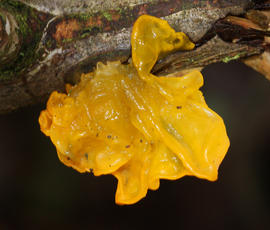 David Nicholls
Rutland Water
31 December 2011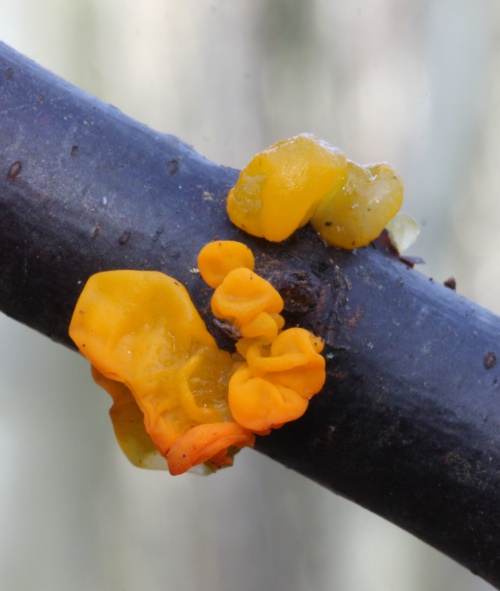 David Nicholls
Burbage Wood
13 February 2014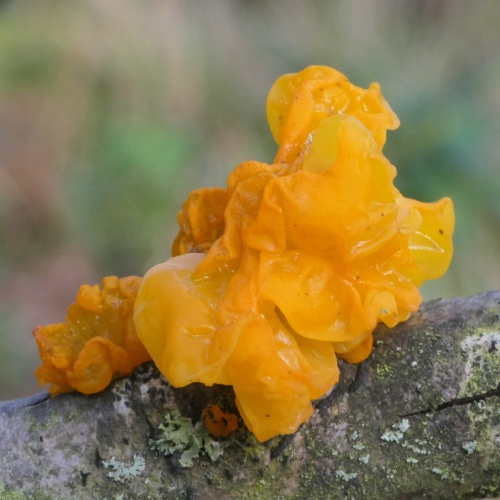 David Nicholls
Bardon Hill
04 November 2019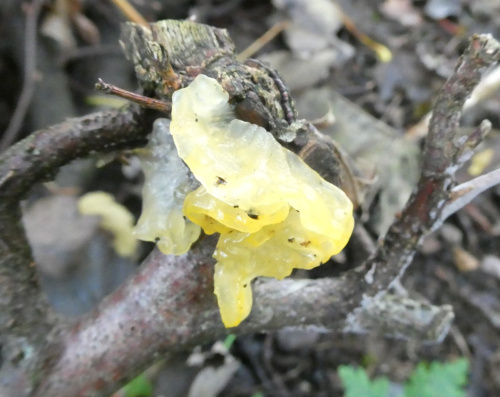 sue
sue
Oaks in Charnwood, near church
23 October 2023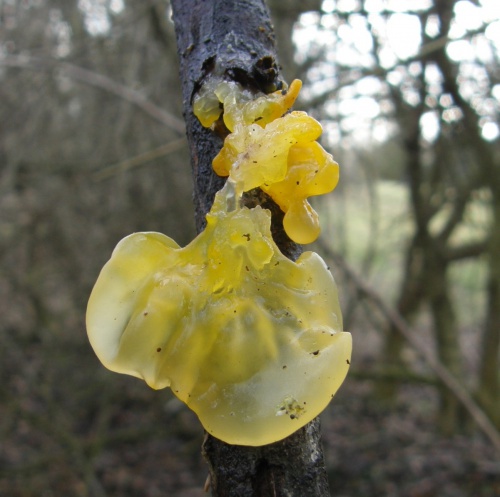 Saharima Roenisch
Shady Lane Arboretum
03 January 2018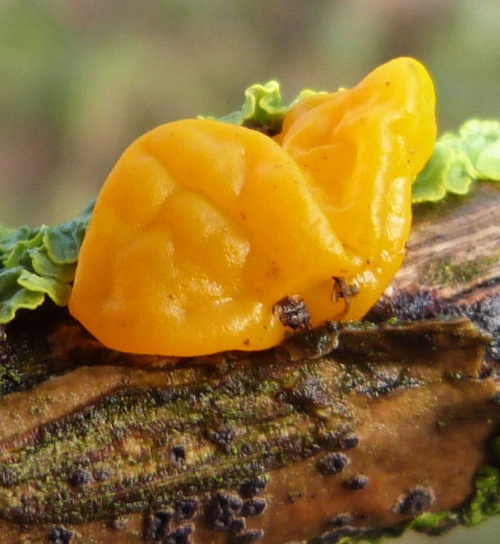 Graham Calow
Sapcote
14 February 2013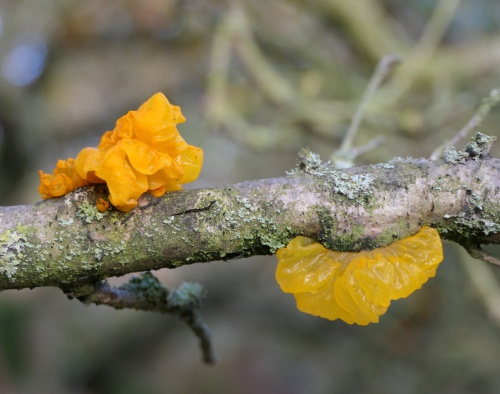 David Nicholls
Bardon Hill
04 November 2019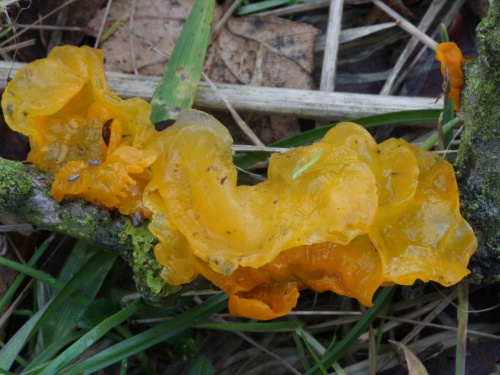 David Nicholls
Bardon Hill
15 February 2013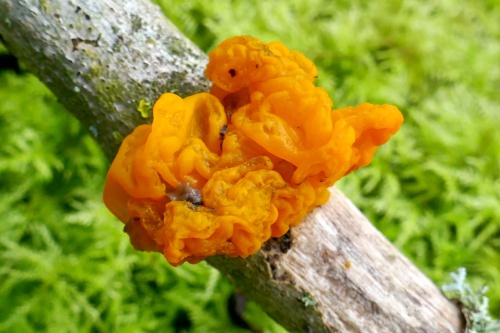 granniejo
Billesdon Woodland Pool
06 April 2023

Leicestershire & Rutland Map
Enter a town or village to see local records
MAP KEY:
Yellow squares = NBN records (all known data)
Coloured squares = NatureSpot records: 2025+ | 2020-2024 | pre-2020
UK Map
Additional images