Yarrow
Yarrow - Achillea millefolium
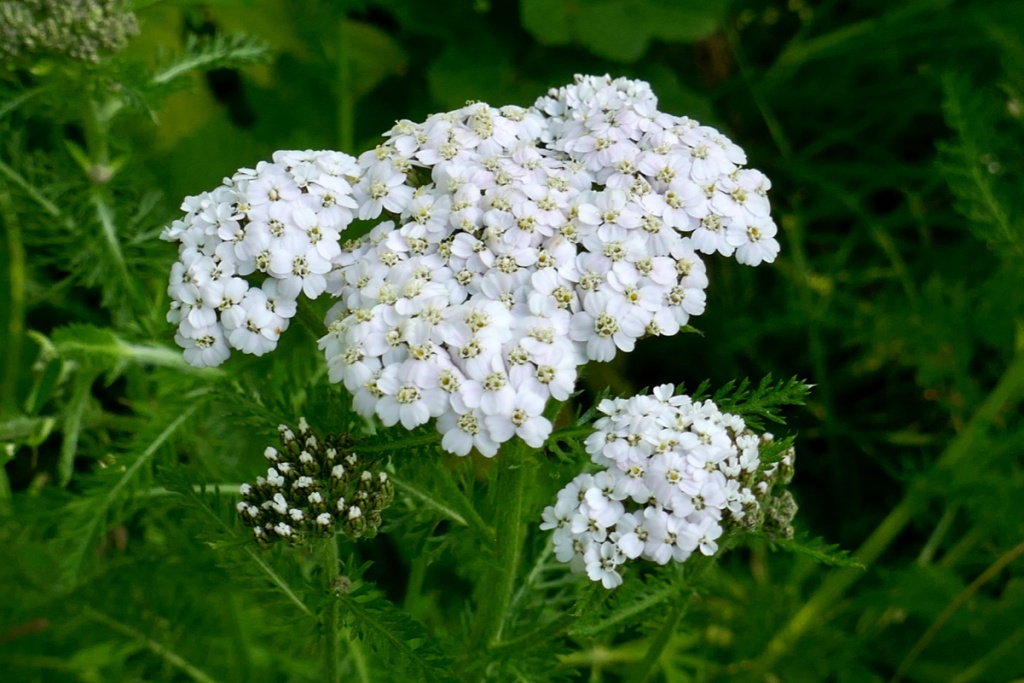
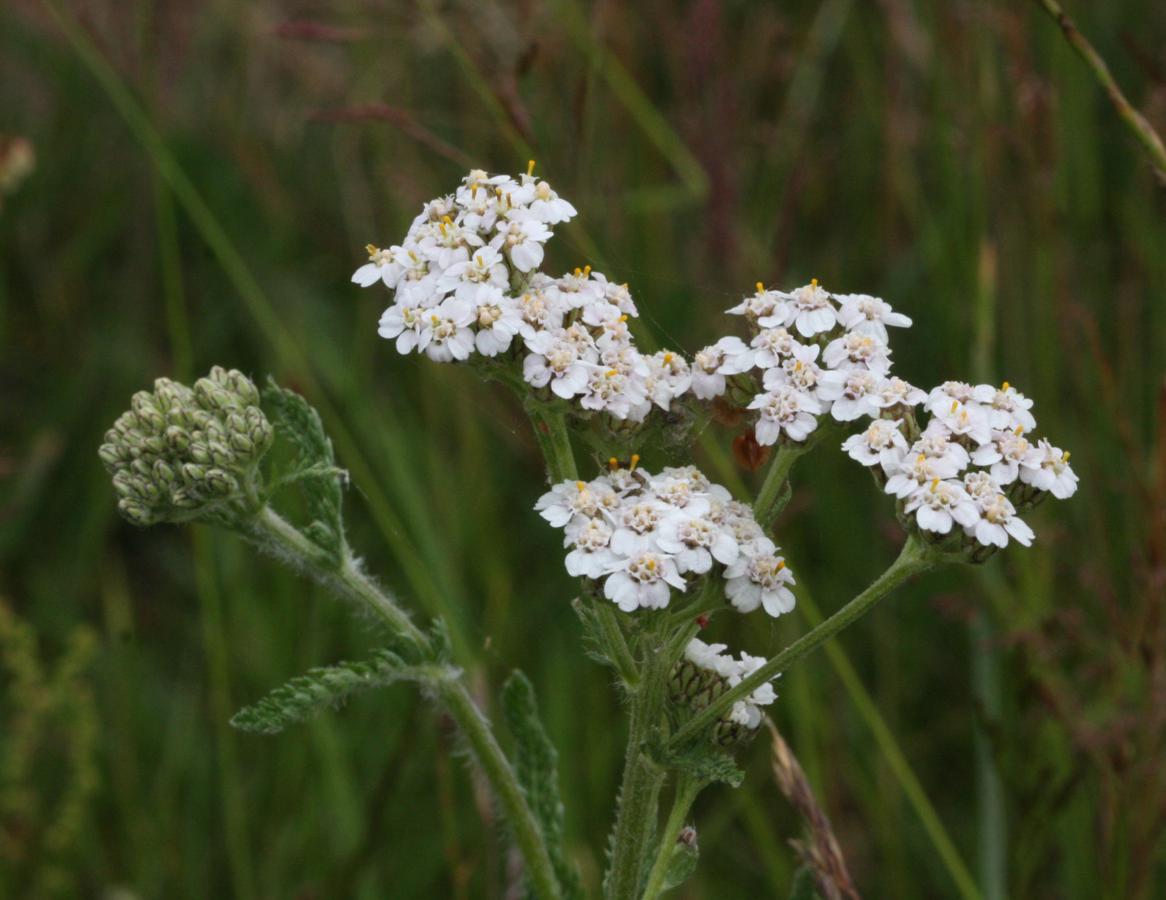
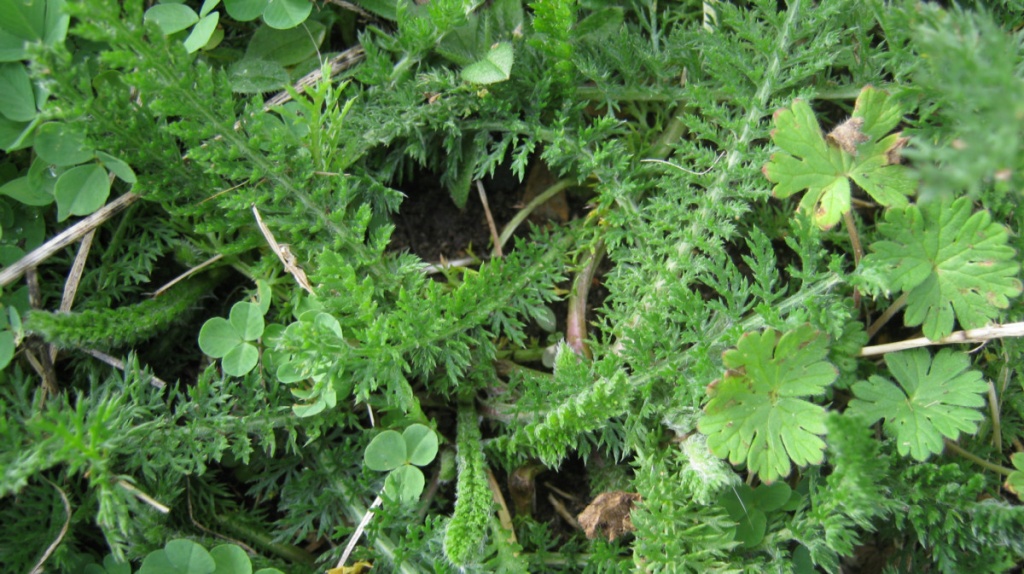
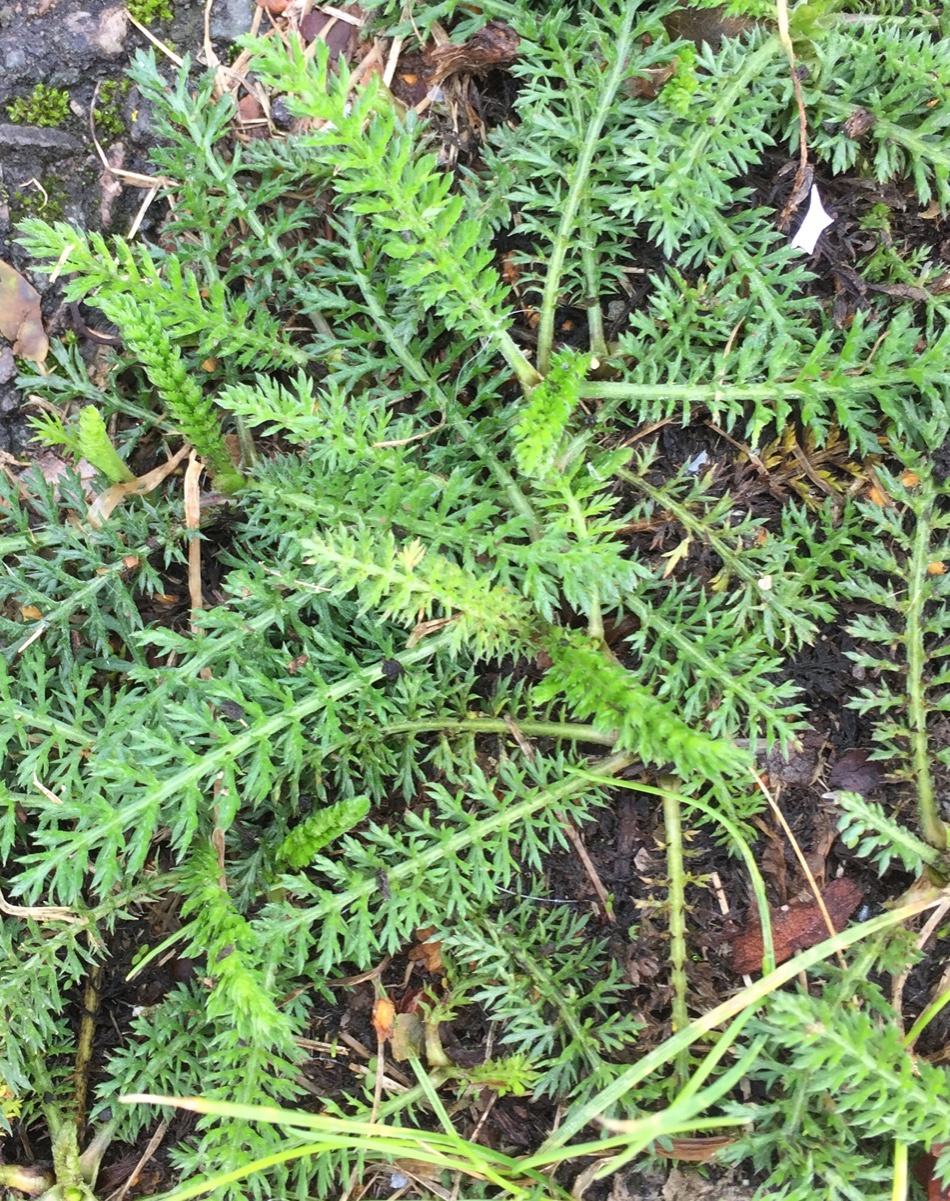
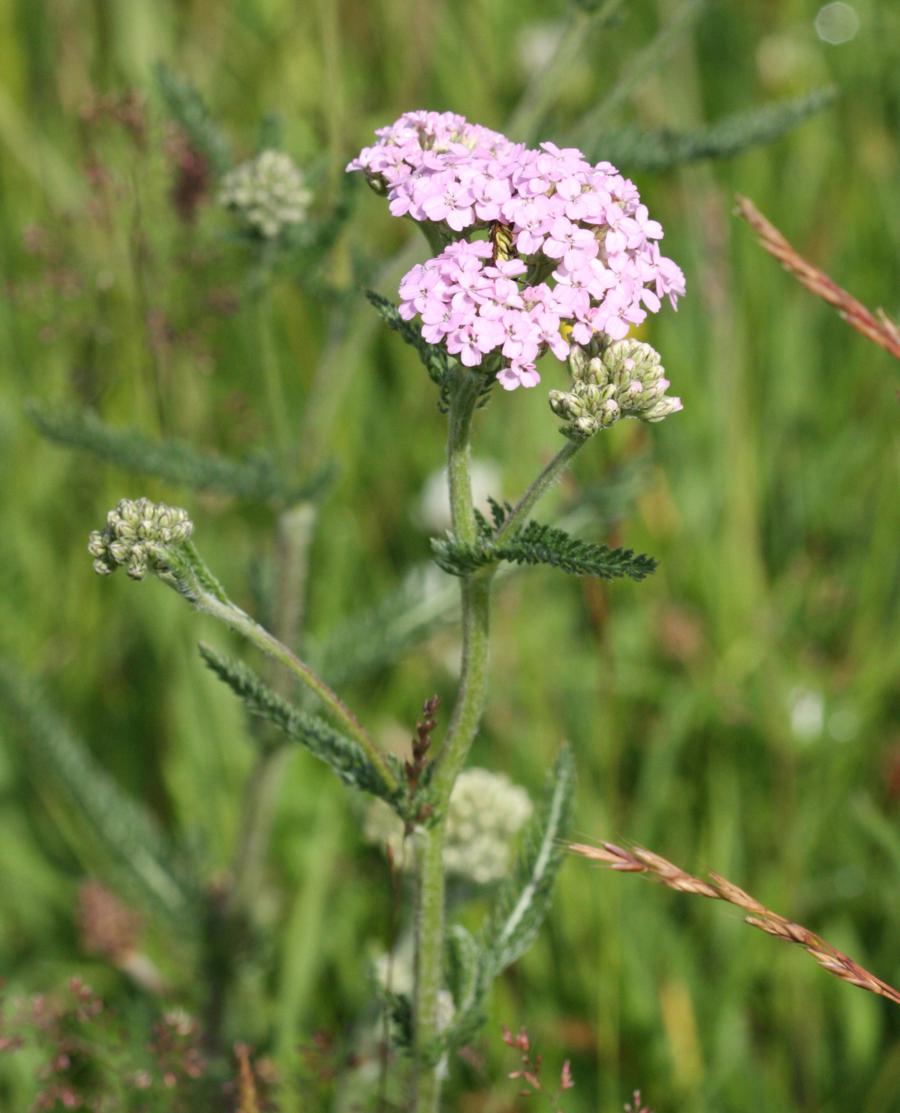
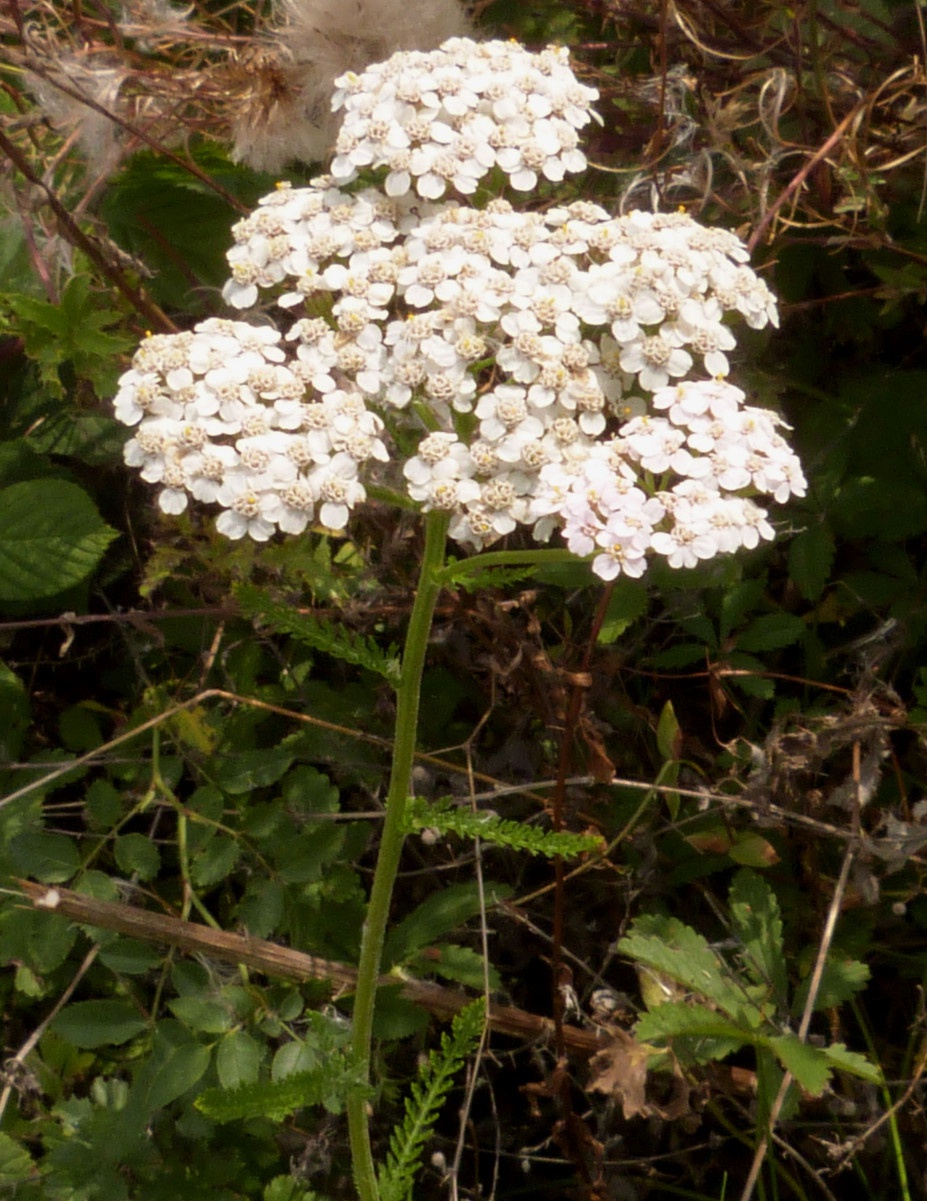
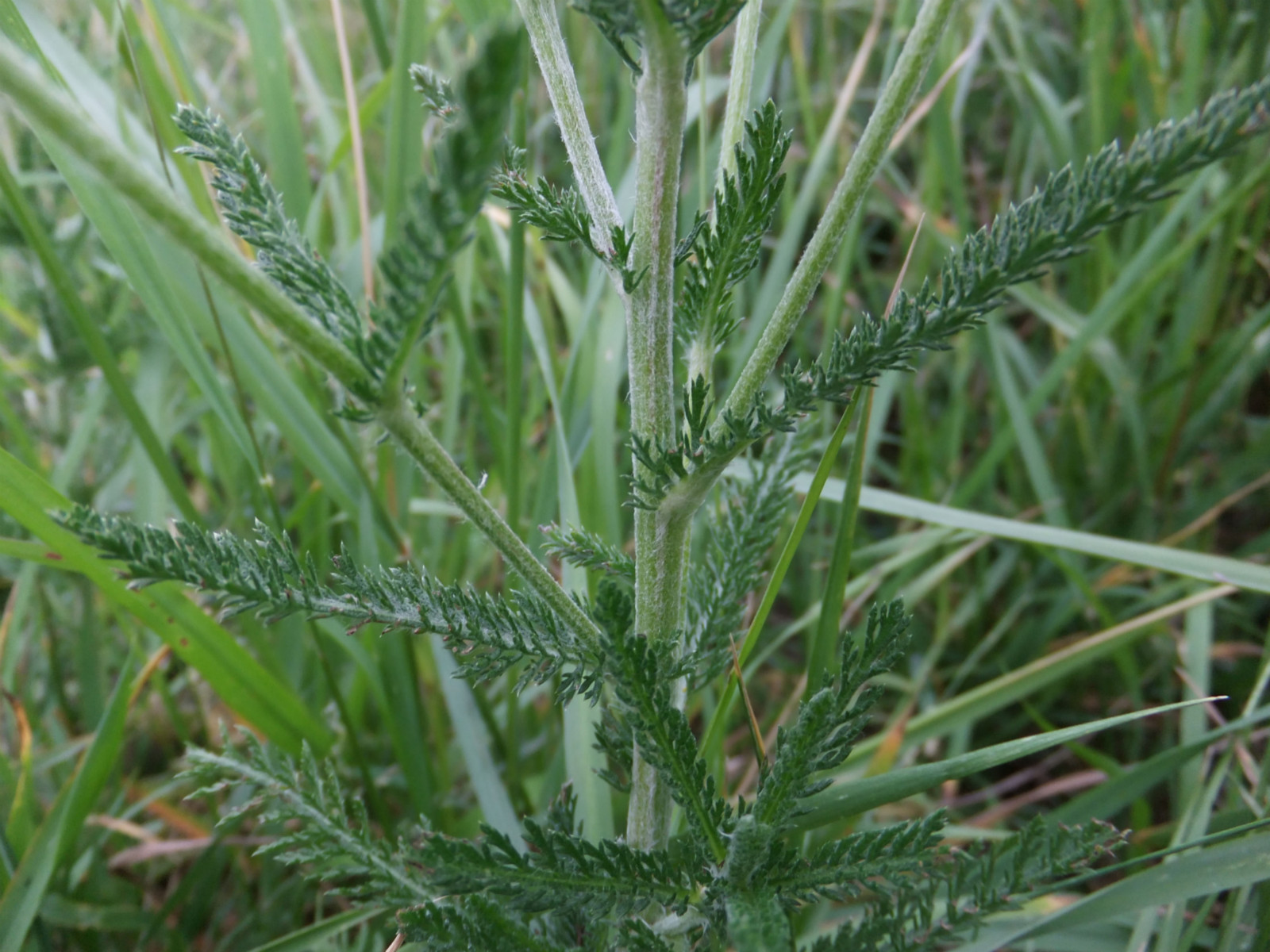
Short to medium hairy, stoloniferous plant, often patch forming, strong smelling, stems erect, unbranched. Leaves feathery, lanceolate. Flowerheads small, white, occasionally pink or reddish, with a white or cream disk, 4 to 6 mm, borne in dense flat topped heads, rays short.

Feathery leaves
Grassy habitats, roadside verges, waste places.
July to October.
Perennial.
Very common in Britain.
Very commonin in Leicestershire and Rutland. In the 1979 Flora survey of Leicestershire it was found in 602 of the 617 tetrads.
 Leicester Road lay-By Sapcote SP 5019 9296 (taken 29.6.2007).JPG) Graham Calow
Graham Calow
Sapcote
29 June 2007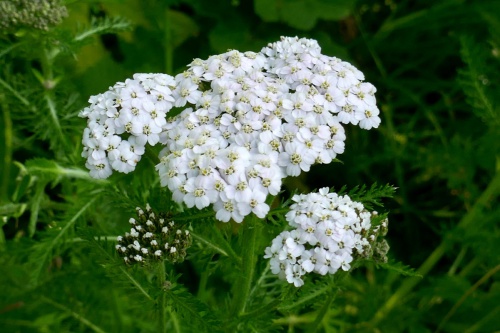 granniejo
Billesdon Woodland Pool
05 July 2022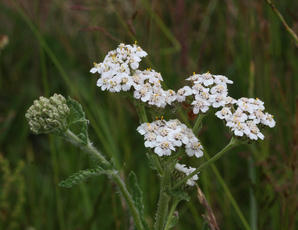 David Nicholls
Lea Meadows
07 July 2011 B4114 Sapcote SP 4932 9247 (taken 21.8.2006).JPG) Graham Calow
Graham Calow
Sapcote
21 August 2006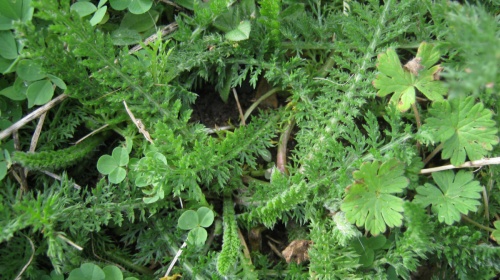 Ruth Dring
Broughton Astley
27 August 2012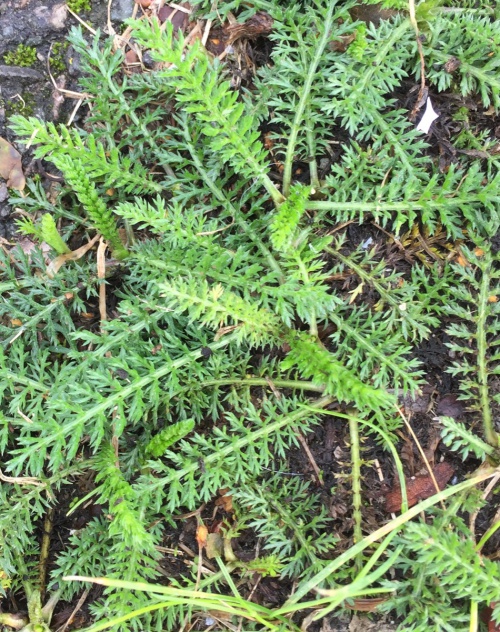 Dylan
Dylan
Melton Mowbray
05 October 2021
Yarrow
 Leicester Road lay-By Sapcote SP 5019 9296 (taken 29.6.2007).JPG)
 B4114 Sapcote SP 4932 9247 (taken 21.8.2006).JPG)
Leicestershire & Rutland Map
Enter a town or village to see local records
MAP KEY:
Yellow squares = NBN records (all known data)
Coloured squares = NatureSpot records: 2025+ | 2020-2024 | pre-2020
UK Map
Additional images
All NatureSpot records
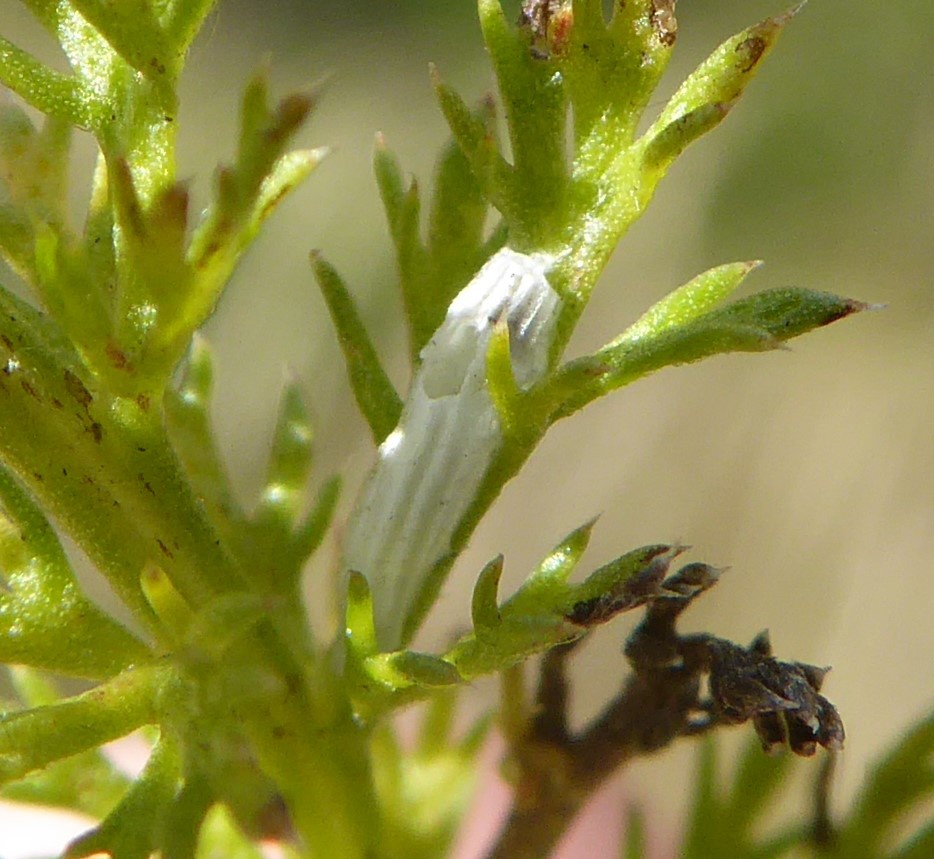
Bucculatrix cristatella
The larva of Bucculatrix cristatella feeds on Yarrow in a leaf mine to begin with, then later feeding externally on the leaves, shrivelling and blanching or browning them. Twice during its growth, it spins a white cocoonet in which it moults its skin. The cocoonet is constructed on the upper surface of a leaf, where it is easily detected. If held up to the light, the larva, or its cast skin retaining the larval shape, can be seen. Like other Bucculatriginae, the pupa, on the foodplant or adjacent plants, is in a distinctive whitish ribbed cocoon.
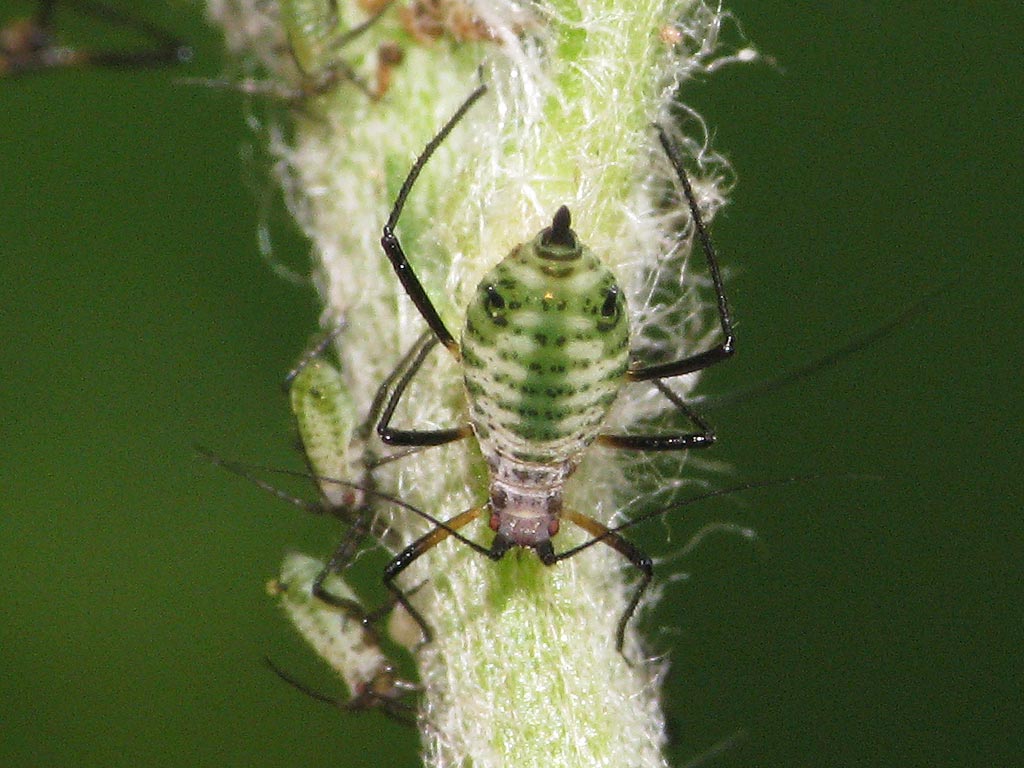
Macrosiphoniella millefolii
The aphid Macrosiphoniella millefolii mainly feeds on Yarrow, but it has been found on many other Achillea species, as well as on daisies, tansies and mayweeds. The Apterae of Macrosiphoniella millefolii are of moderate size, green and wax powdered except for a spinal stripe on the abdomen and presiphuncular spots.
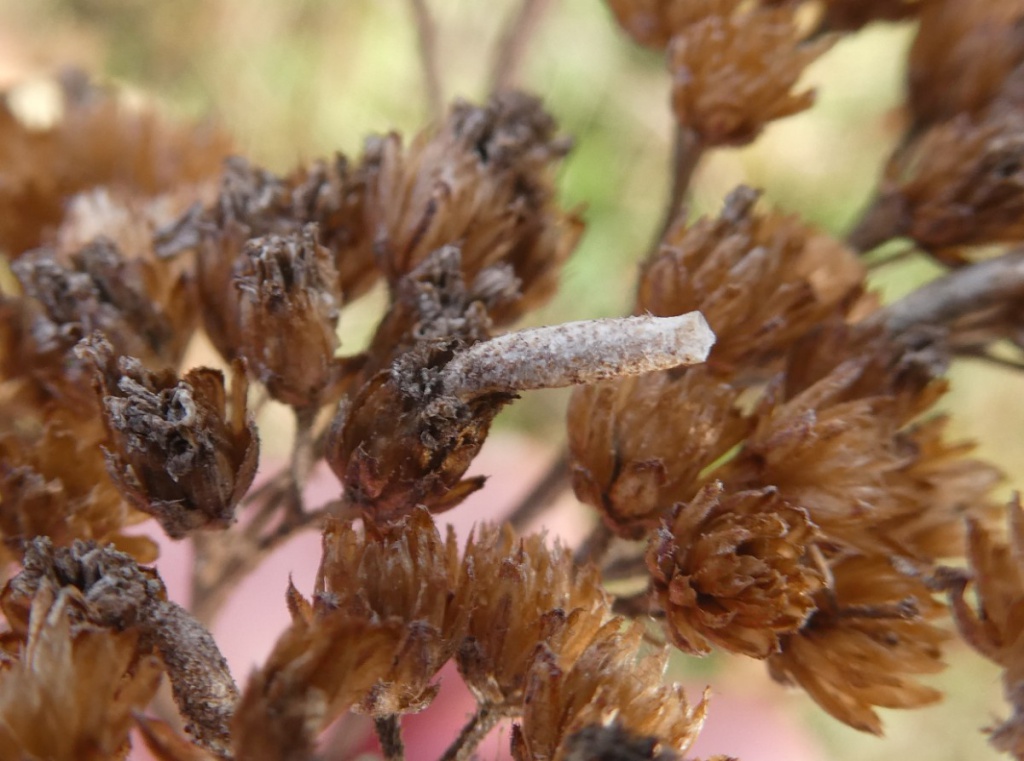
Coleophora argentula
The cased larva of the moth Coleophora argentula feeds on Yarrow and Sneezewort.