Willow Redgall Sawfly
Willow Redgall Sawfly - Euura proxima
Adult Willow Redgall Sawflies are small - approximately 3.5-5 mm long. They are shiny, black and wasp-like.
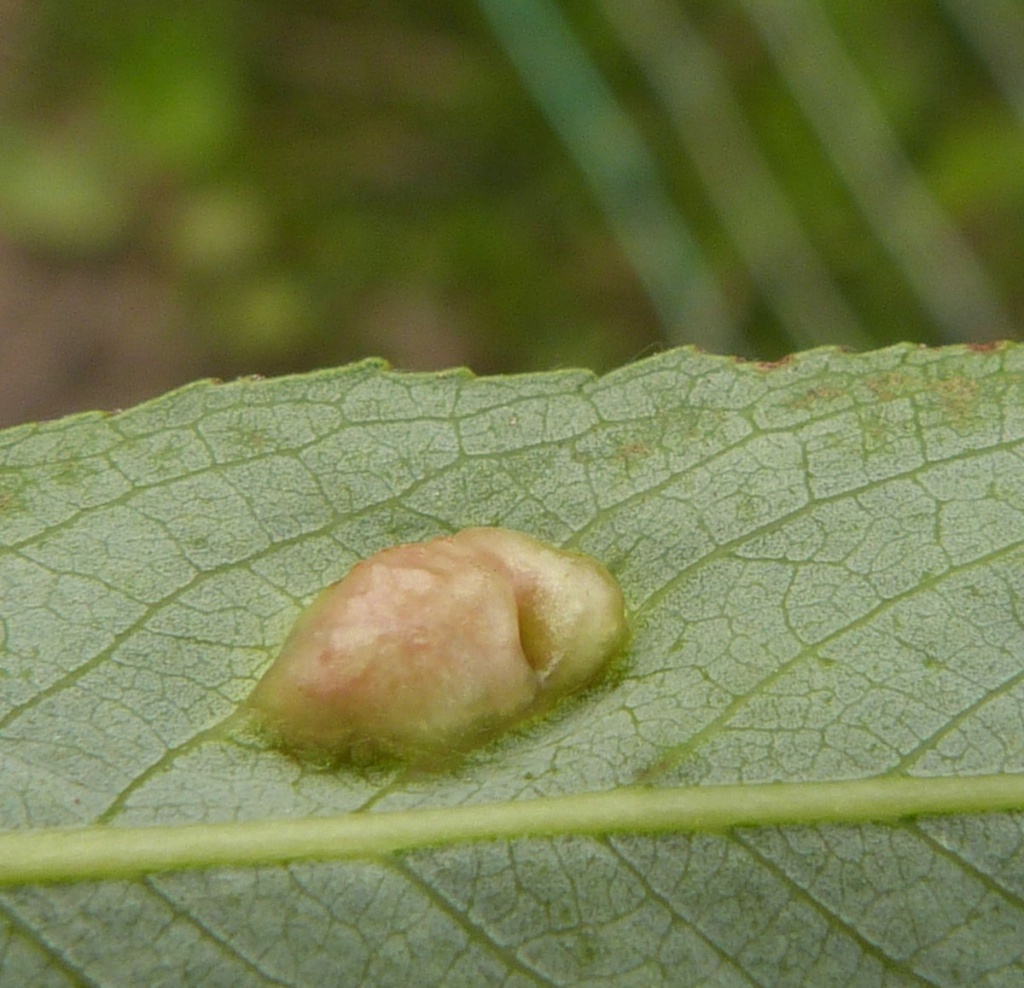
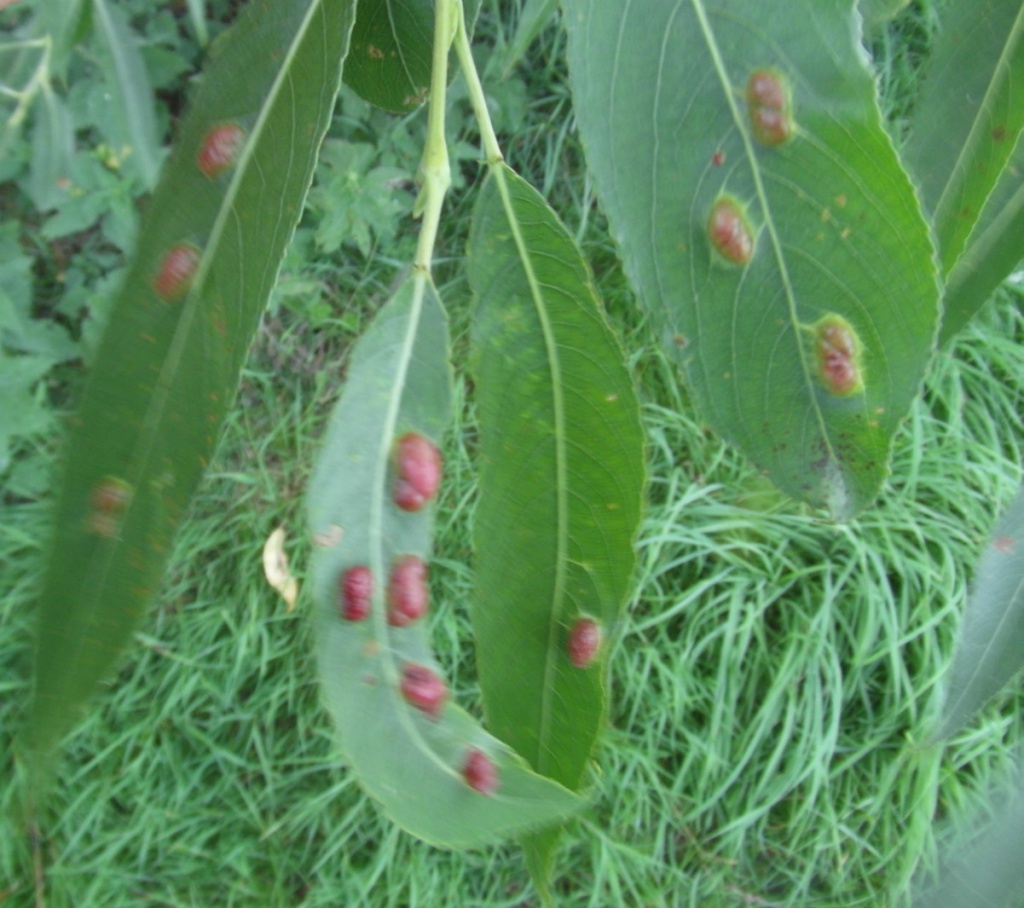
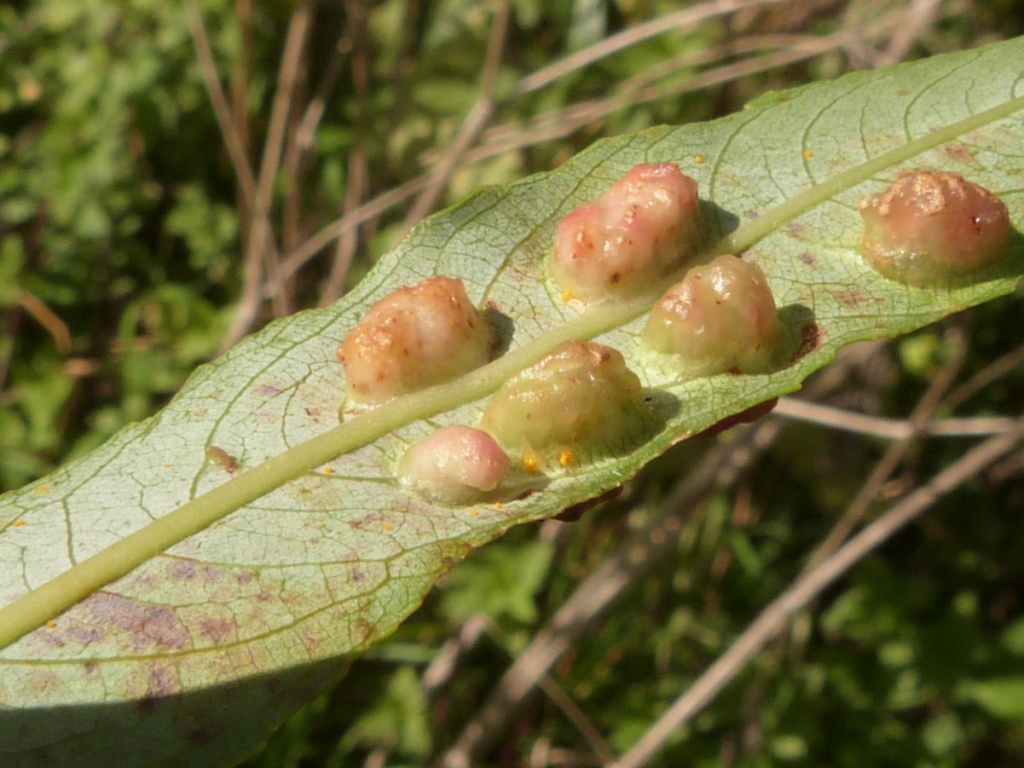
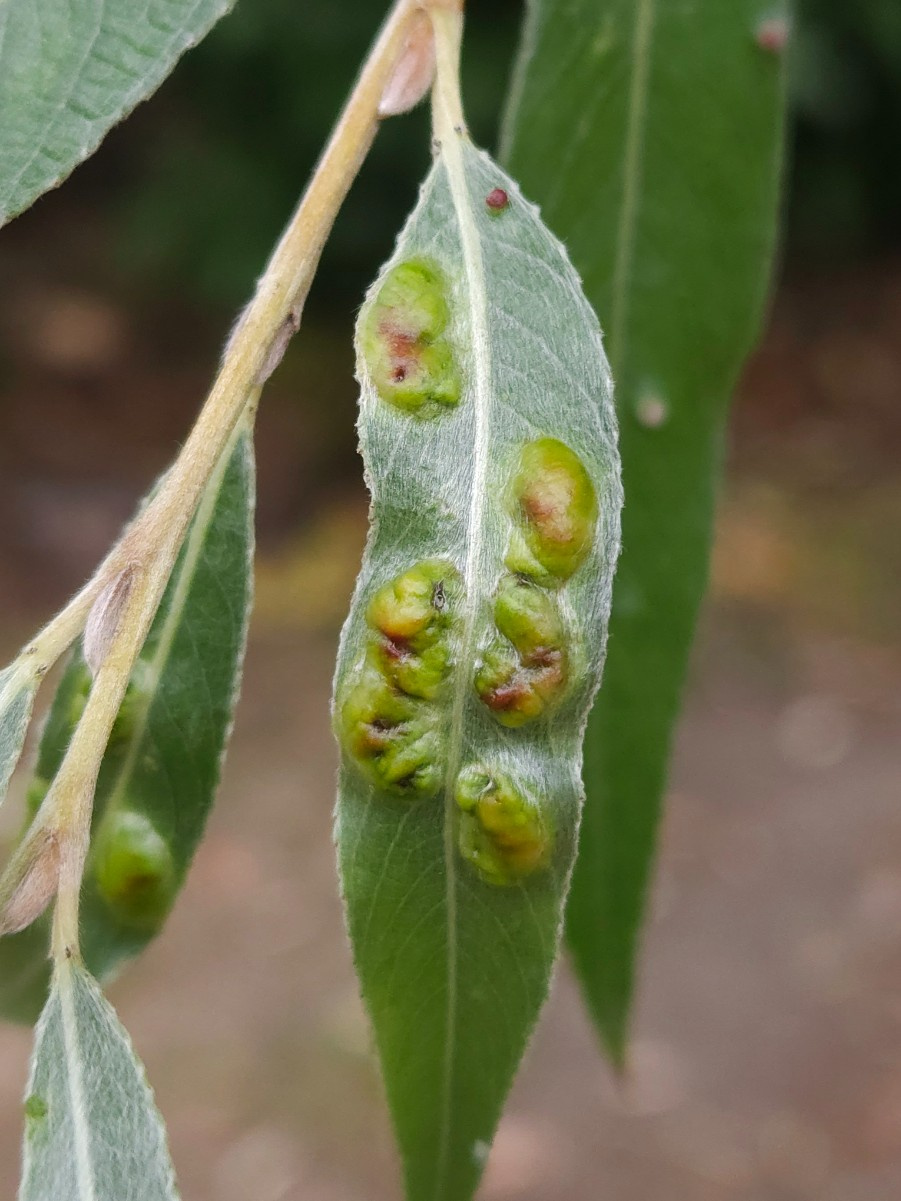
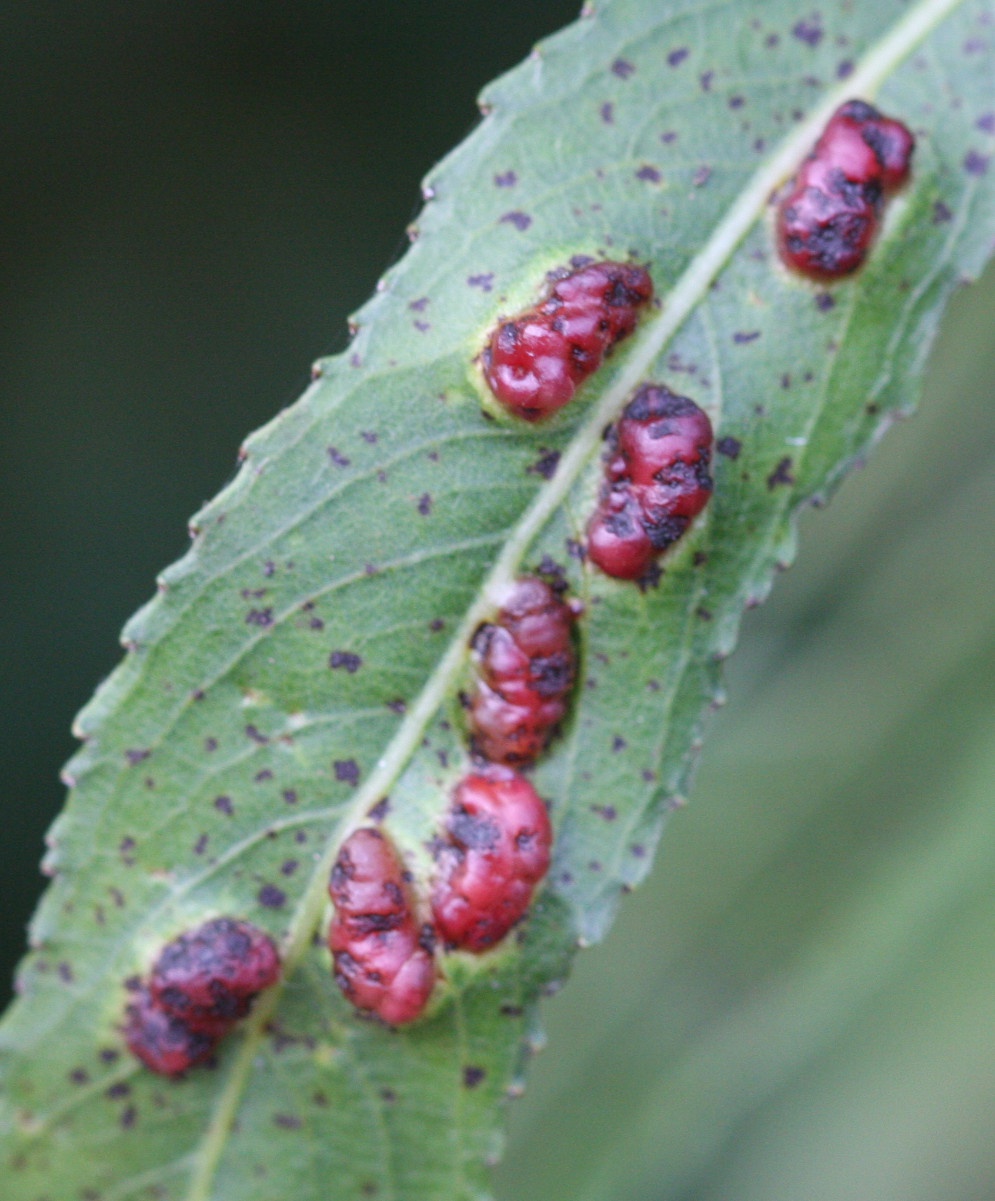
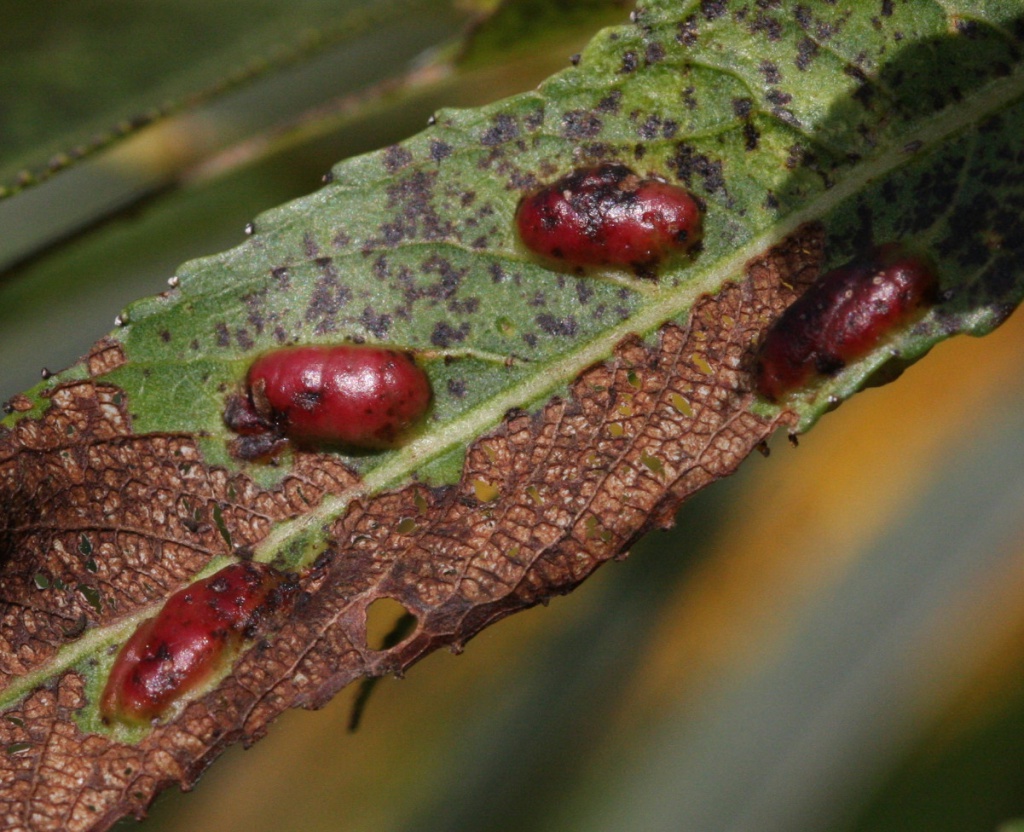
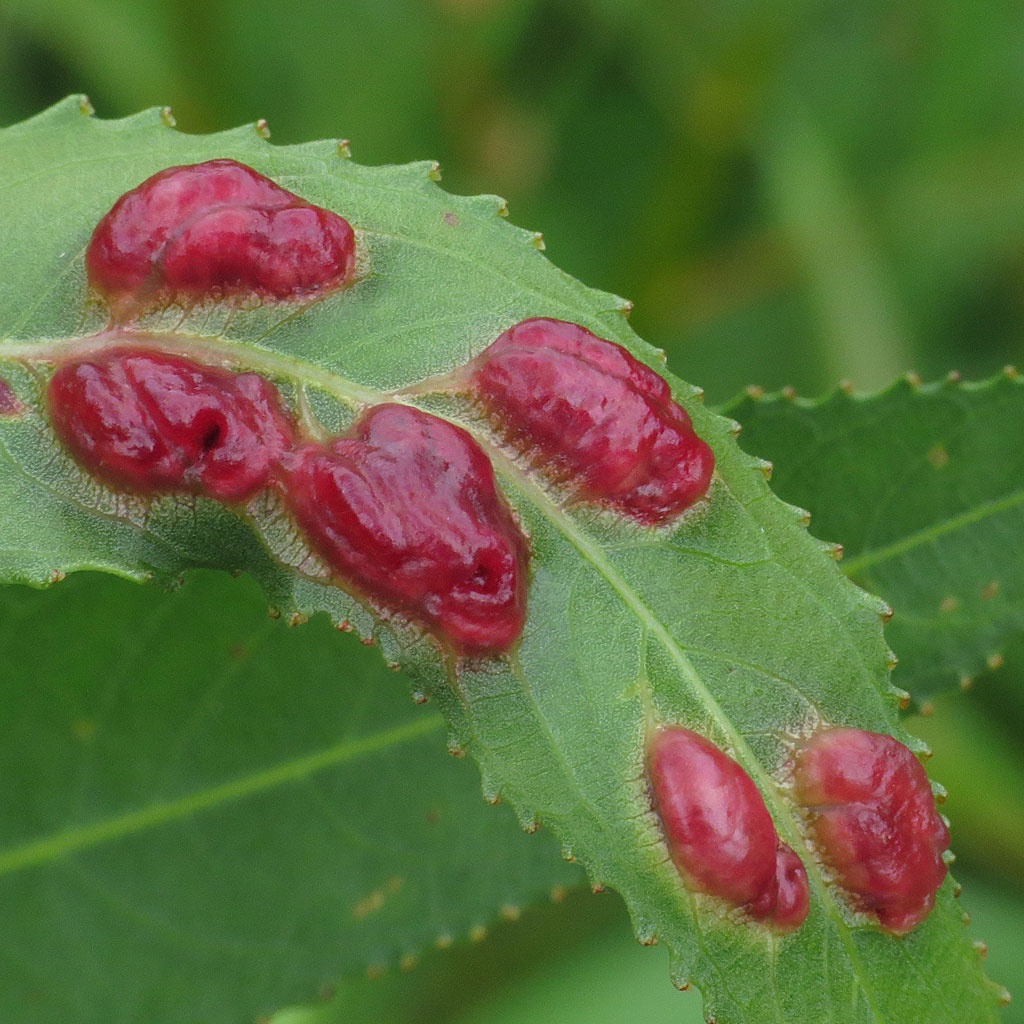
They cause a gall to form on narrow-leaved willows Salix alba and Salix x fragilis and this gall is more likely to be seen than the adult sawfly. The gall is bean-shaped, starting off green but gradually turning red. It is smooth with a thick wall and protrudes from both the upper and lower leaf surface.
Galls of Euura bridgmanii and E. triandrae are all very similar - but are found on sallow and almond willow respectively
Gall  Adult
Adult 
If a gall, it is essential to say which tree species it was on.
Wherever White Willow or Crack Willow grow, usually damp open wooded areas, sometimes hedgerows.
Adult May to August
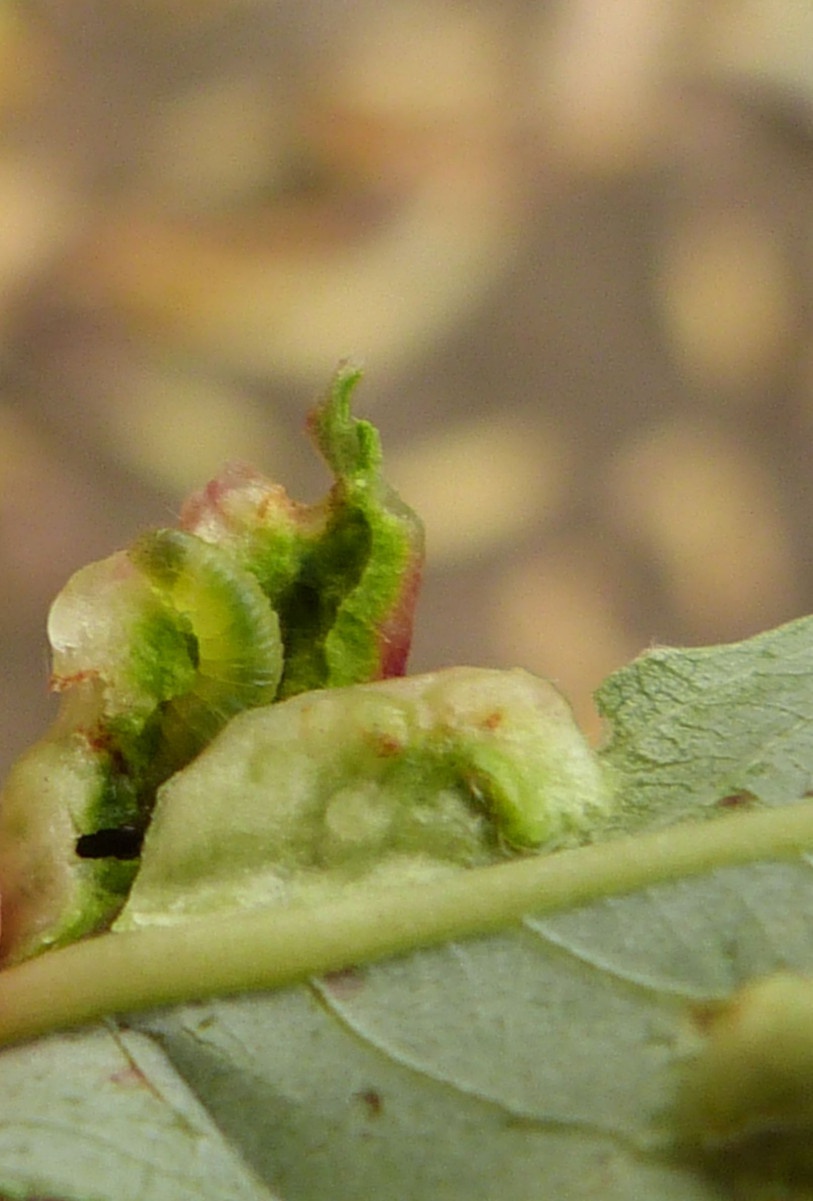
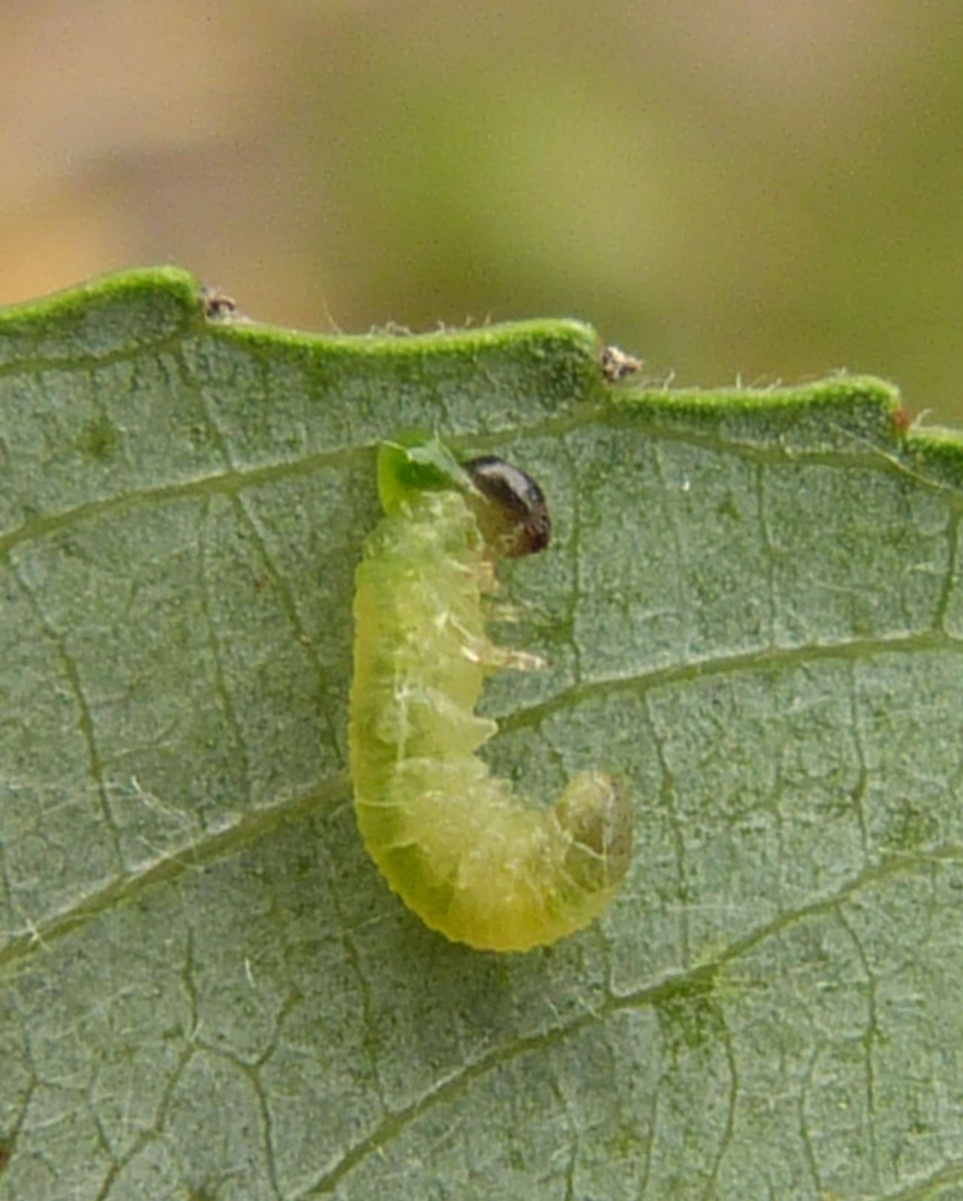
The larvae of the Willow Redgall Sawfly are pale green in colour with a dark head. They are small and caterpillar-like, reaching only 5 mm in length. Adults emerge in late spring, and females seek out suitable willows on which to lay eggs. The female inserts an egg into leaf tissue where it hatches and begins to eat the soft leaf tissue. This stimulates the leaf to produce a gall which is bean-shaped, smooth and emerges equally on both sides of the leaf. The gall may be green, red or yellow. A single larva feeds in the cavity of each gall.
Common and widespread in Britain
Common in Leicestershire and Rutland.
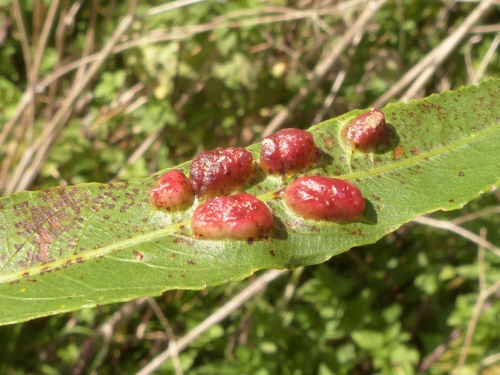 Graham Calow
Witherley
26 September 2015
galls on Crack-willow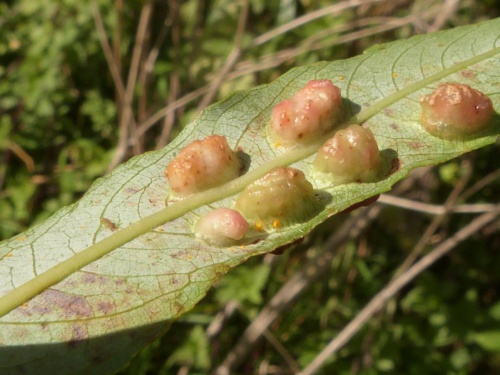 Graham Calow
Witherley
26 September 2015
on Crack-willow - underside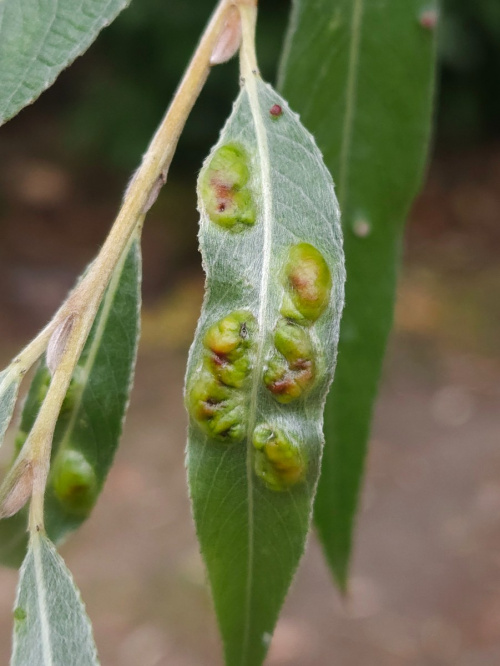 Peter Smith
Anstey, Jubilee Field
26 September 2025
Upper surface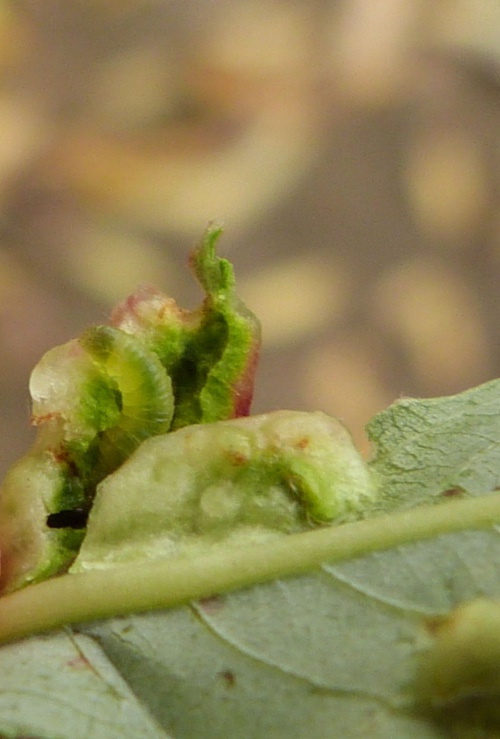 Graham Calow
Sapcote
26 September 2013
larva inside gall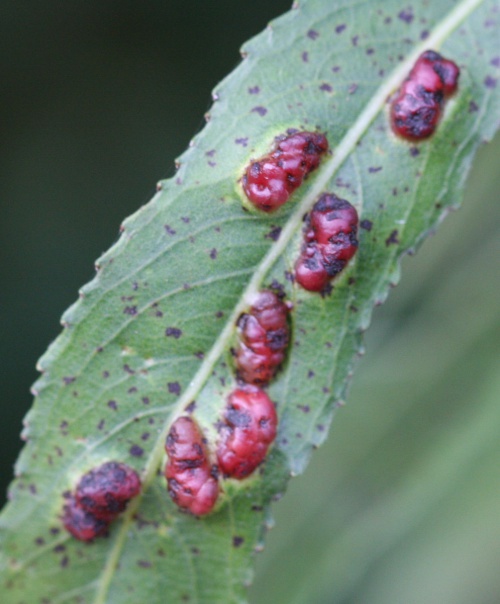 David Nicholls
Watermead
27 September 2013 David Nicholls
Watermead Country Park
27 September 2013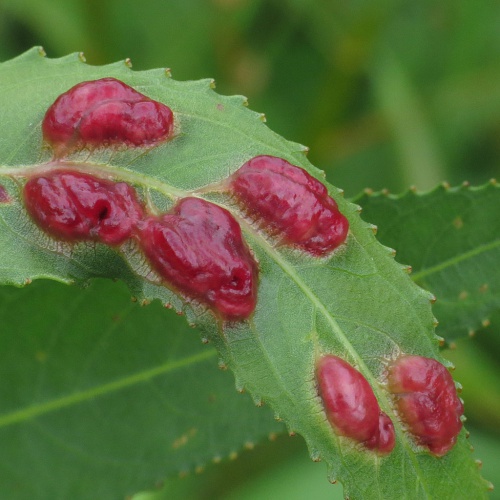 David Gould
Aylestone Meadows
15 August 2014 Graham Calow
Sapcote
26 September 2013
larva

Leicestershire & Rutland Map
Enter a town or village to see local records
MAP KEY:
Yellow squares = NBN records (all known data)
Coloured squares = NatureSpot records: 2025+ | 2020-2024 | pre-2020
UK Map
Additional images
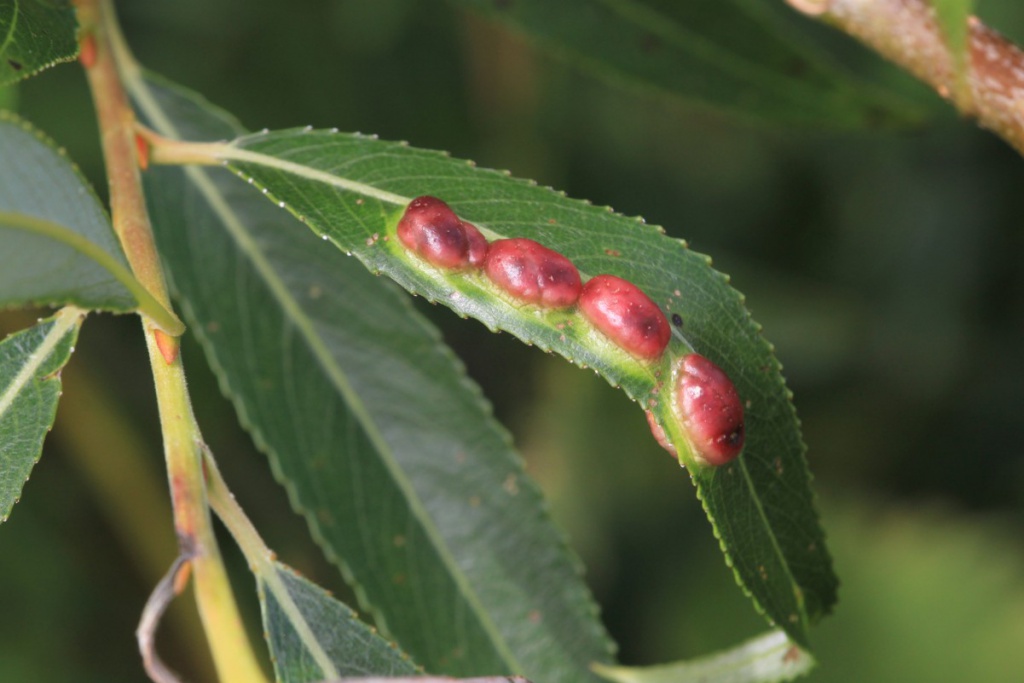

 on host Salix fragilis Granitethorpe Sapcote SP 4961 9363(taken 28.5.2009)._gall.JPG)