Wild Privet
Wild Privet - Ligustrum vulgare
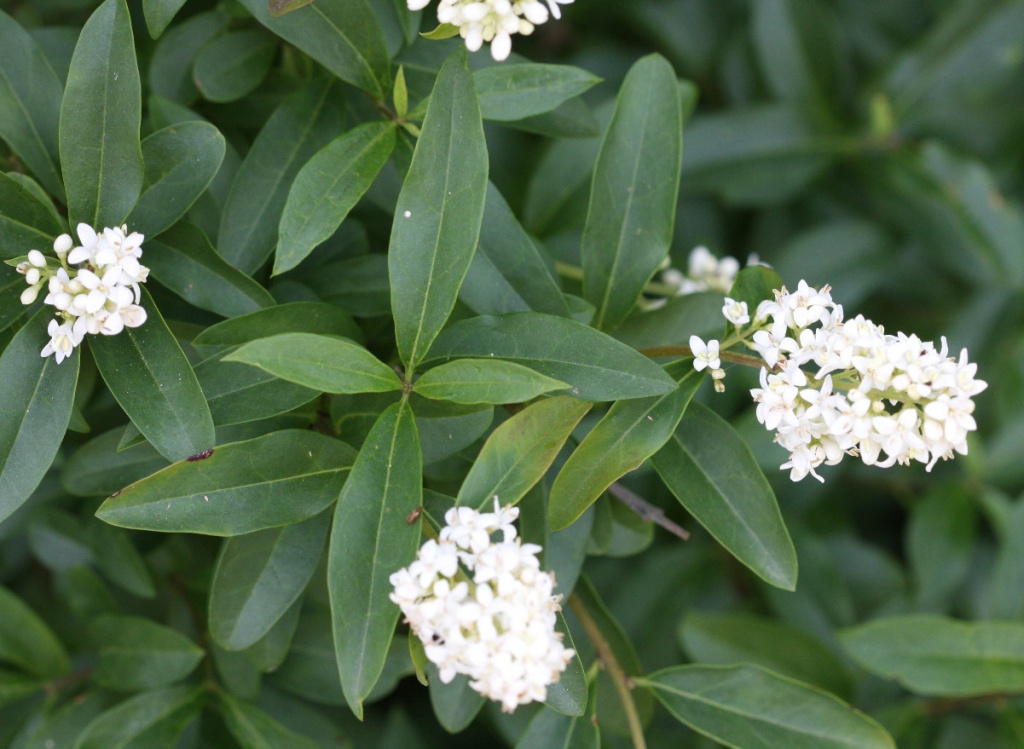
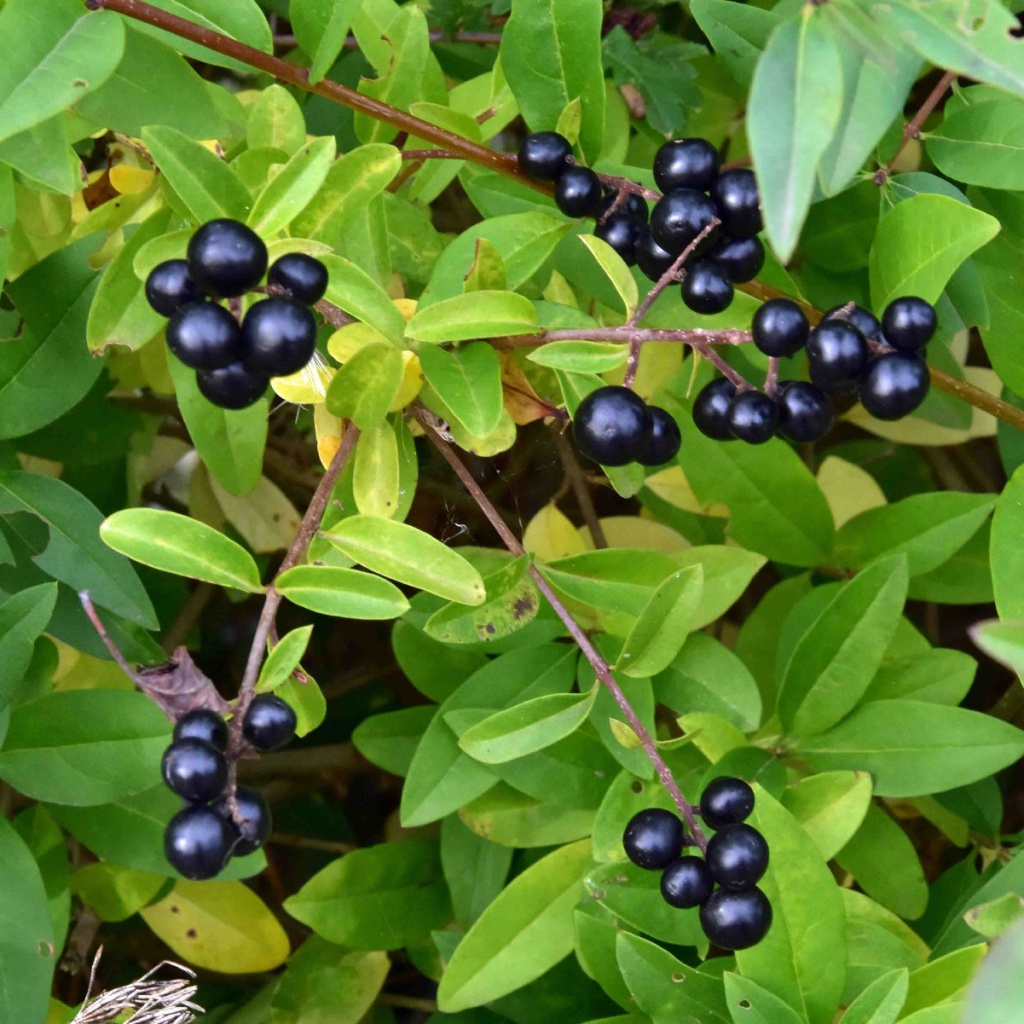
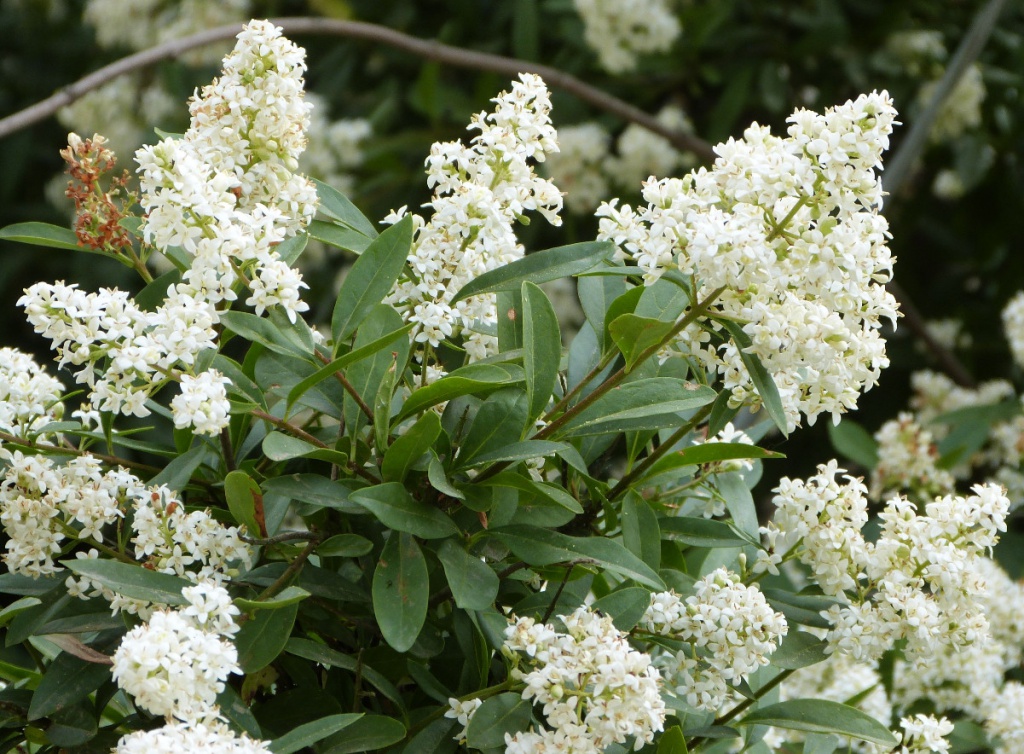
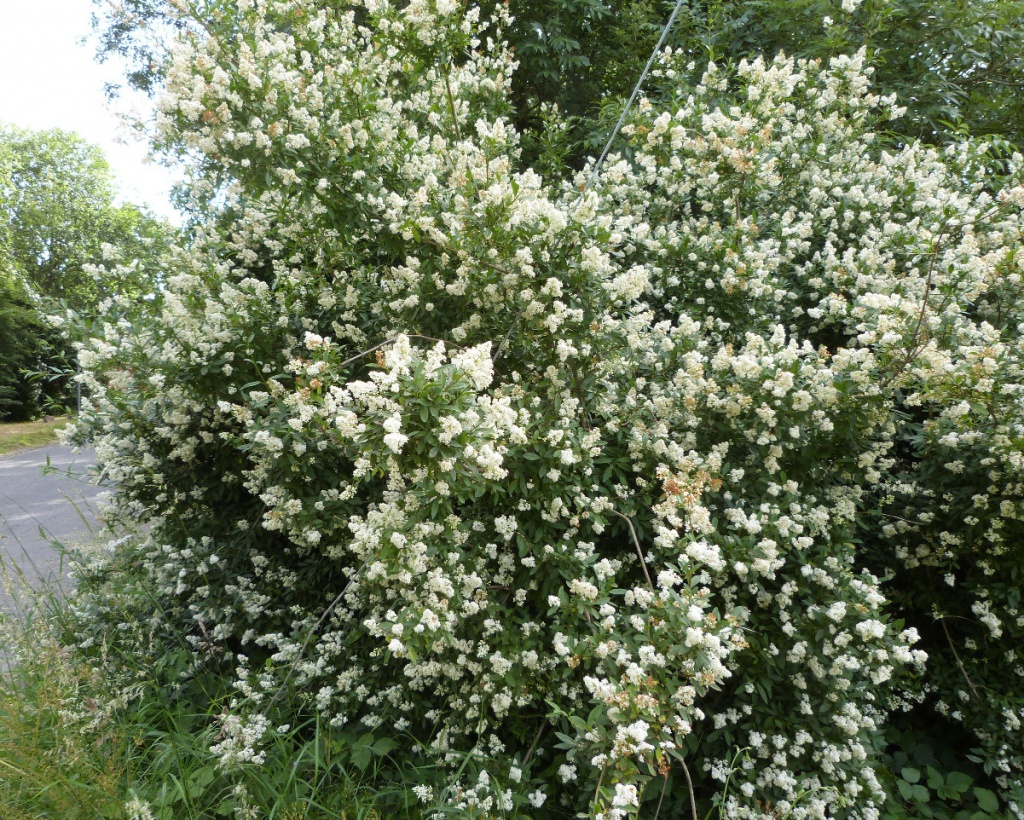
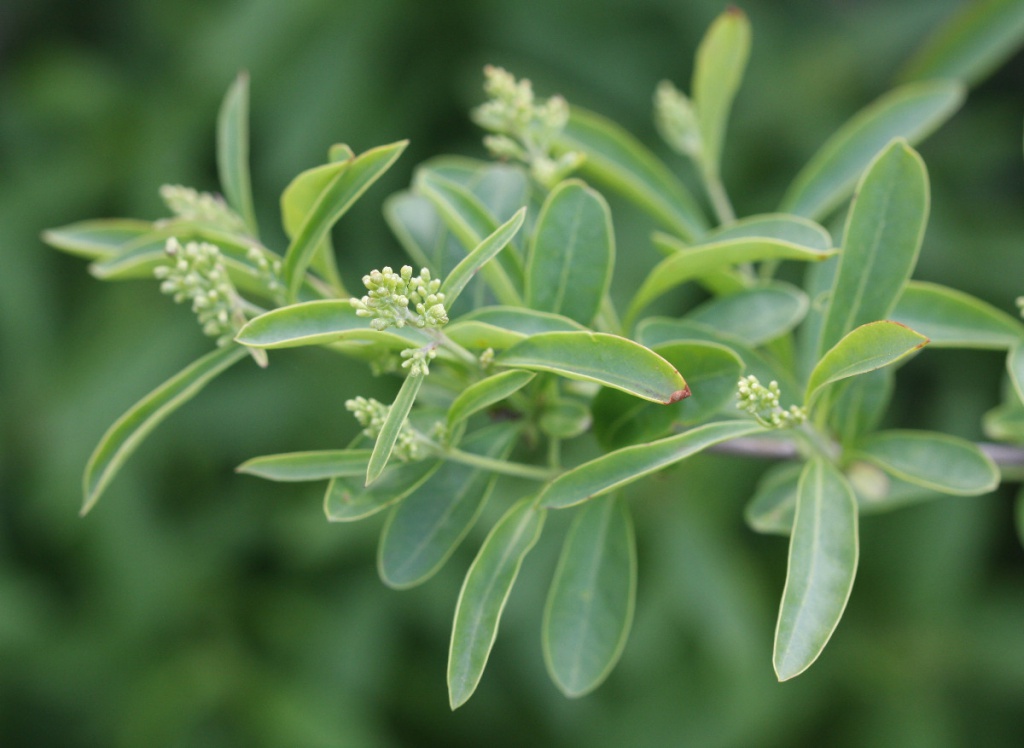
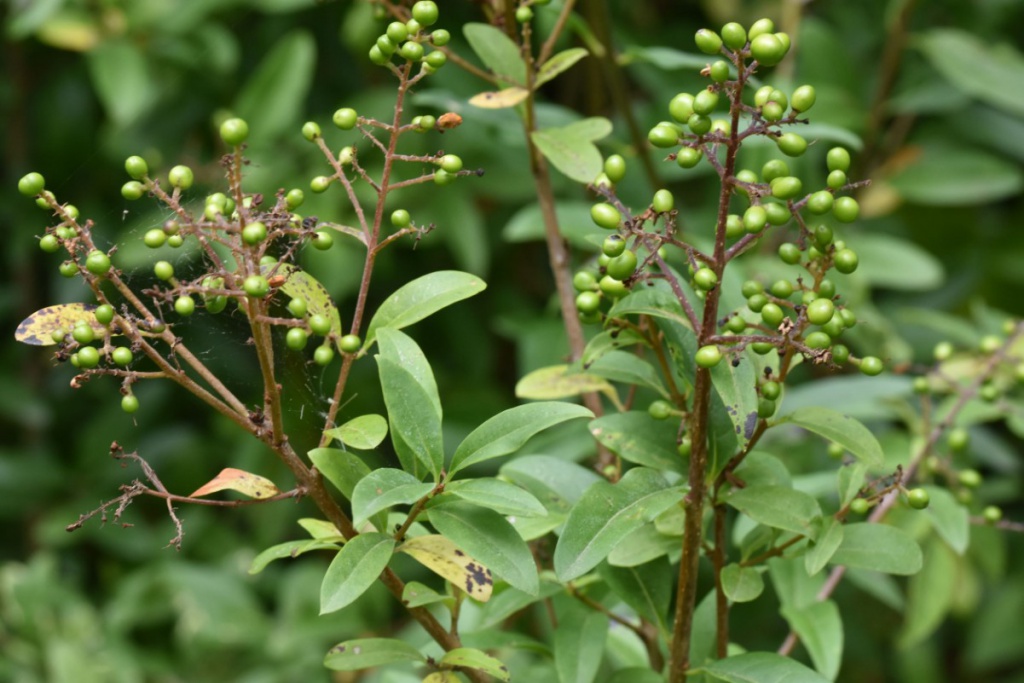
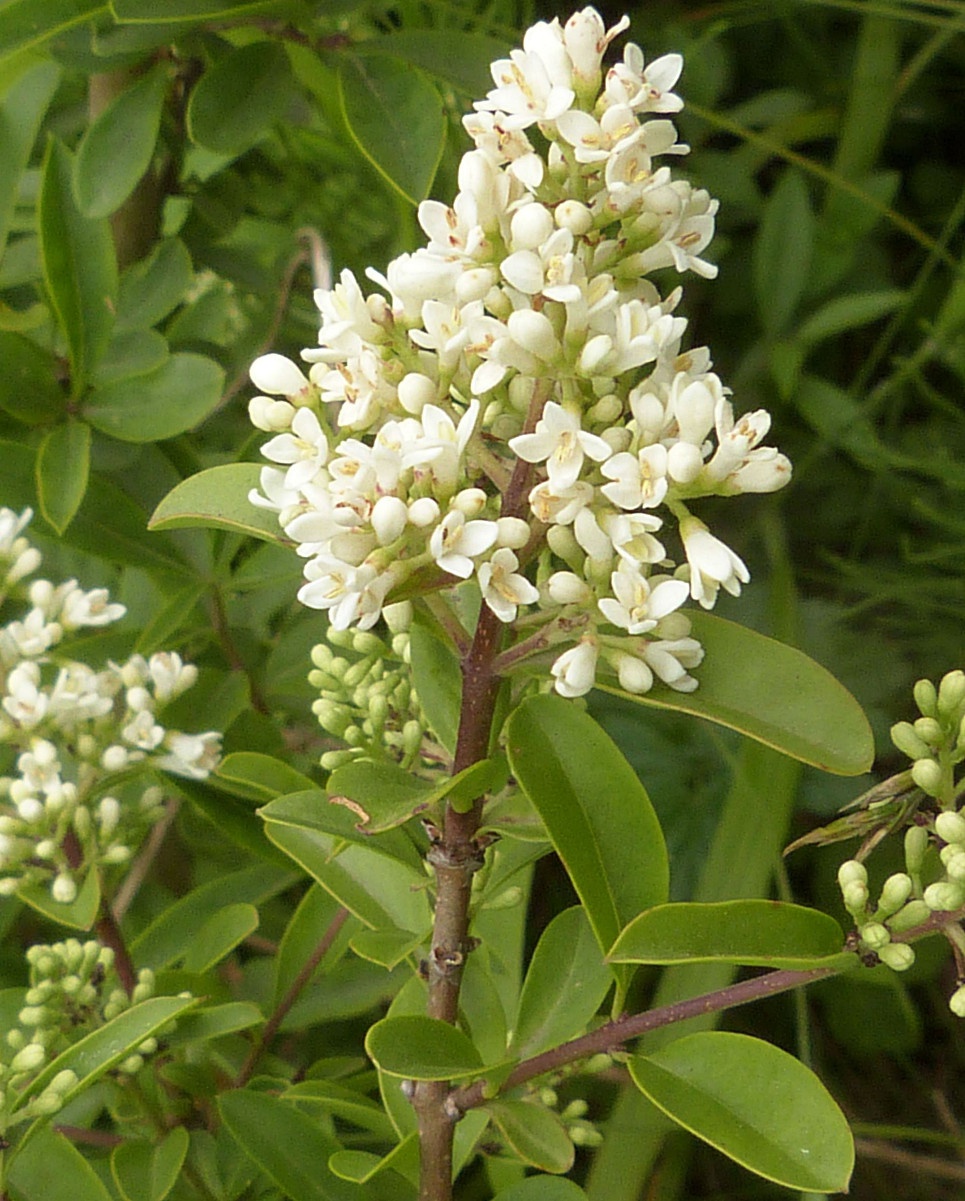
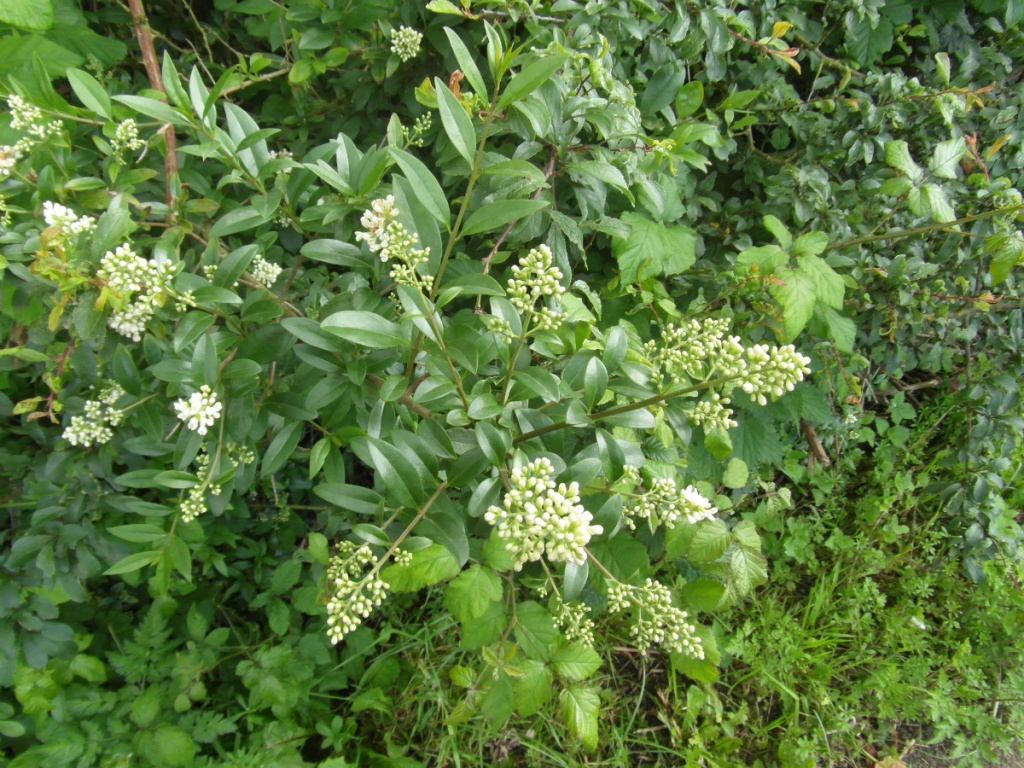
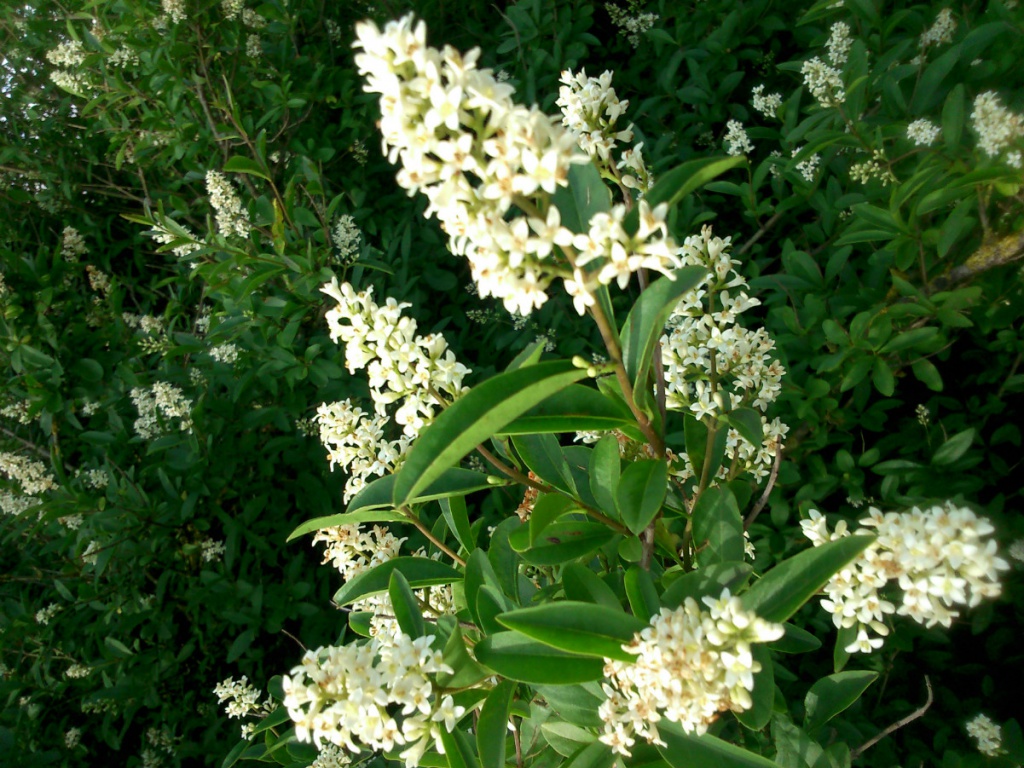
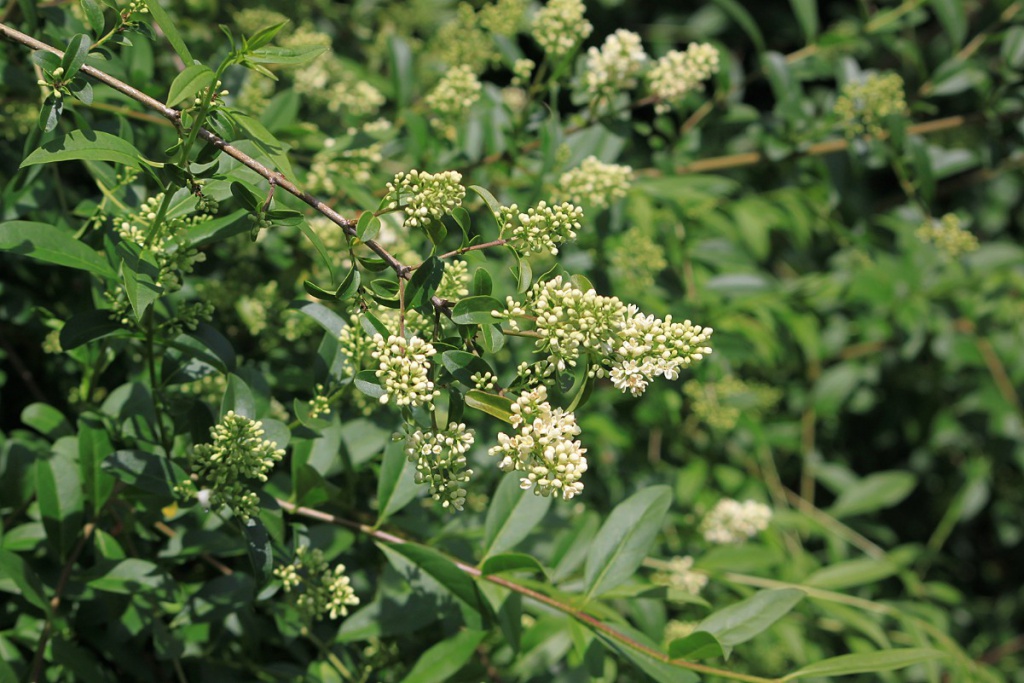
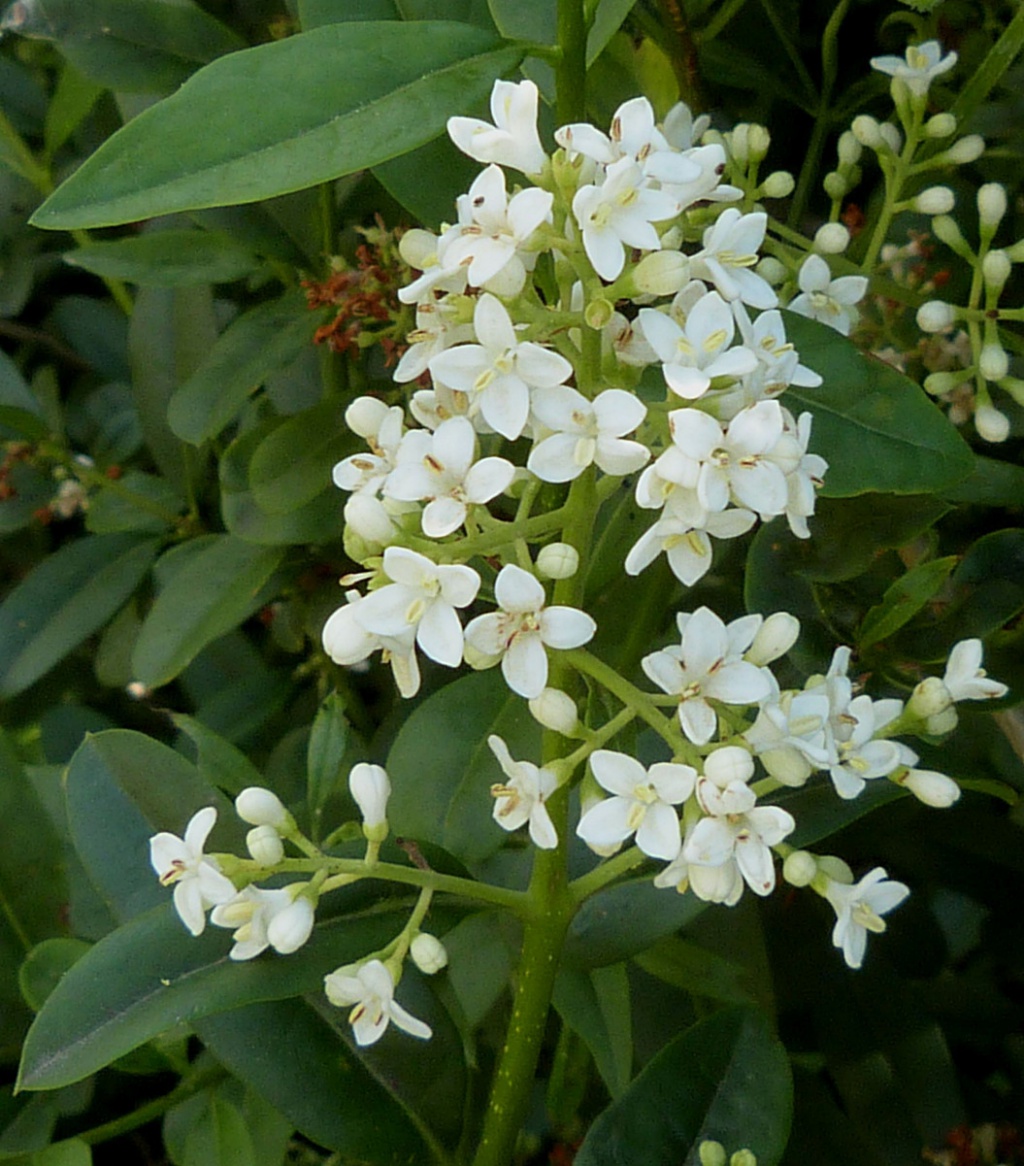
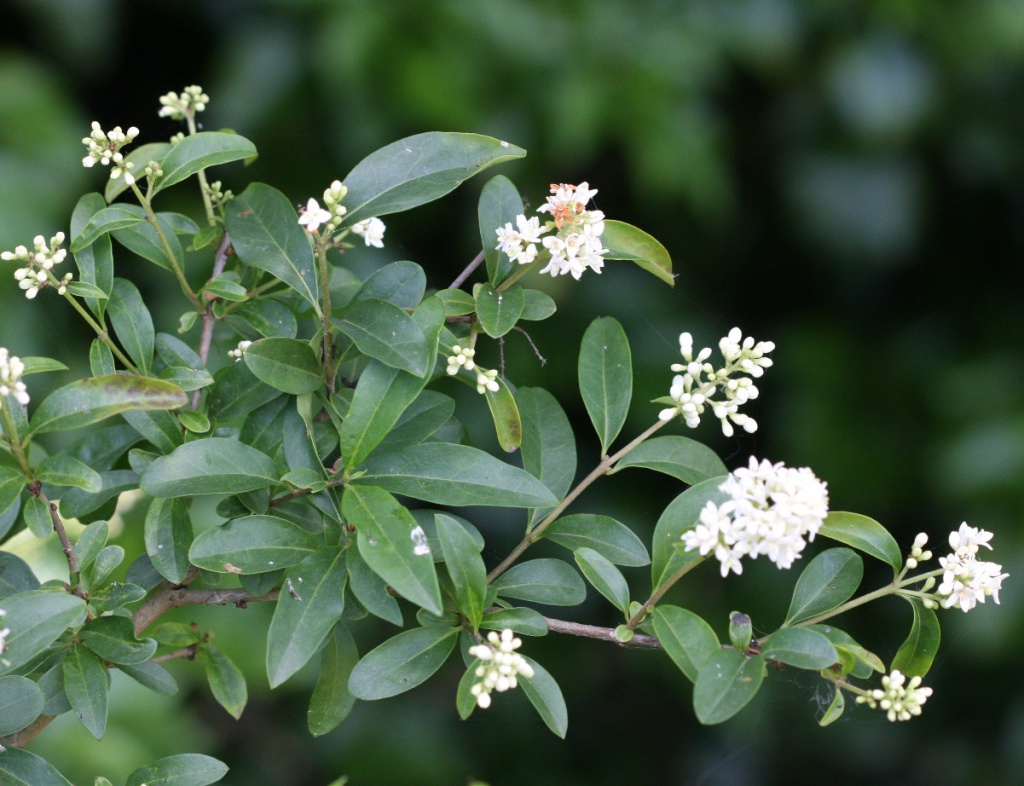
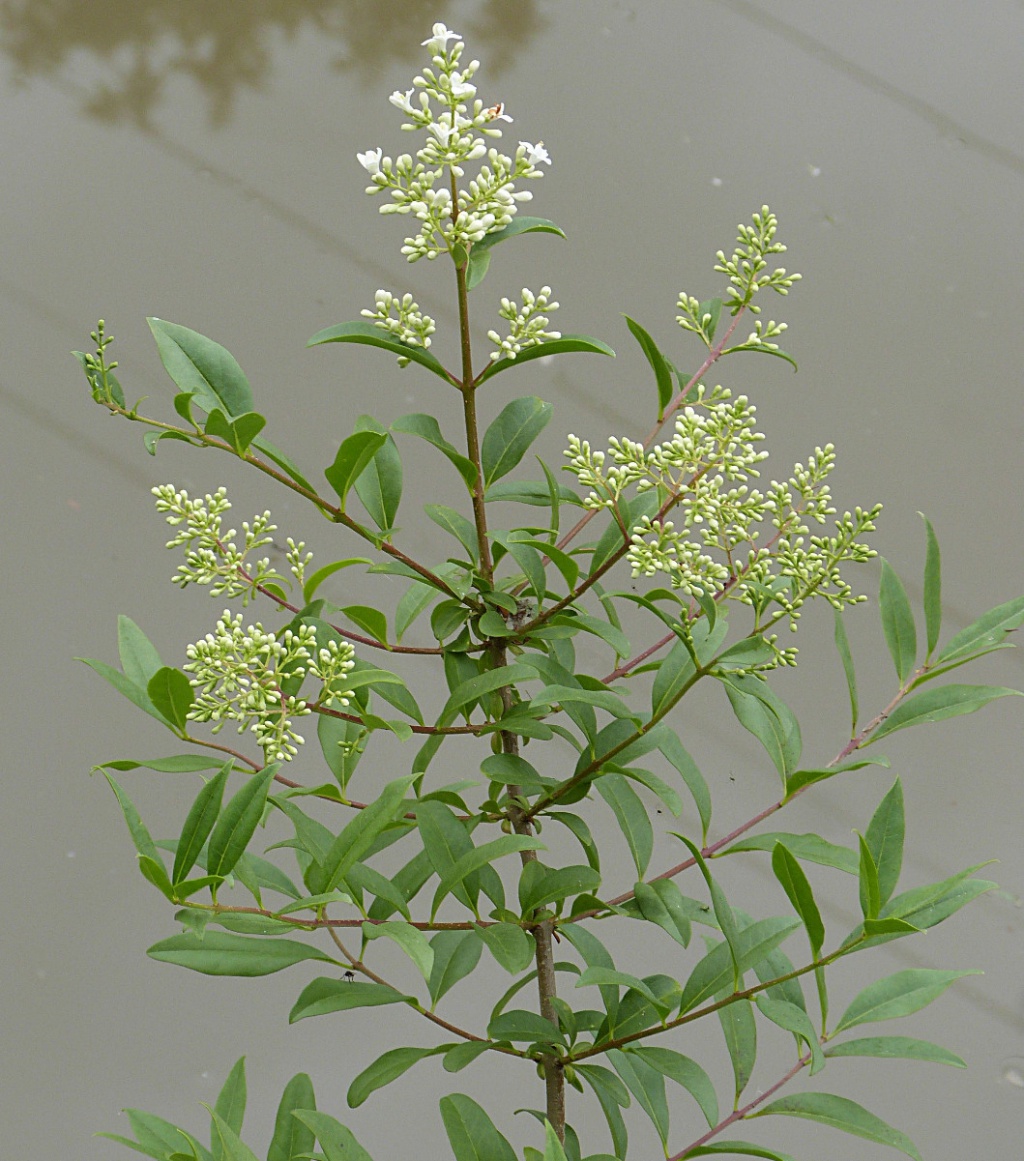
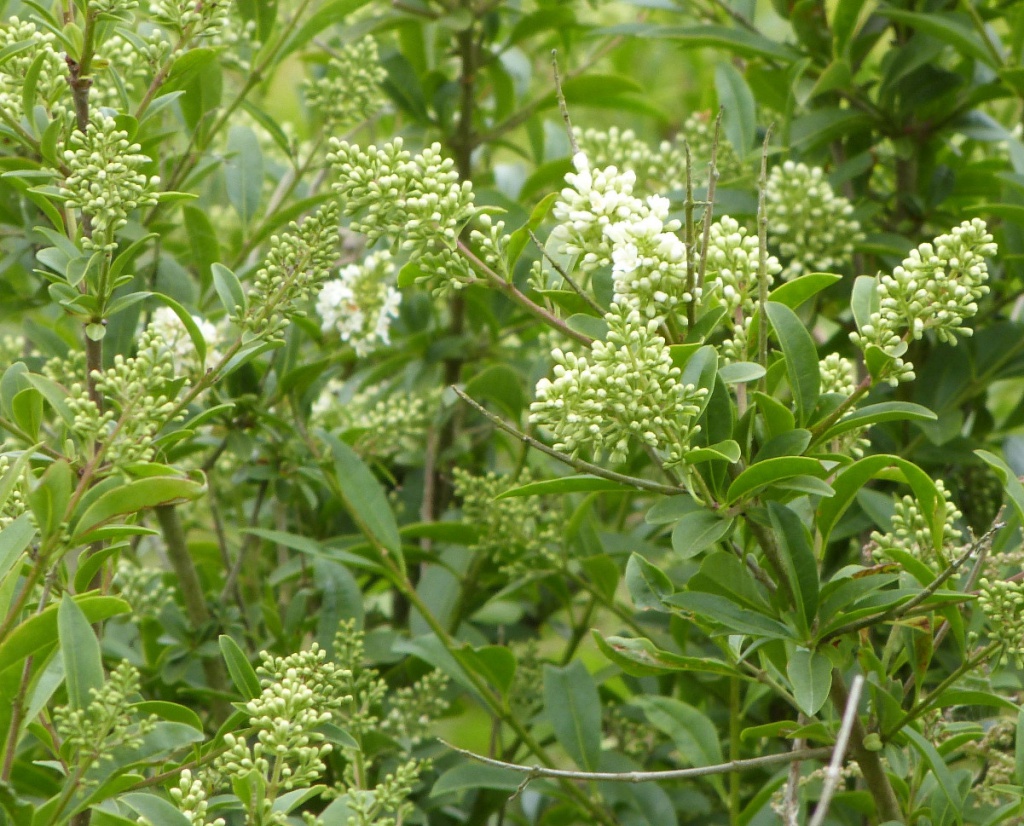
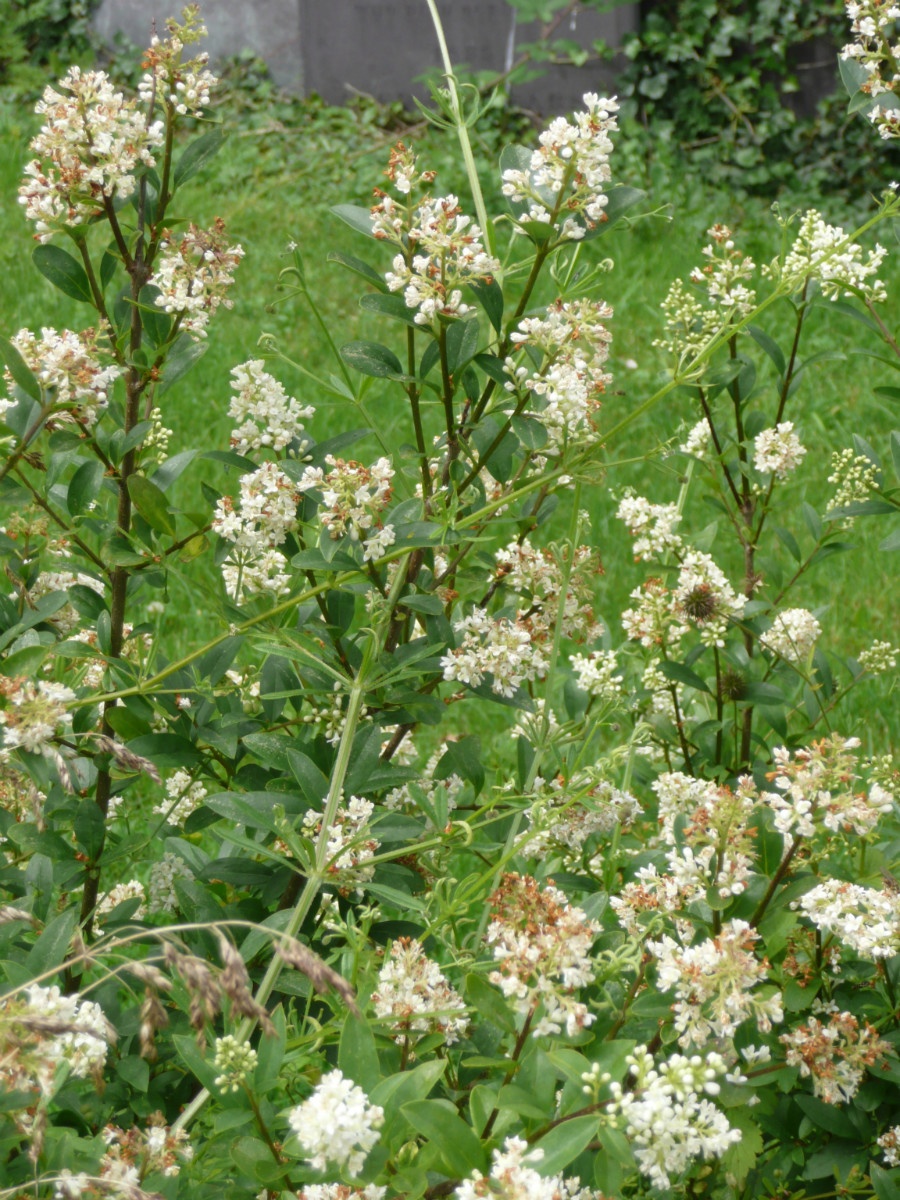
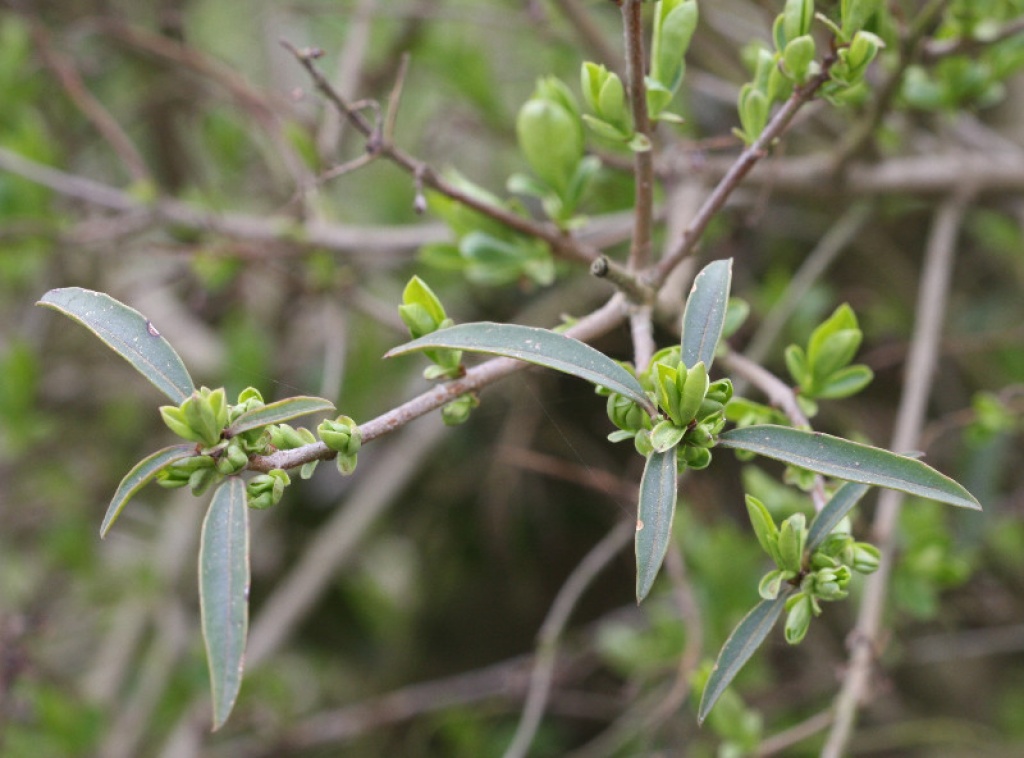
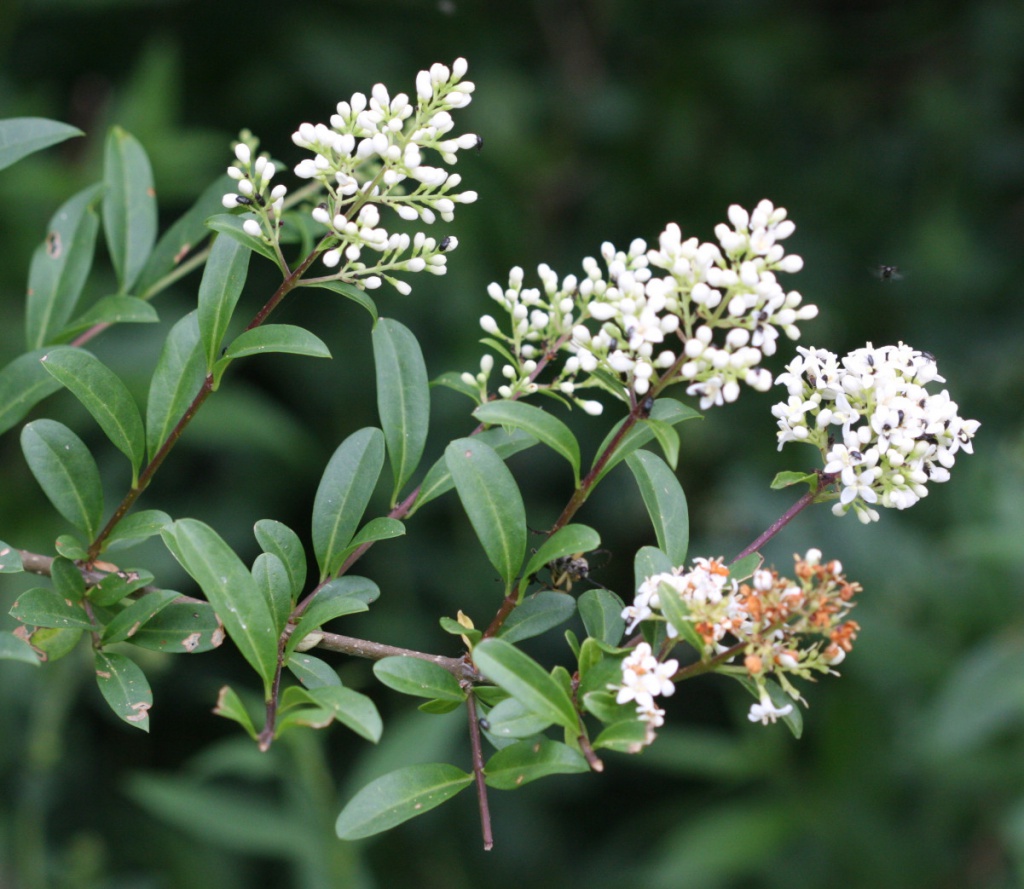
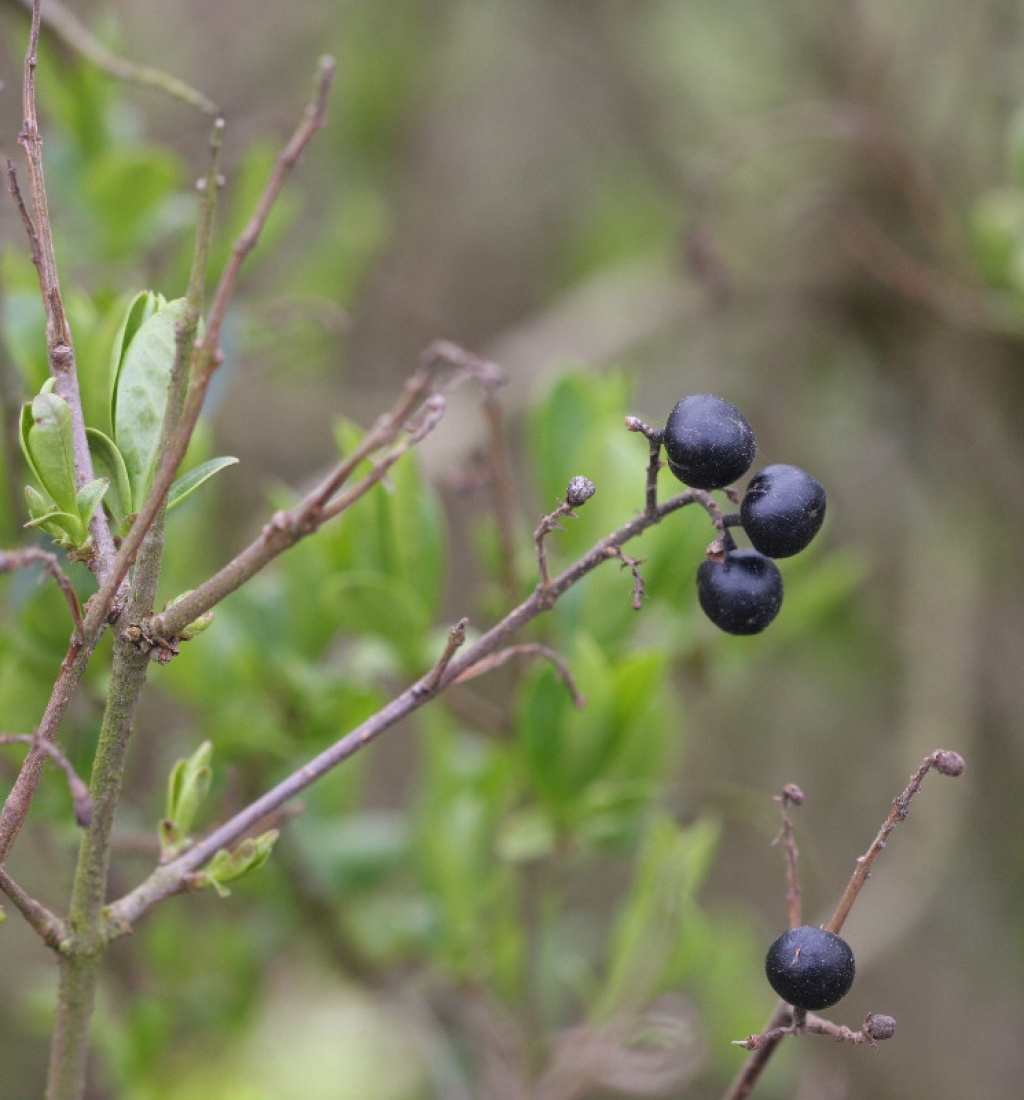
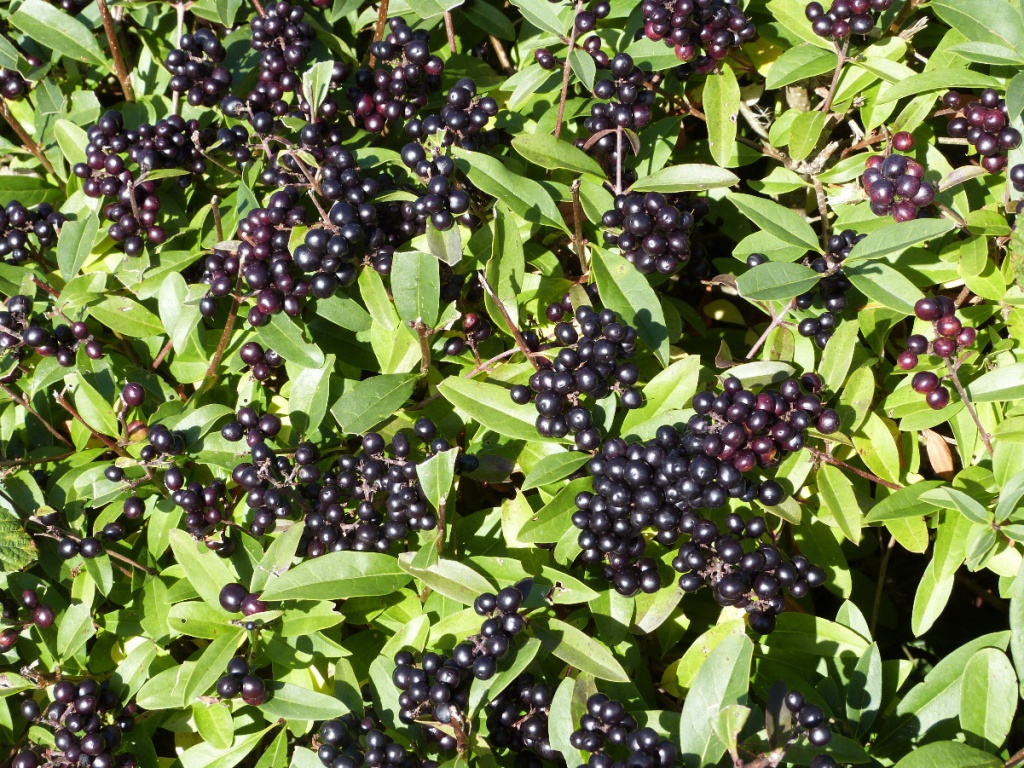
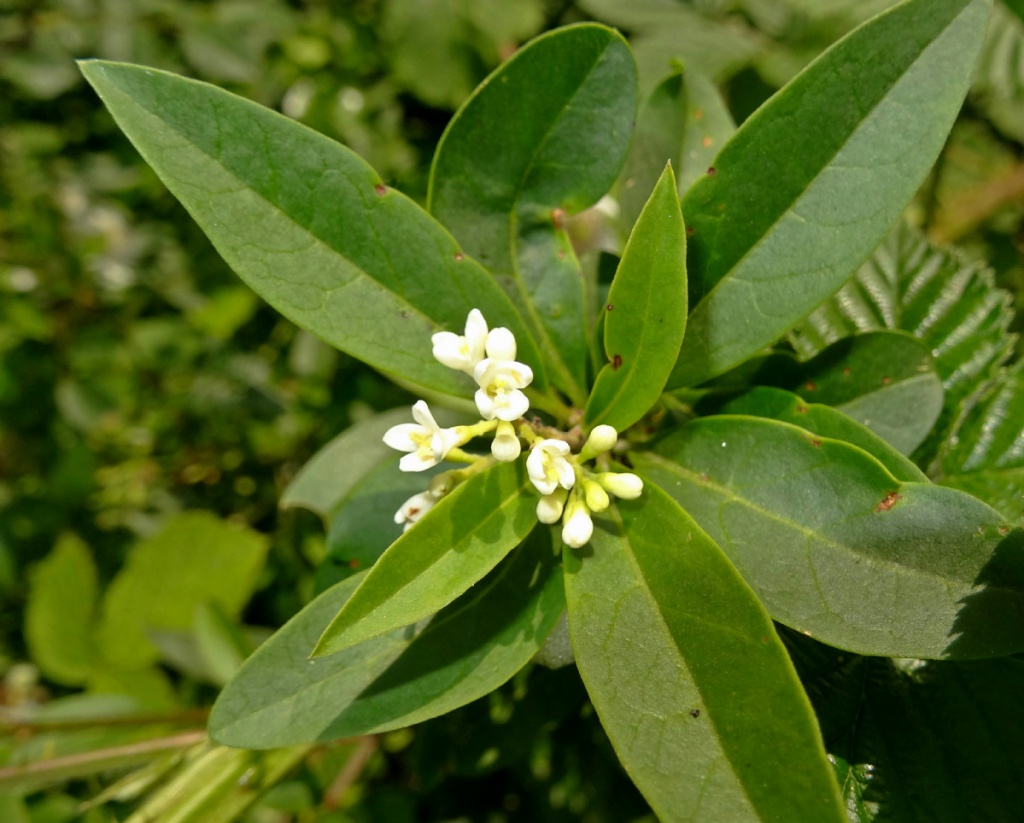
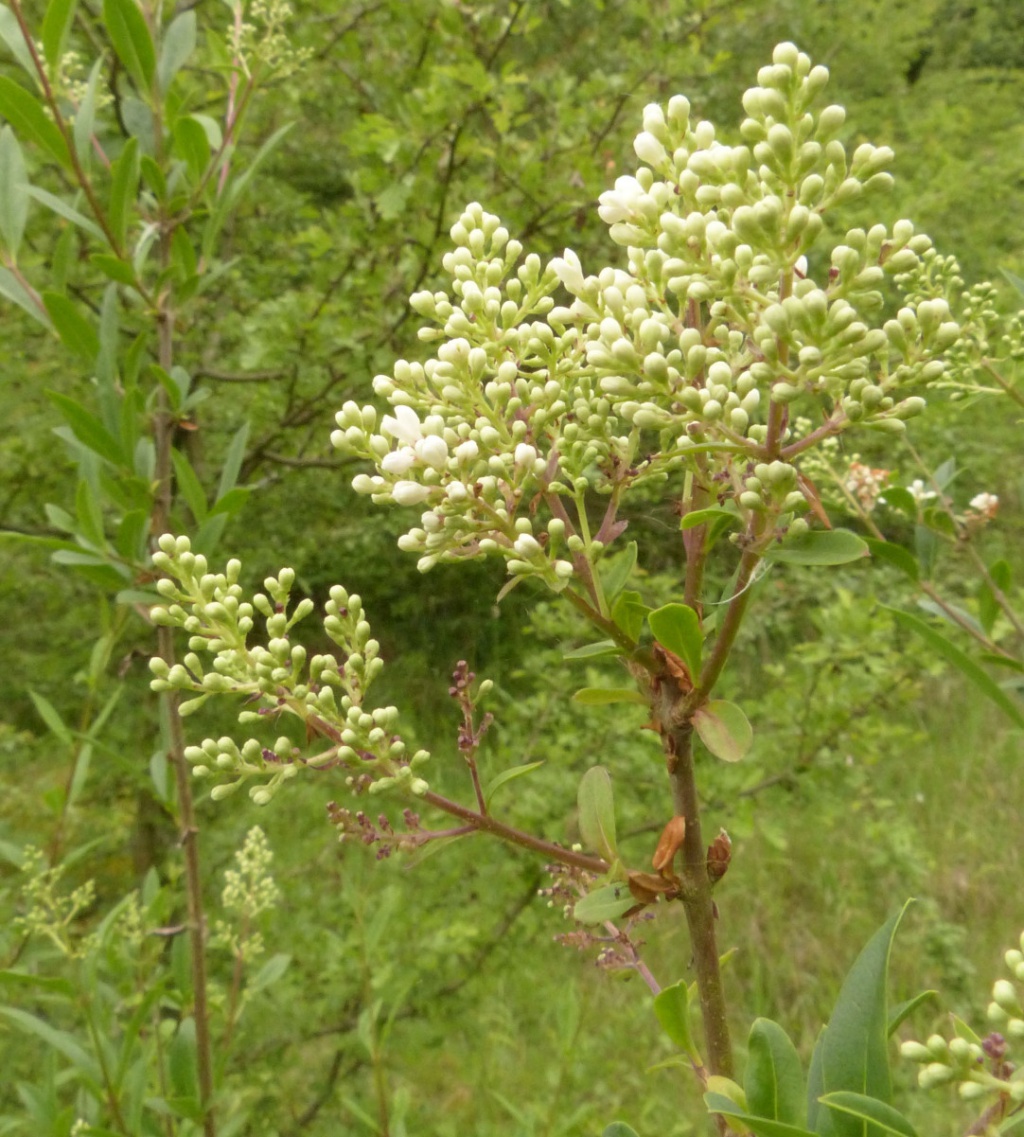
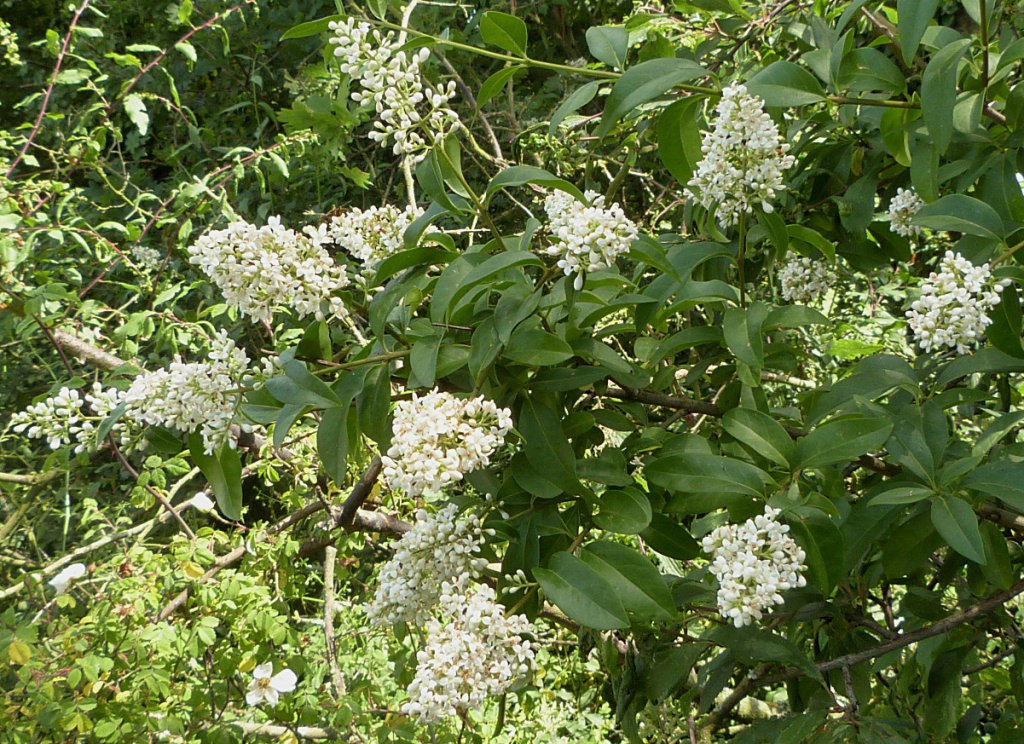
Shrub 1 to 3 metres tall and densely branched. Leaves lanceolate, smooth, untoothed and short stalked. Flowers white, 4 to 6 mm in dense pyramidal panicles, fragrant. Fruit a berry 6 to 8 mm shiny black when ripe.
Wild Privet and Garden Privet can be hard to tell apart. The key difference involves whether the new stems are minutely hairy (Wild Privet) or not (Garden Privet), and the length of the corolla tube (the length of the free petals is equal to the joined part of the petals in Wild Privet, but longer in Garden Privet). The shape of the leaves is a supporting characteristic, but it’s not a key difference as intermediate leaf-shapes can be found. Another useful indicator is where it is growing; Garden Privet obviously being associated with habitation, cemeteries, parks and gardens. Wild Privet is usually commonest in hedges and scrub in base-rich areas (e.g. on the limestone areas in Rutland and Melton), but is found across most of the County except on acid soils and is often planted in new woodlands and hedges.

Add a comment as to whether new stems are hairy or not.
Wood margins and hedgerows.
May and June.
Semi deciduous.
Found mainly in England and Wales, decreasing further north into Scotland.
Common in Leicestershire and Rutland. In the 1979 Flora survey of Leicestershire it was found in 394 of the 617 tetrads.
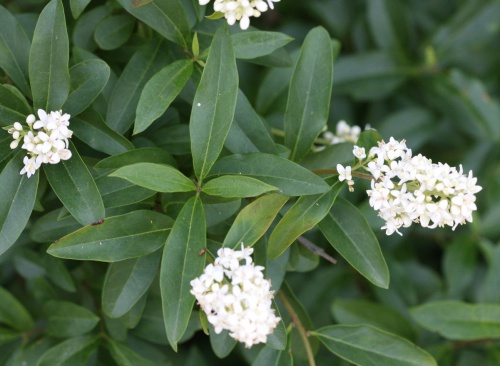 David Nicholls
Ketton Quarry
13 June 2014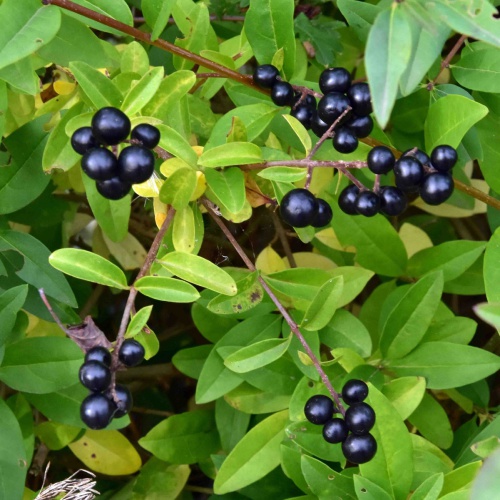 Andy's Rutland
Love's Lane-Empingham
07 October 2018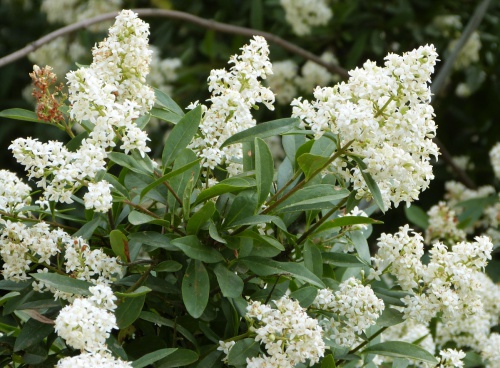 Graham Calow
Smithy Lane, near Freeholt Wood
23 June 2018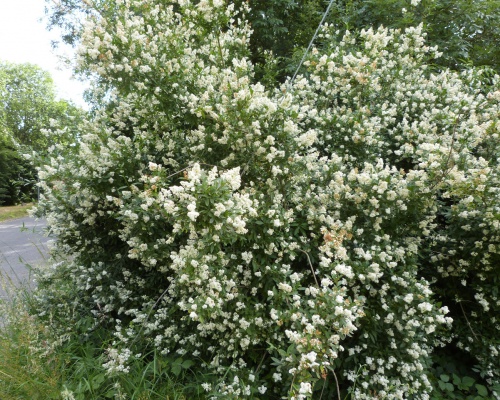 Graham Calow
Smithy Lane, near Freeholt Wood
23 June 2018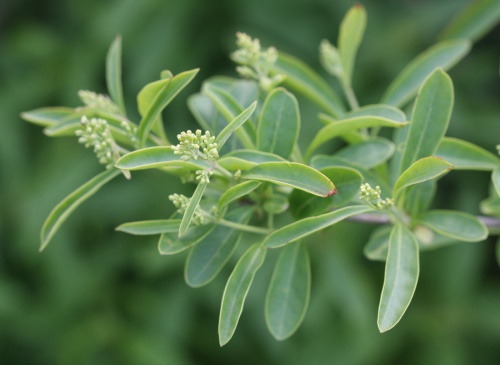 David Nicholls
Burroughs Road, Ratby
31 May 2013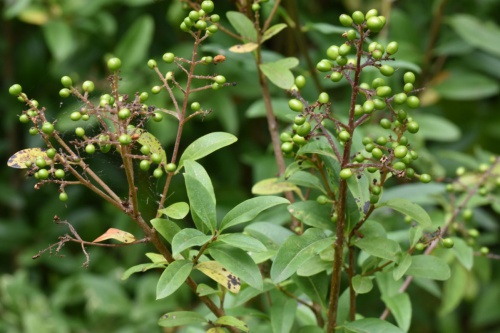 stepgray4
Kettton Quarry NR
15 August 2021
Leicestershire & Rutland Map
Enter a town or village to see local records
MAP KEY:
Yellow squares = NBN records (all known data)
Coloured squares = NatureSpot records: 2025+ | 2020-2024 | pre-2020
UK Map
Additional images
 Hedge near marsh area Old Fosse Sapcote SP 4957 9210 (taken 17.6.2007).JPG)
 Hedge near marsh area Old Fosse Sapcote SP 4957 9210 (taken 21.7.2008).JPG)
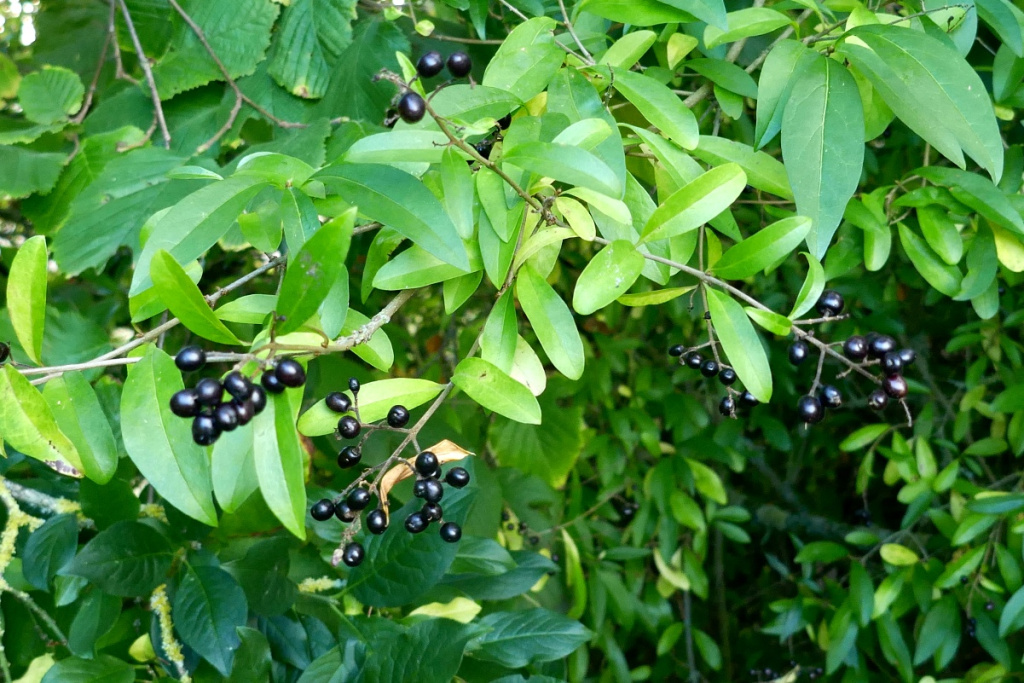
All NatureSpot records
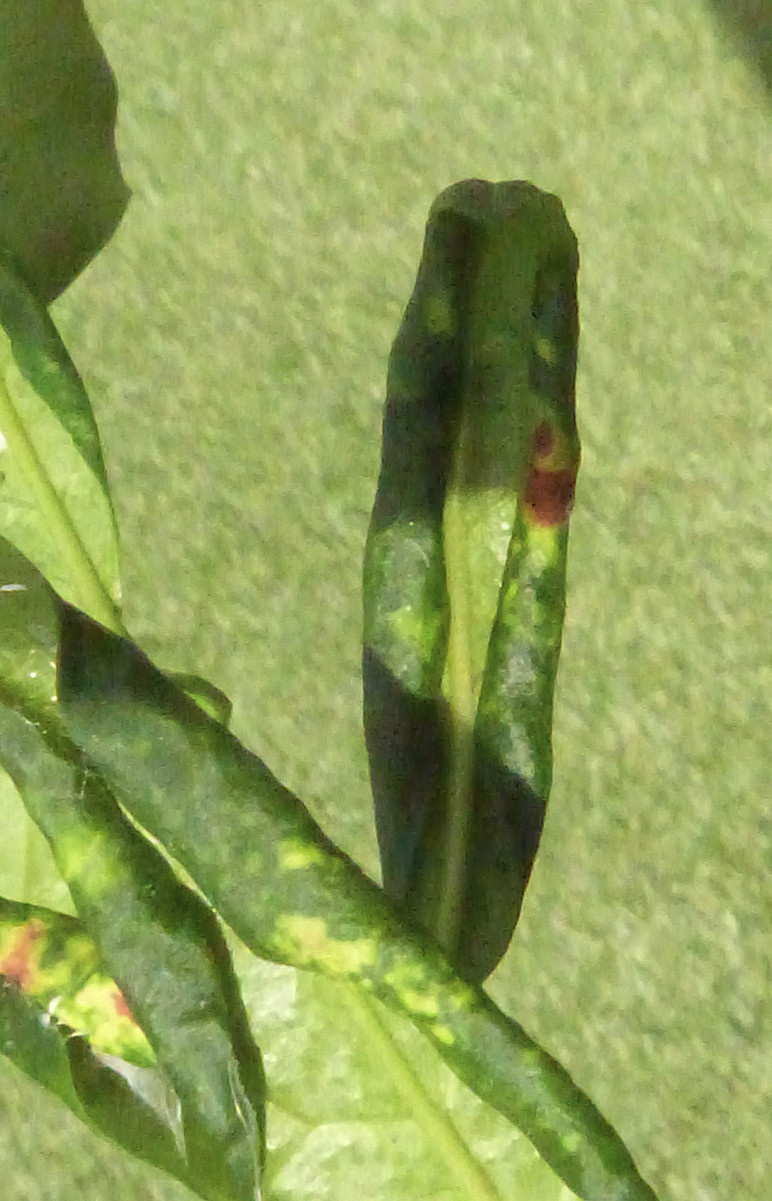
Myzus ligustri
Myzus ligustri sometimes called the Privet Aphid is pale yellow or greenish-yellow. The aphids produce a pseudo-gall by causing the leaves of Garden Privet or Wild Privet distorting the leaves, causing one or both margins to roll downwards. There is often some discolouration of the affected leaves which may have patches of yellow.
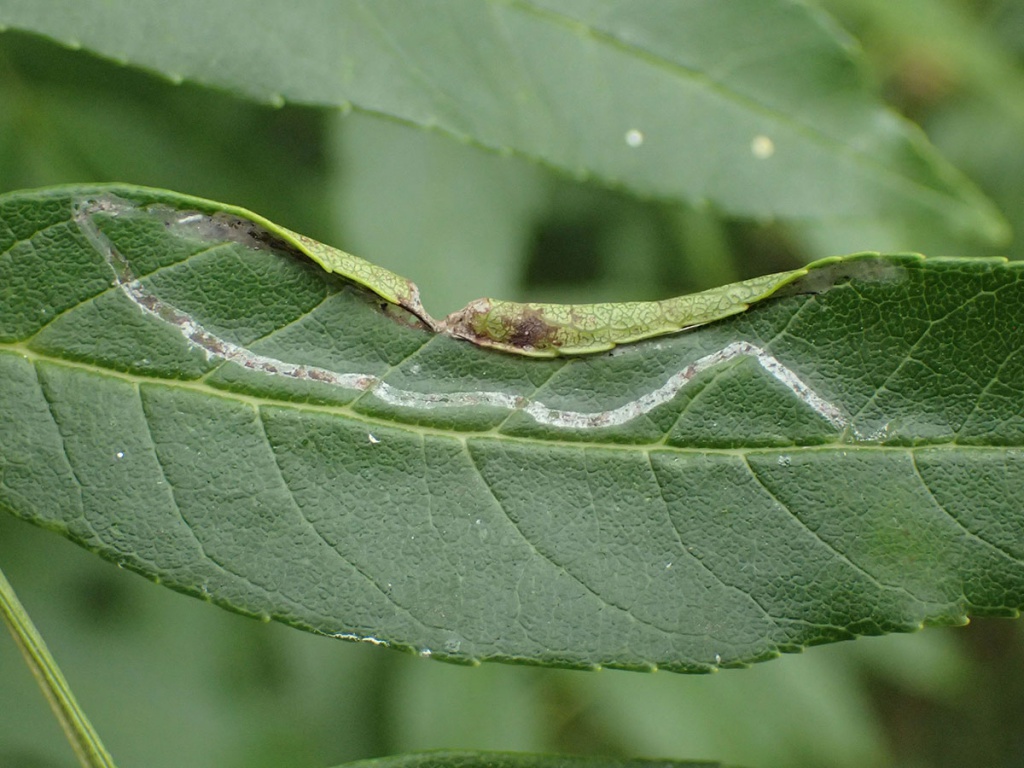
Caloptilia cuculipennella
The larva of the moth Caloptilia cuculipennella mines the leaves of Ash and Privet. On Ash, the larva makes a thin silvery gallery mine on the upper leaf surface which causes a slight upward fold of the leaf-edge. It then leaves the mine and feeds inside a cone caused by a double leaf-fold at the tip, eventually pupating inside.
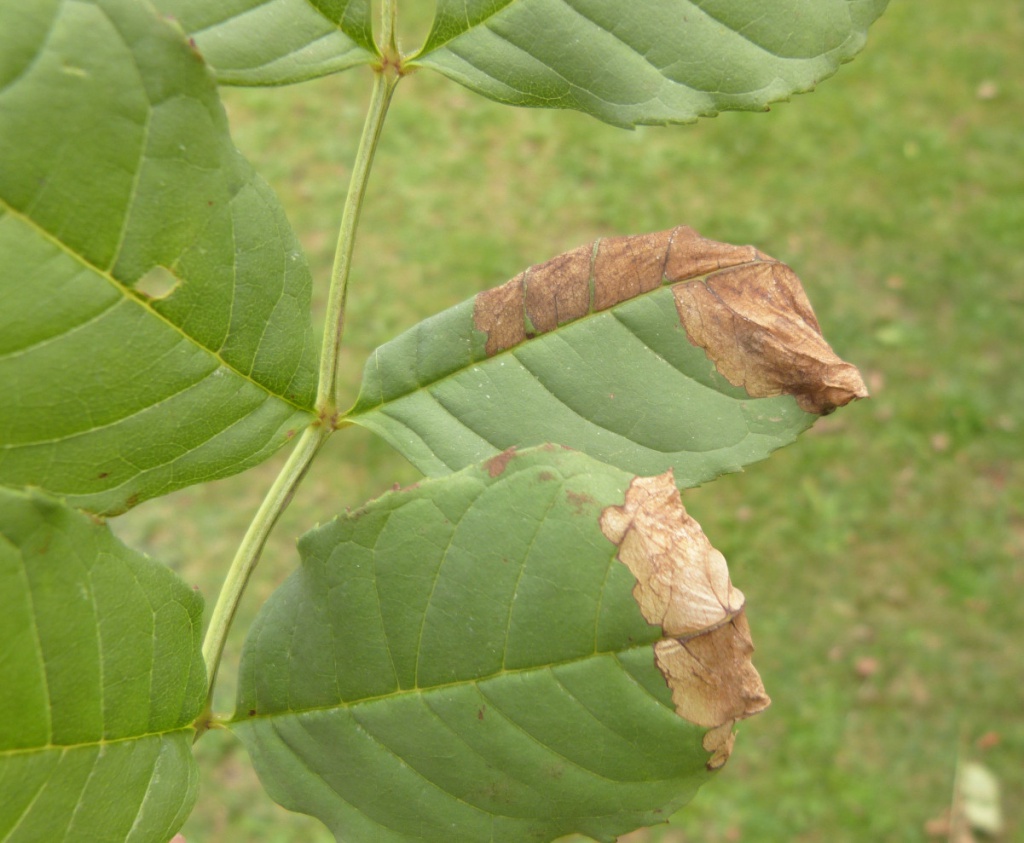
Gracillaria syringella
The larvae of the moth Gracillaria syringella mine the leaves of Lilac, Ash, Privet and Jasmine, often gregariously, in a large blotch mine.