White-jawed Yellow-face Bee
White-jawed Yellow-face Bee - Hylaeus confusus
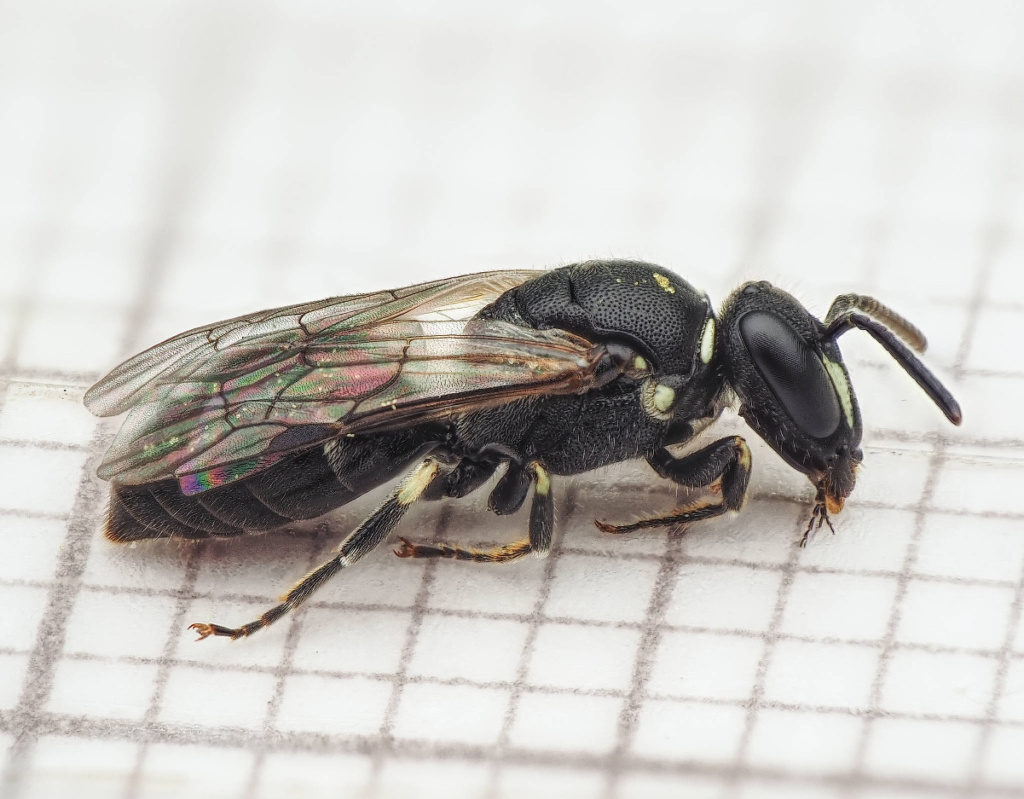
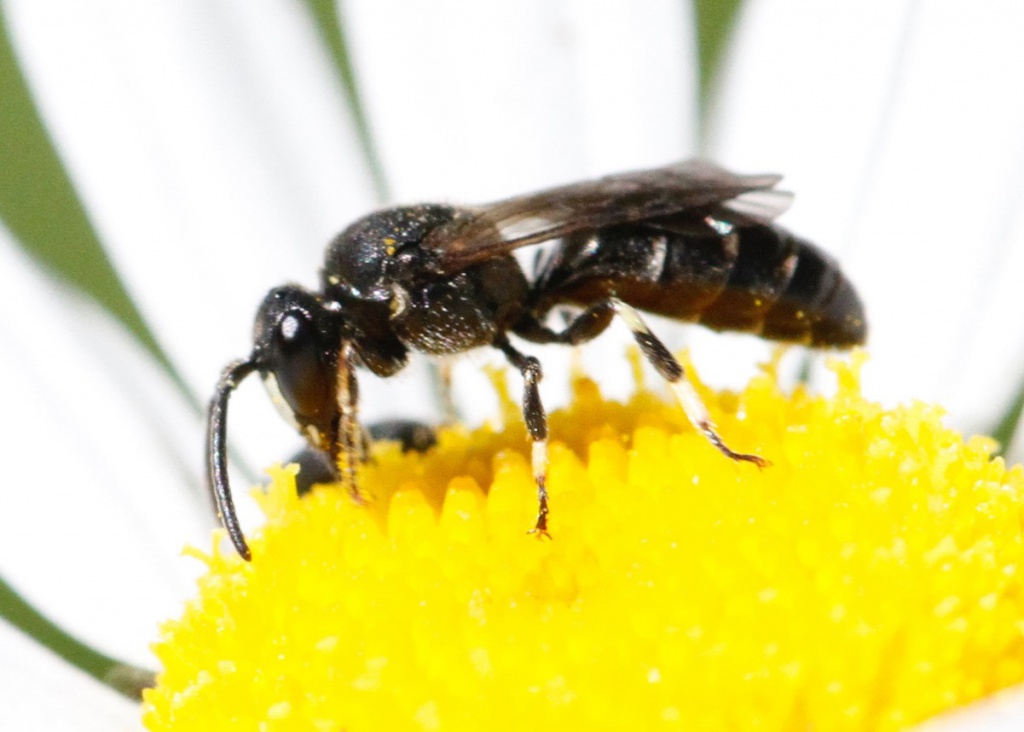
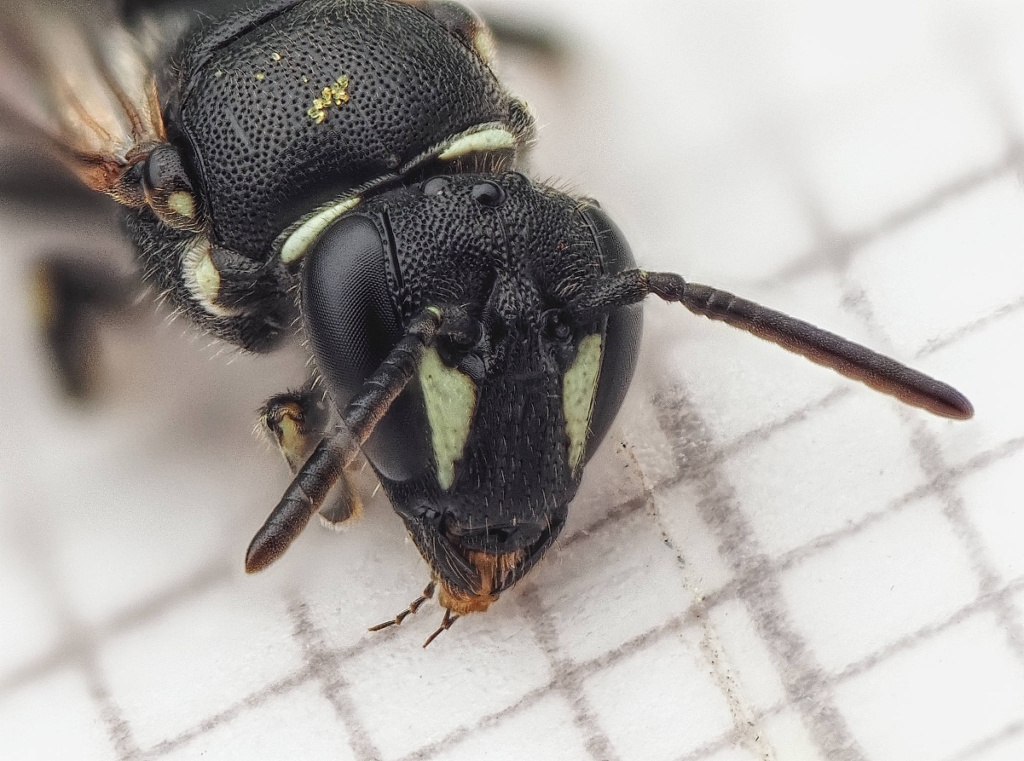
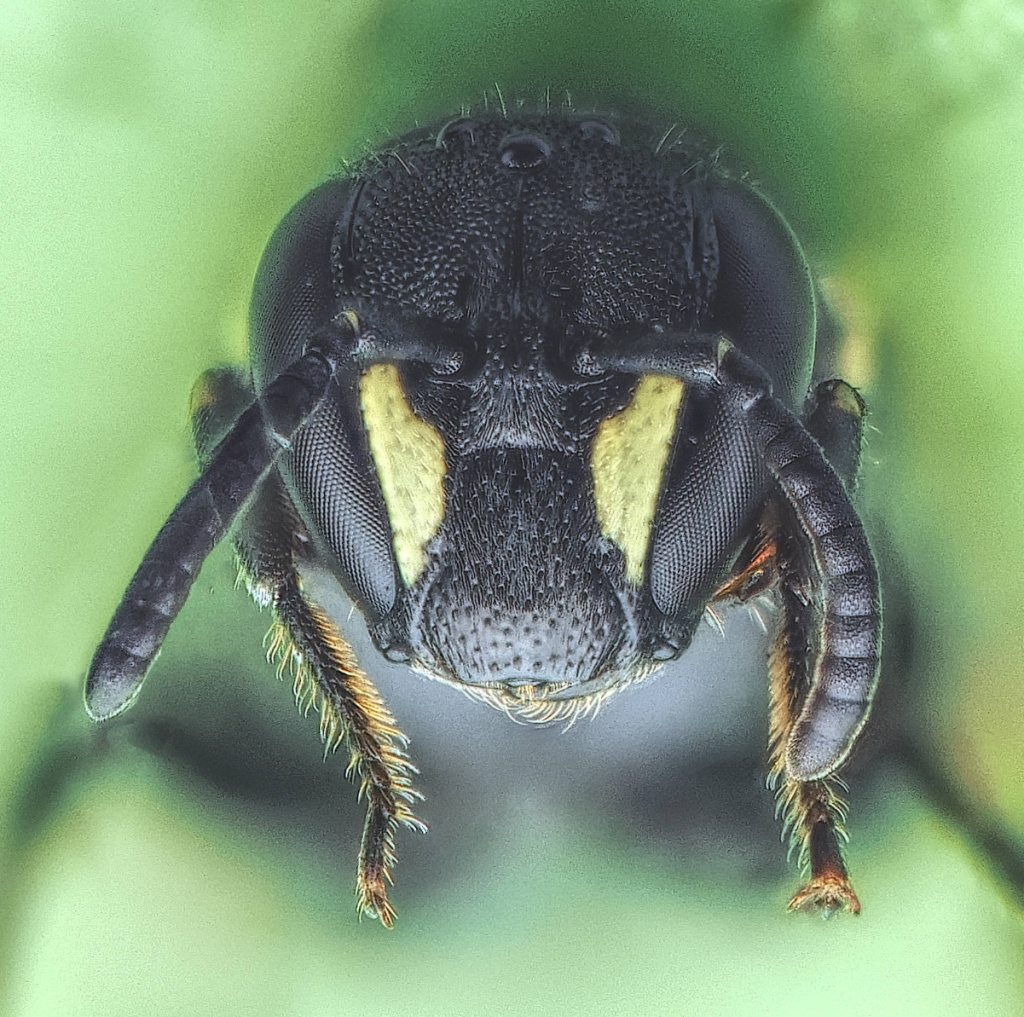
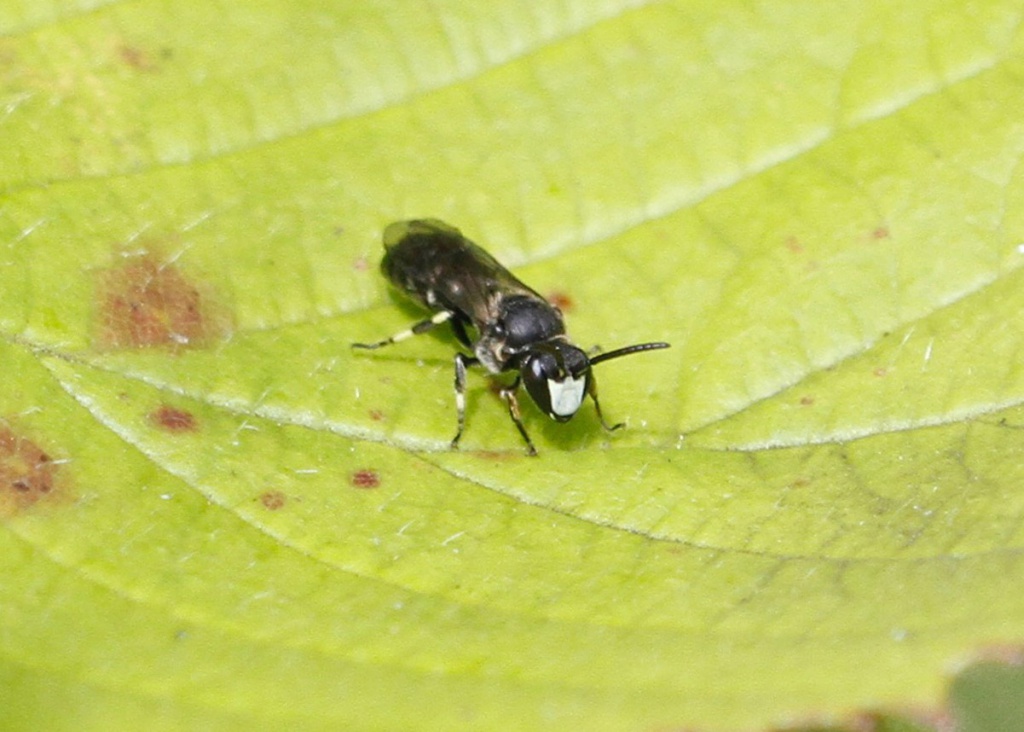
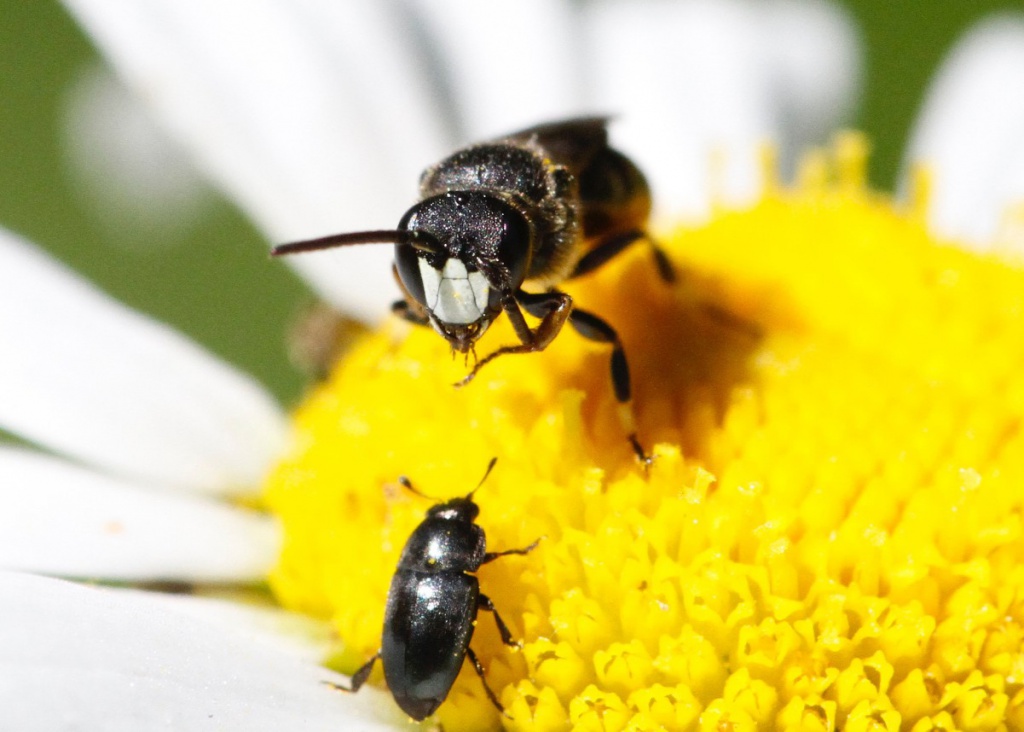
This bee is a very close relative of the scarcer Hylaeus incongruus and the females of the two species can be difficult to distinguish apart; the facial markings offers the best character for identification. In southern England both species are occasionally found flying together.

Females
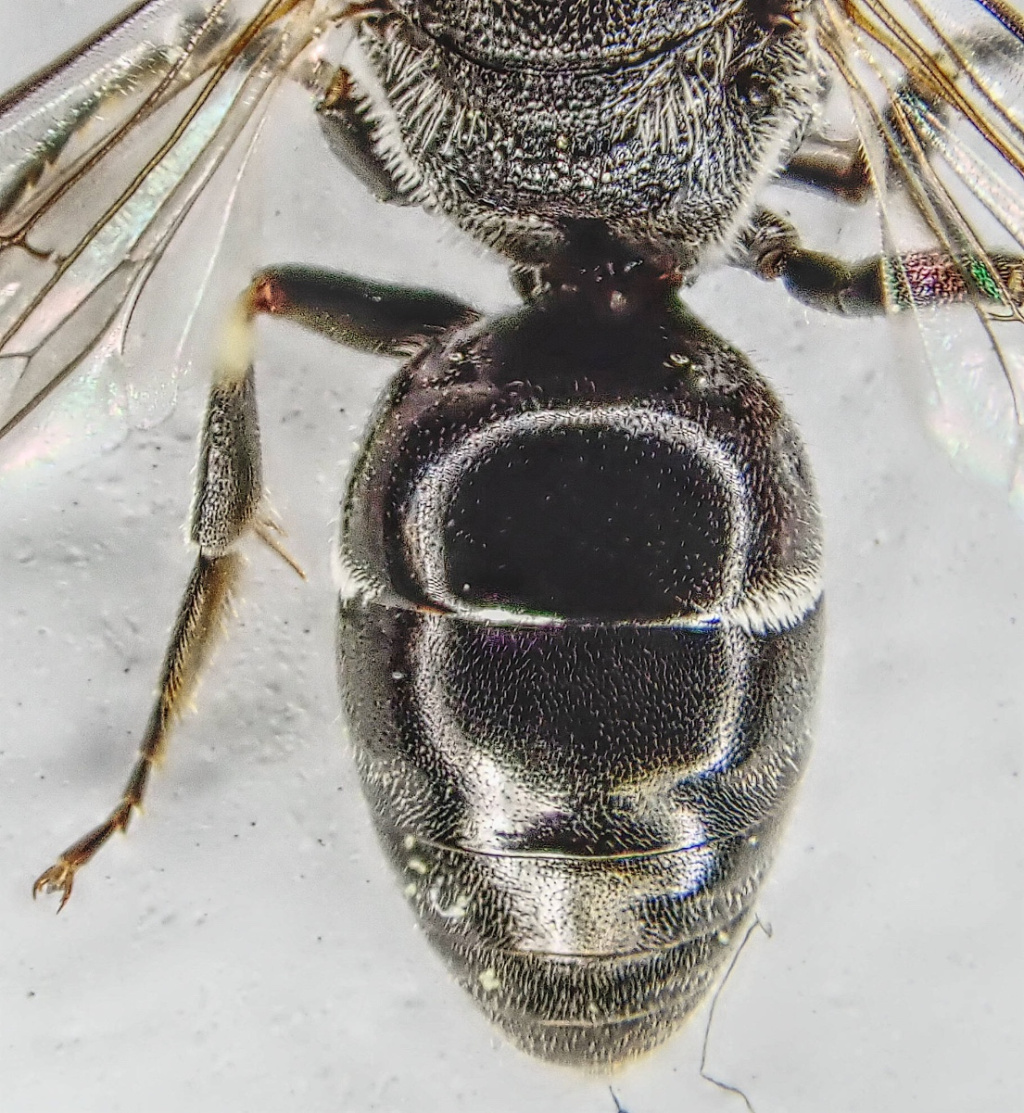
- tergite 1 with basal white hair just at sides
- groove alongside eye does not extend above the eye edge
- white/yellow on the basal third of the hind tibia
- black space between the facial white patches relatively broad
- frons punctate throughout with no inpunctate patches above the antennal insertion points
Most solitary bees and wasps are difficult to identify, and can rarely be identified from photos taken in the field. All red-rated records should include a photo, or set of photos, showing the key characters, which may require the specimen. Please include a face shot, side, top and wings. Note whether male or female, explain how the specimen met the key characters and the key used. We will accept records identified by a recognised local or national expert, or that have been identified via the BWARS’ Facebook noting the name of the person/organisation identifying the record (e.g. ‘Stuart Roberts, BWARS Facebook’).
Mainly associated with open deciduous woodland but it also occurs in bushy places on chalk grassland, heaths, fens and on the coast.
Presumed to be univoltine in the British Isles, flying from late May to the end of September.
Nests in a variety of burrows in dead stems and wood; a female has been seen burrowing in the ground.
Widely distributed throughout Britain though rare and sporadic in Scotland. It is a locally common bee in the southern half of Britain.
Status in Leicestershire and Rutland not known.
 Matthew Berriman
Stretton Wood
22 June 2019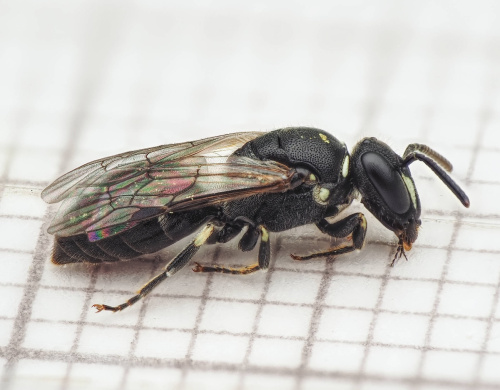 AJ Cann
Knighton
30 April 2025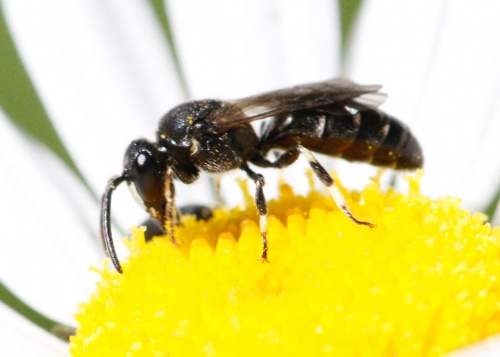 Matthew Berriman
Ketton Quarry NR
27 June 2019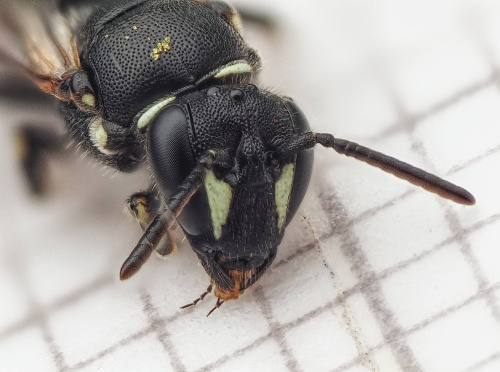 AJ Cann
Knighton
30 April 2025
Frons punctate above antennal insertions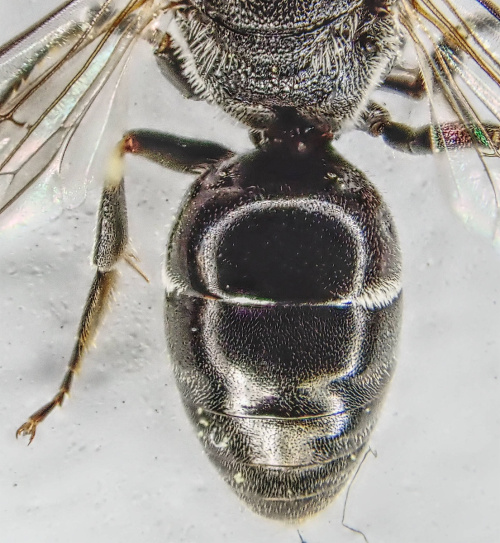 AJ Cann
Knighton
30 April 2025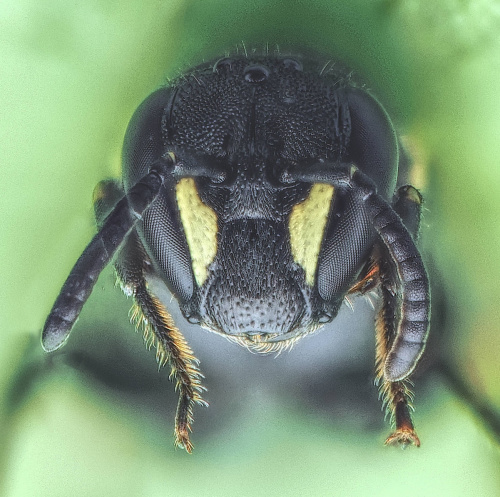 AJ Cann
Knighton
12 May 2025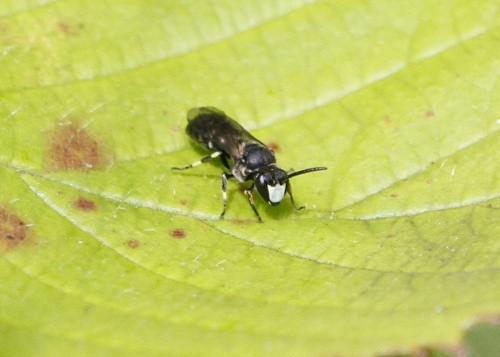 Matthew Berriman
Clipsham Park Wood
17 June 2019
Hylaeus confusus (White-jawed Yellow-face Bee)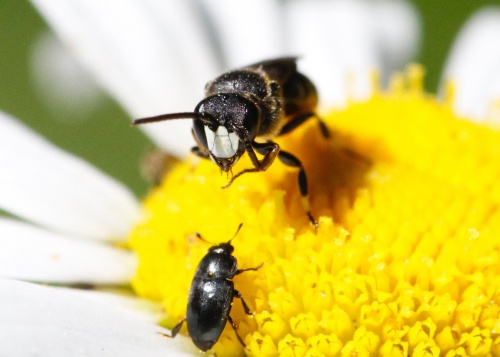 Matthew Berriman
Ketton Quarry NR
27 June 2019
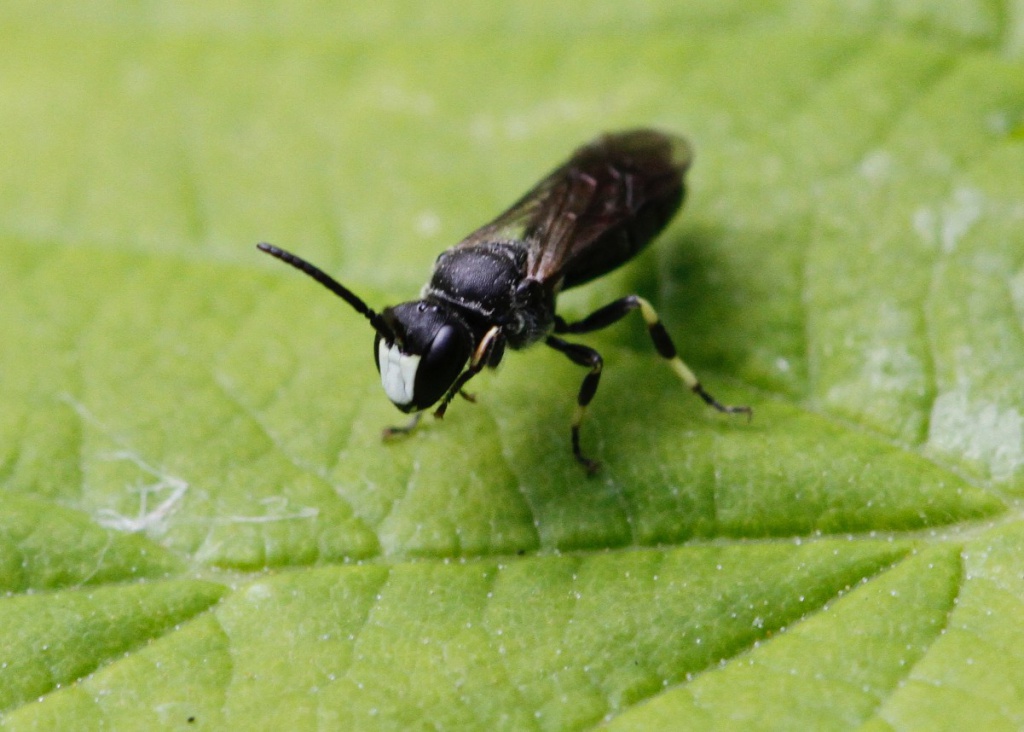
Leicestershire & Rutland Map
Enter a town or village to see local records
MAP KEY:
Yellow squares = NBN records (all known data)
Coloured squares = NatureSpot records: 2025+ | 2020-2024 | pre-2020
UK Map
Additional images
No additional images available for this species.