Weymouth Pine
Weymouth Pine - Pinus strobus
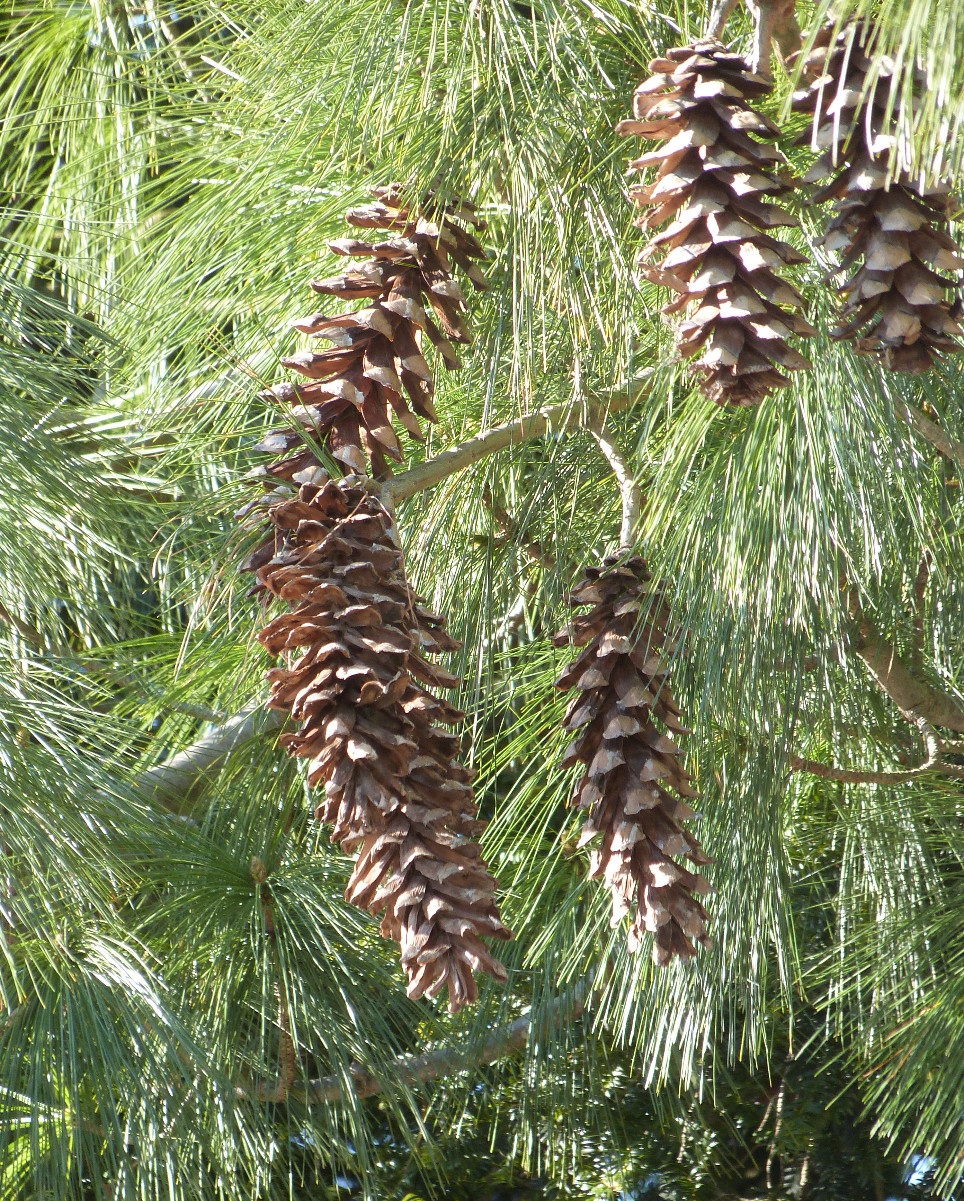
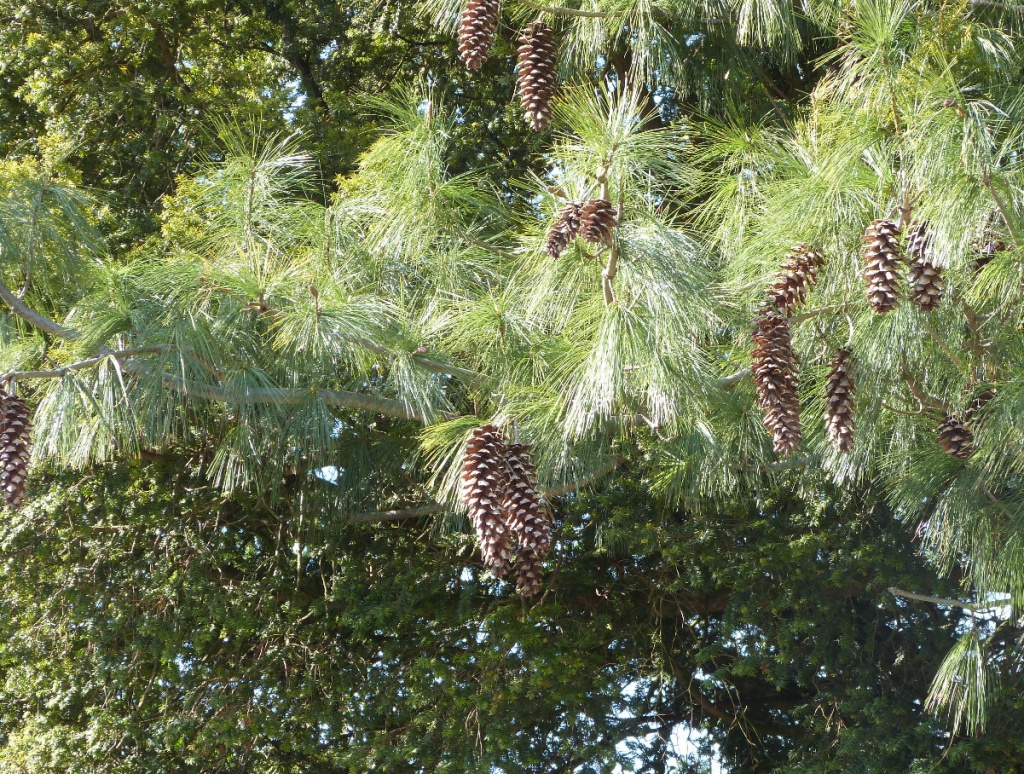
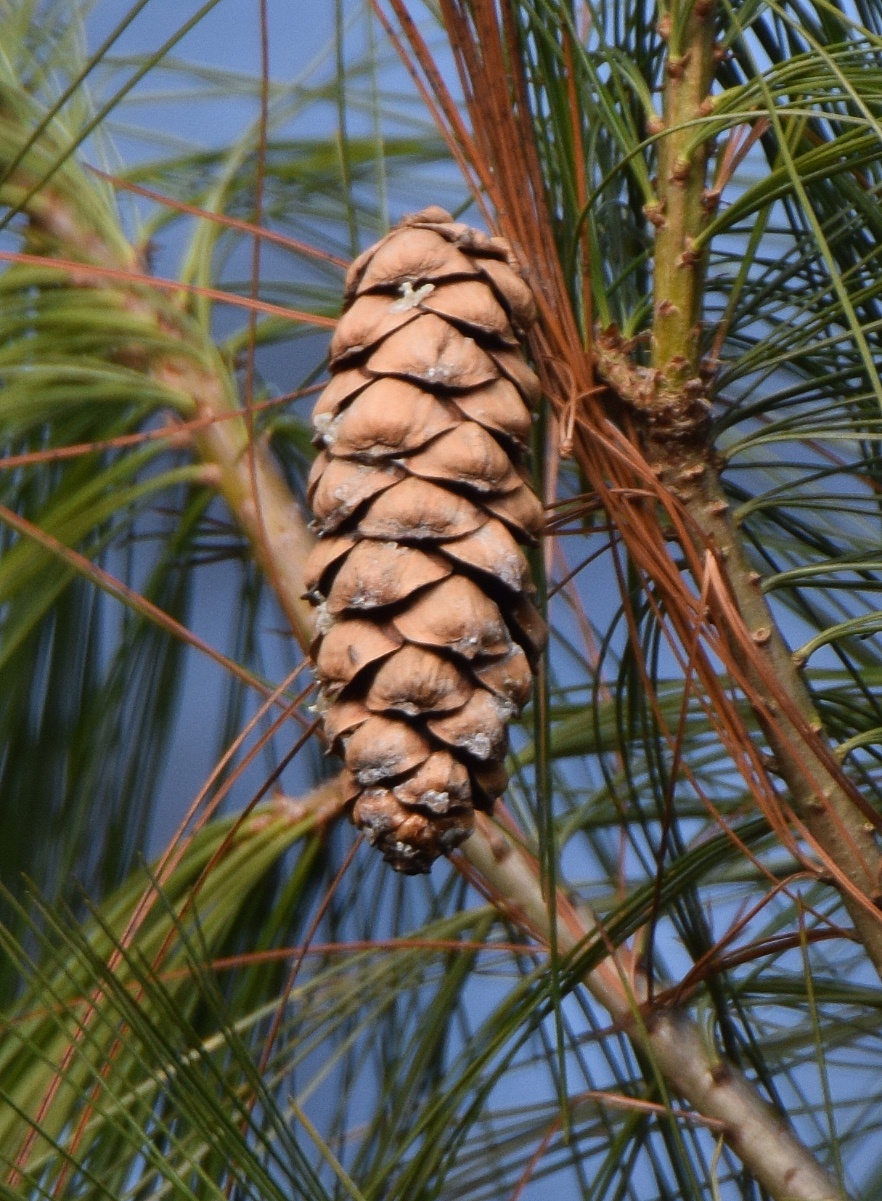
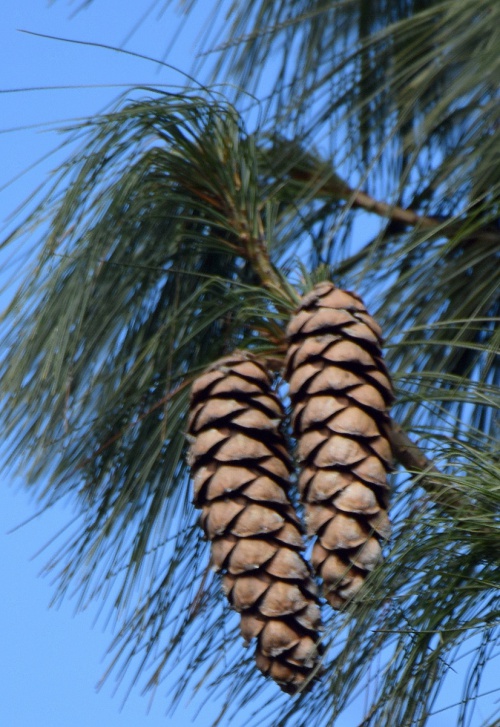
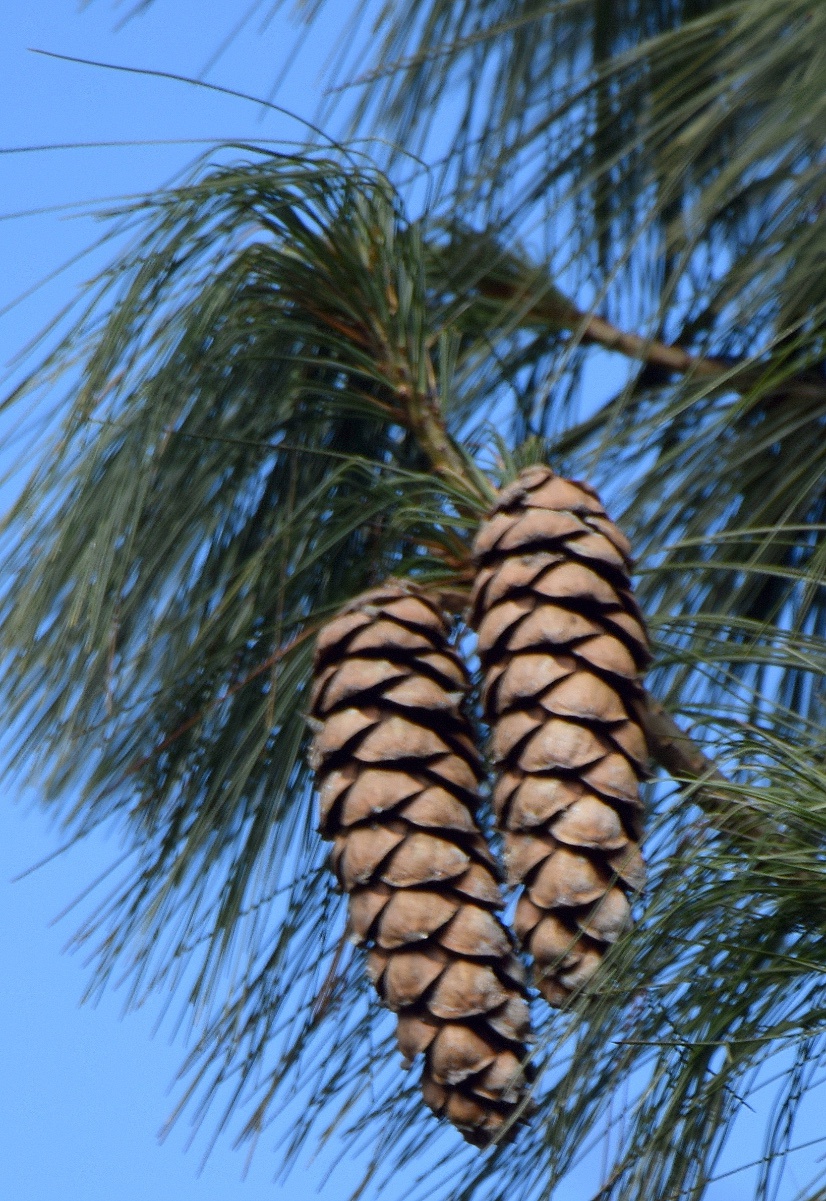
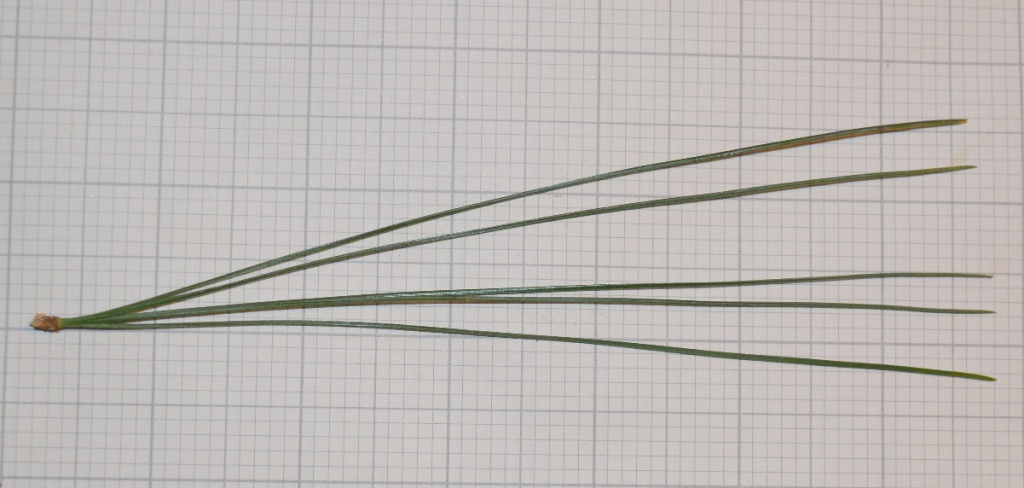
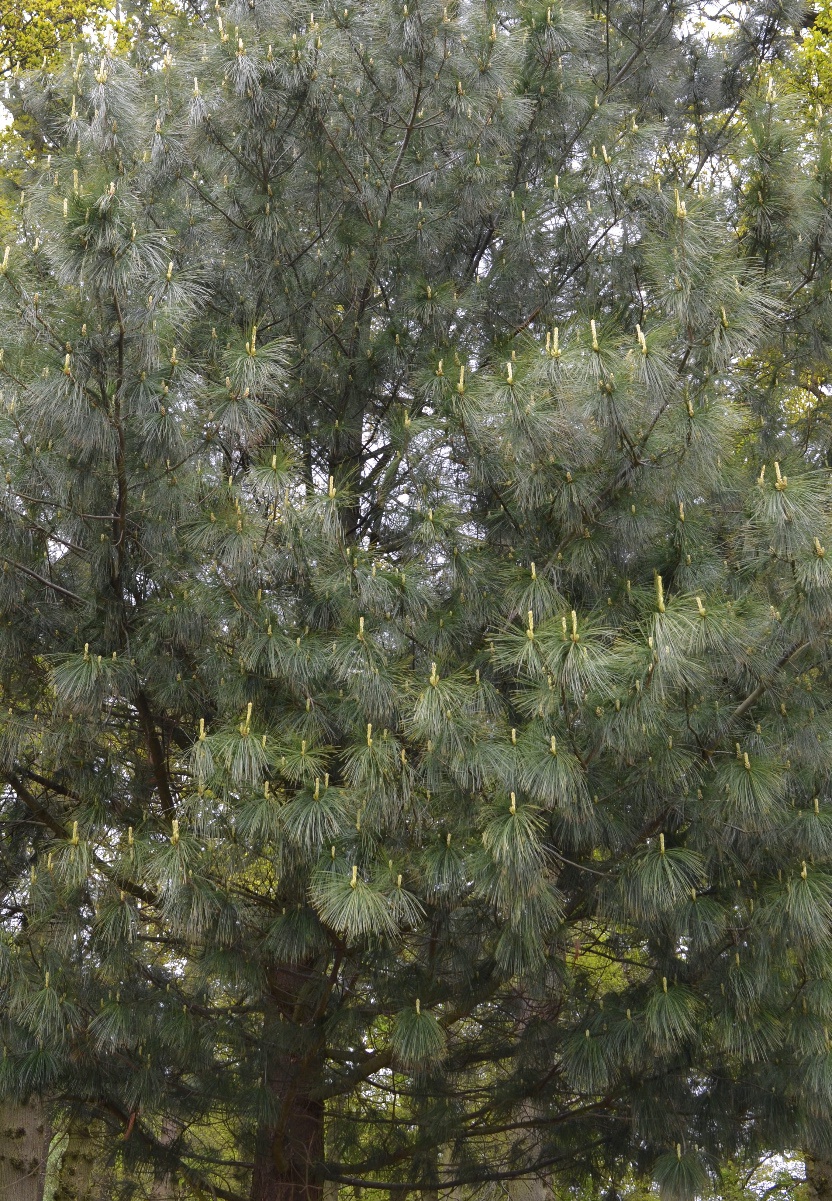
Pinus strobus is characterised by needles in bundles of five, and pendant female cones with sharply outcurved scale tips. The feathery leaves-needles are dark green in colour on each side, c 12 cm long (max 15 cm), and with fine white lines sometimes apparent on their inner surfaces.
Bhutan Pine (P. wallichiana). The two species can be very similar, although Bhutan Pine usually has longer, more drooping needles and longer, pendent cones often encrusted with resin - but the lengths of cones/needles overlap

Leaves in fives, 5-14cm, cones 8-20cm; the tips of the cone scales only slightly thickened. Twigs have minute hairs at base of short shoots, but this feature is difficult to see and photograph
Photos of whole tree; photo of shoot and cones, with details of length of cones and needles. It may not be possible to ID from a photo; retention of a specimen of the shoot is recommended
Usually occurs in Britain as a planted tree in parks and gardens.
All year round.
Evergreen tree.
Widespread but occasional in Britain where it is usually found as a planted tree. Native to eastern North America it was first introduced to the UK by Lord Weymouth (for whom it is named) on his estate at Longleat, south of Bath, in the early 18th Century.
Uncommon or rarely recorded in Leicestershire and Rutland, where it is usually found as a planted tree. It was not recorded in the 1979 Flora survey of Leicestershire.
 Steve Mathers
Bradgate Park (Elder Plantation)
07 February 2017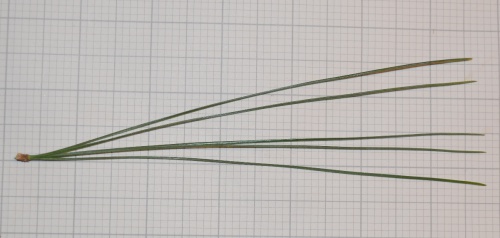 Steve Mathers
Bradgate Park (Elder Plantation)
08 December 2016
5 needle bundles usually c 12 cm, unto 15cm max.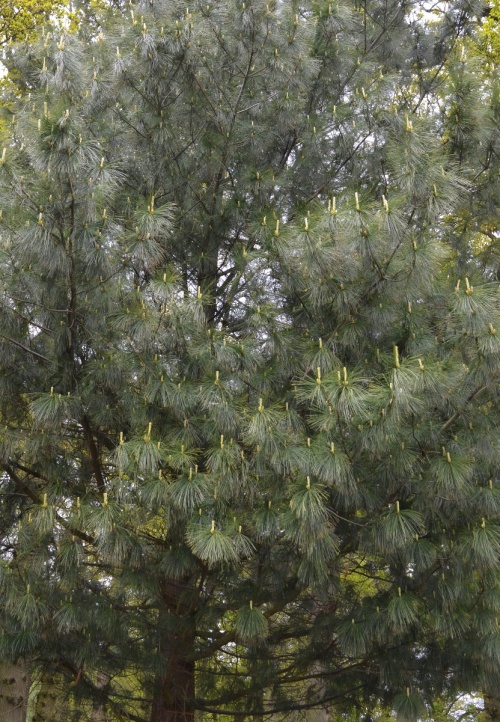 Steve Mathers
Bradgate Park
08 May 2017
Leicestershire & Rutland Map
Enter a town or village to see local records
MAP KEY:
Yellow squares = NBN records (all known data)
Coloured squares = NatureSpot records: 2025+ | 2020-2024 | pre-2020
UK Map
Additional images