Webb's Wainscot
Webb's Wainscot - Globia sparganii
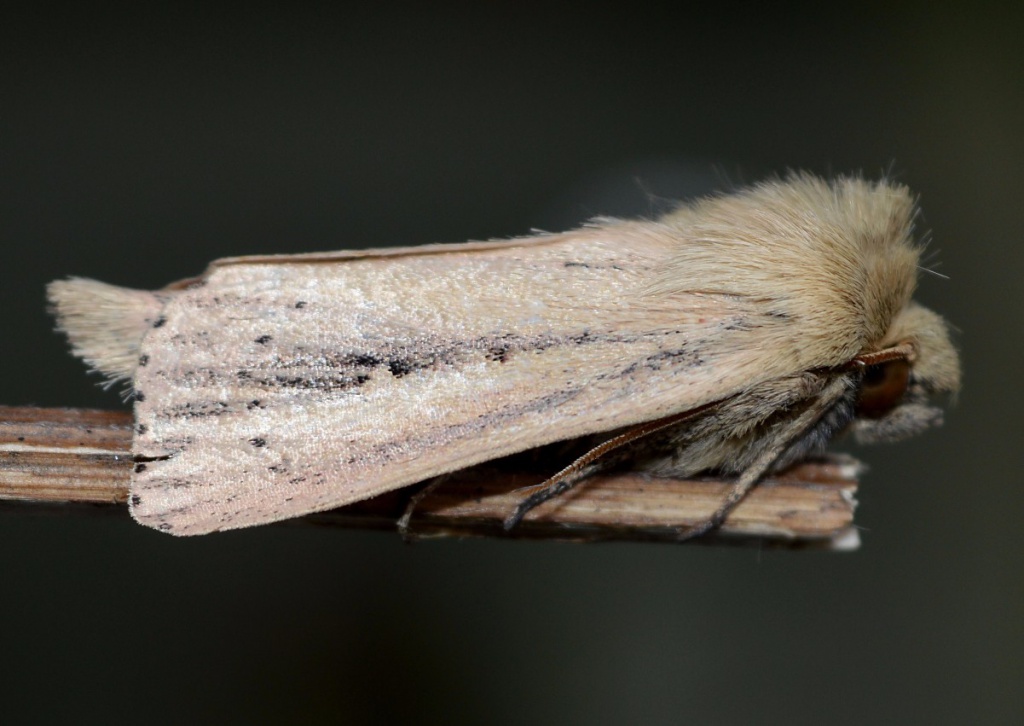
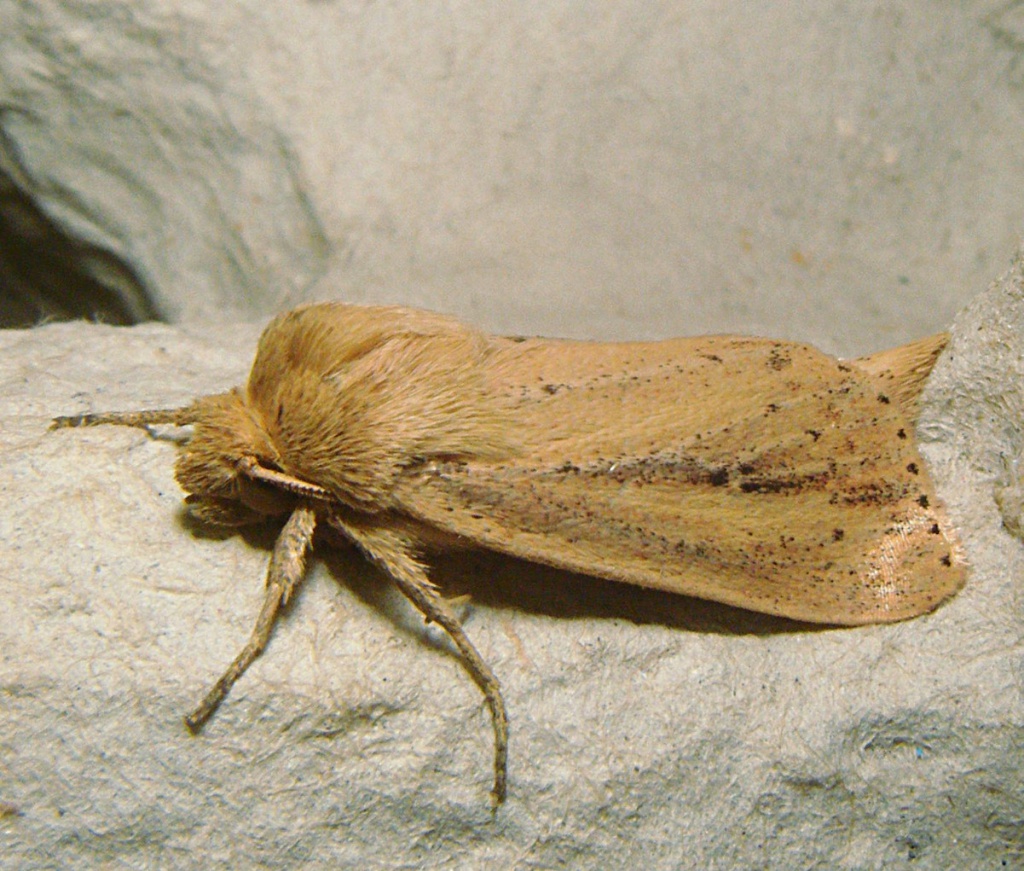
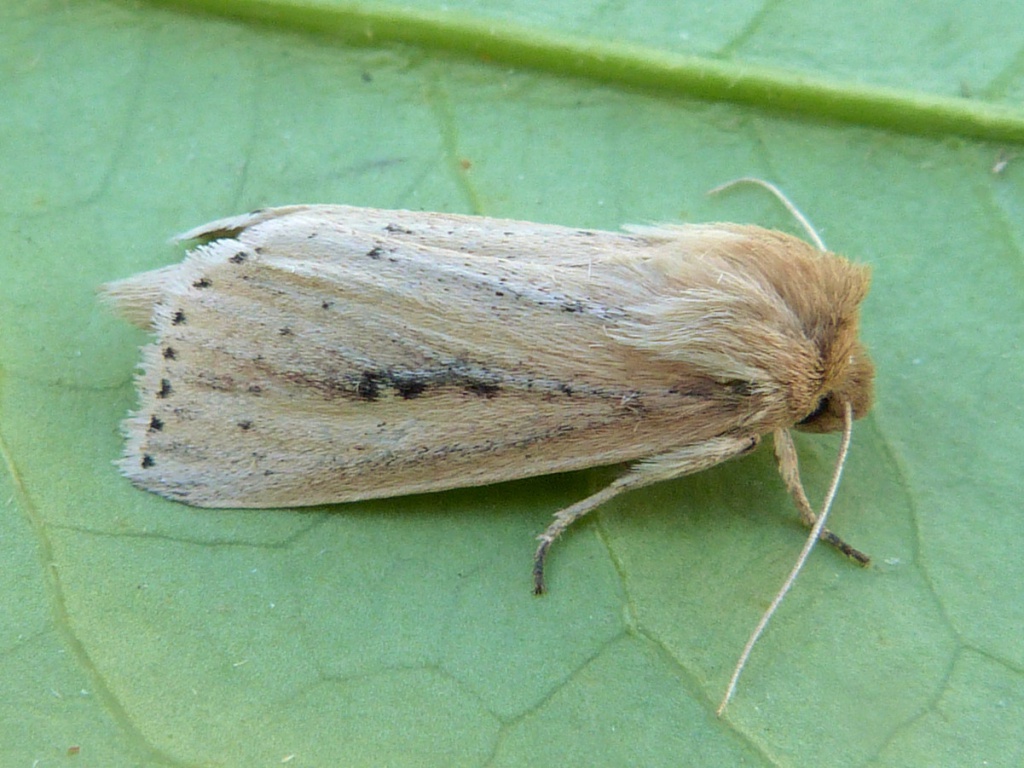
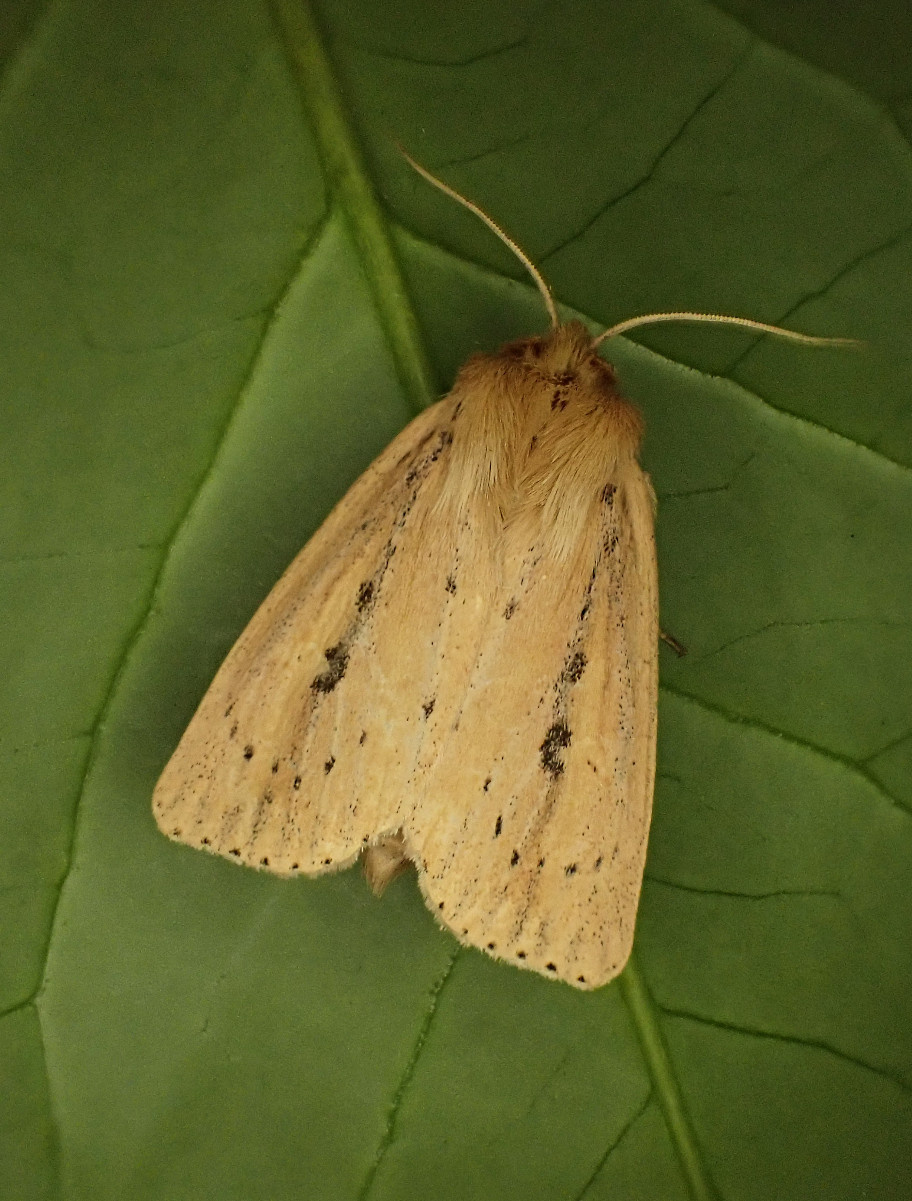
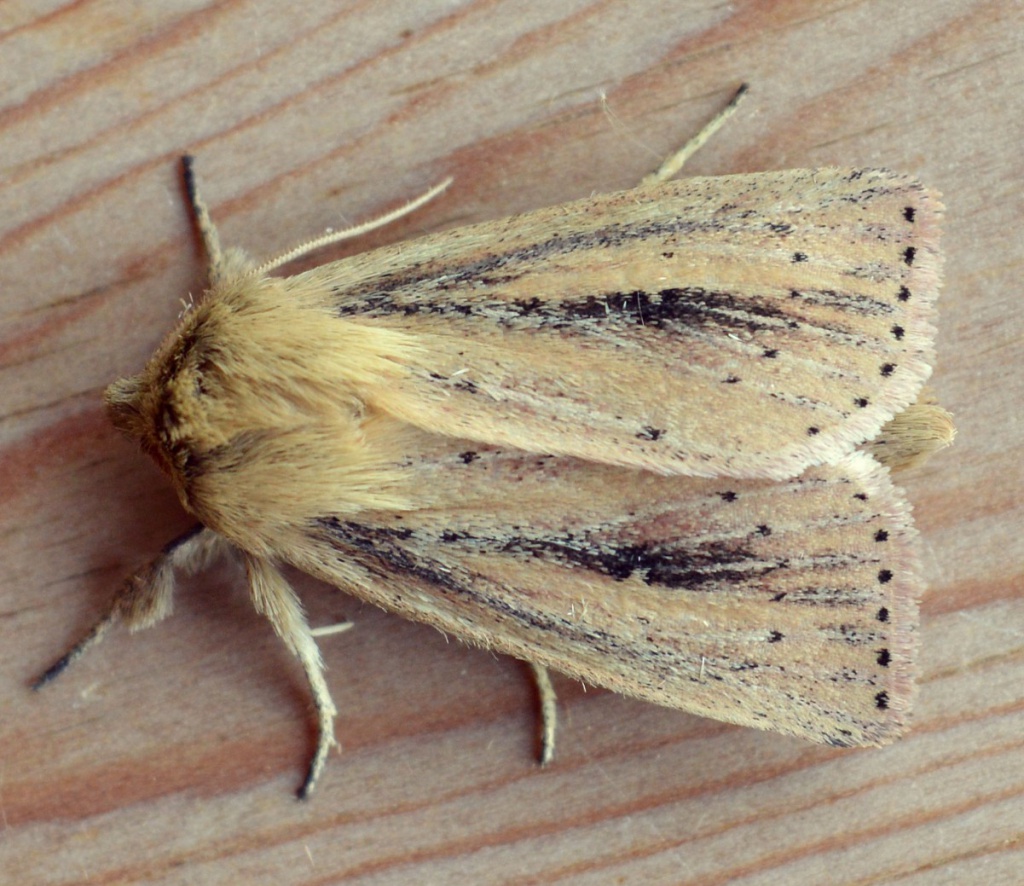
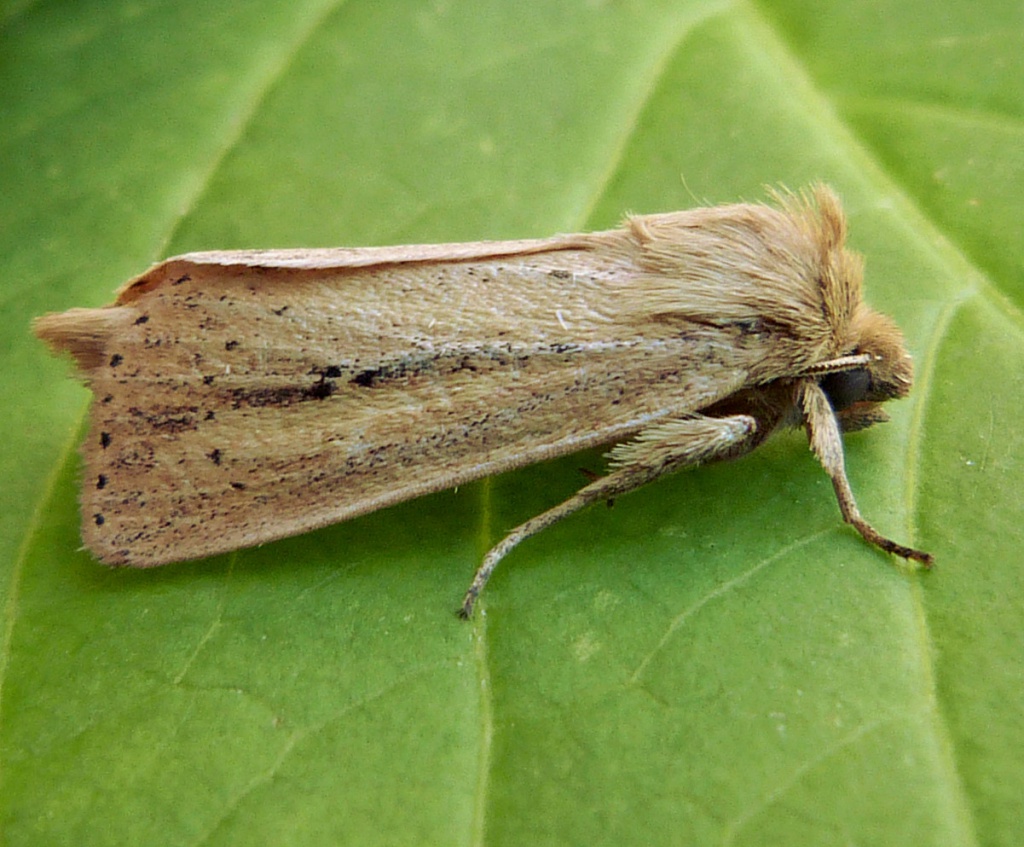
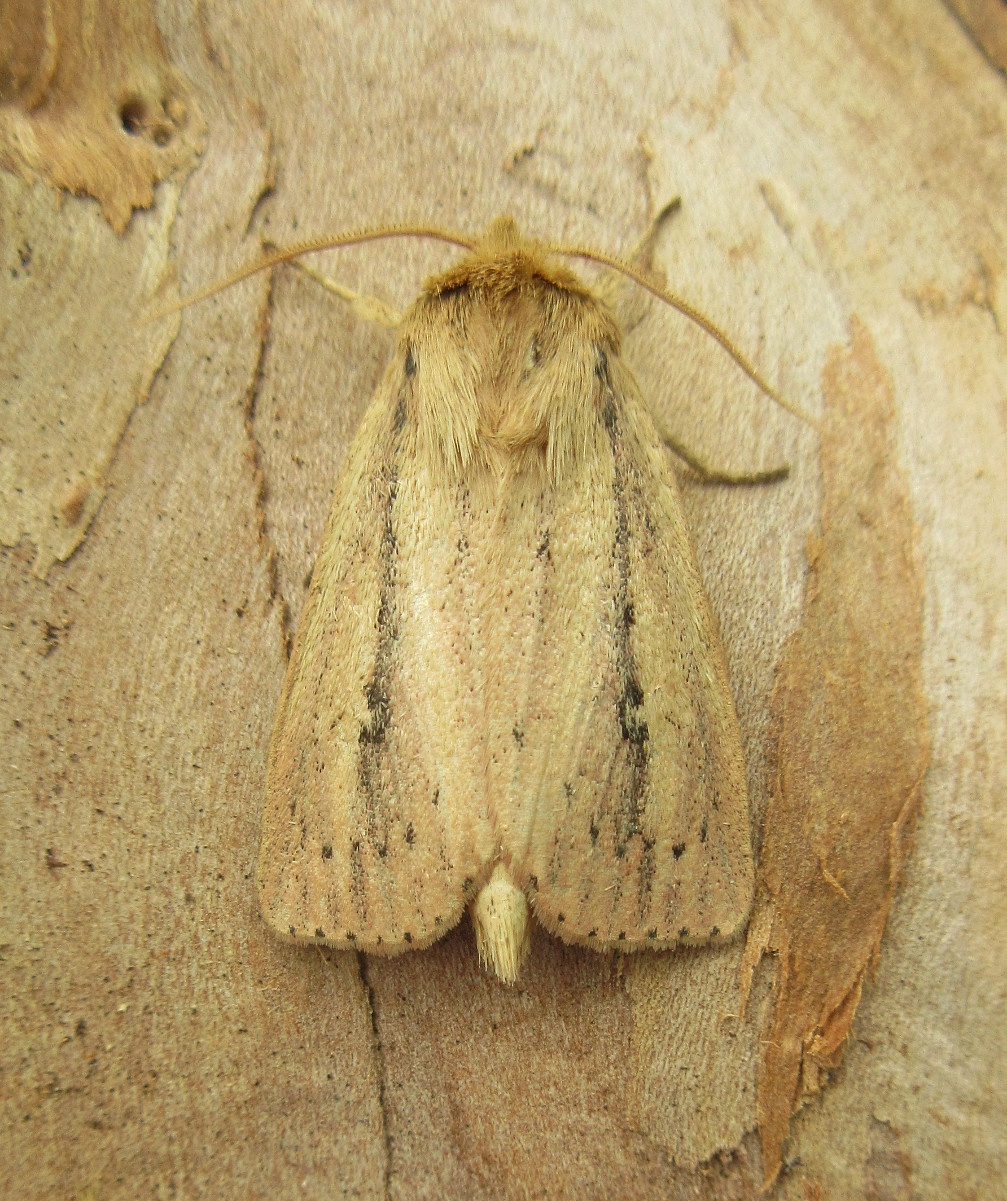
Wingspan 32 to 40 mm. This species is orange-brown to cream in colour and distinguished by the broad, blunt forewing, rounded at the tip. The amount of dark streaking also varies usually, crossing an outer row of black dots. There is also a row of small, but clear, black spots along the outer edge. The tip of the abdomen projects conspicuously beyond the wings at rest.

Frequents fens, marshes, brackish ditches and areas where the larval foodplants are present.
The moths are on the wing in August and September, when the species can be attracted to light.
The larvae feed internally in the stems of Yellow Iris (Iris pseudacorus), Reed-mace (Typha spp.) and similar water plants.
Locally distributed, mainly around parts of the south coast and the coasts of East Anglia and south Wales. In a recent survey to determine the status of all macro moths in Britain this species was classified as Nationally Scarce B.
It appears to be uncommon in Leicestershire and Rutland, where there are few records. L&R Moth Group status = D (rare or rarely recorded).
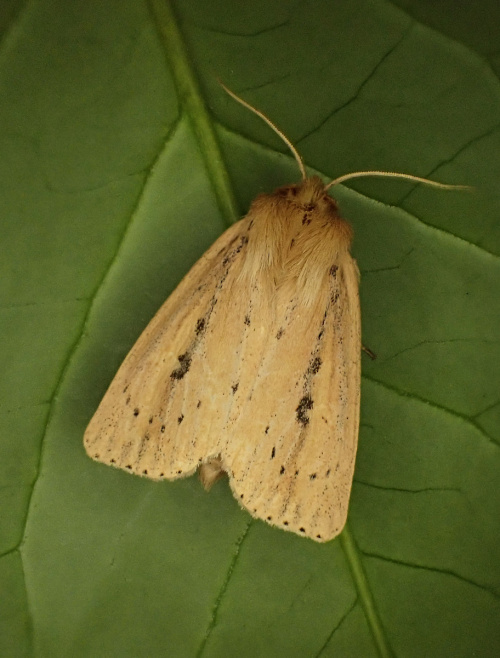 Pete Leonard
Harby
15 August 2025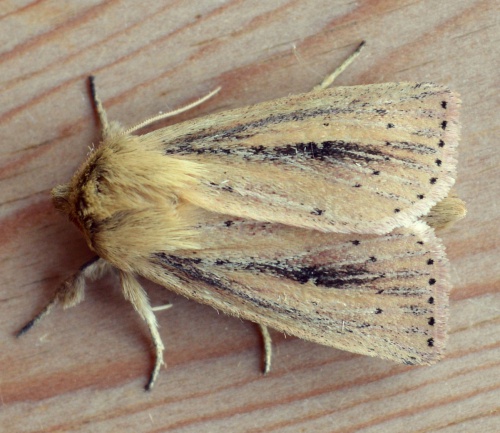 Barbara Cooper
Long Clawson
24 July 2019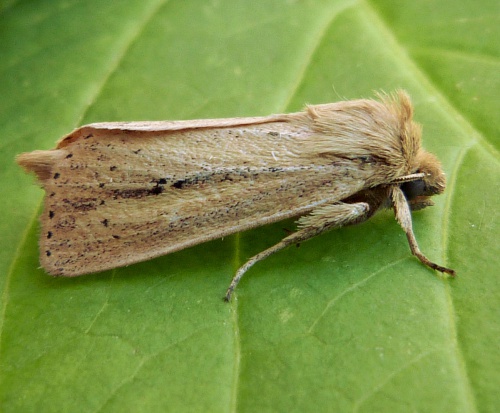 Graham Calow
Sapcote garden1
12 September 2016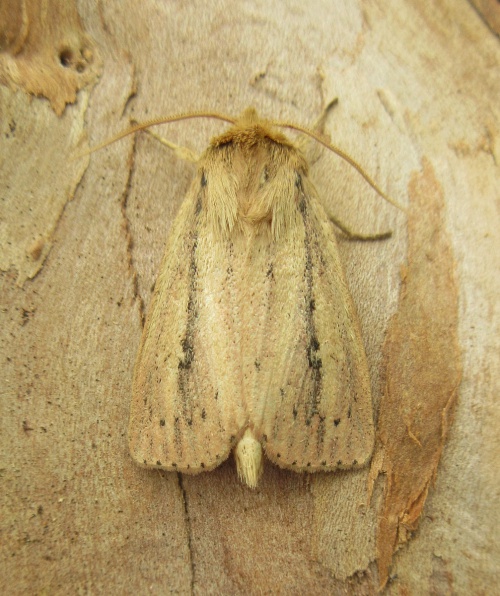 Pete Leonard
Harby, Hollidays
29 July 2020
Leicestershire & Rutland Map
Enter a town or village to see local records
MAP KEY:
Yellow squares = NBN records (all known data)
Coloured squares = NatureSpot records: 2025+ | 2020-2024 | pre-2020
UK Map
Additional images