Water Mint
Water Mint - Mentha aquatica
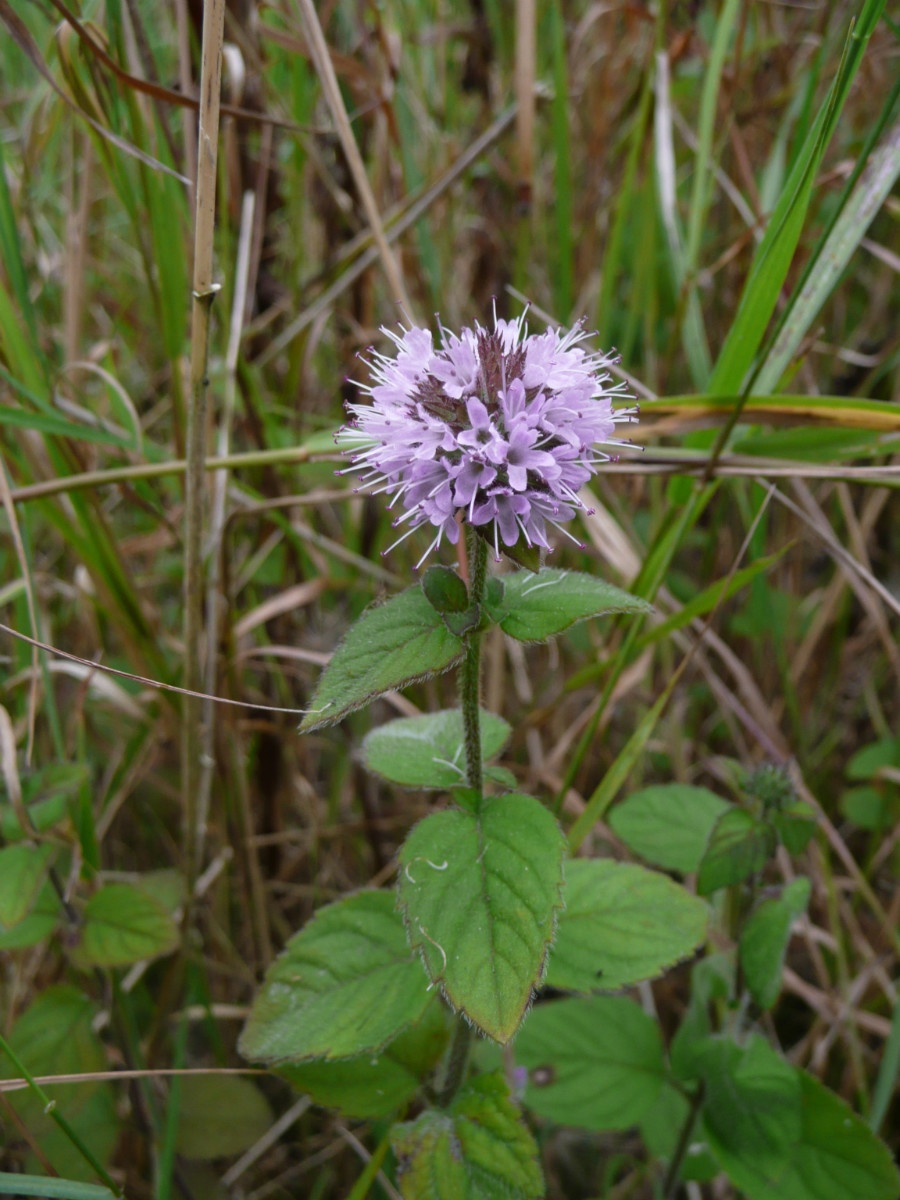
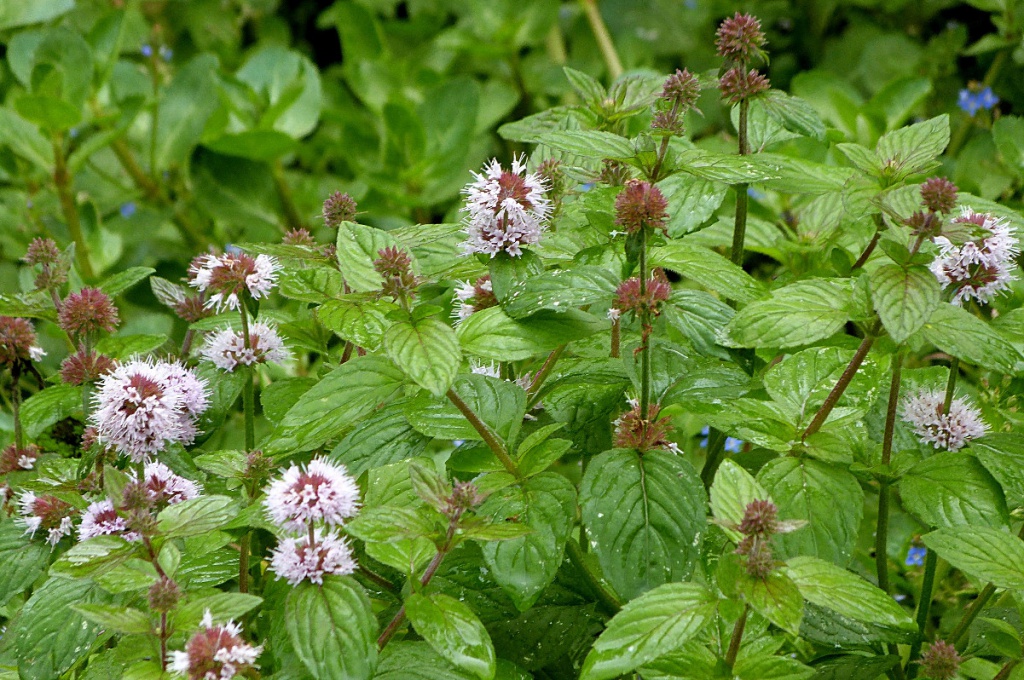
Variable short to tall plant with a strong aromatic small when crushed, but not as sweetly aromatic as some other mints. Flowers lilac-pink 4 to 6 mm long in a dense oblong head often with 1 or 2 distinct whorls of flowers below.
Indicator Species - Leicestershire, Leicester & Rutland Local Nature Recovery Strategy.
There are many hybrid and naturalised cultivated varieties of mint, making this a difficult genus

Flowers in terminal heads, ovate leaves with distinct petioles, calyx tube hairy
Photo of whole plant in flower, including leaves; details of flowers
Any wet or swampy habitat, often with its feet in water.
July to September.
Perennial.
Common throughout Britain except in the Scottish Highlands.
Fairly common in Leicestershire and Rutland. In the 1979 Flora survey of Leicestershire it was found in 325 of the 617 tetrads.
 Fosse Meadows (Taken 17.9.2008).JPG) Graham Calow
Graham Calow
Fosse Meadows, Sharnford
17 September 2008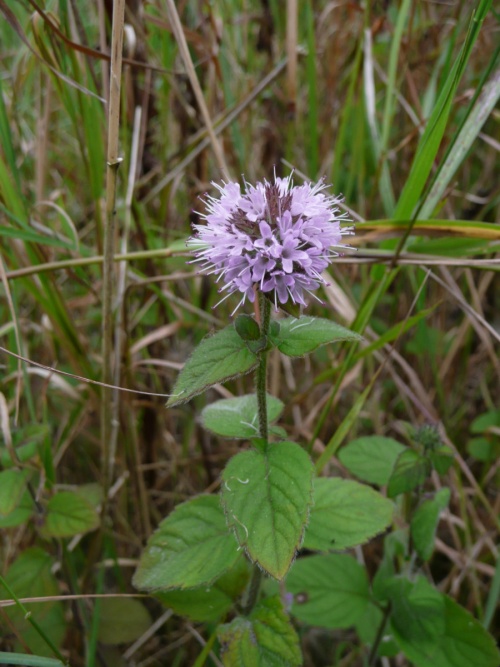 Barbara Cooper
Long Clawson
13 August 2012 Graham Calow
The Nook, Cosby
27 August 2016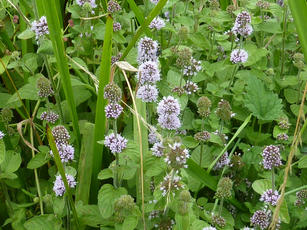 David Nicholls
Wirlybones Wood, Ratby
21 August 2011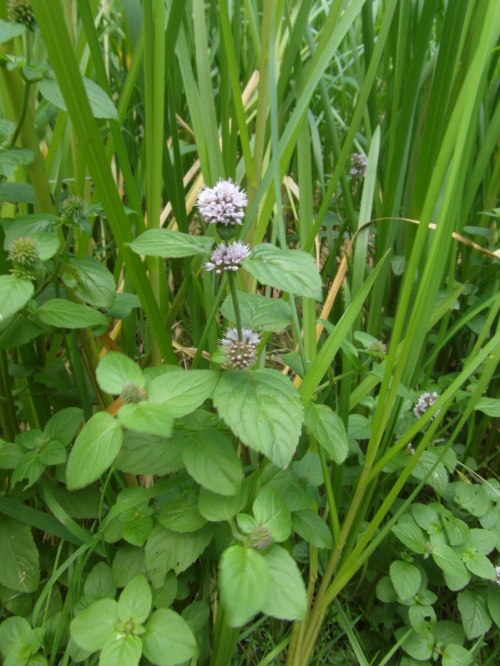 Alan Semper
Melton, New Park
28 August 2013
 Fosse Meadows (Taken 17.9.2008).JPG)


Leicestershire & Rutland Map
Enter a town or village to see local records
MAP KEY:
Yellow squares = NBN records (all known data)
Coloured squares = NatureSpot records: 2025+ | 2020-2024 | pre-2020
UK Map
Additional images
No additional images available for this species.
All NatureSpot records
Mint Rust
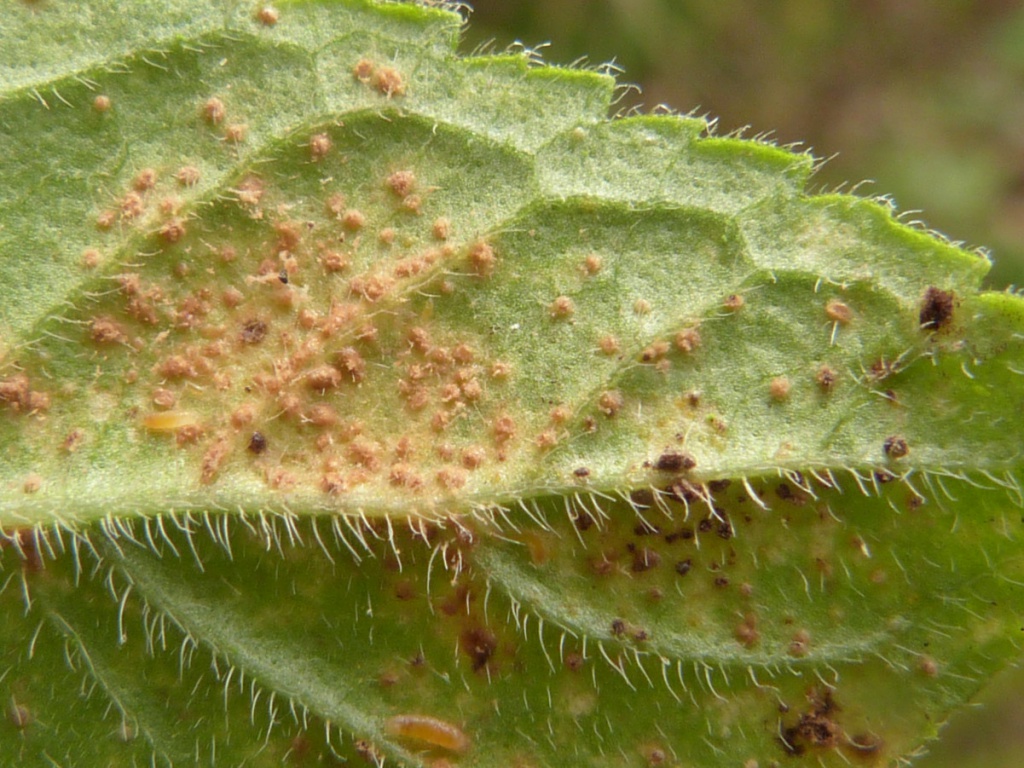
Puccinia menthae is a rust fungus which galls the leaves of various Mints (Water Mint, etc.), and occasionally Marjoram or Wild Basil. Young leaves at shoot tip become thickened, distorted, with purple patches. carrying aecia and spermogonia; later uredinia and telia are present.

Phytomyza tetrasticha
The larva of the Agromyzid fly Phytomyza tetrasticha mines the leaves of mint, especially Water Mint. The mine starts with a small spiral and then develops into a greenish blotch (frequently on the leaf margin), which turns brown as it ages. The pupa is yellow-brown in the summer generation and deep black in the winter one. However, the leafmines of Phytomyza obscura and Phytomyza origani are identical those of Phytomyza tetrasticha so the adult must be reared and identified to confirm the species.