Trioza urticae
Trioza urticae
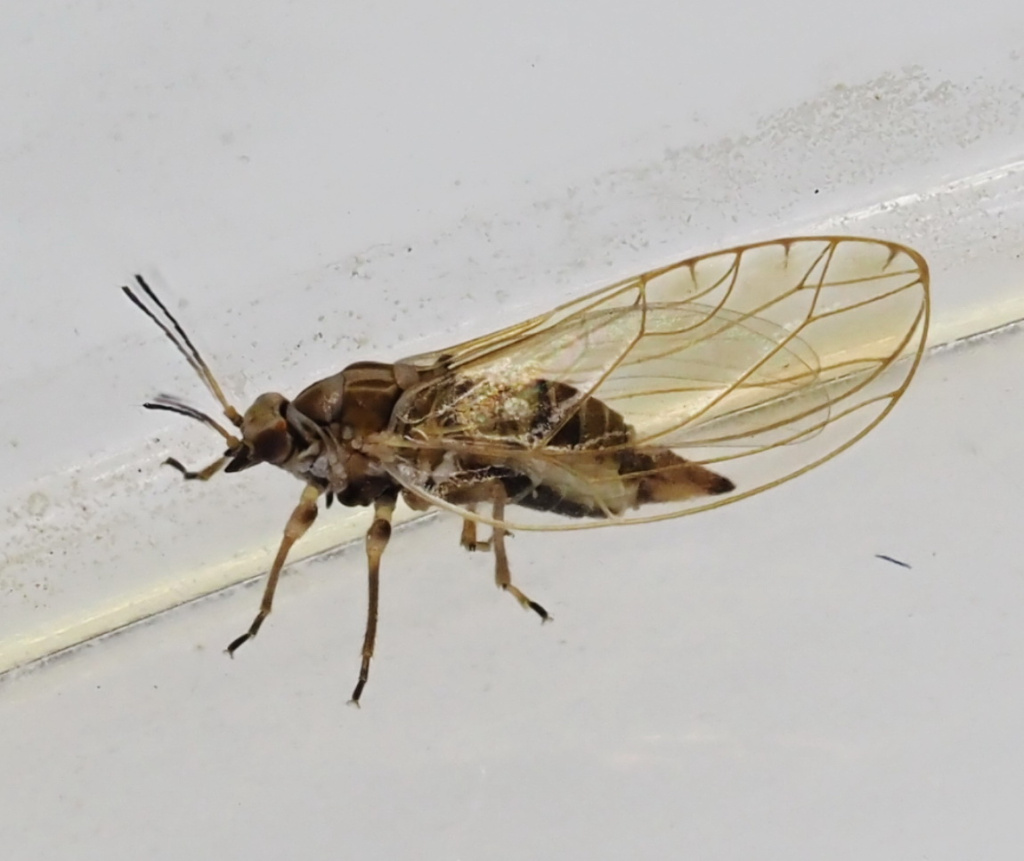
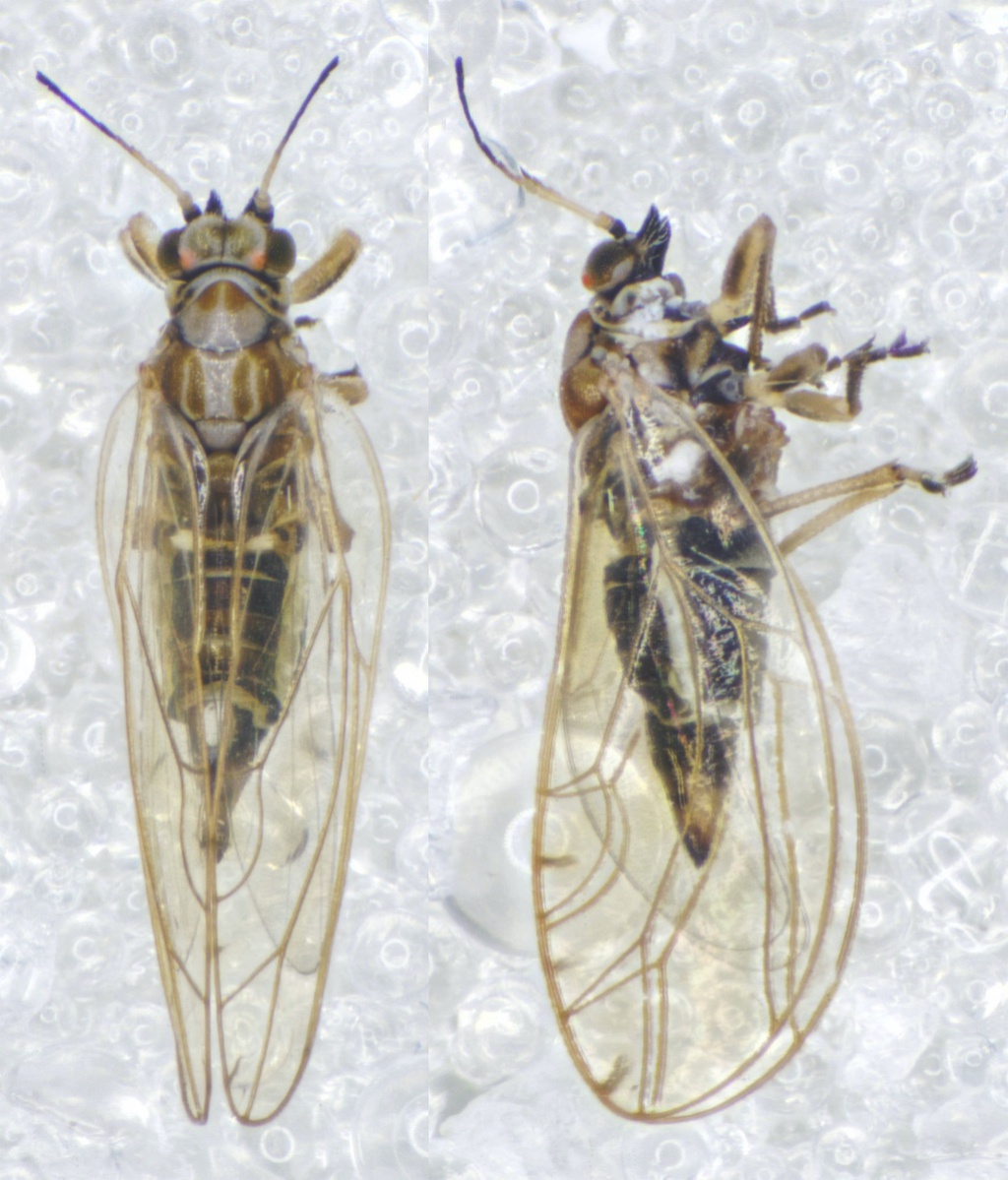
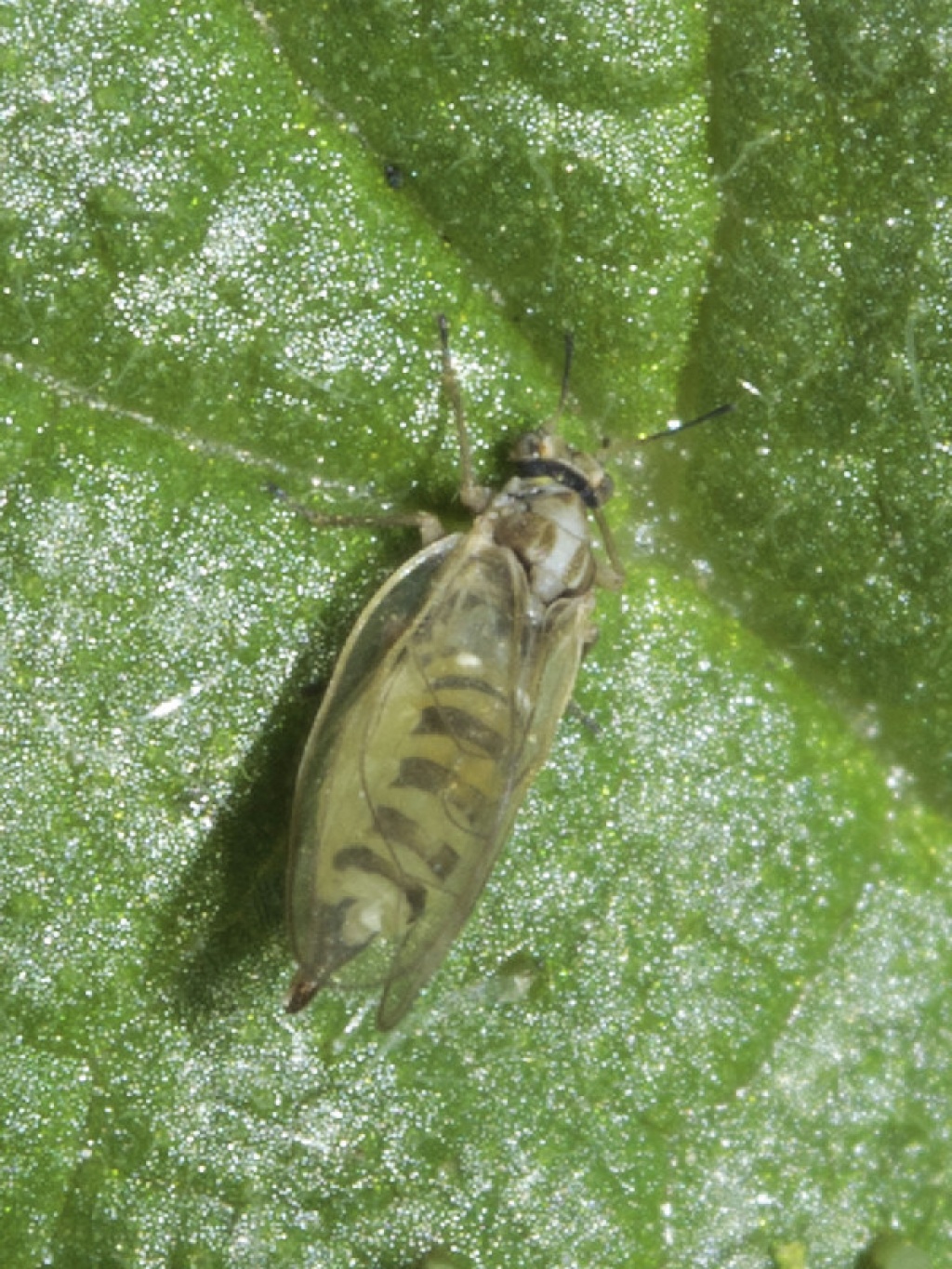
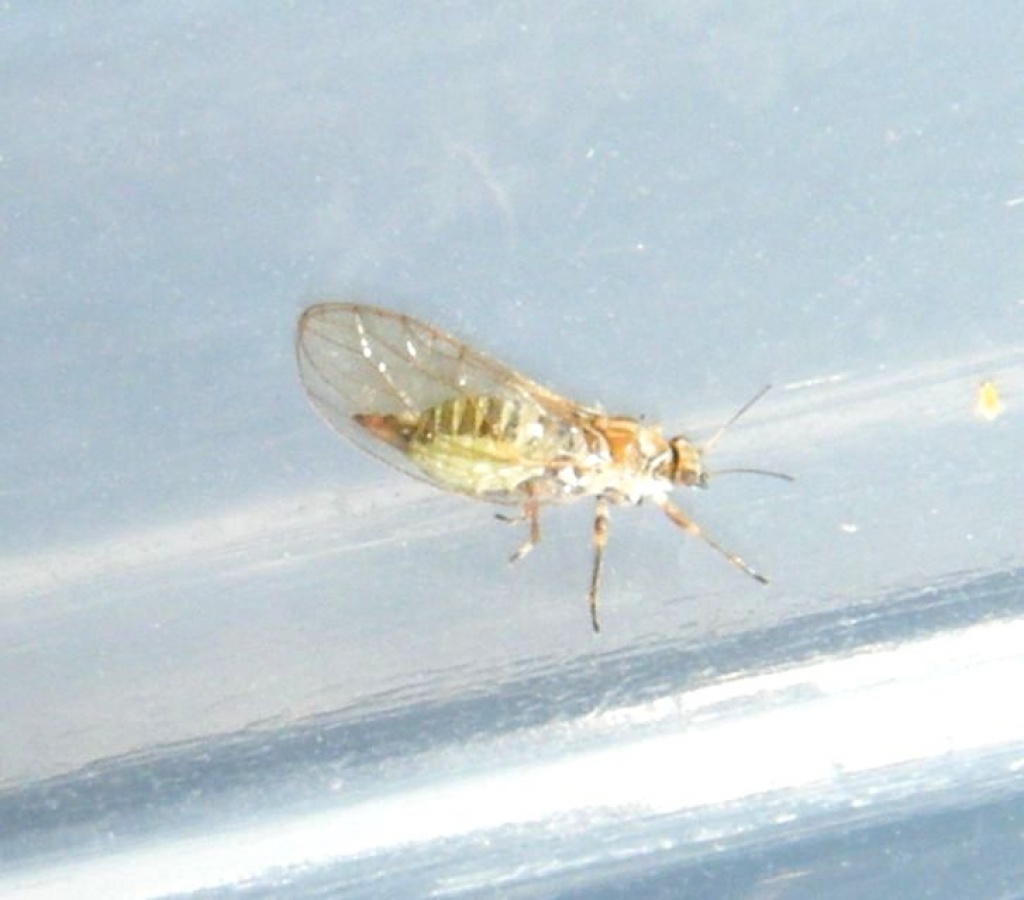
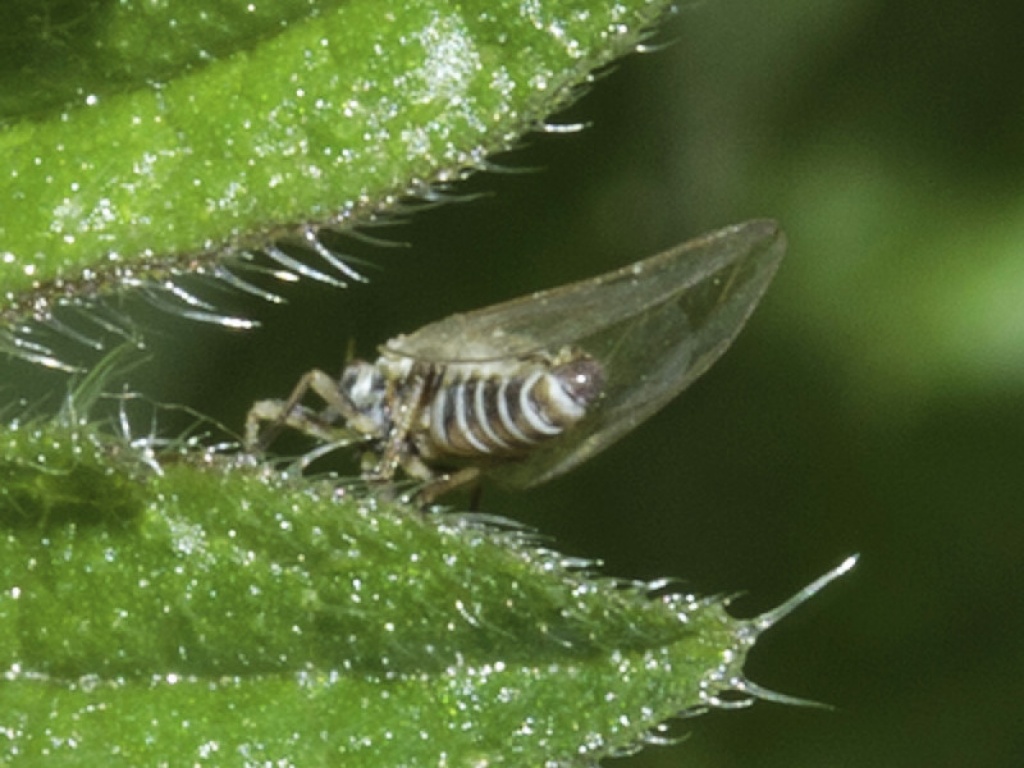
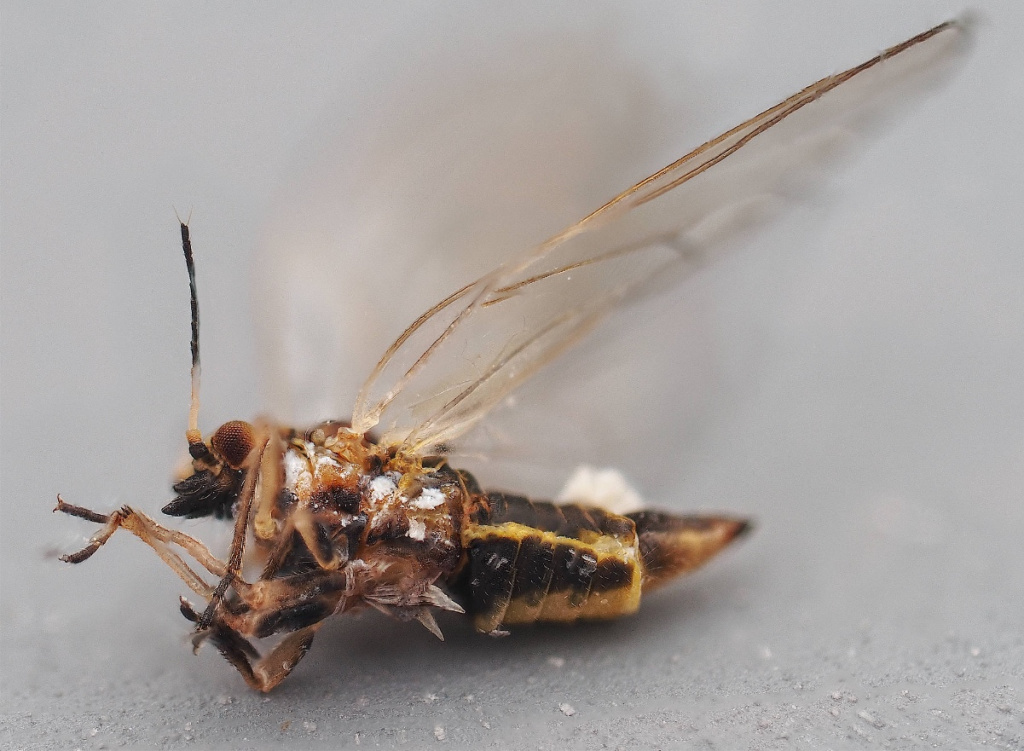
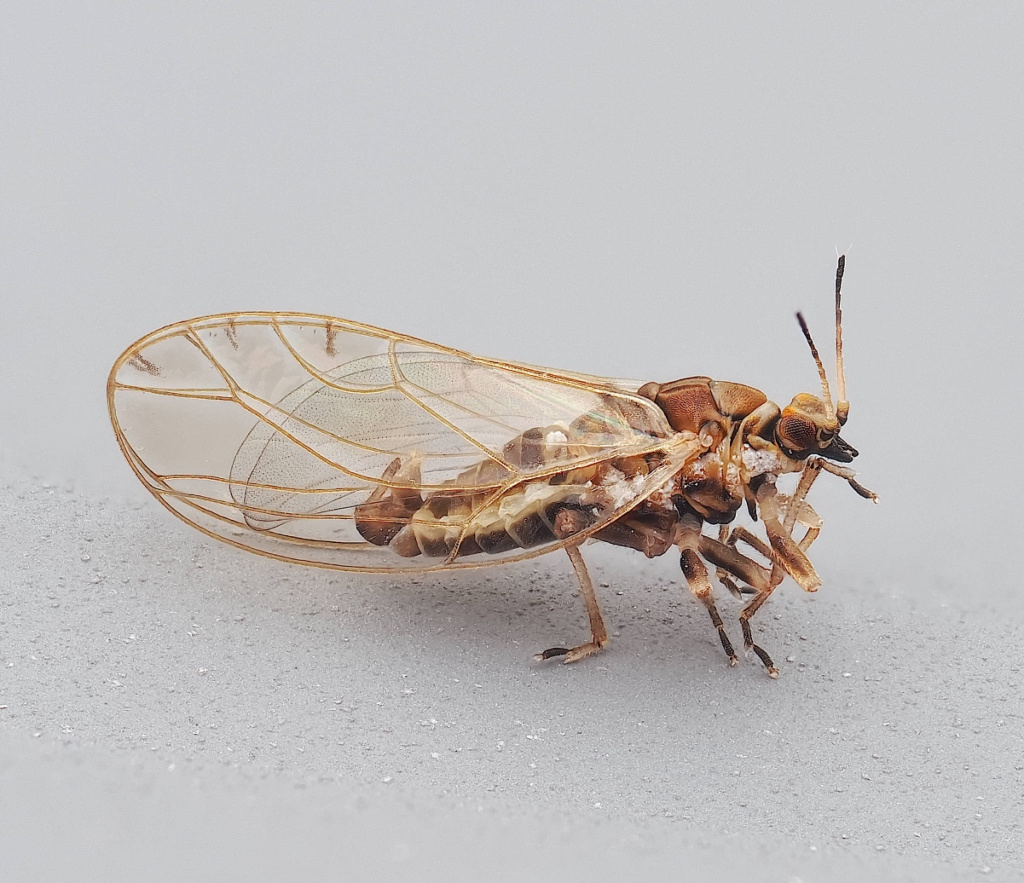
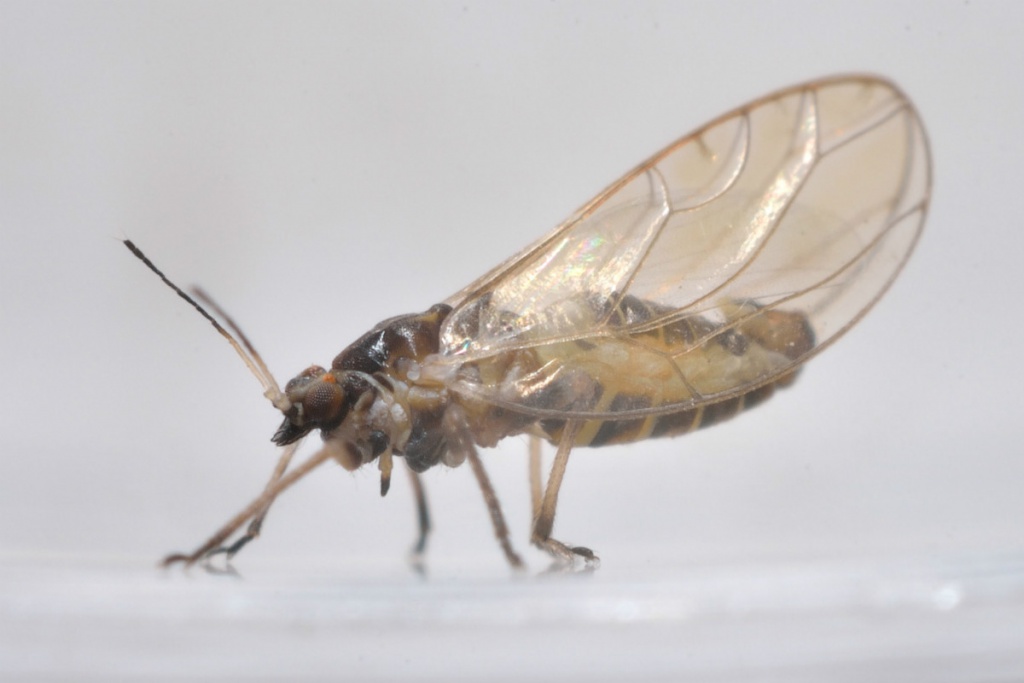
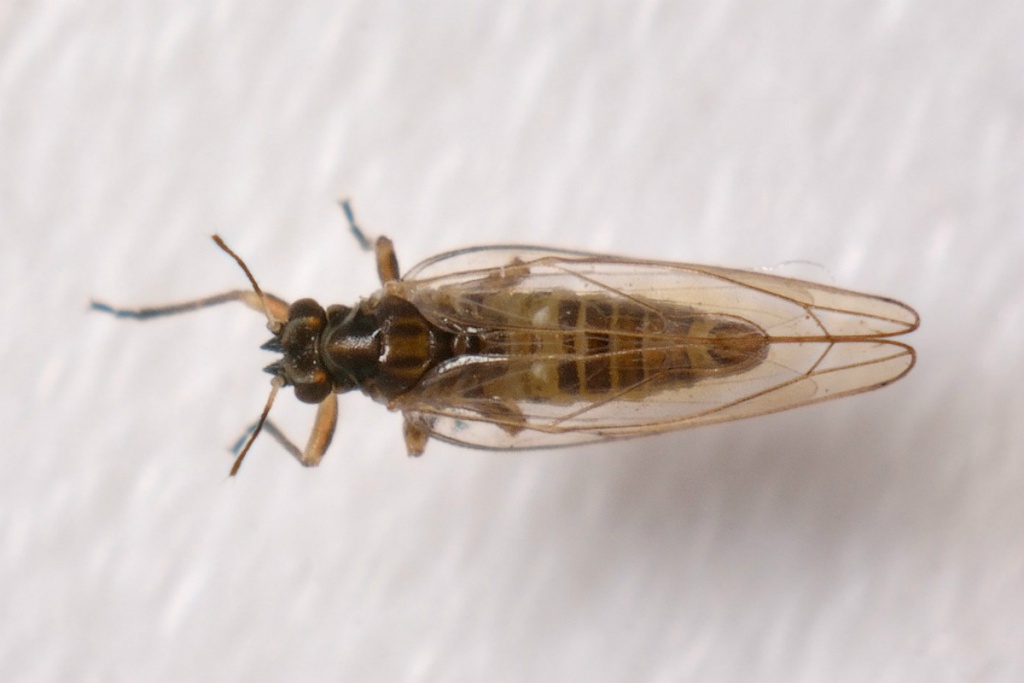
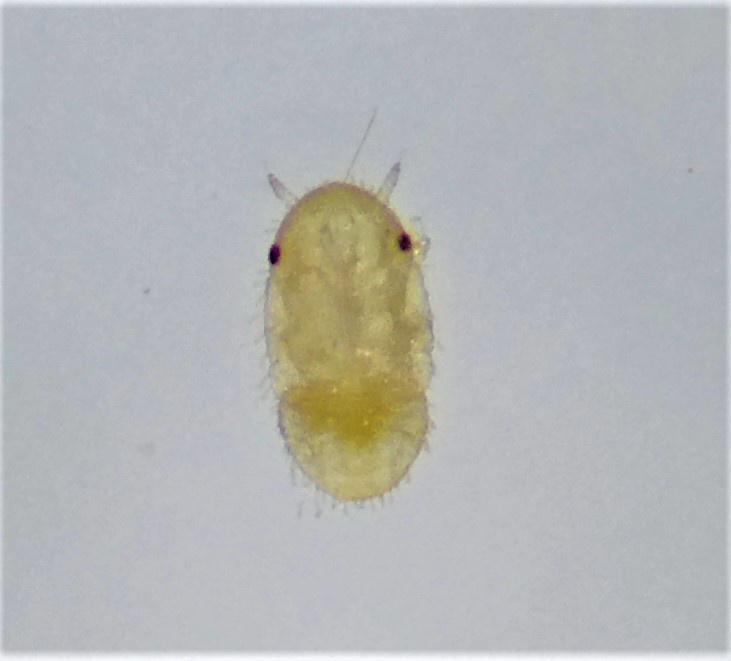
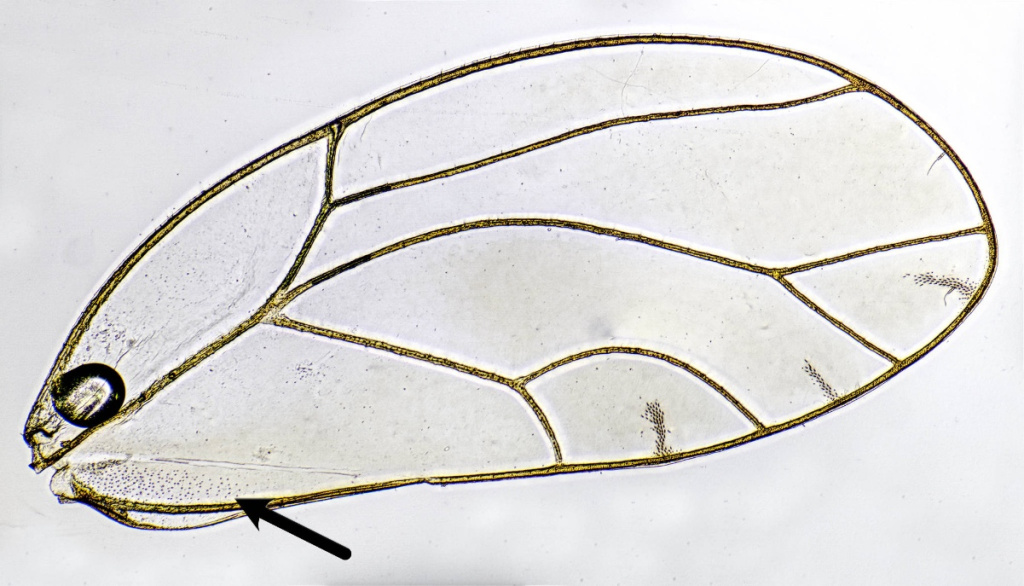
Length 3 to 3.5 mm. This psyllid bug or jumping plant louse is a reasonably distinctive species in a large and difficult genus. Distinguishing features include the relatively rounded (for Trioza) forewings with long outer vein, which together with its occurrence on nettles, make it reasonably easy to identify, although colouration is quite variable. The three main veins arise from a single point, which is the thing that distinguishes Triozidae. Early instar nymphs are pale, but the later stages have a distinctive black patterning.
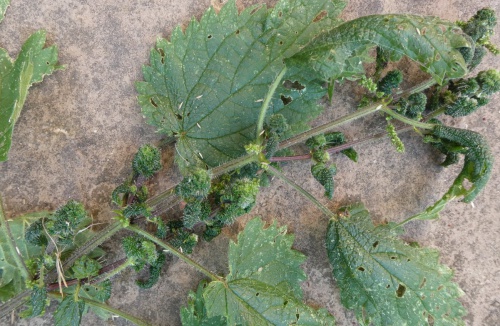
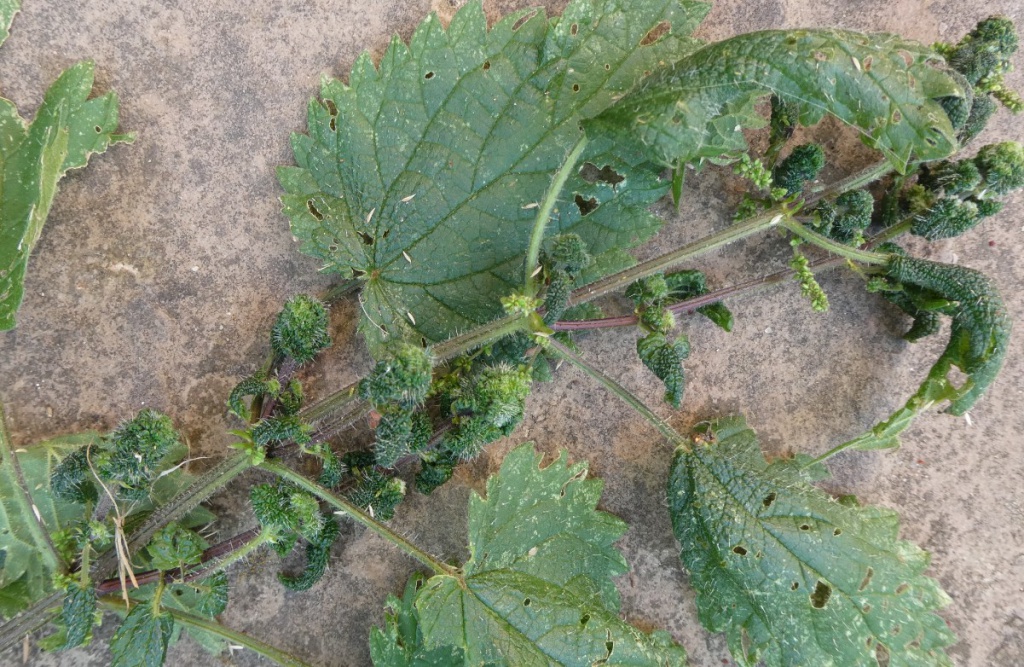
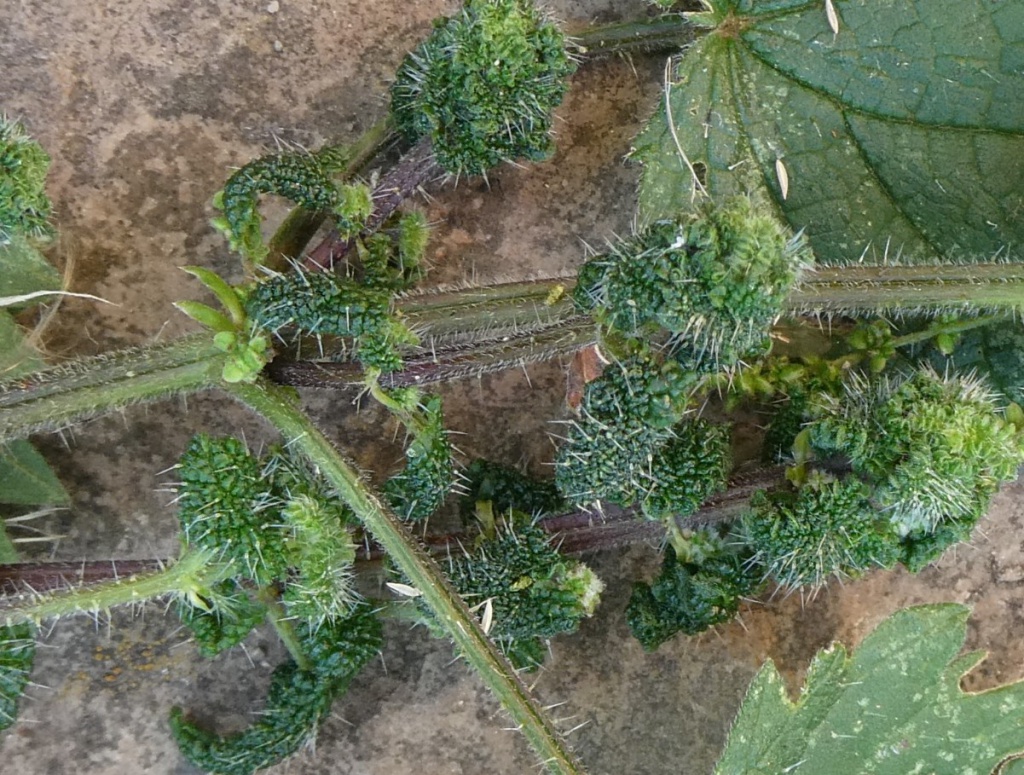
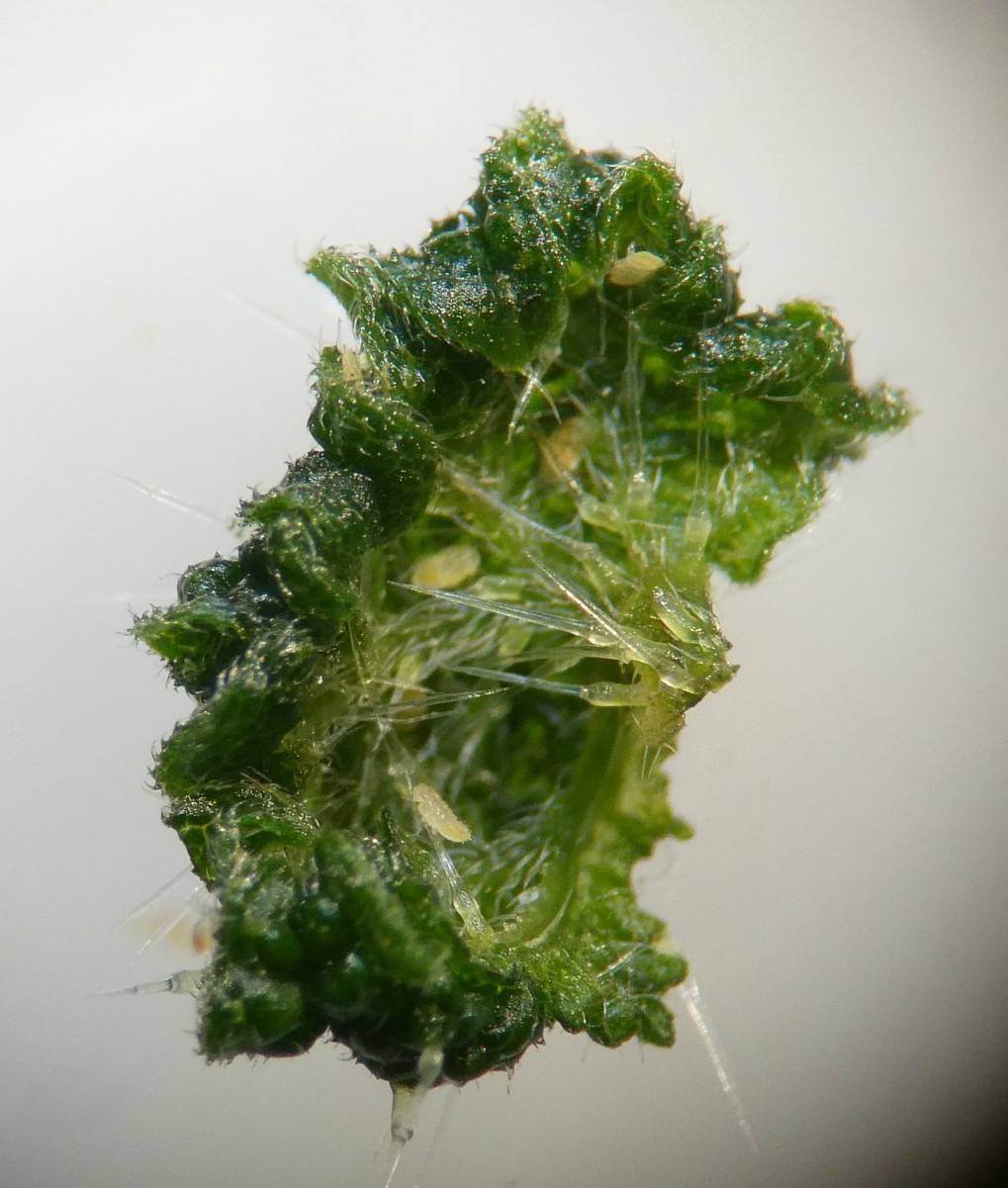
It causes galls on nettle; the young leaves are curled up and darker green, with the flat psyllids in a small depression beneath.

Anywhere that nettles are present. This is the only UK nettle-feeding psyllid.
All year round.
Nymphs cause galls on nettle leaves. The adults overwinter, and there can be as many as four generations in the UK per year.
Widespread and common in Britain.
Common in Leicestershire and Rutland.
 sue
sue
Loughborough, Jubilee Wood, western corner opposite Buck Hill
23 August 2023
galls on nettle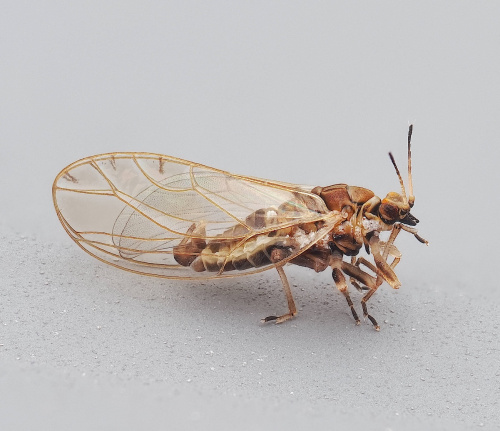 AJ Cann
Knighton
16 November 2025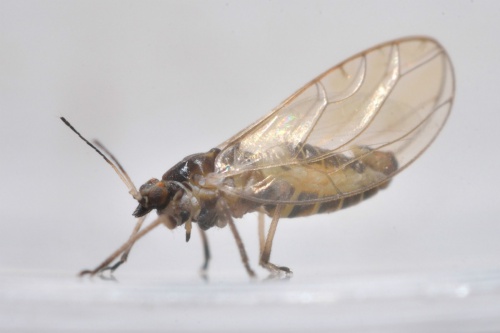 Barbara Cooper
Long Clawson
01 August 2013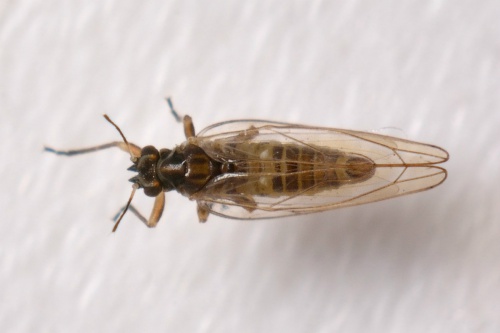 Barbara Cooper
Long Clawson
01 August 2013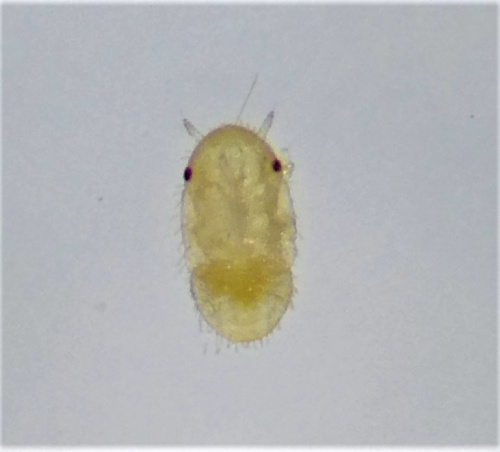 sue
sue
Loughborough, Jubilee Wood
23 August 2023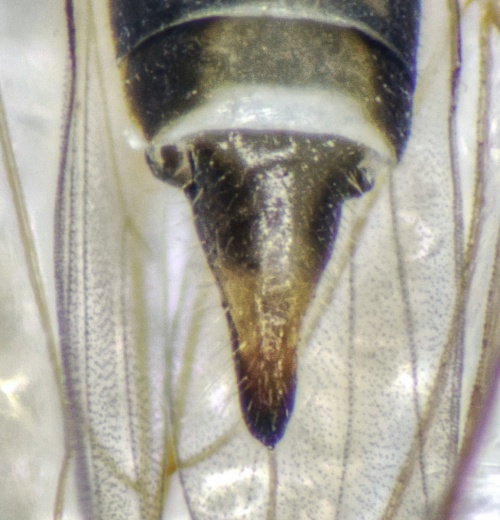 AJ Cann
Leicester, St Marys
01 February 2021
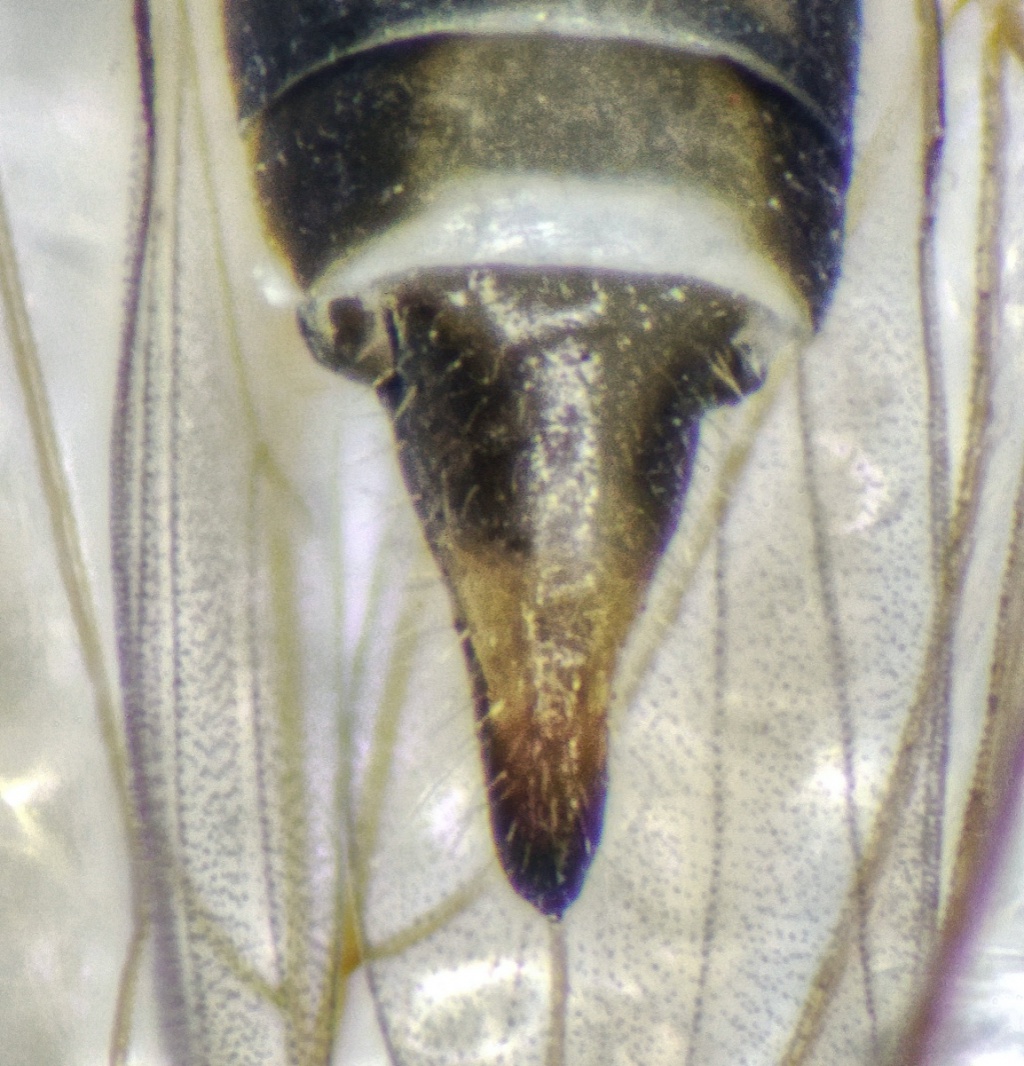
genital cone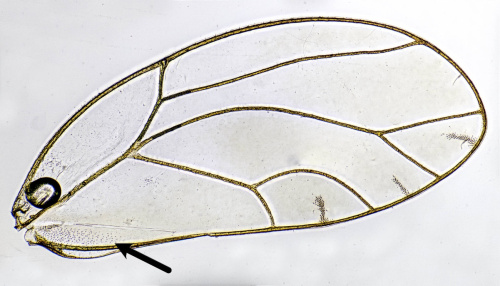 AJ Cann
Knighton
16 November 2025
surface spinules on forewing largely confined to the base of Cu2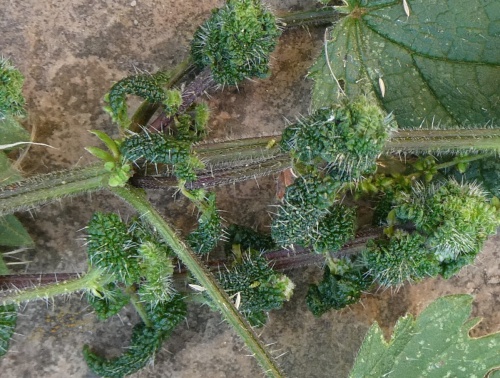 sue
sue
Loughborough, Jubilee Wood, western corner opposite Buck Hill
23 August 2023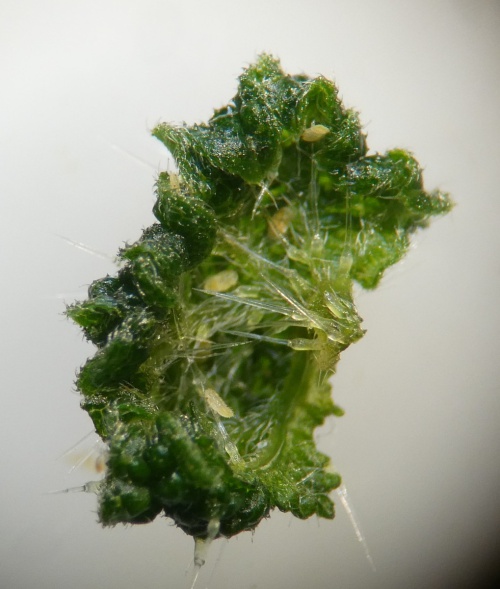 sue
sue
Loughborough, Jubilee Wood
23 August 2023
Leicestershire & Rutland Map
Enter a town or village to see local records
MAP KEY:
Yellow squares = NBN records (all known data)
Coloured squares = NatureSpot records: 2025+ | 2020-2024 | pre-2020
UK Map
Additional images