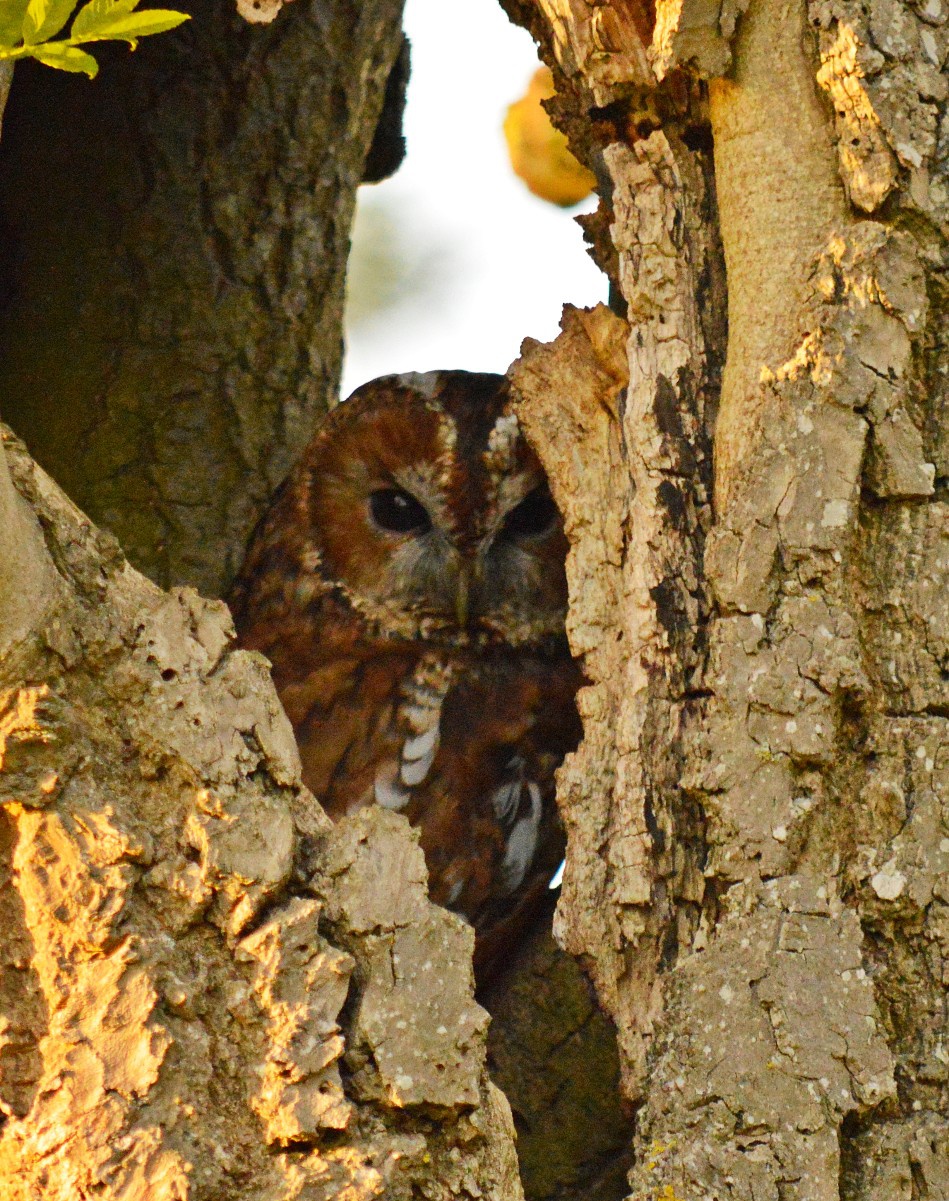
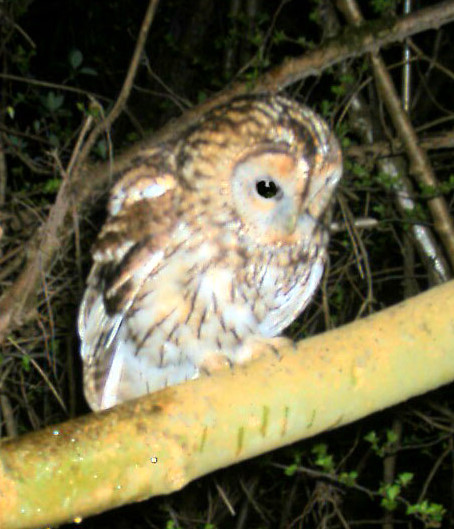
Tawny Owl
Tawny Owl - Strix aluco
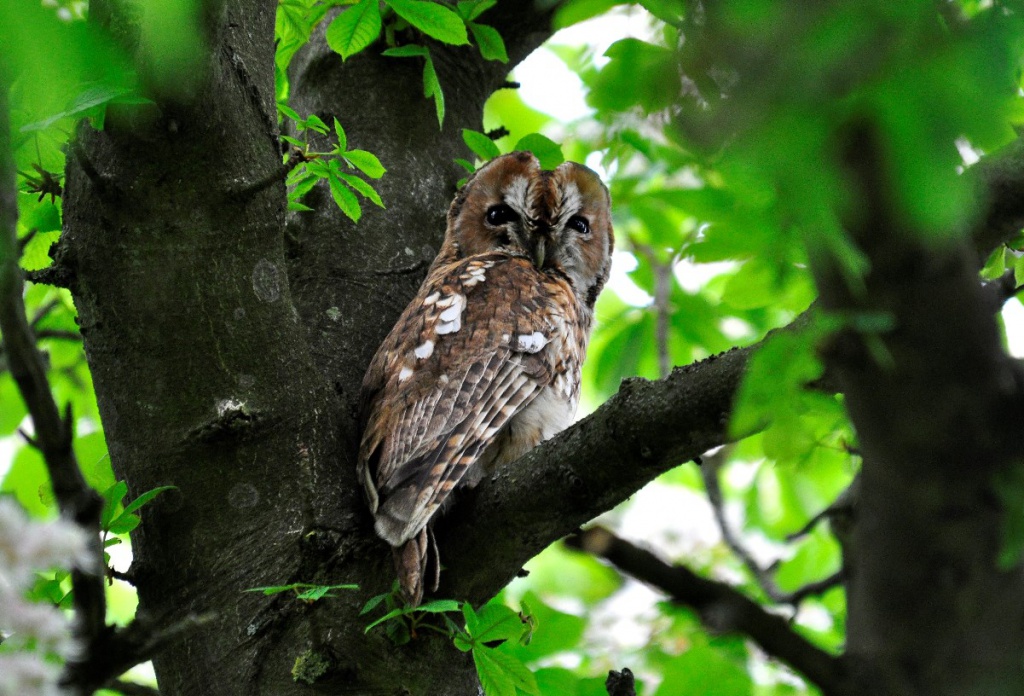
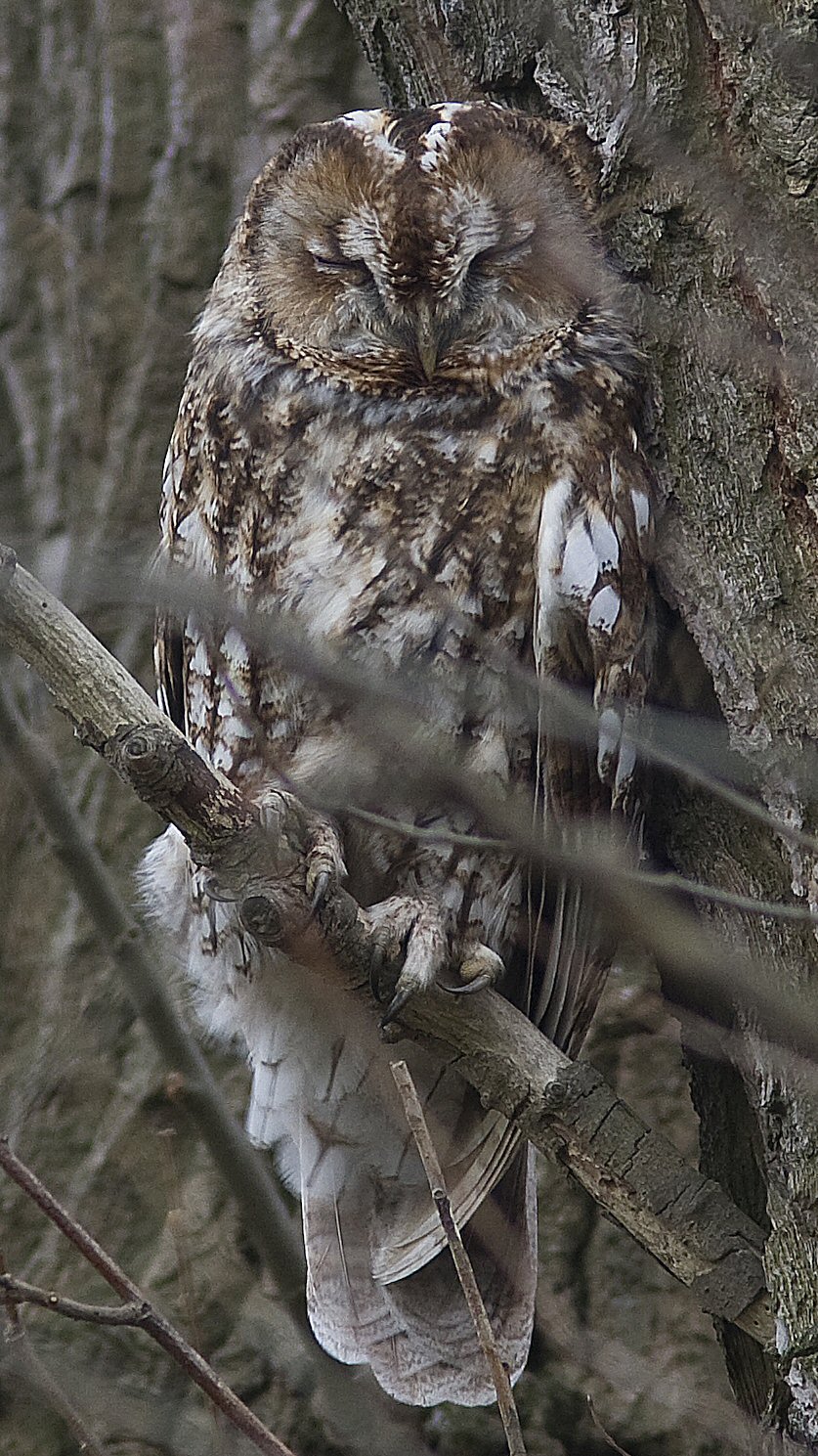
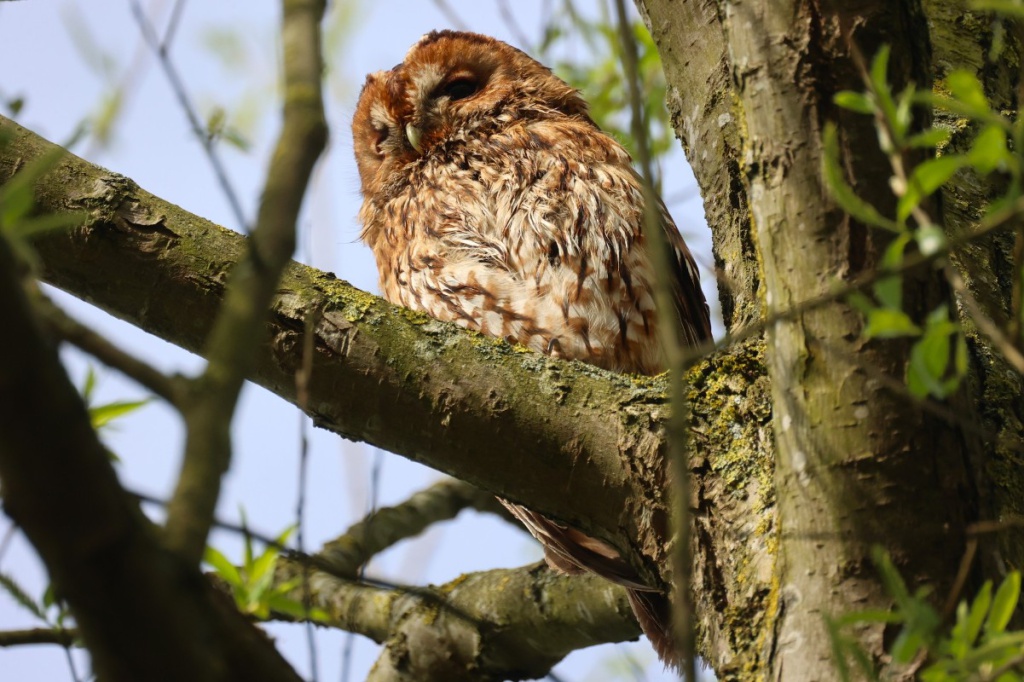
The Tawny Owl is the size of a pigeon. It has a rounded body and head, with a ring of dark feathers around its face surrounding the dark eyes. It is mainly reddish brown above and paler underneath. The classic, wavering hoot is the call of the male; the female's call is a sharp "ke-wik".

Mainly in broadleaf woodland, but also around conifers and scrub.
All year round - the Tawny Owl is nocturnal so it is often heard calling at night, but much less often seen. Only to be seen in the daytime if you disturb it inadvertently from its roost site in woodland up against a tree trunk or among ivy. Look for pellets below roosting places.
Lays 2 or 3 white eggs in late March or April in a nest site usually in a hollow part of a tree. Incubation takes 30 days, the chicks fledging after 35 to 39 days and are capable of breeding in their first year. Birds are mainly residents with established pairs probably never leaving their territories. Young birds disperse from breeding grounds in autumn. It hunts mainly rodents, usually by dropping from a perch to seize its prey, which it then swallows whole. In more urban areas its diet includes a higher proportion of birds. Vision and hearing adaptations and silent flight aid its night hunting, though it relies principally on hearing to locate prey.
It is a widespread breeding species in England, Wales and Scotland but is not found in Ireland
Fairly common in Leicestershire and Rutland
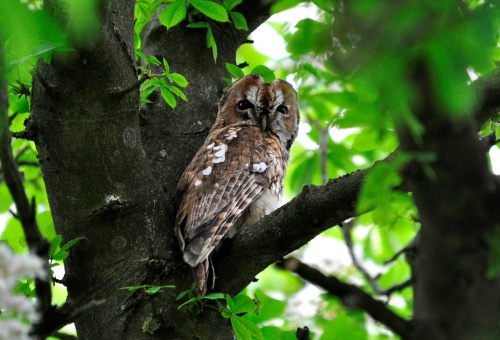 David Taylor
Brascote Sand Pits
17 May 2015 Chris Lythall
Great Easton
02 August 2009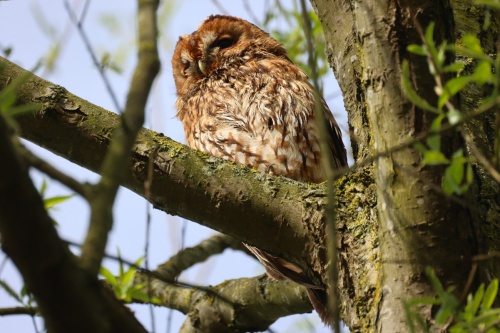 Brendon Brockway
Watermead Country Park
01 May 2023
Leicestershire & Rutland Map
Enter a town or village to see local records
MAP KEY:
Yellow squares = NBN records (all known data)
Coloured squares = NatureSpot records: 2025+ | 2020-2024 | pre-2020
UK Map
Additional images