Sweet-briar
Sweet-briar - Rosa rubiginosa
The attractive pink flowers are highly scented and are followed by large red hips which last well into winter. The leaves are also scented, said to resemble the smell of apples. The whole plant is vigorous with arching, thorn bearing stems. Leaflets with sticky glands underside, fruit-smelling when crushed or after rain; pedicels (flower stalks) also glandular and hairy. and often with slender straight prickles.
Other roses; Small sweet-briar (Rosa micrantha) has very similar glandular leaflets and pedicels.

check for glands and glandular hairs on leaflets, pedicels,
A photo is required showing glands under leaflets and glandular hairs on pedicels
Sometimes planted as hedging and may be found in areas such as country parks.
Flowering in summer.
Deciduous.
Widespread in Britain, though often as an escape or introduction.
Occasional as an introduction in Leicestershire and Rutland; may be native especially in limestone areas to east of Vice-county.
It was on the 2011 VC55 Rare Plant Register (Jeeves, 2011) but is not on the current RPR (Hall & Woodward, 2022); it is listed as 'data deficient' because it is not clear whether records are of introduced/escaped plants or natives.
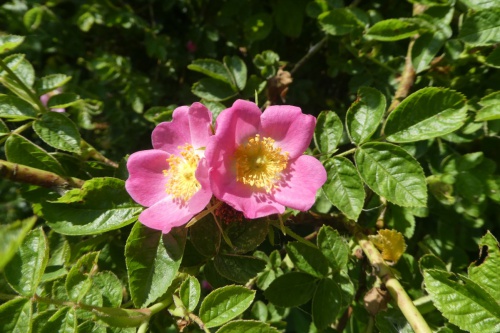 Frank Bedford
Ashby de la Zouch, Hicks Lodge
23 June 2021
Sweet Briar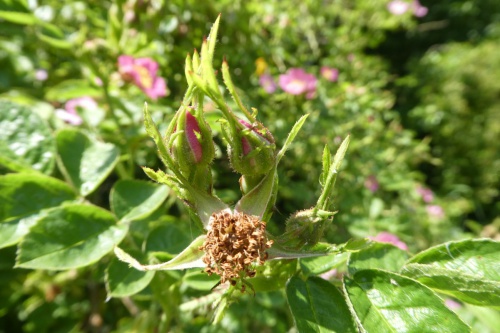 Frank Bedford
Ashby de la Zouch, Hicks Lodge
23 June 2021
Sweet Briar
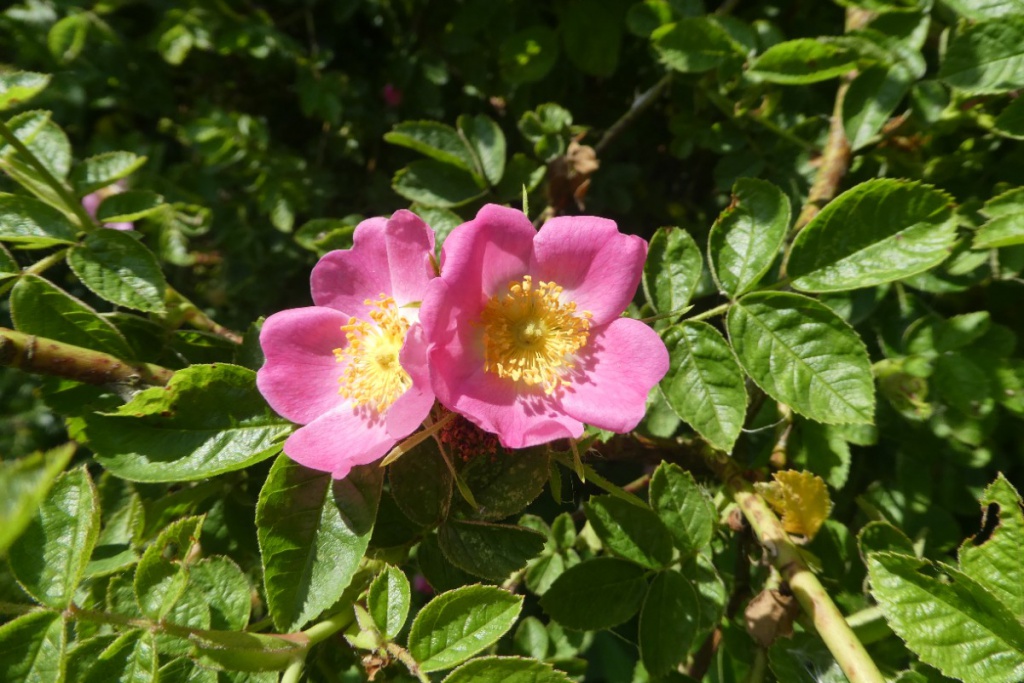
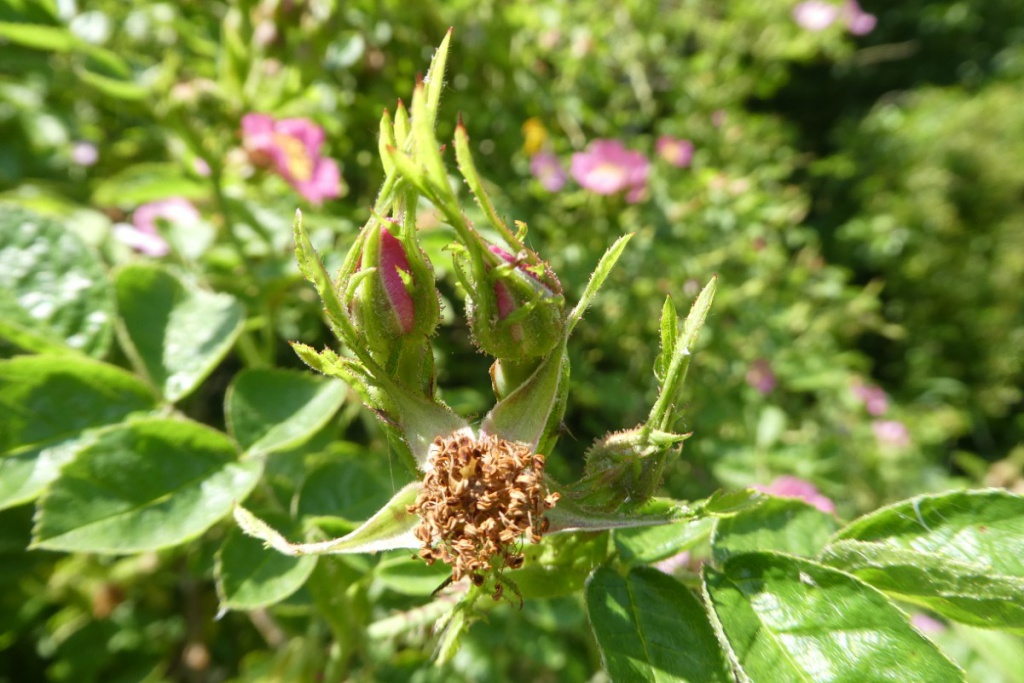
Leicestershire & Rutland Map
Enter a town or village to see local records
MAP KEY:
Yellow squares = NBN records (all known data)
Coloured squares = NatureSpot records: 2025+ | 2020-2024 | pre-2020
UK Map
Additional images
No additional images available for this species.
All NatureSpot records
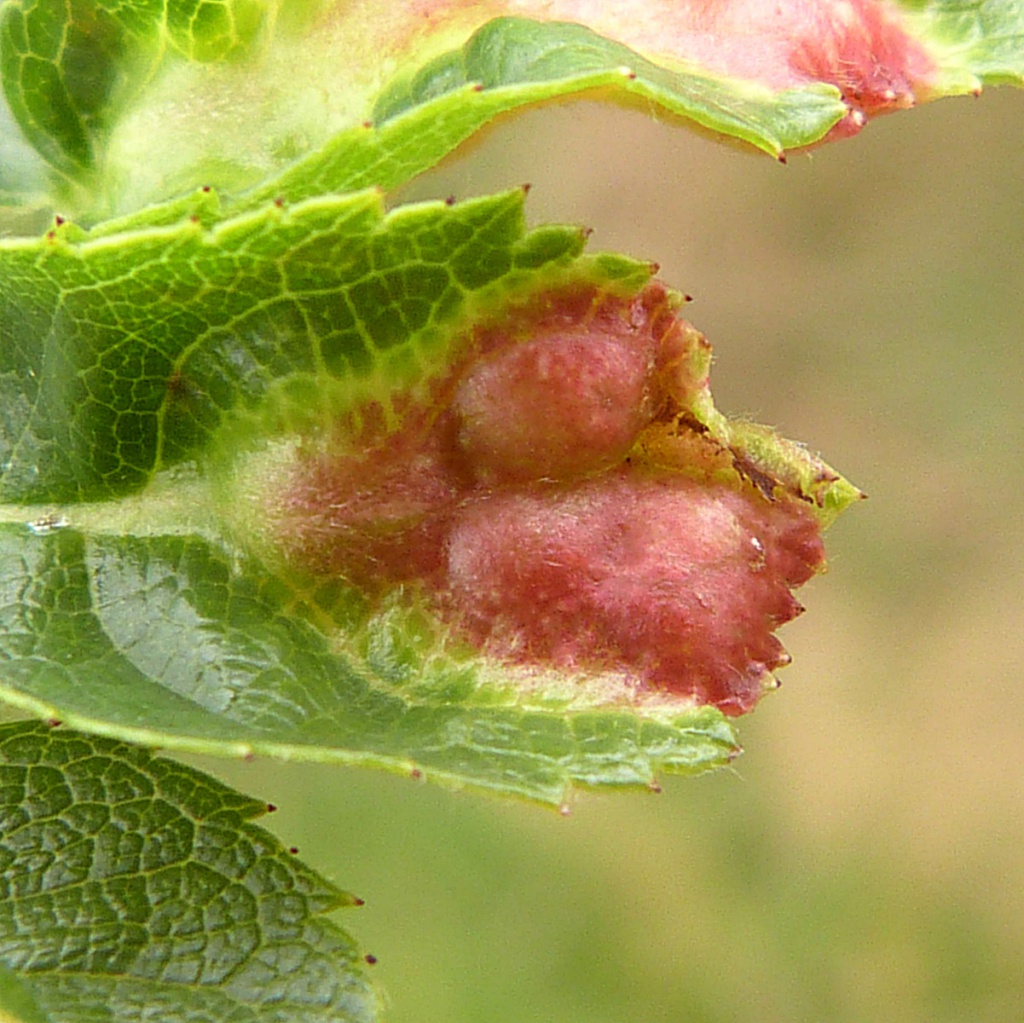
Diplolepis spinosissimae
The larvae of the gall wasp cause Diplolepis spinosissimae cause galls to form on various rose species, being most frequent on Burnet Rose (Rosa spinosissima), but also found on other rose species including Dog-rose and Sweet-briar. The galls are smooth, reddish-green, ovoid in shape and may occur on the leaf petiole or protruding from both sides of the leaf but quite often the galls coalesce. Each gall contains a single white larva.