Sun Spurge
Sun Spurge - Euphorbia helioscopia
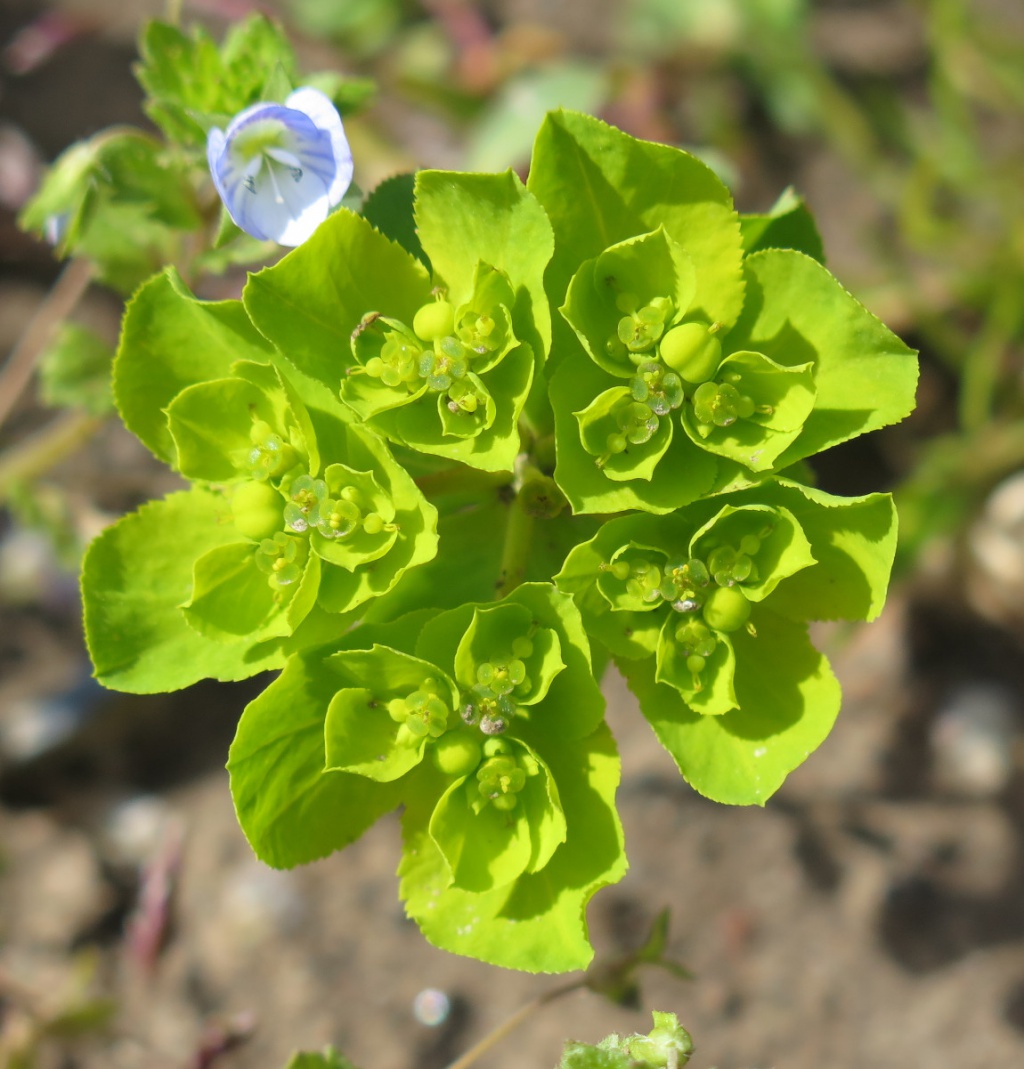
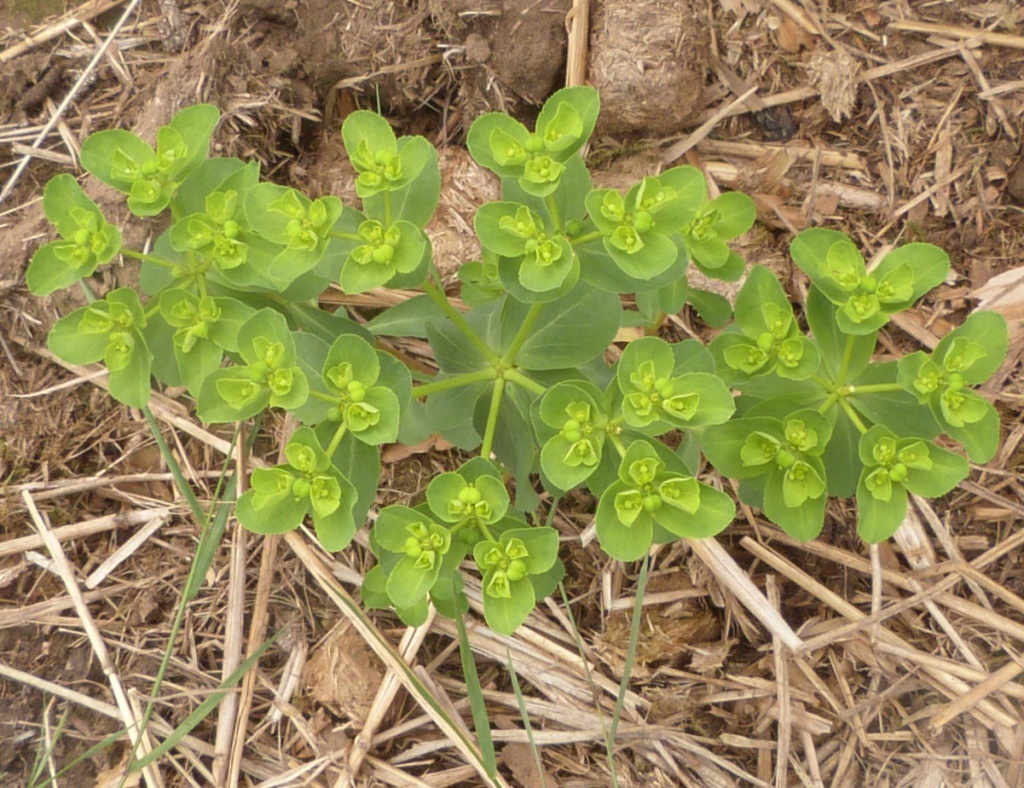
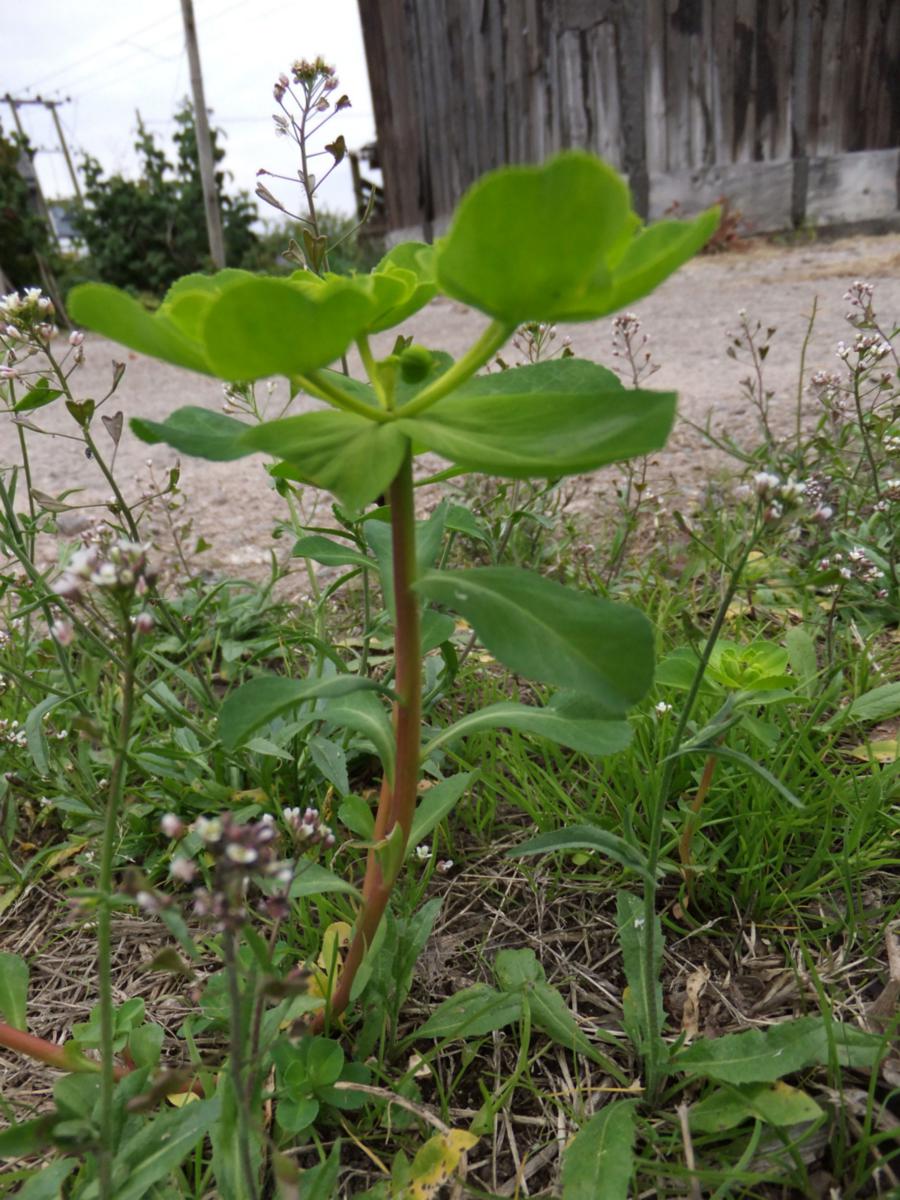
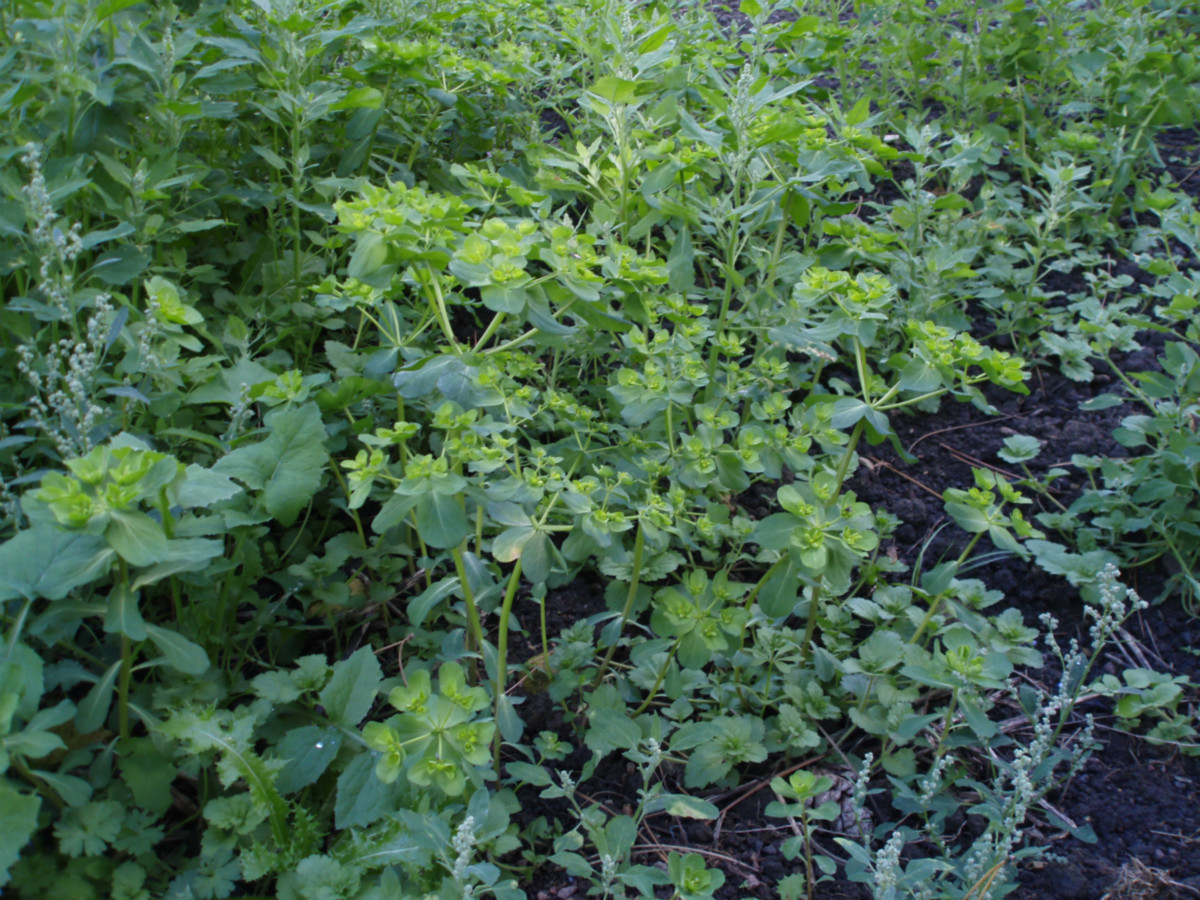
Short to medium, more or less hairless plant. Stem usually solitary, erect. Leaves oval, broadest above the middle, blunt, finely toothed in the upper half. Umbel with 5 main rays and yellowish bracts, similar in shape to the leaves.
Euphorbia peplus is a similar small spurge

Leaves glabrous and obovate (widest towards the end not the stalk). The cyathium (the cup-shaped structure that carries the male and female flowers) is rounded on the outer edge (not concave and with two points, as in E peplus). The ovary and capsule are glabrous.
Cultivated land, gardens, allotments, arable fields and waste ground.
May to August.
Annual.
Fairly common throughout Britain, but scarcer and more coastal in the north.
Quite common in Leicestershire and Rutland. In the 1979 Flora survey of Leicestershire it was found in 367 of the 617 tetrads.
In the current checklist (Jeeves, 2011) it is listed as Alien (archaeophyte); occasional
 Field near Grace Rd and Granitethorpe Quarry Sapcote SP 4917 9360 (taken 9.7.2006).JPG) Graham Calow
Graham Calow
Sapcote
09 July 2006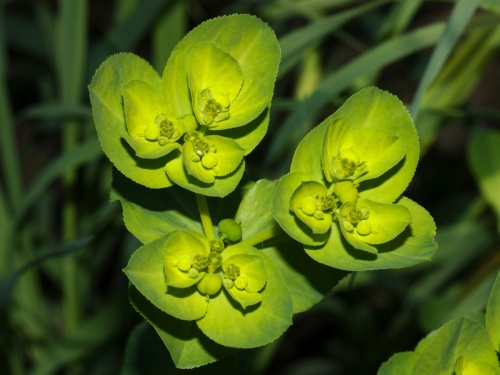 HAPeacock
Gilroes Cemetery Extension
27 May 2012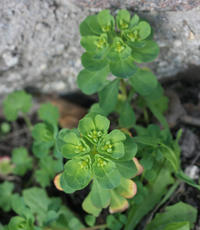 David Nicholls
Abbey Park
19 September 2010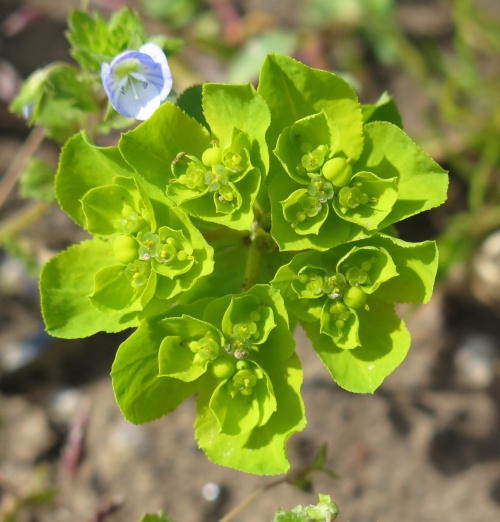 David Nicholls
Ratby
30 April 2016
 Field near Grace Rd and Granitethorpe Quarry Sapcote SP 4917 9360 (taken 9.7.2006).JPG)


Leicestershire & Rutland Map
Enter a town or village to see local records
MAP KEY:
Yellow squares = NBN records (all known data)
Coloured squares = NatureSpot records: 2025+ | 2020-2024 | pre-2020
UK Map
Additional images



All NatureSpot records

Melampsora euphorbiae
The rust Melampsora euphorbiae commonly causes galls on Petty Spurge and Sun Spurge, and occasionally on other species of Spurge. There is no host alternation. Stems and leaves become distorted and thickened, with orange aecia on both leaf surfaces, petioles and stems. Later, yellow uredinia are present on leaf underside; dark telia are occasional on Petty Spurge.