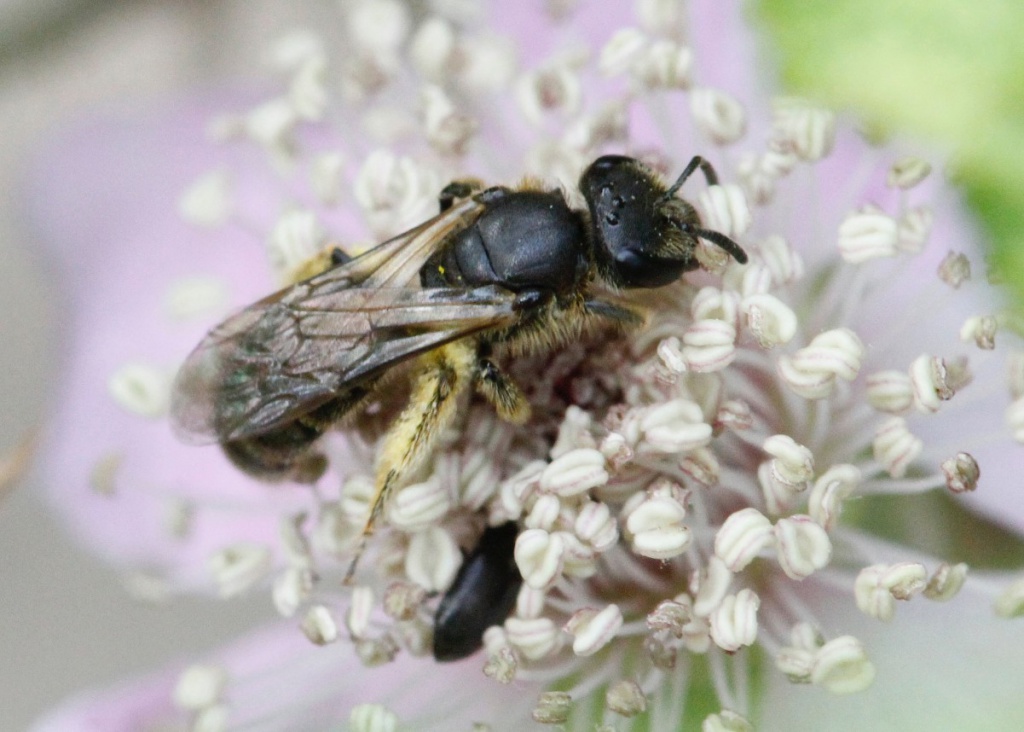
Sharp-collared Furrow Bee
Sharp-collared Furrow Bee - Lasioglossum malachurum
This is one of the larger Lasioglossum species in Britain, and the distinctive right-angled front corners of the pronotum are easily seen under the microscope.

Most solitary bees and wasps are difficult to identify, and can rarely be identified from photos taken in the field. All red-rated records should include a photo or set of photos of the specimen, illustrating the key characters taken from a standard key, which should also be referenced (e.g. ‘Falk, 2015’). The full set of key characters are generally not visible in field photos and photos are rarely sharp enough. To aid in the verification of your records, please include face shot, side, top and wings. The notes should state whether male or female, and explain how the specimen met the key characters. Although NS may not be able to identify the species even if these reference photos are provided, the photos will be stored with the record and may allow it be identified in future. Alternatively, NS will accept records identified by a recognised local or national expert, or that have been identified via BWARS Facebook Group. If you have obtained this advice, please note the name of the person/organisation identifying the record in the ‘determiner’ field (e.g. ‘Stuart Roberts, BWARS Facebook’) rather than just a comment of ‘BWARS Facebook’.
Coastal cliffs and landslips, abandoned quarries, commons, chalk grassland and private gardens.
Females from early April (sometimes earlier) to October; males from early July to the beginning of October.
Commonly nests in aggregations, occasionally of considerable extent, especially in exposed soil at the base of coastal cliffs and similar unstable locations where vegetation is sparse. Nest burrows are often observed in the hard trodden soil of footpaths.
Mainly found in southern England and the Channel Islands. Formerly a scarce and very local species but, since about 1990, it has been extending its range in England and is common to locally abundant in many sites in the southern counties.
Status in Leicestershire and Rutland not known.
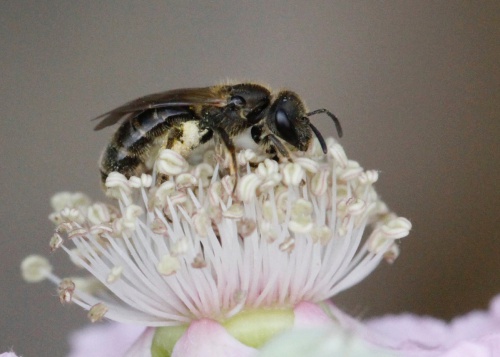 Matthew Berriman
Ketton Quarry NR
20 July 2019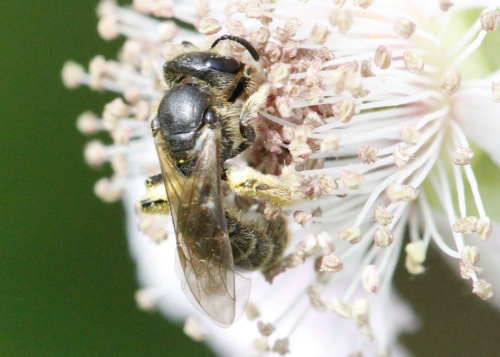 Matthew Berriman
Ketton Quarry NR
20 July 2019 Matthew Berriman
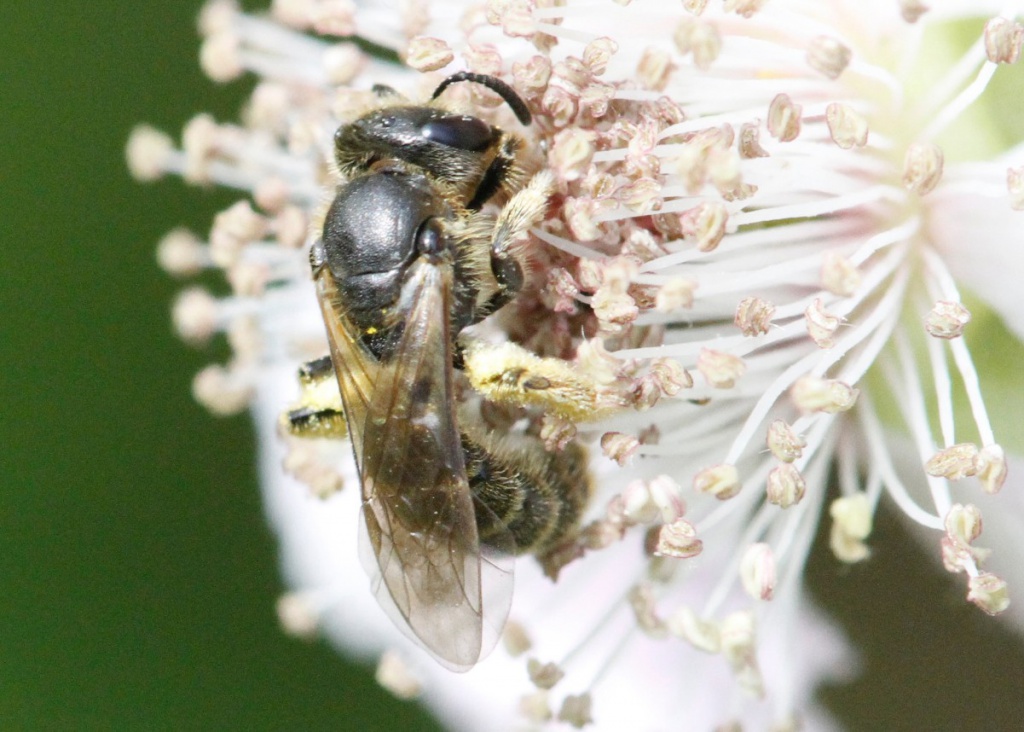
Ketton Quarry NR
20 July 2019


Leicestershire & Rutland Map
Enter a town or village to see local records
MAP KEY:
Yellow squares = NBN records (all known data)
Coloured squares = NatureSpot records: 2025+ | 2020-2024 | pre-2020
UK Map
Additional images