Scarletina Bolete
Scarletina Bolete - Boletus luridiformis var. luridiformis
Neoboletus luridiformis
Neoboletus erythropus
Boletus erythropus
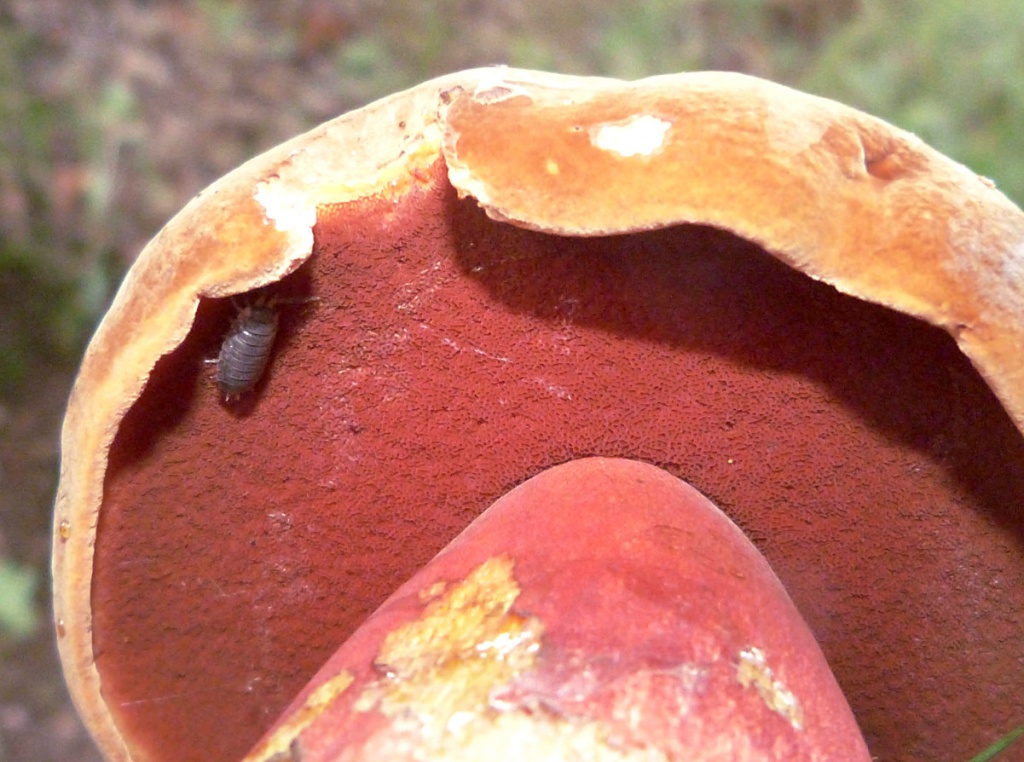
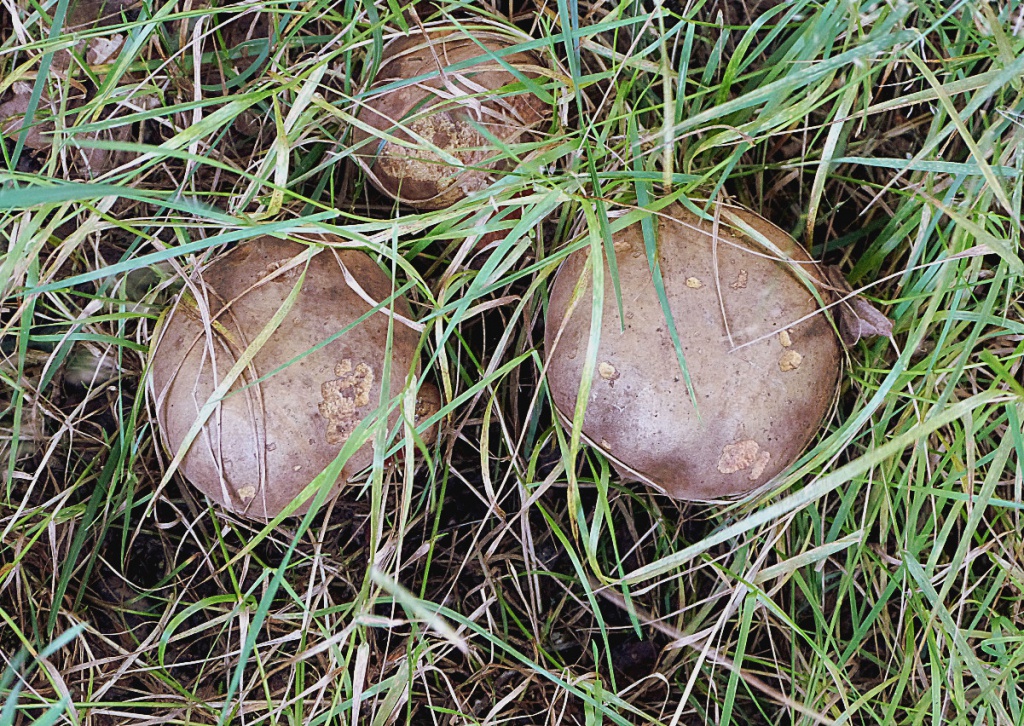
A large bolete with a brown felted cap and scarlet pores. The cap colour is variable, from yellow-brown to reddish or dark brown. The flesh is yellow. The stem is cream or yellow, covered with dense small red or orange dots or scales. The stem, tubes, pores and flesh stain blue when bruised.
Other boletes in the genus Suillellus, Rubroboletus, Imperator and Neoboletus have bluing flesh and red pores.

Photograph a fresh specimen from top down and in side view, and underneath to show pores and full length of stipe. Note habitat and substrate. Check for staining on cap and pores when bruised. We also recommend cutting vertically through cap and stem to show flesh colour and any staining.
On the ground in broad-leaved woodland on acid soils.
Peak time is September and October.
Widespread and fairly frequent in Britain.
Occasional in suitable habitats in Charnwood but unlikely in the east.
The taxonomy of this species is confusing; it appears in various sources under different specific or varietal names; Boletus erythropus was the name commonly used until recently. On the NBN, Boletus luridiformis has two varieties: var. erythropus is named as the Scarletina Bolete, and var. discolor as the False Yellow Bolete. Kibby (2017) does not use English names, but refers to it as Neoboletus praestigiator, and descibes two varieties, var. erythropus (i.e. Scarletina Bolete) and var. discolor (i.e. False Yellow Bolete).
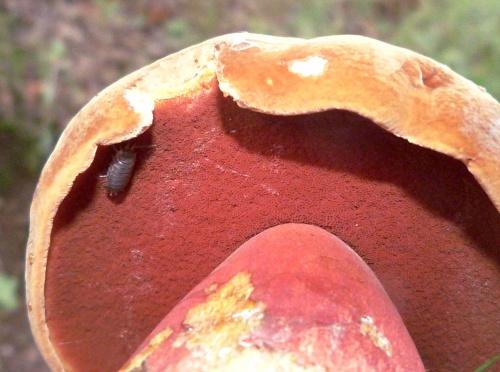 Graham Calow
Foot of Croft Hill
12 August 2019
det. R Iliffe from specimen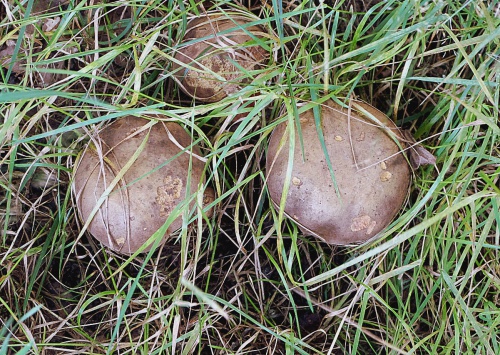 Graham Calow
Foot of Croft Hill
12 August 2019
det. R Iliffe from specimen
Leicestershire & Rutland Map
Enter a town or village to see local records
MAP KEY:
Yellow squares = NBN records (all known data)
Coloured squares = NatureSpot records: 2025+ | 2020-2024 | pre-2020
UK Map
Additional images
No additional images available for this species.