Ribwort Plantain
Ribwort Plantain - Plantago lanceolata
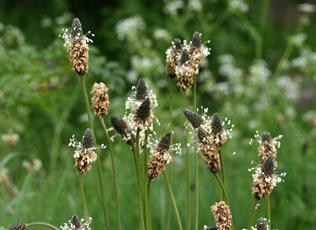
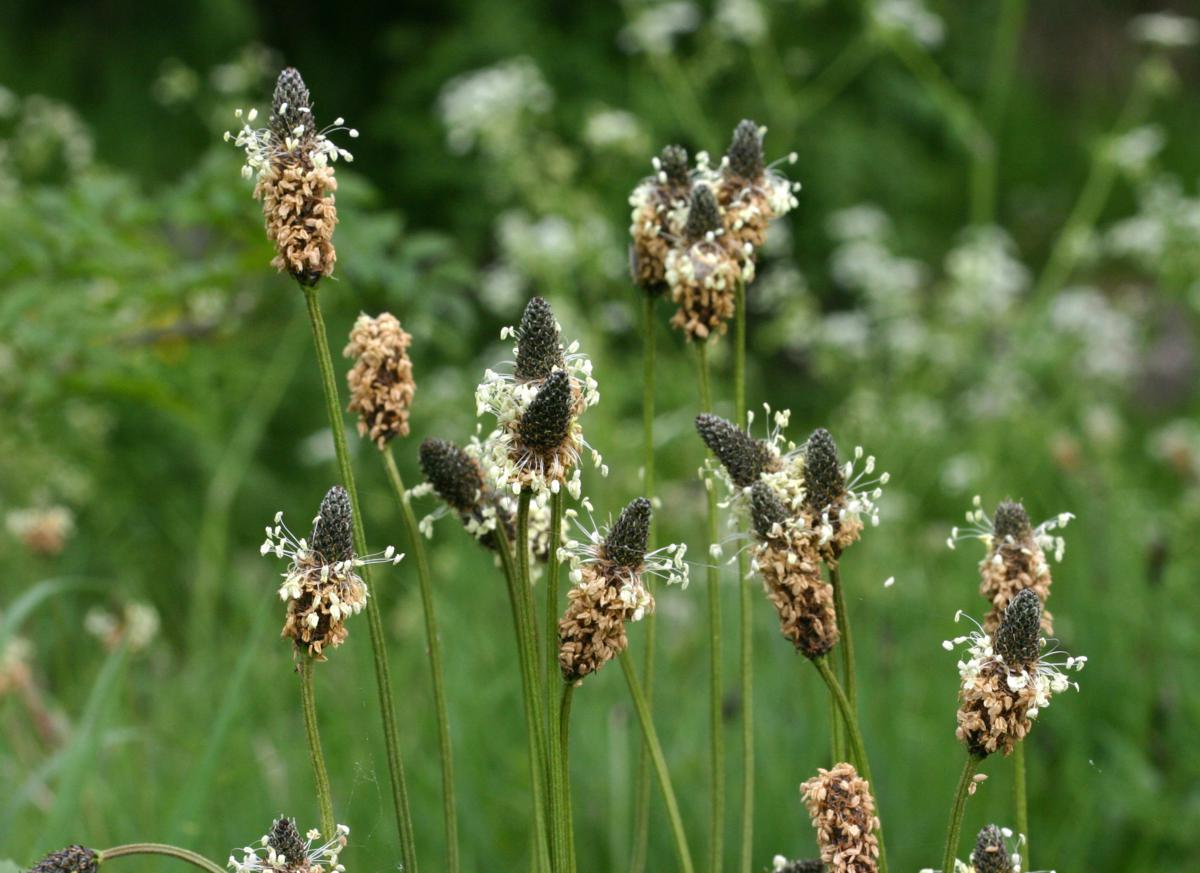
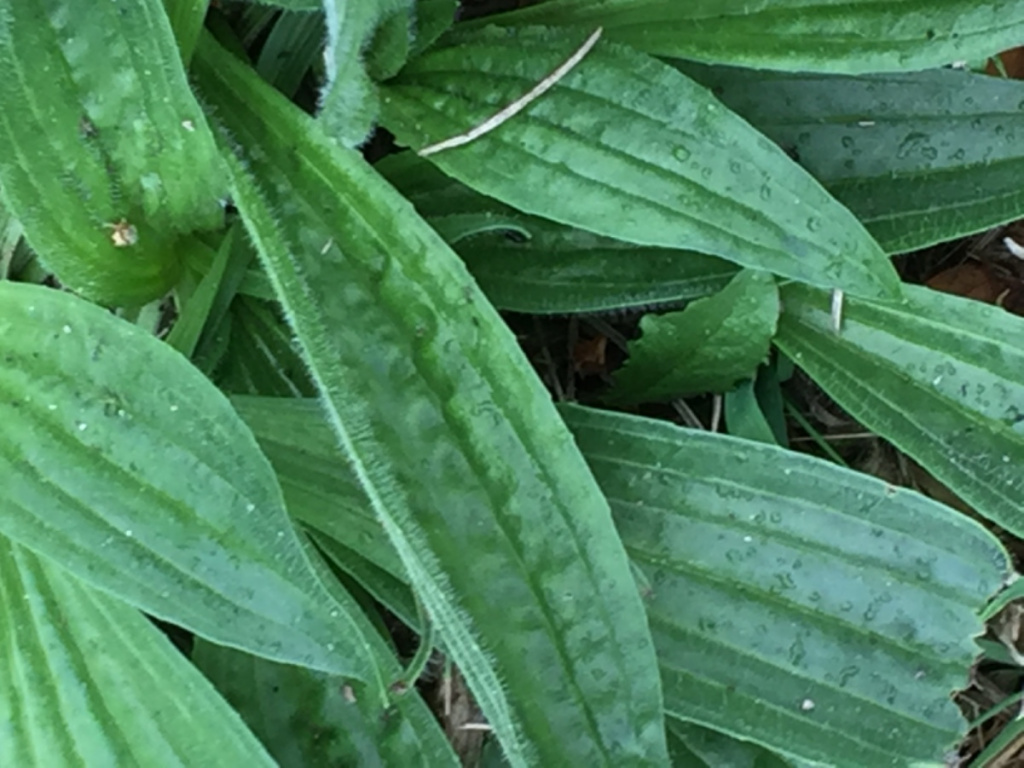
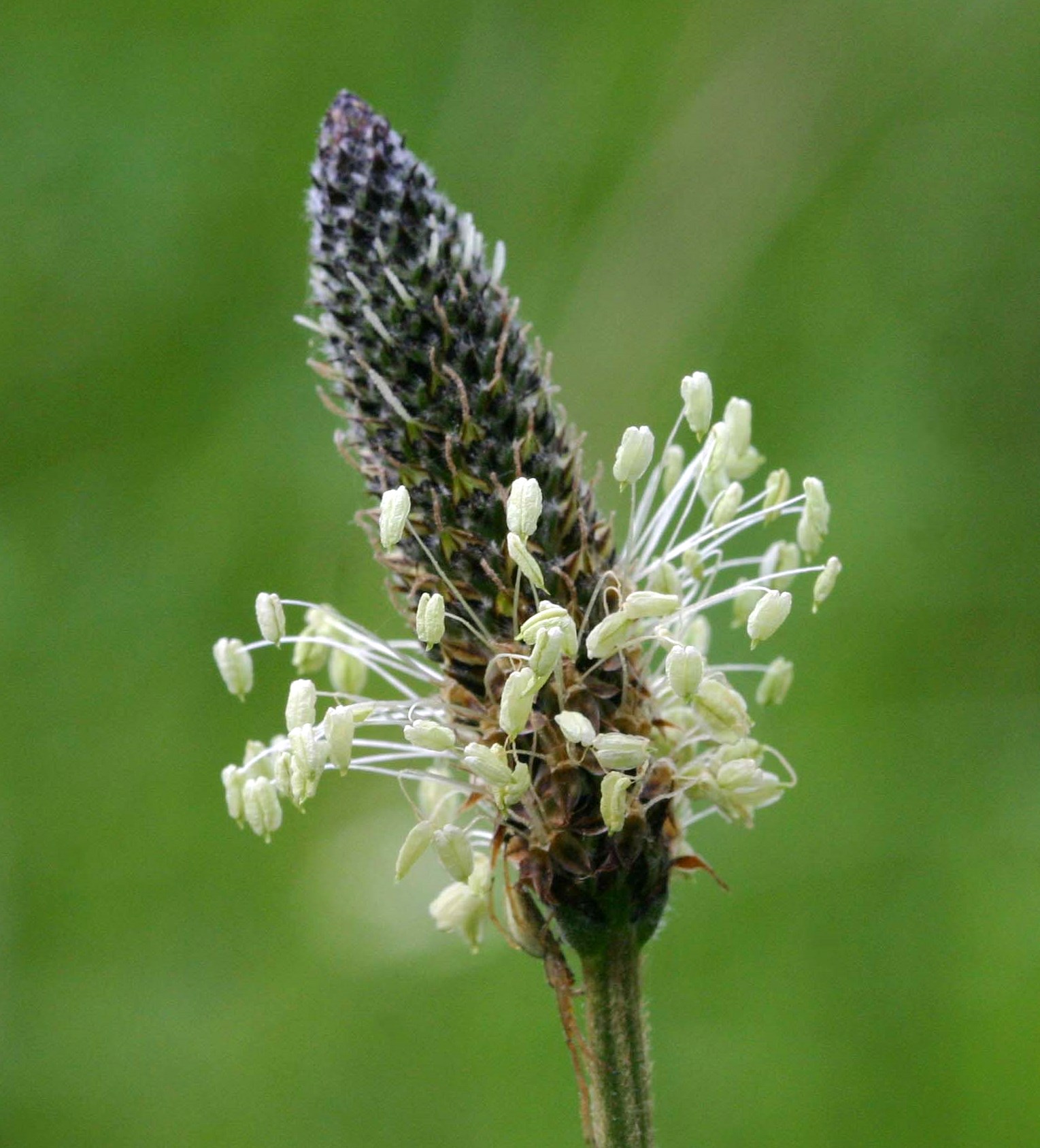
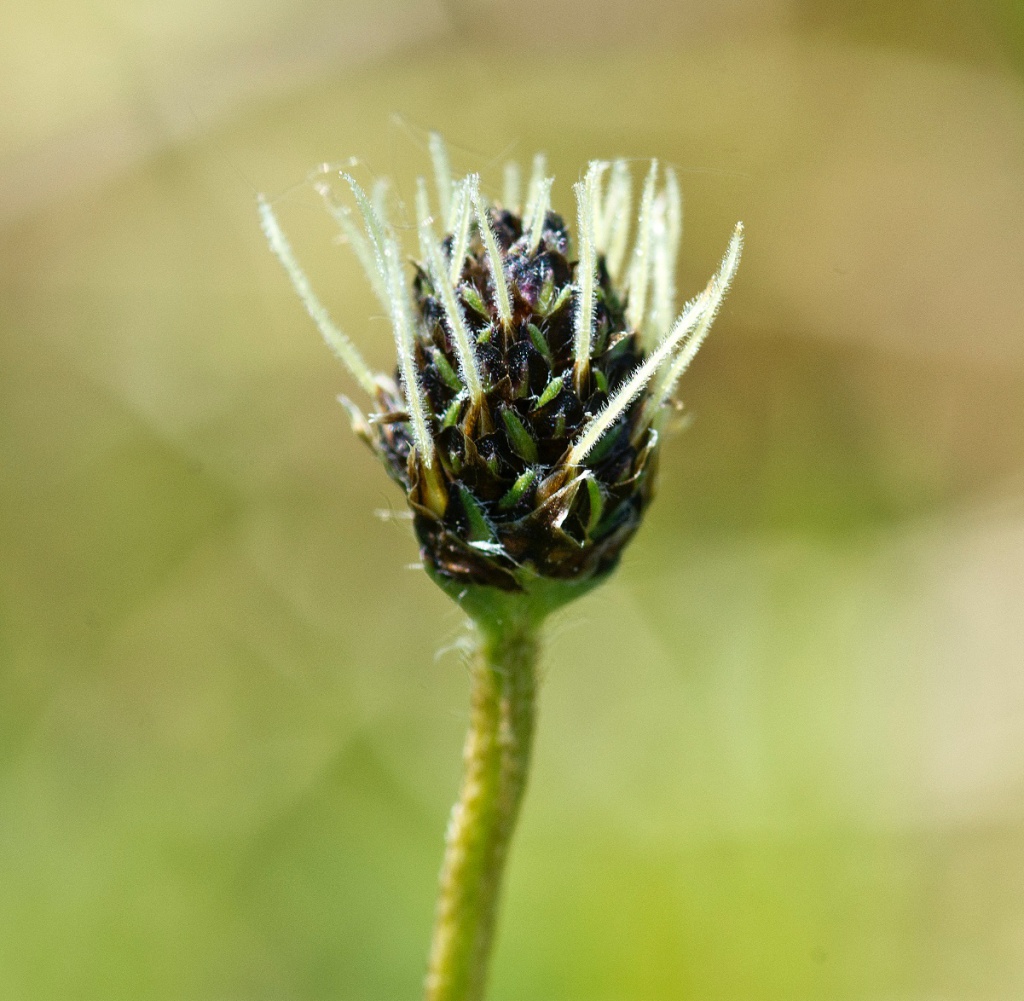
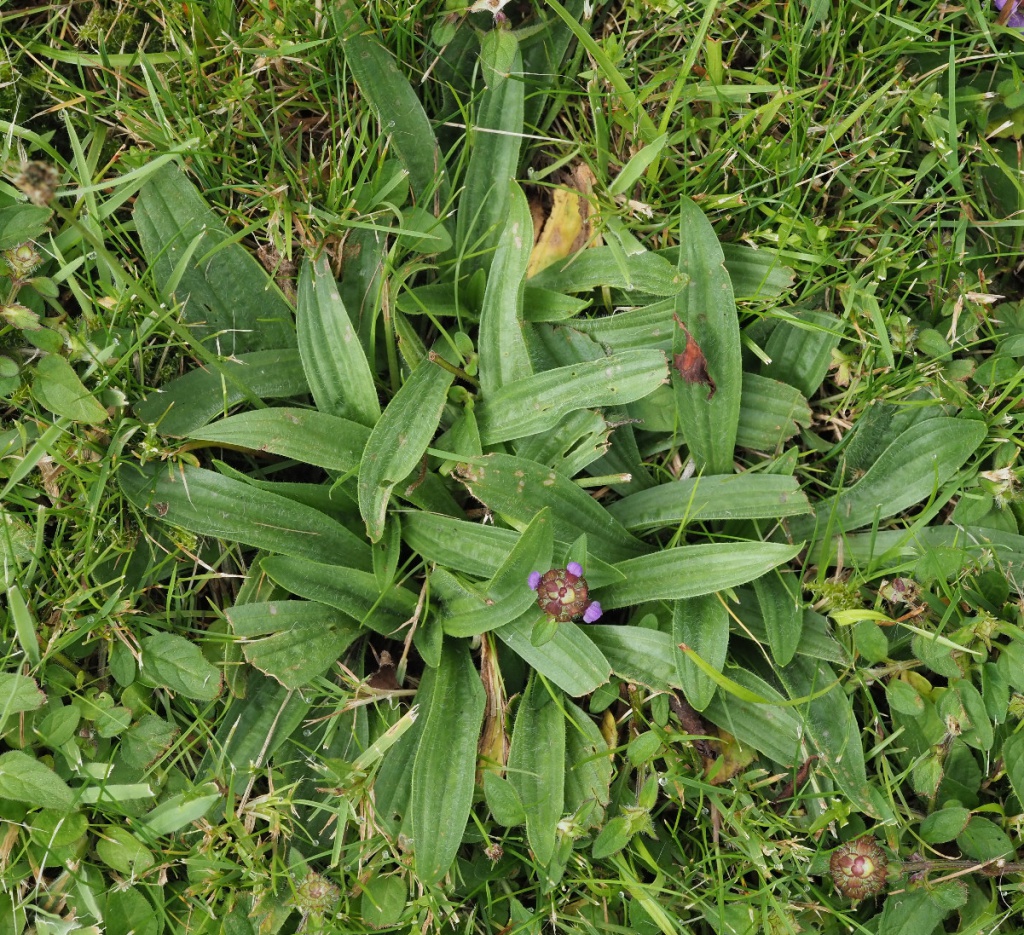
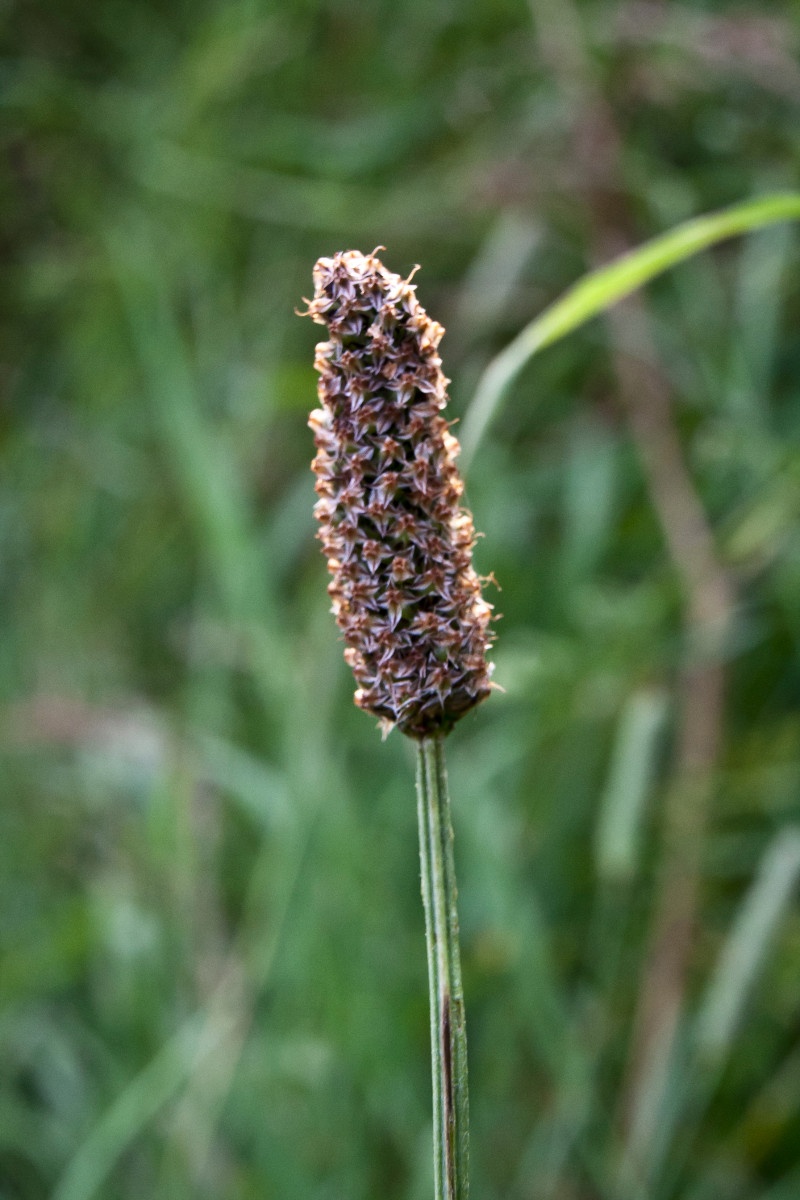
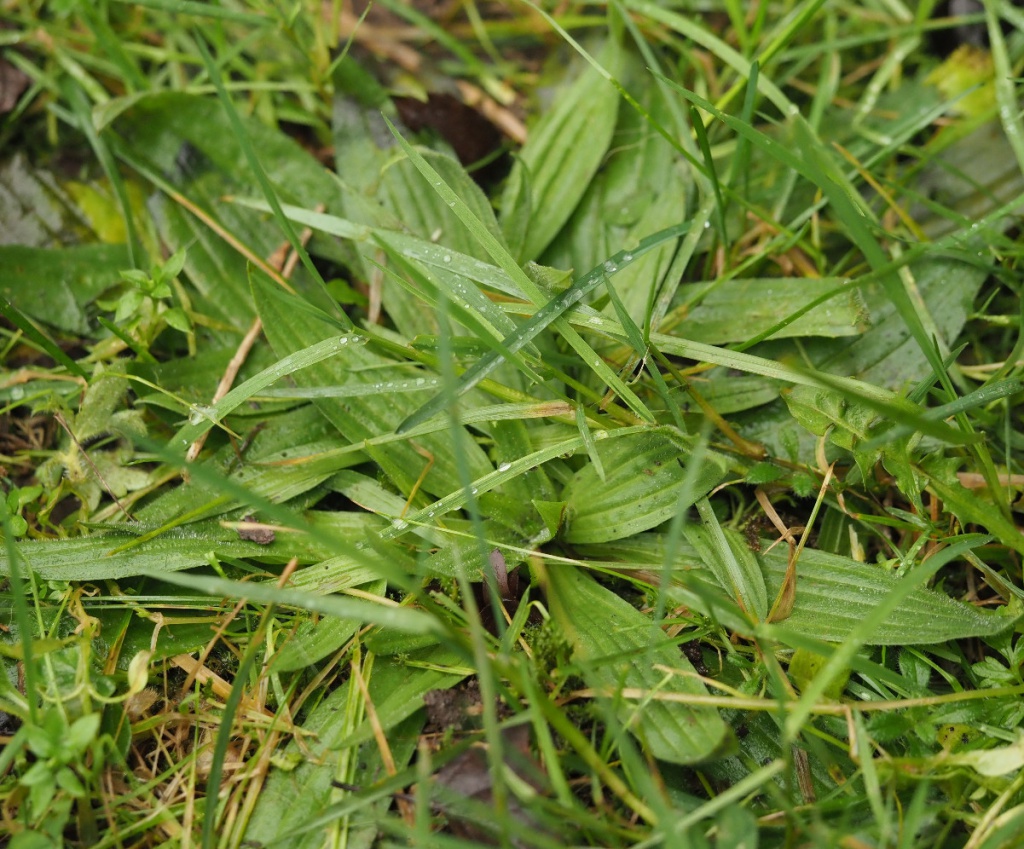
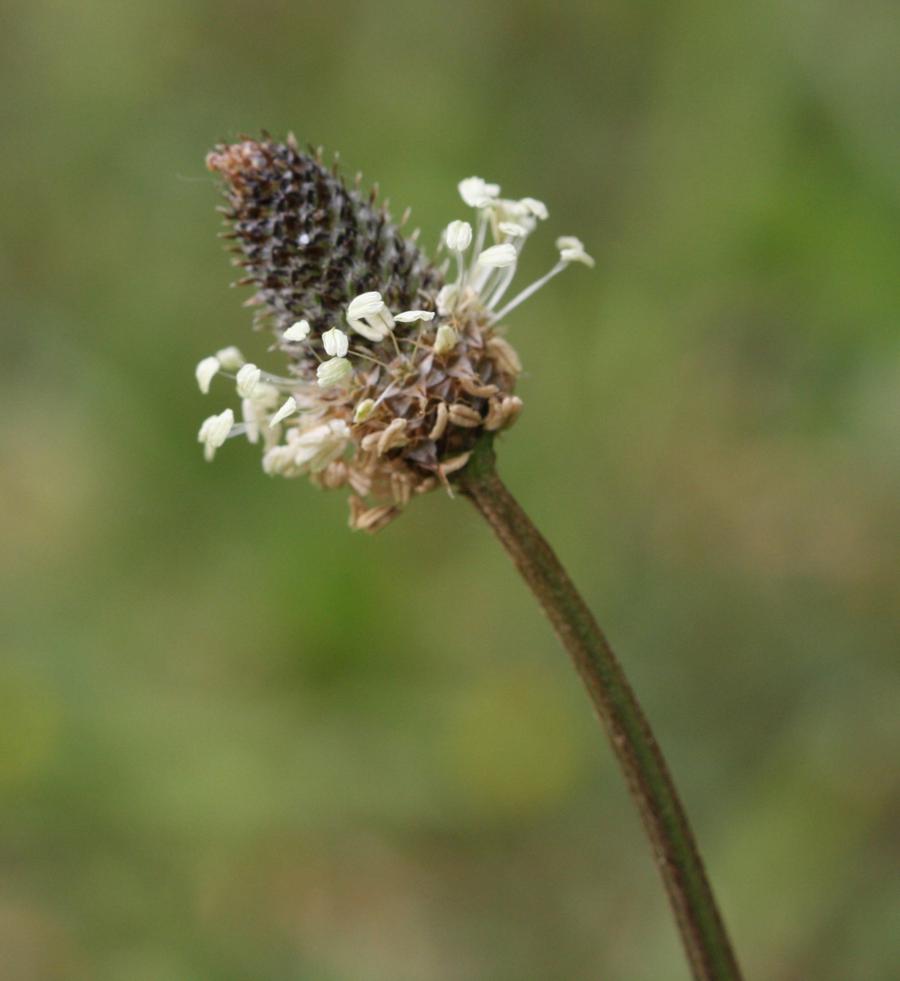
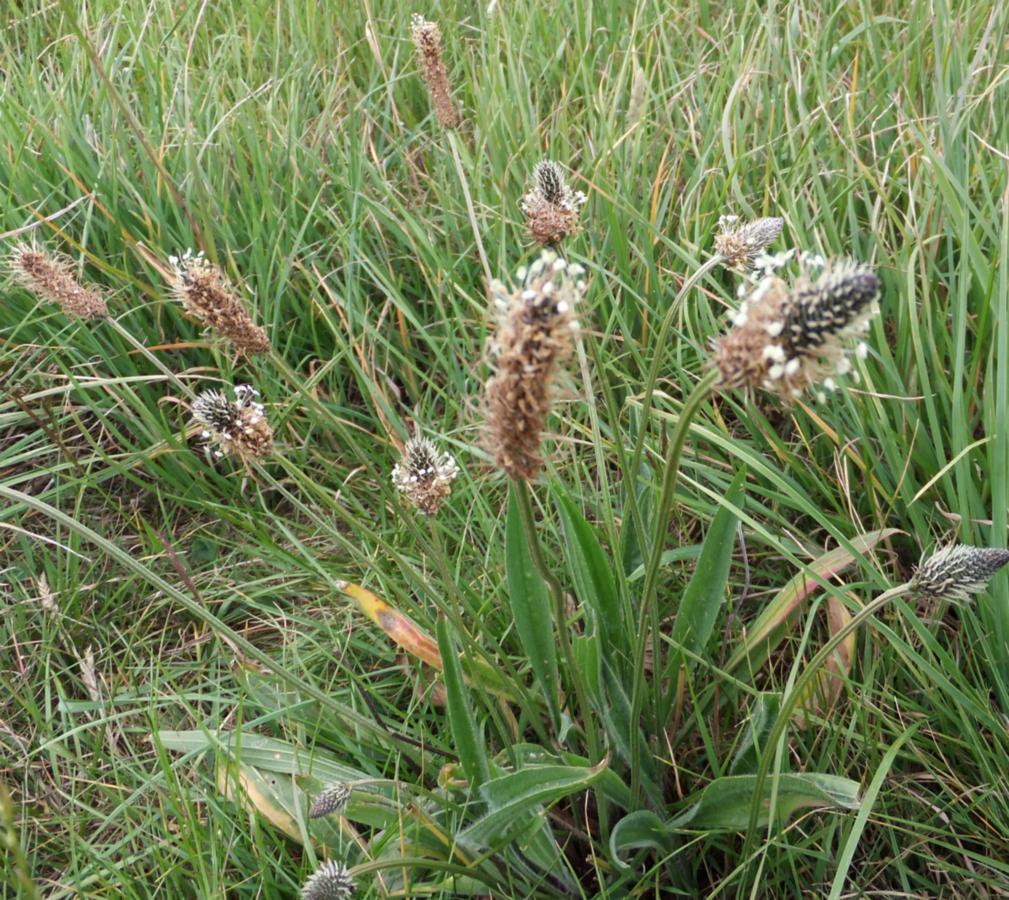
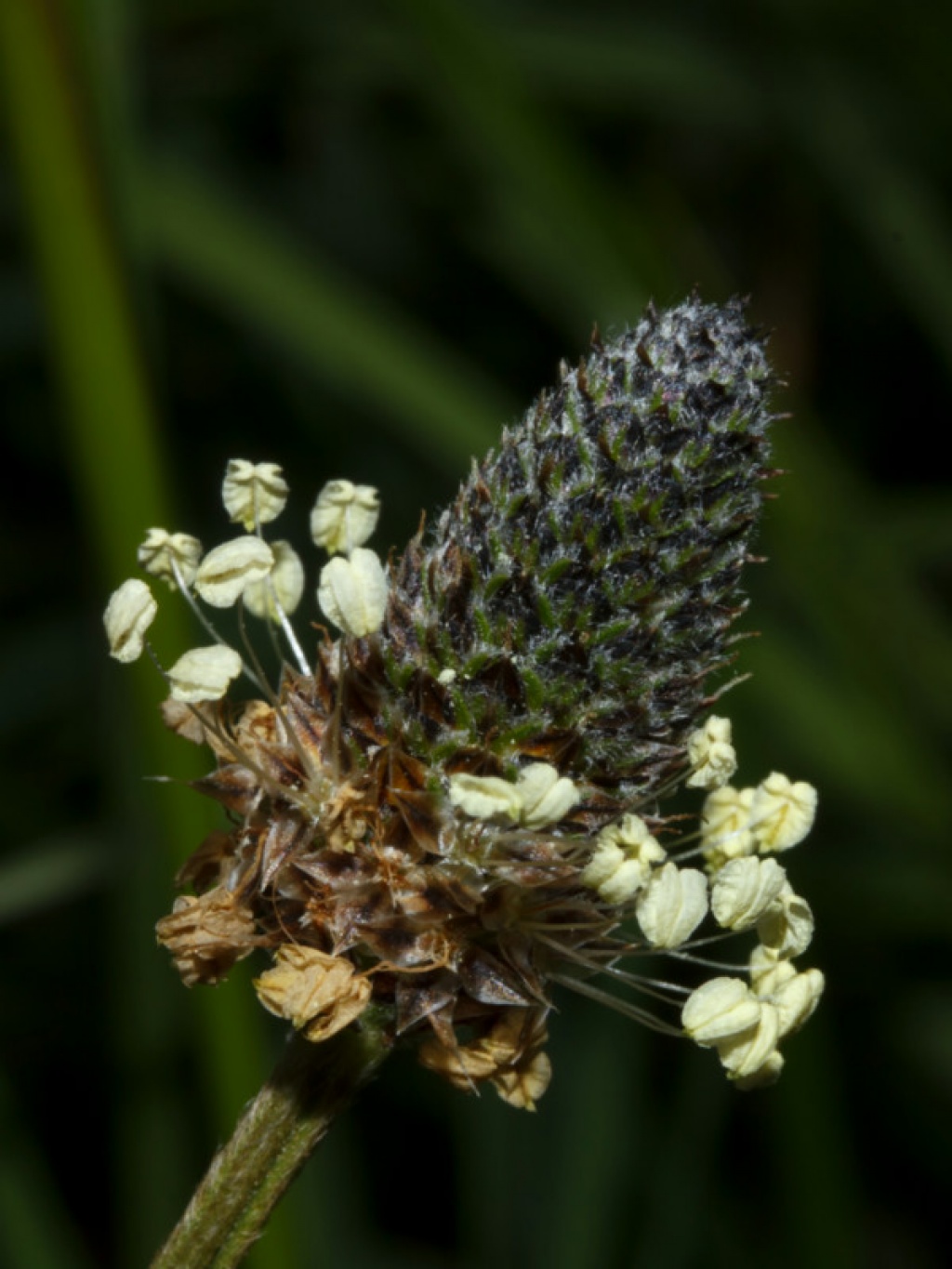
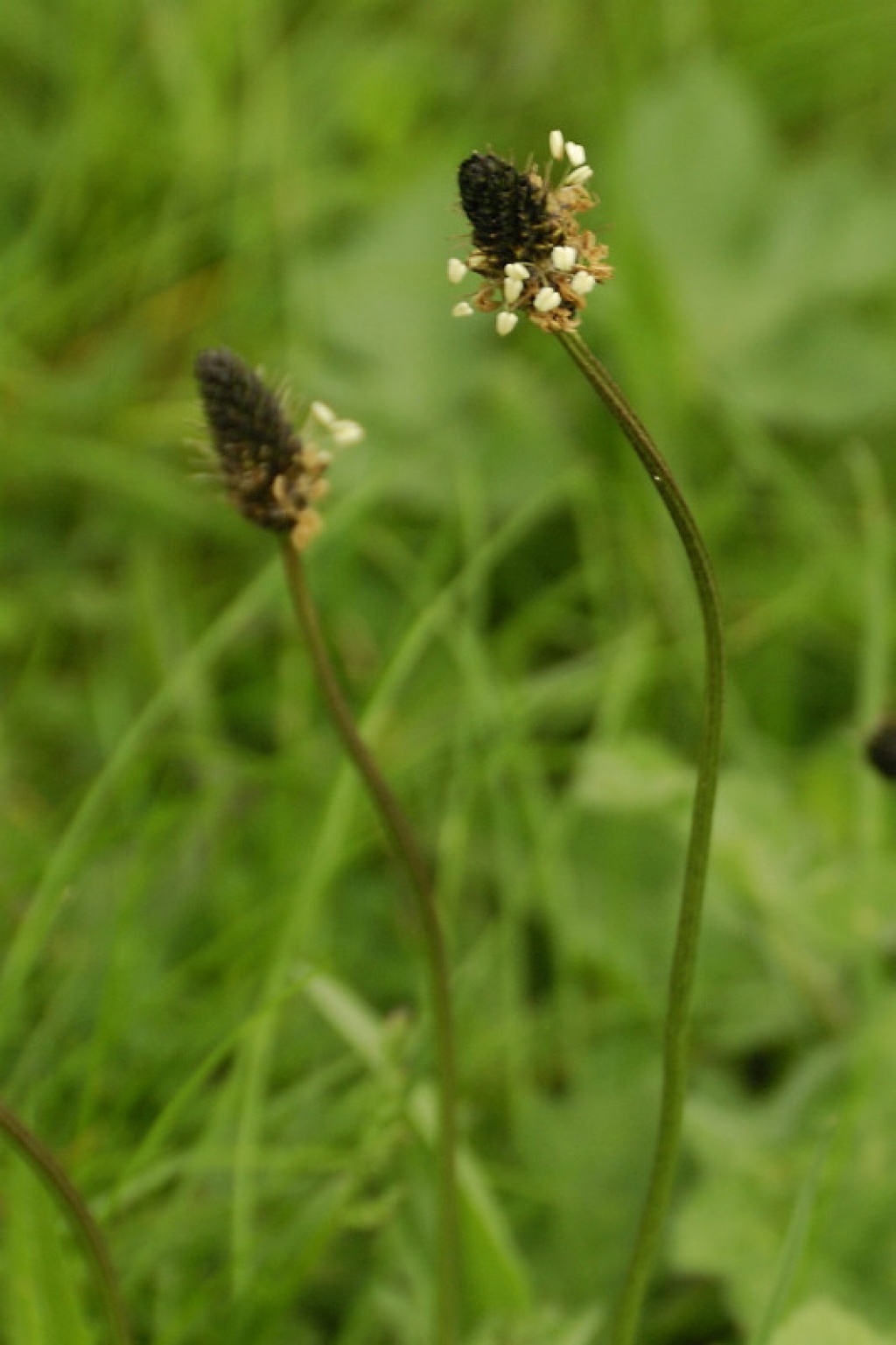
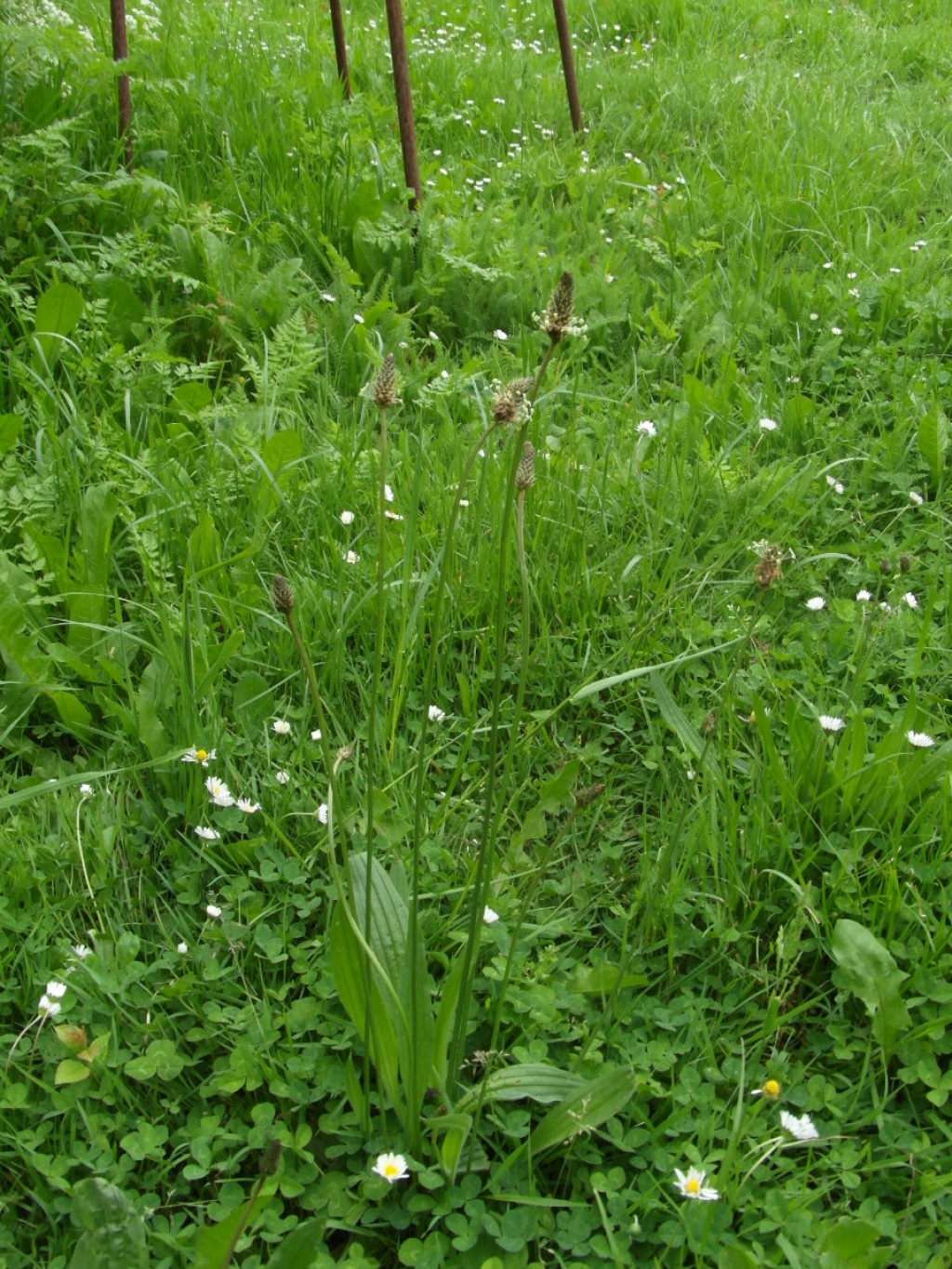
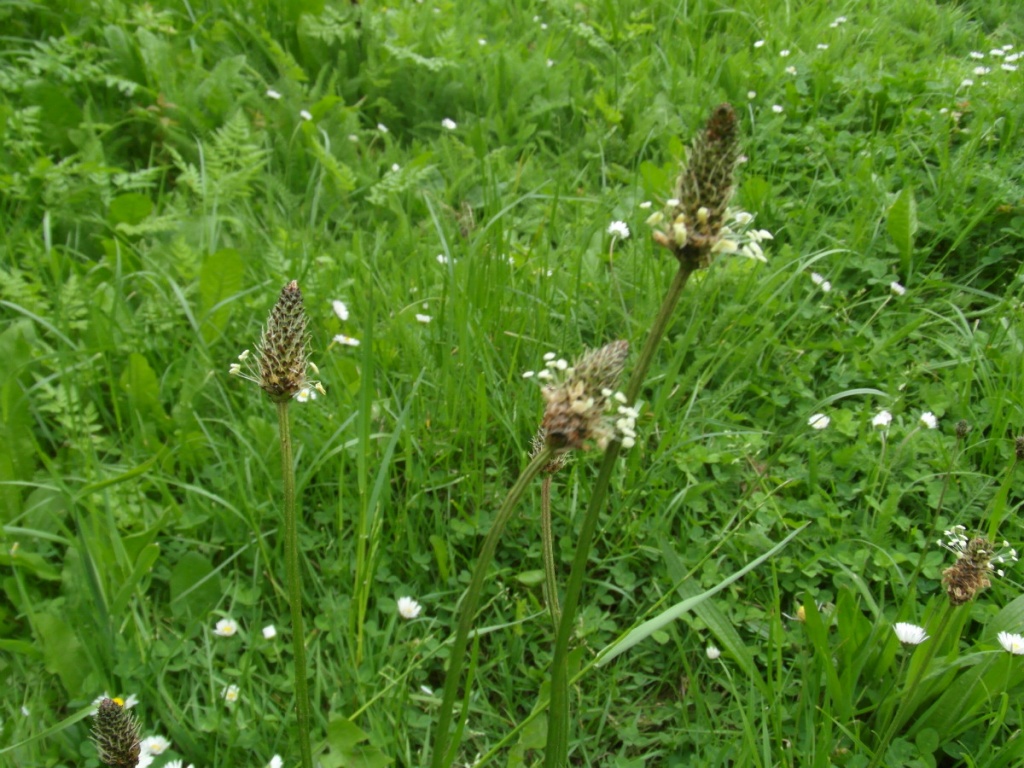
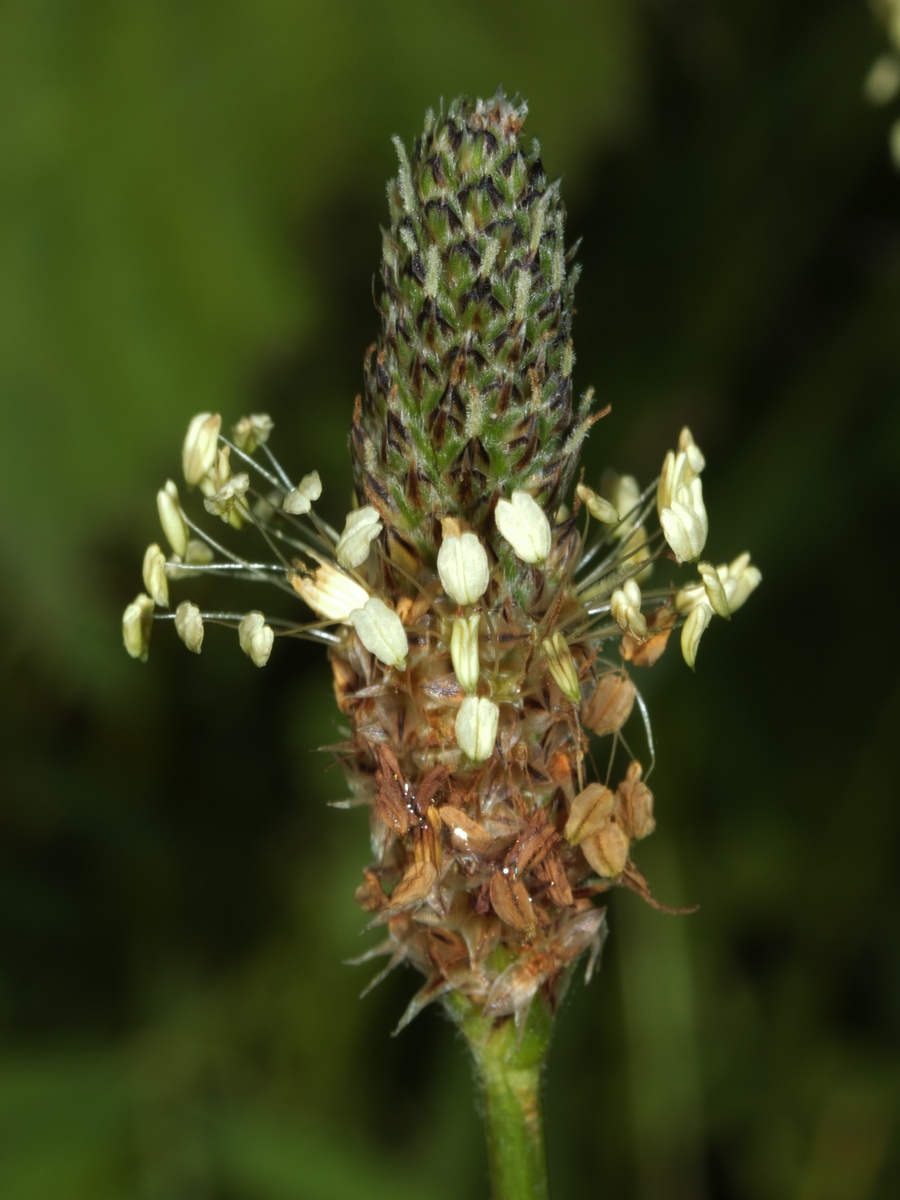
Low to medium plant with several leaf rosettes. Leaves linear lanceolate to lanceolate, slightly toothed or untoothed, 3 to 5 veined, strongly ribbed and stalked. Flowers brown, 4 mm in short blackish spikes on ridged stalks, exceeding the leaves, anthers pale yellow.

Roadsides, meadows, waste ground.
April to October.
Perennial.
Very common throughout Britain.
Very common in Leicestershire and Rutland. In the 1979 Flora survey of Leicestershire it was found in 599 of the 617 tetrads.
 David Nicholls
Groby Pool
10 May 2008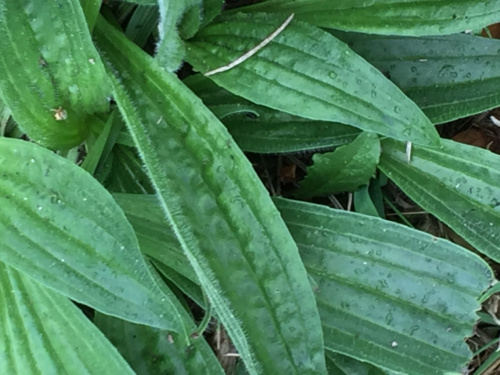 Dylan
Dylan
Melton Dalby Road/River Eye
04 September 2024
leaves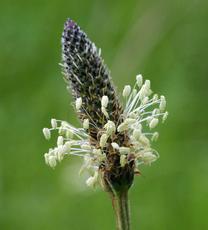 David Nicholls
Groby Pool
10 May 2008 Leicester Road by quarry wall Sapcote SP 4968 9336 (taken 27.4.2008)..JPG) Graham Calow
Graham Calow
Sapcote
27 April 2008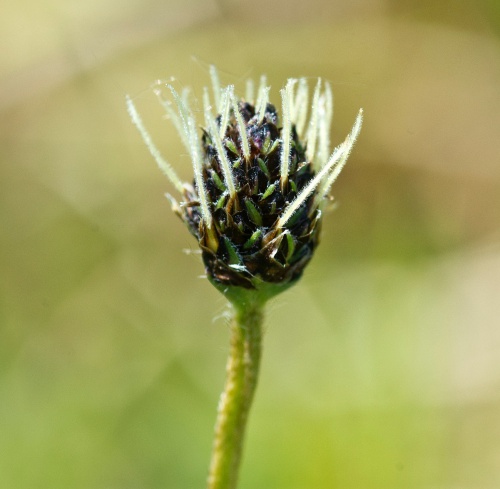 AJ Cann
Ketton Quarry
08 May 2016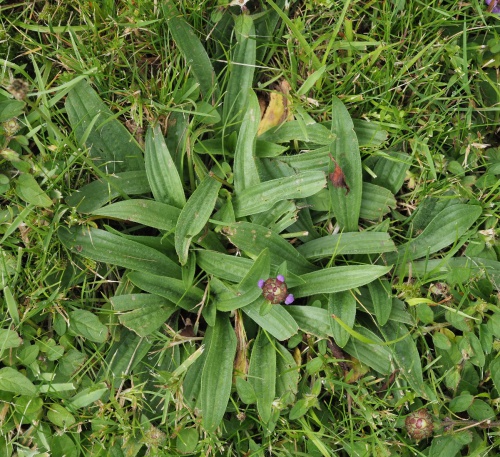 David Nicholls
Newtown Linford Churchyard
20 July 2023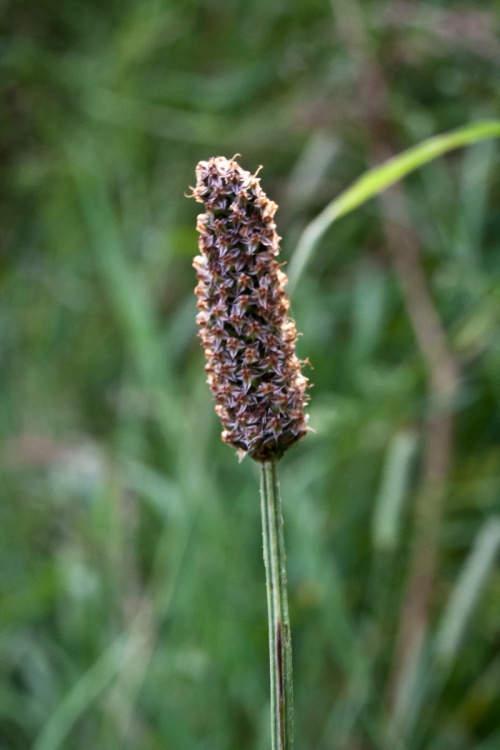 Fran Marsland
Broughton Astley
17 July 2012
 Leicester Road by quarry wall Sapcote SP 4968 9336 (taken 27.4.2008)..JPG)
Leicestershire & Rutland Map
Enter a town or village to see local records
MAP KEY:
Yellow squares = NBN records (all known data)
Coloured squares = NatureSpot records: 2025+ | 2020-2024 | pre-2020
UK Map
Additional images
 Old Fosse Sapcote SP 5030 9289 (taken 11.7.2008).JPG)
 Leicester Road by quarry wall Sapcote SP 4968 9336 (taken 1.5.2008).JPG)
All NatureSpot records
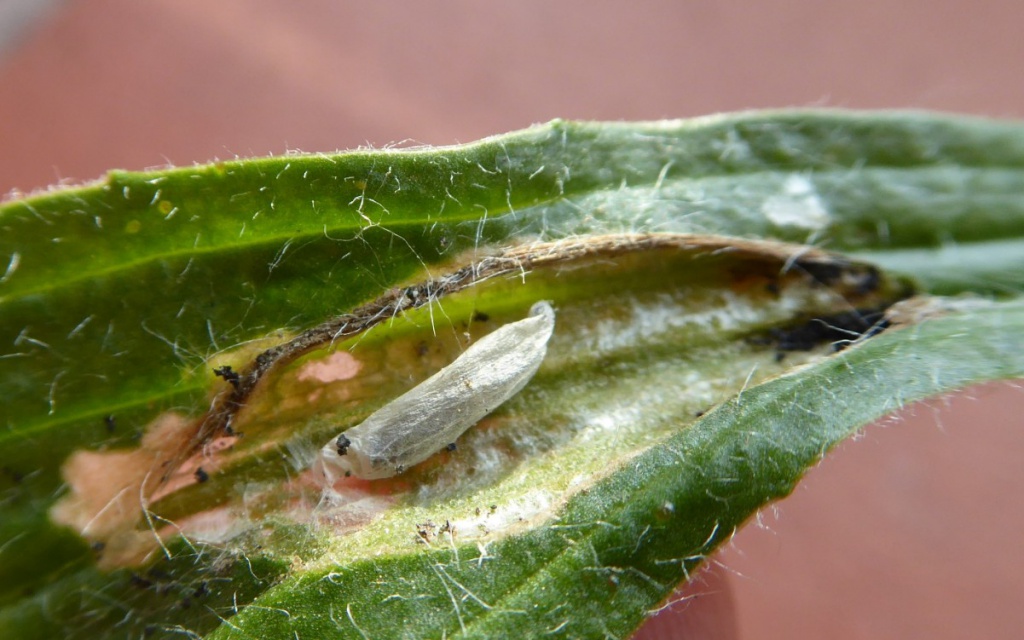
Aspilapteryx tringipennella
The larva of the moth Aspilapteryx tringipennella mines the leaves of Ribwort Plantain, initialy in narrow gallery under the leaf, later in a blotch over the midrib on the upper side. This contracts, puckering the leaf and causing it to fold up. Pu[paton is in a coccon in the mine.
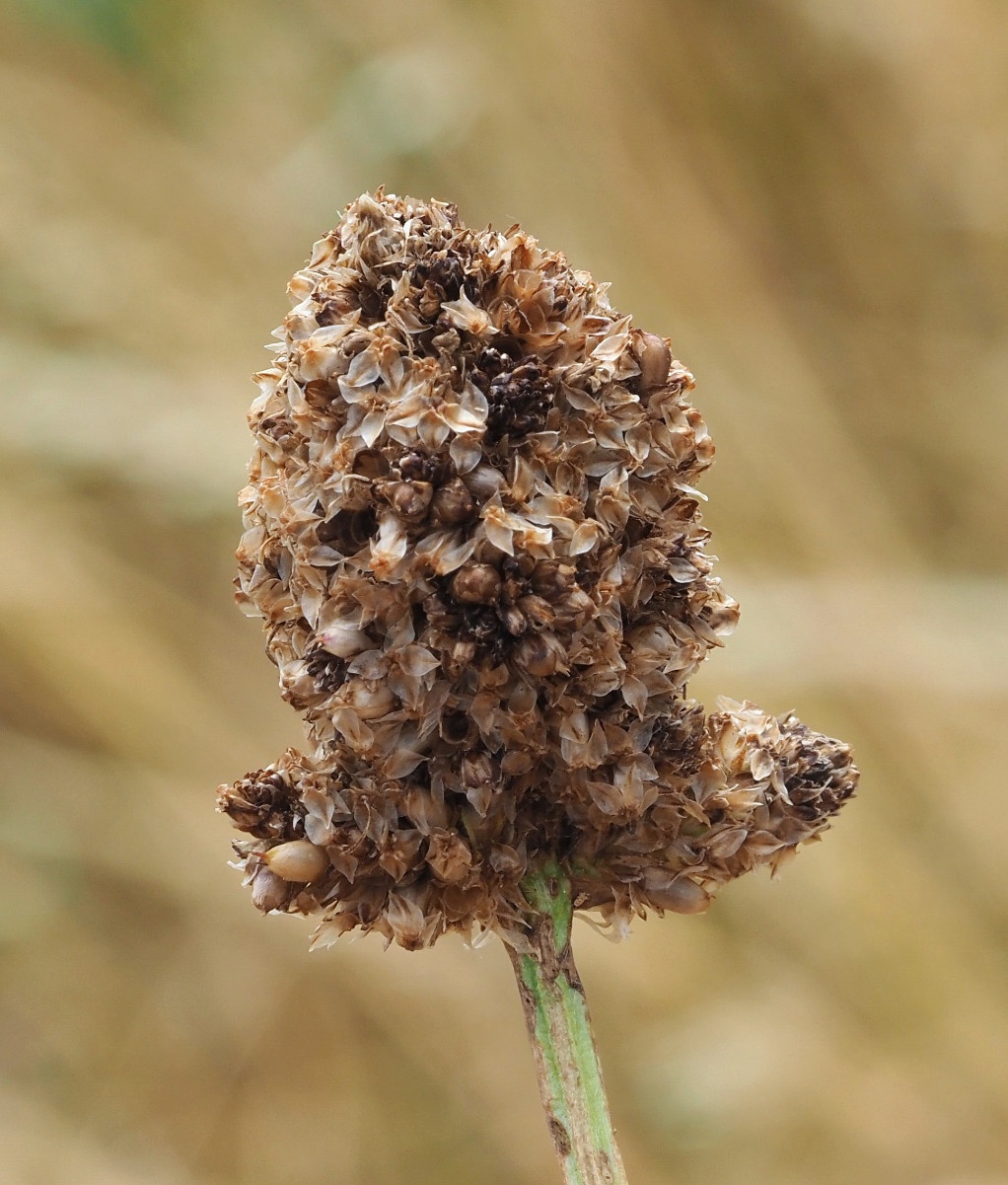
Causer unknown (Ribwort Plantain Gall)
This gall appears on Ribwort Plantain as an abnormally distorted flowerhead, and is probably caused by a virus or phytomplasma, but the precise causer has not yet been identified.
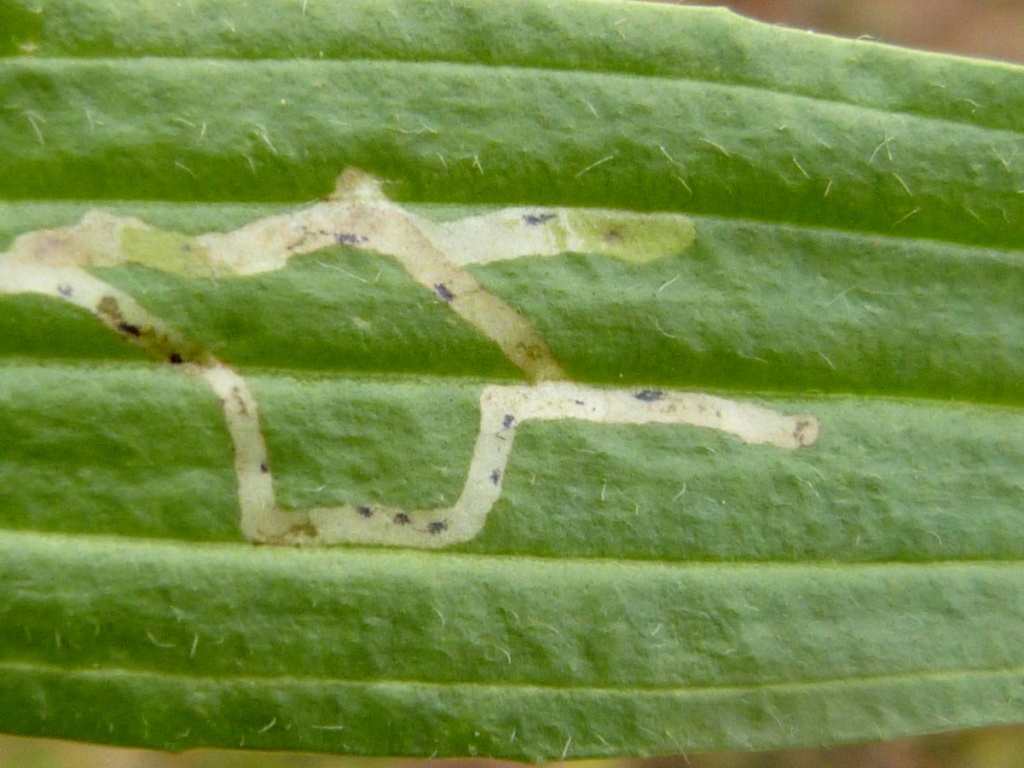
Phytomyza plantaginis
The larva of the Agromyzid fly Phytomyza plantaginis mines the leaves of various Plantain species including Ribwort Plantain producing a long, linear, whitish narrow mine; normally in the leaf, but sometimes in the stem. The pupa is formed at the end of the mine and in the lower surface of the leaf.