Red Banded Sand Wasp
Red Banded Sand Wasp - Ammophila sabulosa
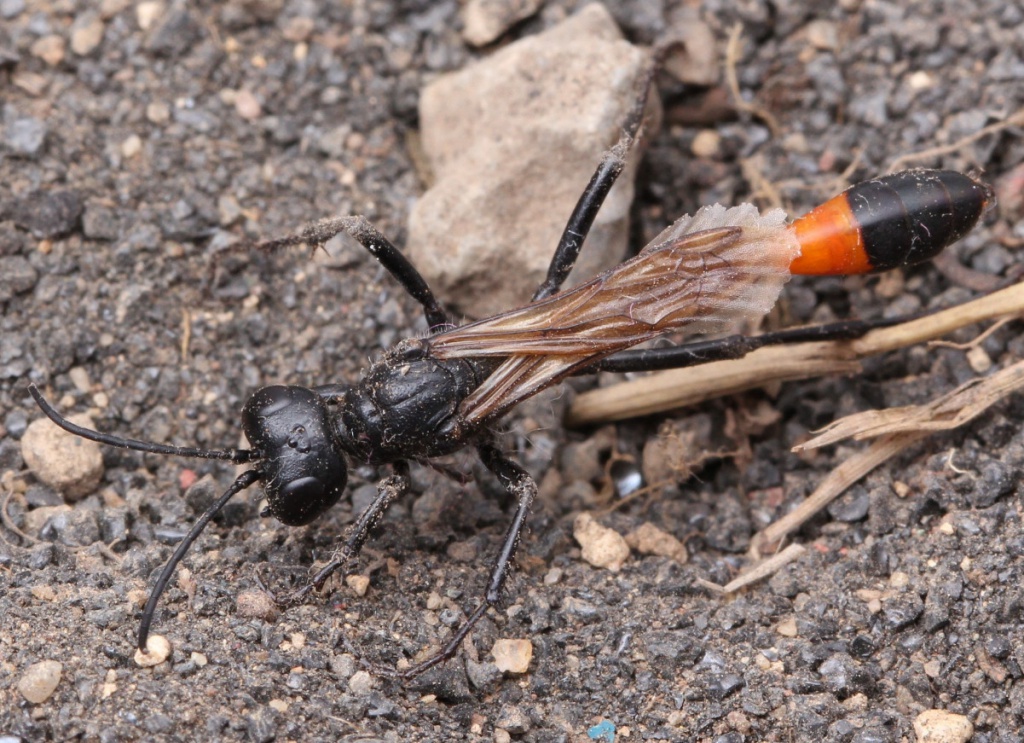
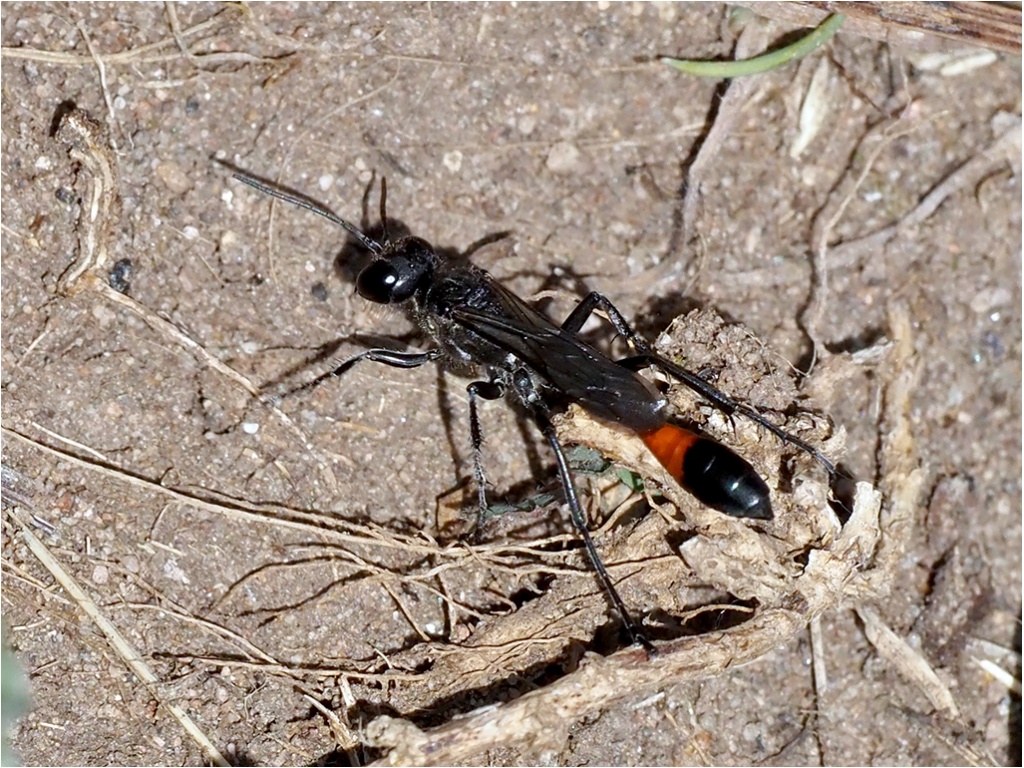
Ammophila sabulosa is a large (15 to 25 mm long) and striking solitary wasp with a very long narrow "waist" of two segments. The species can be told from A. pubescens (which is smaller, 12 to 20ÿmm long) as the waist widens out very gradually into the "tail" of the abdomen. The pattern of the forewings also differs: the third sub marginal cell makes broad contact with the cell to its front and the rear end of the abdomen has a faint metallic blue sheen. The whole body is black except for the front half of the "tail", which is orange.

Most solitary bees and wasps are difficult to identify, and can rarely be identified from photos taken in the field. All red-rated records should include a photo or set of photos of the specimen, illustrating the key characters taken from a standard key, which should also be referenced (e.g. ‘Falk, 2015’). The full set of key characters are generally not visible in field photos and photos are rarely sharp enough. To aid in the verification of your records, please include face shot, side, top and wings. The notes should state whether male or female, and explain how the specimen met the key characters. Although NS may not be able to identify the species even if these reference photos are provided, the photos will be stored with the record and may allow it be identified in future. Alternatively, NS will accept records identified by a recognised local or national expert, or that have been identified via BWARS Facebook Group. If you have obtained this advice, please note the name of the person/organisation identifying the record in the ‘determiner’ field (e.g. ‘Stuart Roberts, BWARS Facebook’) rather than just a comment of ‘BWARS Facebook’.
On heathland and other sandy places ? often near to the coast.
June to September.
Normally, a female digs a short burrow, ending in a horizontal cell, in bare or sparsely vegetated sand. Later, she temporarily closes the nest entrance using sand and tiny stones, then hunts for lepidopteran caterpillars in vegetation. About half of all cells are provisioned with just one large caterpillar, which is carried back on foot as it is sometimes more than ten times as heavy as the wasp. Other cells are provisioned with two to five smaller caterpillars. An egg is laid on the first caterpillar provisioned and rarely hatches before permanent closure of the nest burrow. After the last caterpillar has been interred the wasp permanently closes the burrow with a much deeper plug of sand, and camouflages the entrance with debris so that it is invisible to the human eye. All nests are unicellular. The whole nesting cycle, from searching for a digging site to closing the nest permanently after provisioning, takes an average of eight to ten hours of activity. Marked females each dug and provisioned up to ten nests during a summer.
Found throughout much of Britain, though more often seen in southern England.
It seems to be infrequent in Leicestershire and Rutland with few modern records.
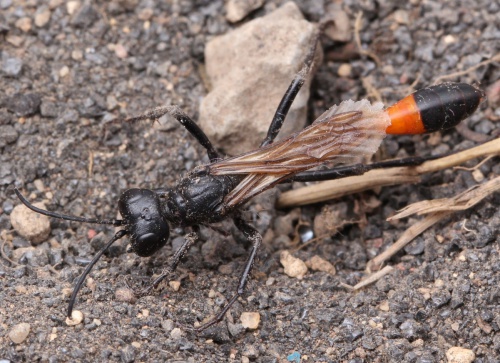 Steve Woodward
Asfordby Hill
12 August 2015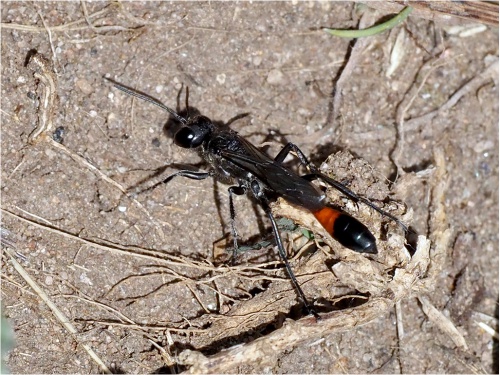 John Tinning
Asfordby Hill
18 May 2020
Leicestershire & Rutland Map
Enter a town or village to see local records
MAP KEY:
Yellow squares = NBN records (all known data)
Coloured squares = NatureSpot records: 2025+ | 2020-2024 | pre-2020
UK Map
Additional images
No additional images available for this species.