Puccinia hieracii
Puccinia hieracii
Knapweeds (Centaurea), Puccinia jaceae
Cat's-ear (Hypochaeris), Puccinia hypochaeridis
Mouse-ear Hawkweed (Pilosella), Puccinia piloselloidearum
Chicory (Cichorium intybus), Puccinia cichorii
Dandelions (Taraxacum), Puccinia taraxaci
Hawkweeds (Hieracium), Puccinia hieracii
Hawkbits (Leontodon and Scorzoneroides), Puccinia leontodontis
Ox-tongues (Picris and Helminthotheca), Puccinia picridis
Saw-wort (Serratula tinctoria), Puccinia tinctoriicola
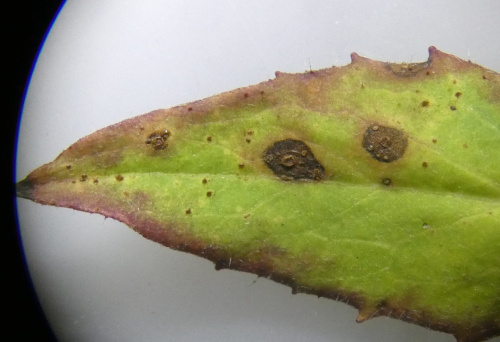
The rust fungus Puccinia hieracii causes galls in several Asteraceae genus - e.g. Knapweeds (Centaurea), Hawkweeds (Hieracium), Hawkbits (Leontodon/Scorzoneroides), Ox-tongues (Helminthotheca/Picris), Mouse-ear Hawkweed (Pilosella), Saw-wort (Serratula) and Dandelion (Taraxacum).
Typically, the gall is a thickened deformed leaf with reddish-yellow spots bearing spermogonia, followed by uredinia and telia. [N.B.: it is not clear if aecia are produced; in Redfern and Shirley (2023) this stage is referred to; 'Plant Parasites of Europe' states that aecia are missing.]
Similar species of rust, some gall-causing, can occur on these species - e.g. Puccinia calcitrapae on Knapweed. Puccinia variabilis on Dandelions has small orange aecia but is not thought to be a gall-causer.
host/microscopy 
Photograph the rust on the host. Ensure you have noted the host-plant species in your comments. On some hosts, microscopic examination may be needed.
on various grassland or waste-ground species in the Asteraceae
 sue
sue
Bagworth Beacon
30 July 2026
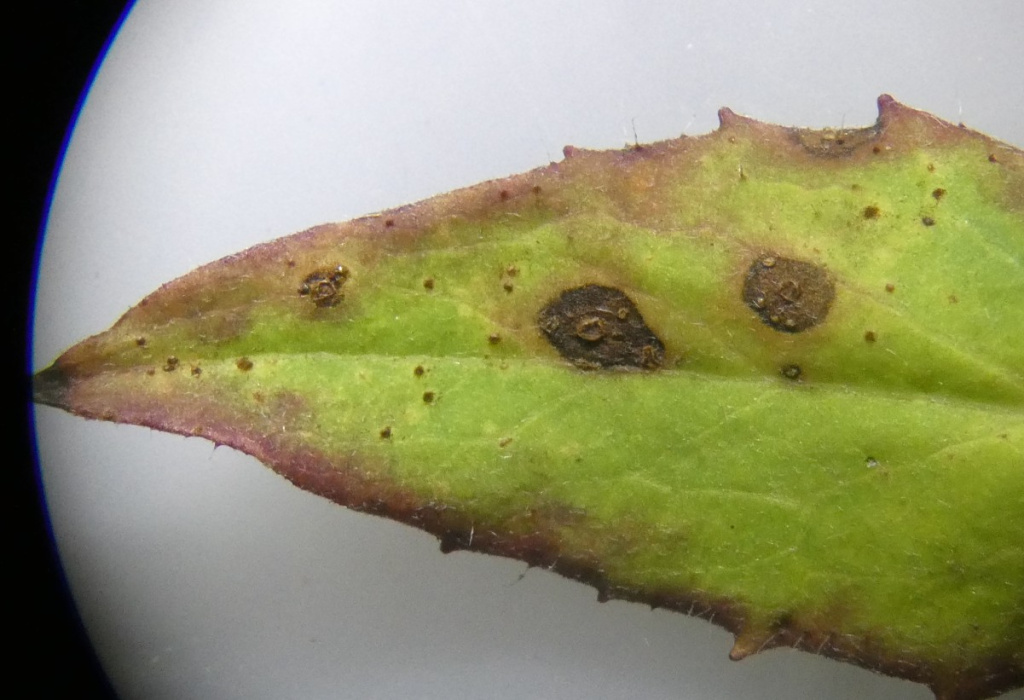
uredinia on a hawkweed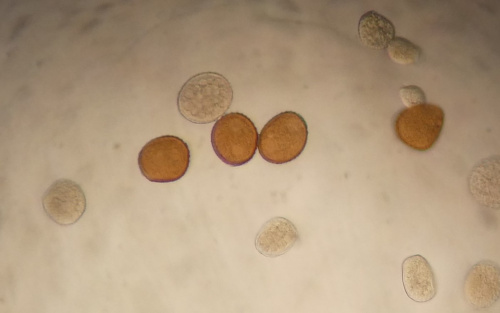 sue
sue
Bagworth Beacon
30 July 2026
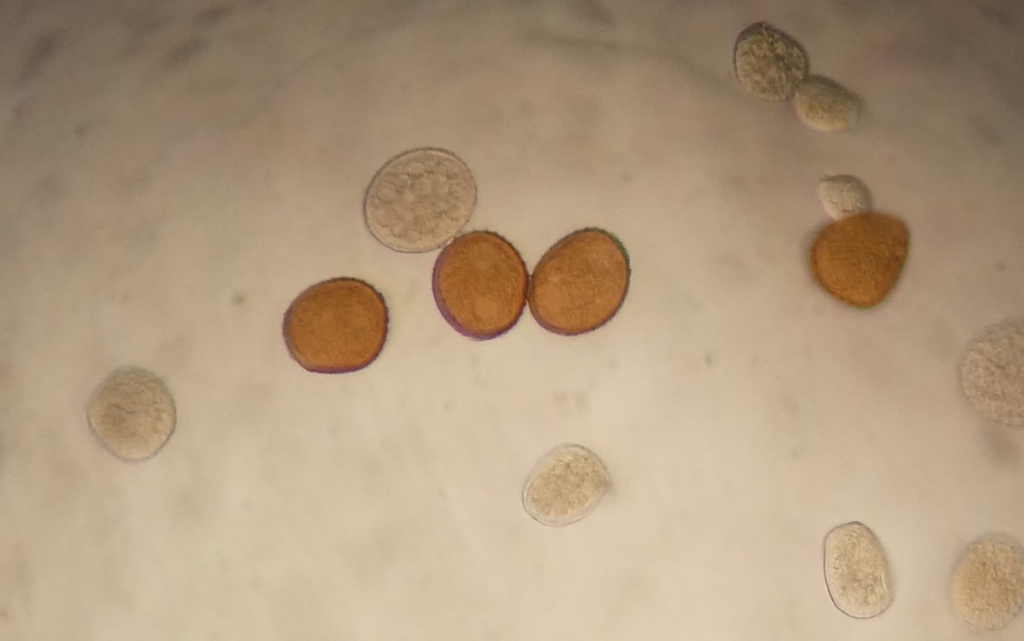
urediniospores
Leicestershire & Rutland Map
Enter a town or village to see local records
MAP KEY:
Yellow squares = NBN records (all known data)
Coloured squares = NatureSpot records: 2025+ | 2020-2024 | pre-2020
UK Map
Additional images
No additional images available for this species.