Awkward Clusterfly
Awkward Clusterfly - Pollenia rudis
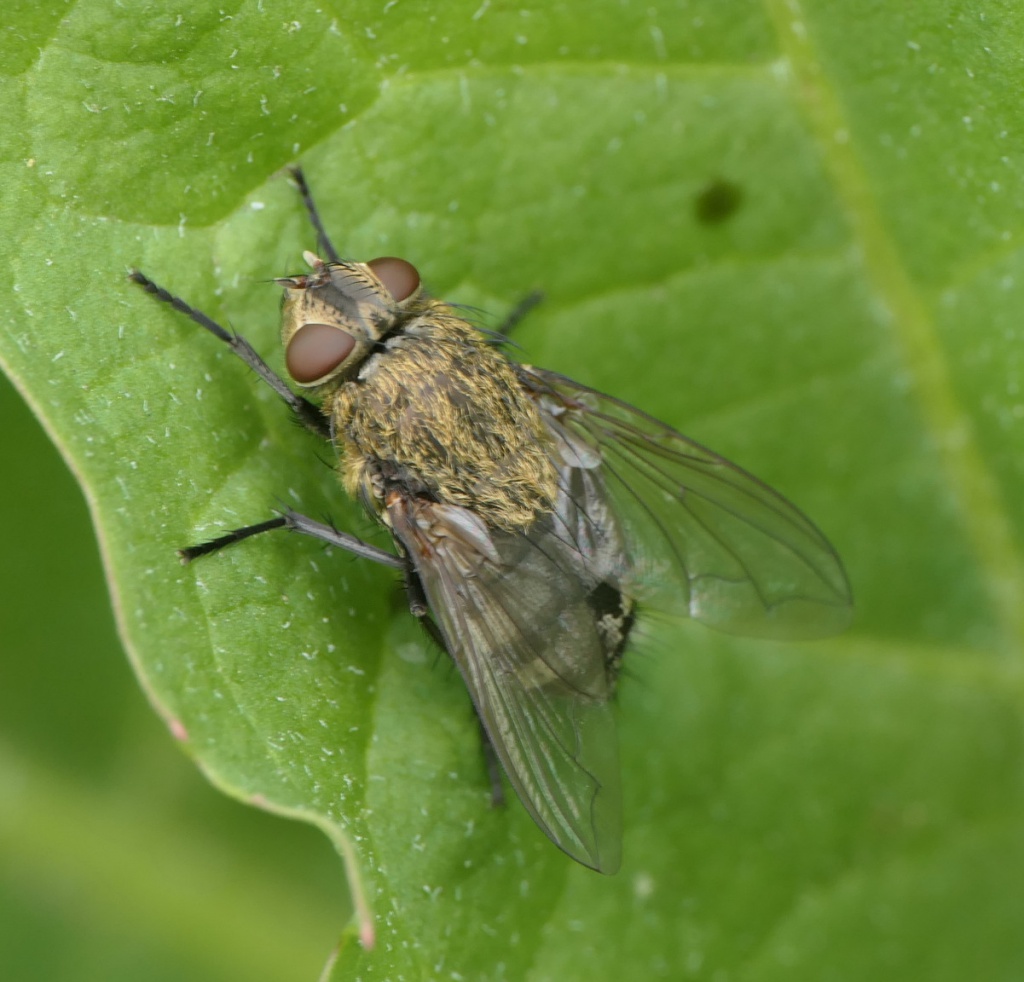
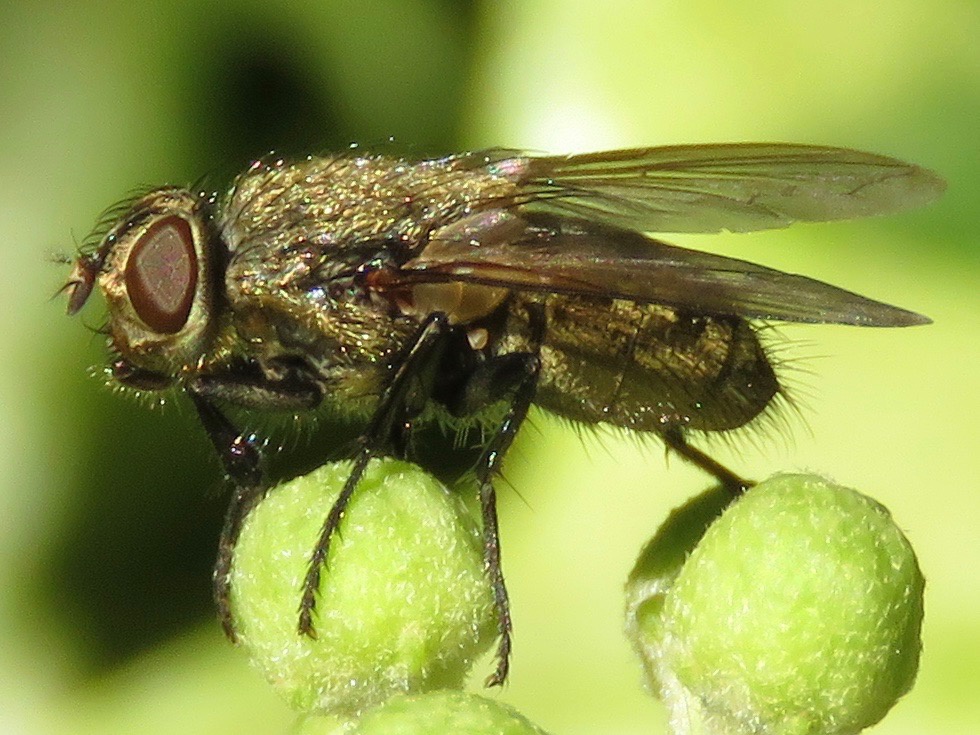
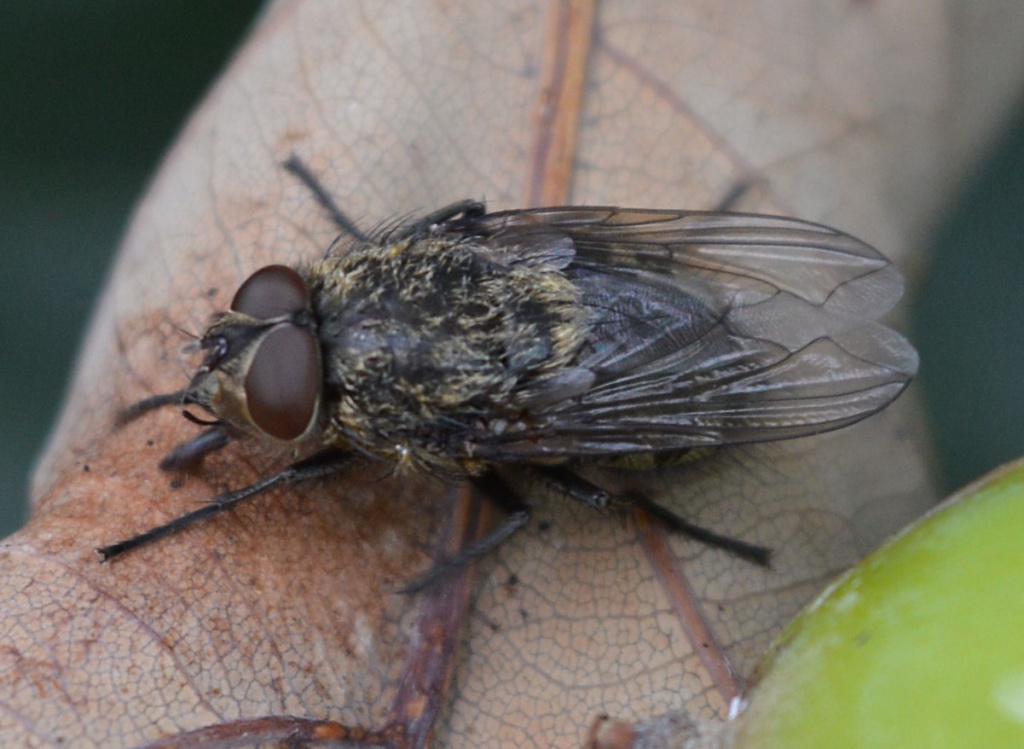
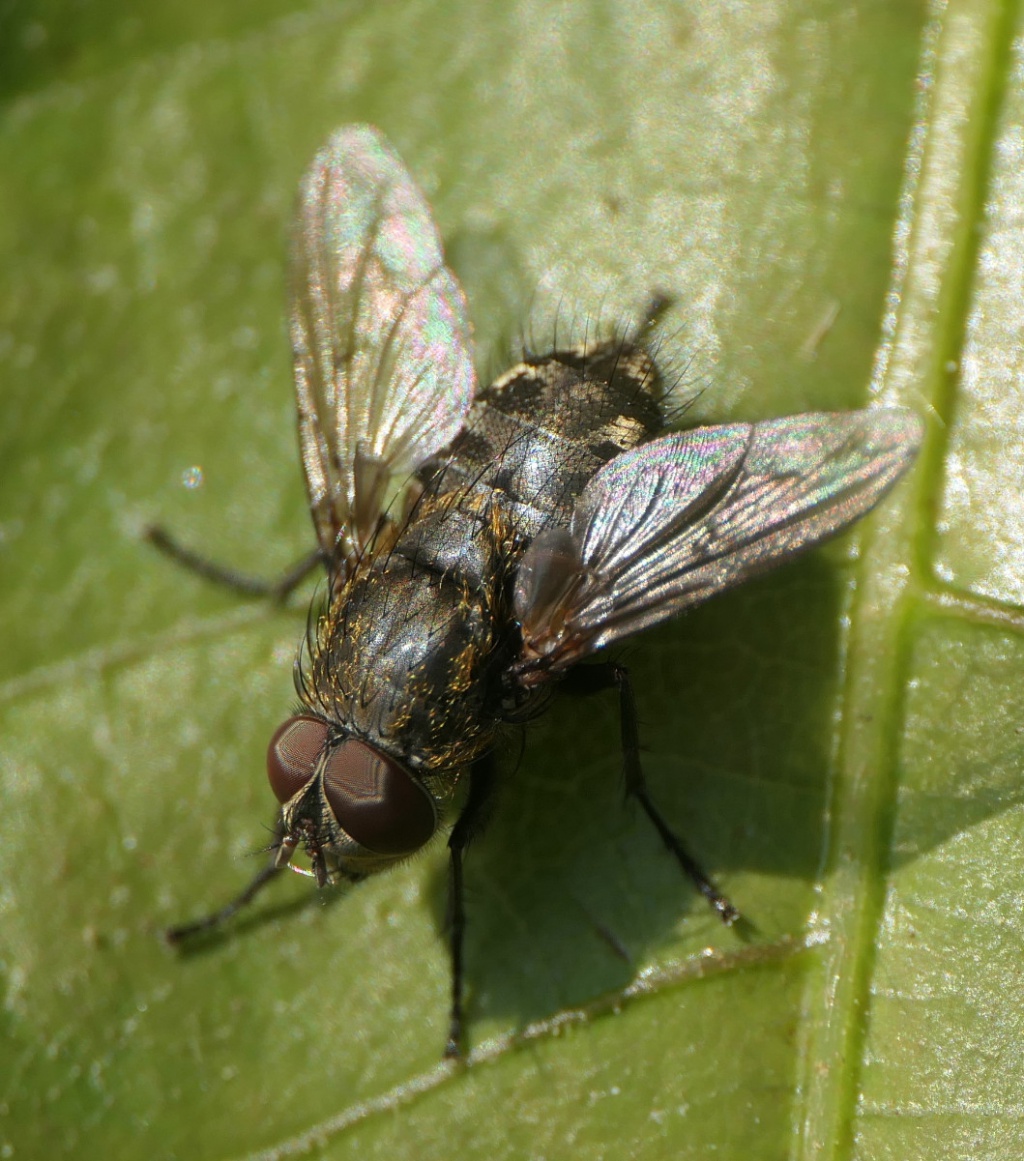
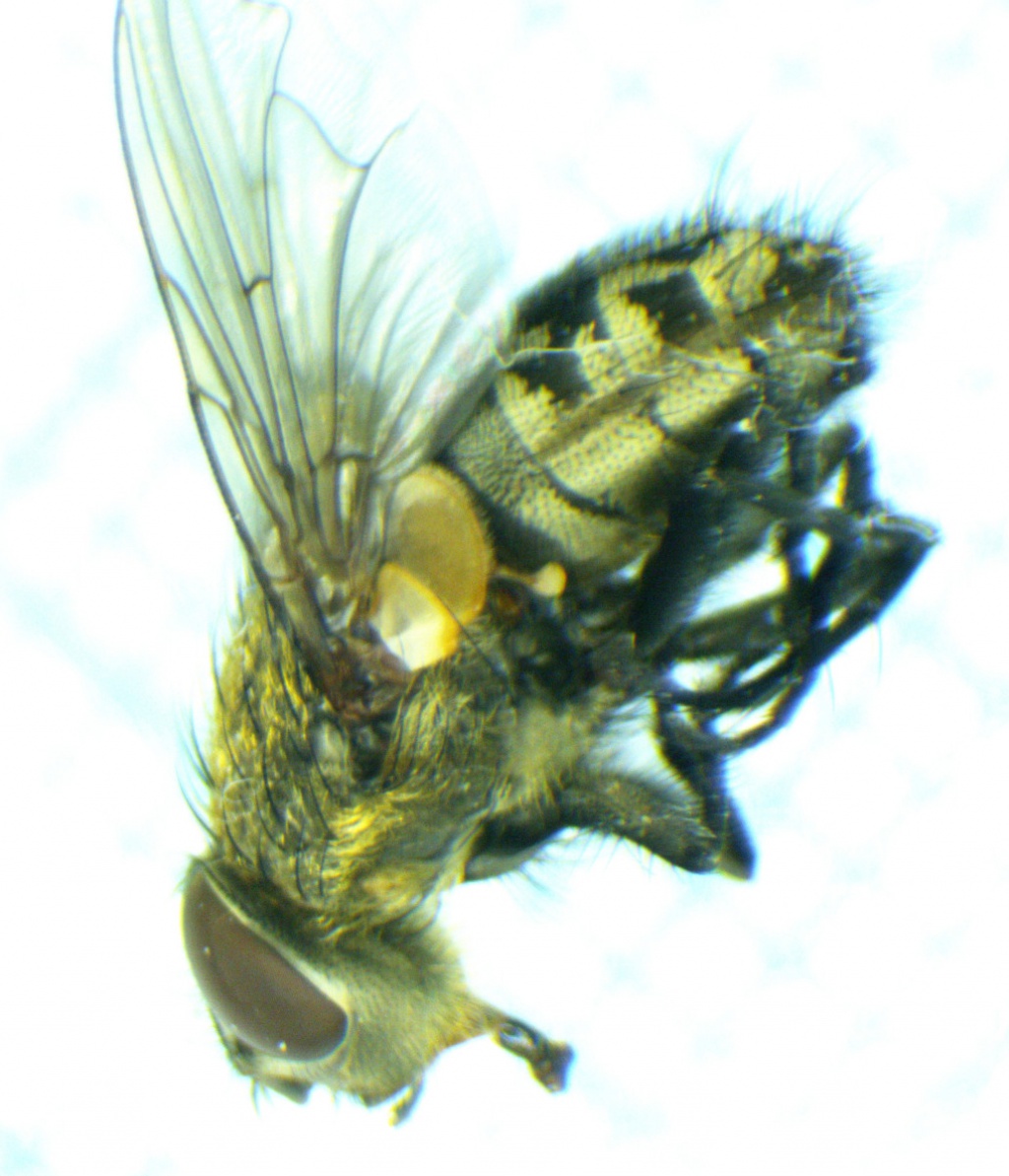
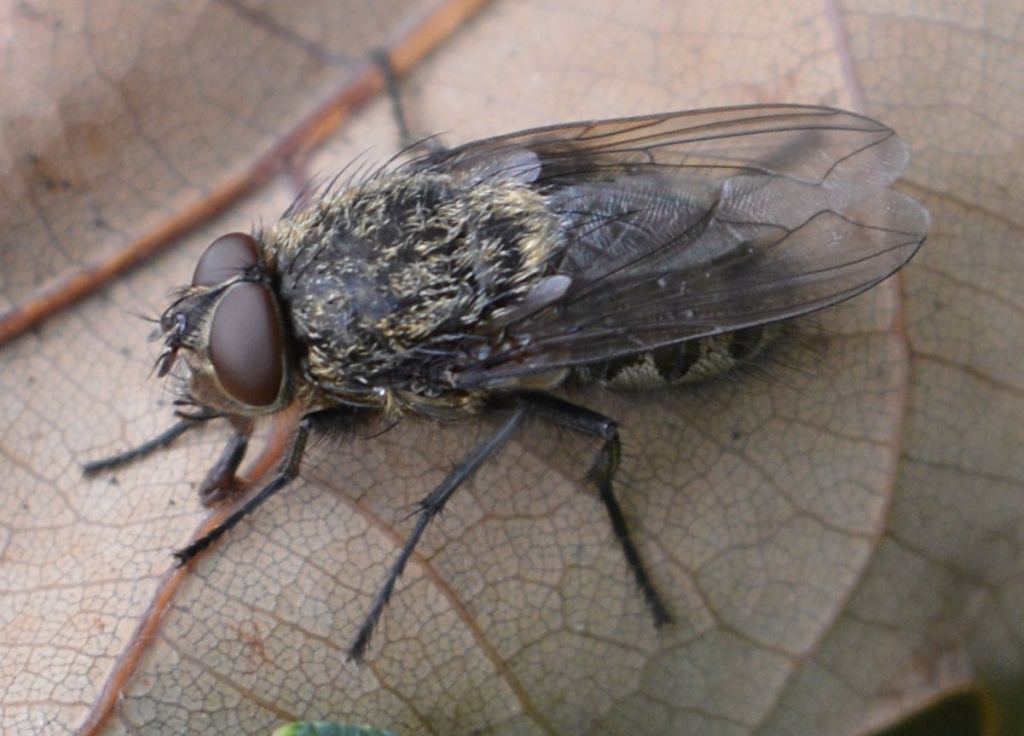
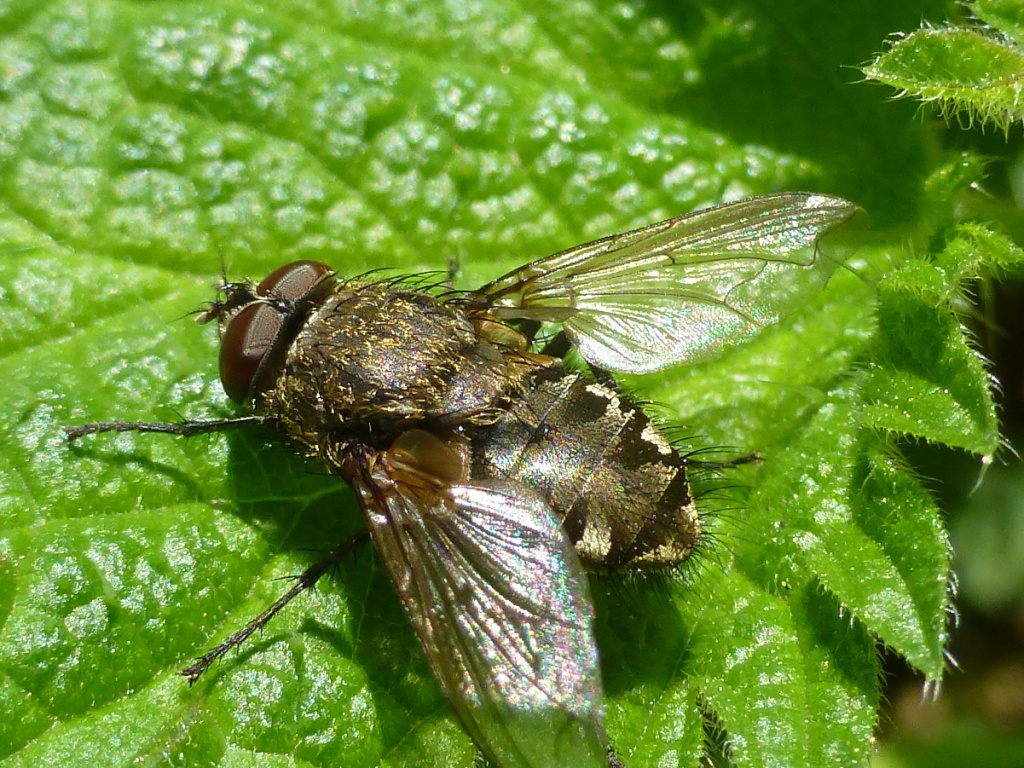
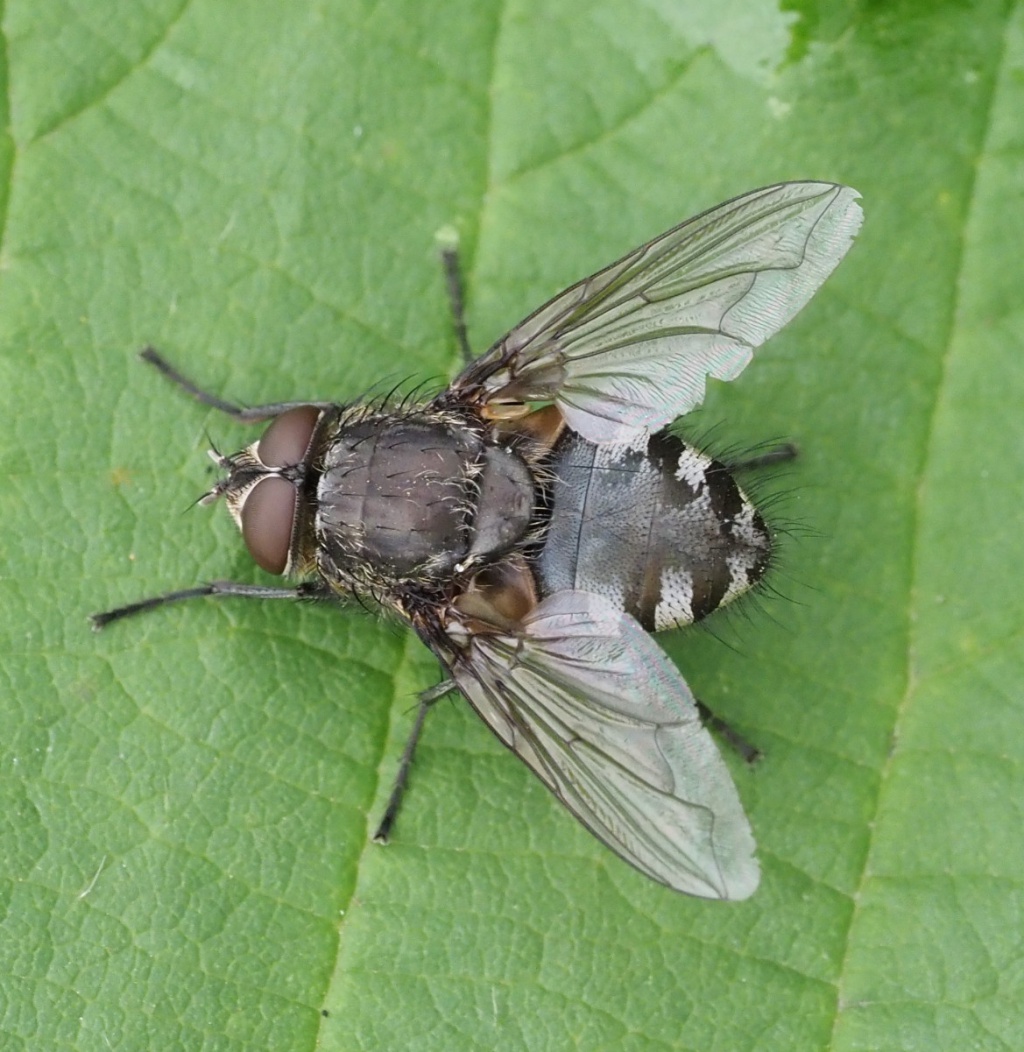
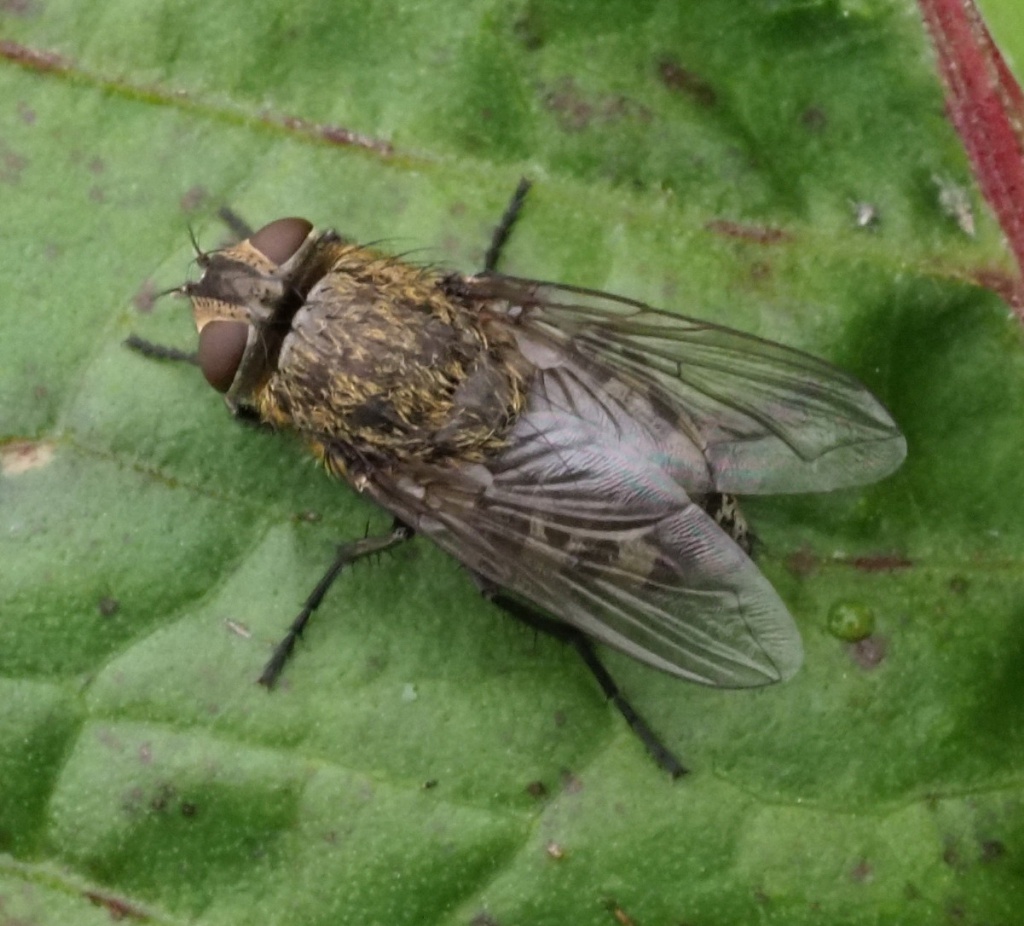
The typical cluster fly Pollenia rudis is about 7 mm long, has short golden-coloured hairs on the thorax and irregular light and dark grey areas on the abdomen. Cluster flies are typically slow moving and pass the winter as adults so are very common in early spring.
There are 8 Pollenia species in Britain, most of which require microscopic examination to key out. See ID Aids below. Pollenia rudis is generally the most common species though some of the others are also common.

- yellow hairs on thorax
- patterned abdomen
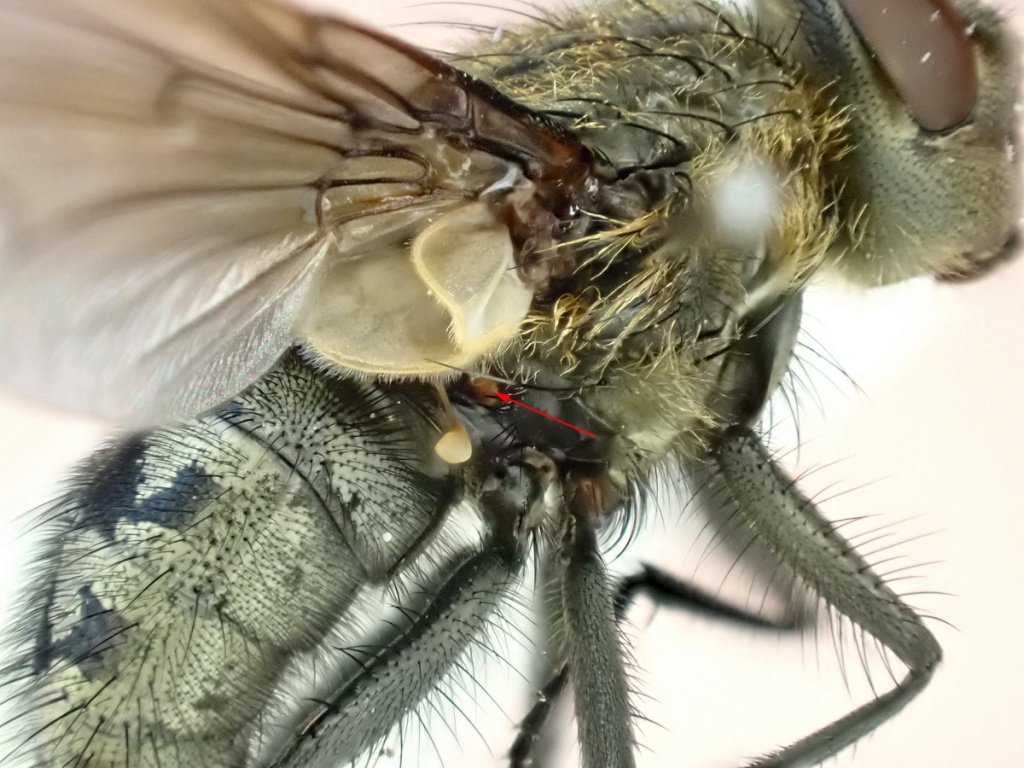
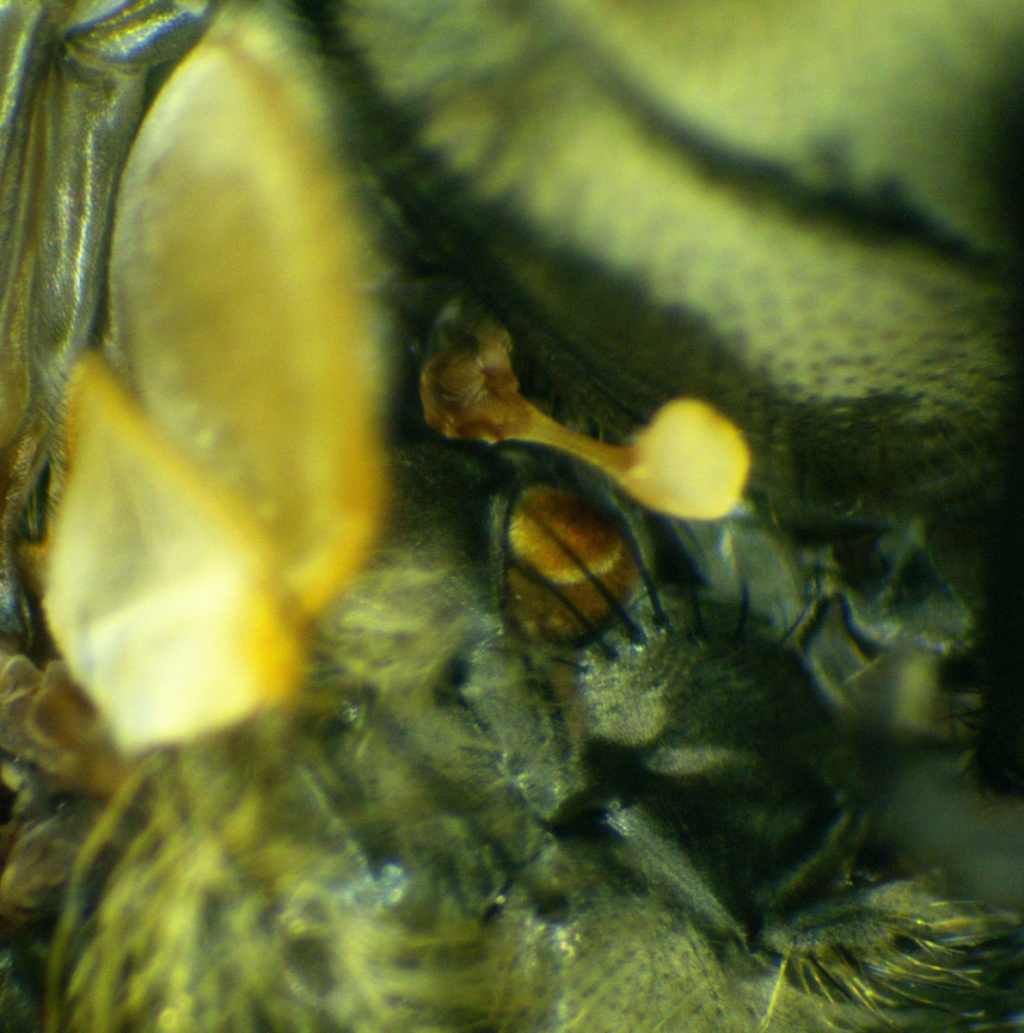
- yellow/orange rear spiracle
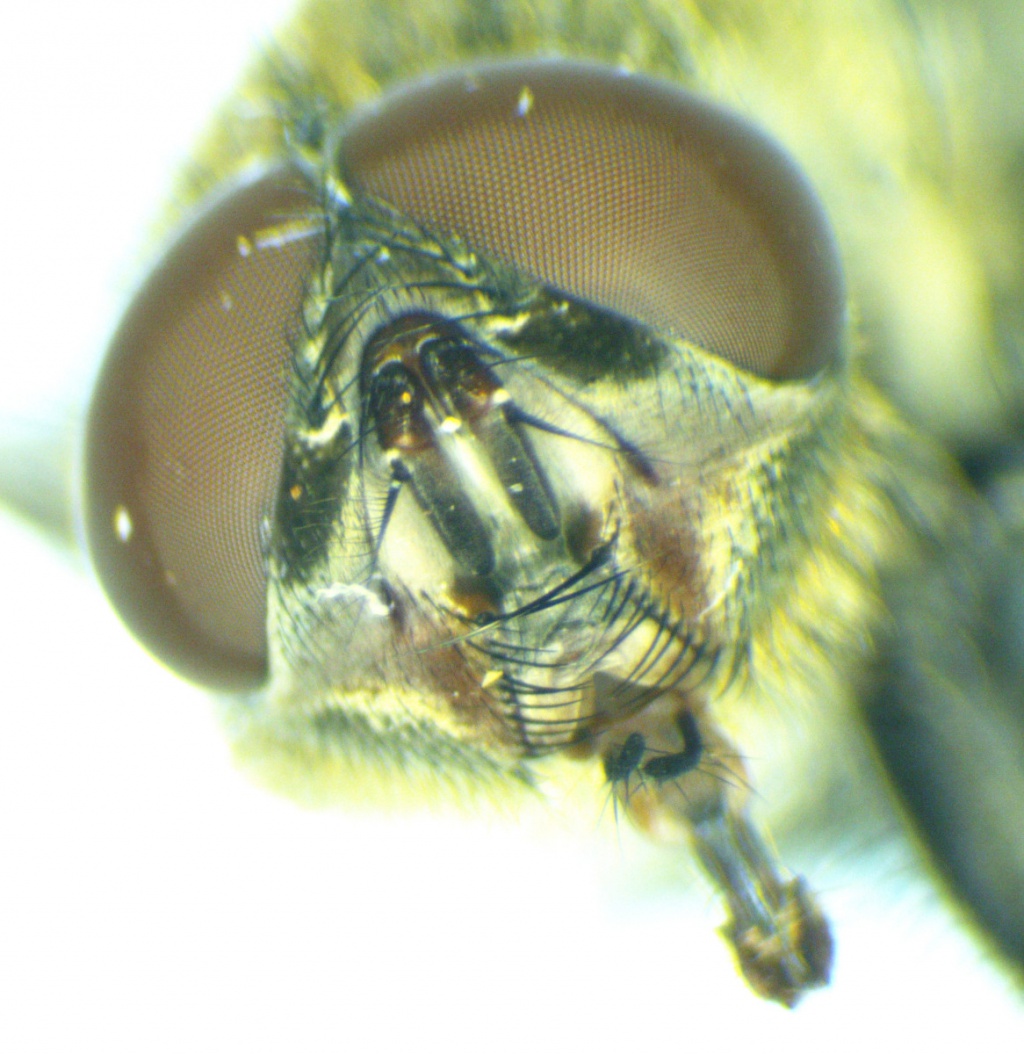
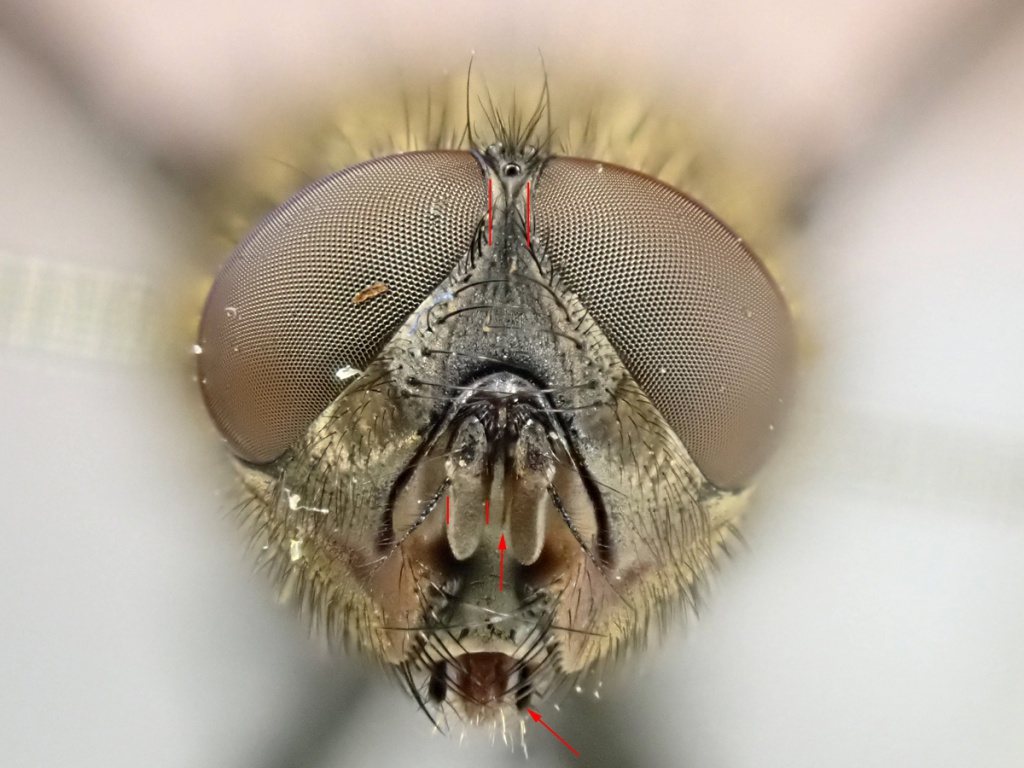
- dark palps
- facial ridge between the antennae
- 2 or more anterodorsal bristles on the mid tibia
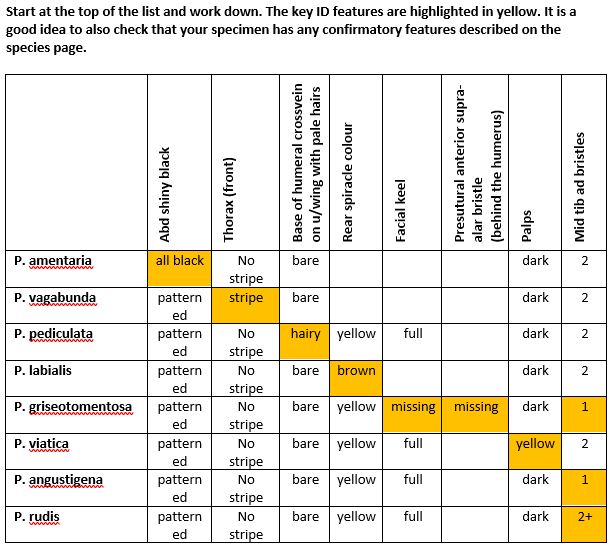
Explain how you identified this fly and the key features.
In autumn, it can be commonly found sunning on sheltered fences and tree trunks.
All year round.
Cluster flies are so called because they congregate, often in large numbers, to hibernate in attics and out-houses. Its larvae parasitise earthworms.
Widespread and common in Britain.
Common in Leicestershire and Rutland
 Annie Smith
Brock's Hill country park
02 April 2017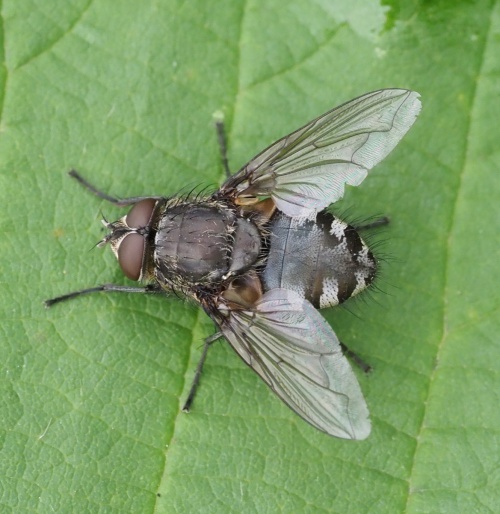 David Nicholls
Newtown Linford
20 July 2023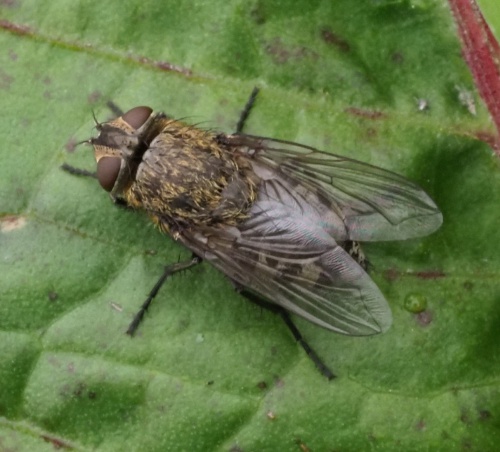 David Nicholls
Coalville Meadows
26 June 2021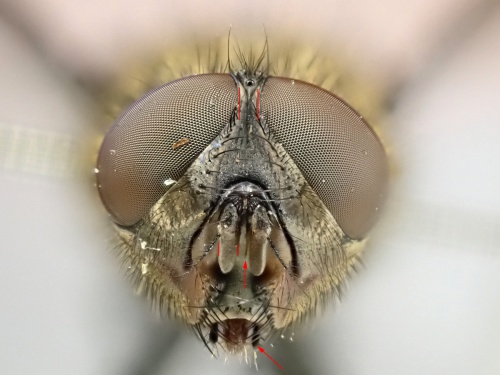 Mark Skevington
Whetstone Garden
17 February 2021
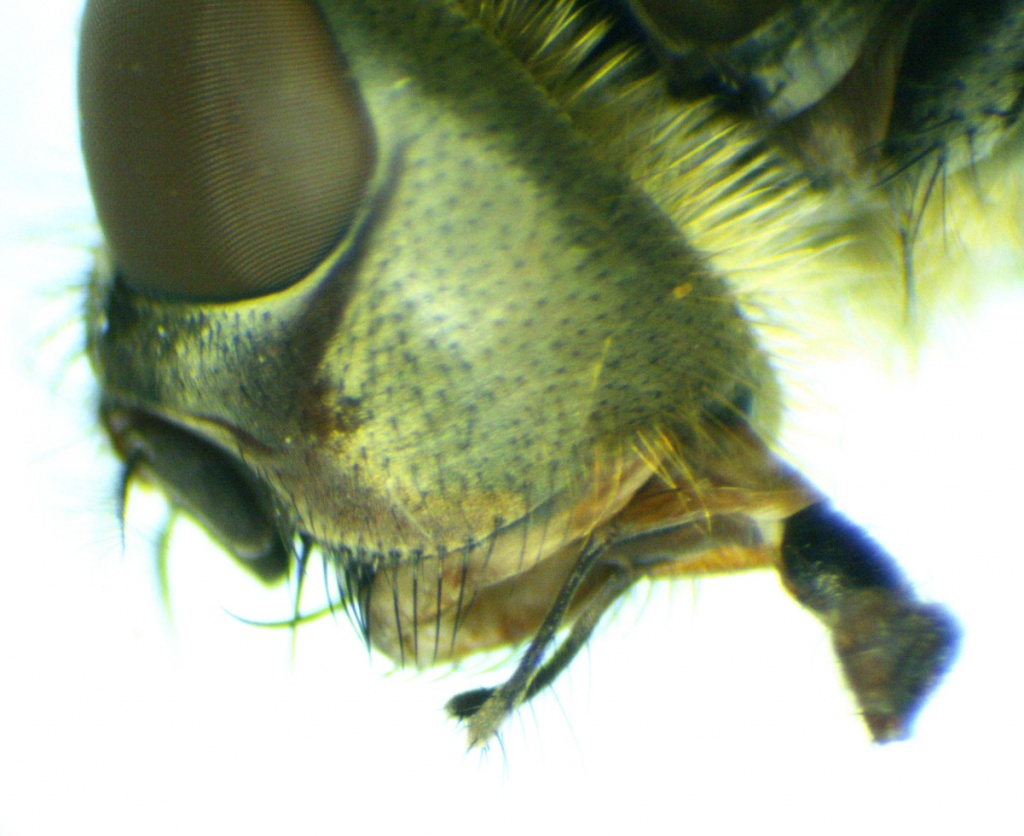
Facial keel, dark palps & eye spacing cf third antennal segment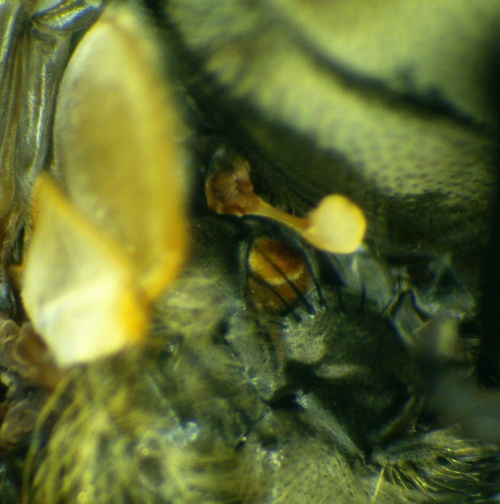 David Nicholls
Ratby garden
30 September 2019
yellow/orange rear spiracle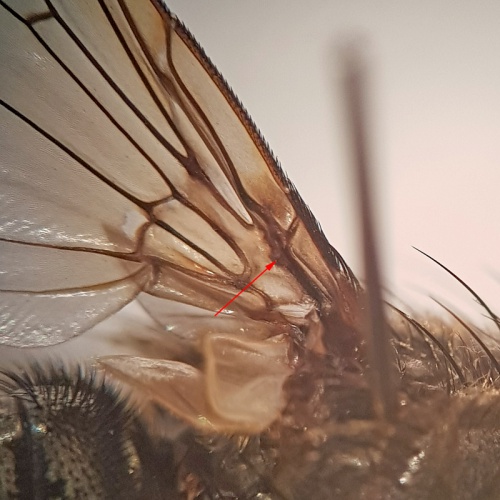 Mark Skevington
Whetstone Garden
17 February 2021
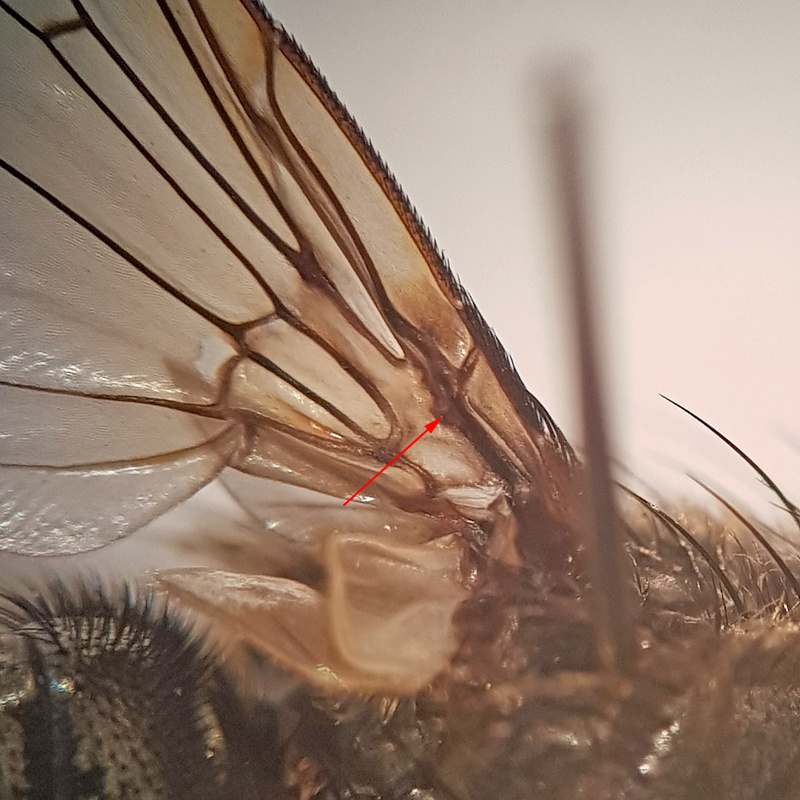
No hairs at the junction of the humeral cross-vein and subcosta
Leicestershire & Rutland Map
Enter a town or village to see local records
MAP KEY:
Yellow squares = NBN records (all known data)
Coloured squares = NatureSpot records: 2025+ | 2020-2024 | pre-2020
UK Map
Additional images