Phyllonorycter trifasciella
Phyllonorycter trifasciella
Honeysuckle Midget
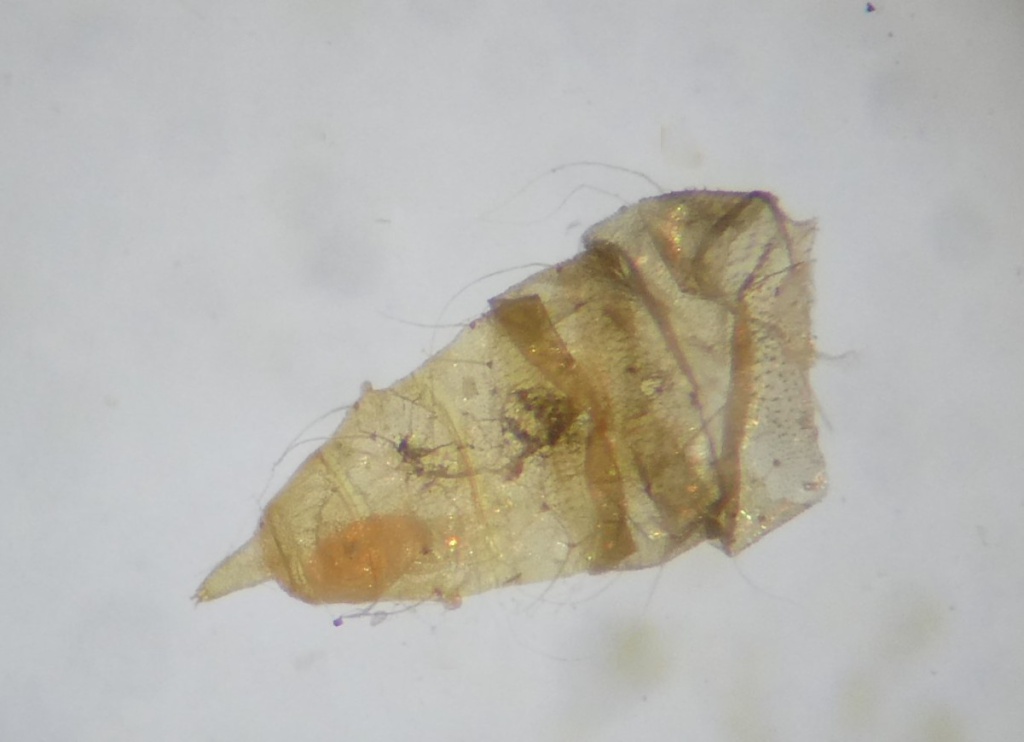
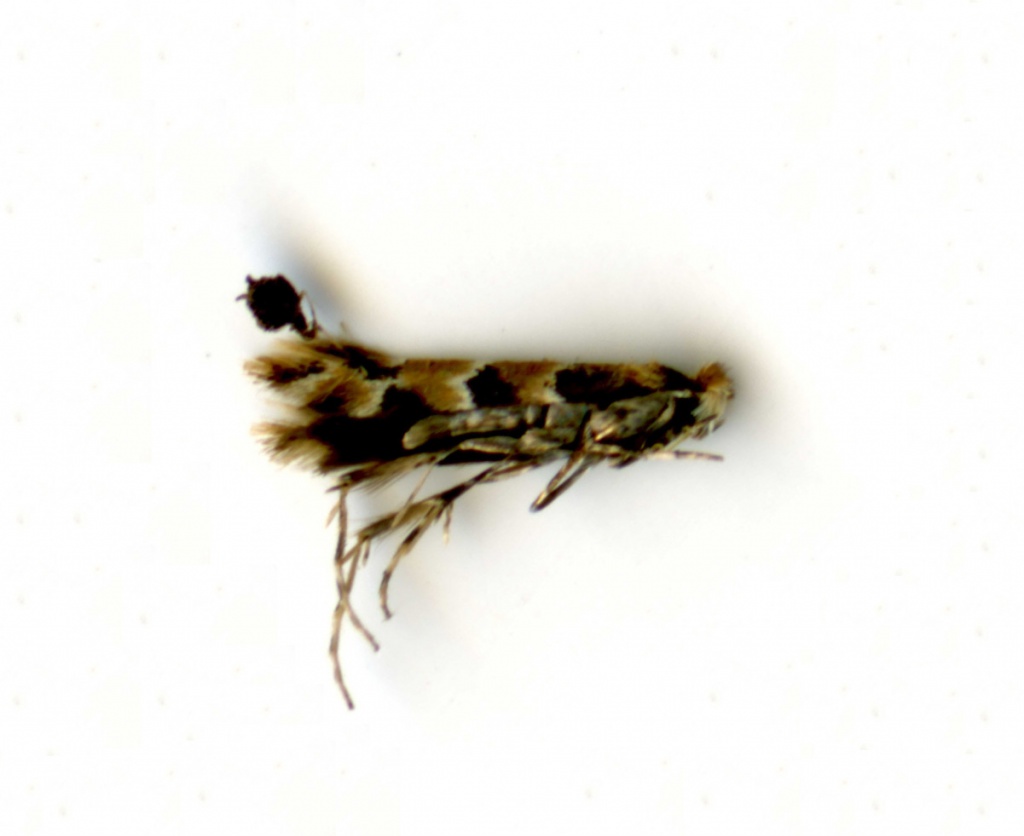
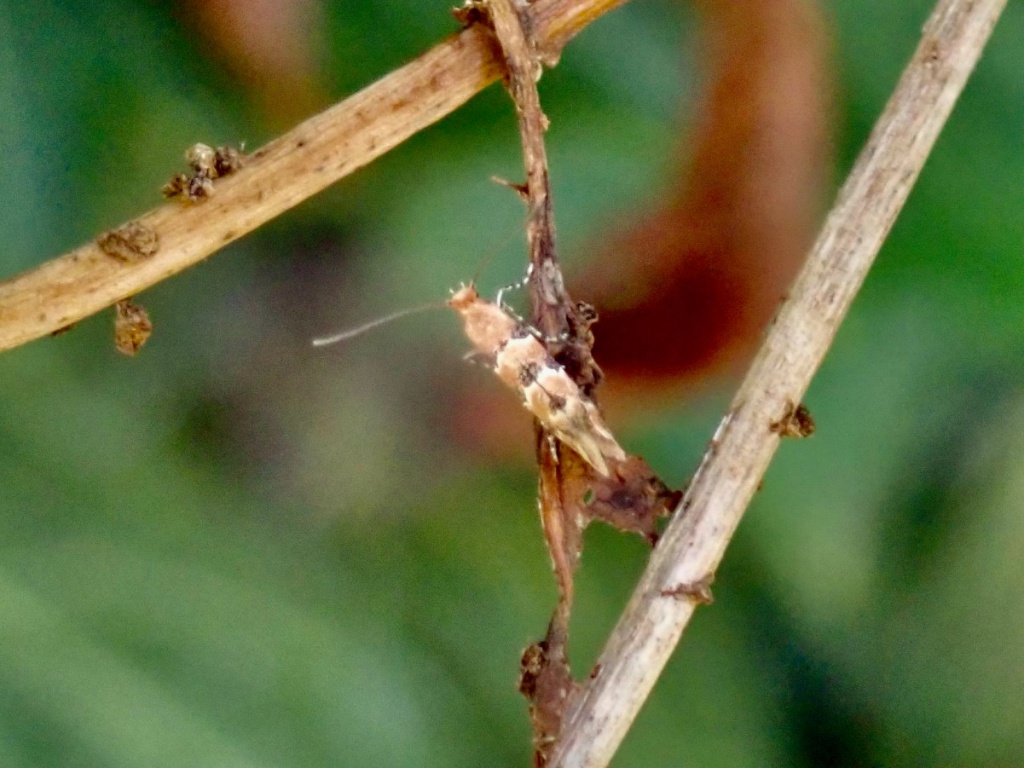
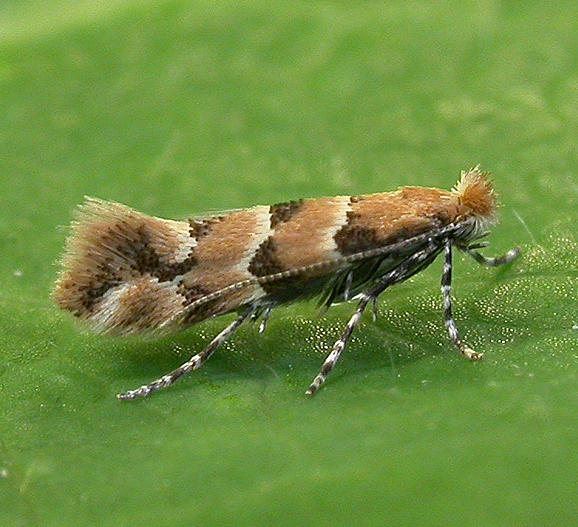
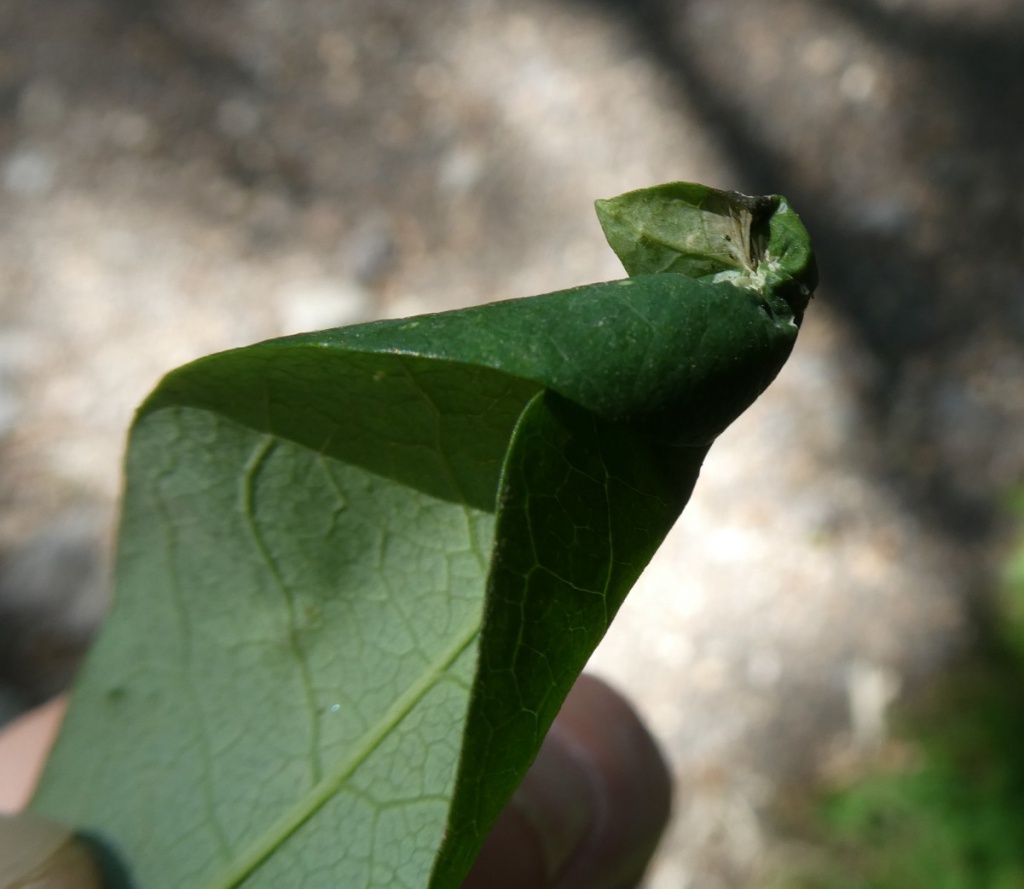
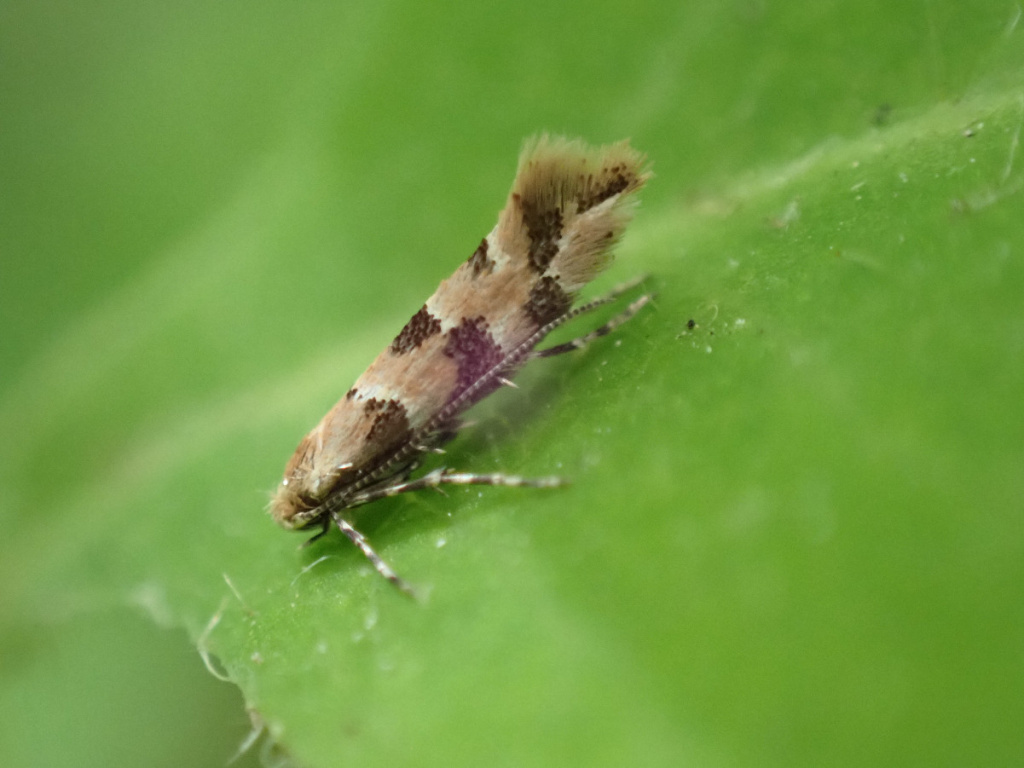
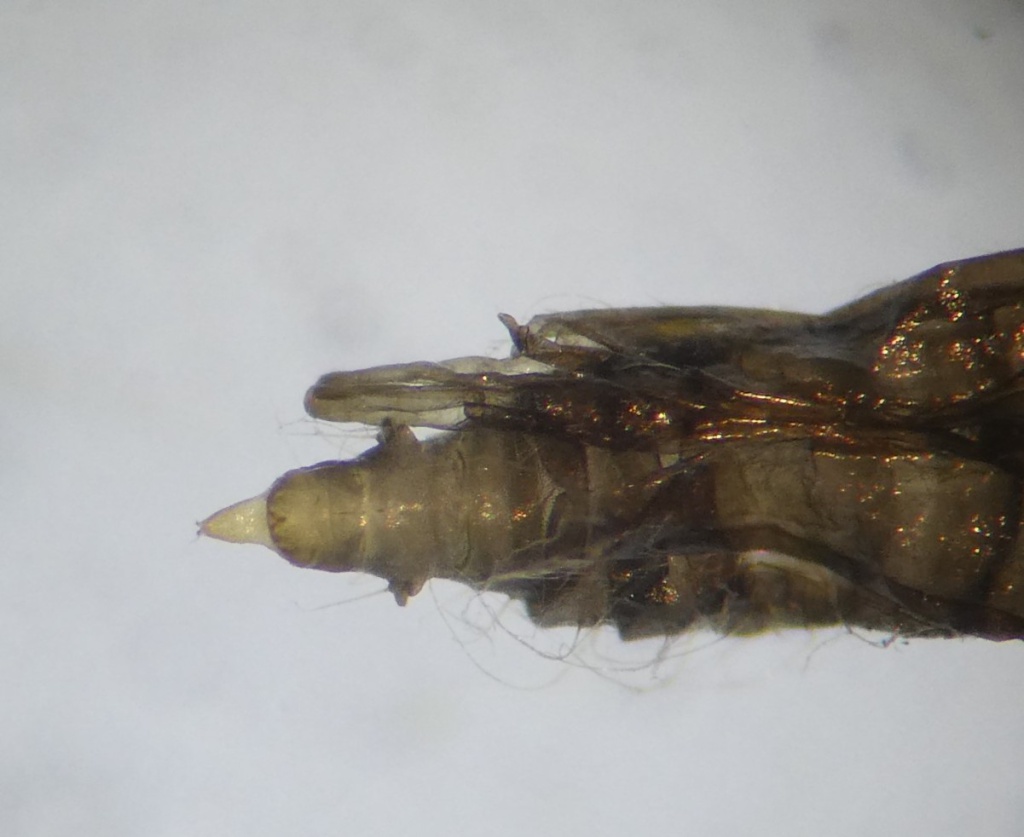
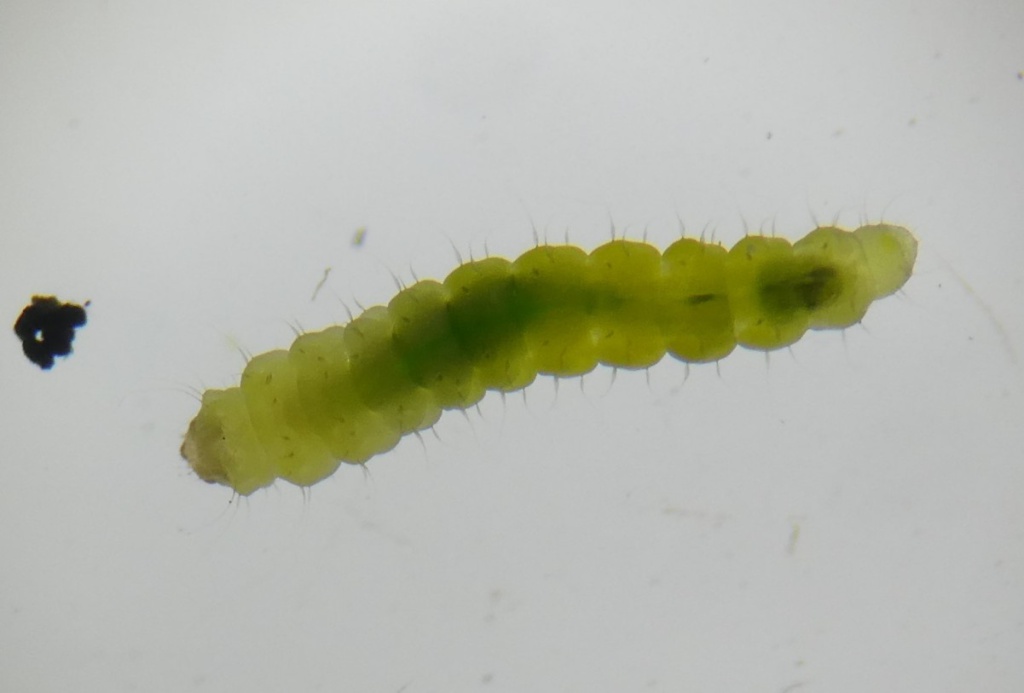
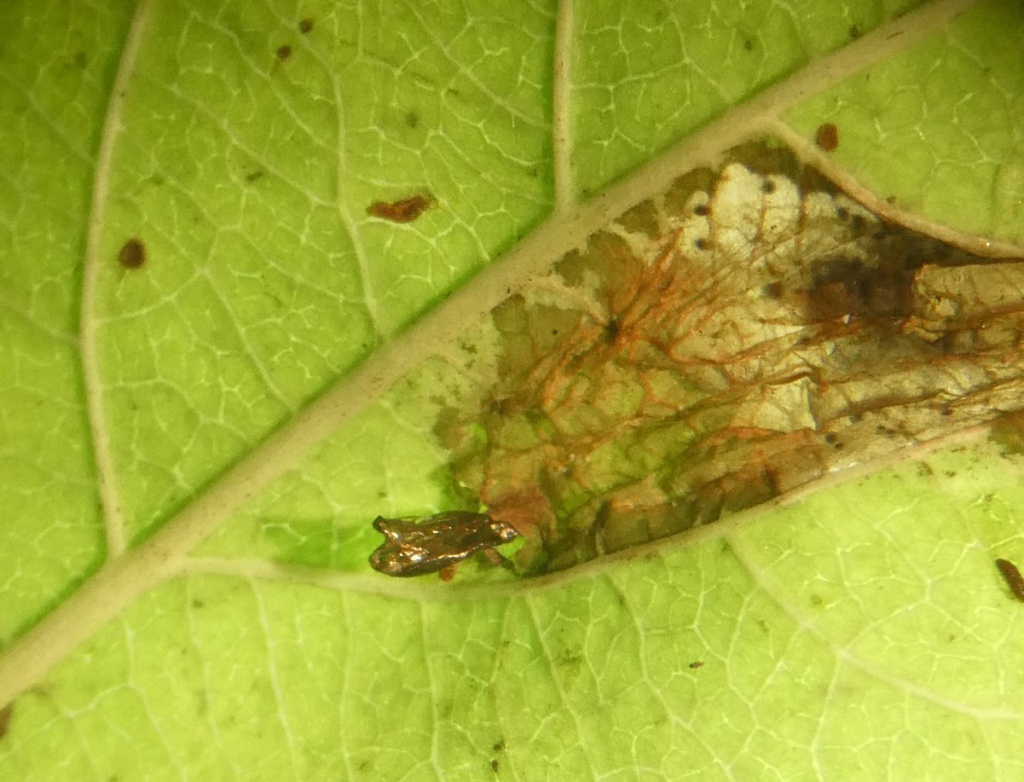
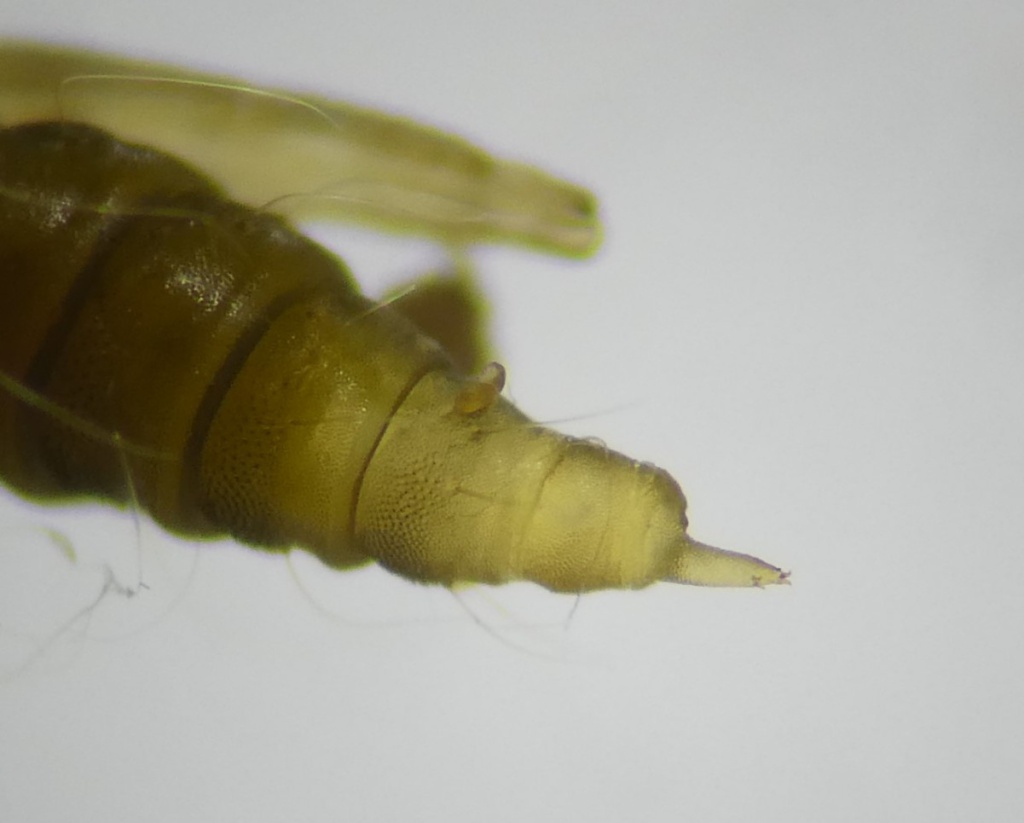
Wingspan 7-8 mm. This species has a banded patterning of chestnut, off white and dark browns. The larva mines the leaves of Honeysuckle, and occasionally Snowberry or Himalayan Honeysuckle, in a small tentiform mine that contracts diagonally causing the leaf to roll up. There is no cocoon, and the pupal cremaster has a distinctive shape wih two long hooks at the tip and two lateral processes.
Phyllonorycter emberizaepennella mines can be similar, but have different pupa and no cocoon
Adult  Leafmine
Photograph leaf mine and pupa; note host species
Woodland and hedgerows.
This species is unusual among Phyllonorycter in having three generations, with adults on the wing in November, as well as the usual May and August periods.
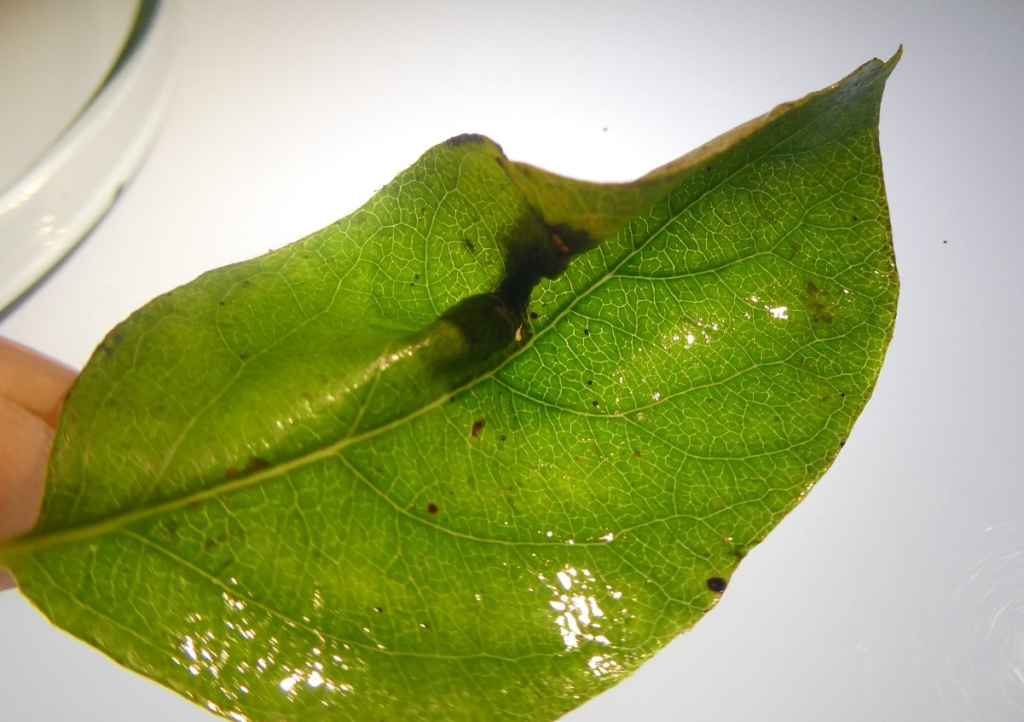
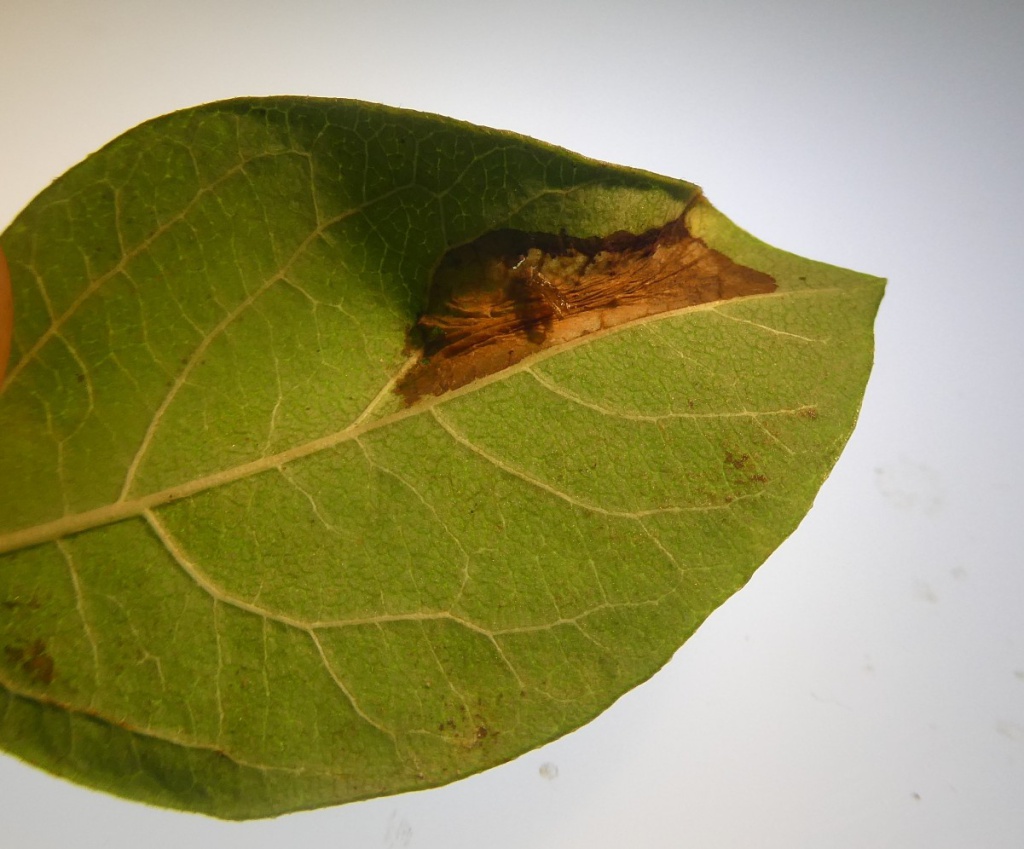
The foodplant is Honeysuckle, though occasionally Snowberry and Himalayan Honeysuckle are used. The mine is quite distinctive, occupying a large part of a leaf and causing it to fold and twist into a conical shape. The mines can be quite abundant where it is found.
A common and widespread species throughout the British Isles. In the Butterfly Conservation’s Microlepidoptera Report 2011 this species was classified as common.
Uncommon or under recorded in Leicestershire and Rutland. L&R Moth Group status = D (rare or rarely recorded)
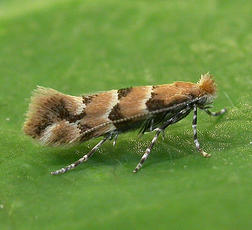 Mark Skevington
Martinshaw Wood
24/04/2006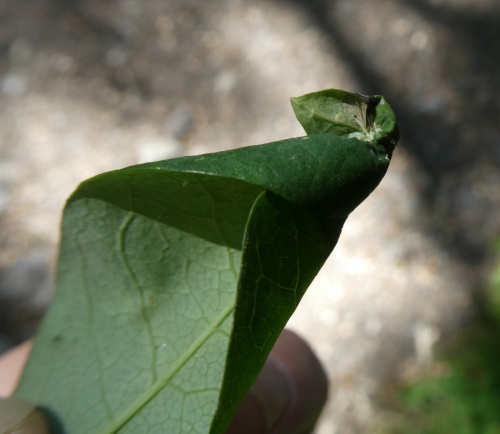 sue
sue
Loughborough, Woodhouse Lane adj to Jubilee Wood opposite Buck Hill
23 August 2023
leaf folded around tentiform mine on Honeysuckle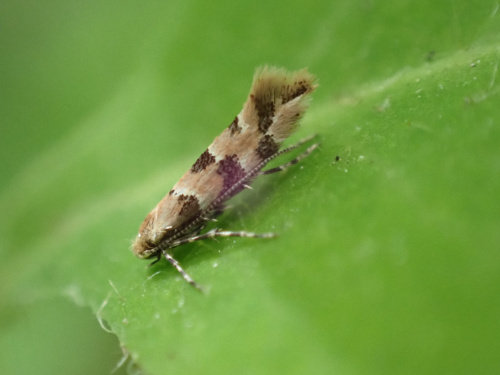 stepgray4
Cloud Wood
17 May 2026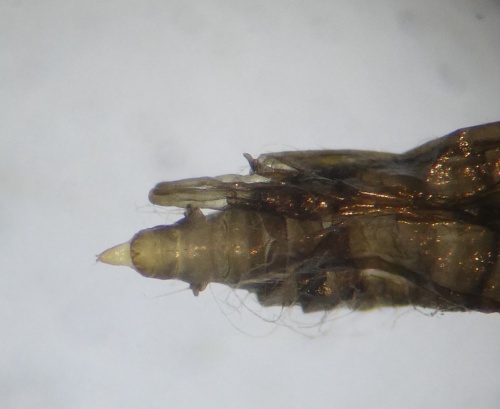 sue
sue
Shenton, Ashby Canal towpath by Bradfields Bridge
20 November 2022
pupal cremaster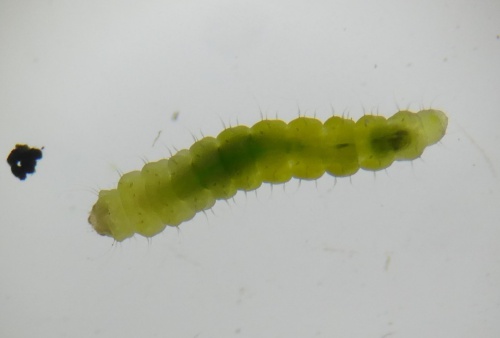 sue
sue
Loughborough, Woodhouse Lane
adj to Jubilee Wood opposite Buck Hill
23 August 2023
larva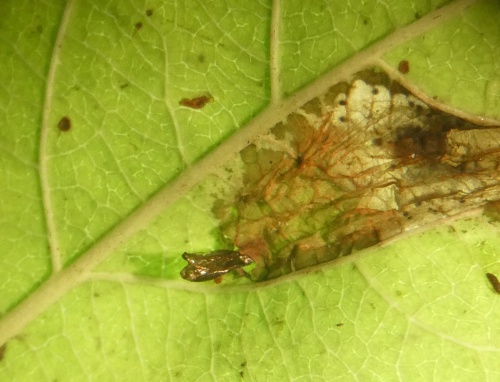 sue
sue
Shenton, Ashby Canal towpath by Bradfields Bridge
20 November 2022
vacated pupa sticking out of mine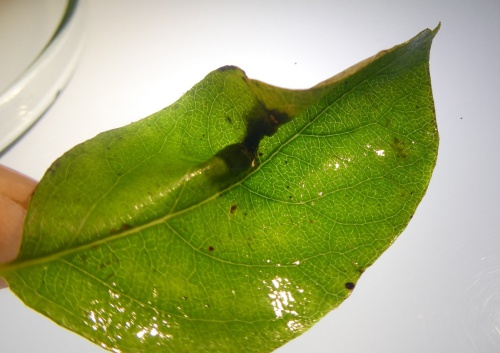 sue
sue
Shenton, Ashby Canal towpath by Bradfields Bridge
20 November 2022
snowberry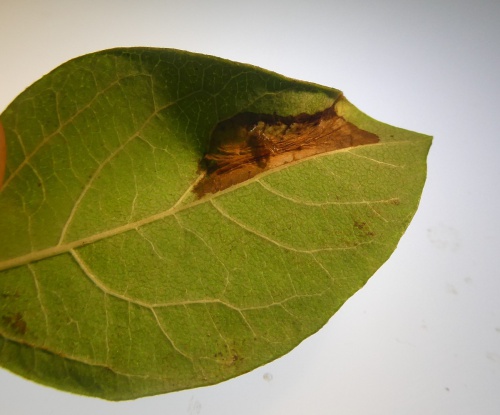 sue
sue
Pinwall, crossroads Sheepy Rd/Pinwall Lane
18 November 2022
snowberry, vacated pupa sticking out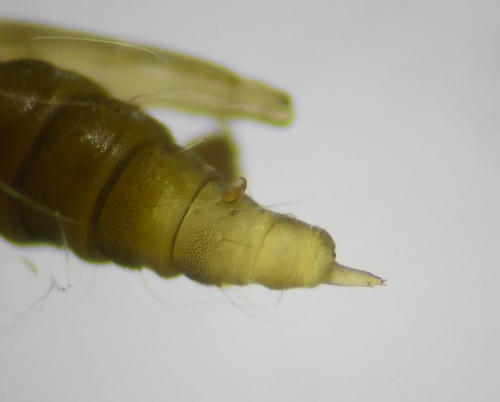 sue
sue
Loughborough, Woodhouse Lane
adj to Jubilee Wood opposite Buck Hill
23 August 2023
cremaster with two projecting processes
Leicestershire & Rutland Map
Enter a town or village to see local records
MAP KEY:
Yellow squares = NBN records (all known data)
Coloured squares = NatureSpot records: 2025+ | 2020-2024 | pre-2020
UK Map
Additional images