Phyllonorycter sorbi
Phyllonorycter sorbi
Rowan Midget
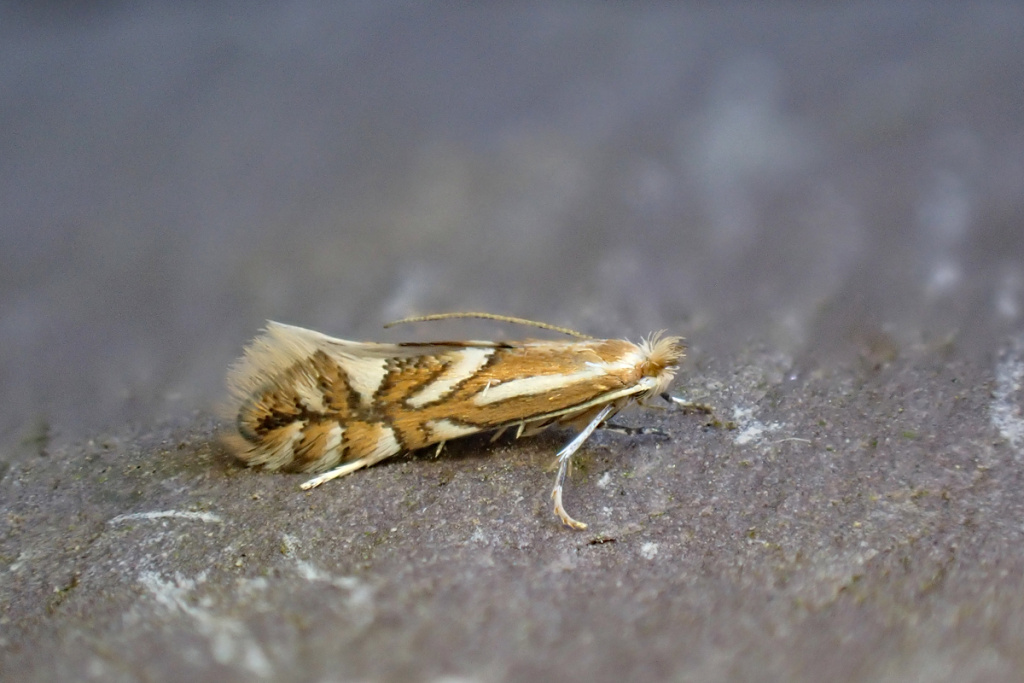
Wingspan 7 to 9 mm. The forewing colour is golden brown but is often suffused with blackish on the outer half. The white markings are well defined and partially bordered blackish.
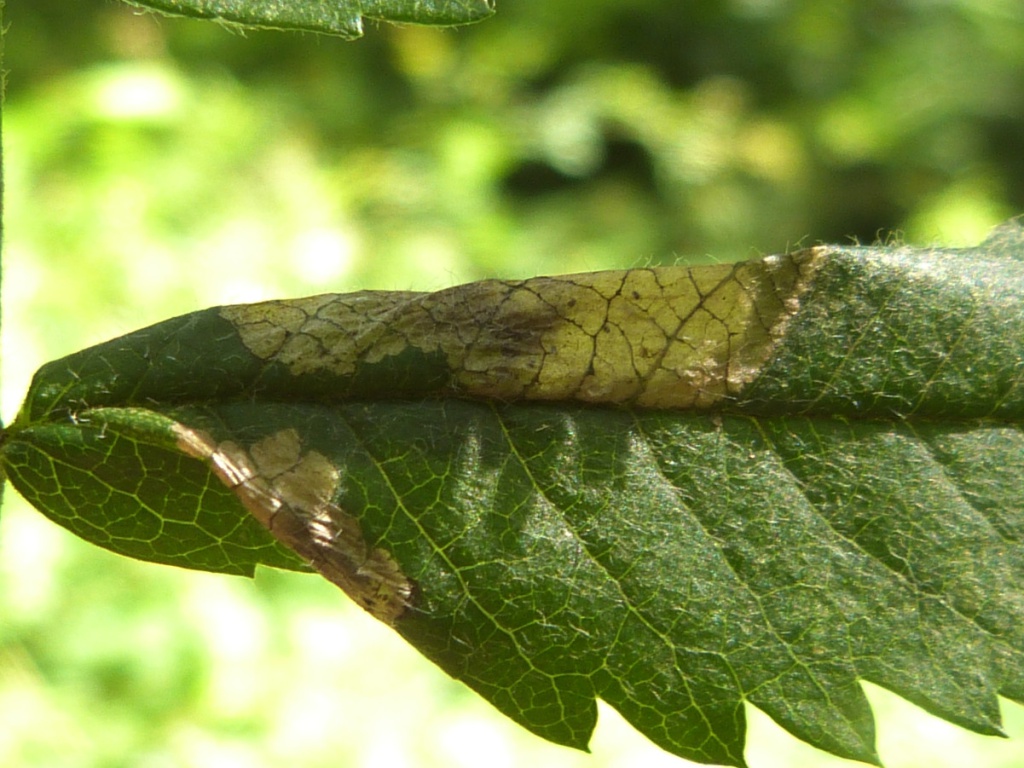
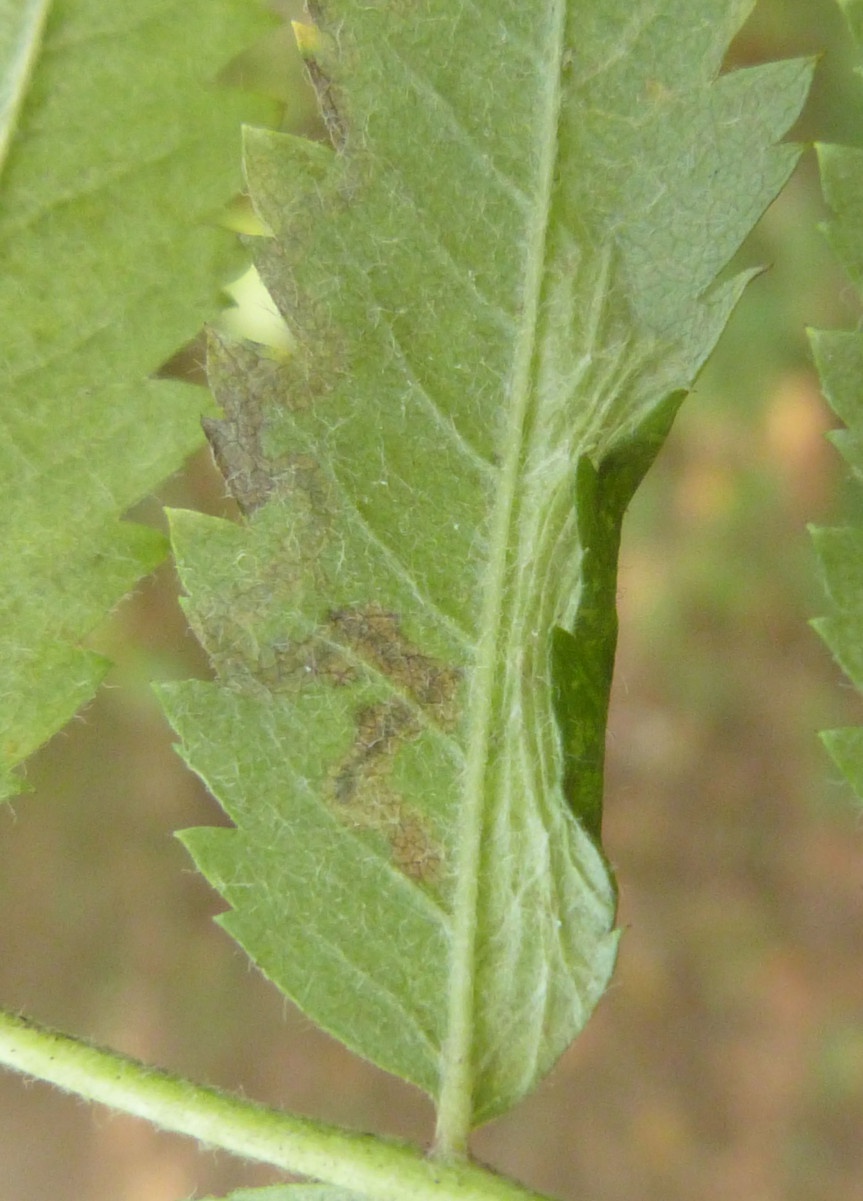
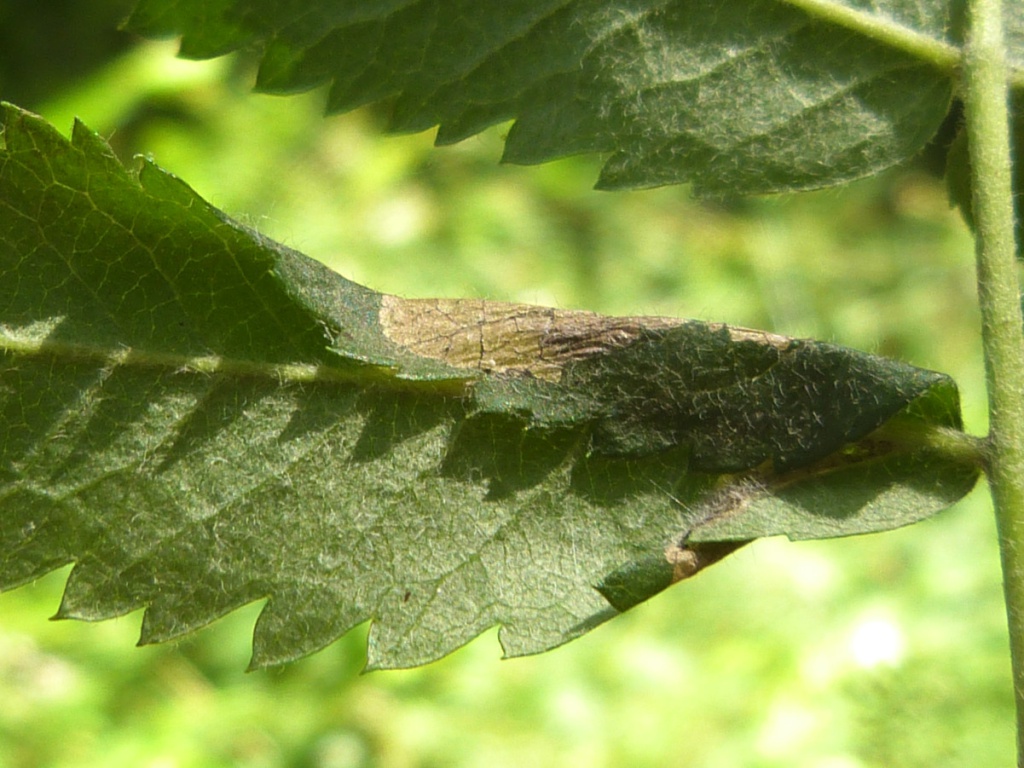
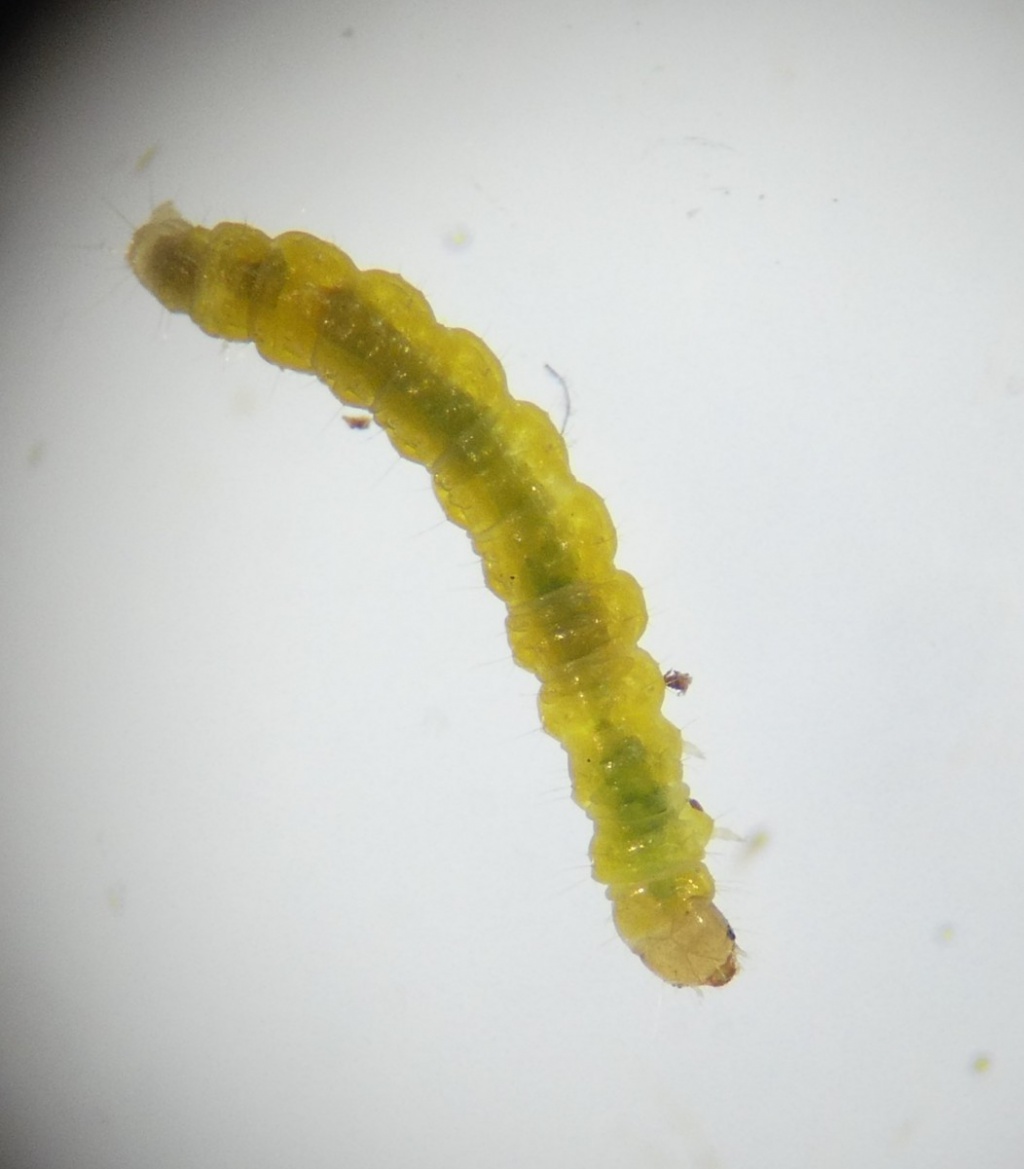
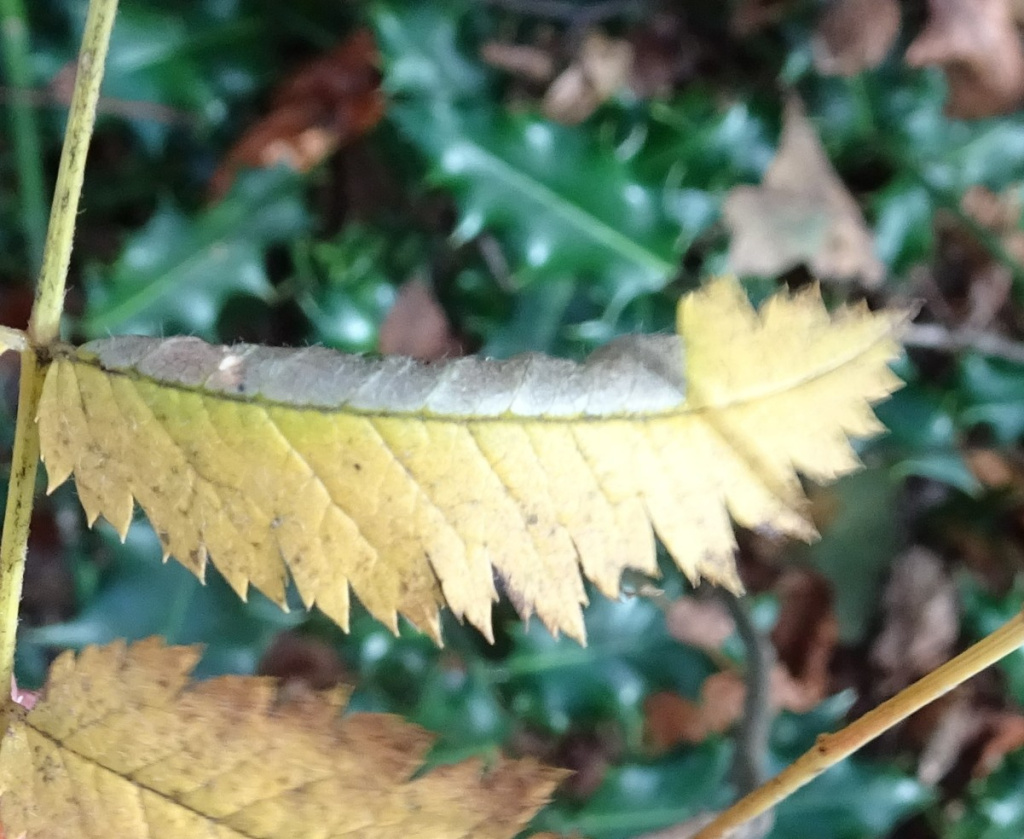
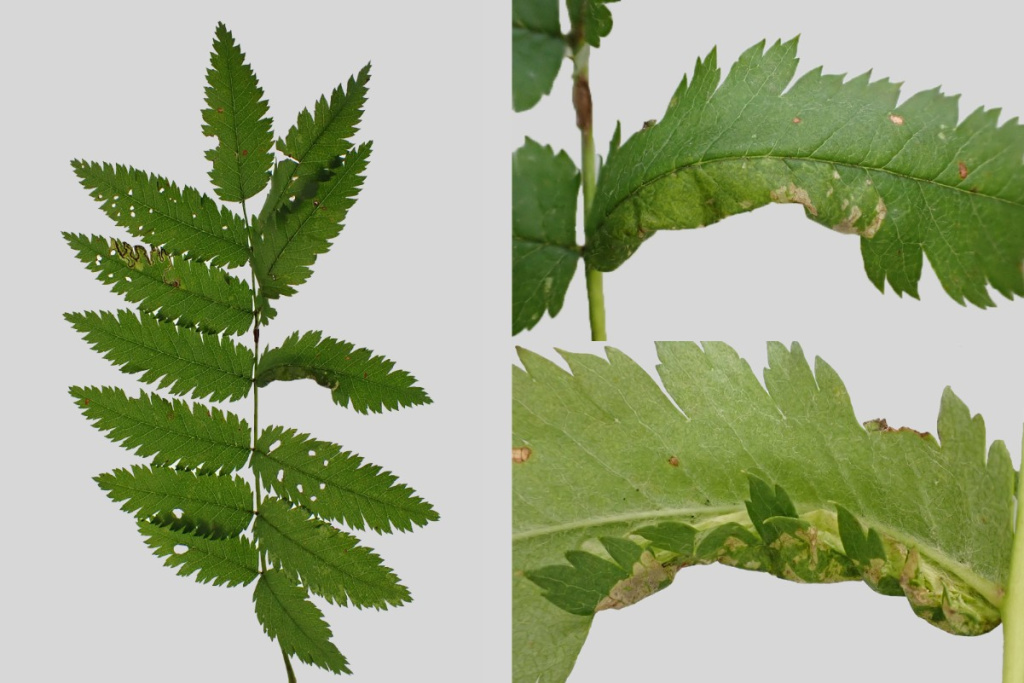
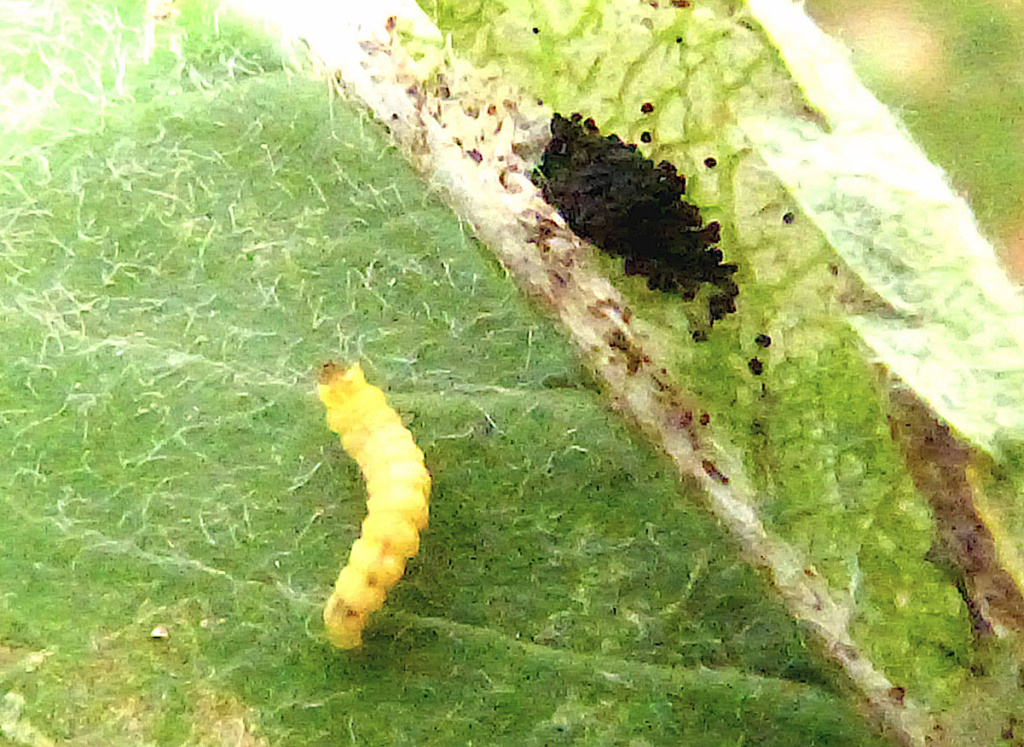
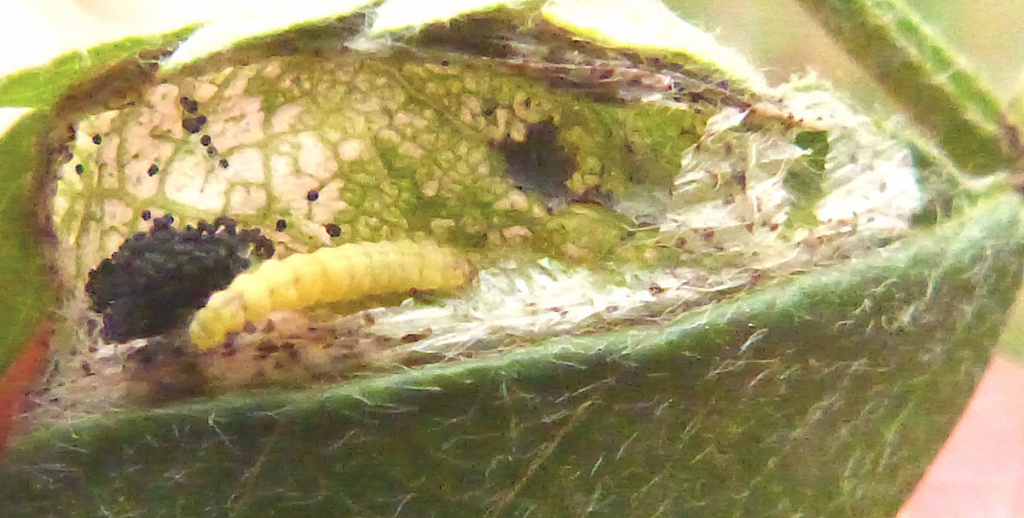
The larva commonly mines the leaves of Rowan or Bird Cherry, and occasionally on Whitebeam or other hosts in the Rosaceae, creating a long tentiform mine along the midrib/eaf-edge on Rowan. The under-surface has several sharp folds. The pupa inside is in a strong white cocoon. The mature larva is yellow with a pale brown head.
There are several other rarely recorded Phyllonorycter species found on Rowan and Whitebeam
Adult  Leafmine
Photograph the leaf with mine, and if possible the pupa and cocoon inside.
Where Sorbus species (especially Rowan) are present.
It flies in April and May and again in August.
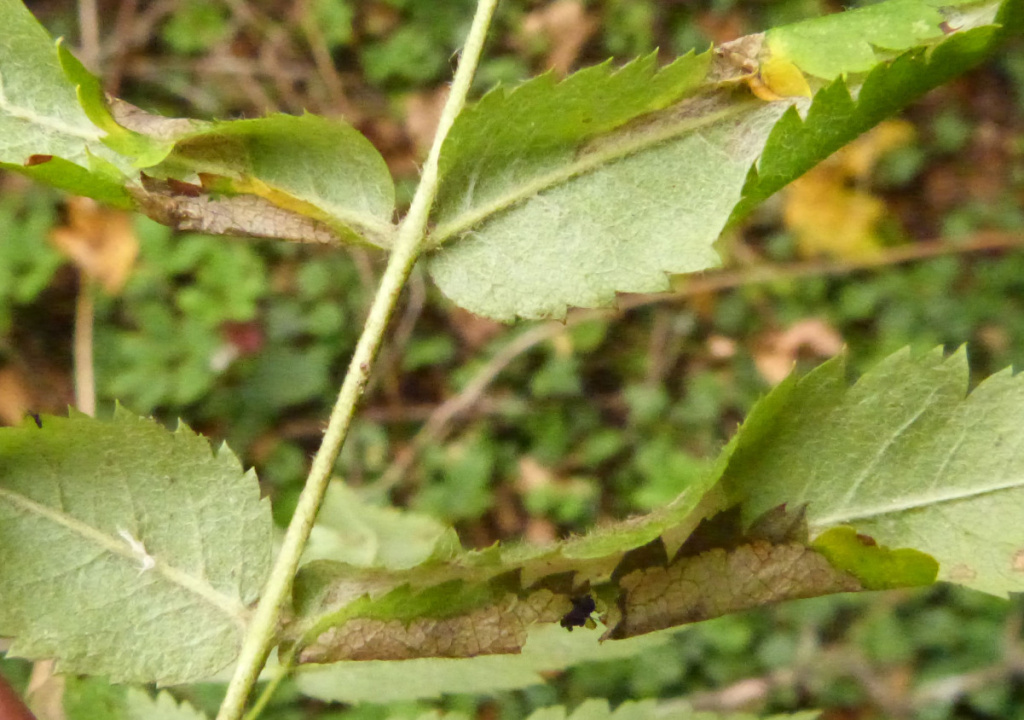
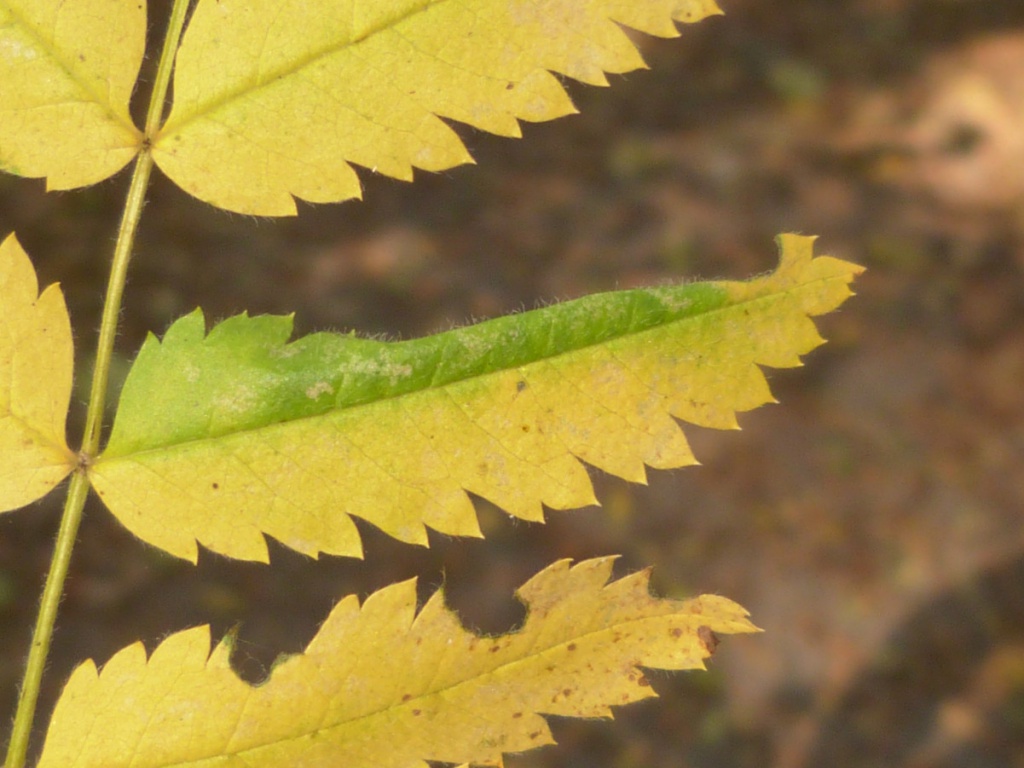
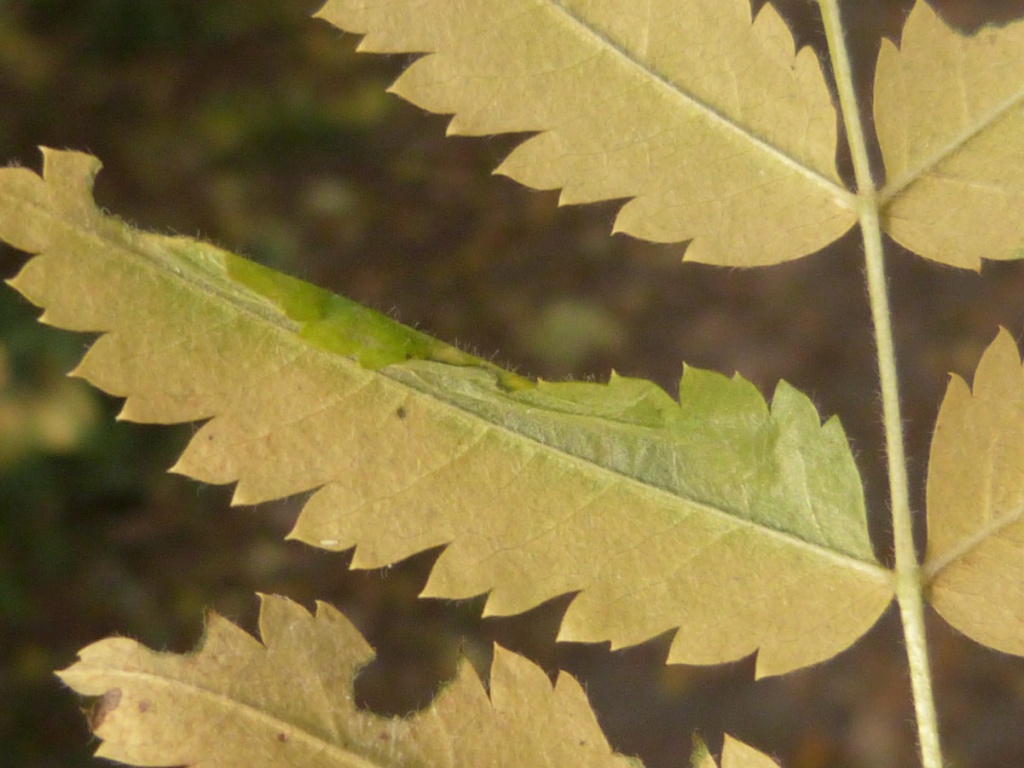
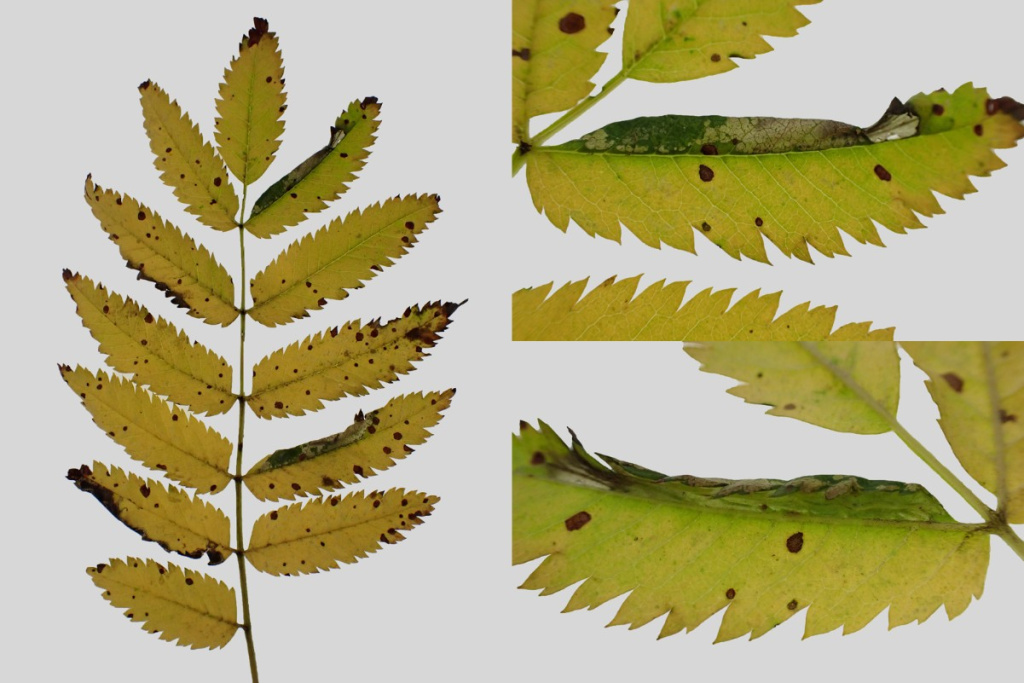
The larva feeds in a leaf-mine, which is wrinkled on the underside and curved into a tube on the upper surface. The whole leaflet is often strongly contorted. The most usual foodplant is Rowan (Sorbus aucuparia), but it is sometimes found on Bird-cherry (Prunus padus) and other species of Sorbus including Swedish Whitebeam (Sorbus intermedia).
Distributed throughout the British Isles, this species is generally commoner in the northern half. In the Butterfly Conservation's Microlepidoptera Report 2011 this species was classified as common.
It appears to be uncommon in Leicestershire and Rutland, where there are few records. L&R Moth Group status = D (rare or rarely recorded).
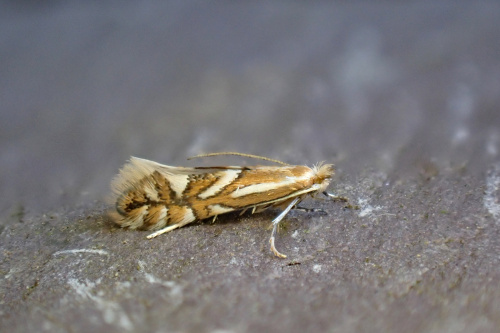 Mark Skevington
Bradgate Park
22 October 2024
ex-leafmine, emerged 01/04/2025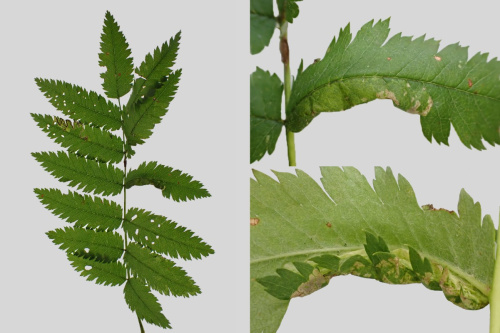 Mark Skevington
Bradgate Park
22 October 2024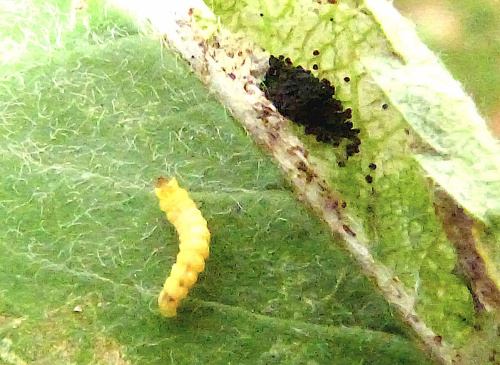 Graham Calow
Stoney Stanton, Highgate Lodge Farm open access land
15 October 2025
larva ex tenanted leafmine on Rowan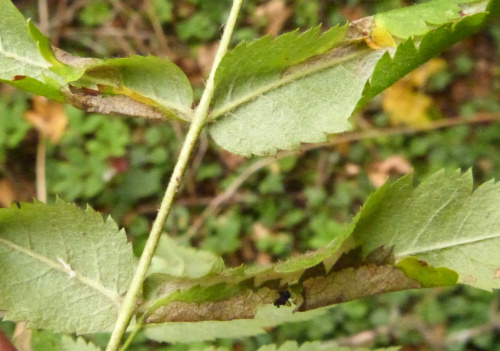 Graham Calow
Peatling Parva, St Andrew's Churchyard
08 October 2025
leafmines on Rowan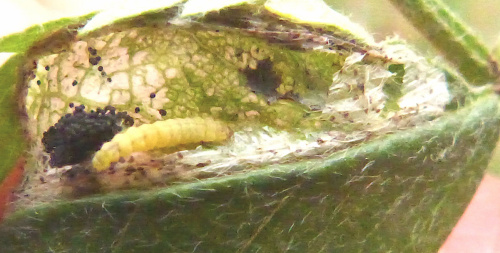 Graham Calow
Stoney Stanton, Highgate Lodge Farm open access land
15 October 2025
tenanted leafmine on Rowan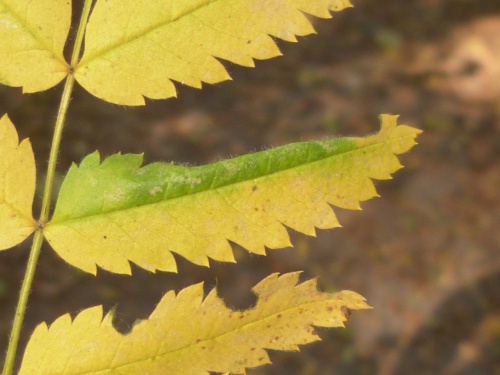 Graham Calow
Burbage Wood
10 October 2018
leafmine on Rowan Graham Calow
Burbage Wood
10 October 2018
leafmine on Rowan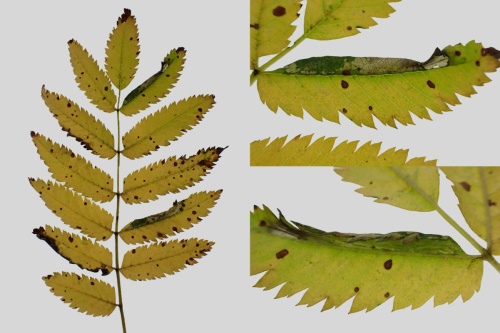 Mark Skevington
Bradgate Park
22 October 2024
Leicestershire & Rutland Map
Enter a town or village to see local records
MAP KEY:
Yellow squares = NBN records (all known data)
Coloured squares = NatureSpot records: 2025+ | 2020-2024 | pre-2020
UK Map
Additional images