Phyllonorycter quercifoliella
Phyllonorycter quercifoliella
Common Oak Midget
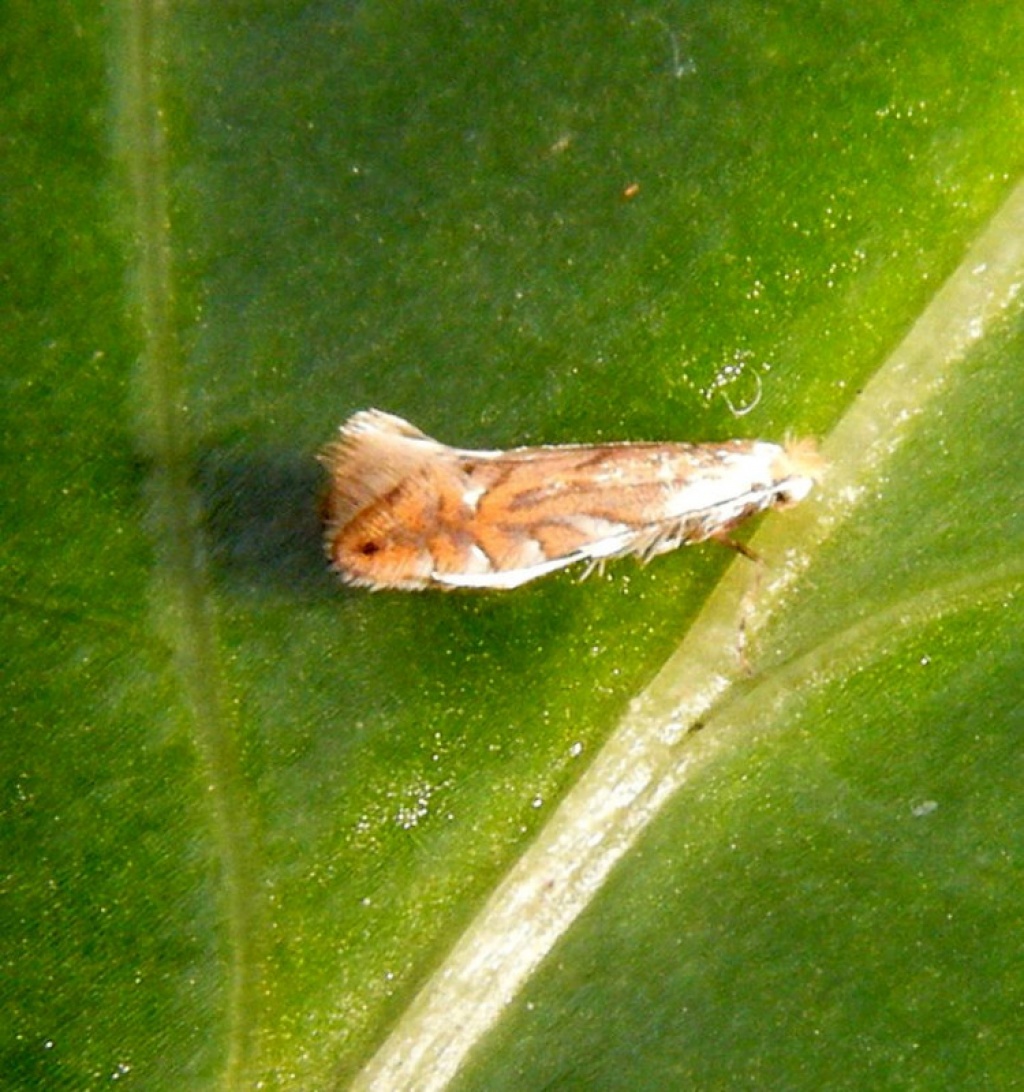
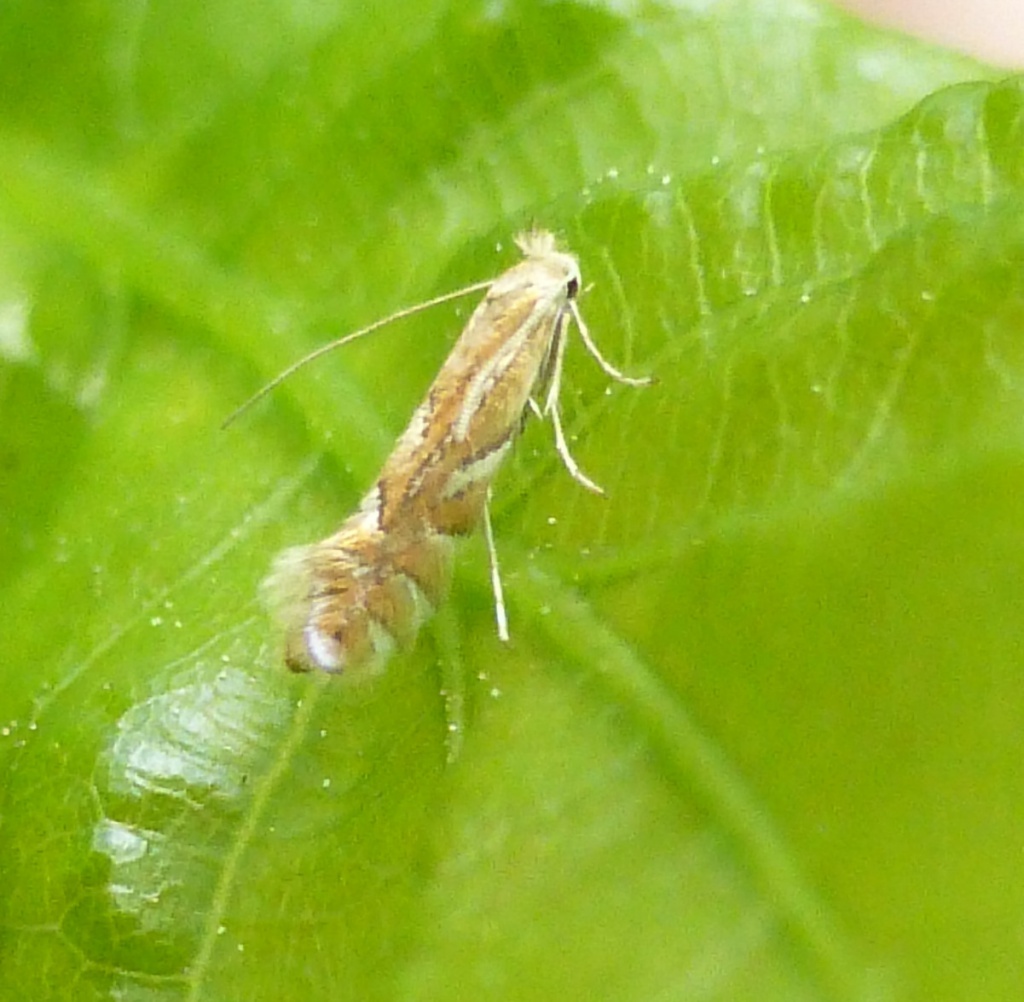
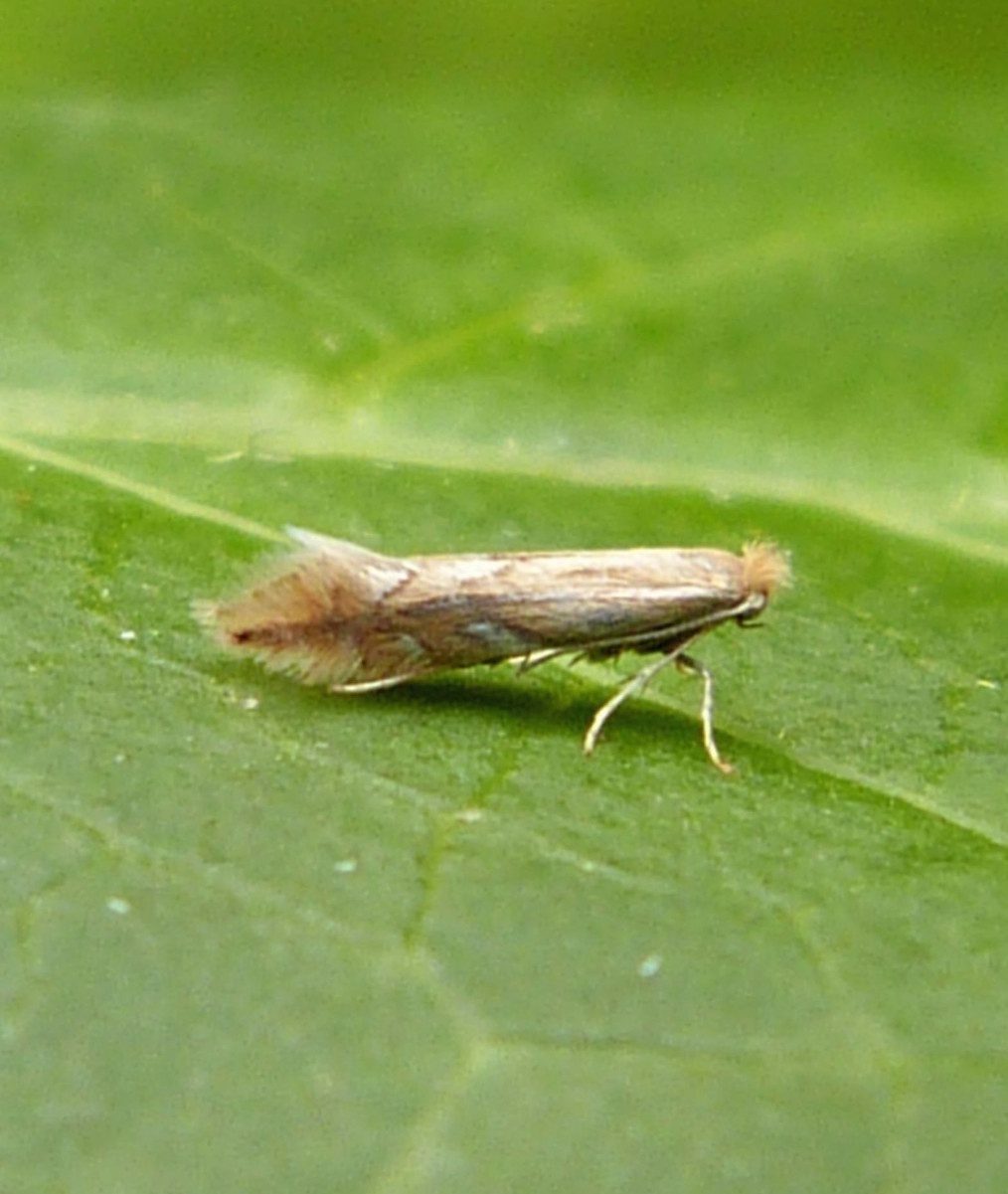
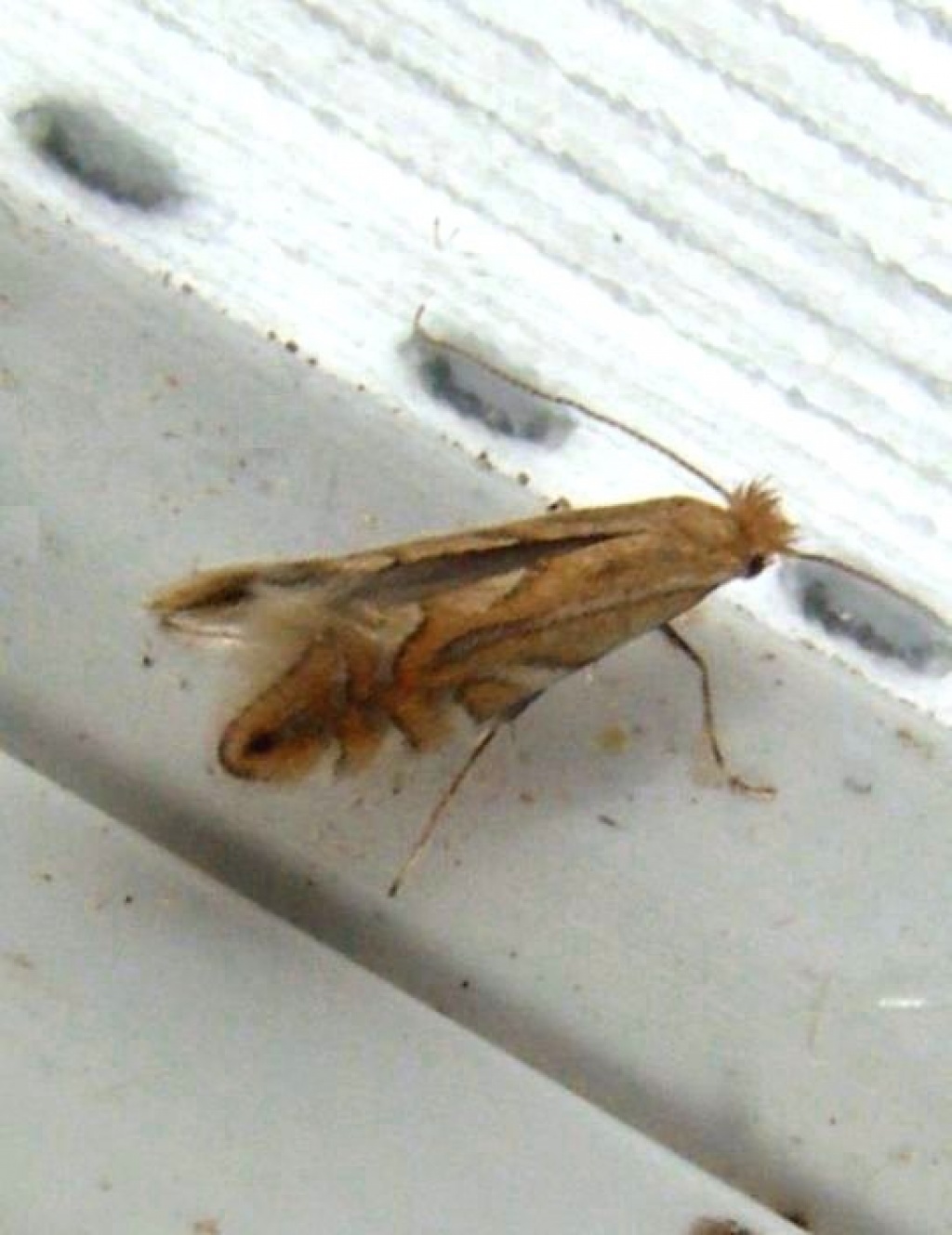
Wingspan 7 to 9 mm. At first glance the adult can appear devoid of markings, but on closer scrutiny, the pale greyish strigulae can be seen, as can the diagnostic basal streak, which usually extends more than half the forewing length.
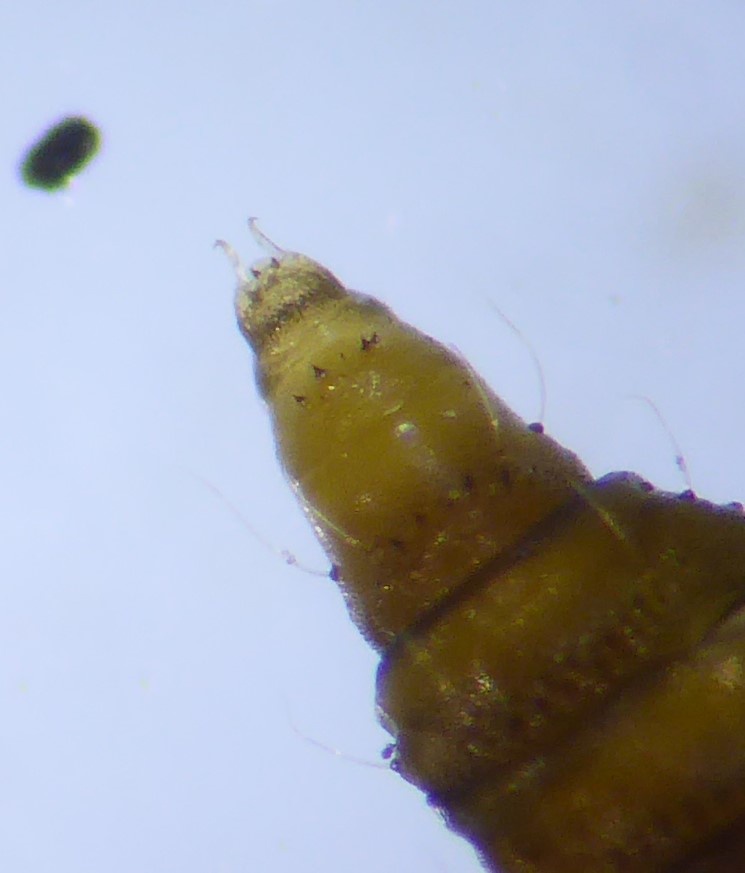
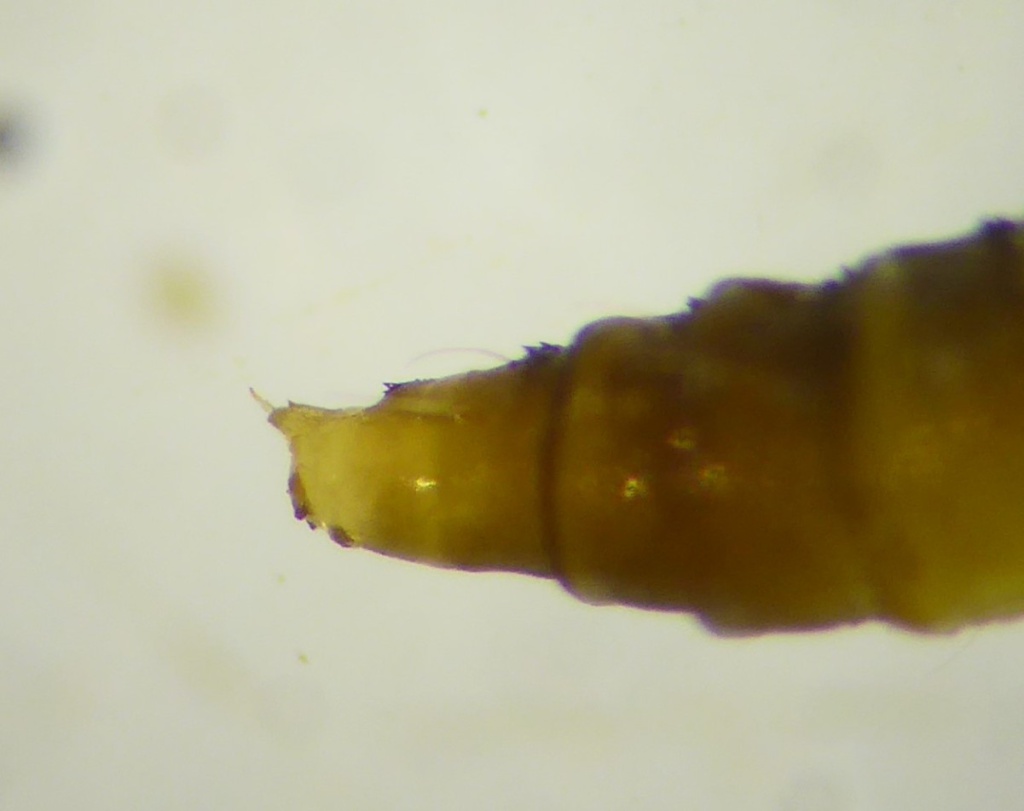
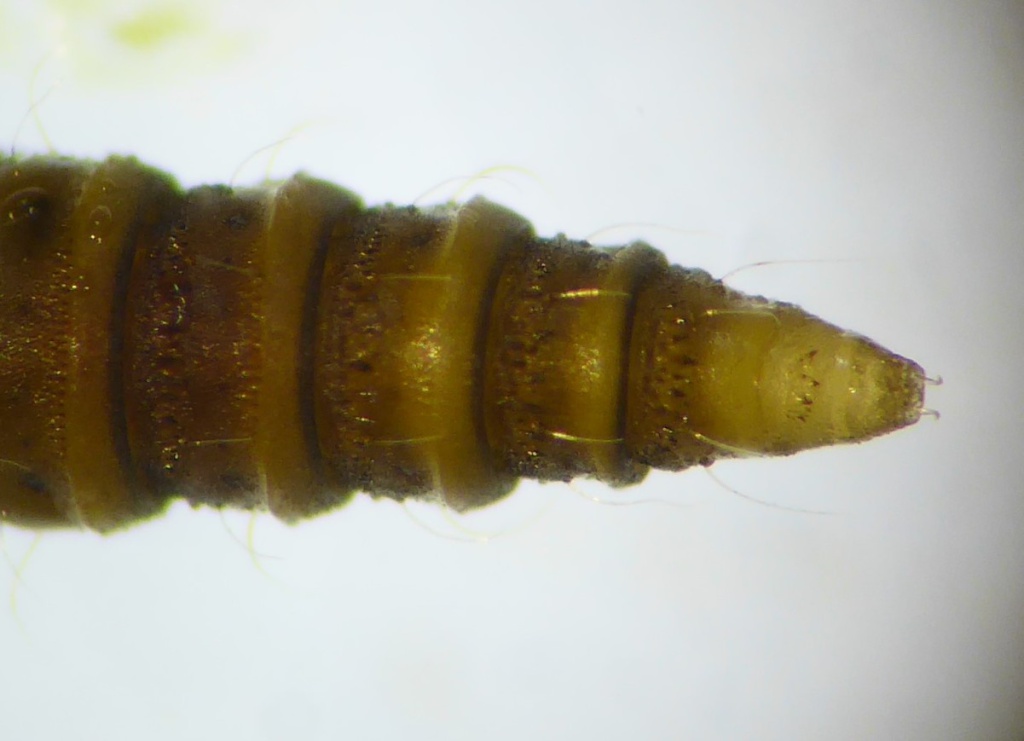
The leaf mines on oak can be searched for from late autumn through winter, and it is relatively easy to rear the adult. The species is difficult to identify from the mine alone, but the pupa has a distinctive arrangements of hooks at the very end, known as the 'cremaster'. There is a key and description of these on Bladmineerders.nl (see 'Further Information' link below) and photos at https://mothdissection.co.uk/species.php?Tx=Phyllonorycter_quercifoliella
Other Oak Phyllonorycter
Adult  Leafmine/pupa
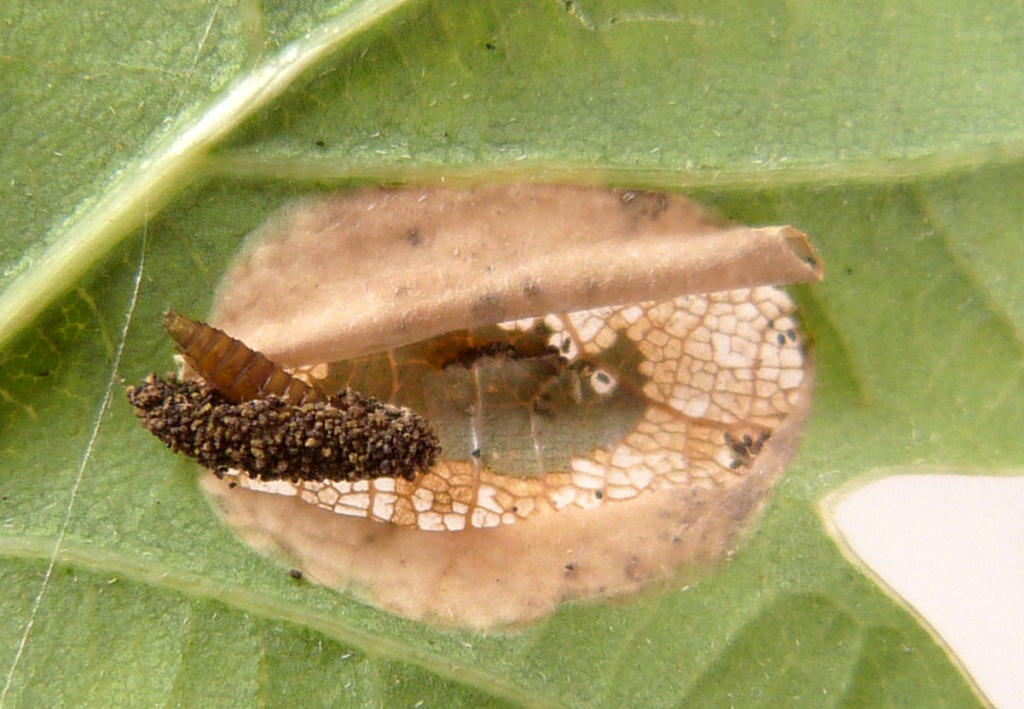
Photograph adult, or frass covered cocoon when recording leafmine, or mine and pupal cremaster.
Areas where Oak is plentiful.
The moths are on the wing in April and May, and again in August and September.
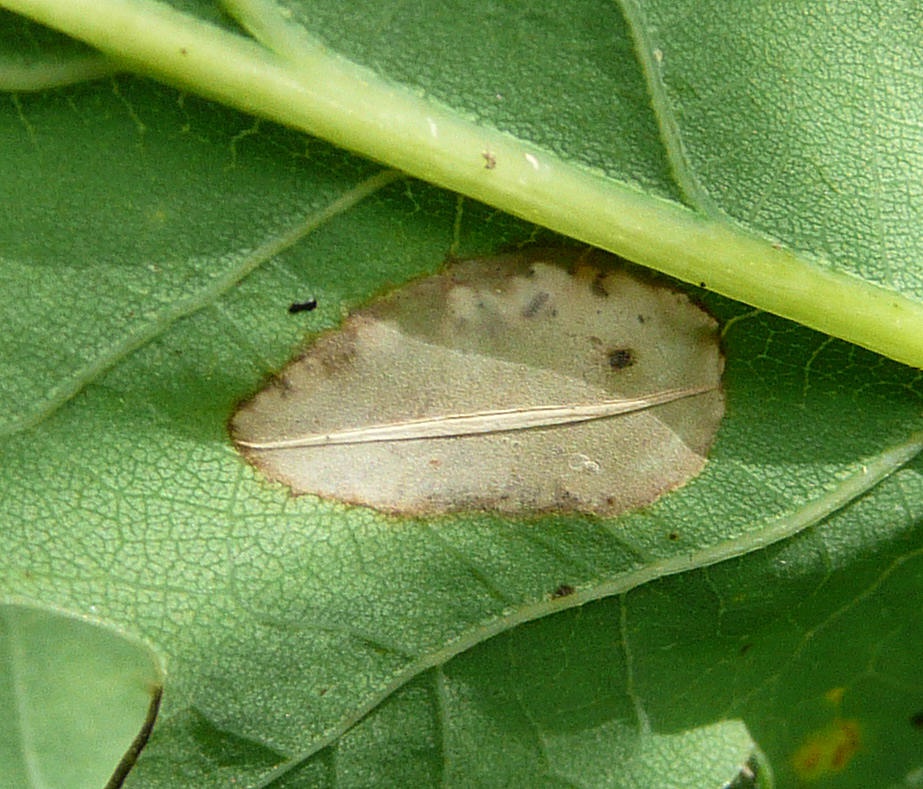
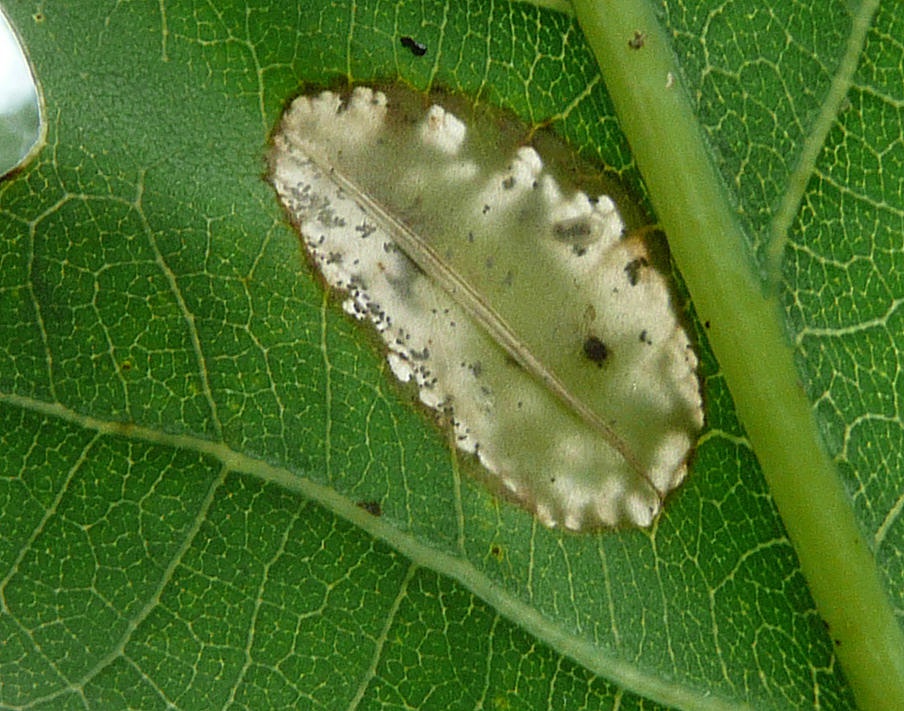
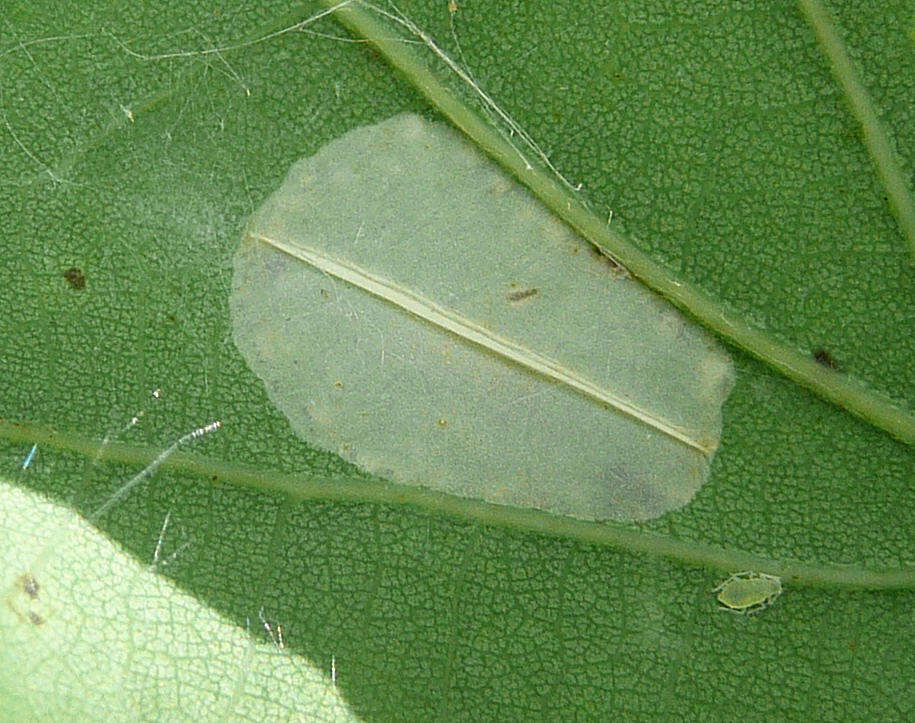
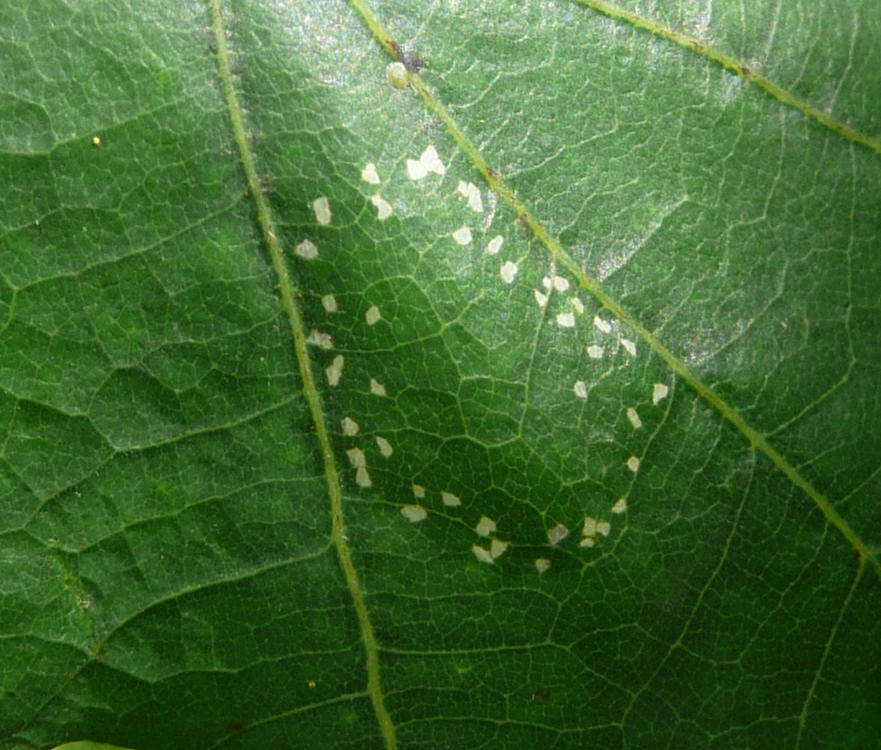
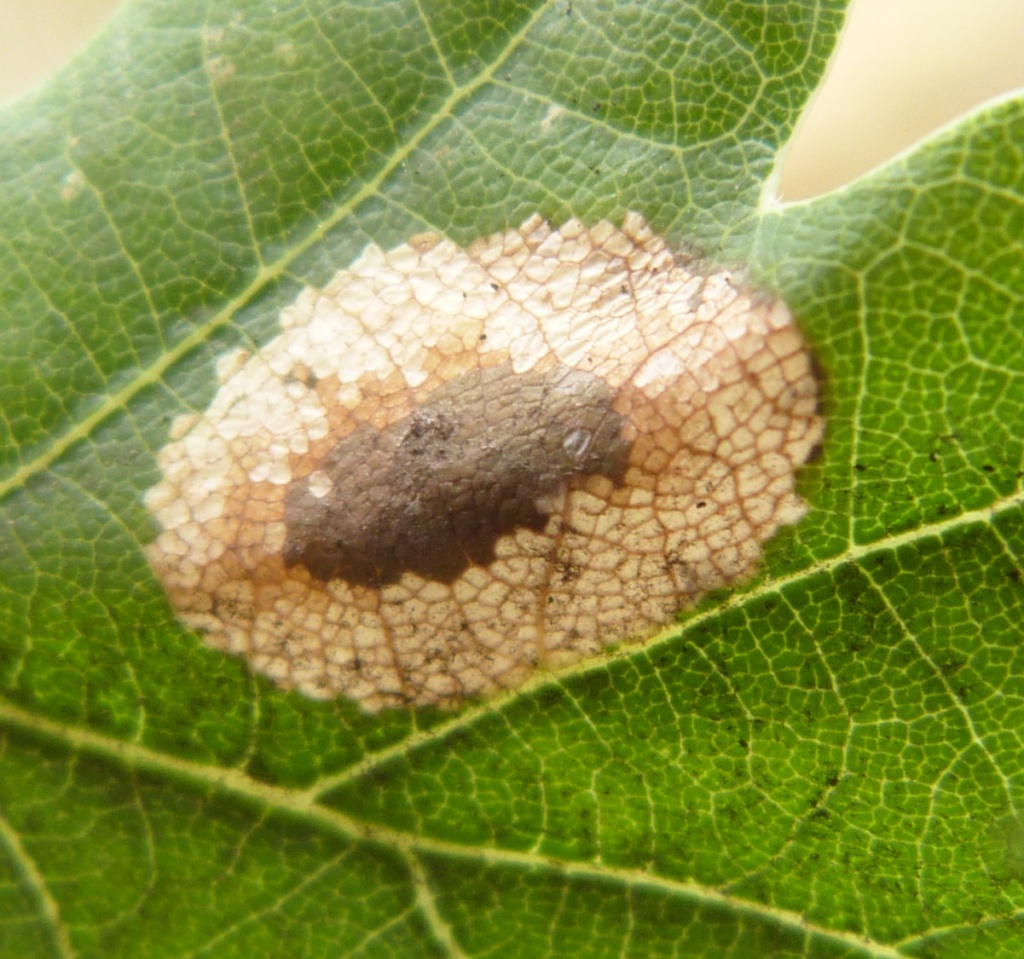
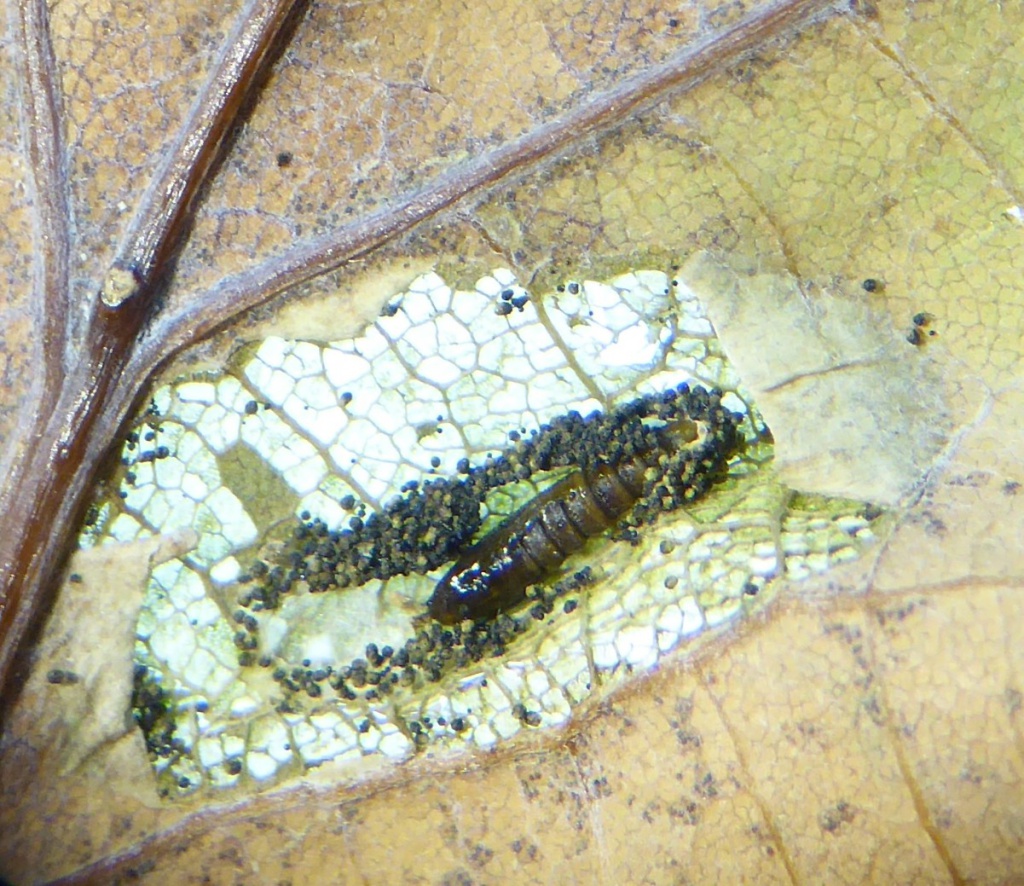
The larval mine is a small blotch on the underside of a leaf of Oak.
Probably the commonest of the oak-feeding Phyllonorycters, this species is frequent throughout most of the British Isles. In the Butterfly Conservation’s Microlepidoptera Report 2011 this species was classified as common.
Occasional in Leicestershire and Rutland. L&R Moth Group status = C (very scarce resident or rare migrant).
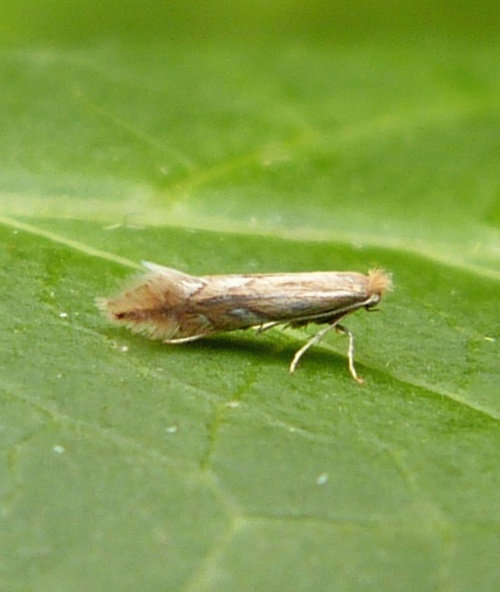 Graham Calow
Sapcote garden1
19 May 2014
confirmed by gen det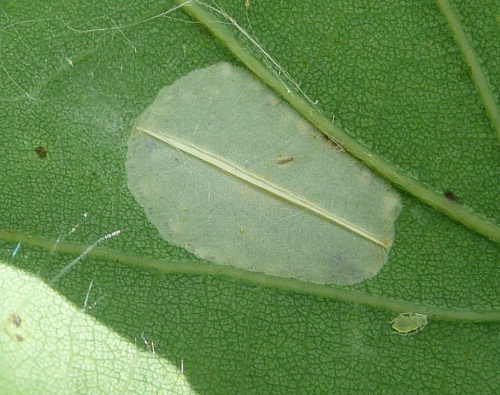 Barbara Cooper
Long Clawson
29 June 2014
leafmine on Oak, underside of leaf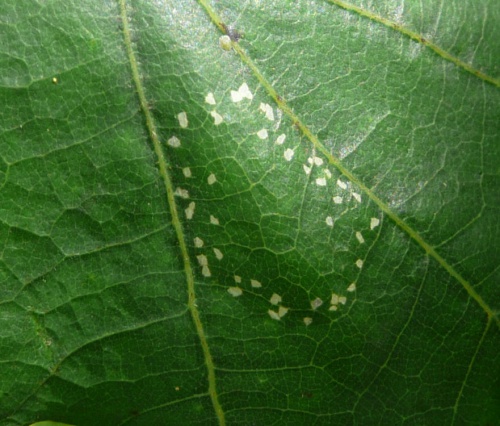 Barbara Cooper
Long Clawson
29 June 2014
leafmine on Oak, upper side of leaf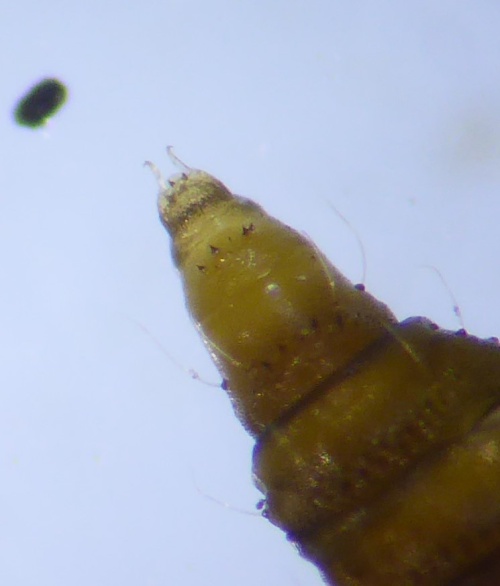 sue
sue
Bagworth, rear of Burditt Close
29 November 2020
pupal cremaster, one long and one v short pair of hooks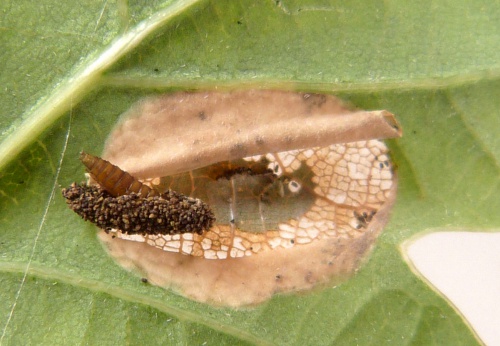 Graham Calow
Sapcote, Land behind William Spencer Avenue
10 August 2021
frass covered pupal cocoon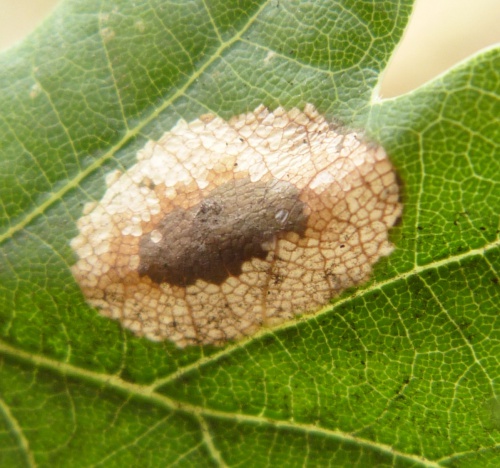 Graham Calow
Sapcote, Land behind William Spencer Avenue
10 August 2021
leafmine on Oak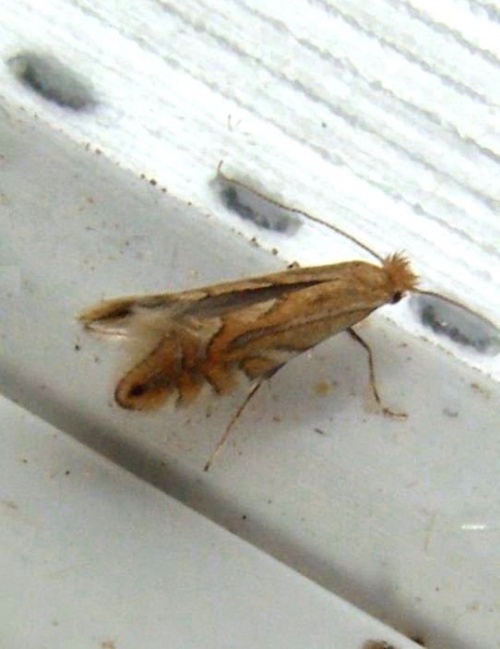 Graham Calow
Sapcote garden1
10 May 2012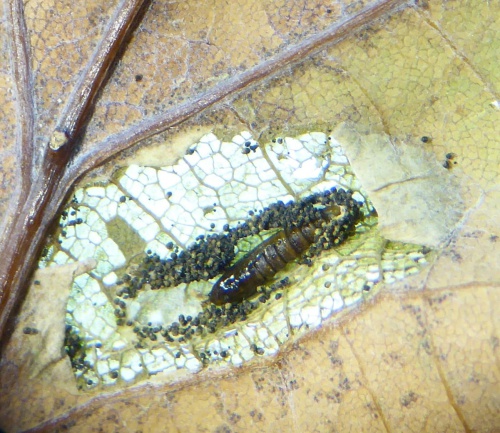 sue
sue
Bagworth, Manor Farm LNR
05 December 2020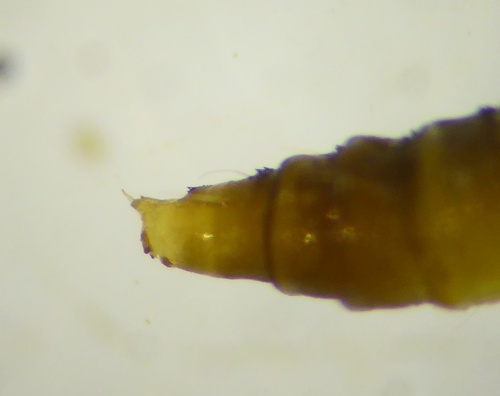 sue
sue
Ibstock, rough grassland and plantation E of football ground
30 November 2020
pupal cremaster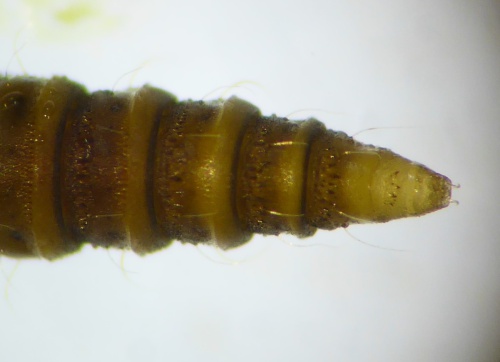 sue
sue
Bagworth, Manor Farm LNR
05 December 2020
pupal cremaster
Leicestershire & Rutland Map
Enter a town or village to see local records
MAP KEY:
Yellow squares = NBN records (all known data)
Coloured squares = NatureSpot records: 2025+ | 2020-2024 | pre-2020
UK Map
Additional images