Phyllonorycter messaniella
Phyllonorycter messaniella
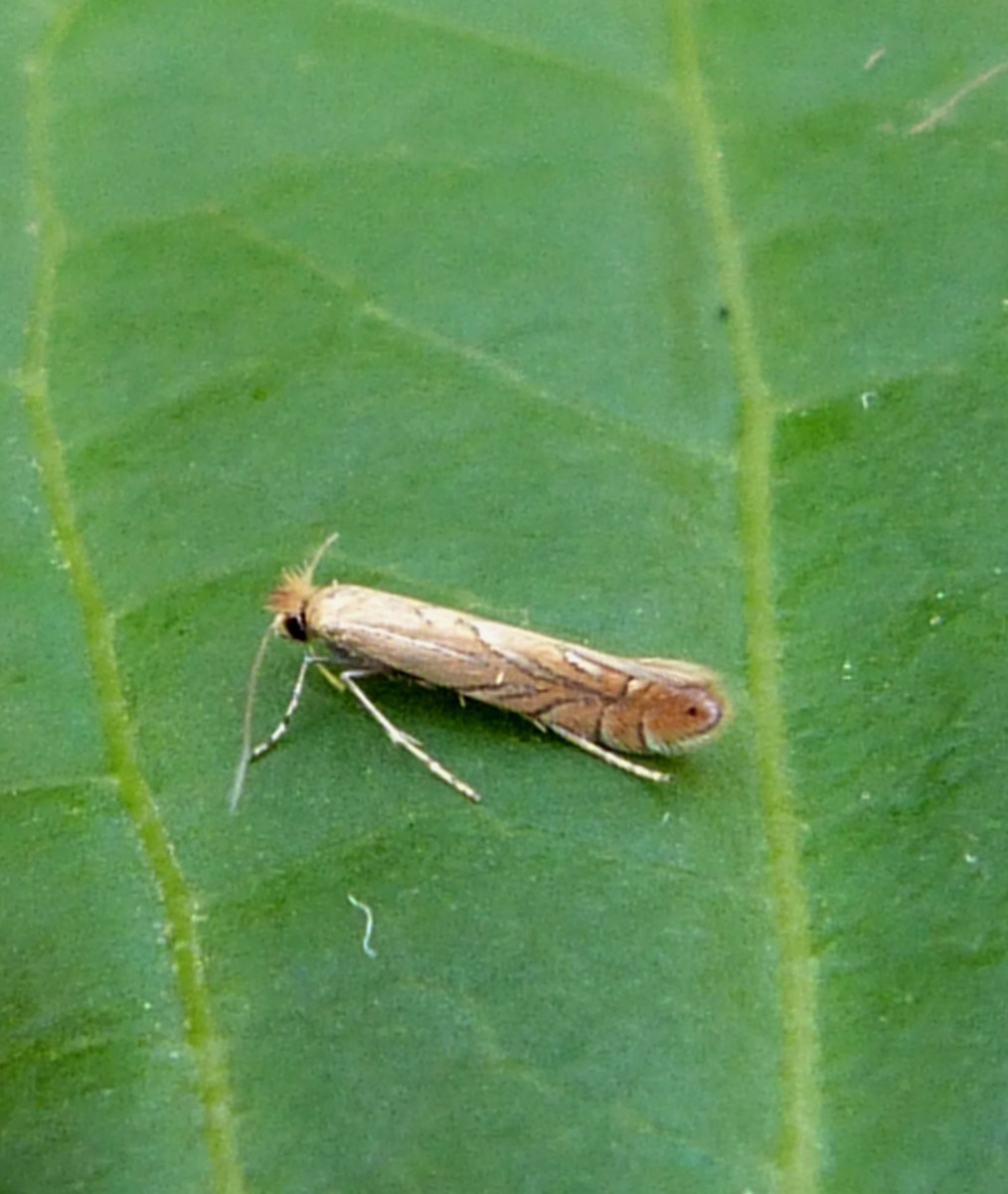
Garden Midget
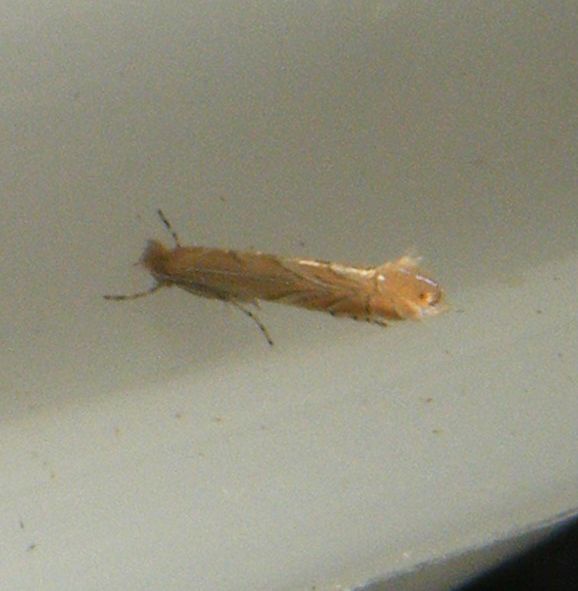
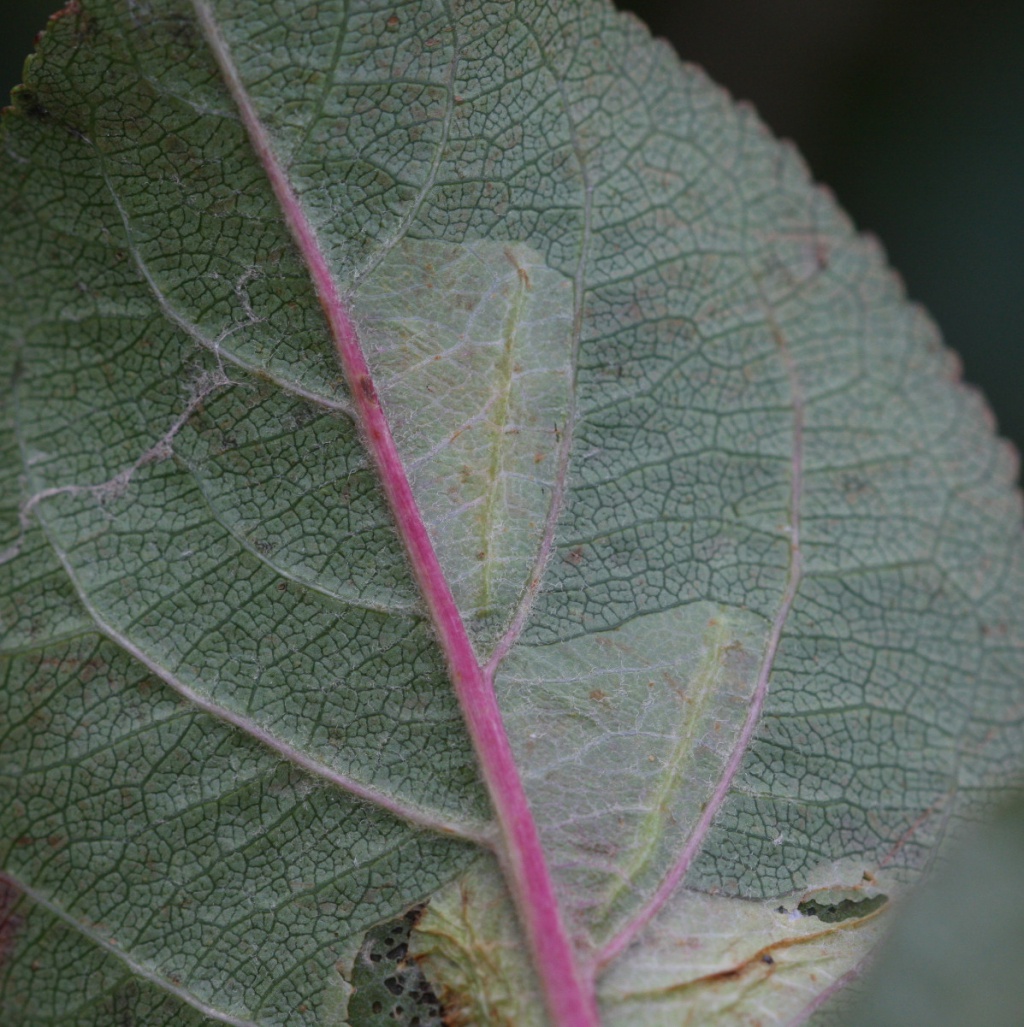
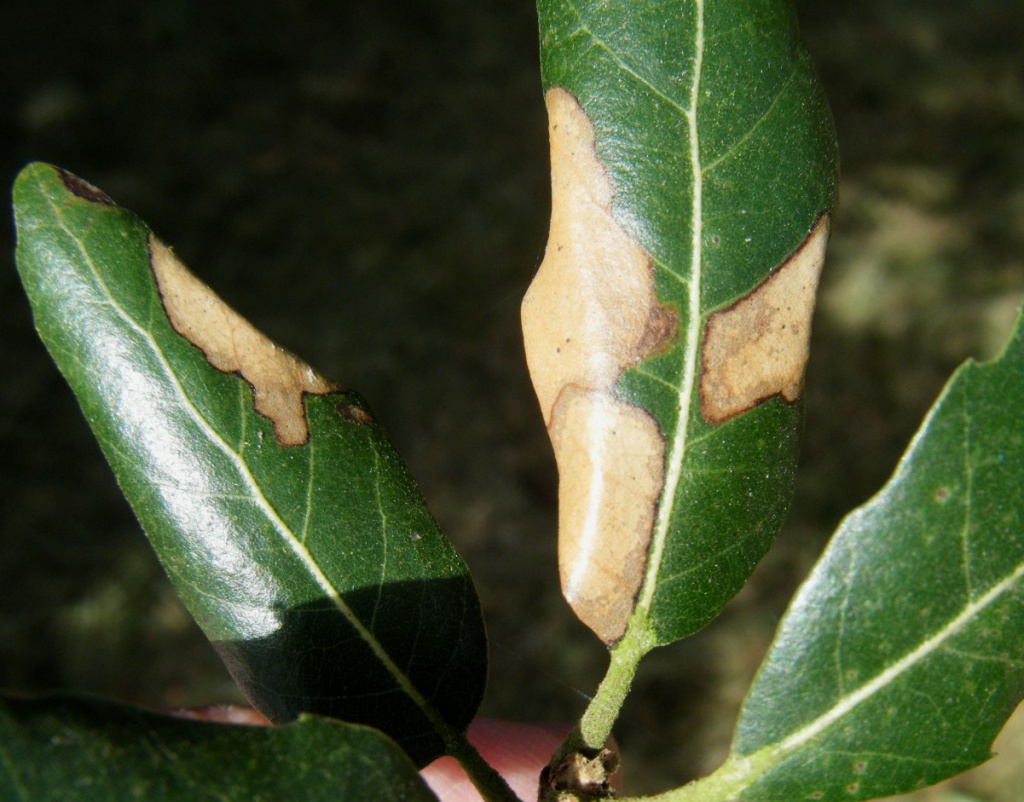
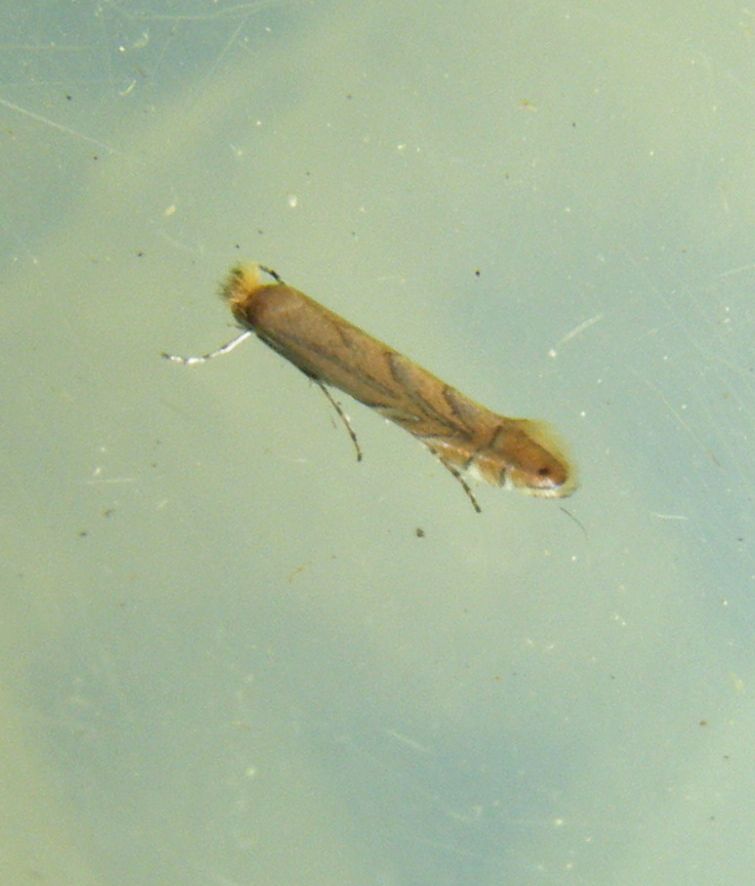
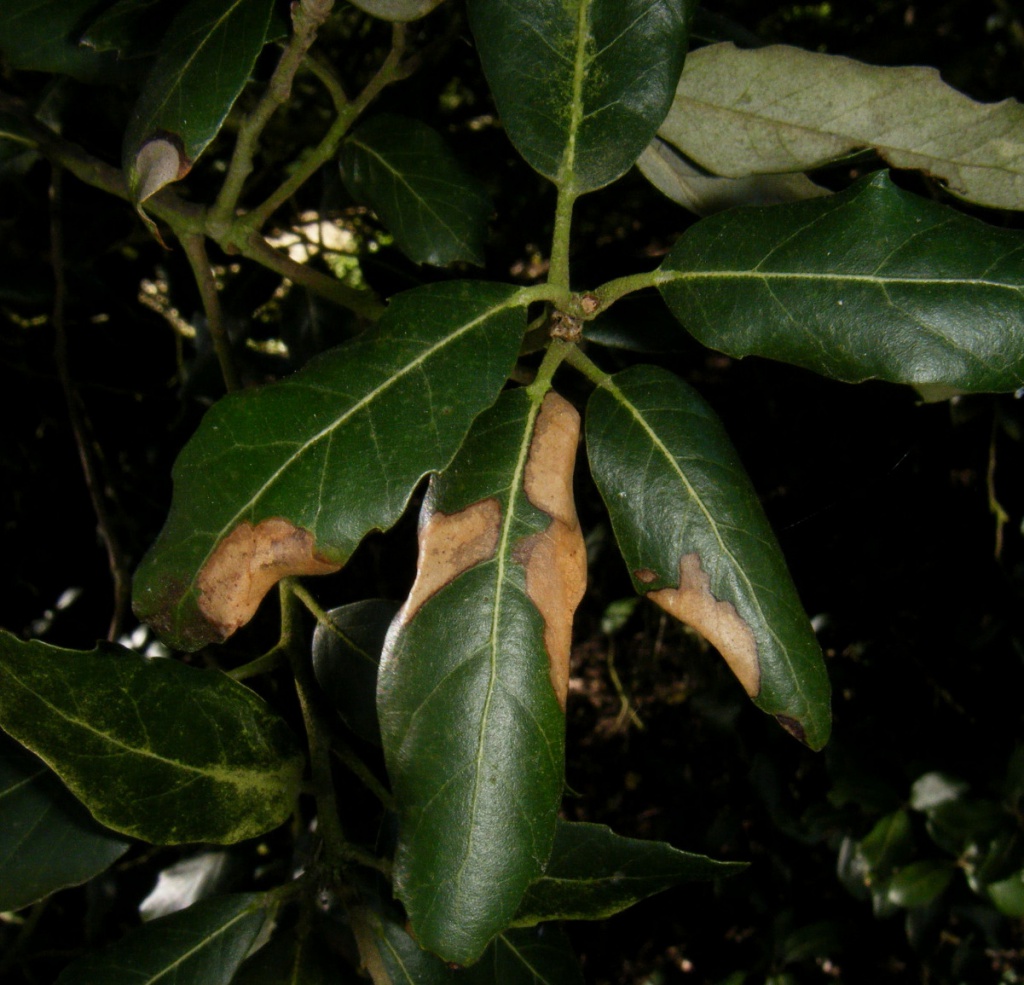
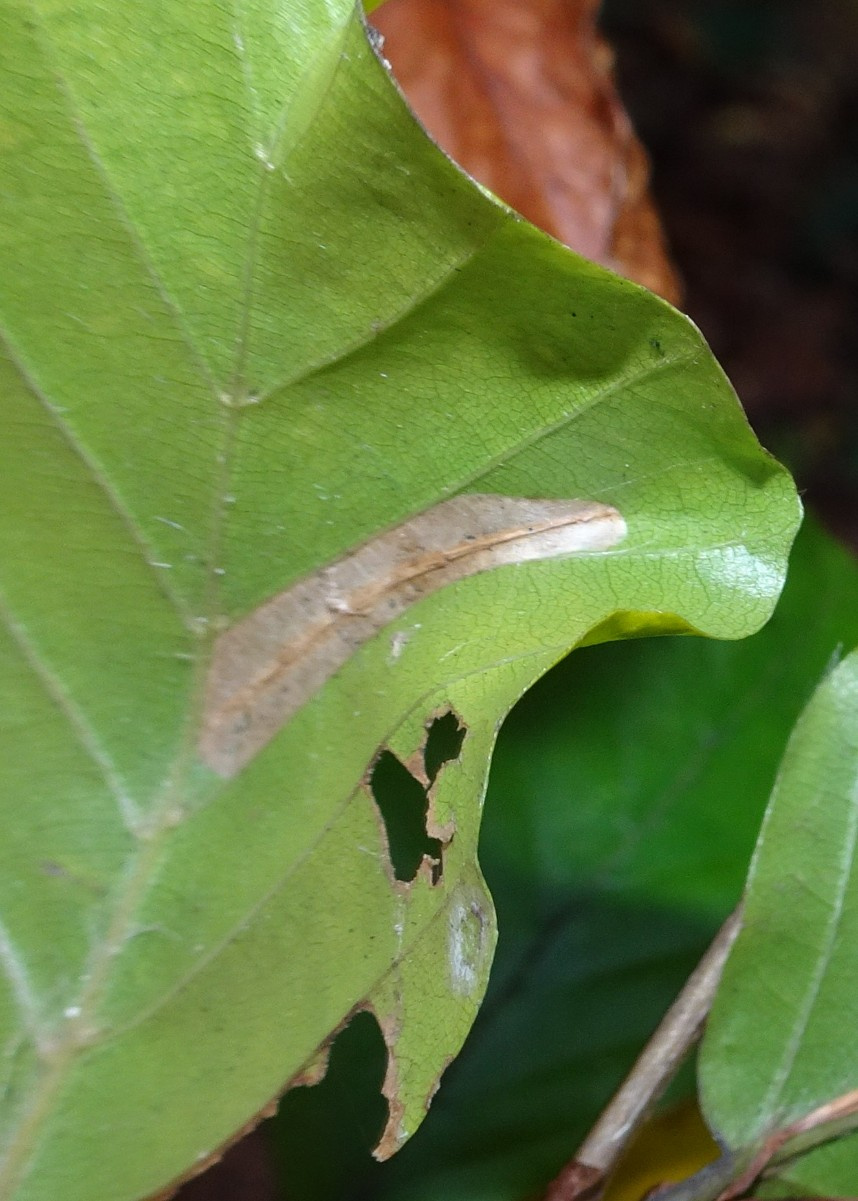
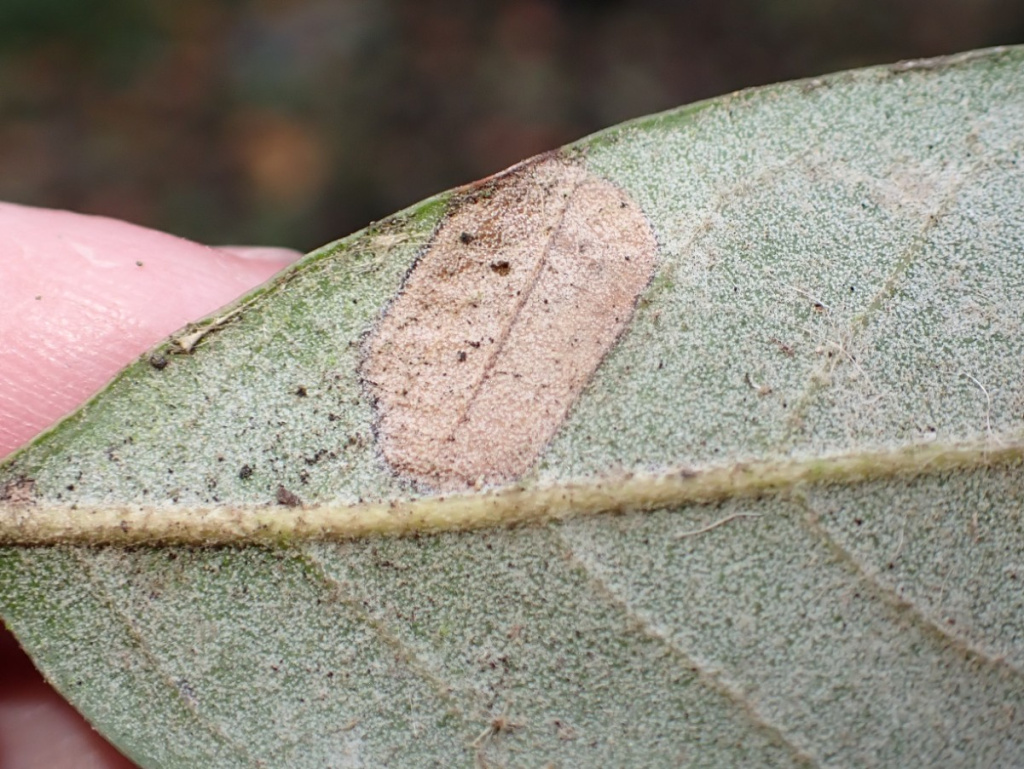
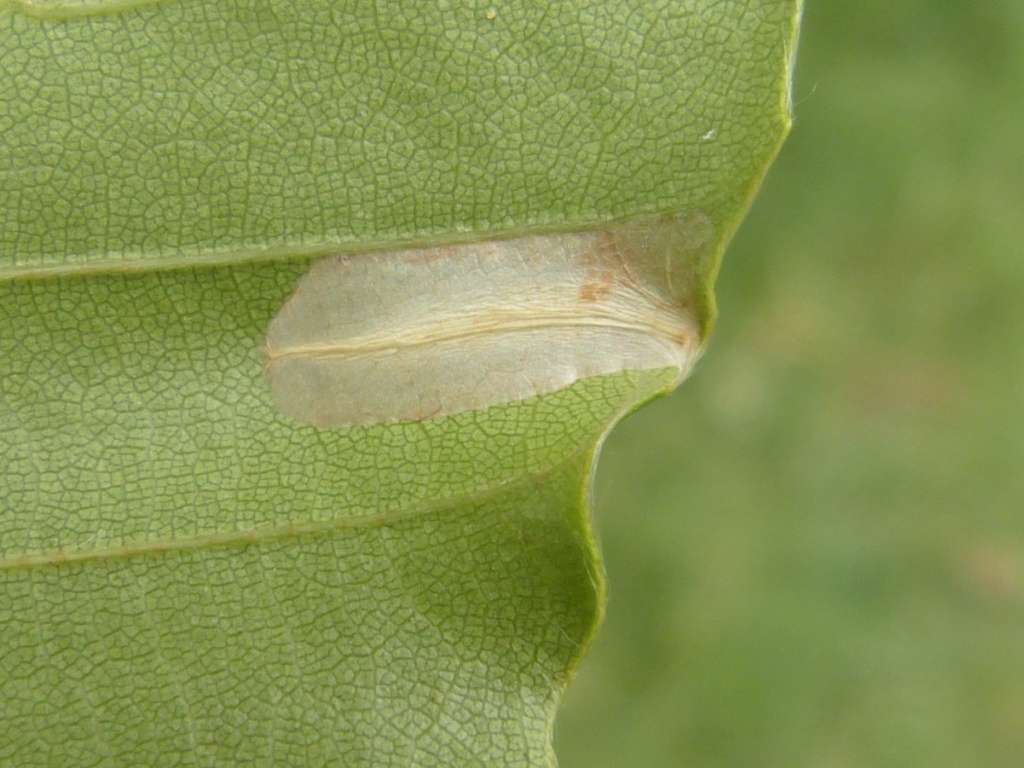
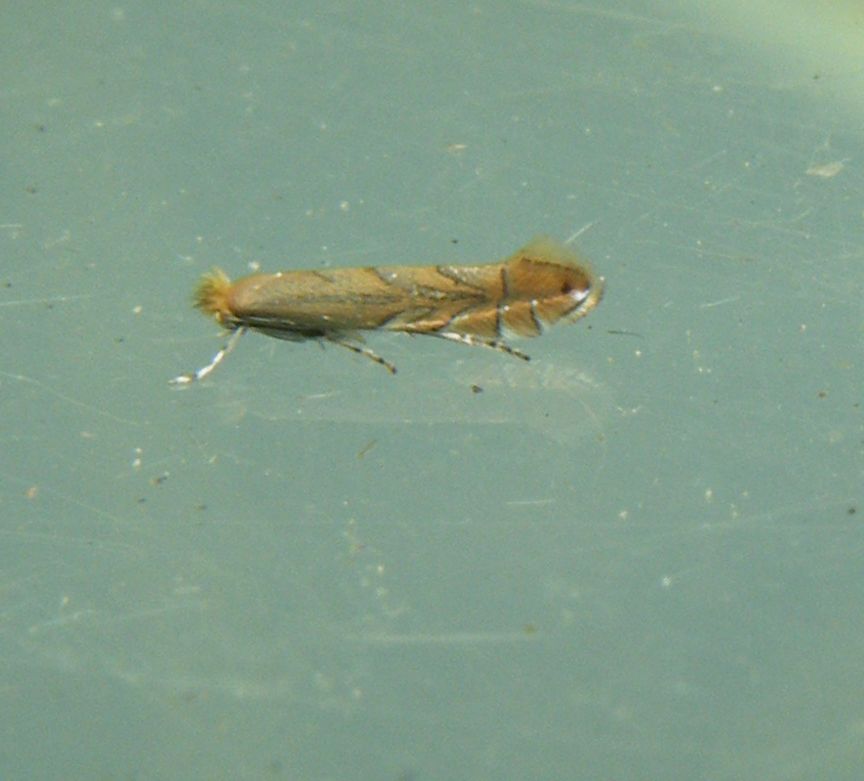
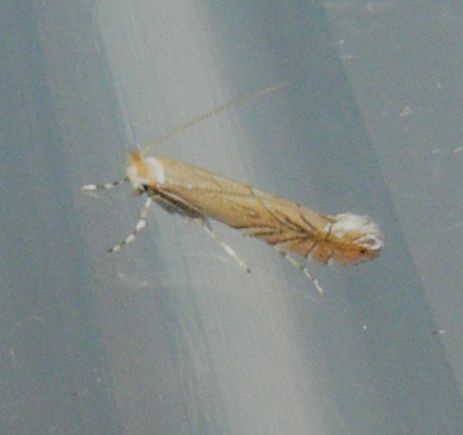
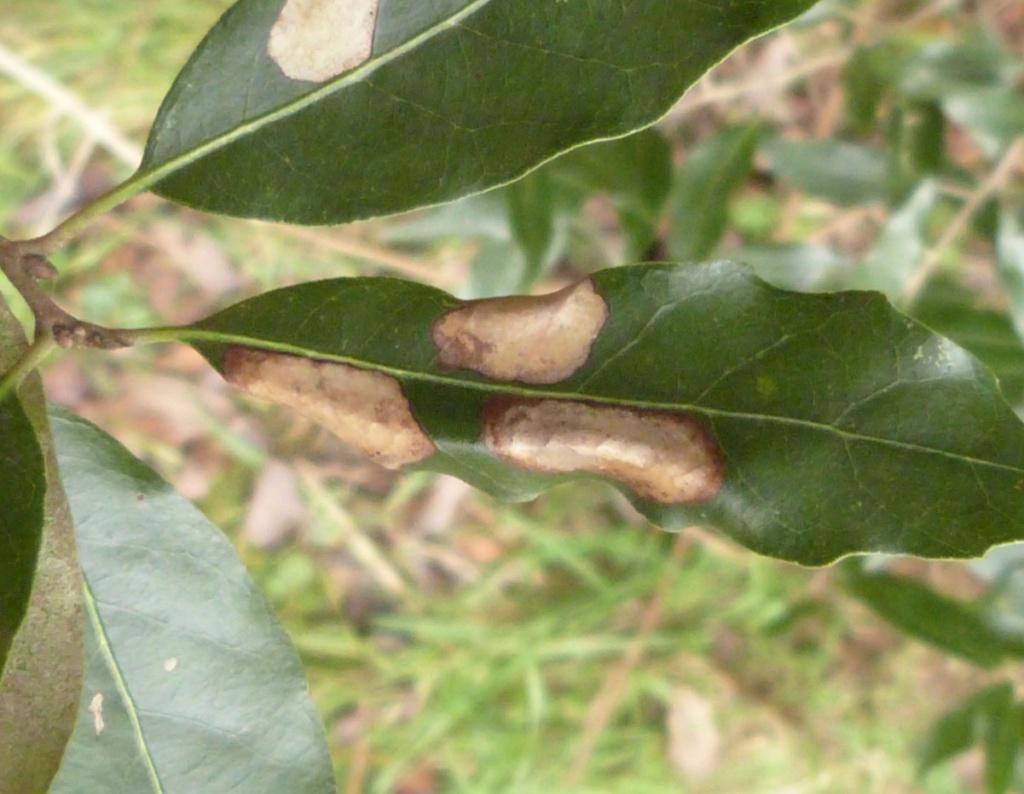
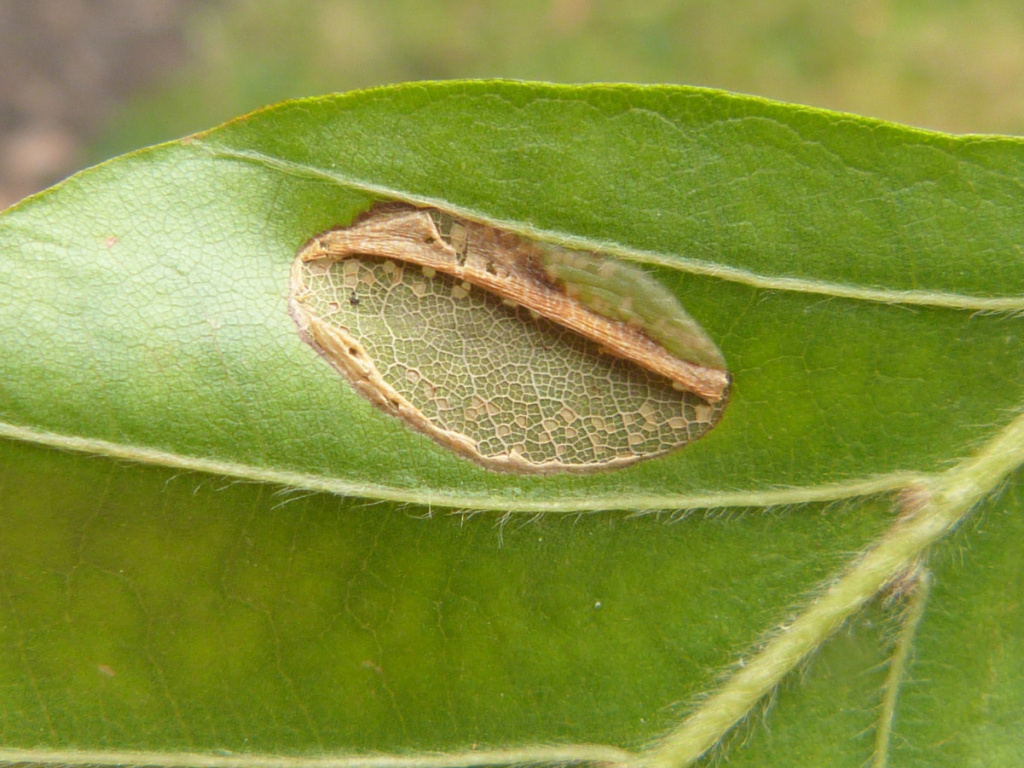
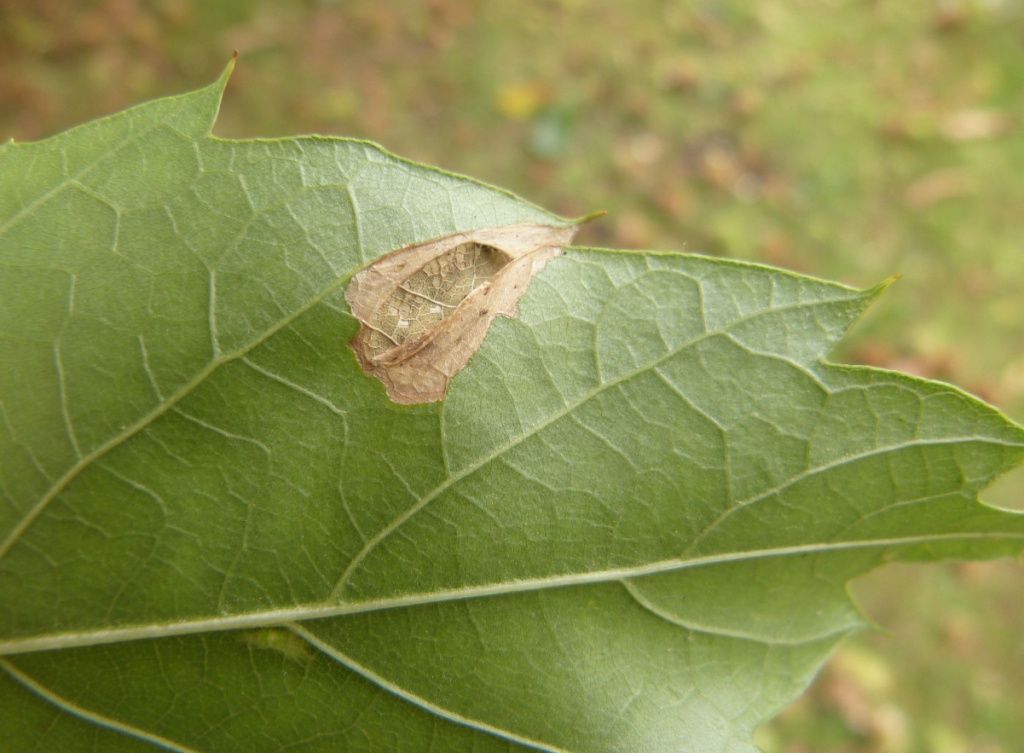
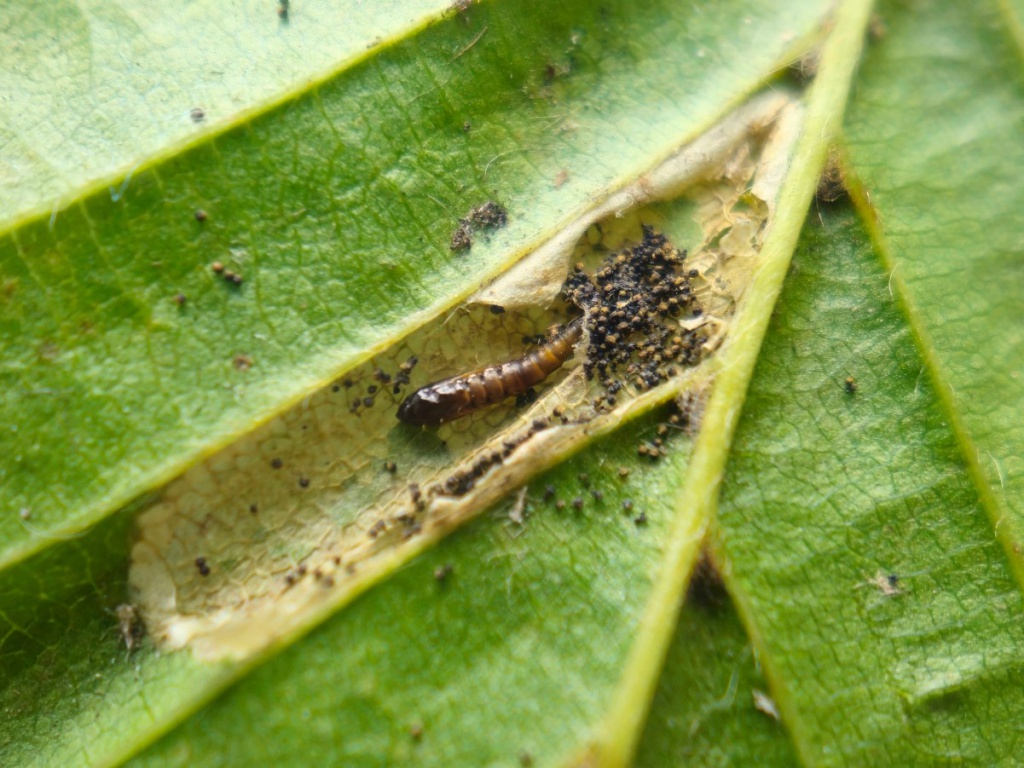
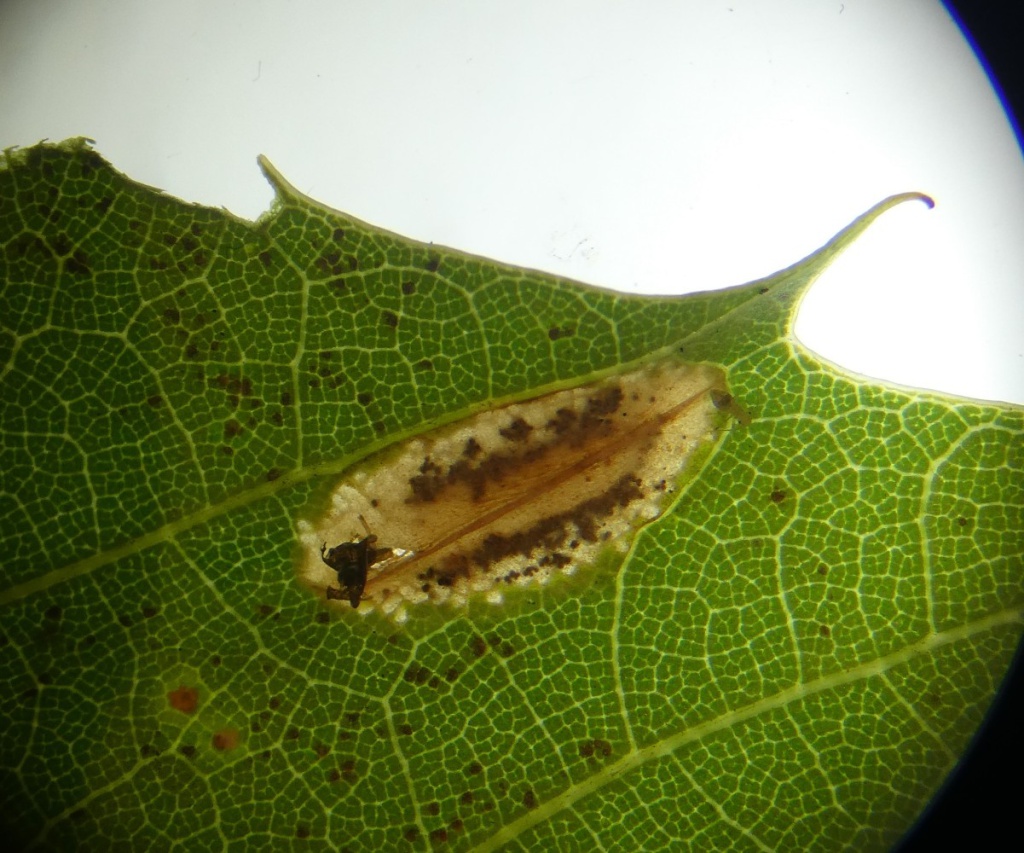
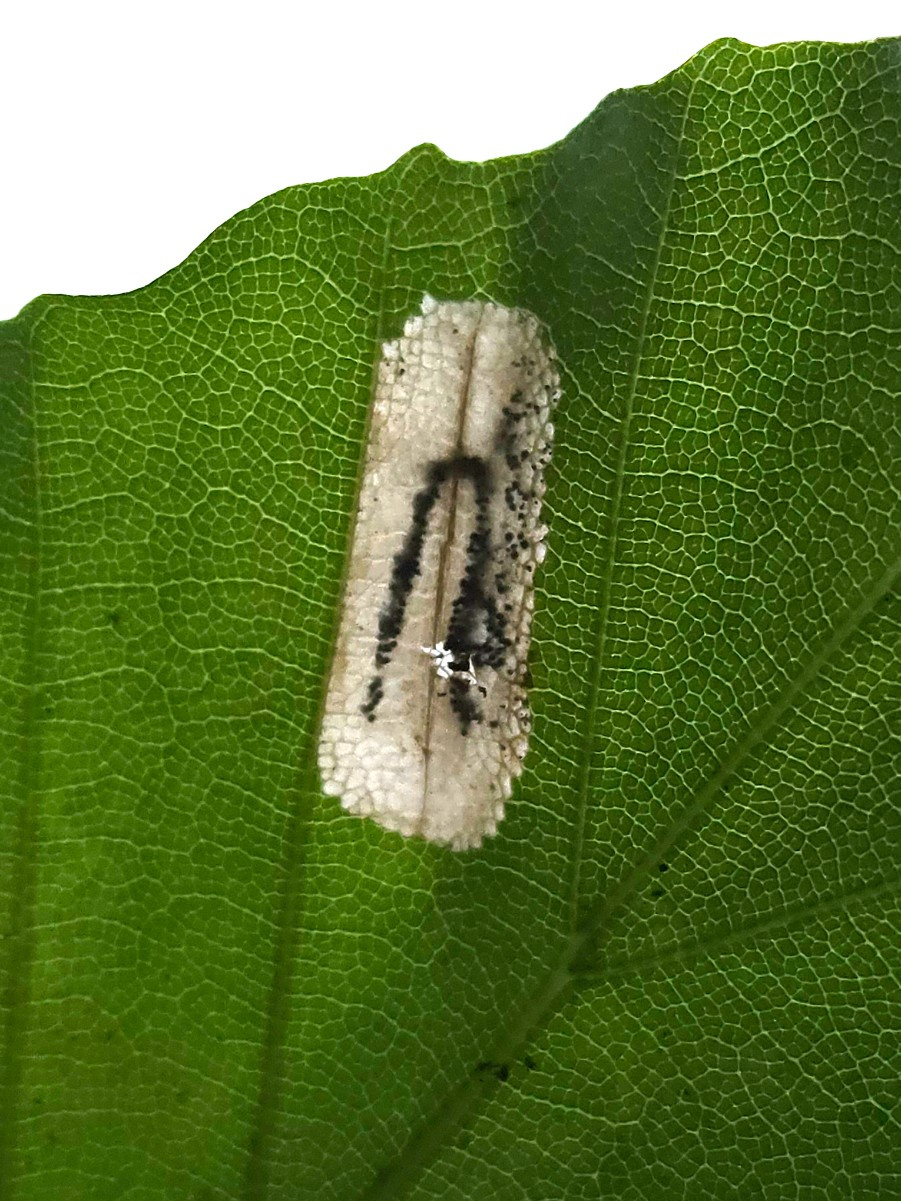
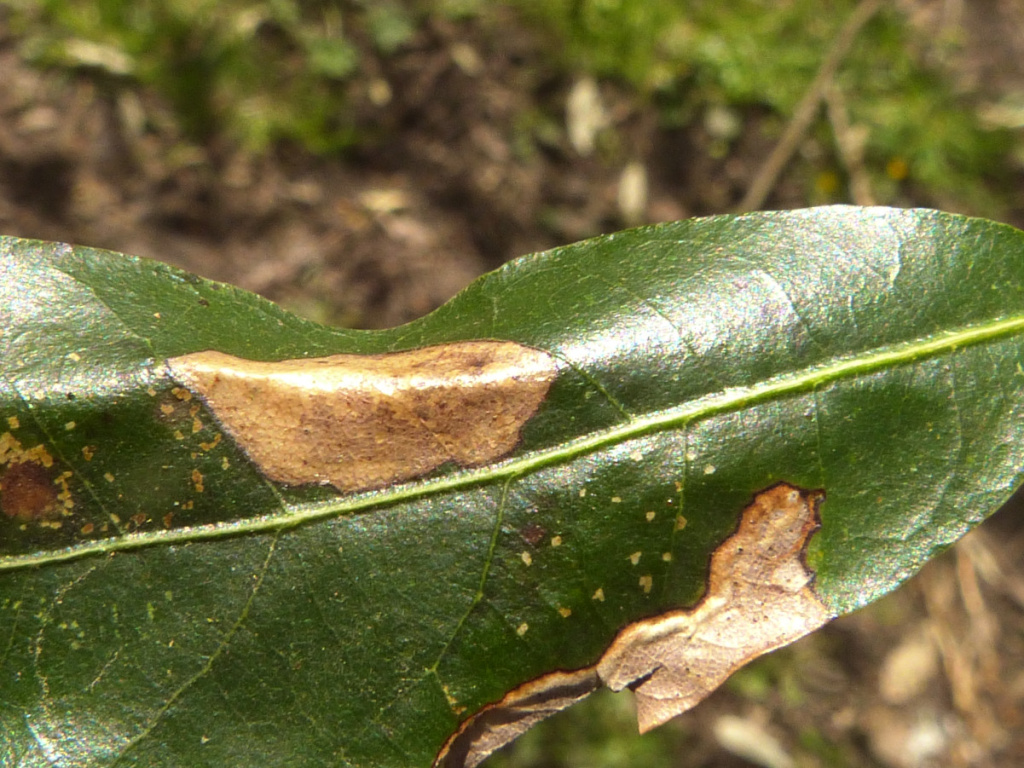
Wingspan 7 to 9 mm. The leaf mines caused by the larvae are usually found on the underside and have a typical 'tented' appearance with a crease line across the surface. The frass is characteristically arranged in a U-shape around the cocoon.
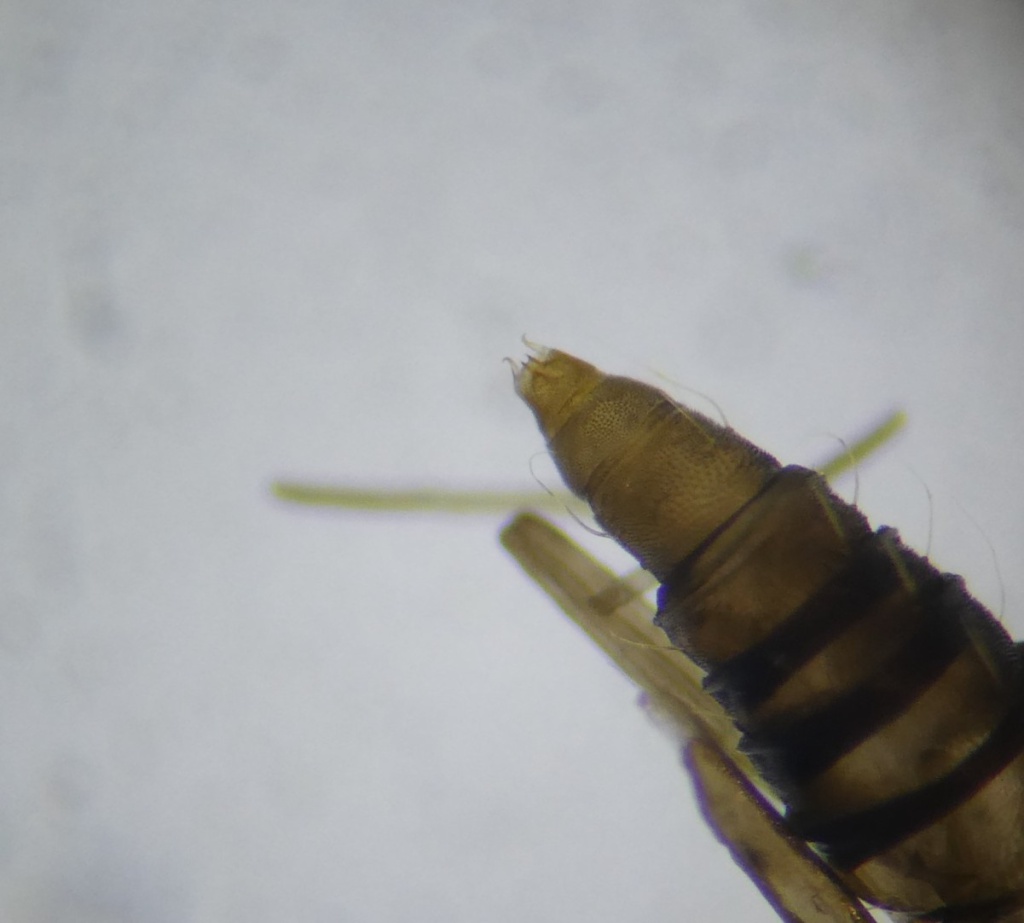
The larvae mine the leaves of Oak, Hornbeam, Beech or Sweet Chestnut, and sometimes on other tree species. On oak the species is difficult to identify from the mine alone. The pupa has a distinctive arrangements of hooks at the very end, known as the 'cremaster'. There is a key and description of these on Bladmineerders.nl here
Other Phyllonorycter
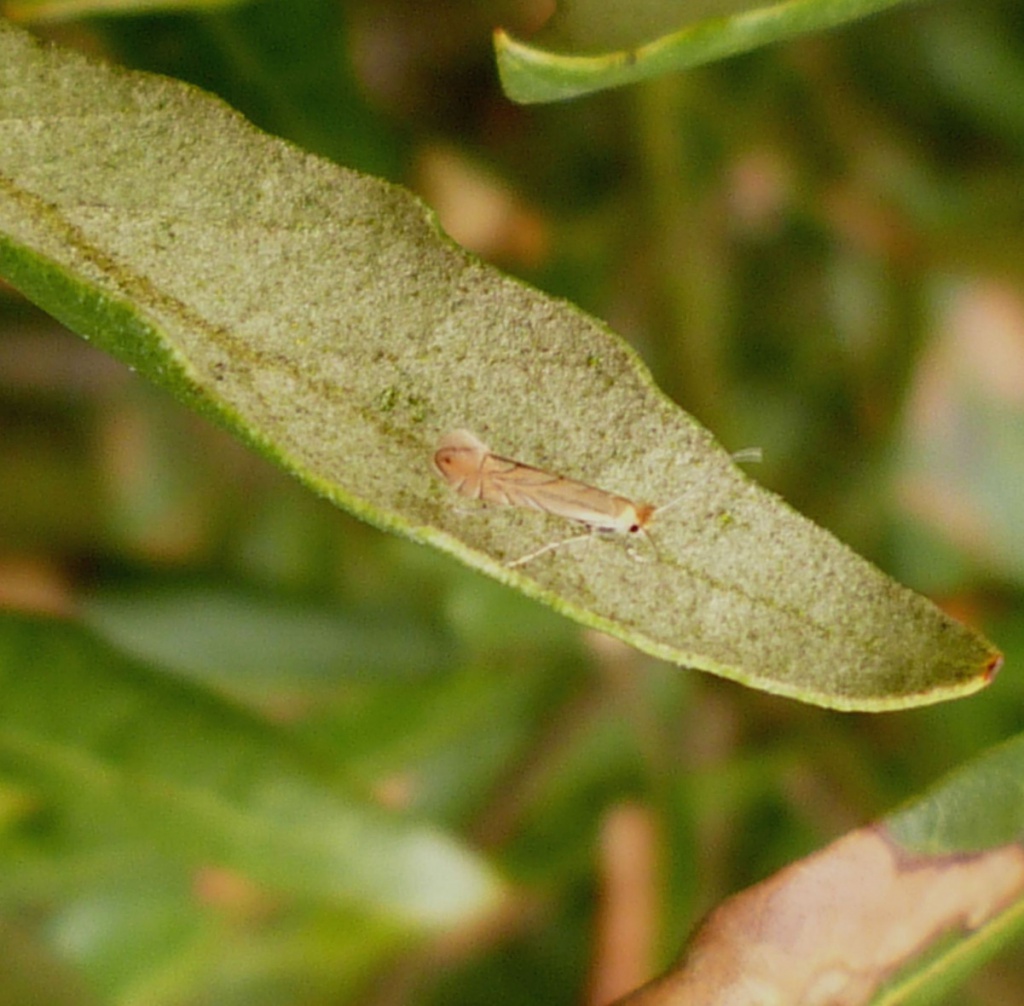
Adult  Leafmine (Oak)
  (Holm Oak/SwChes)
  (Beech)
Photograph the underside of mine on Holm Oak, and backlit on Sweet Chestnut and Beech. On other oaks and other tree species, it is necessary to examine the pupa and photograph the cremaster - often this is sticking out of a vacated mine.
Wherever the larval foodplants occur.
The adult moths occur in a number of generations, any time between April and November.
The larvae mine the leaves of Oak, Hornbeam, Beech or Sweet Chestnut, and sometimes on other tree species. The mines can be seen during March and April and again July to October.
Fairly common throughout much of the British Isles, though more so in the south. In the Butterfly Conservation's Microlepidoptera Report 2011 this species was classified as common.
Occasional in Leicestershire and Rutland. L&R Moth Group status = C (very scarce resident or rare migrant).
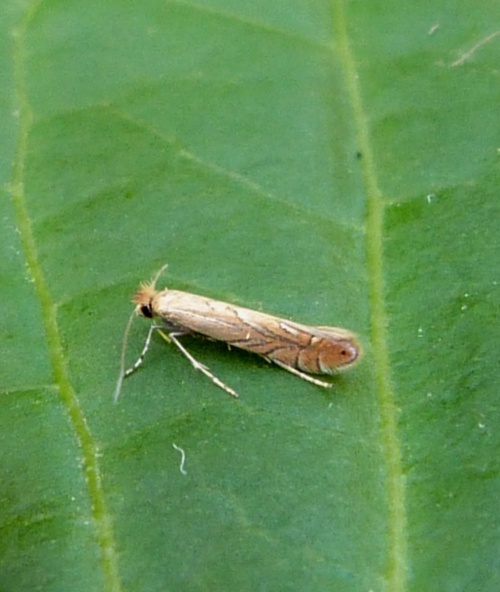 Graham Calow
Sapcote
28 April 2014
found on Holm Oak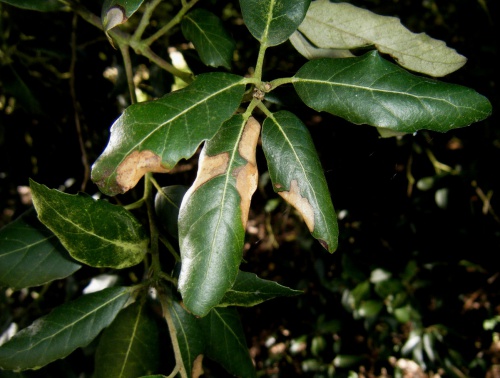 Graham Calow
Sapcote
19 September 2012
leafmines on Holm Oak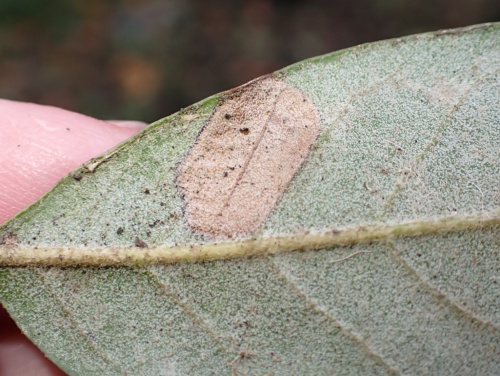 sue
sue
Osbaston
21 October 2024
on Holm Oak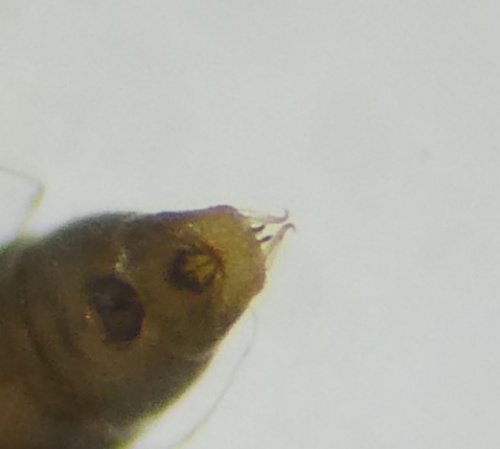 sue
sue
Barlestone Cemetery
11 October 2021
pupal cremaster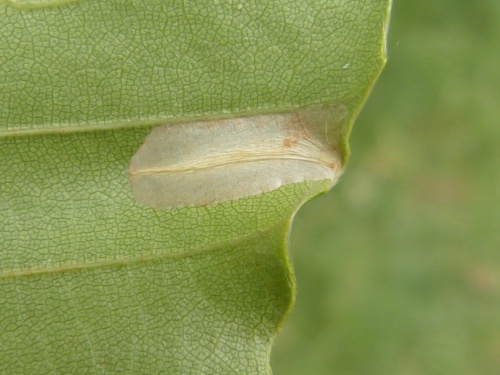 Graham Calow
Stoney Stanton, Highgate Lodge Farm open access land
04 July 2022
leafmine on Beech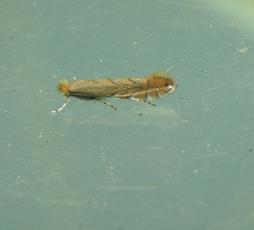 Graham Calow
Sapcote garden1
04 October 2011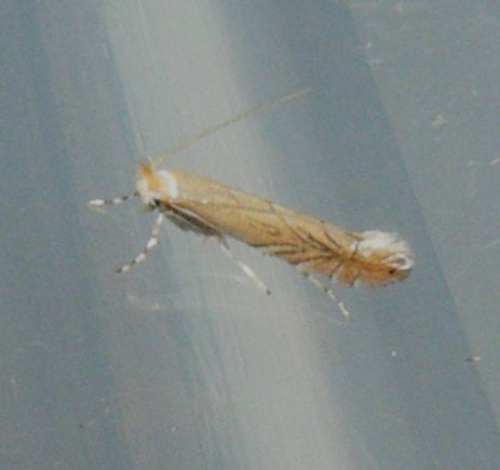 Graham Calow
Sapcote garden1
14 October 2014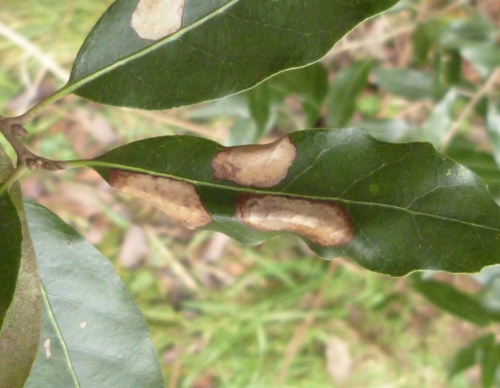 Graham Calow
Stoney Stanton
01 February 2016
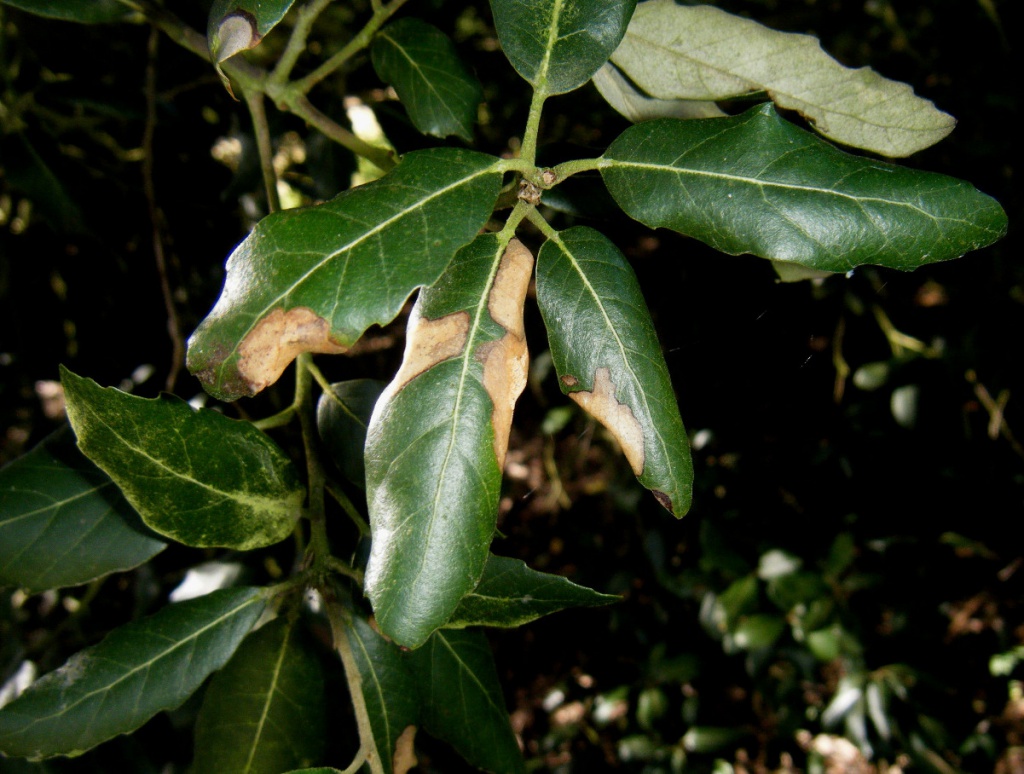
leafmines on Holm Oak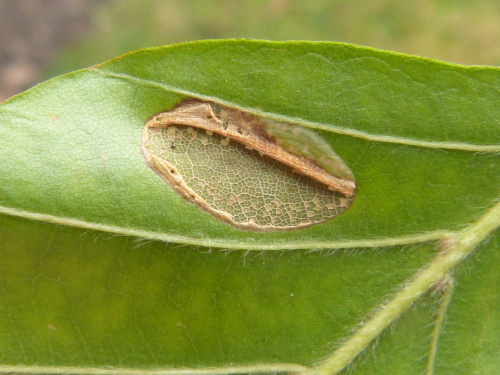 Graham Calow
Willoughby Waterleys, Main Street
26 August 2024
leafmine on Beech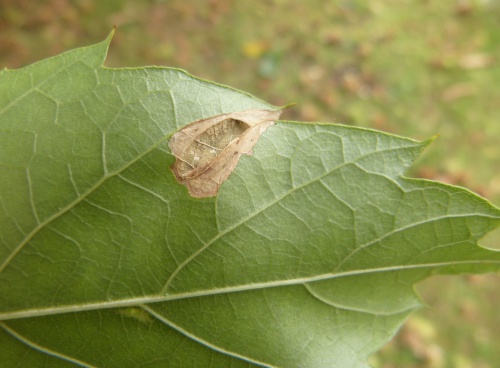 Graham Calow
Frolesworth St Nicholas Churchyard
07 October 2021
leafmine on Sweet Chestnut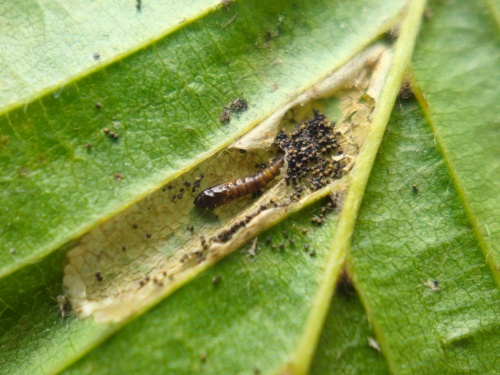 Peter Smith
Leicester, Abbey Park
27 October 2023
Pupa in opened mine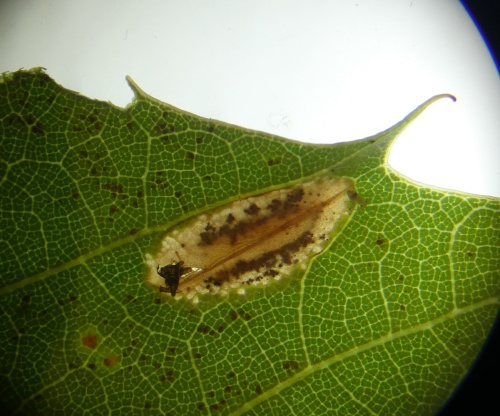 sue
sue
Ashy de la Zouch, Prestop Park nest to new housing
02 October 2022
vacated pupa sticking out of mine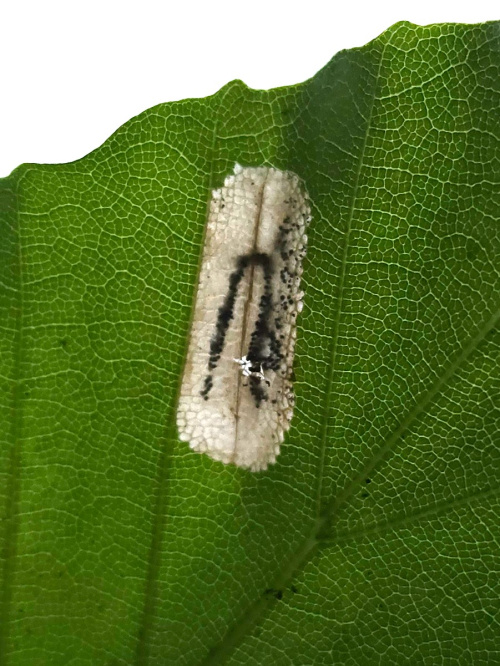 Peter Smith
Cropston garden
21 October 2024
Backlit: frass in U-shape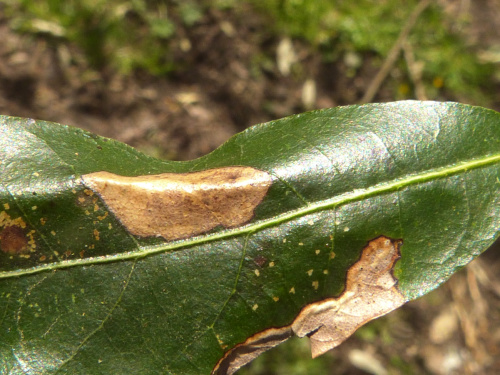 Graham Calow
Stoney Stanton, Highgate Lodge Farm open access land
26 April 2024
leafmines on Evergreen Oak

Leicestershire & Rutland Map
Enter a town or village to see local records
MAP KEY:
Yellow squares = NBN records (all known data)
Coloured squares = NatureSpot records: 2025+ | 2020-2024 | pre-2020
UK Map
Additional images