Phyllonorycter cavella
Phyllonorycter cavella
Gold Birch Midget
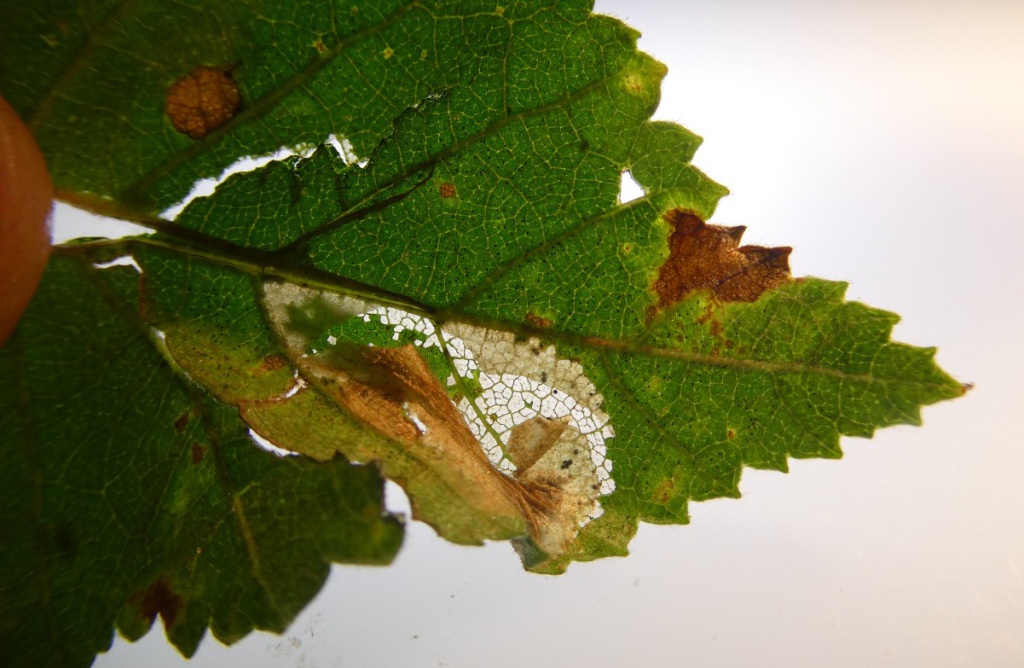
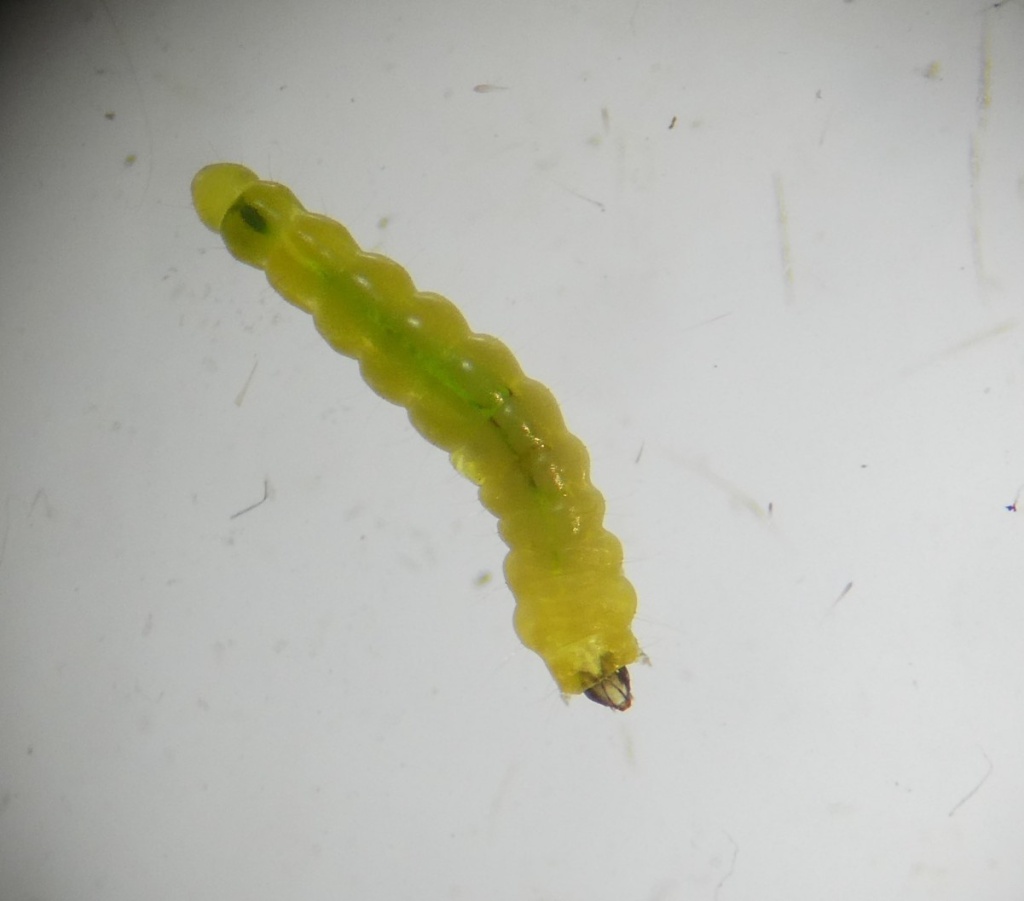
Wingspan about 8 mm. The moth is very similar to a number of other Phyllonorycter species and gen det may be required to identify adults to species level. The larva produces a large blister-mine on Birch (see Life History below). The larva is bright yellow and, when present in the mine, this helps to determine the species.
Adult  Leafmine
Adult: gen det may be necessary.
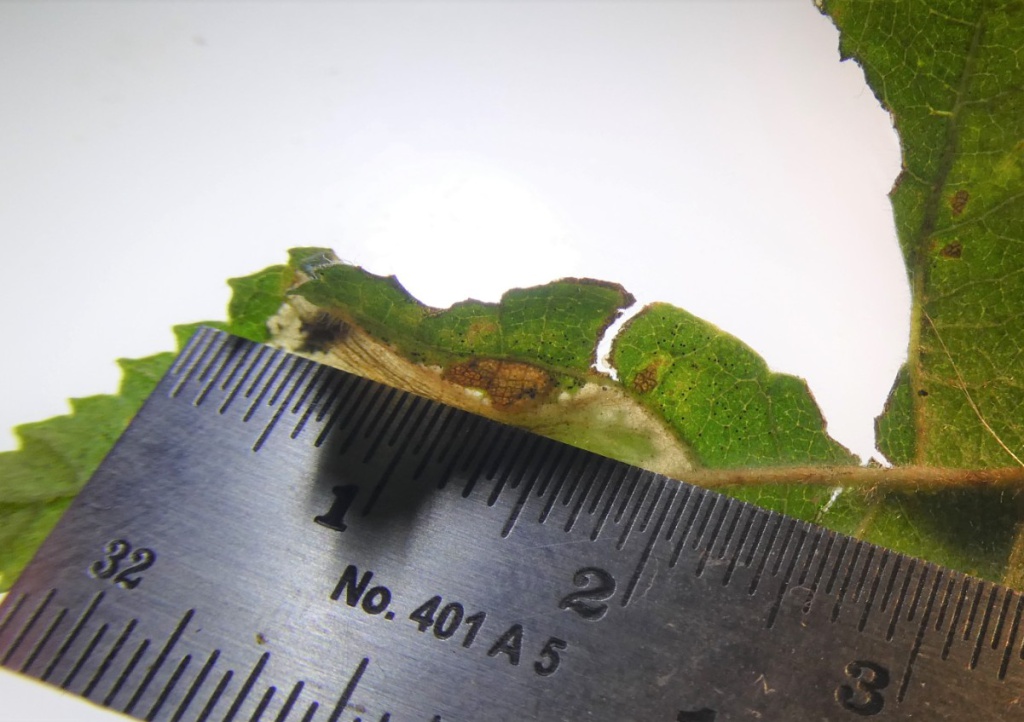
Leafmine: records must include a note of the host plant and size of the mine, and an image of the larva
Areas where Birch is present.
Adult moths are on the wing in June and July.
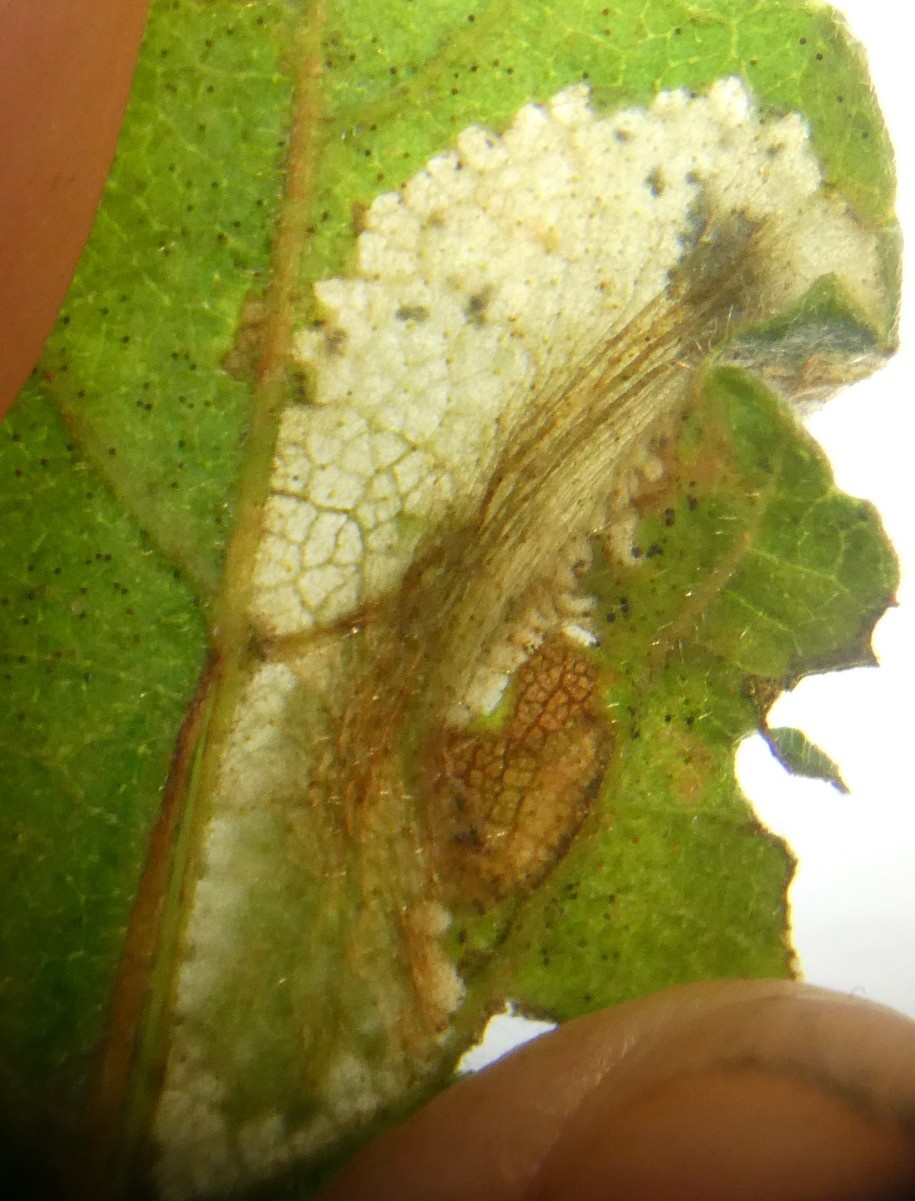
The larvae feed from August to October on birch Betula, forming a large blister-mine on the underside of a leaf, occupying most of the leaf and causing it to pucker quite strongly. The mine has a number of strong creases on the lower epidermis.
A fairly local species with a distribution covering parts of England and Wales, and the Scottish Highlands. In the Butterfly Conservation's Microlepidoptera Report 2011 this species was classified as local.
Rarely recorded in Leicestershire and Rutland.
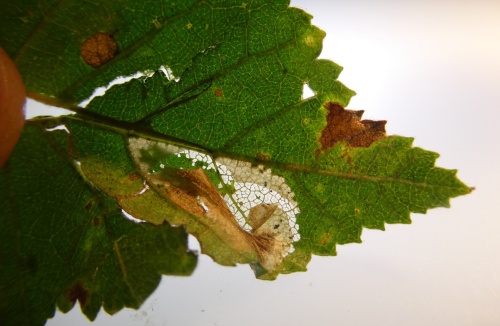 sue
sue
Bardon Hill, footpath along eastern edge of woodland
11 September 2022
on birch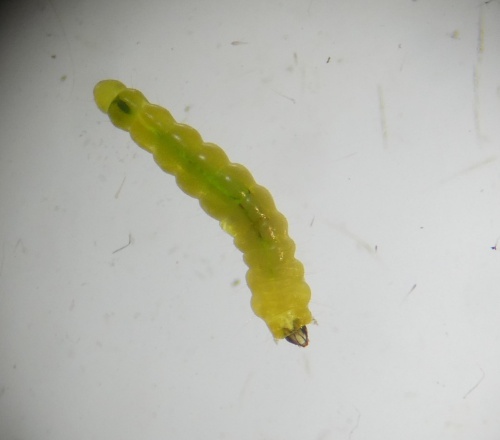 sue
sue
Bardon Hill, footpath along eastern edge of woodland
11 September 2022
bright yellow larva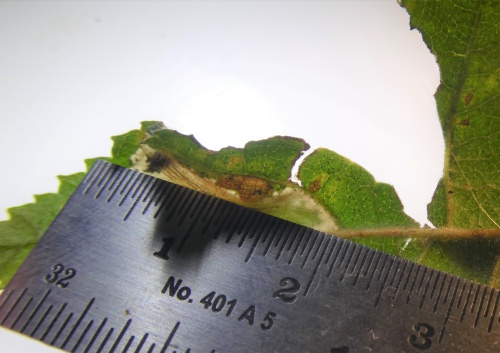 sue
sue
Bardon Hill, footpath along eastern edge of woodland
11 September 2022
c.2cm long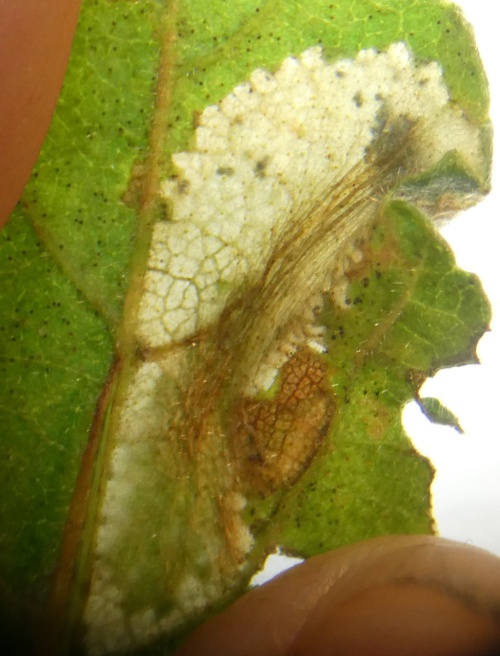 sue
sue
Bardon Hill, footpath along eastern edge of woodland
11 September 2022
Leicestershire & Rutland Map
Enter a town or village to see local records
MAP KEY:
Yellow squares = NBN records (all known data)
Coloured squares = NatureSpot records: 2025+ | 2020-2024 | pre-2020
UK Map
Additional images
No additional images available for this species.