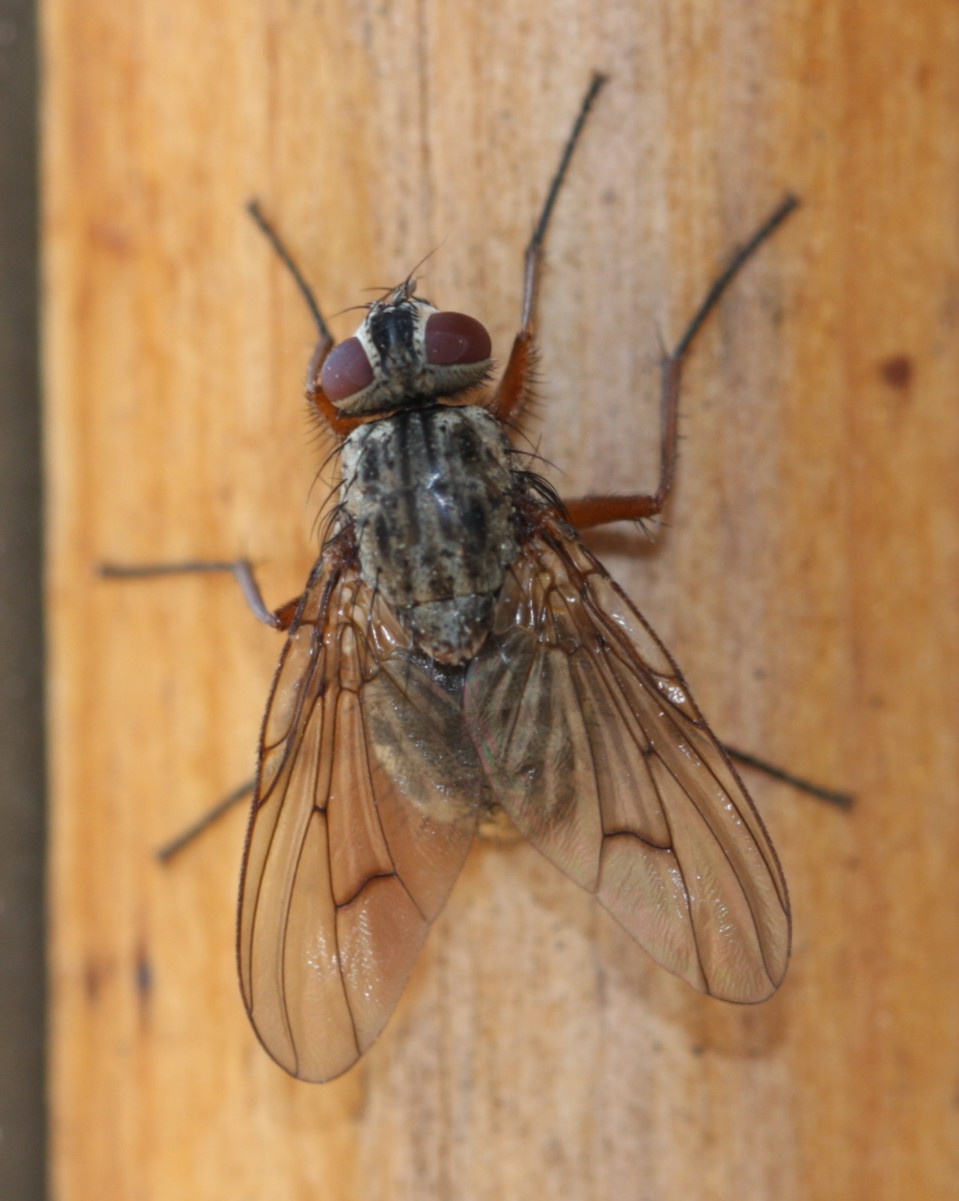
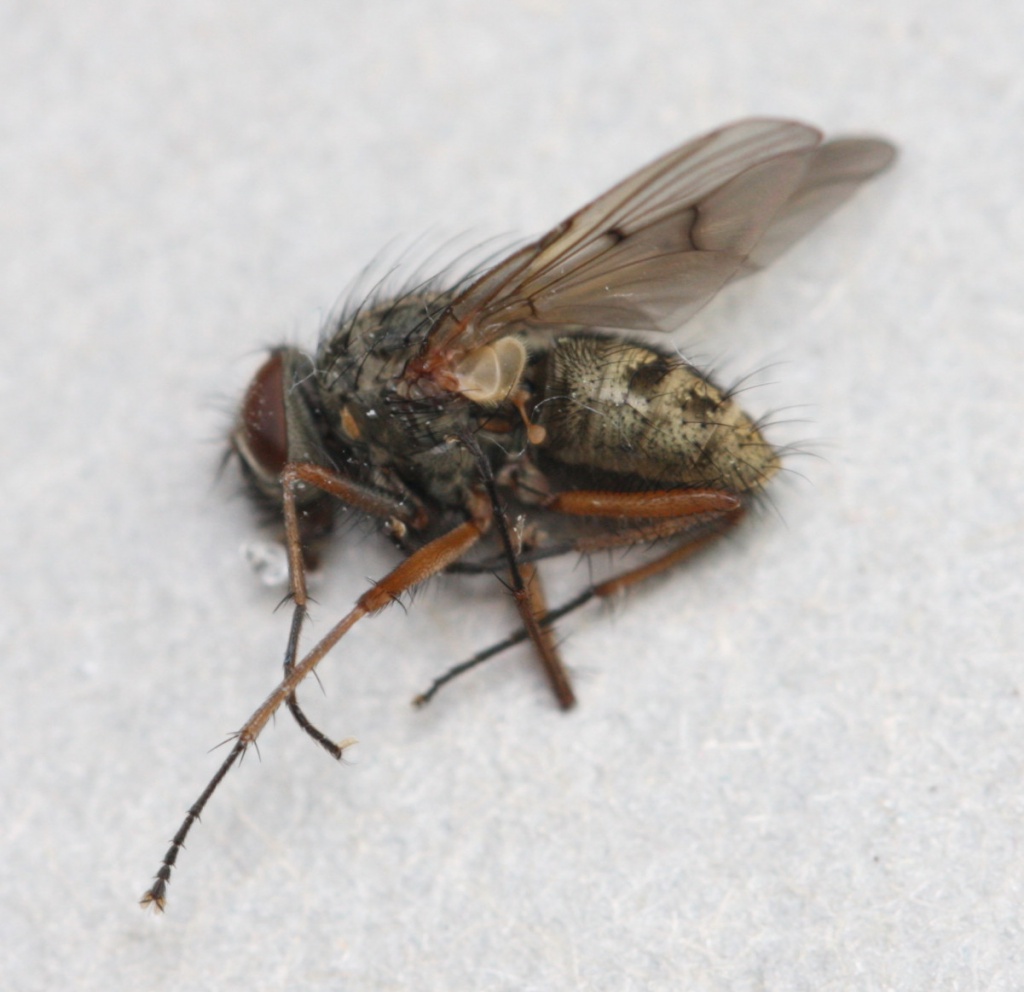
Phaonia signata
Phaonia signata
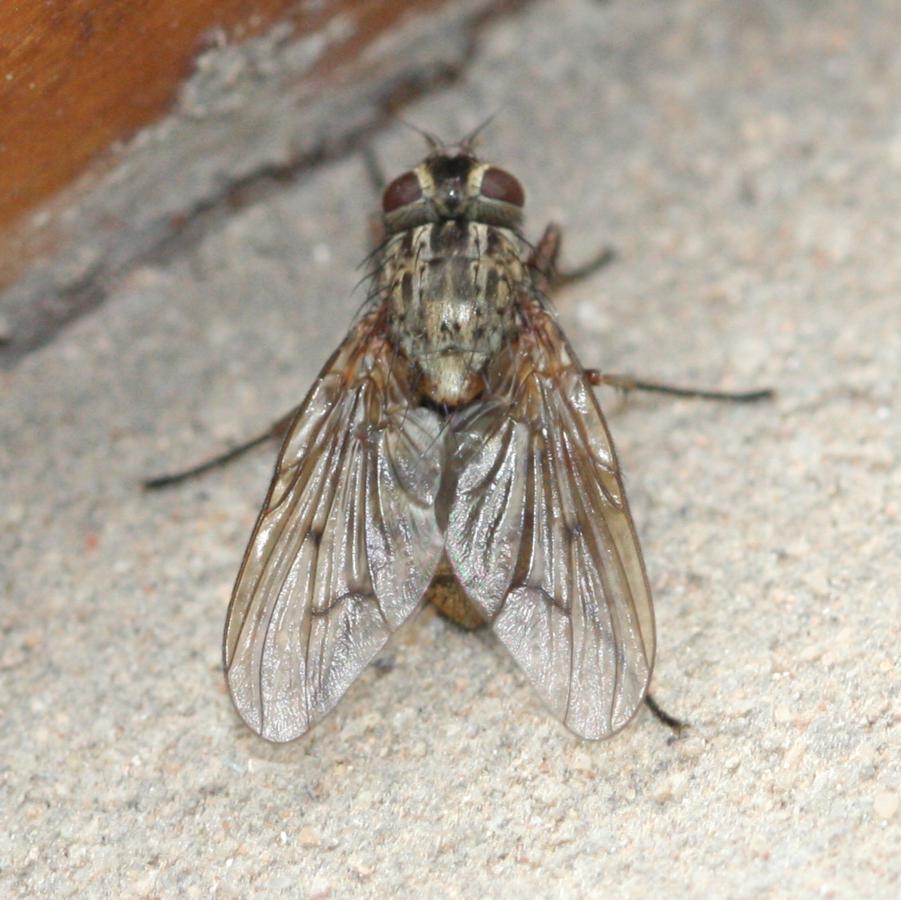
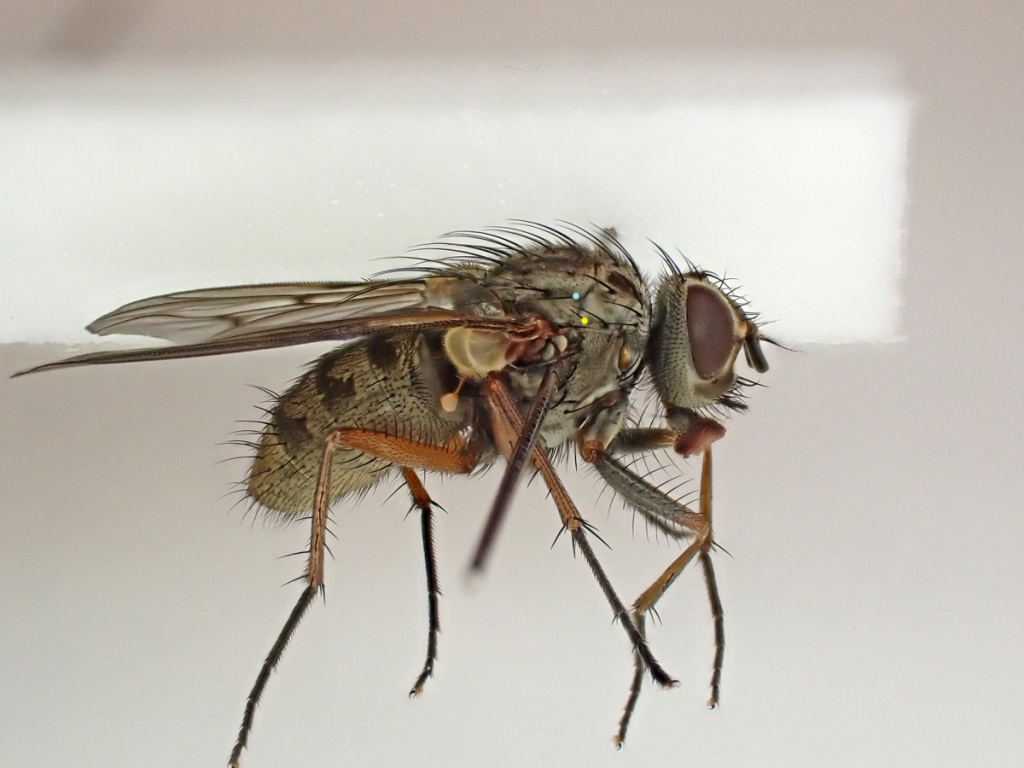
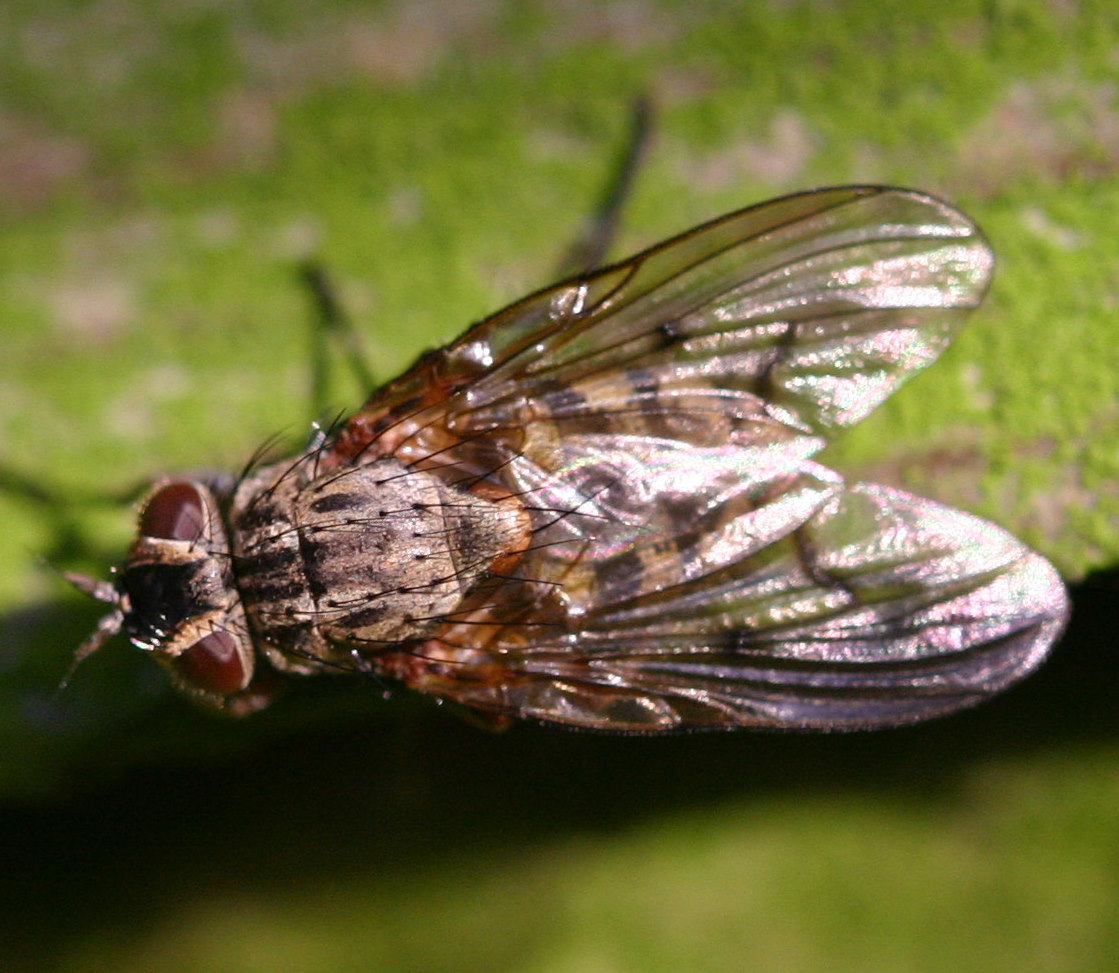
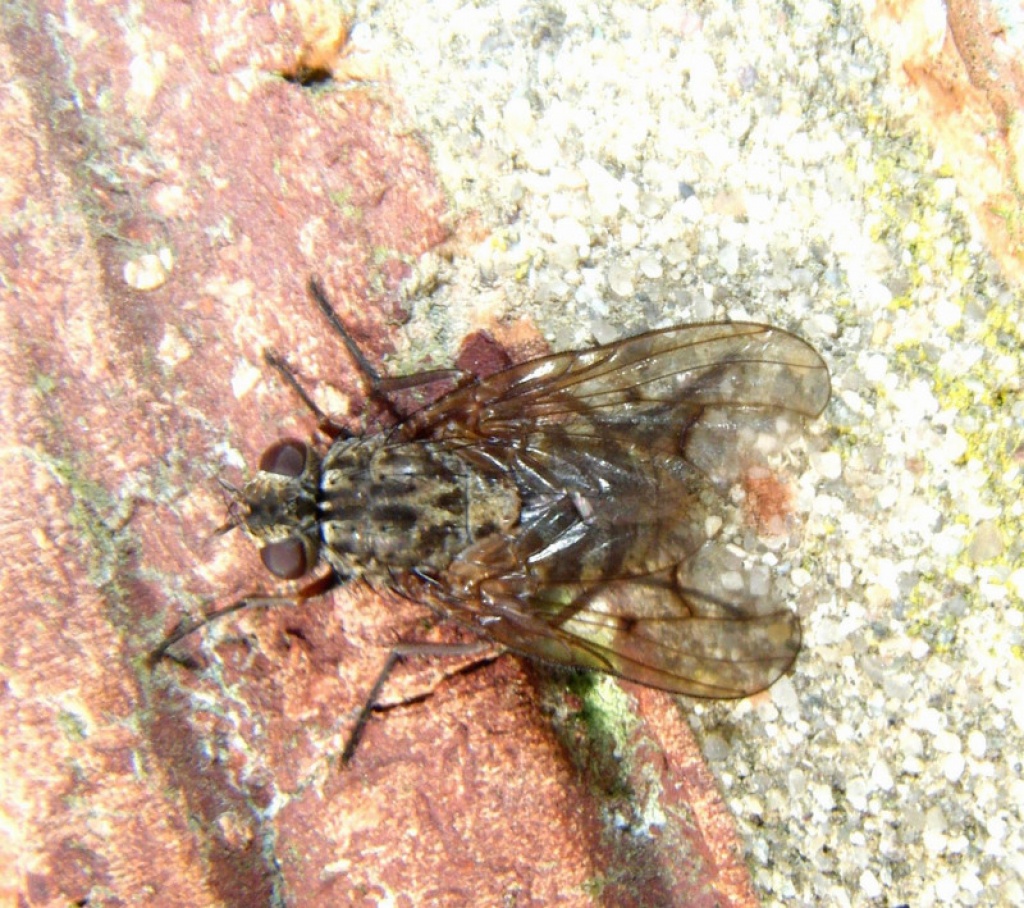
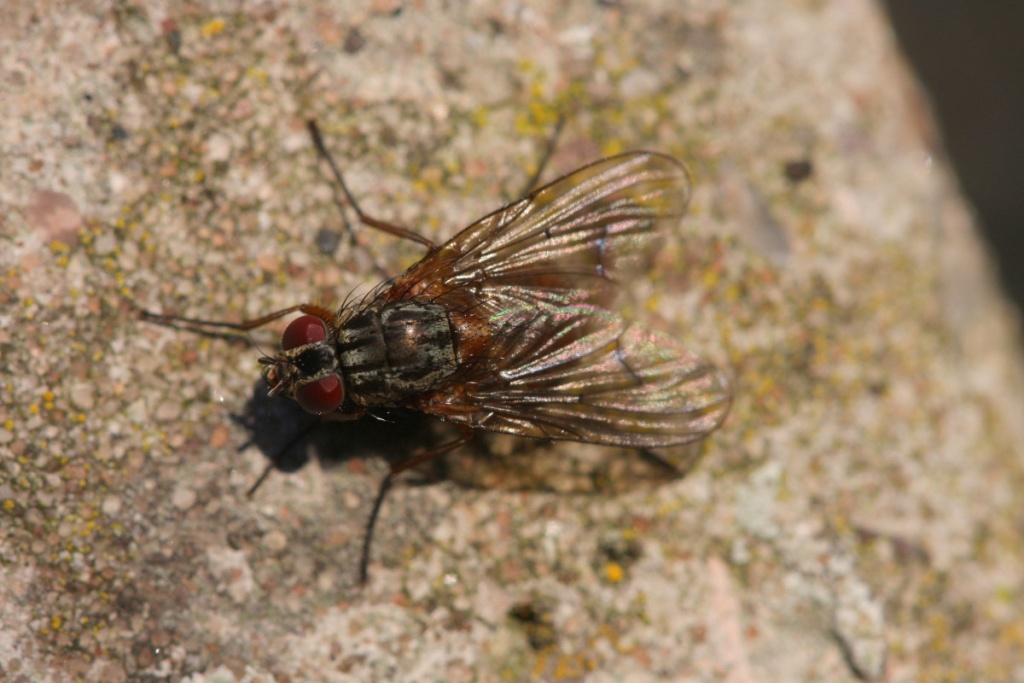
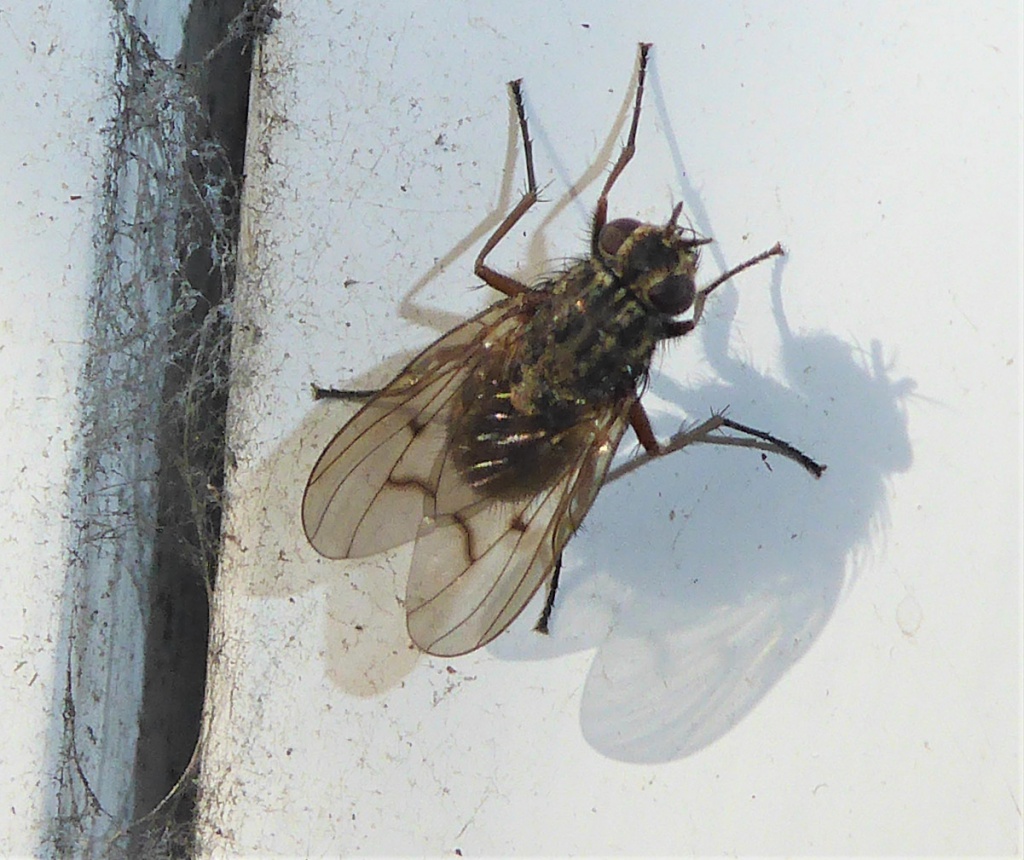
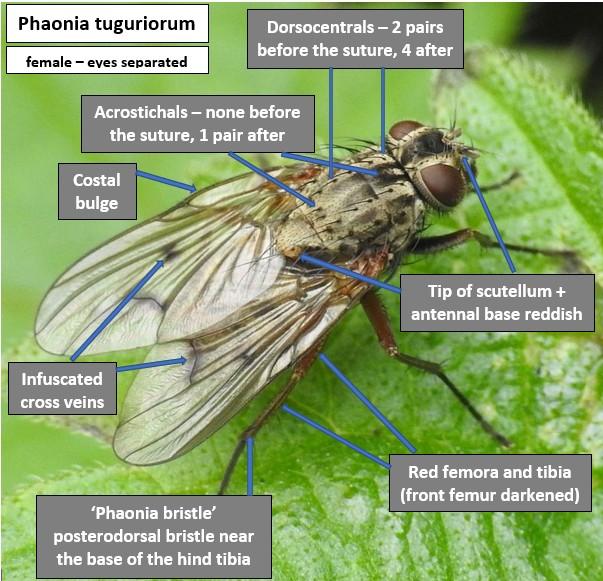
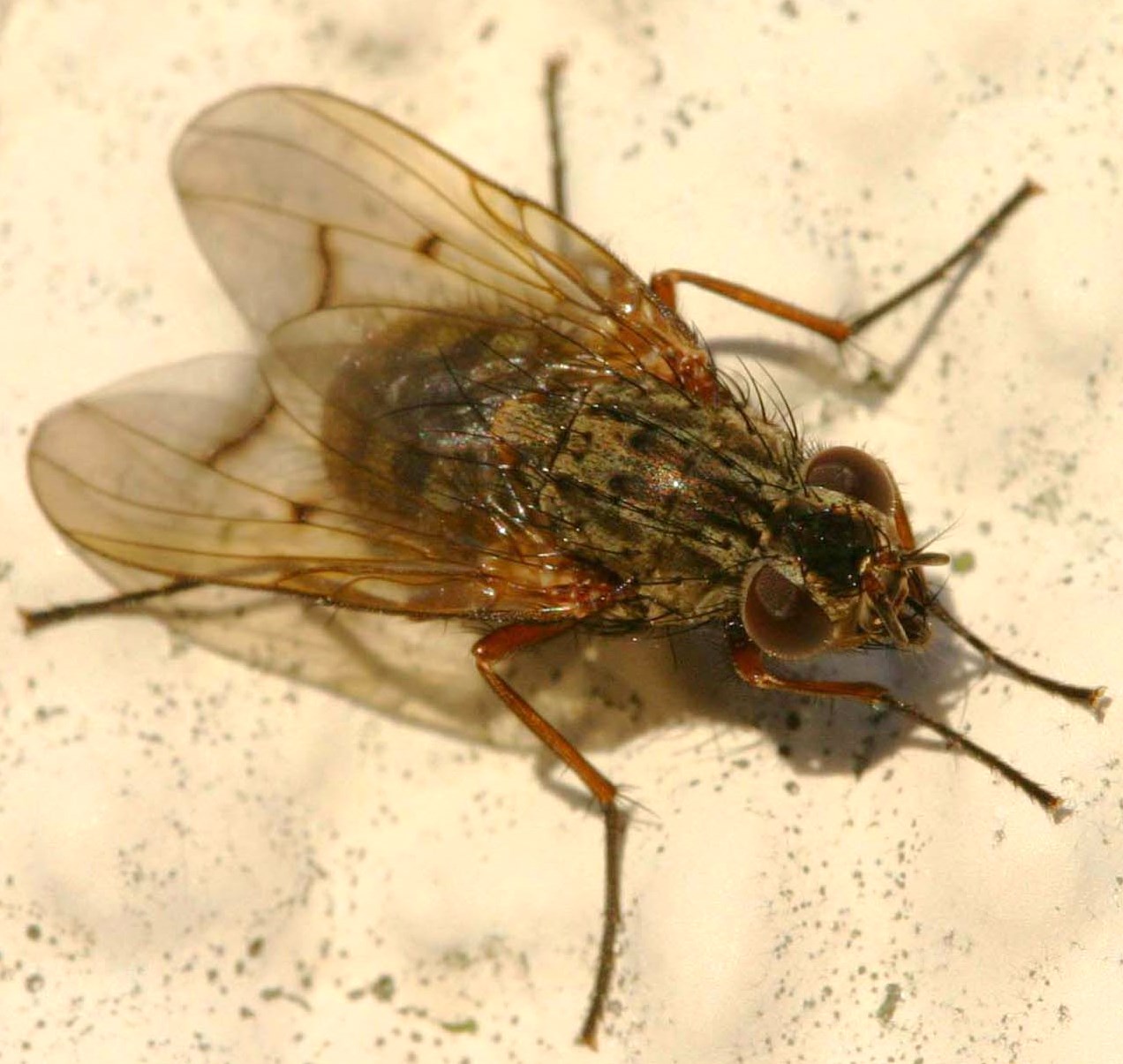
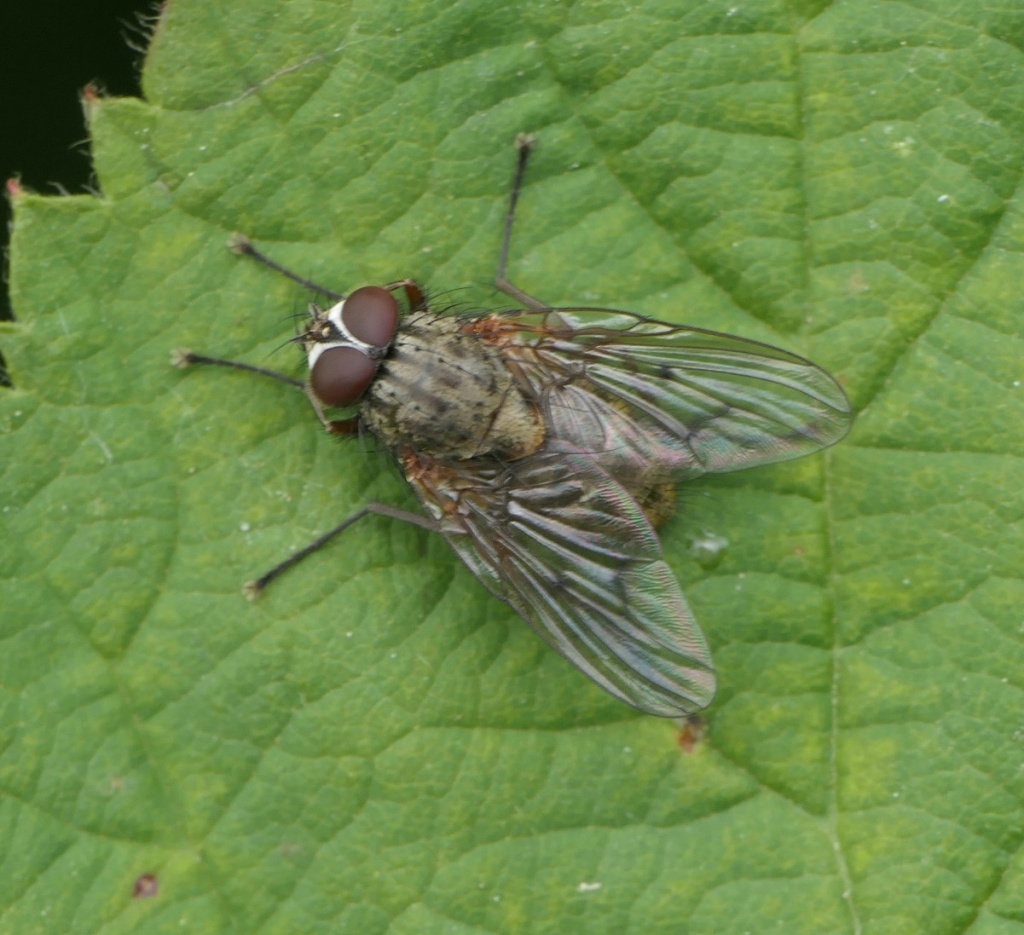
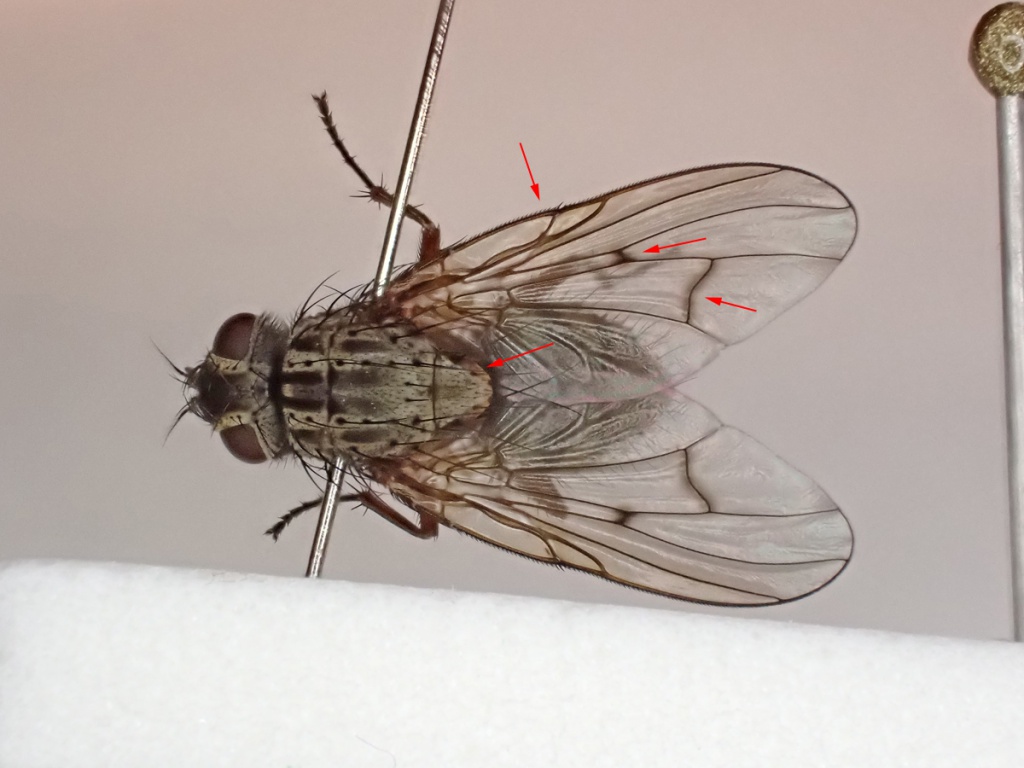
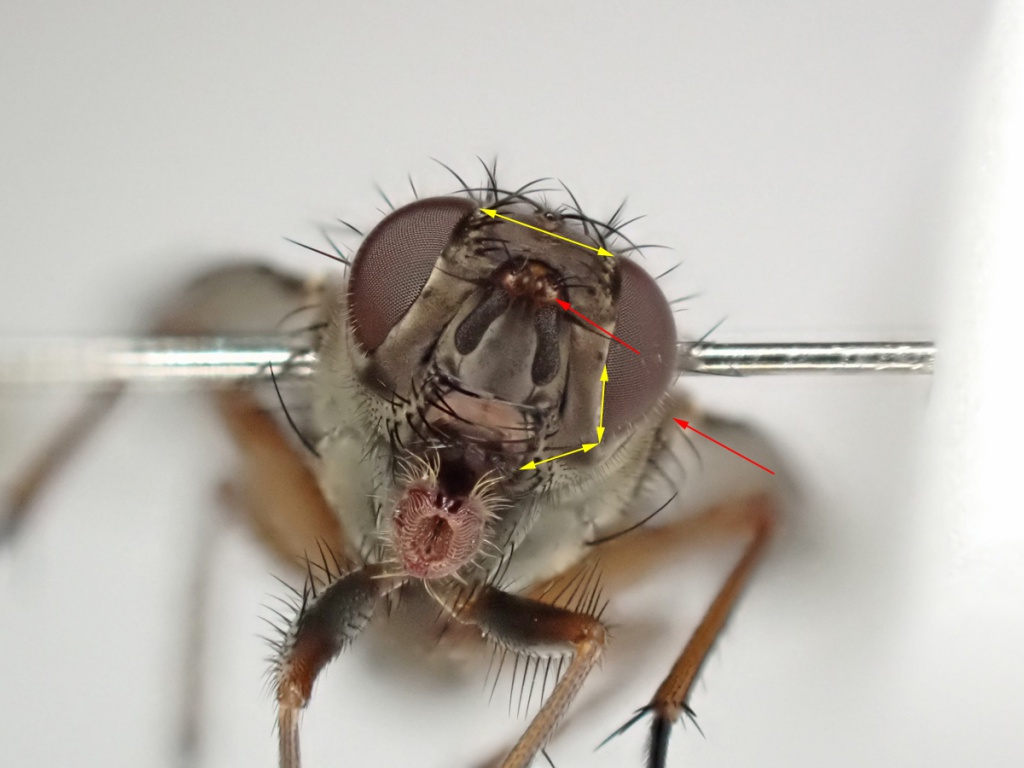
c7mm. This is a very common fly, appearing early in the year when it appears in warm days from February and also in late Autumn when it it usually seen sunning on fences and walls. It has a dull brown abdomen with darker transverse blotches, red femora and tibiae (though the front femora is often darkened) and infuscated cross-veins on the wings. It has a reddish tip to the scutellum and to the basal segment of the antennae.
It also has a strong posterodorsal bristle near the base of the hind tibia and the costal edge of the wing bulges out - both these features are typical of the Phaonia genus.
See Identification Aids below for an illustrated guide to identifying this fly.
Phaonia tuguriorum has now recognised as a largely Mediterranean species and the very similar Phaonia signata is the correct north-western Europe species.
Other Phaonia species, particularly P. errans and P. fuscata which have similar leg colours.
P. errans has black antennae and 2 post-sutoral acrostichals.
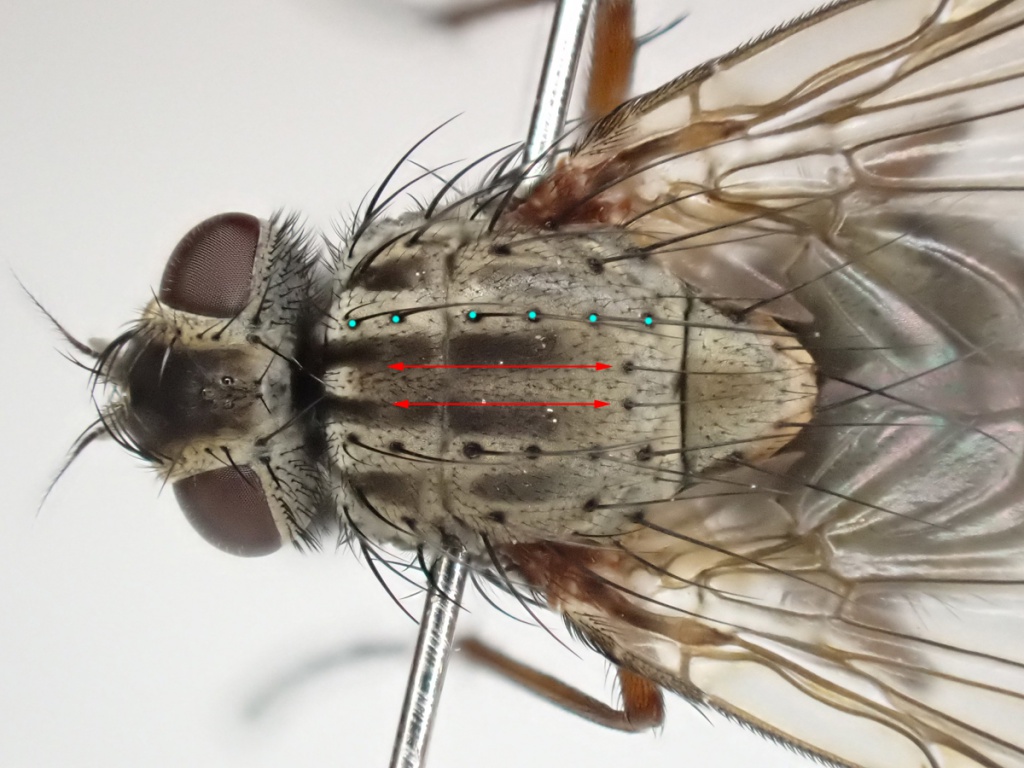
P. fuscata has only 3 post-sutoral dorsocentrals (the other two have 4).
 with a quality image showing the key features.
Your specimen should have all of these features:
- c7mm
- Presutural acrostichal bristles absent
- Post-suture bristles: 1 pair acrostichals + 4 pairs dorsocentrals
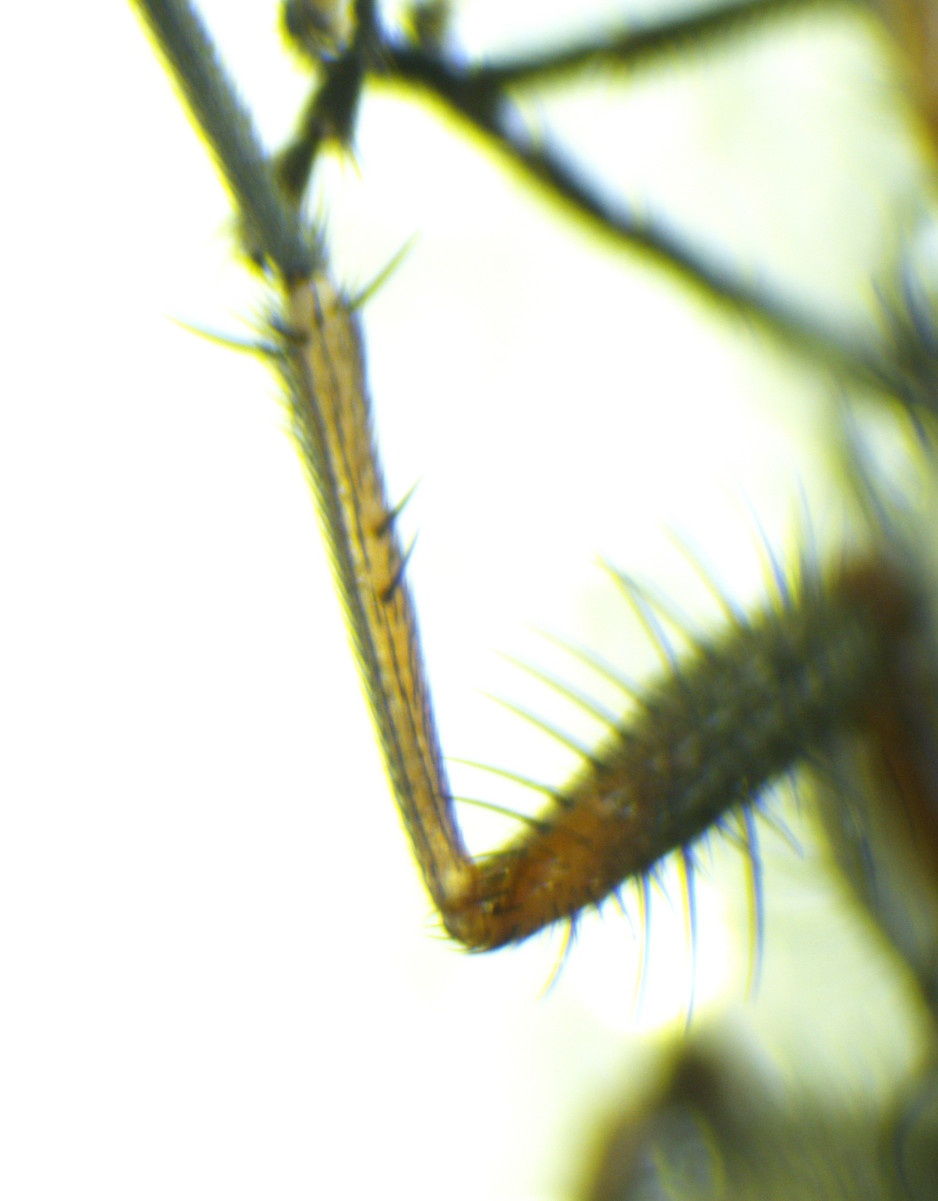
- Front tibia with 1-2 posterior bristles
- Basal antennal segments, scutellum base + legs reddish
- Wing cross-veins darkened
Unless identified by a recognised expert, explain how you identified this species and the identifying features observed.
Various habitats and often seen around habitation, particularly sunning on walls and fences.
It is one of the earliest flies to appear each year, often seen sun-bathing on sunny walls and fences from February and can be seen until the end of October.
Common and widespread in England and Wales.
Very common in Leicestershire and Rutland
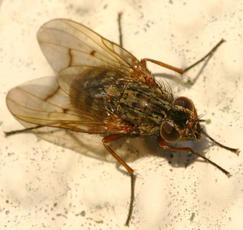 David Nicholls
Ratby garden1
09 February 2008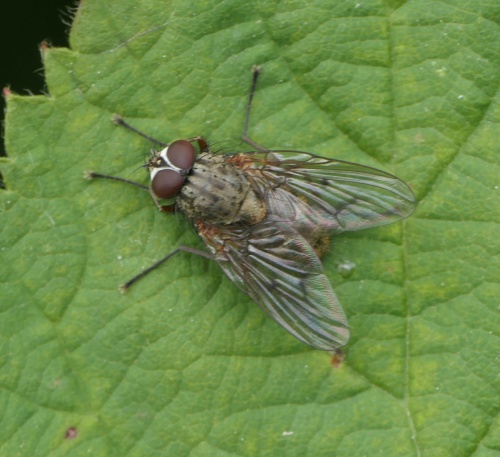 David Nicholls
Broughton Astley, Broughton Way
08 June 2020 M69 Island Sapcote SP 4649 9374 (taken 9.4.2010).JPG) Graham Calow
Graham Calow
M69 Island, Sapcote
09 April 2010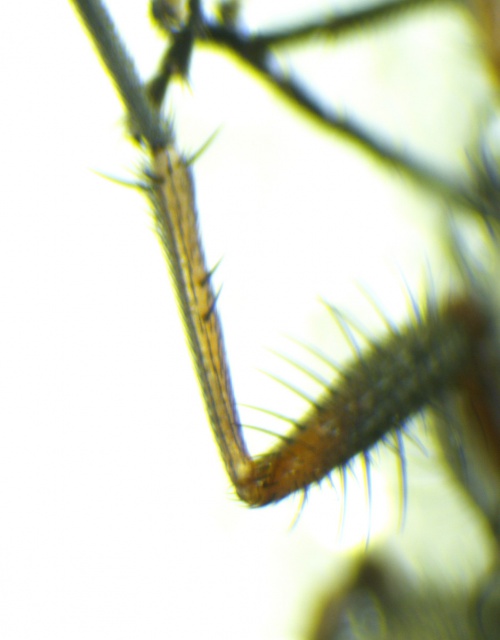 David Nicholls
Ratby garden
03 April 2020
2 posterior bristles on front tibia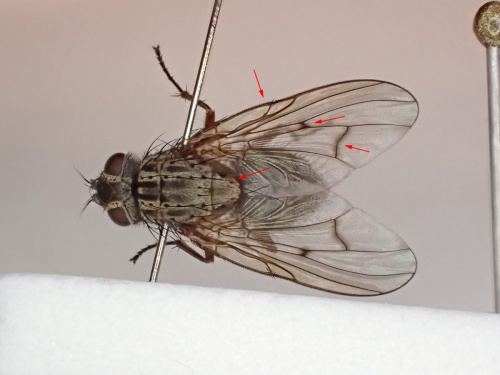 Mark Skevington
Whetstone Garden
20 February 2021
Clouded crossveins, scutellum red-yellow tinged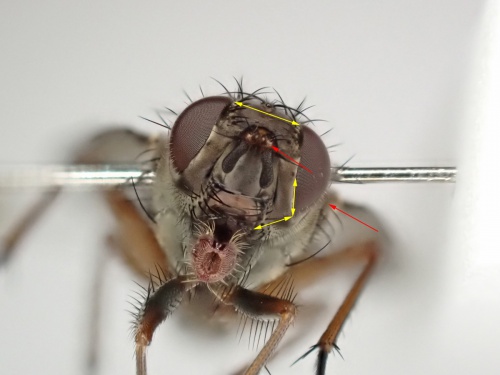 Mark Skevington
Whetstone Garden
20 February 2021
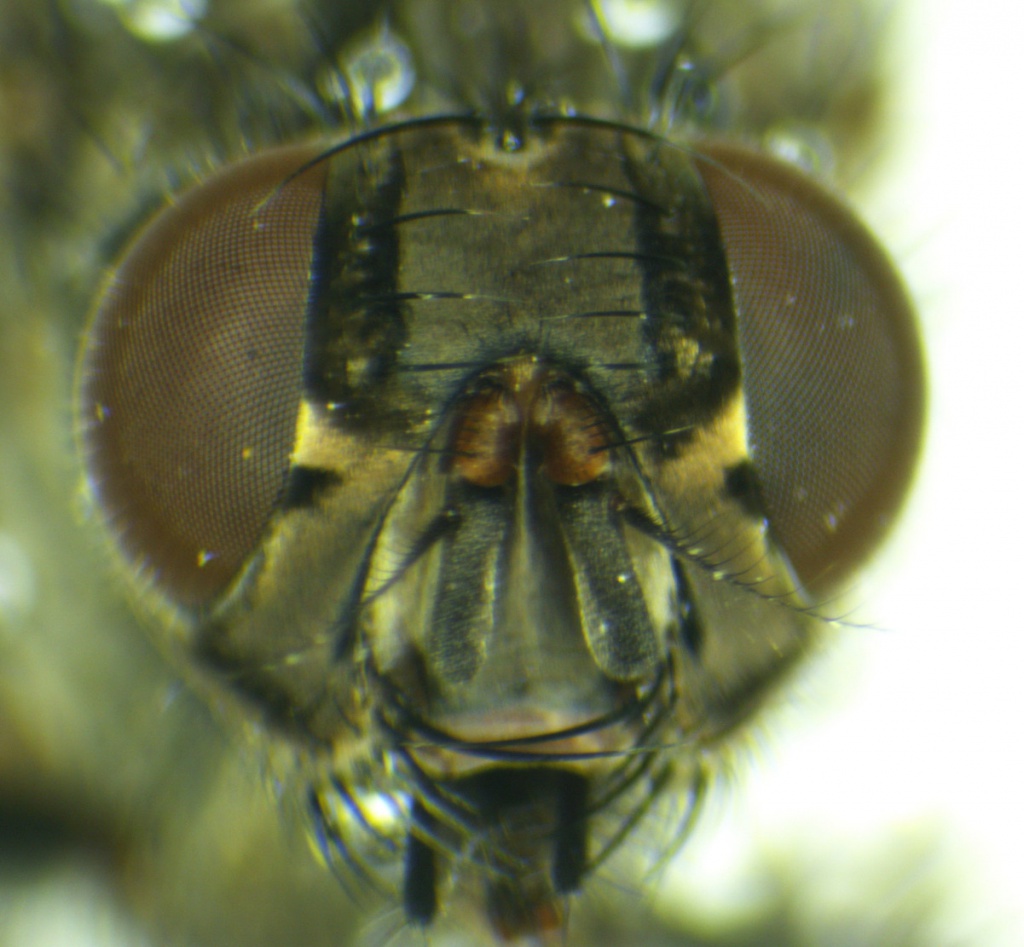
Hairy eyes, antennae bases red-yellow,
frons & jowl width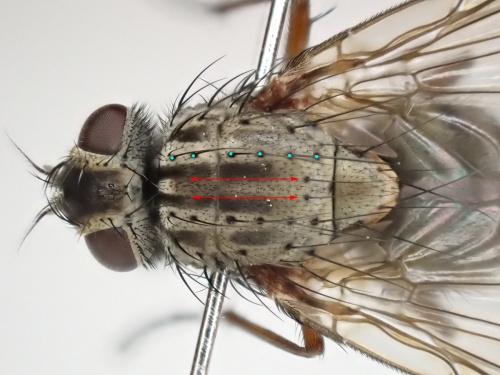 Mark Skevington
Whetstone Garden
20 February 2021
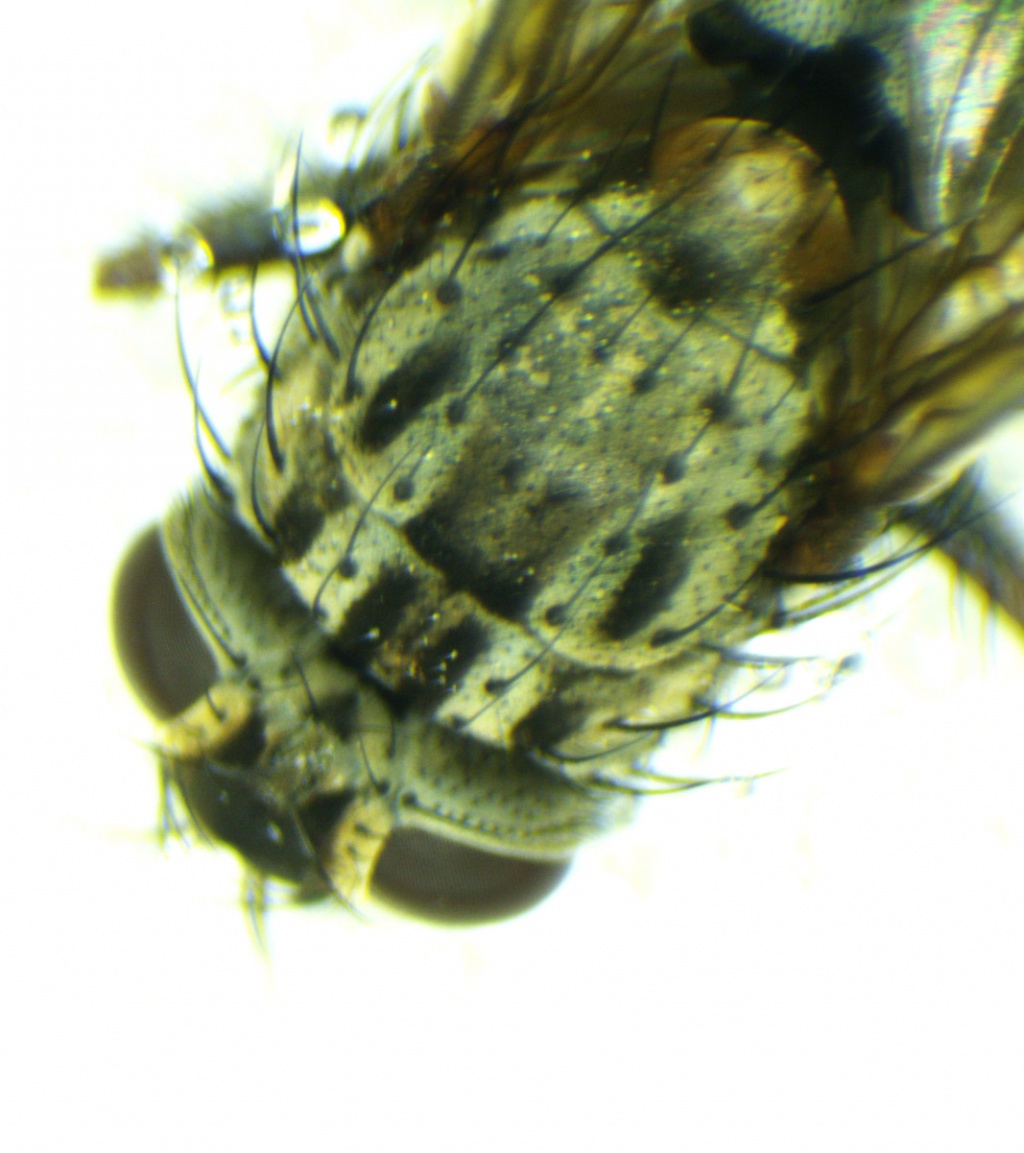
No pre-sutural acrostichal bristles,
4 pairs post-sutural dorsocentral bristles
 M69 Island Sapcote SP 4649 9374 (taken 9.4.2010).JPG)
Leicestershire & Rutland Map
Enter a town or village to see local records
MAP KEY:
Yellow squares = NBN records (all known data)
Coloured squares = NatureSpot records: 2025+ | 2020-2024 | pre-2020
UK Map
Additional images