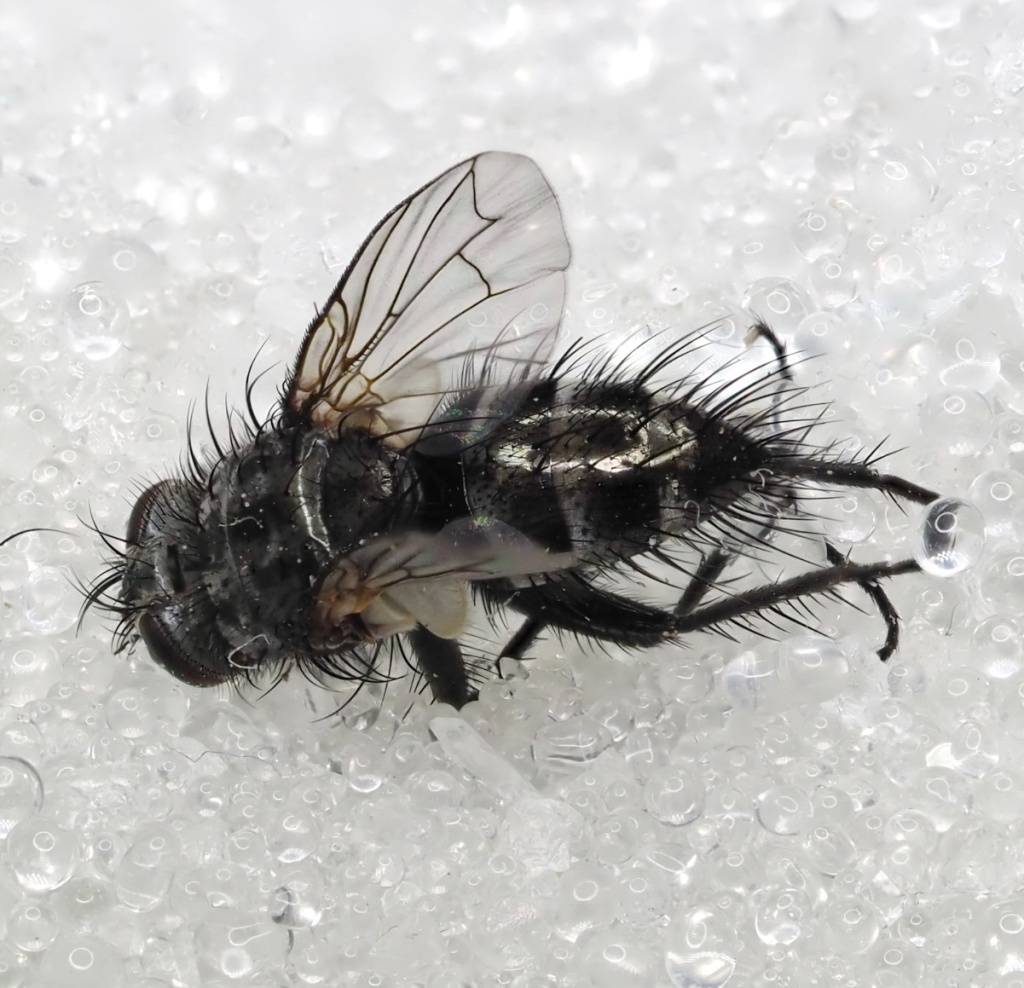
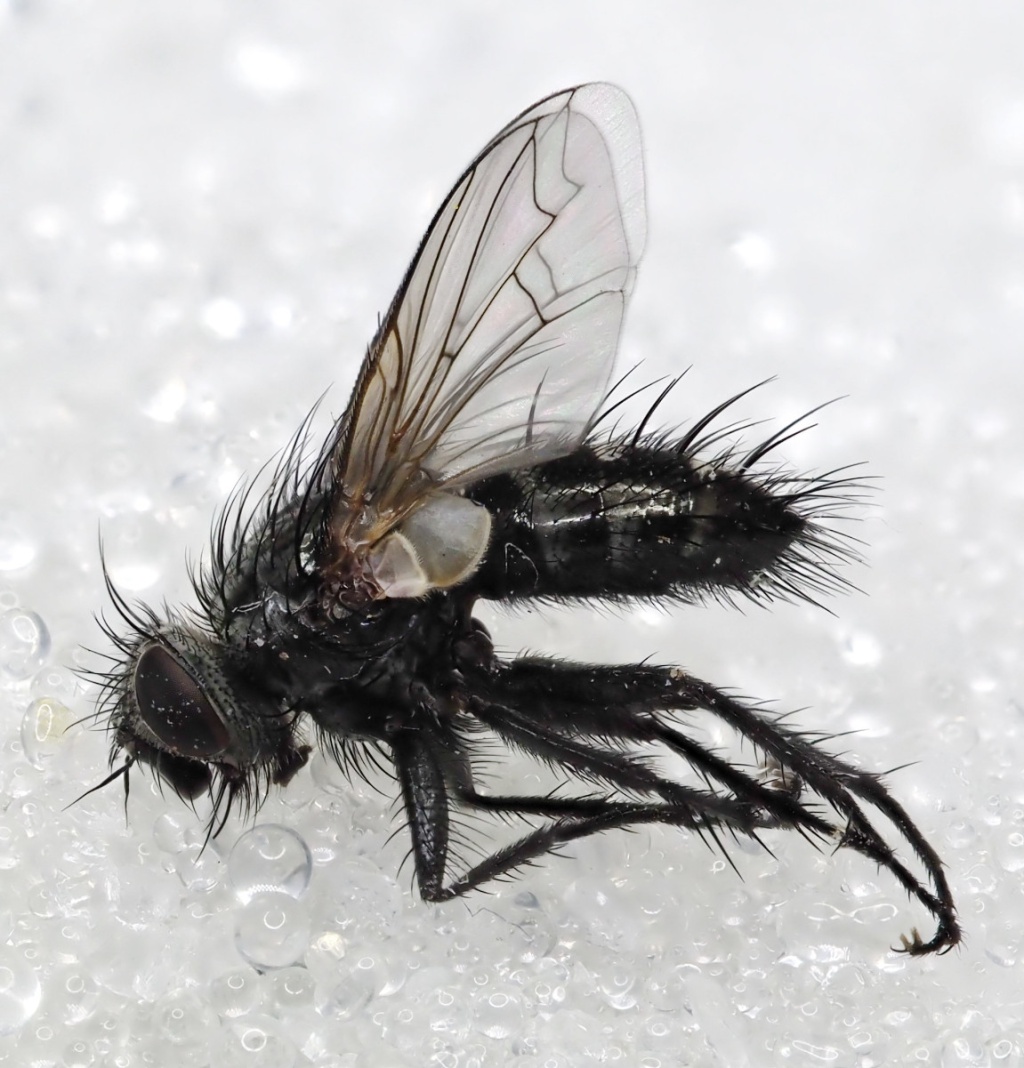
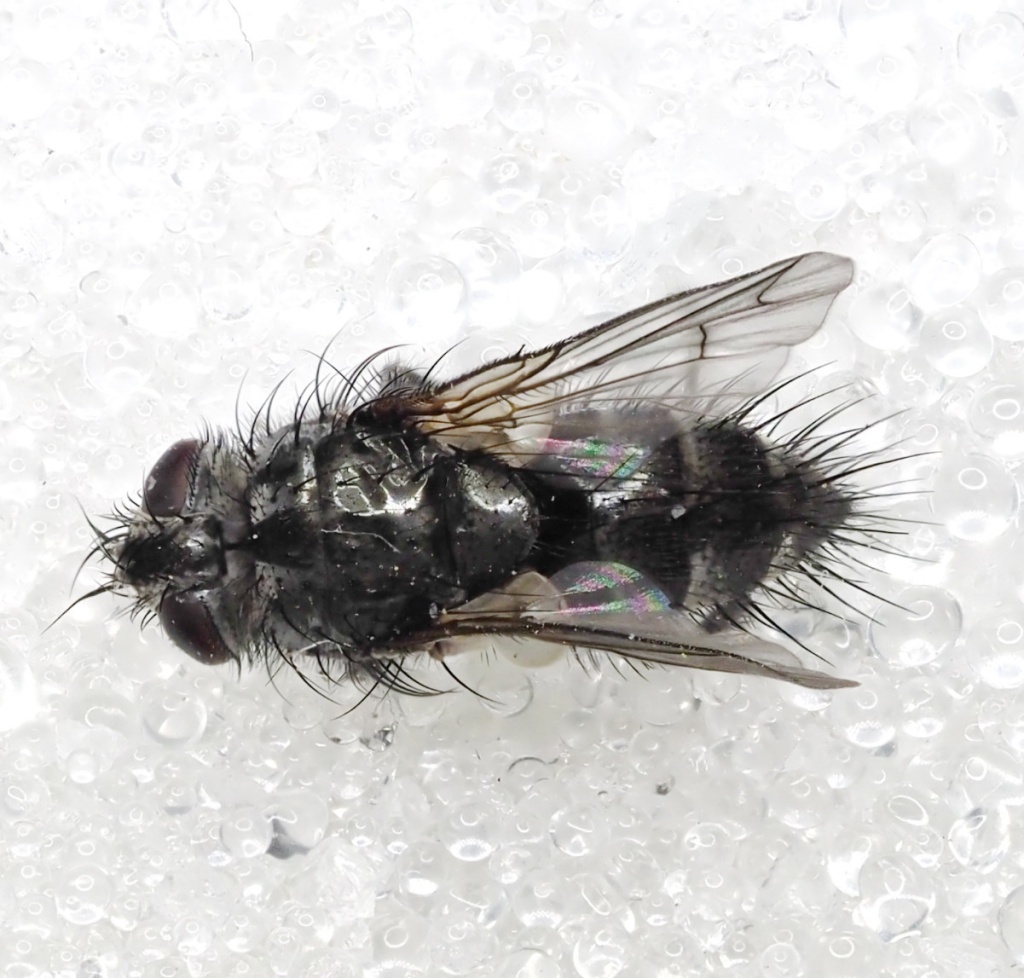
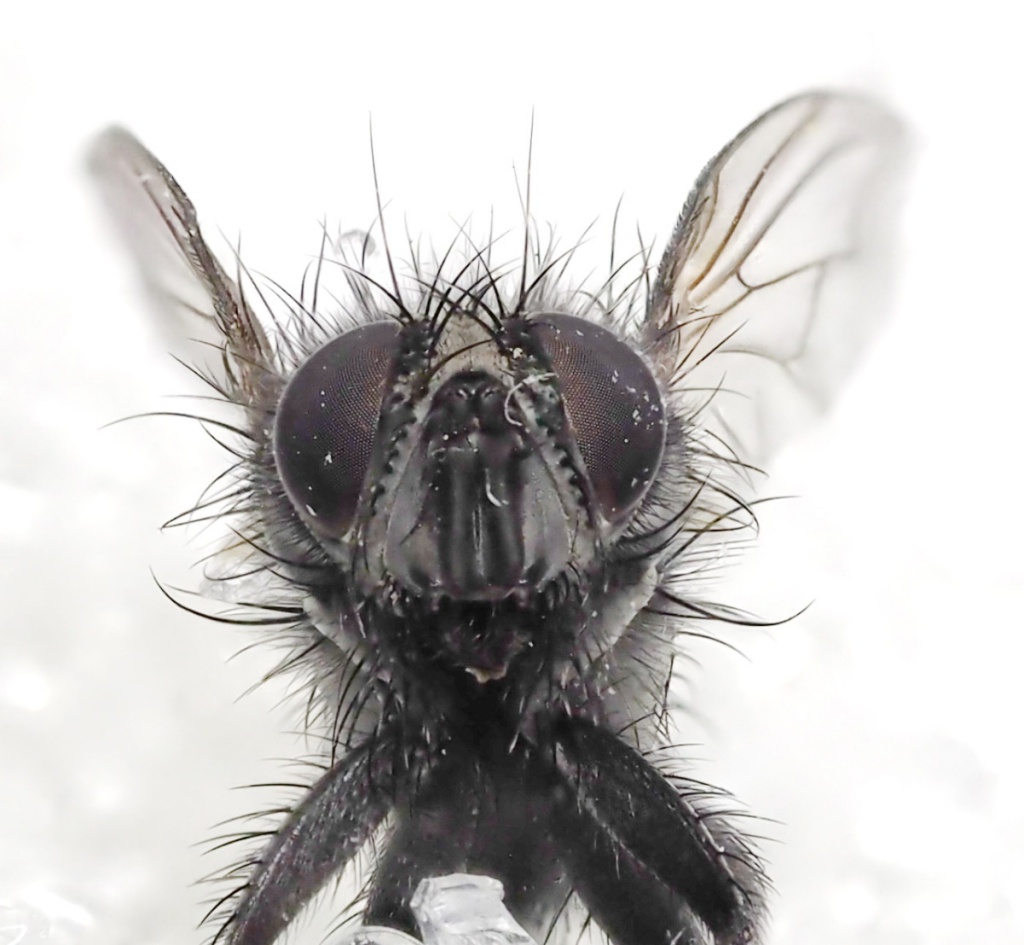
Periscepsia spathulata
Periscepsia spathulata
Common Bristlecheek
Flies in this tachinid fly genus are difficult to identify and most will need to be checked to the relevant keys.

- R4+5 with hairs from the node to the cross-vein
- Grey dusting on apices of tergites
- Brown basicosta
- Petiole approx. 1.5 x the cross-vein
- 2 pairs of ocellar bristles
Unless identified by a recognised expert, a photo is required, and the specimen should be examined with a microscope. In the comments box, state the key or ID method used and describe the size and identifying characters.
It can occur in woodland, heathland, brownfield habitat and scrubby grassland.
Adults fly from May to October probably as 2-3 generations.
Hosts are the caterpillars of various noctuid moths
Periscepsia spathulata is common in southern Britain (our most frequent Periscepsia) with records extending more thinly to Sutherland.
Rarely recorded in Leicestershire and Rutland.
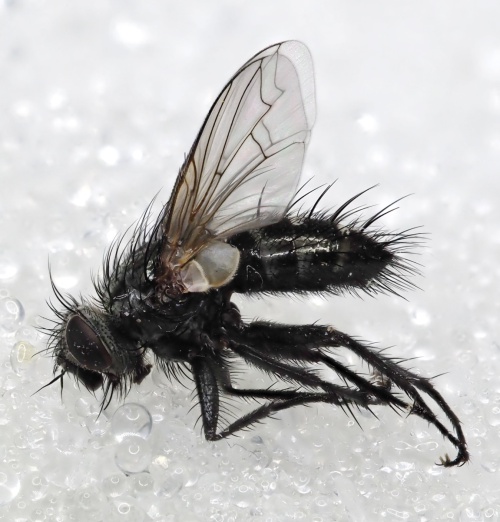 David Nicholls
Ratby garden
15 July 2023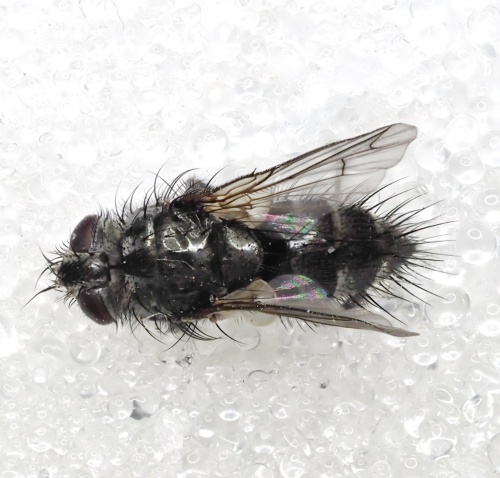 David Nicholls
Ratby garden
15 July 2023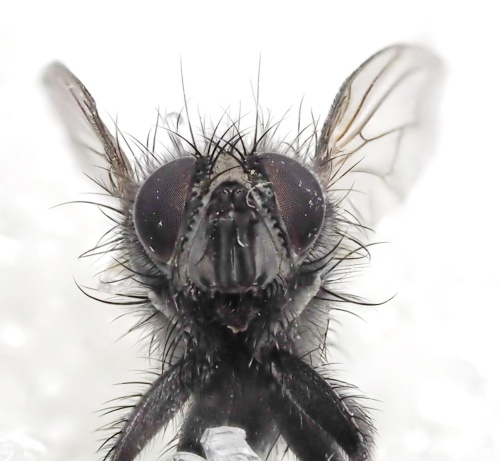 David Nicholls
Ratby garden
15 July 2023
Leicestershire & Rutland Map
Enter a town or village to see local records
MAP KEY:
Yellow squares = NBN records (all known data)
Coloured squares = NatureSpot records: 2025+ | 2020-2024 | pre-2020
UK Map
Additional images