Pendulous Sedge
Pendulous Sedge - Carex pendula
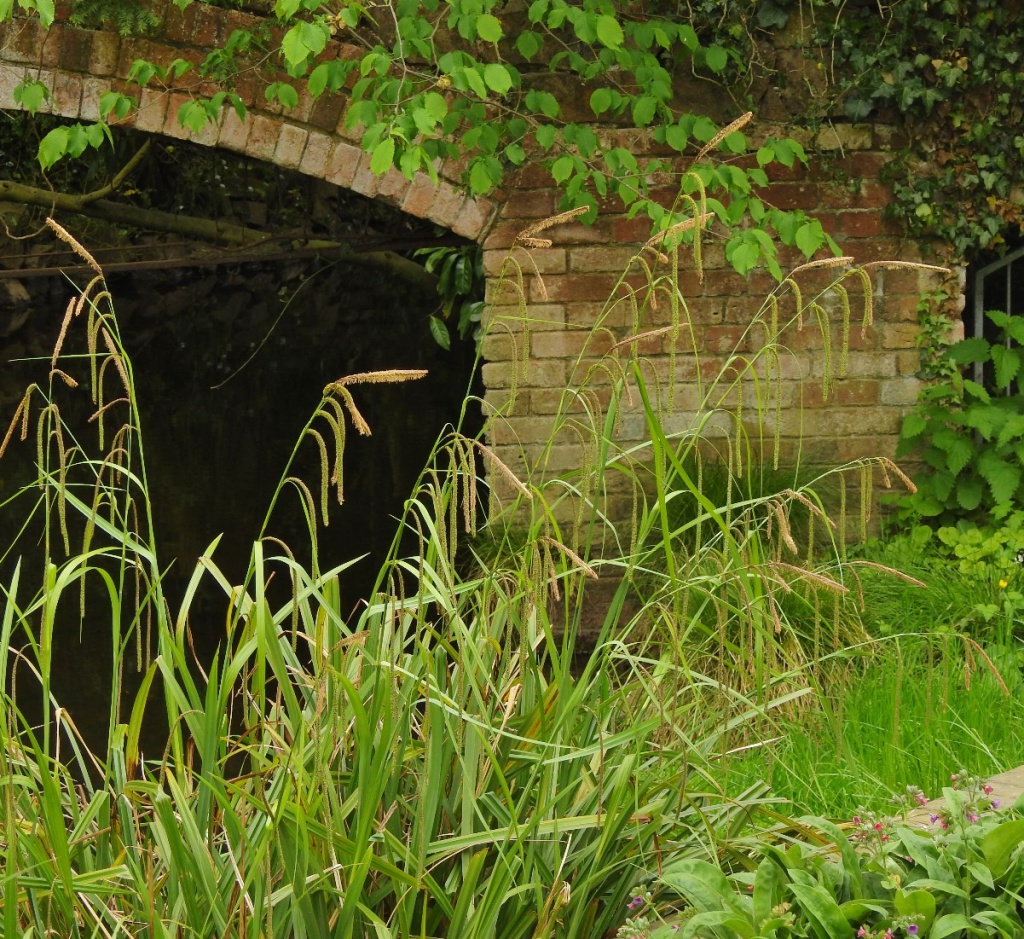
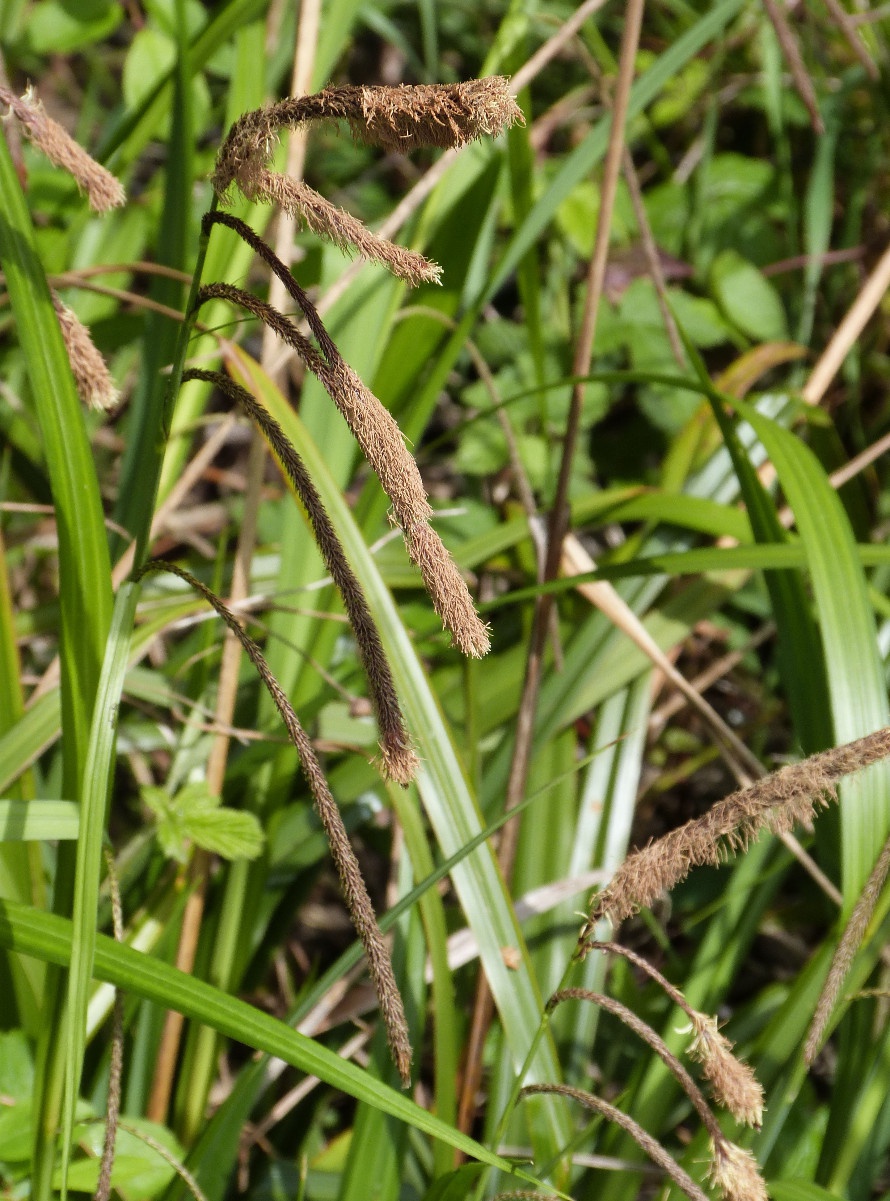
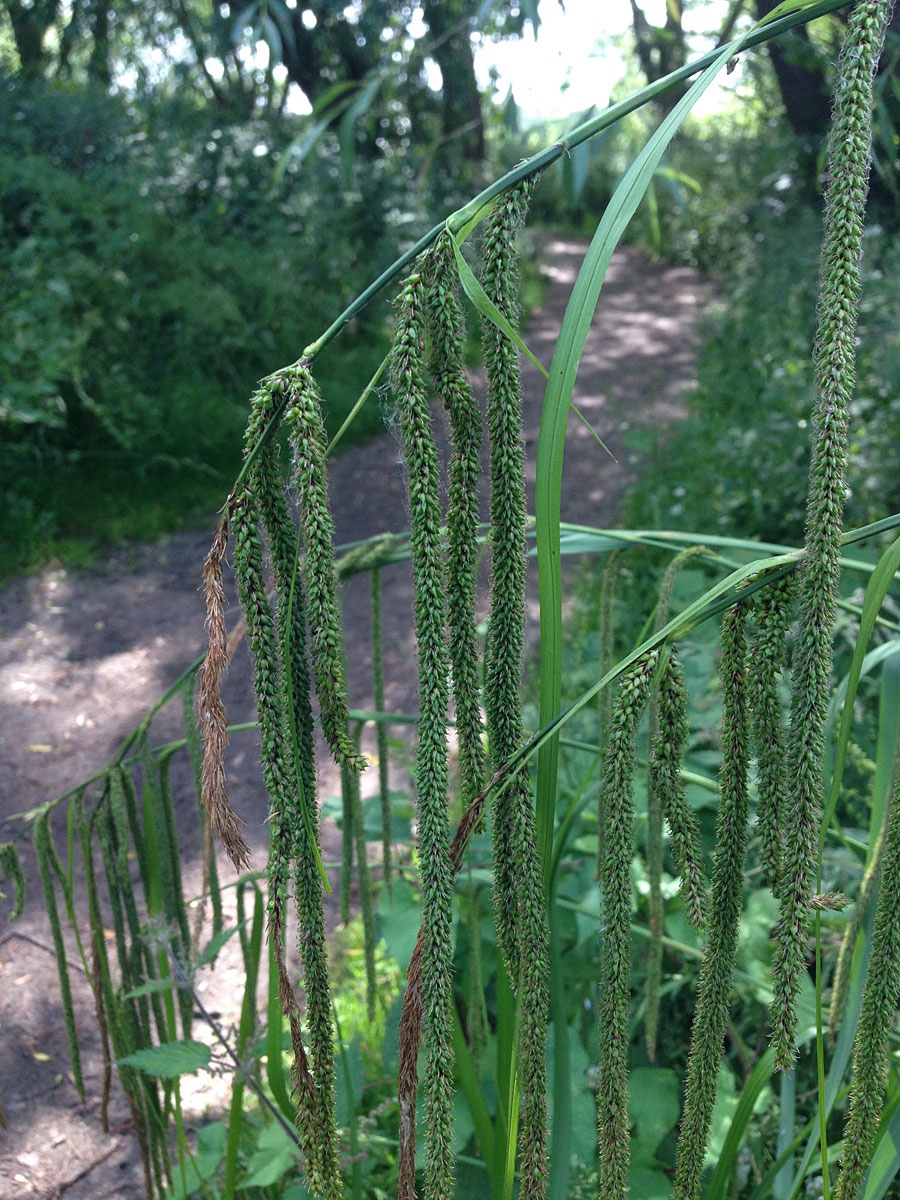
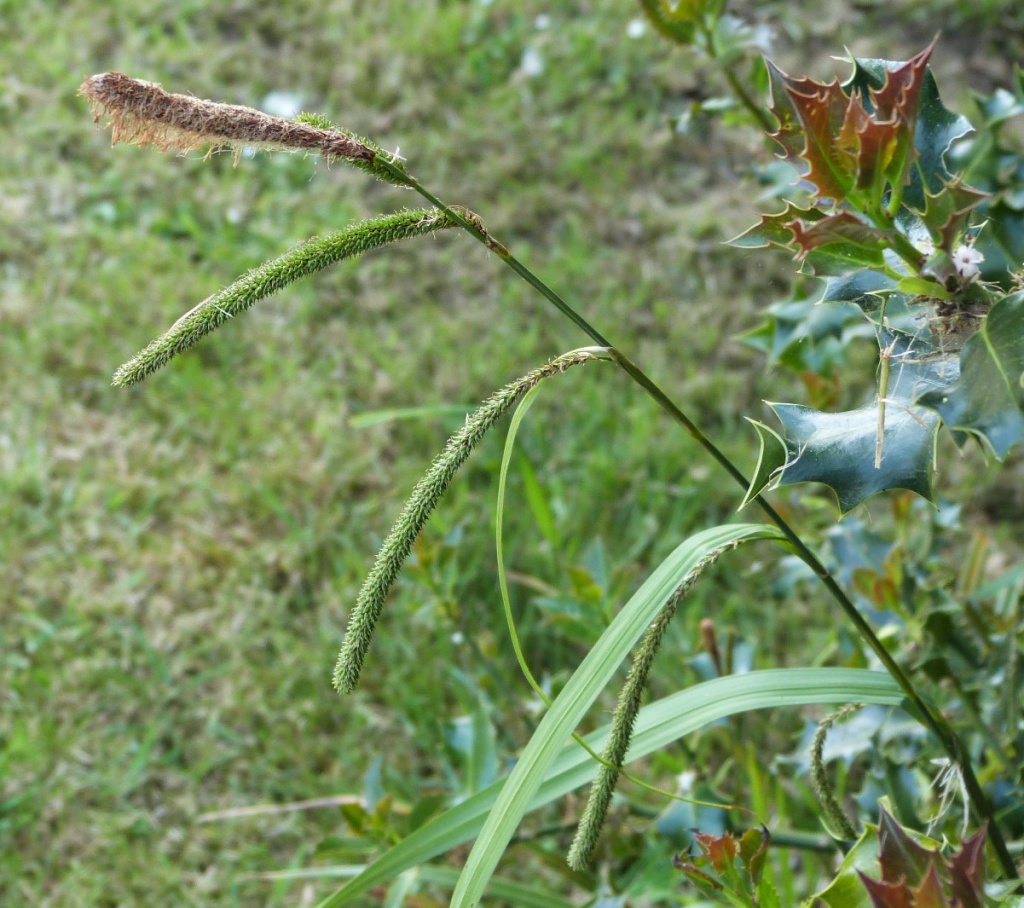
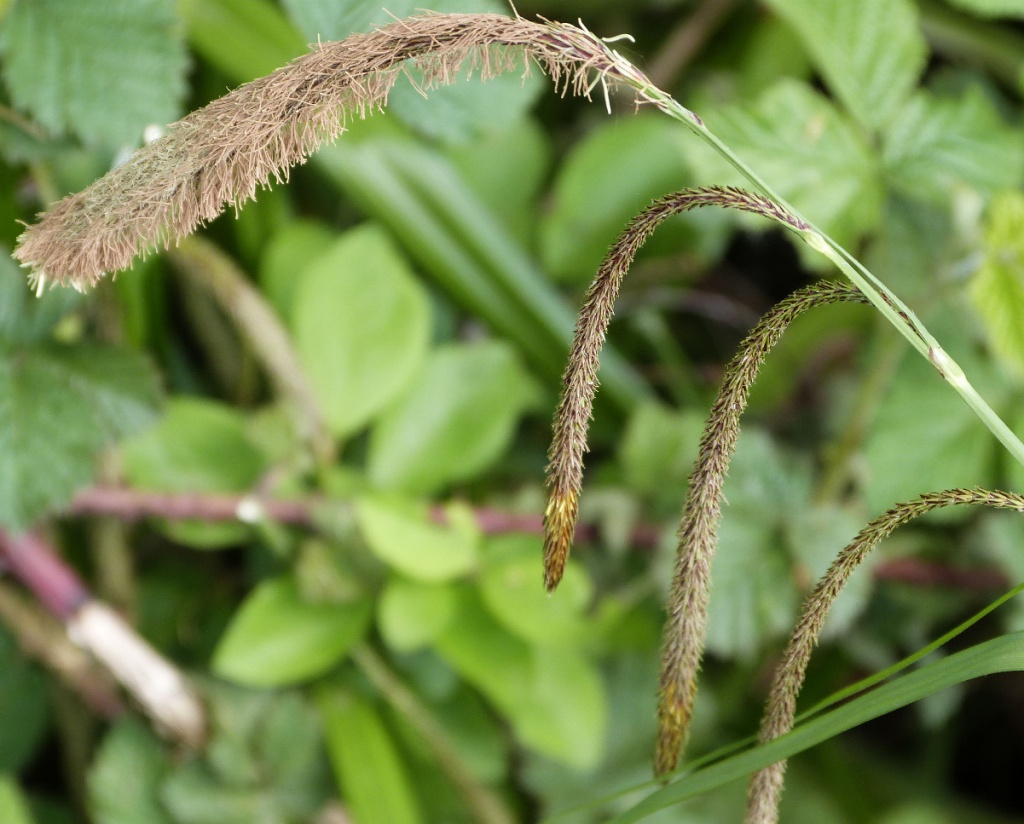
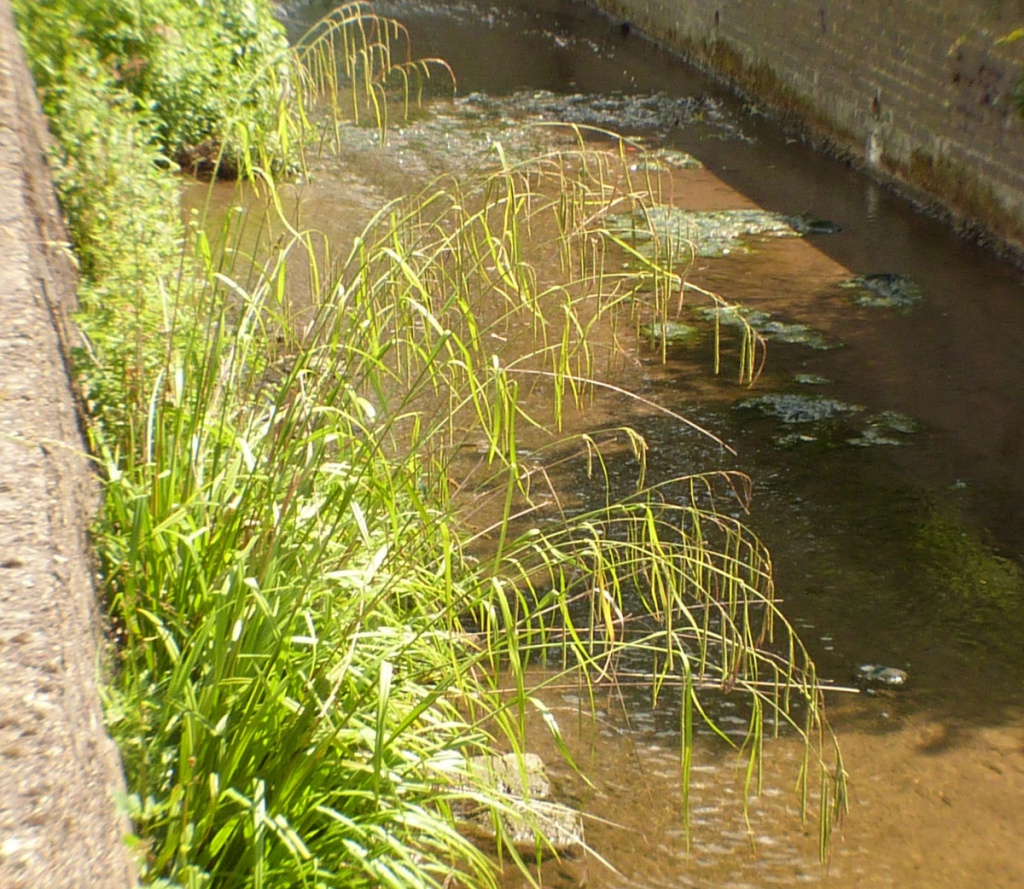
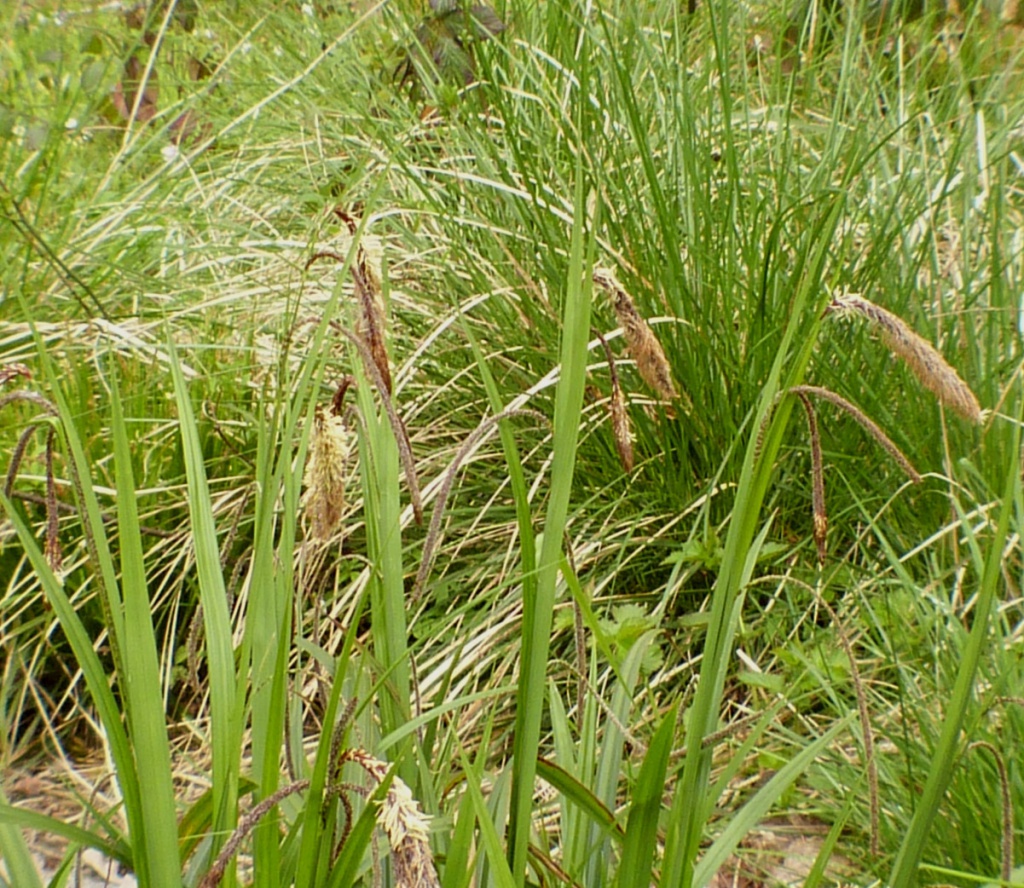
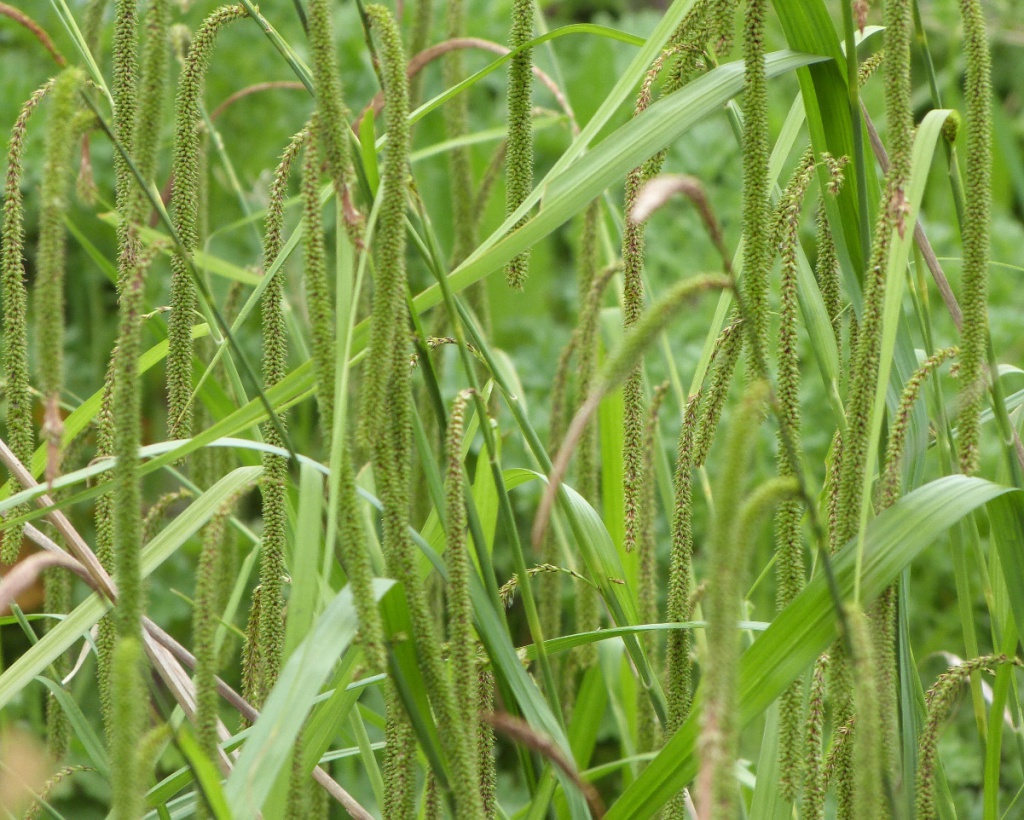
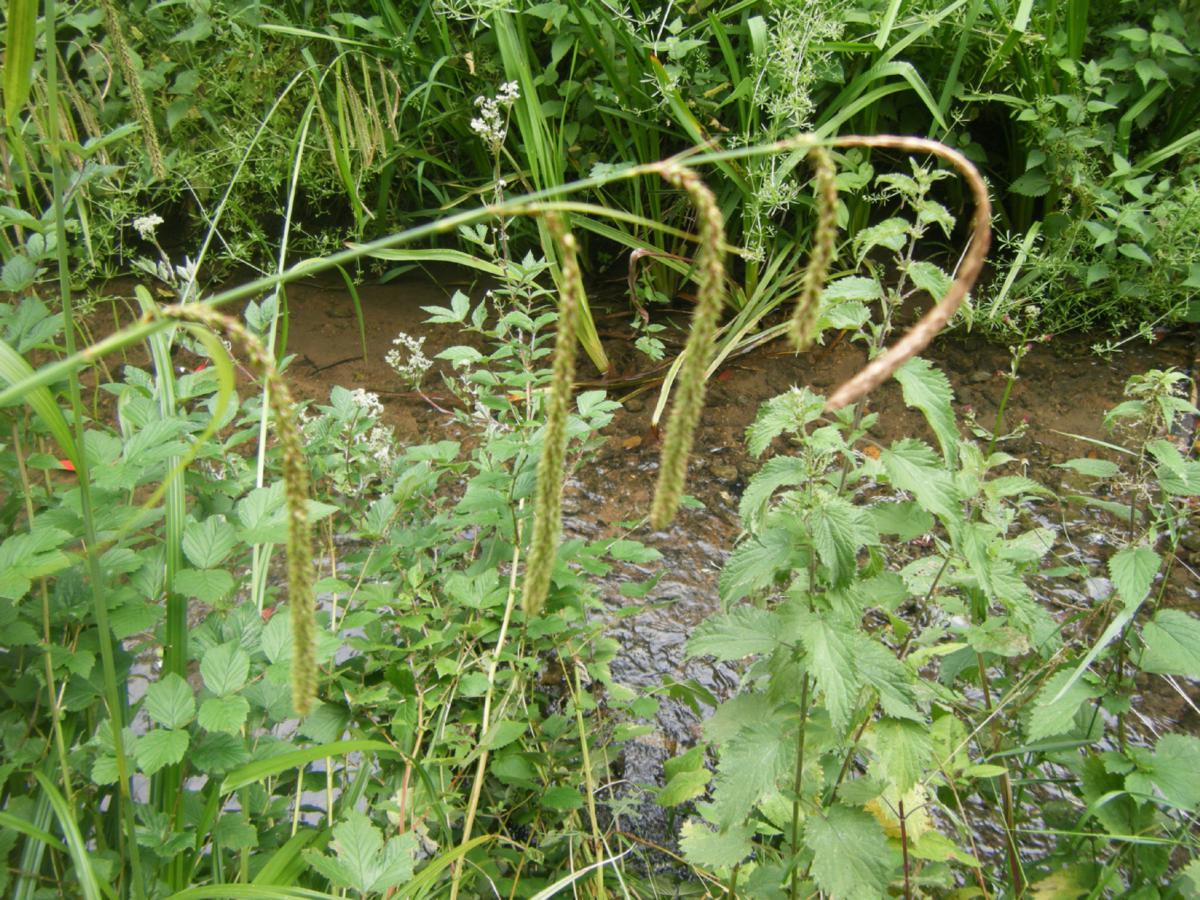
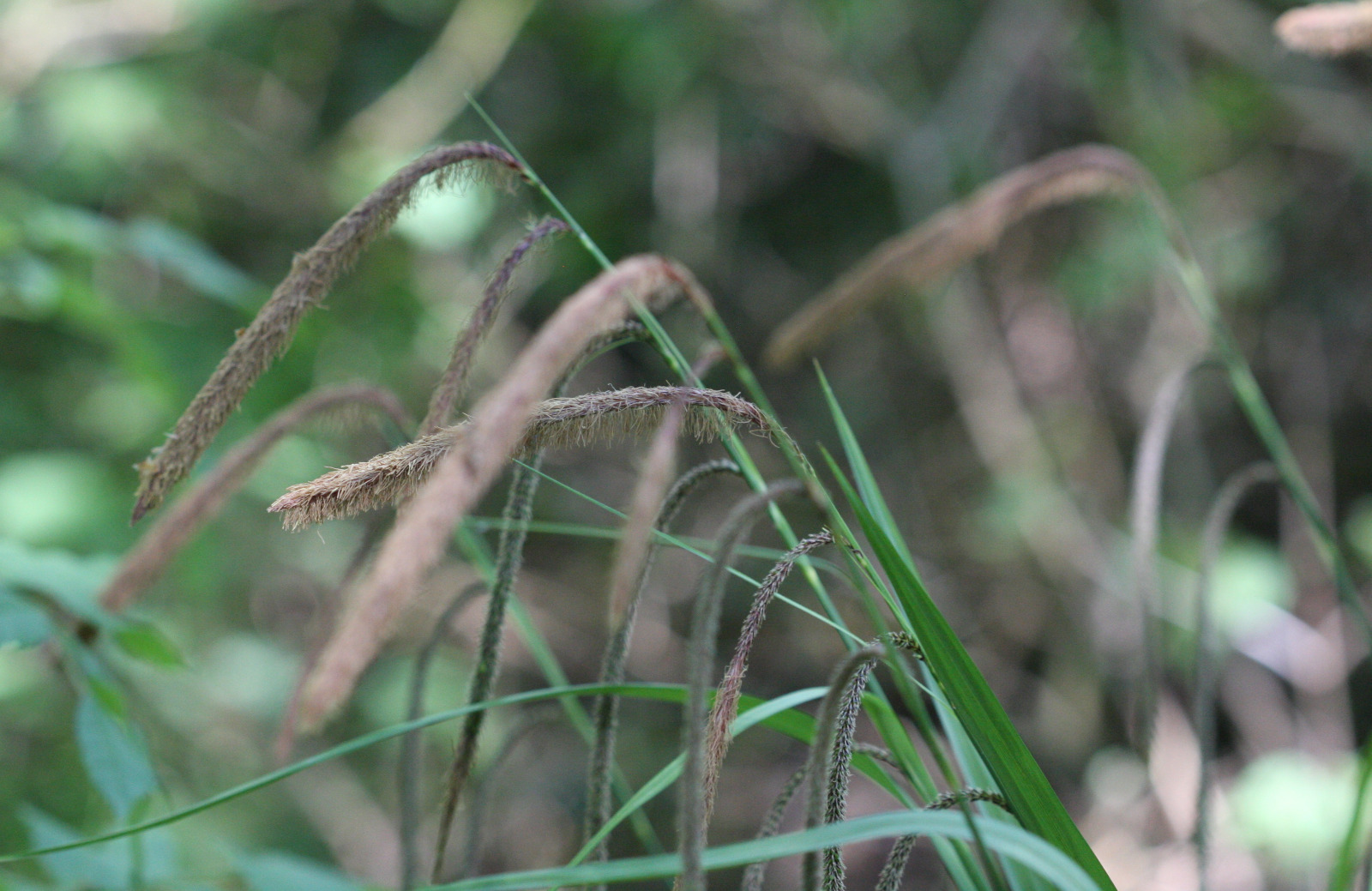
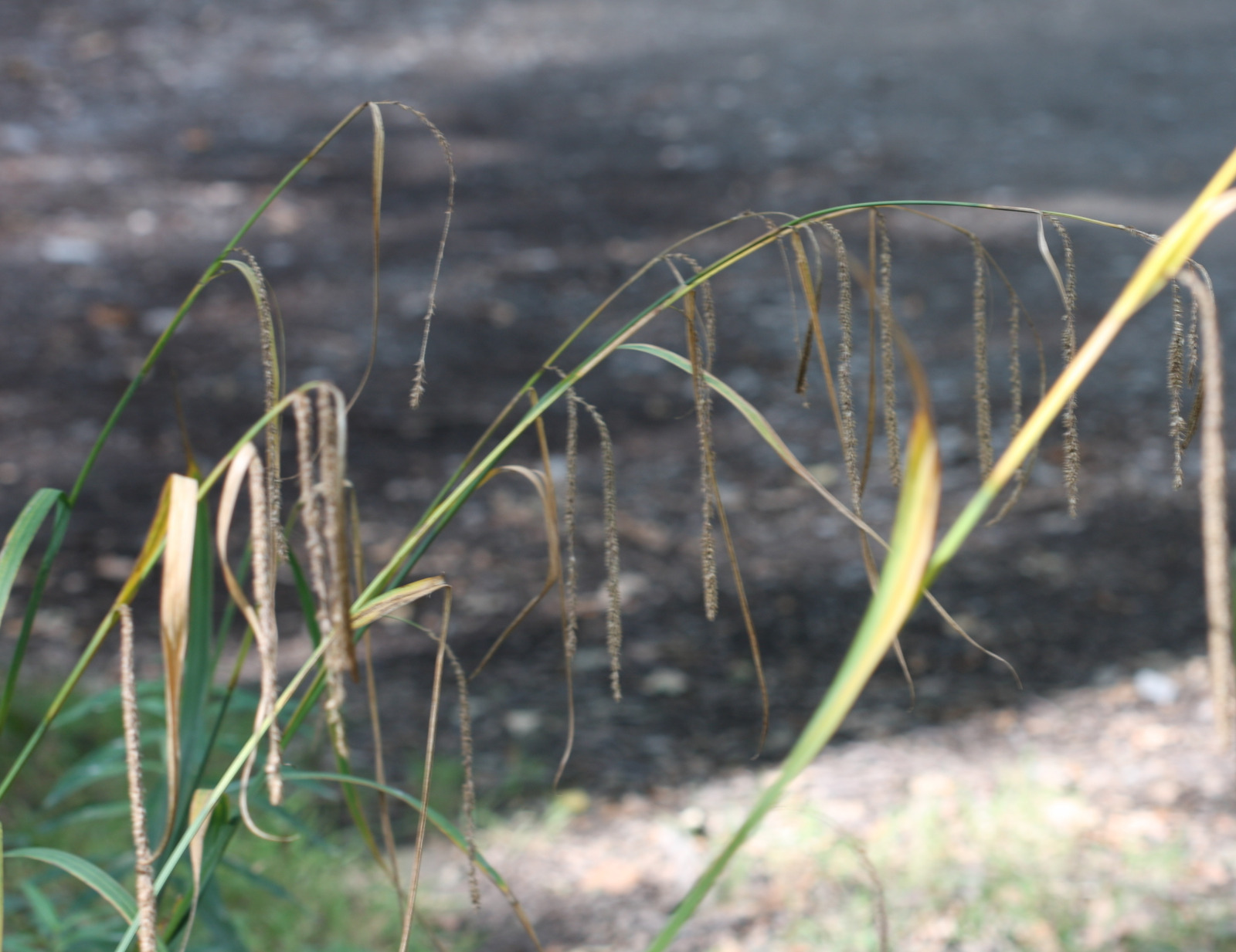
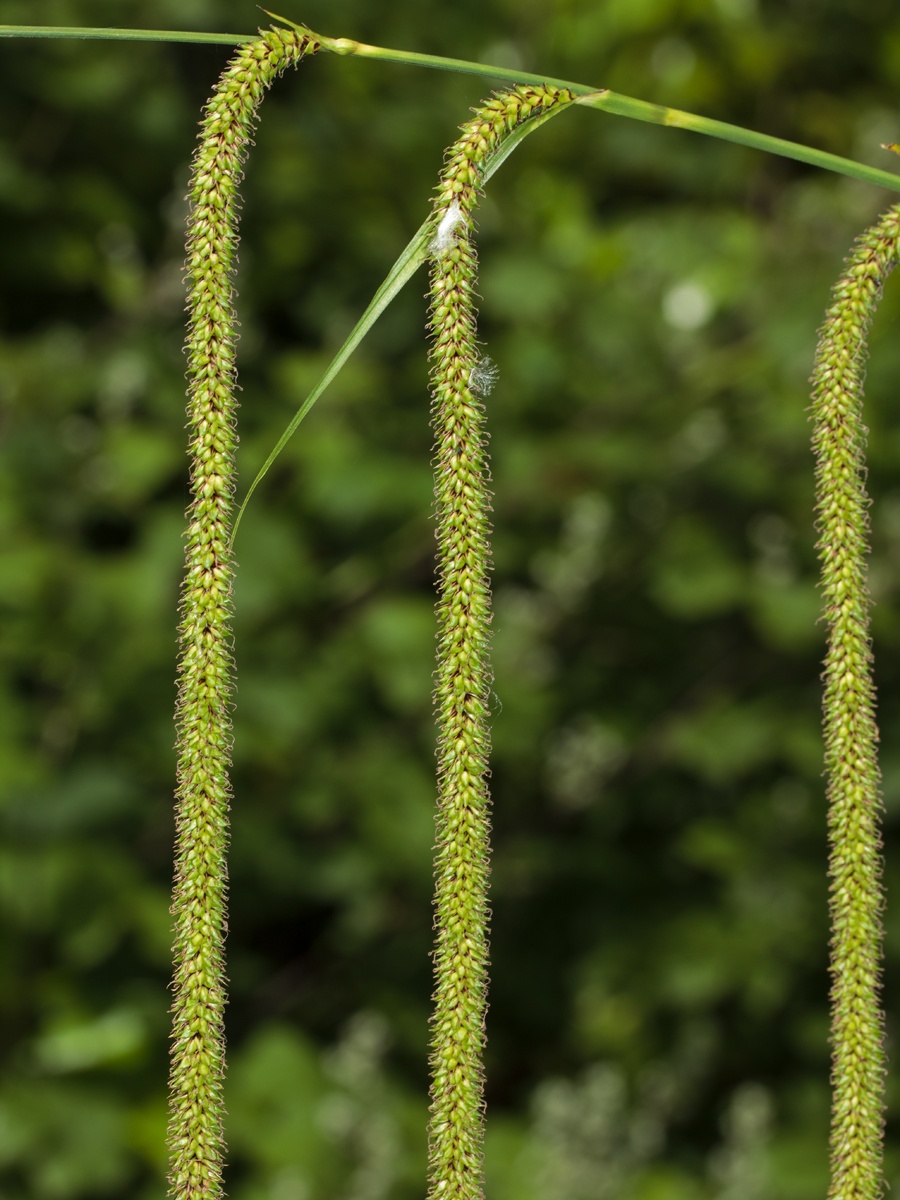
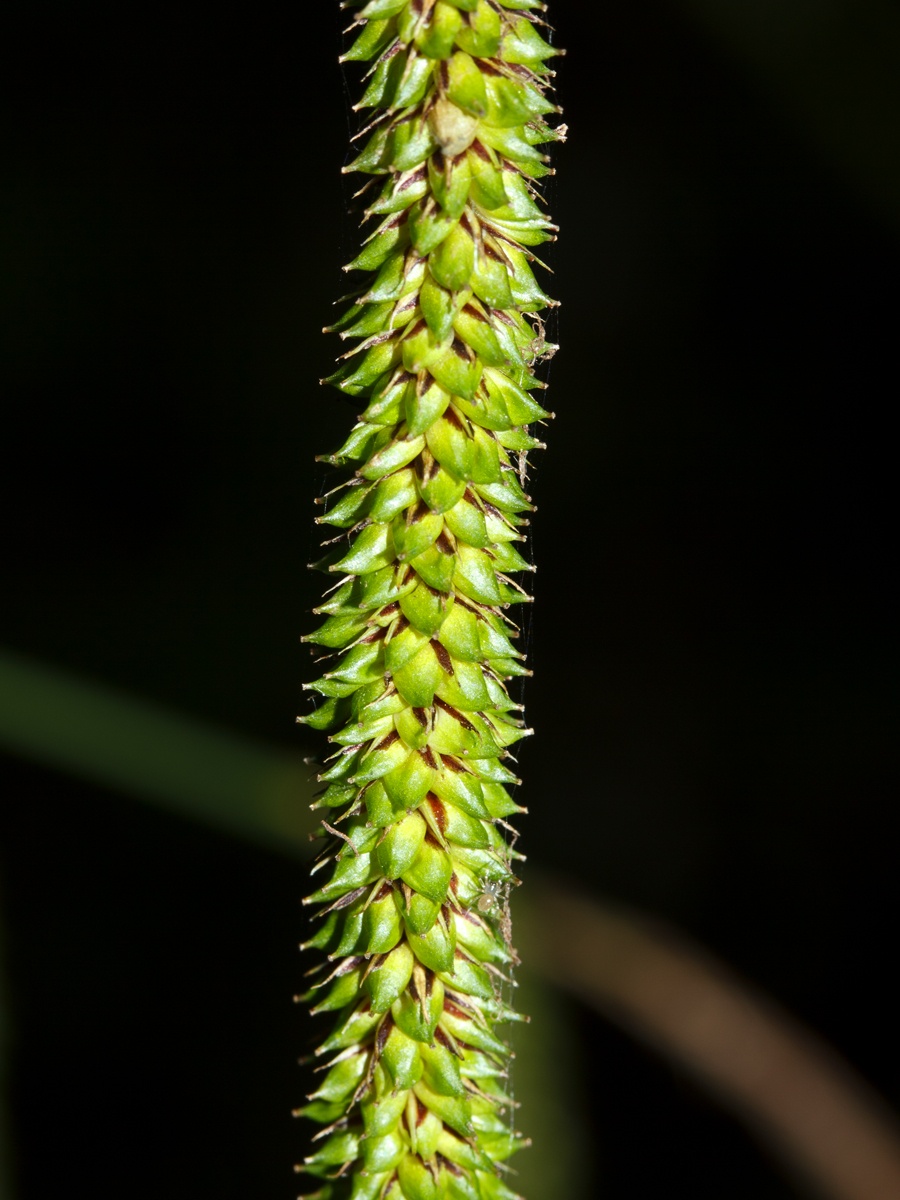
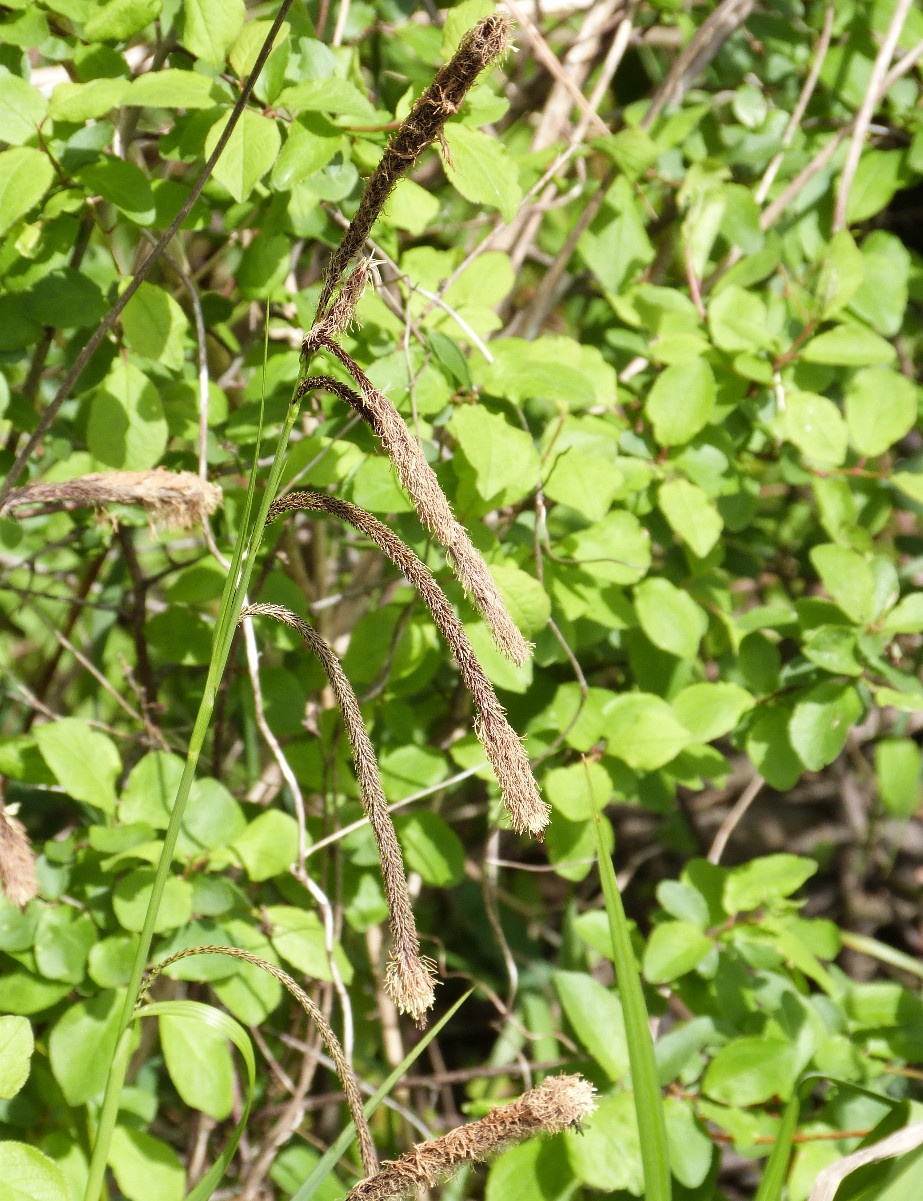
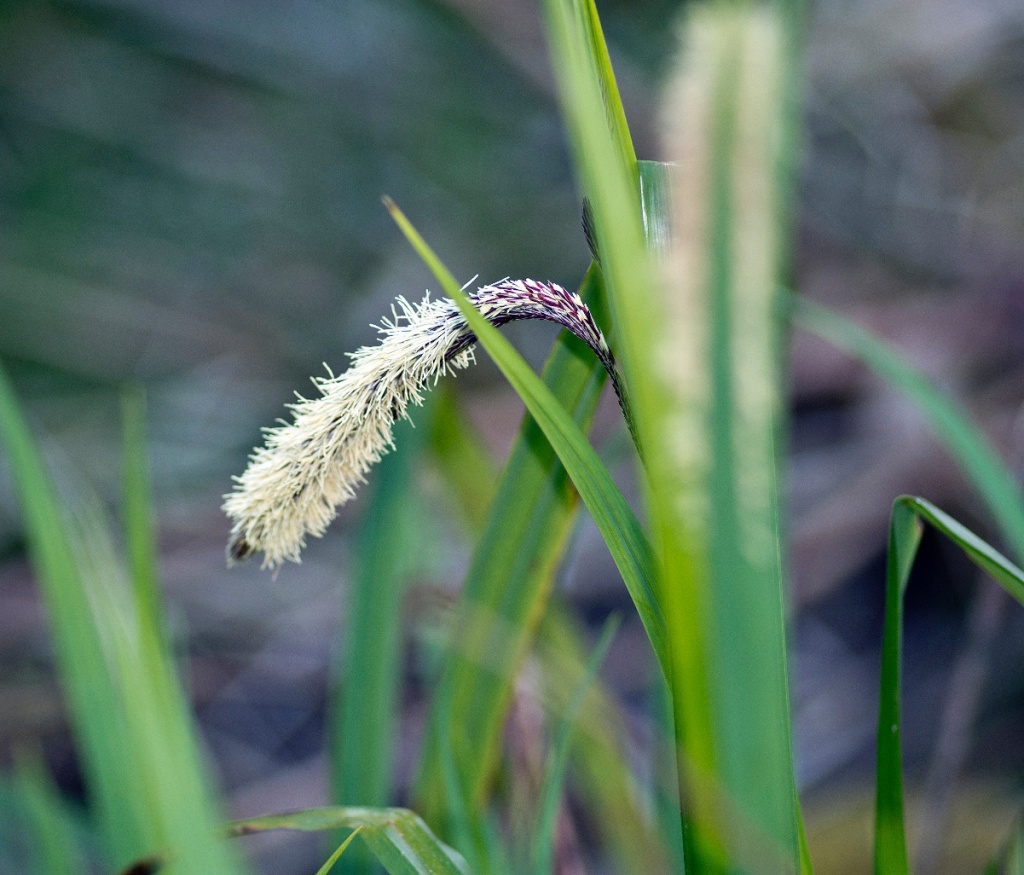
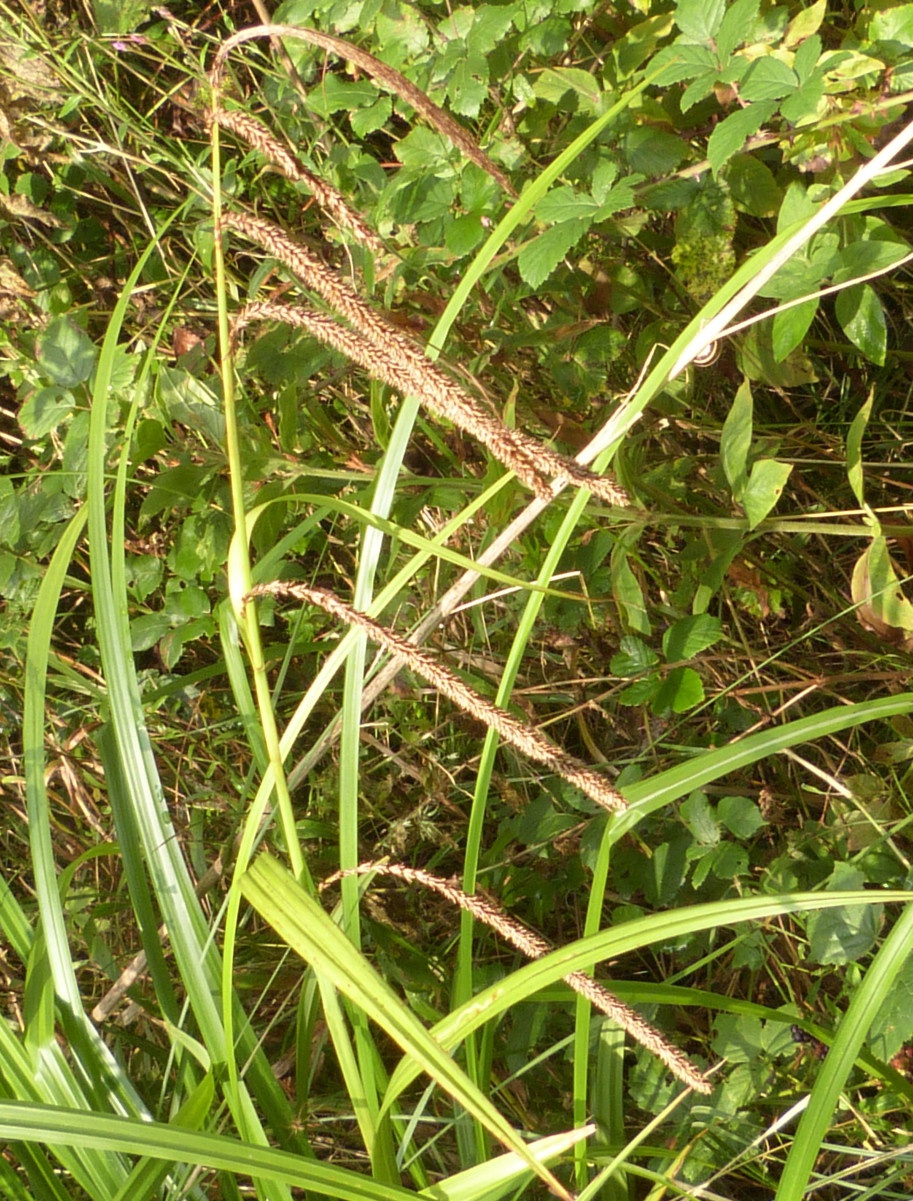
A large plant with very short rhizomes. Its leaves and shoots form large tufts or tussocks up to 70 cm across and stems reach 60 to 180 cm in height. Inflorescence has 1 or 2 male spikelets up to 10 cm long at the tip, and 4 or 5 female spikelets spread out lower down (up to 16 cm long). They are cylindrical and pendulous like catkins.

Woodland.
June and July.
Perennial.
Common and widespread, more so in the south.
Has become increasingly common in VC55.
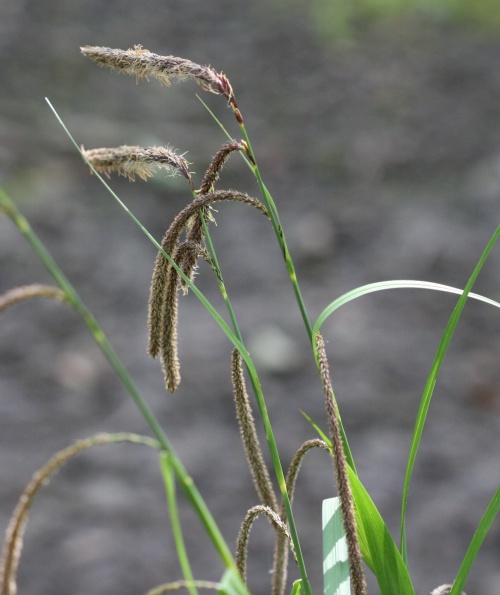 David Nicholls
Burbage Common and Woods
26 April 2014 Freeholt Wood Sapcote SP 4614 9398 (taken 26.4.2007).JPG) Graham Calow
Graham Calow
Sapcote
26 April 2007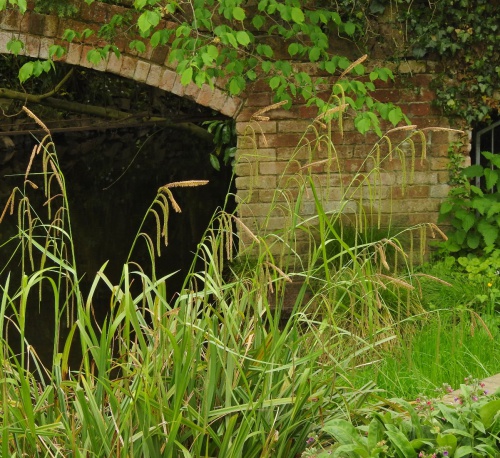 Jane Hollingworth
Memorial Garden Quorn
12 May 2020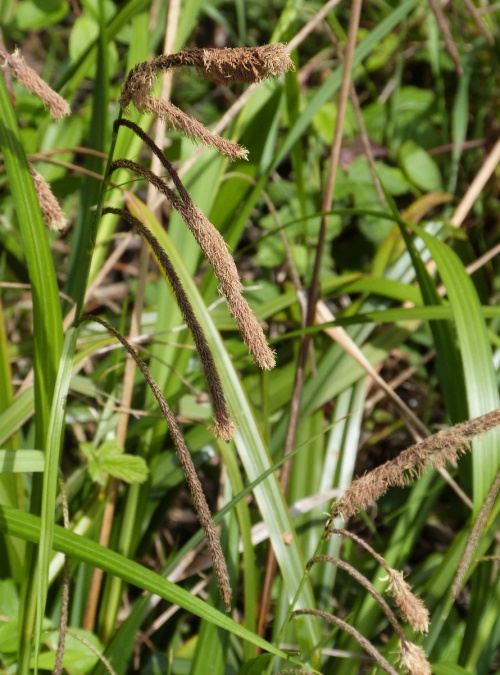 Graham Calow
Cambridge Road, Cosby
15 May 2016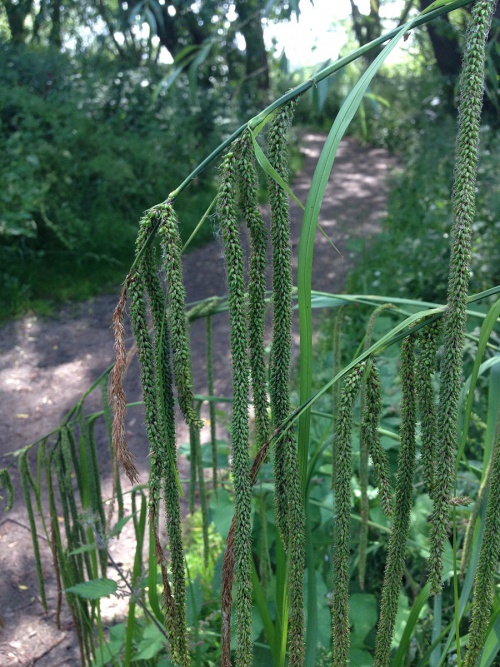 David Gould
Spearwort Fields
27 June 2015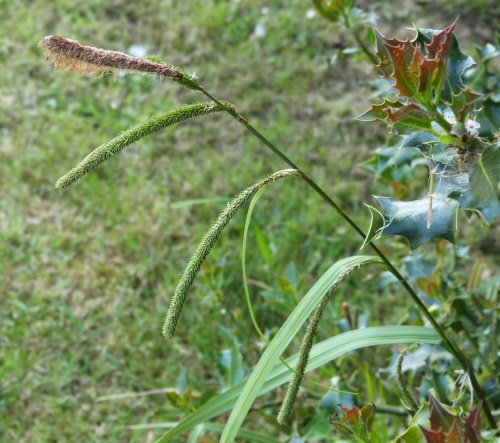 Graham Calow
Near High Cross
09 June 2016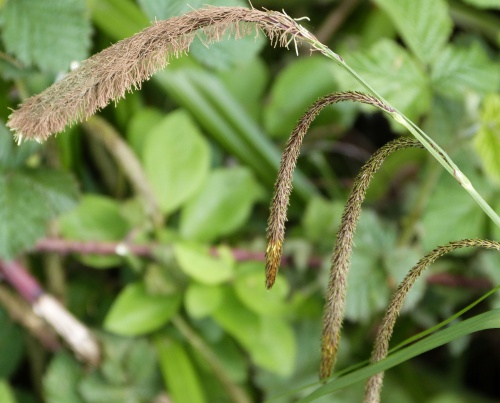 Graham Calow
Cambridge Road, Cosby
15 May 2016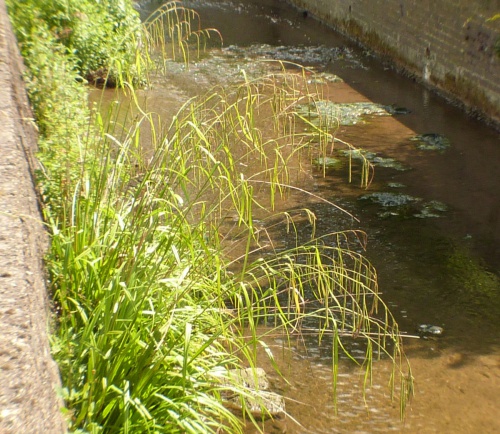 Graham Calow
Broughton Astley Brook
04 July 2013
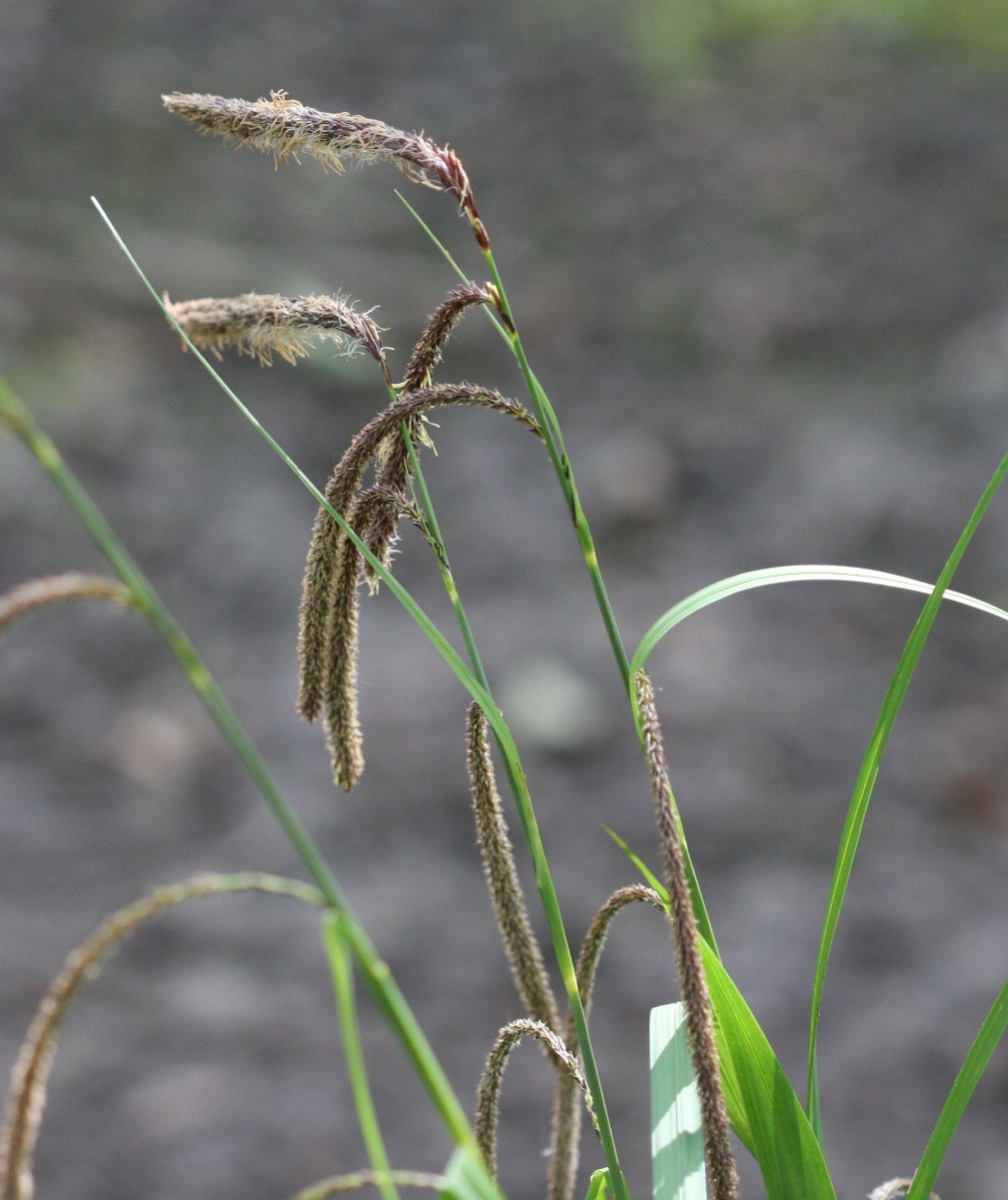
 Freeholt Wood Sapcote SP 4614 9398 (taken 26.4.2007).JPG)
Leicestershire & Rutland Map
Enter a town or village to see local records
MAP KEY:
Yellow squares = NBN records (all known data)
Coloured squares = NatureSpot records: 2025+ | 2020-2024 | pre-2020
UK Map
Additional images
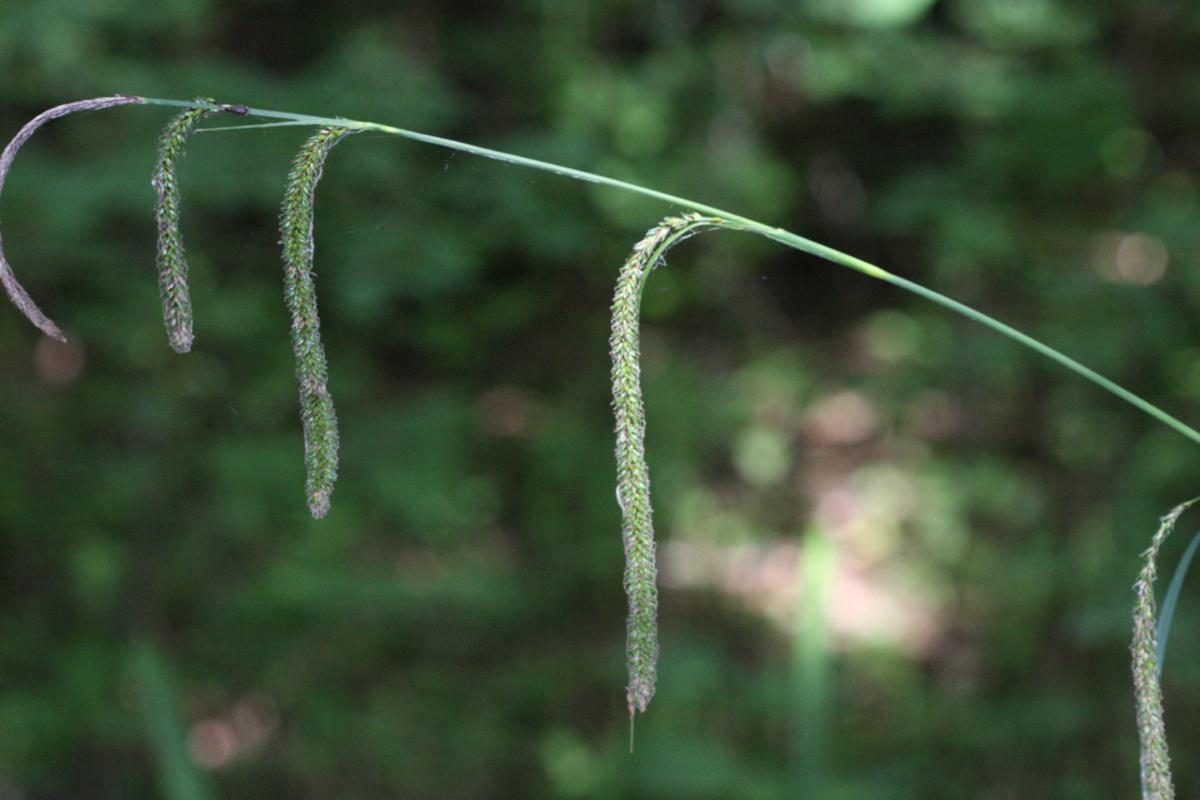
 Freeholt Wood Sapcote SP 4614 9398 (taken 30.5.2007)..JPG)



All NatureSpot records
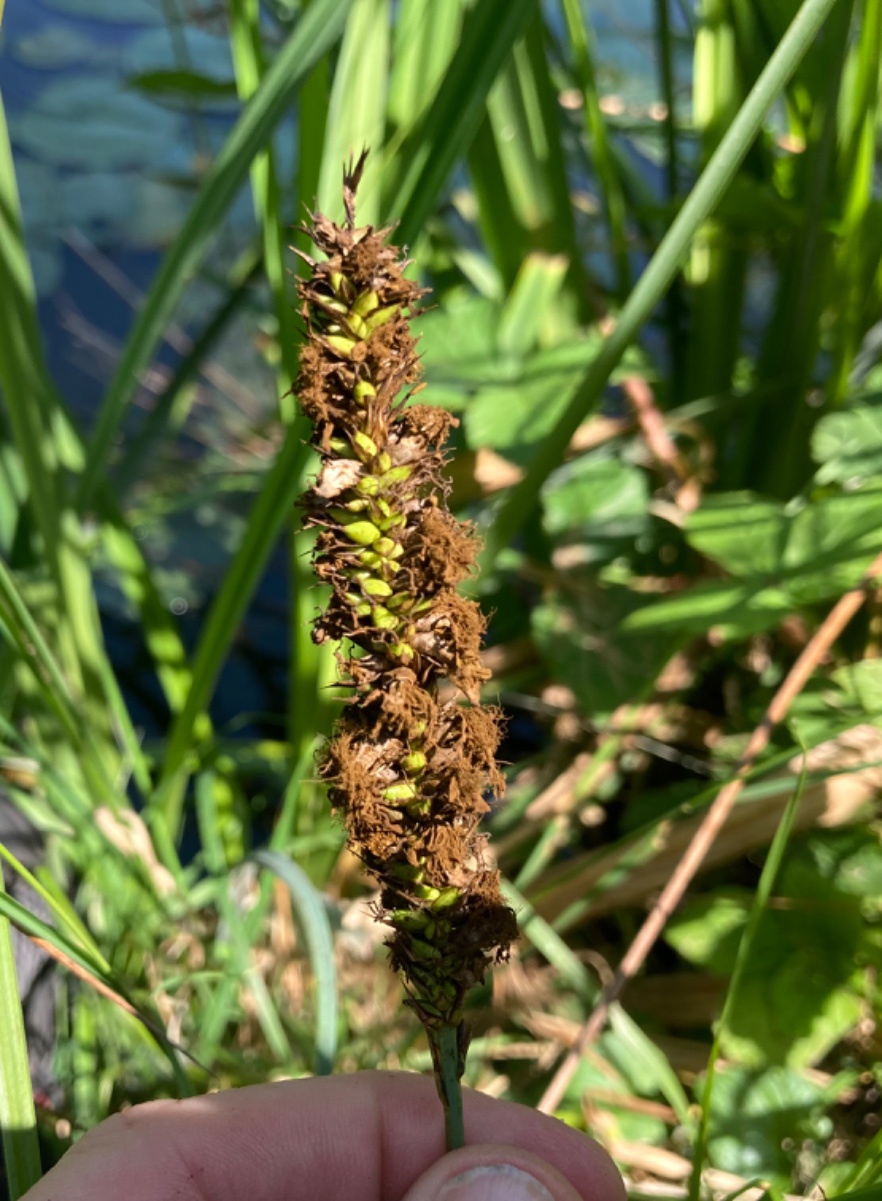
Farysia thuemenii
The smut fungus Farysia thuemenii infects some, but not all, female flowers of Greater Pond-sedge and Pendulous sedge, within the inflorescence, producing masses of olivaceous brown spores and long, pale, straw-coloured elaters conspicuously projecting from the female spikes. Spores are 6-11 µm x 4-6 µm and are finely verruculose.
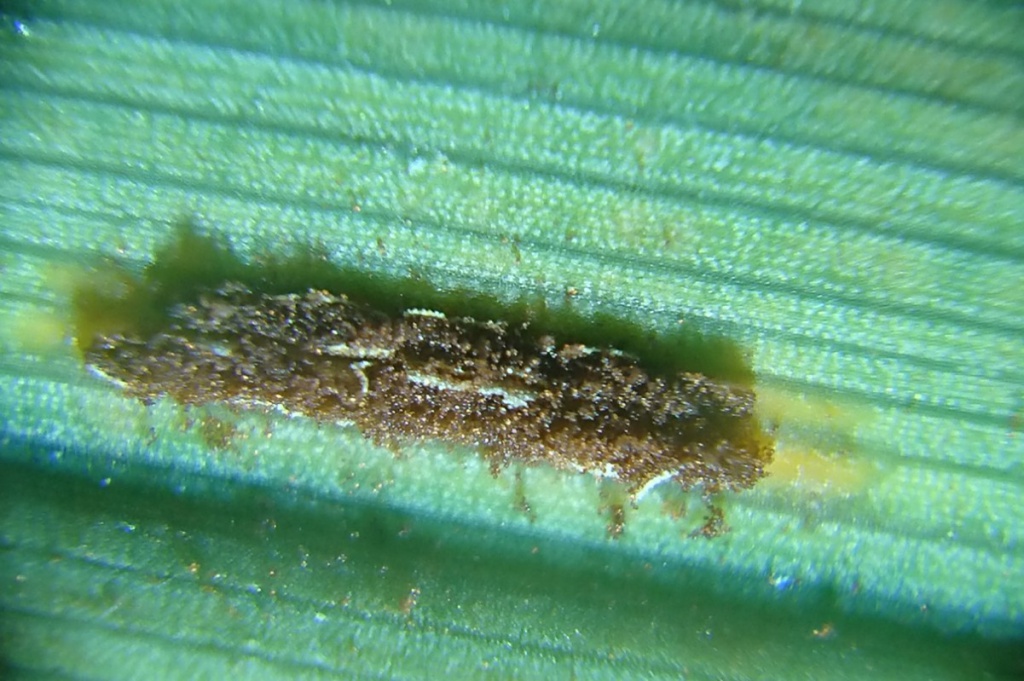
Puccinia caricina
Sedges (Carex species) are the primary hosts, bearing uredinia and telia. The alternate host is a Ribes.
This is a complex of species without a clear consensus; some authors describe different species depending on the species of Carex affected, and Puccinia caricina should be regarded as sensu lato.