Oxford Ragwort
Oxford Ragwort - Senecio squalidus
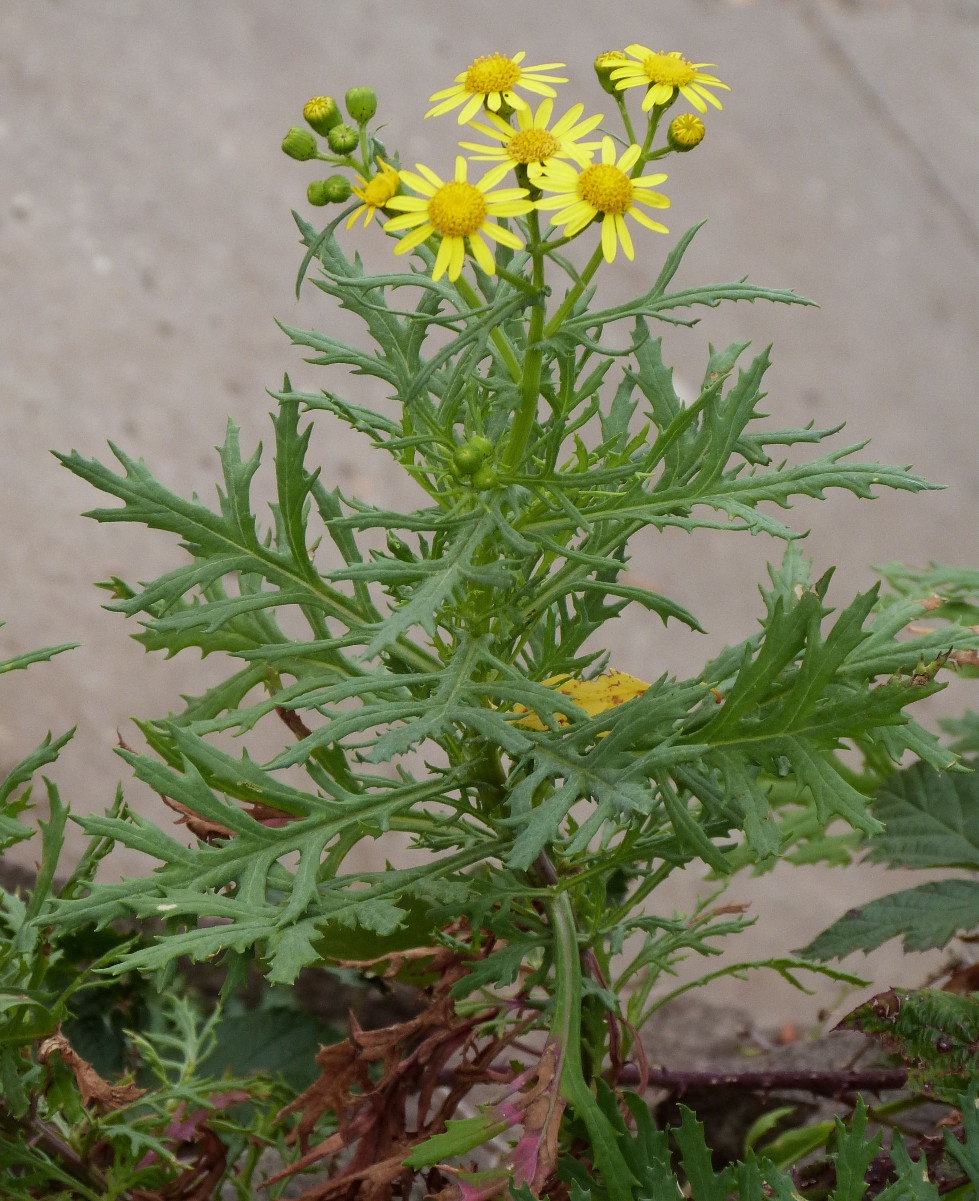
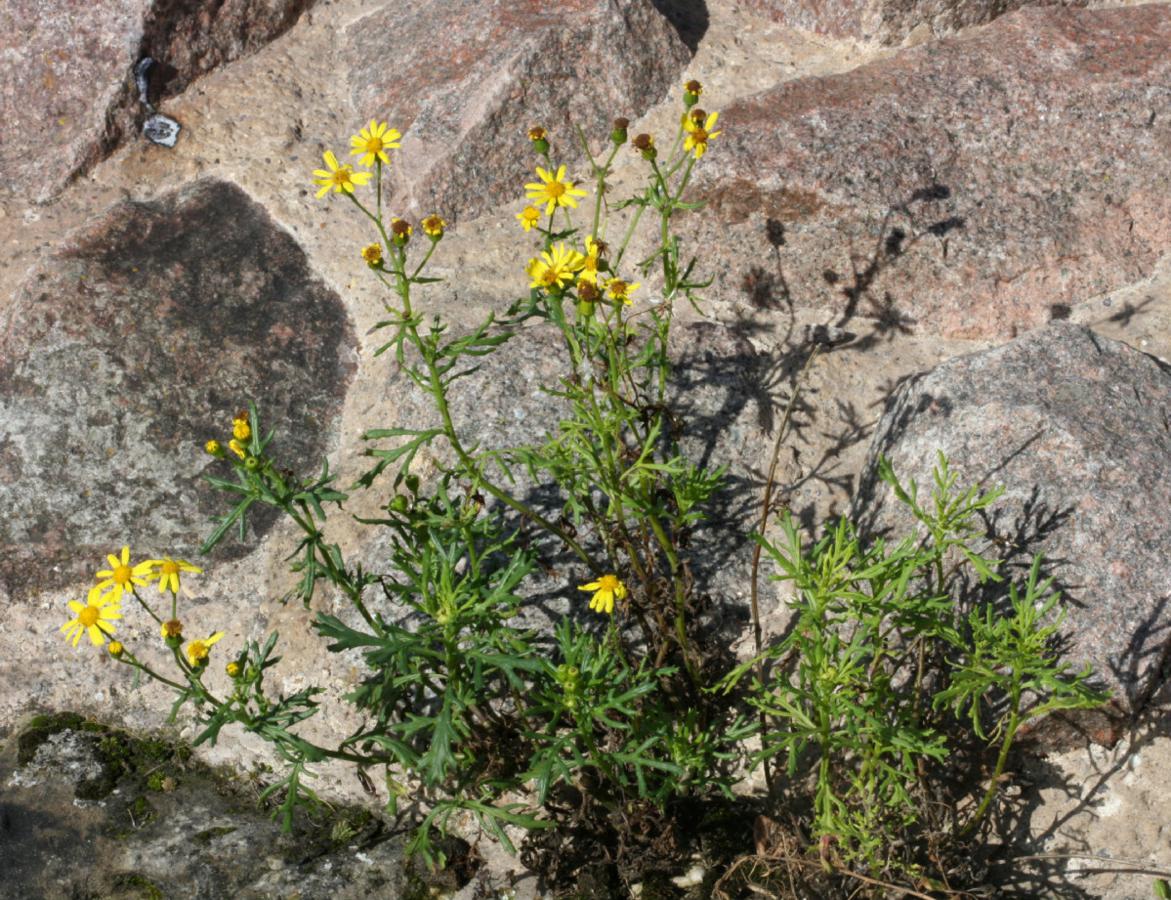
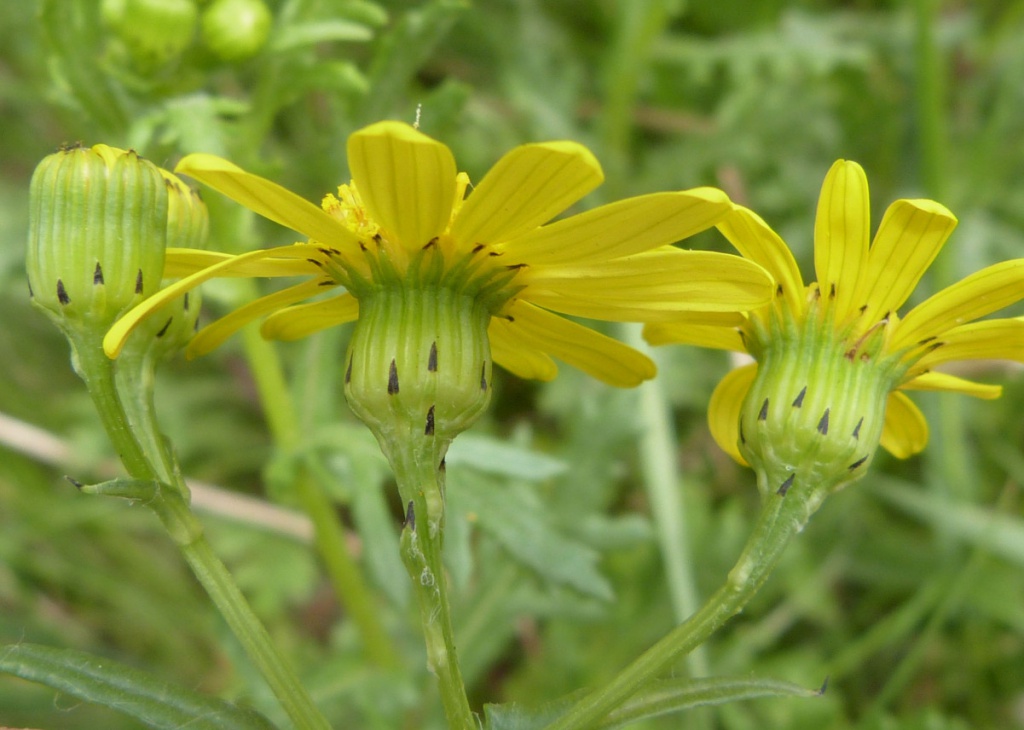
Medium height plant with a well branched stem. Leaves are deep green, lanceolate to pinnately lobed, the upper clasping the stem. Flowerheads bright yellow, 15 to 25 mm usually with 13 rays, borne in loose clusters, all flower bracts black tipped.
Common Ragwort (Senecio jacobaea (syn.= Jacobaea vulgaris) and Hoary Ragwort (Senecio erucifolis (syn. = Jacobaea erucifolia)

Very variable, but with a looser habit and lax corymbs compared to Common and Hoary ragworts. Leaves usually pinnately lobed, but may be serrated; phyllaries (bracts under the flower head) black-tipped.
A photo of the whole plant, showing general habit and leaves as well as flowers; a side-on view of flowers. It is not possible to verify the species from photos of the flowers alone, especially if photographed from above looking down on to the flowers
Waste and disturbed ground, walls.
April to December.
Annual or short lived perennial. This plant is native to Sicily where it colonises lava slopes on Mount Etna. It is now well established in the UK, particularly in towns, since it escaped from the Oxford Botanic Garden in 1794.
Common and widespread in England and Wales, local in southern Scotland.
Fairly common in Leicestershire and Rutland. In the 1979 Flora survey of Leicestershire it was found in 315 of the 617 tetrads.
 Graham Calow
Stoney Stanton
02 October 2014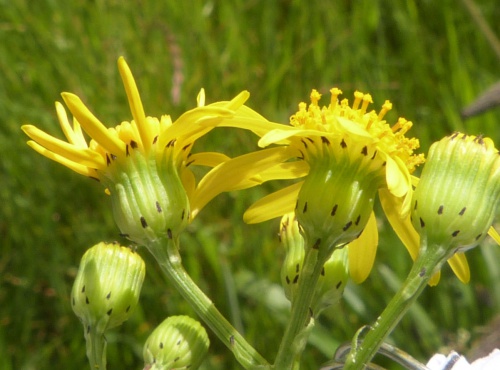 Graham Calow
Witherley
27 May 2015
all flower bracts black tipped Hinckley Road path to Washpit Sapcote SP 4845 9357 (taken 5.4.2006).JPG) Graham Calow
Graham Calow
Wash Pit, Sapcote
05 April 2006 David Nicholls
Abbey Park
19 September 2010

 Hinckley Road path to Washpit Sapcote SP 4845 9357 (taken 5.4.2006).JPG)
Leicestershire & Rutland Map
Enter a town or village to see local records
MAP KEY:
Yellow squares = NBN records (all known data)
Coloured squares = NatureSpot records: 2025+ | 2020-2024 | pre-2020
UK Map
Additional images

All NatureSpot records
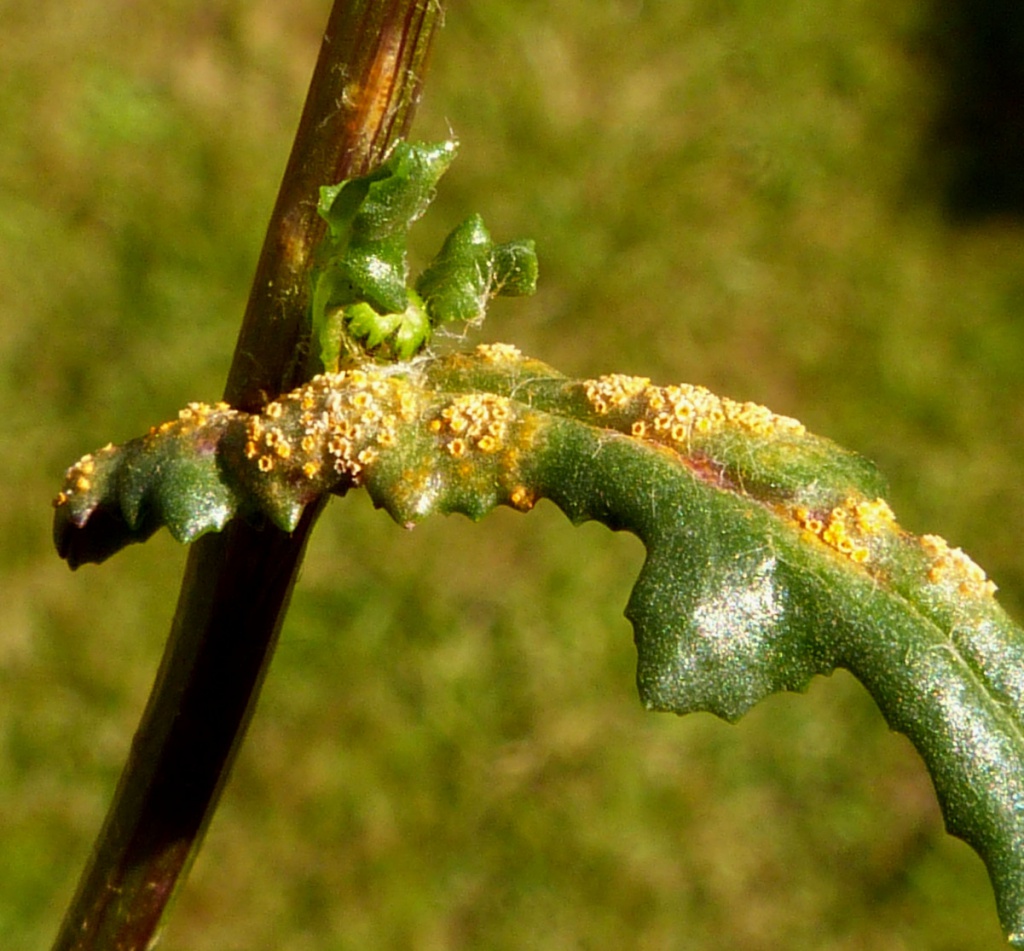
Puccinia lagenophorae
Puccinia lagenophorae is a gall-causing rust affecting stems and leaves of Common Groundsel, and occasionally Oxford Ragwort (Senecio squalidus) and Common Ragwort (Jacobaea vulgaris). It causes swelling and distortion of stems and leaves, with bright orange aecia. There are no uredinia or spermogonia, and the blackish-brown telia are rarely seen.