Omalus puncticollis
Omalus puncticollis
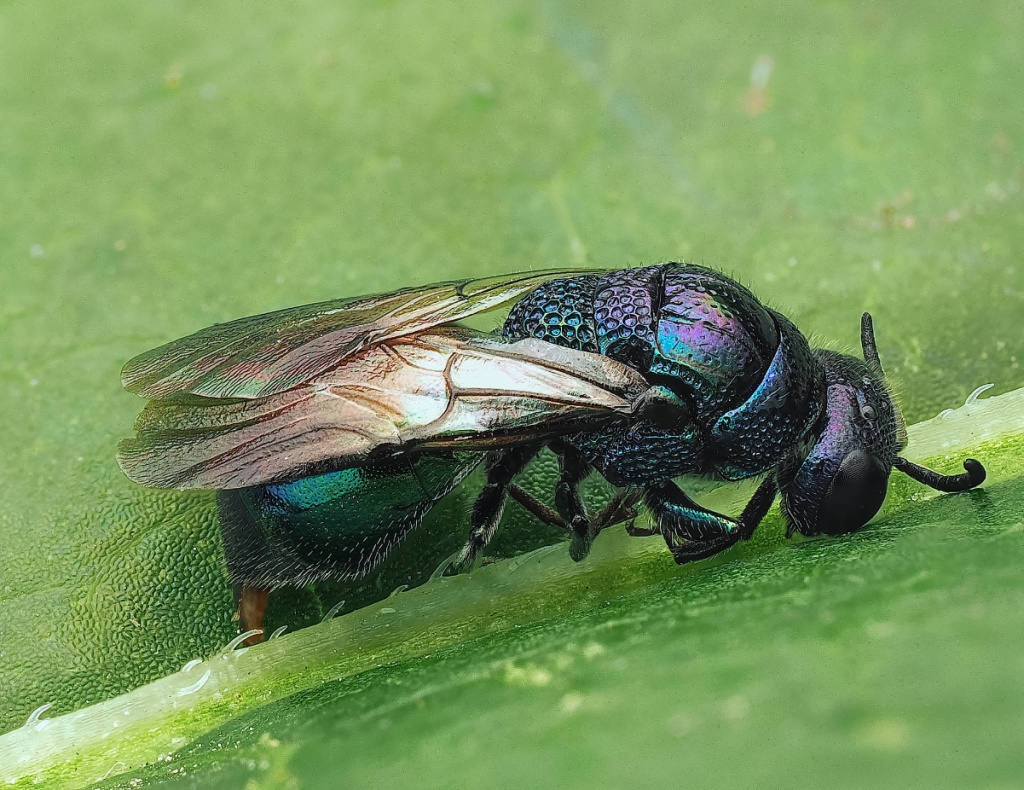
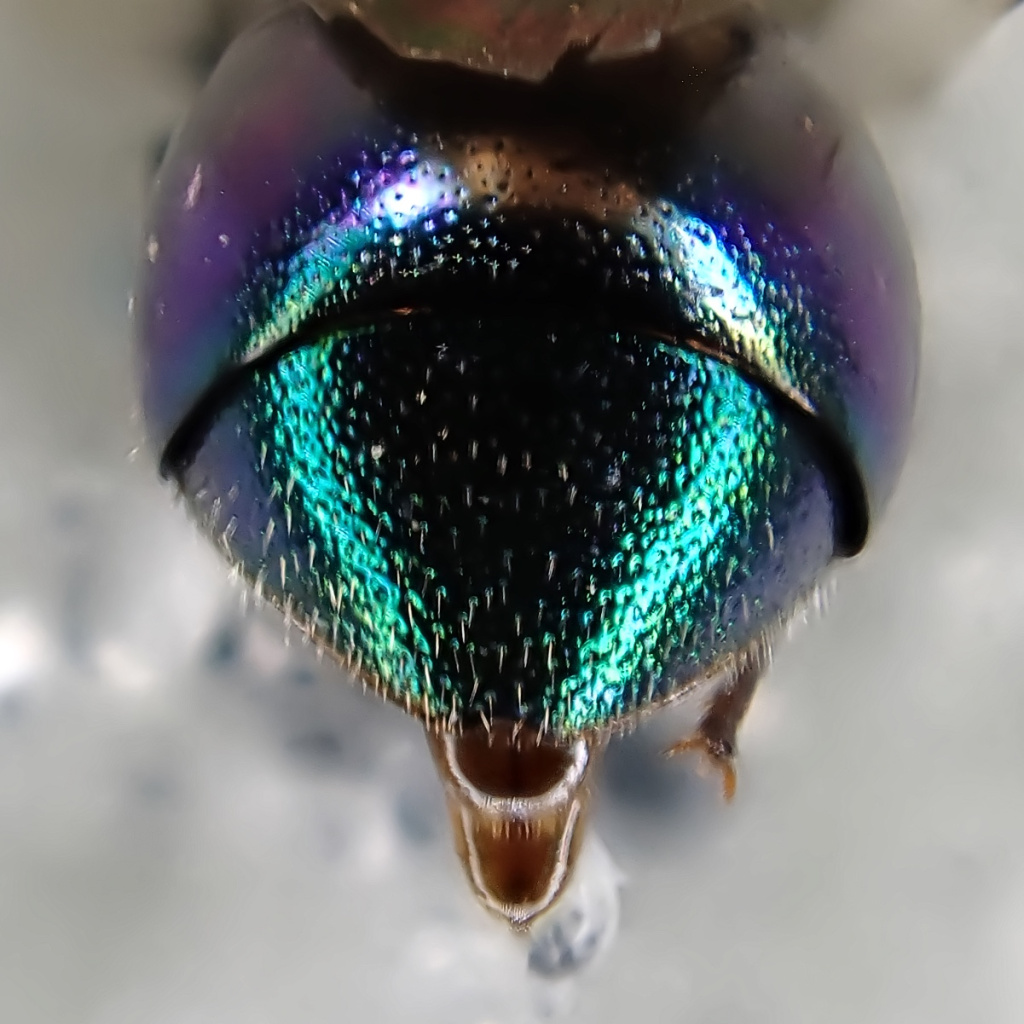
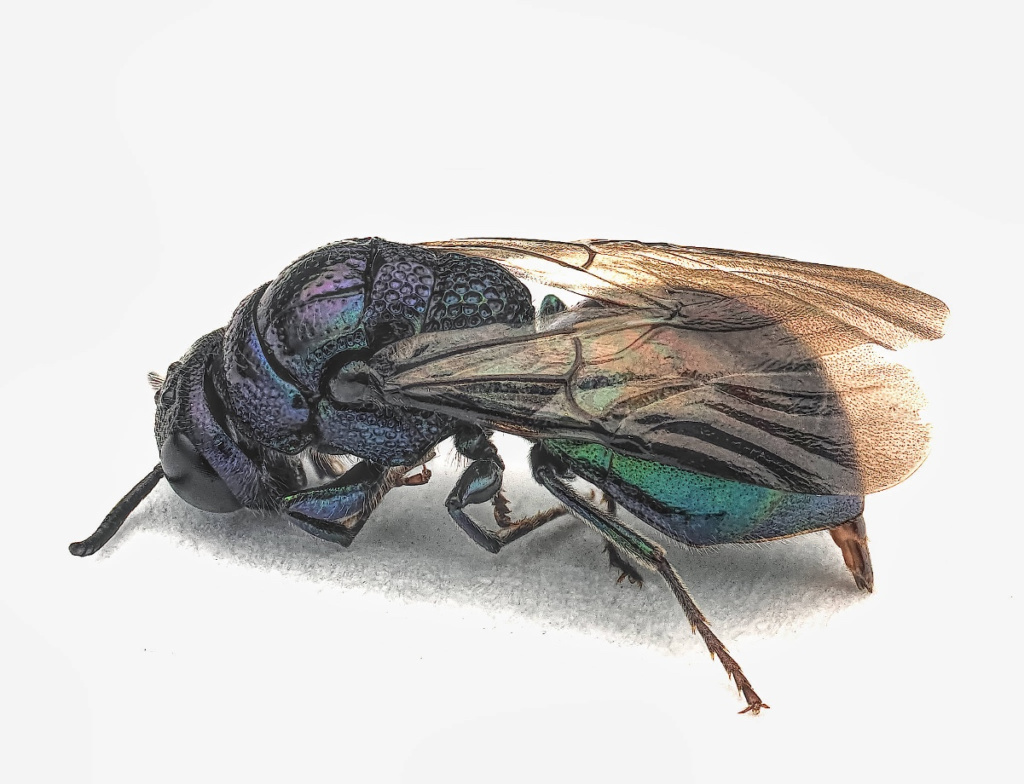
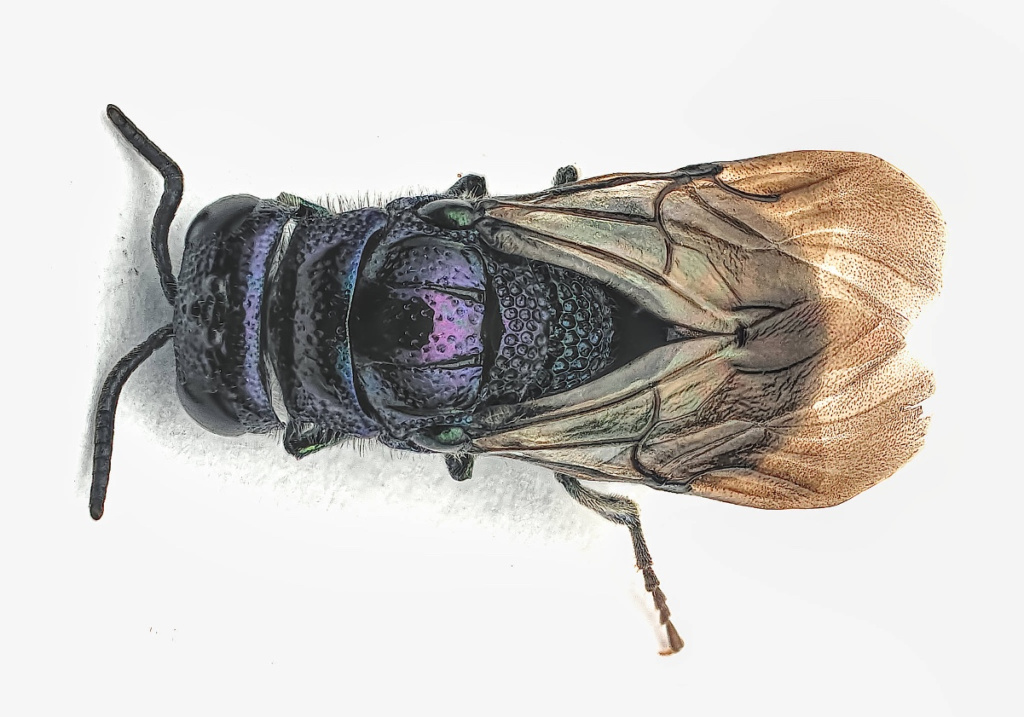
Length 3–6 mm. Mesoscutum with coarse punctures and long pubescence. Setae laterally on pronotum at least twice as long as diameter of mid-ocellus. Apical notch of T3 relatively deep. Flagellomeres short, not longer than broad.
When threatened rolls into a tight ball like a pill woodlouse, presenting an armoured exterior.
Very similar to Omalus aeneus but with coarser punctures and longer pubescence on the mesoscutum. Recent DNA work has shown that they are separate species. Large specimens can resemble small specimens of Pseudomalus violaceus, but the ventral margin of the mesopleuron is not as strongly projecting and the large punctures of the mesoscutum are not clumped postero-medially.

Unless identified by a recognised expert, a photo is required and the specimen should be examined with a microscope. In the comments box, state the key or ID method used and describe the size and identifying characters.
Wood margins and clearings, semi-open sandy areas. Adults are usually found sitting on or flying near leaves of trees and bushes, occasionally also on flowers of Apiaceae.
May to August.
Cleptoparasite of smaller digger wasps from the genera Passaloecus, Pemphredon and Psenulus. Females lay their eggs on potential prey at the host hunting grounds that they will catch and transport to their nests. The cuckoo wasp female therefore does not need to enter the host’s nest, thereby avoiding conflicts and potential injury
Widespread.
Rare, but probably under recorded due to identification difficulty.
Paukkunen, J., Berg, A., Soon, V., Ødegaard, F., & Rosa, P. (2015). An illustrated key to the cuckoo wasps (Hymenoptera, Chrysididae) of the Nordic and Baltic countries, with description of a new species. ZooKeys, (548), 1.
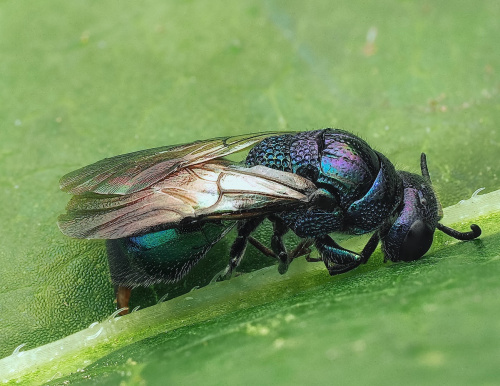 AJ Cann
Cloud Wood
24 July 2026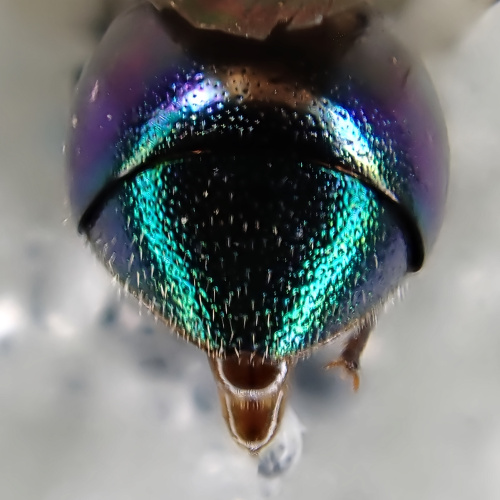 AJ Cann
Cloud Wood
24 July 2026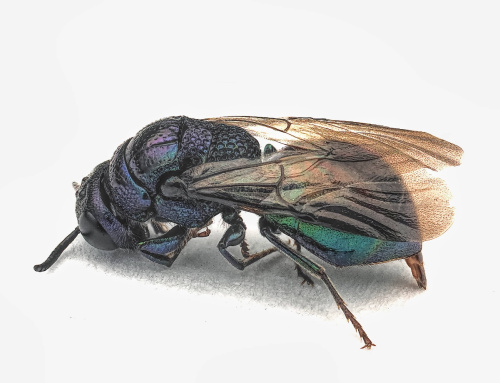 AJ Cann
Cloud Wood
24 July 2026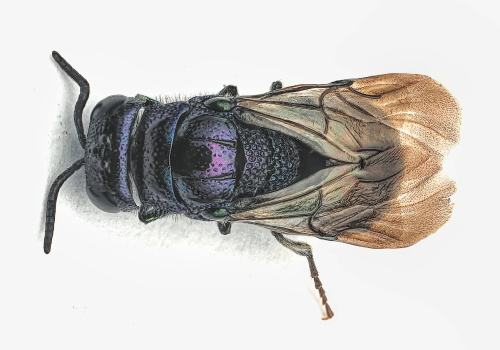 AJ Cann
Cloud Wood
24 July 2026
Leicestershire & Rutland Map
Enter a town or village to see local records
MAP KEY:
Yellow squares = NBN records (all known data)
Coloured squares = NatureSpot records: 2025+ | 2020-2024 | pre-2020
UK Map
Additional images
No additional images available for this species.