Narrow-leaved Everlasting-pea
Narrow-leaved Everlasting-pea - Lathyrus sylvestris
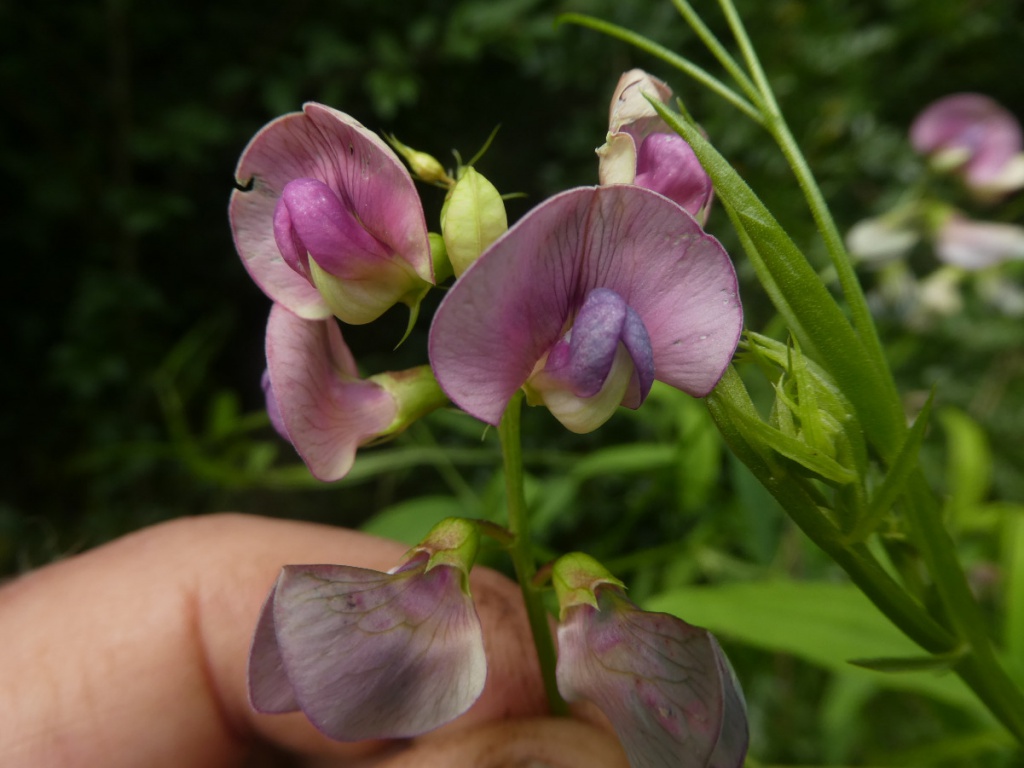
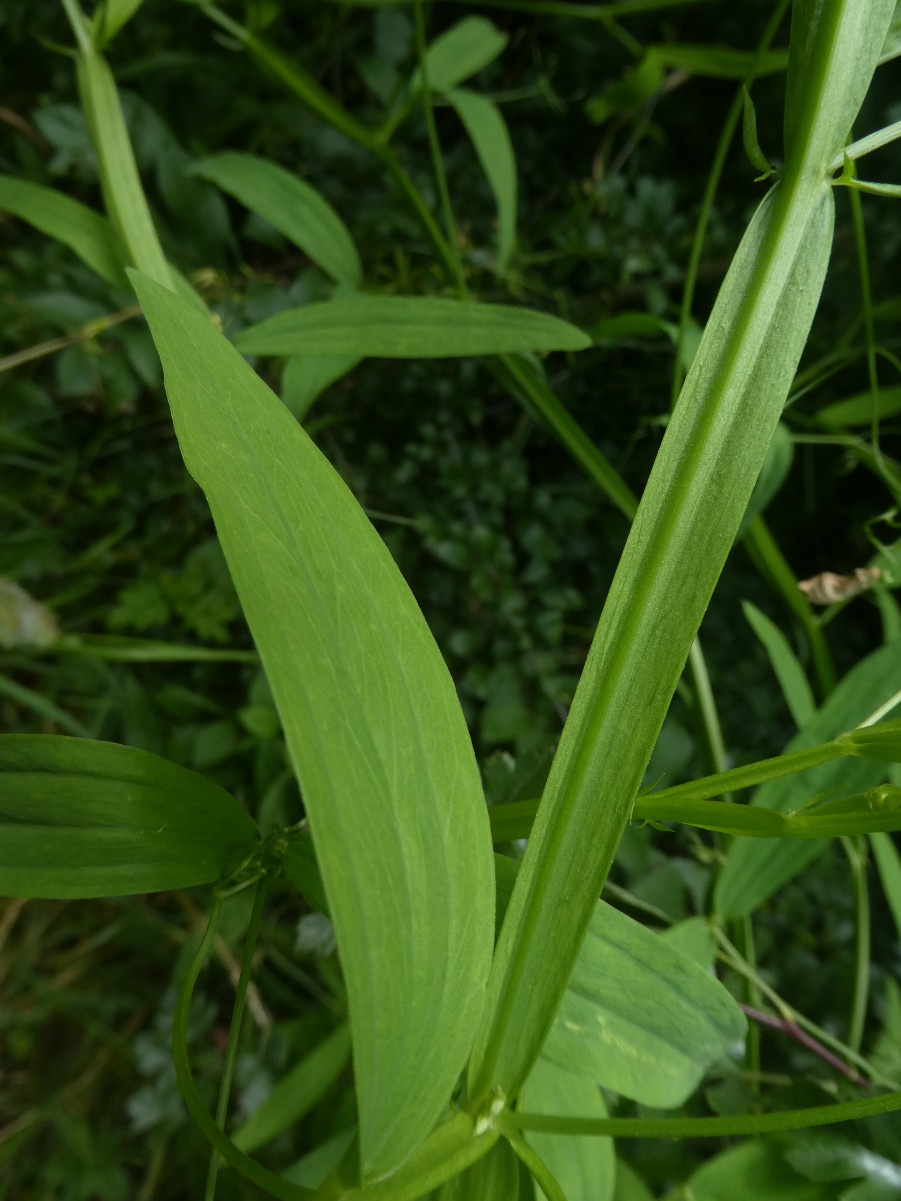
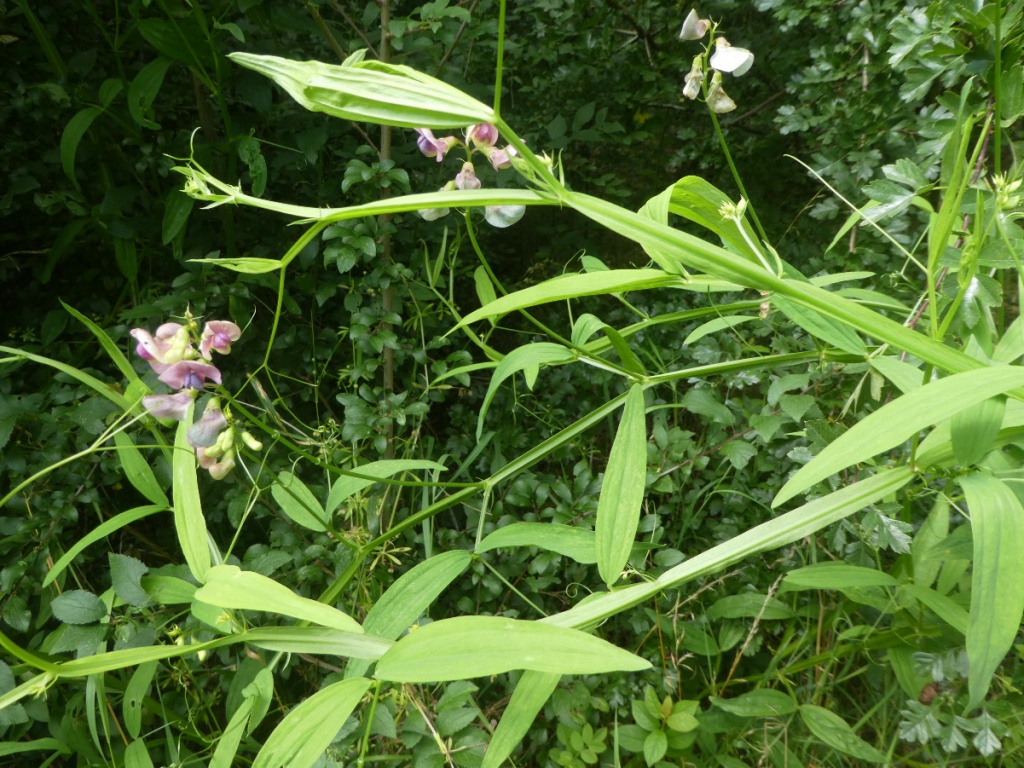
A scrambling or climbing plant to 2 metres tall with broadly-winged stems and leaves comprising a pair of narrowly lanceolate leaflets up to 15cm long with a branched tendril. Narrow stipules and calyx-teeth shorter than tube. Racemes of 4 to 10 rose-pink flowers marked with green and purple, each up to 2cm long – this species has a thin stipule compared to that of Lathyrus latifolius.
Lathyrus latifolius and L grandiflorus

Stem winged, narrow stipules less than half as wide as stem, all calyx-teeth shorter than tube
Provide photographs of the plant in habitat, plus photograph details of flowers, stipules and calyx. (RPR)
Found in hedges, wood-borders, scrub, and on rough banks and sheltered sea-cliffs. It is sometimes cultivated in gardens and can occur as an escape in habitats such as roadsides and railway banks. Away from the coast it seems to prefer calcareous soils.
In flower during June, July and August.
Perennial herb.
Widespread, but quite local in distribution and not particularly common.
Rare in Leicestershire and Rutland as a native plant, but present as a likely introduction in several sites.
In the current checklist for VC55 (Jeeves 2011) it is listed as native, but may have been introduced at Willesley Wood and elsewhere; not recorded as a probable native since 1969 at Burley Wood.
It is listed on the current VC55 Rare Plant Register (Hall and Woodward 2022) as Locally Rare (i.e. present in less than 3 sites)
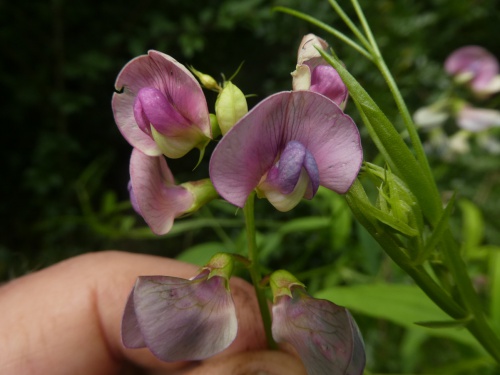 Melinda Bell
Willesley,Willesley wood
05 August 2019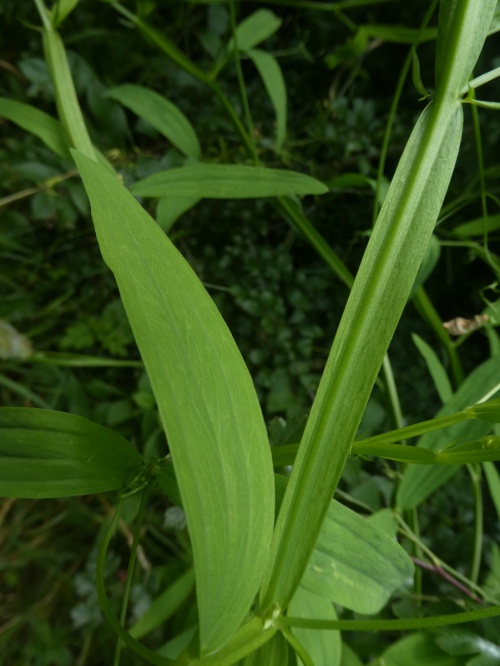 Melinda Bell
Willesley,Willesley wood
05 August 2019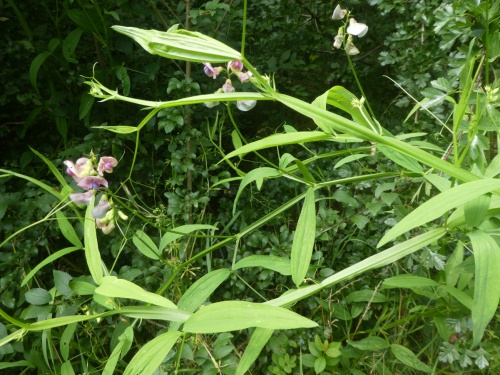 Melinda Bell
Willesley,Willesley wood
05 August 2019
Leicestershire & Rutland Map
Enter a town or village to see local records
MAP KEY:
Yellow squares = NBN records (all known data)
Coloured squares = NatureSpot records: 2025+ | 2020-2024 | pre-2020
UK Map
Additional images
No additional images available for this species.
All NatureSpot records
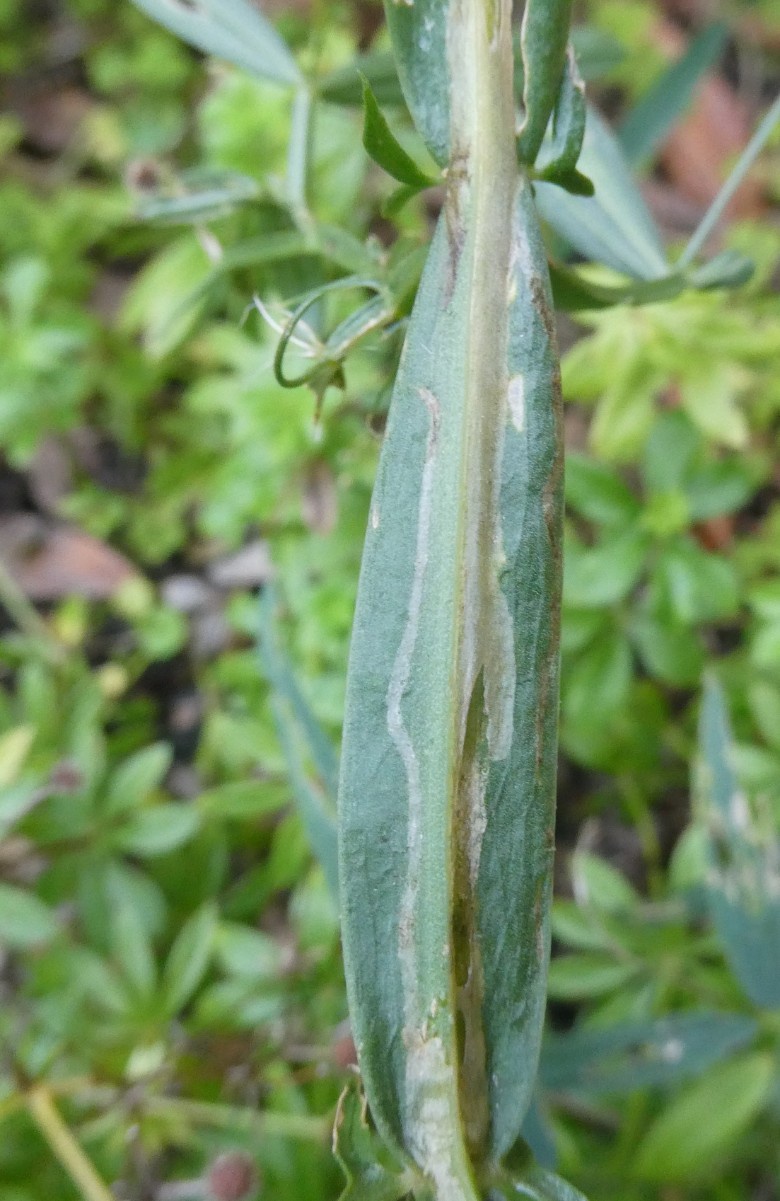
Agromyza varicornis
The larva of the Agomyzid fly Agromyza varicornis mines the winged stems and leaves of Everlasting Peas (Lathyrus latifolius and Lathyrus sylvestris). The long white mine is in the wing of the stem, but often starts in leaf (though not always).