Mystacides azurea
Mystacides azurea
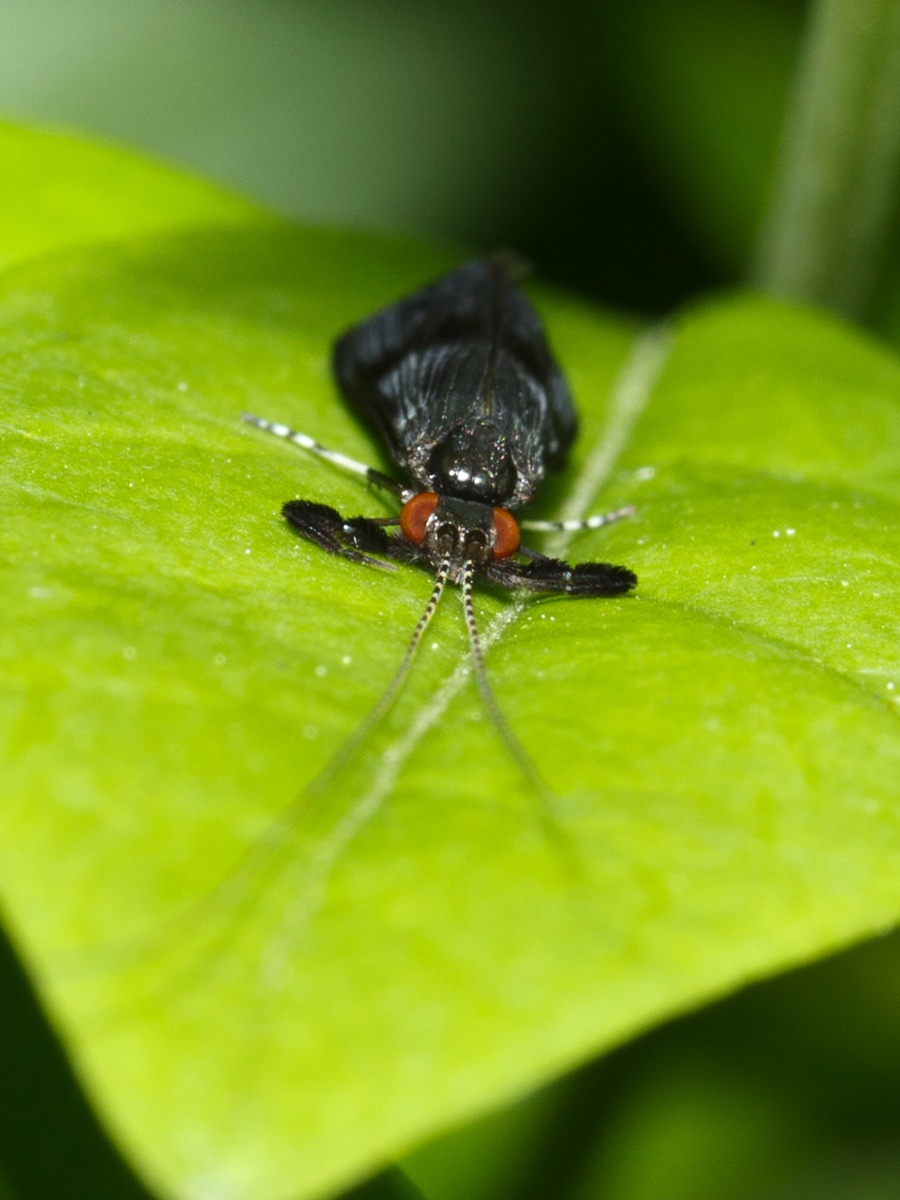
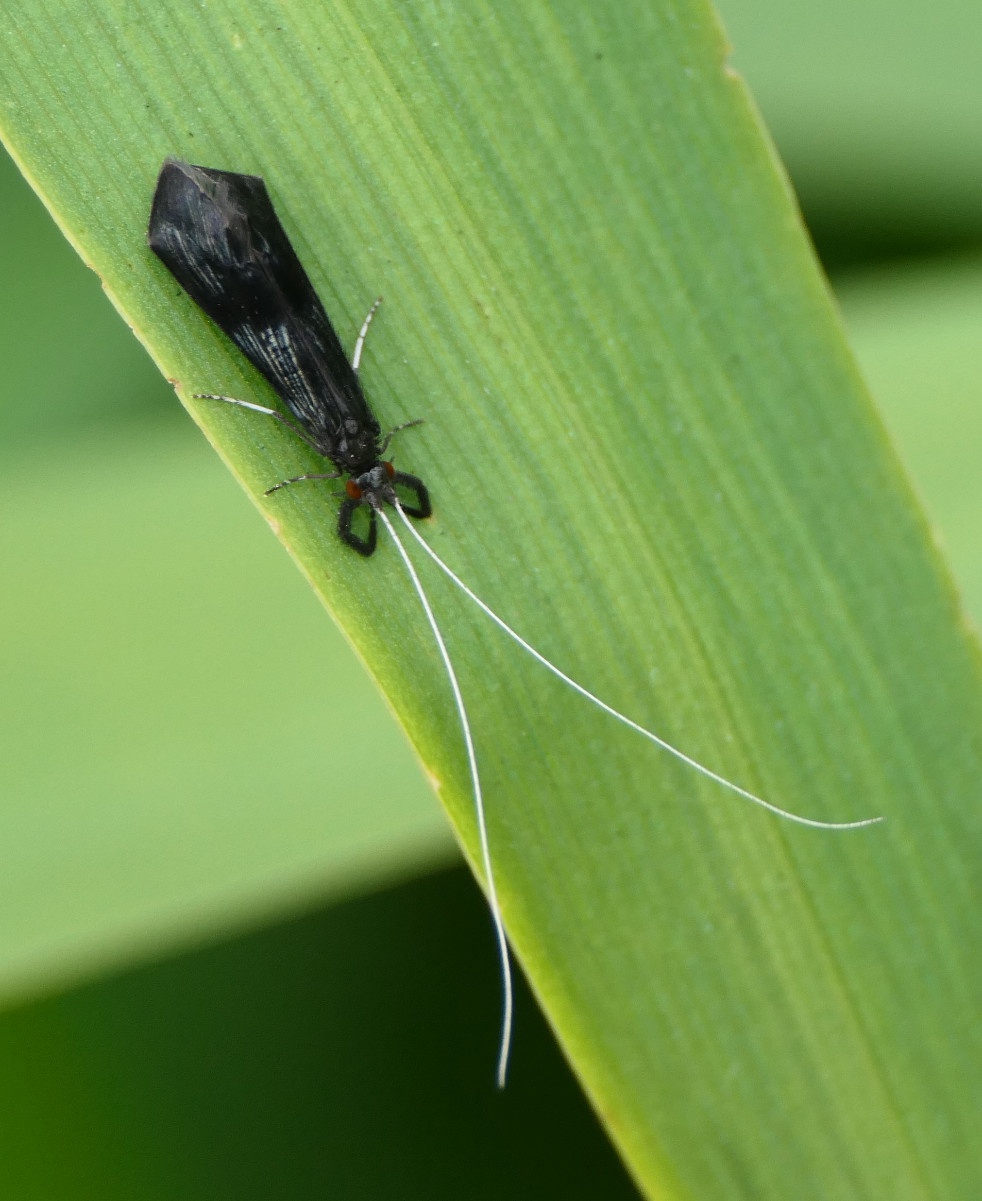
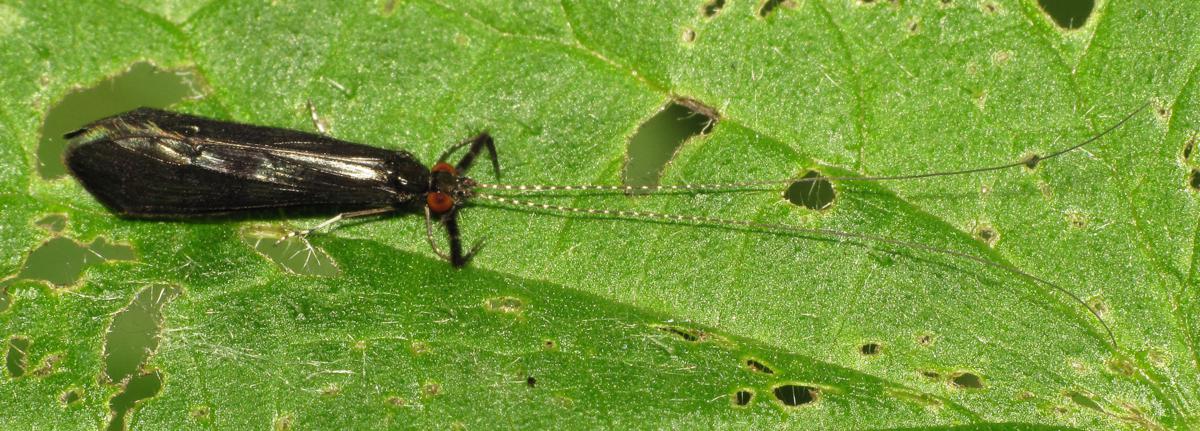
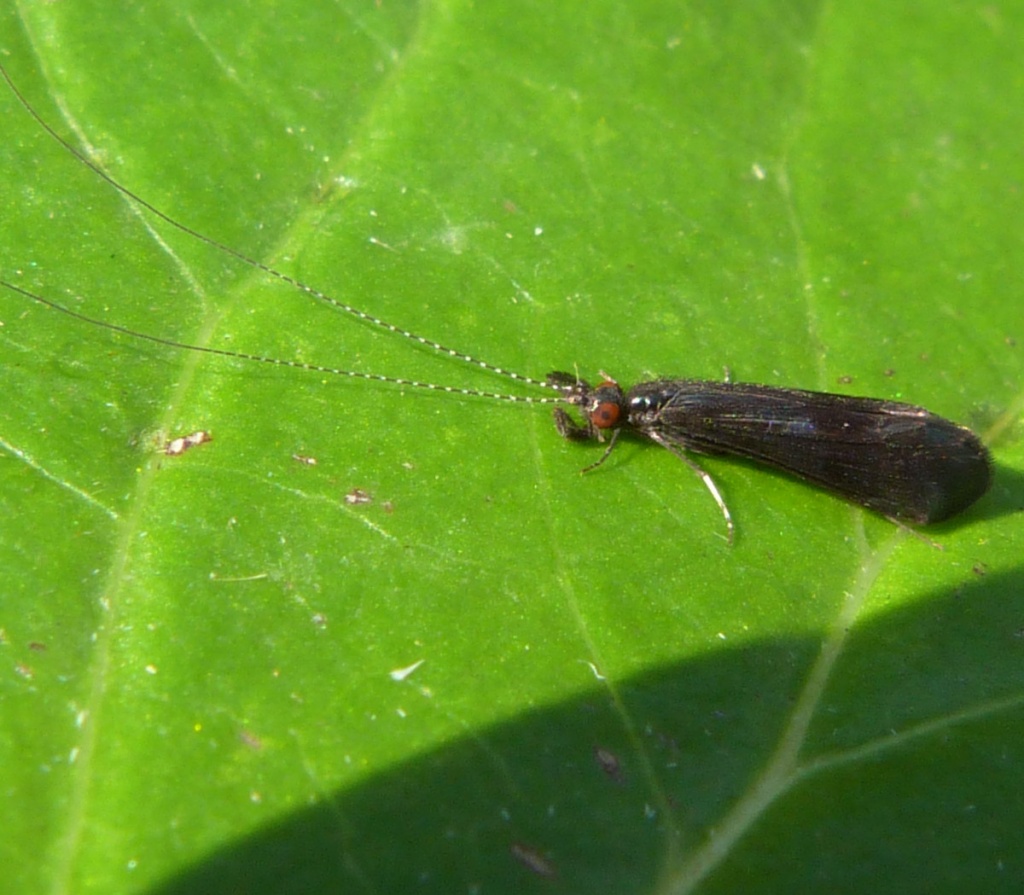
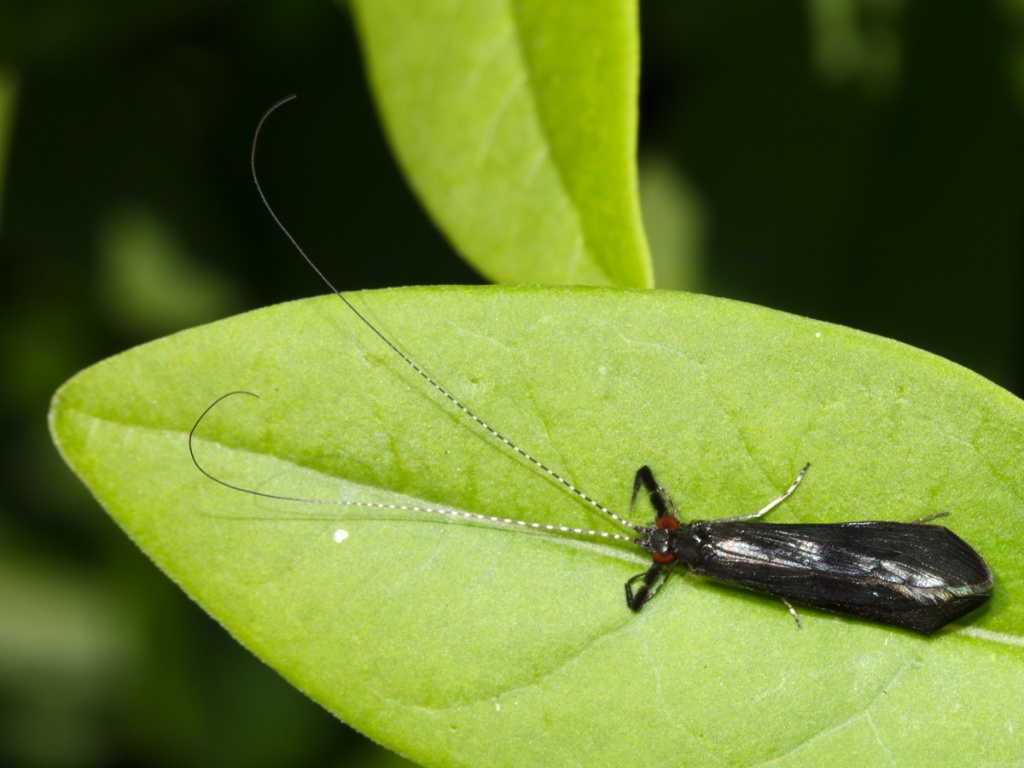
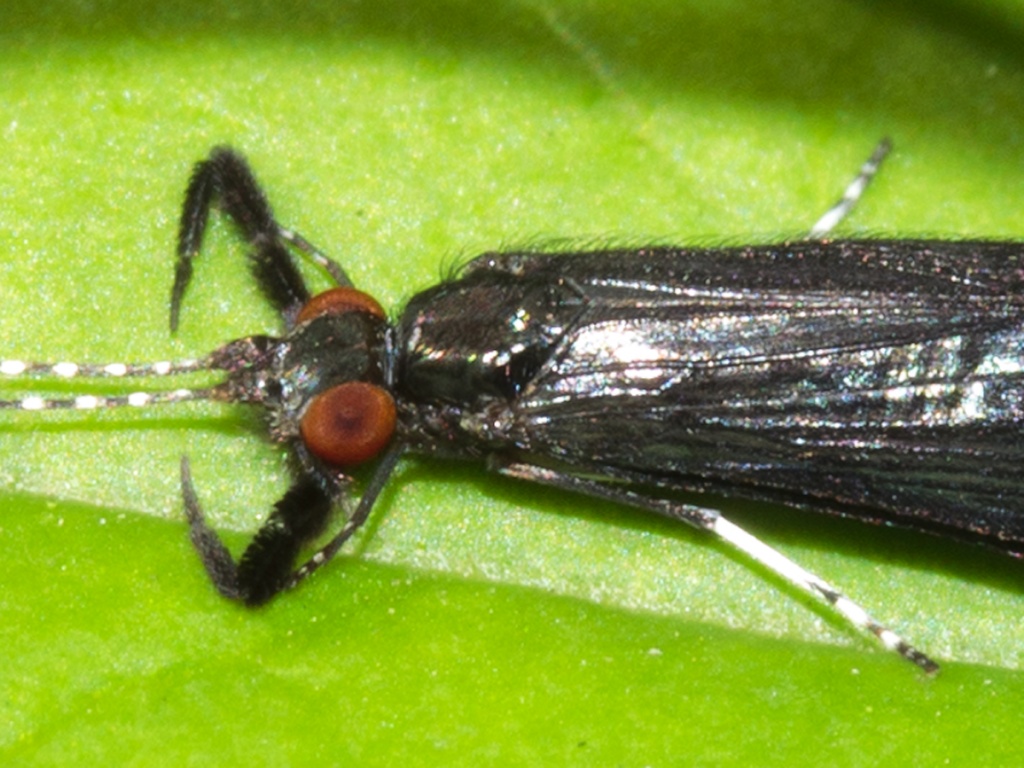
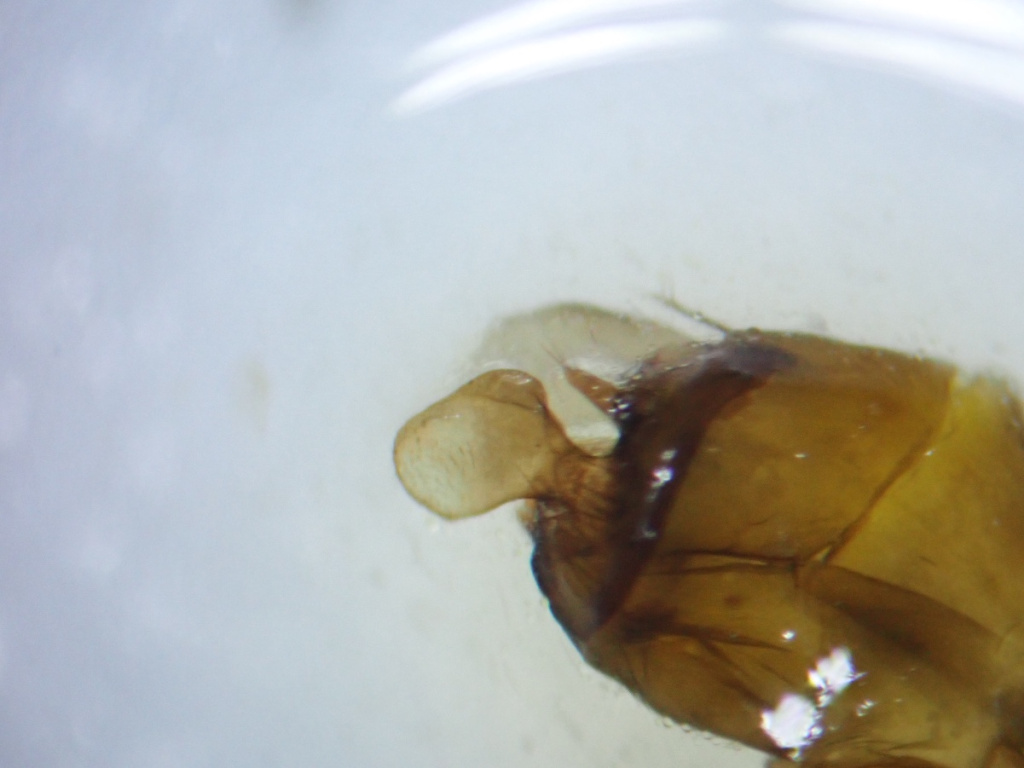
The adult is about 6 to 9 mm long and has bluish black wings which have a characteristic fold at the distal extremity, making the rear of the wing look very angular when viewed fom above. They are called 'longhorn' because of their antennae which are threadlike and extremely long, approximately twice the length of the body. The males have distinctly larger eyes than the females and have distinctive large and hairy maxillary palps used in mating.
Mystacides nigra - matt black wings.

Streams, rivers, canals lakes and large ponds. Probably best seen when males aggregate in swarms above the water surface of lakes and slowly running water for mating.
May to September.
M. azurea performs a swarming flight with vertical zig zag movements. A female, when approaching a swarm, is caught by a male which holds her around the abdomen with its long maxillary palps and both use their wings to fly in tandem to the shore where they copulate. The aquatic stages are found in shallow marginal areas of lakes and ponds or in the slowly moving tracts of streams. They are omnivorous feeding on plant detritus as well as other arthropods.
Quite common and widespread in Britain
Fairly frequent in Leicestershire and Rutland.
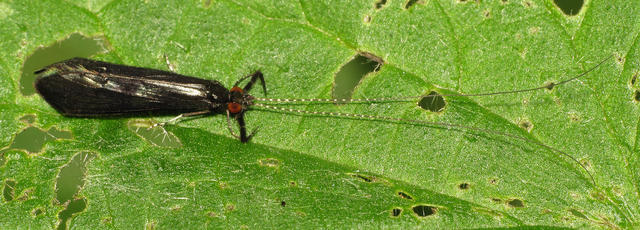 David Gould
Narborough Bog NR
16 June 2010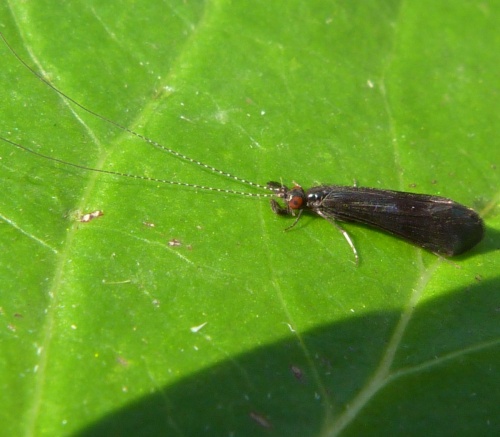 Graham Calow
Sapcote garden1
26 July 2012
male - specimen examined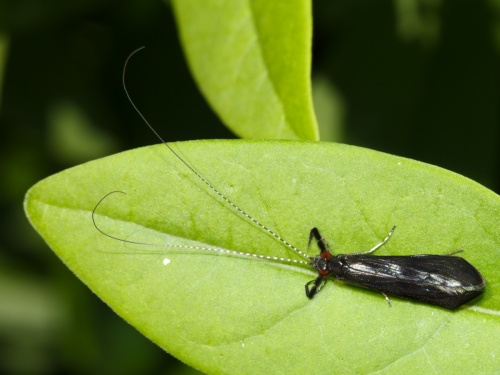 HAPeacock
River Soar - St Marys Mill
14 June 2012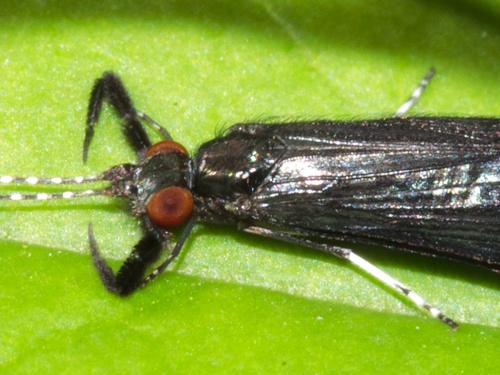 HAPeacock
River Soar - St Marys Mill
14 June 2012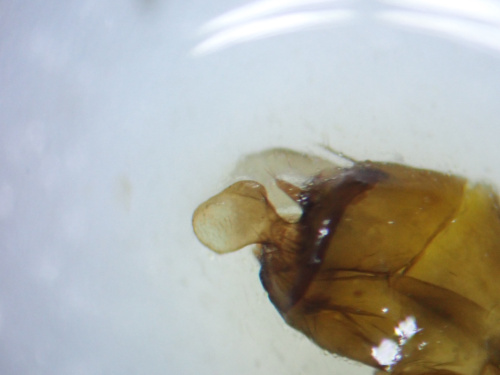 AJ Cann
Knighton
20 June 2024
Photo Adam Poole
Leicestershire & Rutland Map
Enter a town or village to see local records
MAP KEY:
Yellow squares = NBN records (all known data)
Coloured squares = NatureSpot records: 2025+ | 2020-2024 | pre-2020
UK Map
Additional images