Mycetophagus populi
Mycetophagus populi
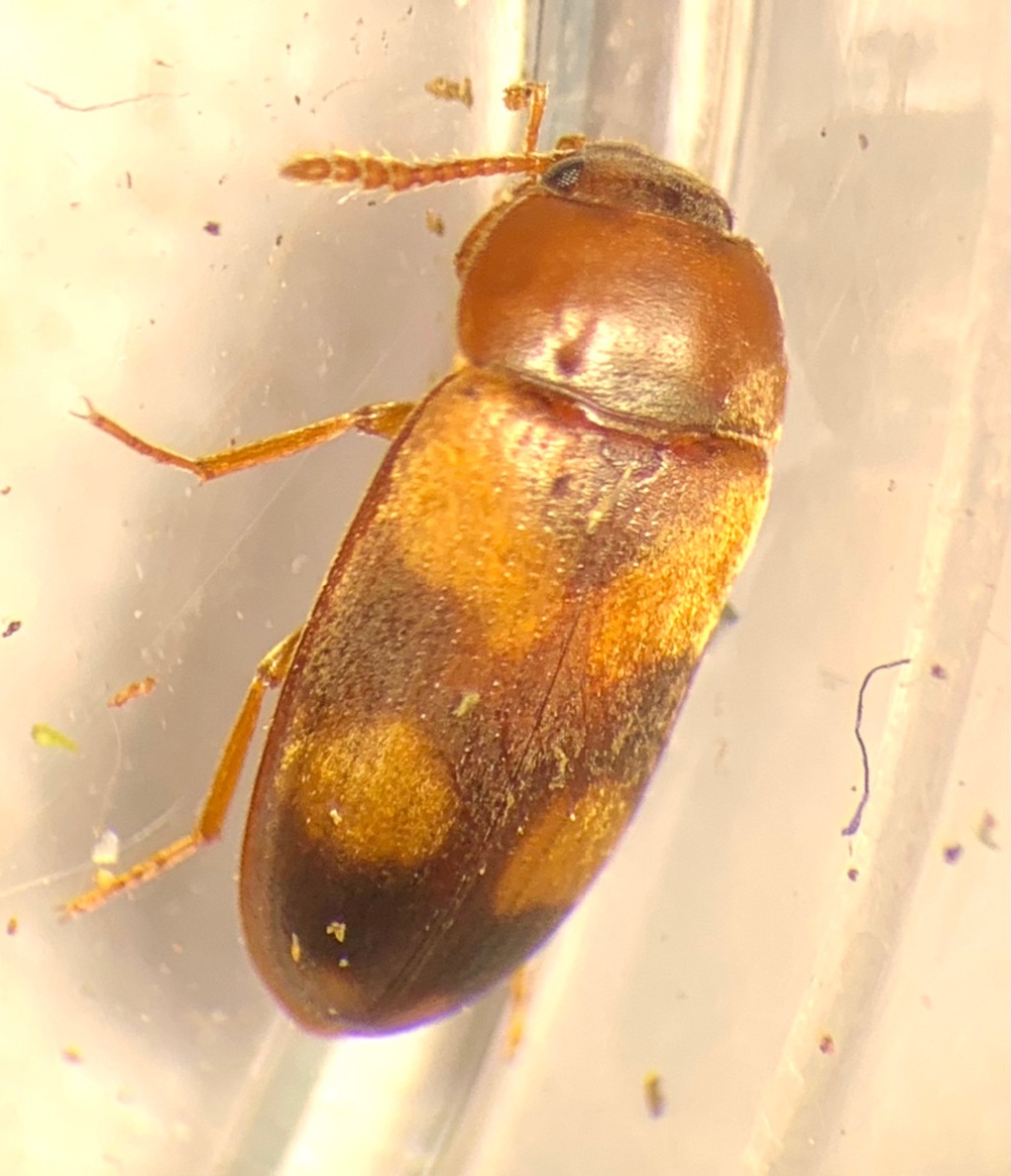
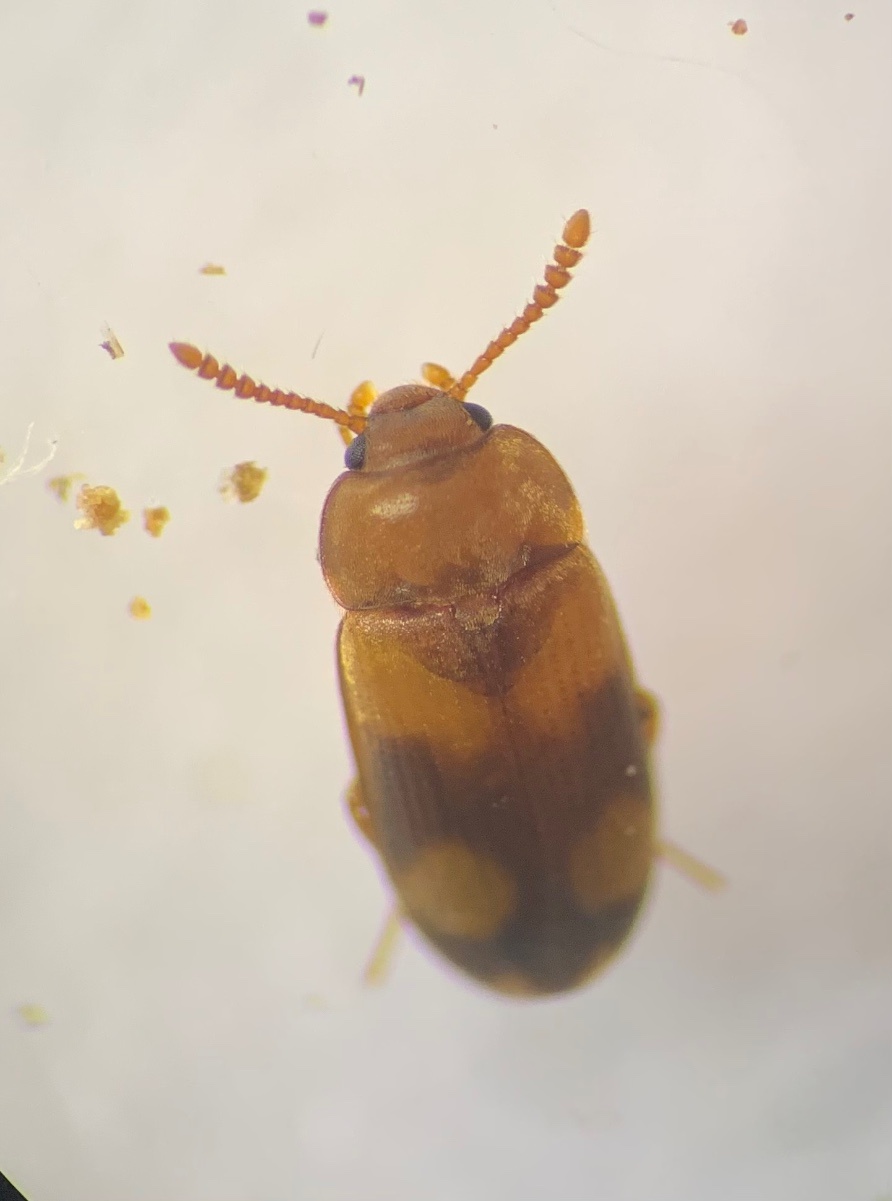
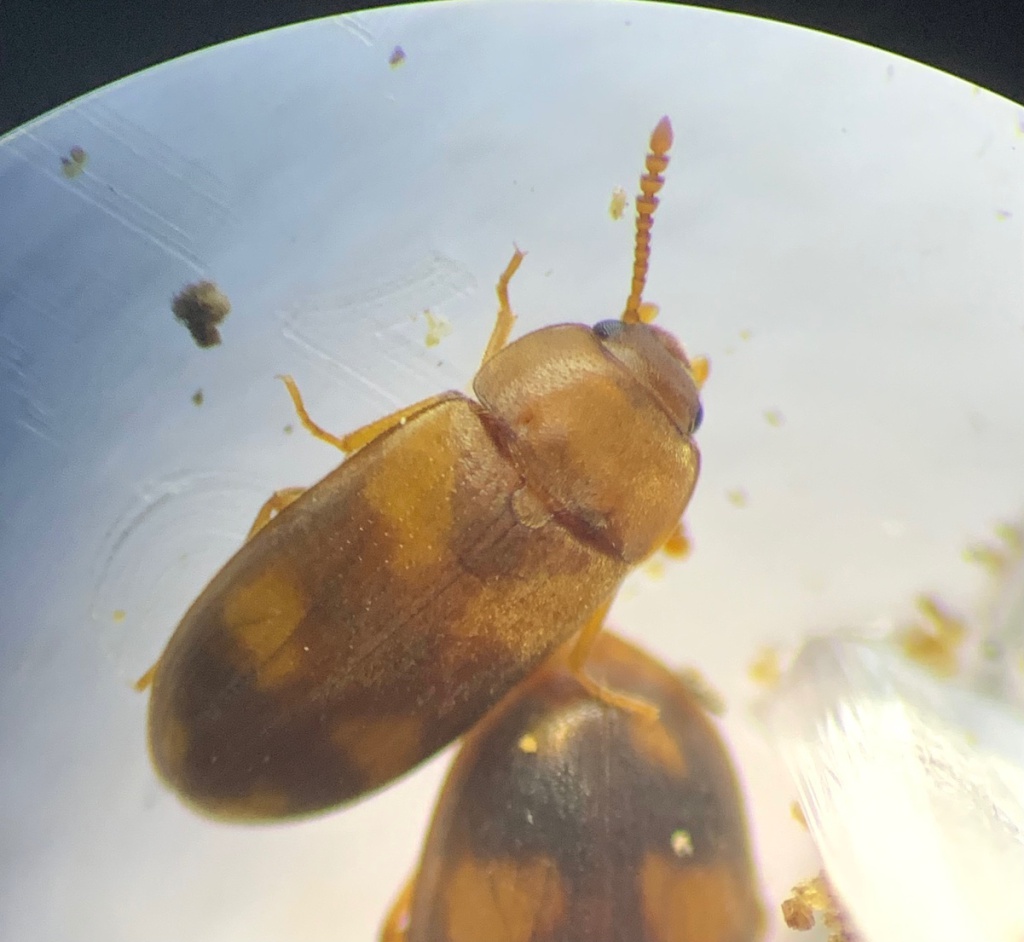
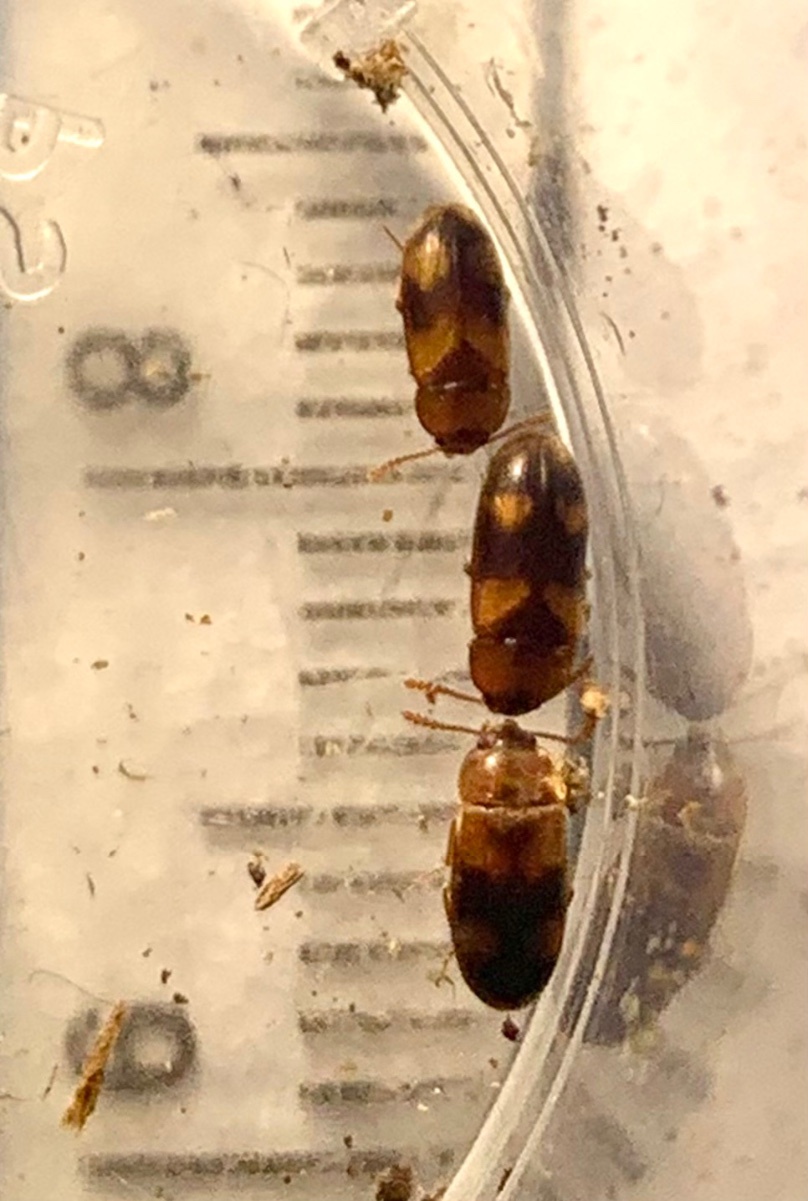
4.0 to 4.5 mm. Distinguished from other members of the genus by the dense and very fine dorsal punctures and pubescence, and the form of the terminal segment of the maxillary palp which is distinctly broader than the penultimate segment. The shape is long-oval with the head much narrower than the pronotum and the pronotum and elytra separately rounded, colour variable but usually pale orange-brown, usually with the head a little darker than the elytra, and with two broad transverse paler bands to each elytron; one across the basal quarter and across the apical third although they vary in size and intensity.

Unless identified by a recognised expert, a photo is required, and the specimen should be examined with a microscope. In the comments box, state the key or ID method used and describe the size and identifying characters.
Adults occur in open deciduous woodland, wooded parkland and on large solitary trees in grassland areas. They usually occur under loose bark and among decaying damp wood in hollows on stumps.
Most frequently recorded during the winter and spring.
The species is thought to be univoltine with pupation occurring late in the year and the resulting adults overwintering and reproducing the following spring.
In the UK it is widespread across the south of England and the midlands though absent in the West Country and known from only a very few records in the south of Wales, it is very infrequently recorded and classified as nationally scarce.
Rare in Leicestershire and Rutland. The record near Stanton under Barden in 2023 is the first for VC55.
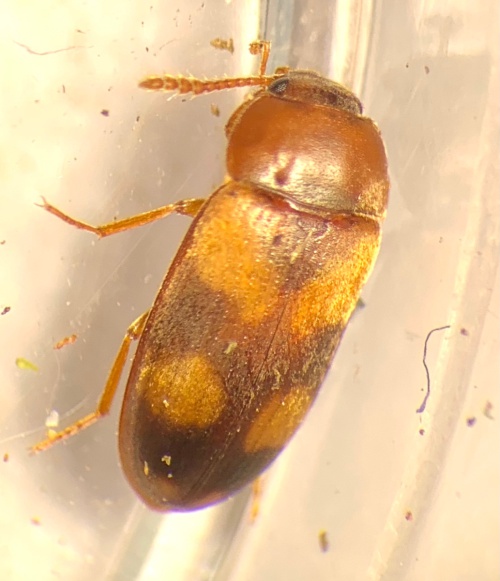 Kay Dinsdale
Horsepool Grange, Stanton-under-Bardon.
09 April 2023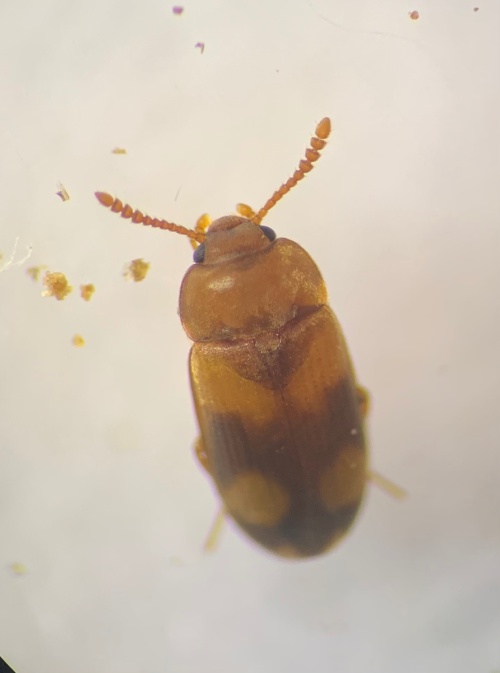 Kay Dinsdale
Horsepool Grange, Stanton-under-Bardon.
09 April 2023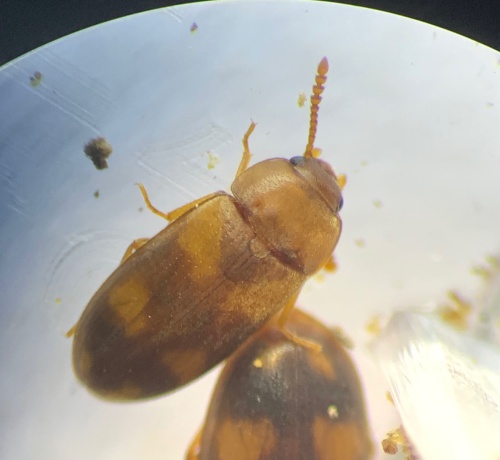 Kay Dinsdale
Horsepool Grange, Stanton-under-Bardon.
09 April 2023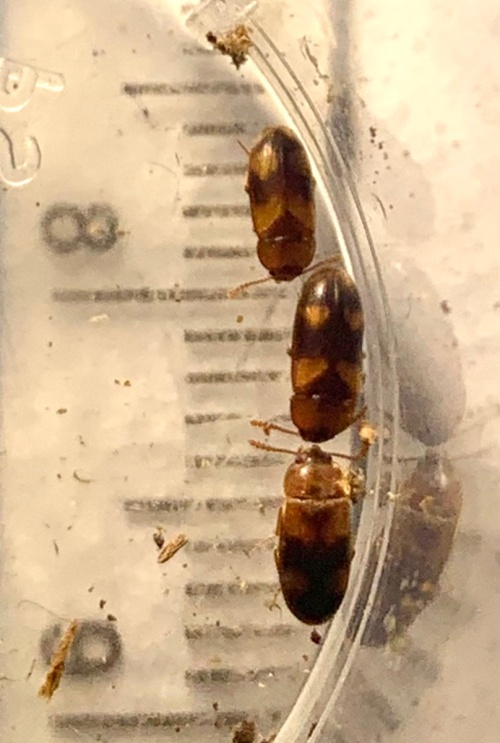 Kay Dinsdale
Horsepool Grange, Stanton-under-Bardon.
09 April 2023
Leicestershire & Rutland Map
Enter a town or village to see local records
MAP KEY:
Yellow squares = NBN records (all known data)
Coloured squares = NatureSpot records: 2025+ | 2020-2024 | pre-2020
UK Map
Additional images
No additional images available for this species.