Mompha miscella
Mompha miscella
Brown Cosmet
Brown Mompha
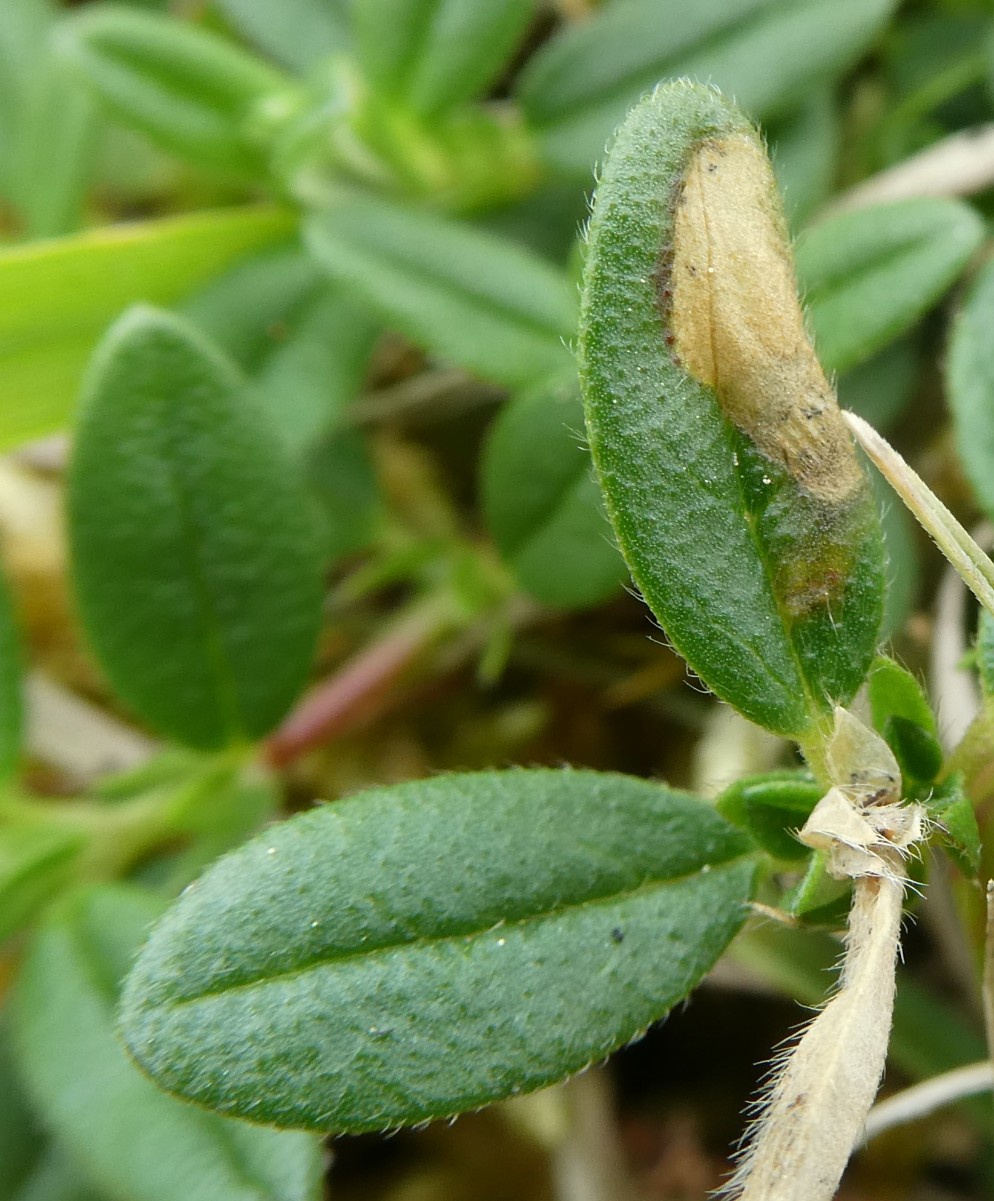
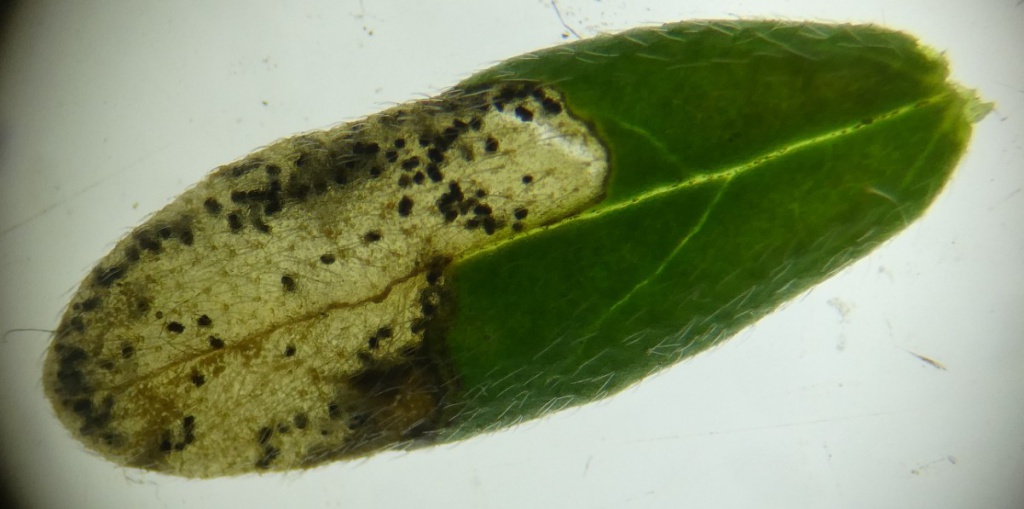
Wingspan 7 to 9 mm. Rather more russet brown than other members of the genus. The larva mines the leaves of various species of Rock-rose. Initially a gallery is made and filled with frass. It is widened abruptly into a blotch, which absorbs the gallery and may occupy the whole leaf. The frass may then be dispersed or heaped in the blotch.
Adult  leaf mine
Photograph the mine and note the host species
Where its foodplant Rockrose (Helianthemum) occurs.
The adults fly in two generations, primarily May to mid-June, and mid-July and August, but specimens can be found any time from late April to early October. Adults can often be taken in a fine meshed net by day, if the foodplants or nearby low vegetation are disturbed.
The larva mines the leaves of Helianthemum. A larva may mine more than one leaf before it vacates the mine to pupate in a silk cocoon among leaf litter. The larval stage occurs in October-April and in June-July.
Rather local in distribution and usually confined to limestone and chalk areas in southern Britain, but extending onto slightly acid soils in N.E. England and E. Scotland. It may be frequent where its foodplants occur. Its absence from Ireland is accounted for by the extreme rarity there of Helianthemum. In the Butterfly Conservation's Microlepidoptera Report 2011 this species was classified as local.
Rare in Leicestershire and Rutland, the Sapcote record of 23rd August 2016 is the first for VC55. L&R Moth Group status = D (rare or rarely recorded).
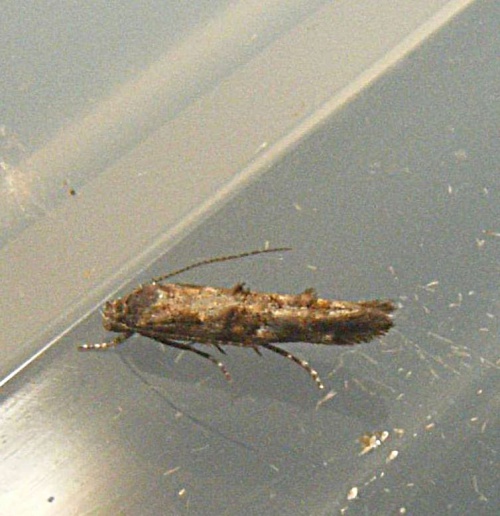 Graham Calow
Sapcote garden1
23 August 2016
1st for VC55 - Confirmed by gen det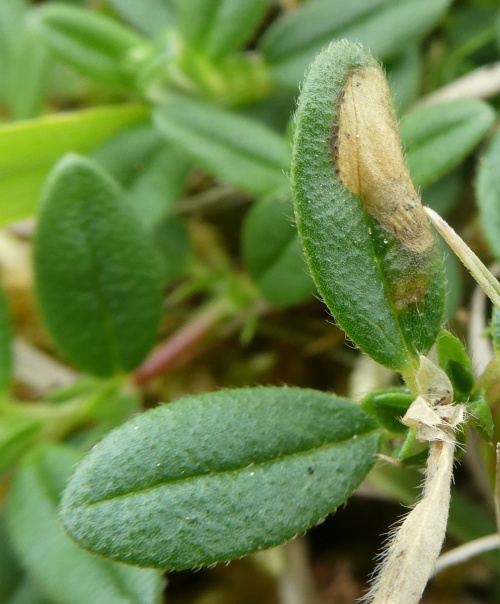 sue
sue
Bloody Oaks Quarry
02 May 2023
on Rock-rose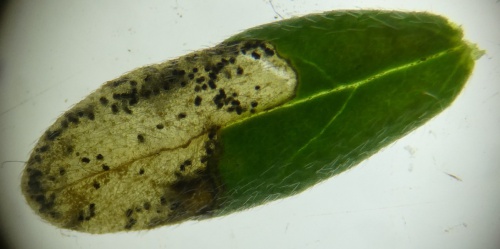 sue
sue
Bloody Oaks Quarry
02 May 2023
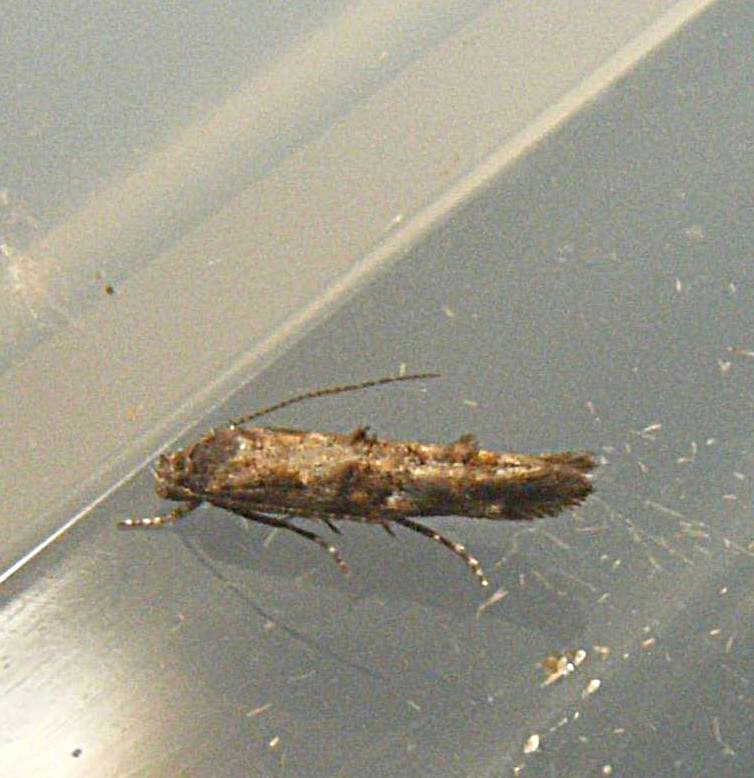
Leicestershire & Rutland Map
Enter a town or village to see local records
MAP KEY:
Yellow squares = NBN records (all known data)
Coloured squares = NatureSpot records: 2025+ | 2020-2024 | pre-2020
UK Map
Additional images
No additional images available for this species.