Mole Cricket
Mole Cricket - Gryllotalpa gryllotalpa
The body length is about 4.5 cm, females being slightly larger than males. The cricket is chestnut brown with a silky shimmer and yellowish underside and is covered with fine velvety hairs. The forelegs are powerful and modified for digging. The antennae are long, with well over 30 segments. The elytra are short, and the wings are transparent and netted with veins. They are folded into pleats and seldom used as the cricket normally remains below the ground, but the species can fly (usually at night). The males can be distinguished from the females by the open vein area in the forewing known as the 'harp' while the females lack the external ovipositor that is possessed by other crickets.

Unless identified by a recognised expert, a photo is required. If the photo doesn't show the key ID features, then in the comments box describe the size and identifying characters you have observed.
Burrows into deep, loose damp soil at the edges of wetlands and seepages. Confined naturally in Britain to water meadows and wet heathlands, but sometimes imported in consignments of vegetables.
Can be seen in most months of the year but spends most of its time below ground.
Three-year life cycle. Feeds on vegetable material, insect larvae and earthworms.
Widespread, but local and rather infrequently recorded.
Rarely recorded in Leicestershire and Rutland.
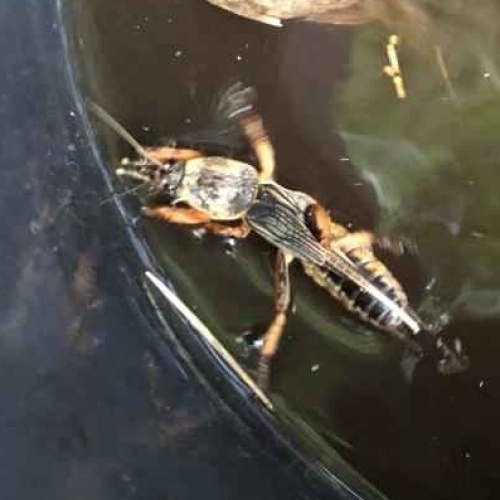 Gavin Bennett
Cotesbach, Leicestershire
12 January 2023
Leicestershire & Rutland Map
Enter a town or village to see local records
MAP KEY:
Yellow squares = NBN records (all known data)
Coloured squares = NatureSpot records: 2025+ | 2020-2024 | pre-2020
UK Map
Additional images
No additional images available for this species.