Marsh Thistle
Marsh Thistle - Cirsium palustre
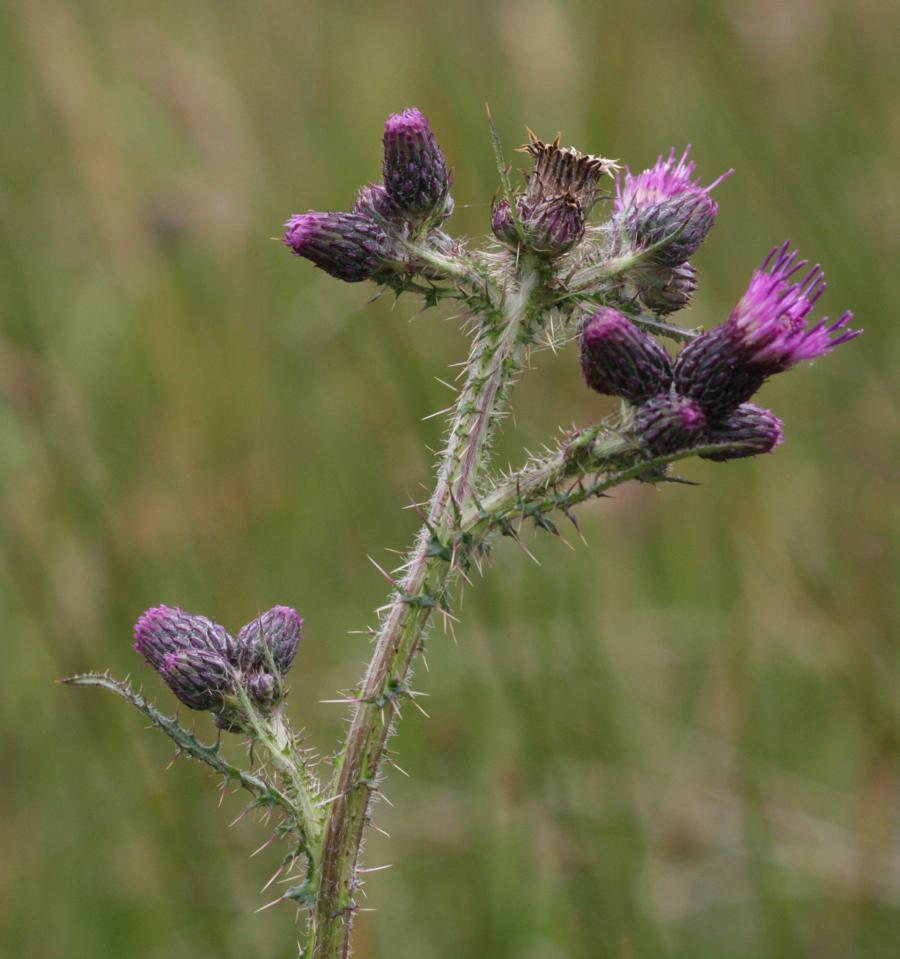
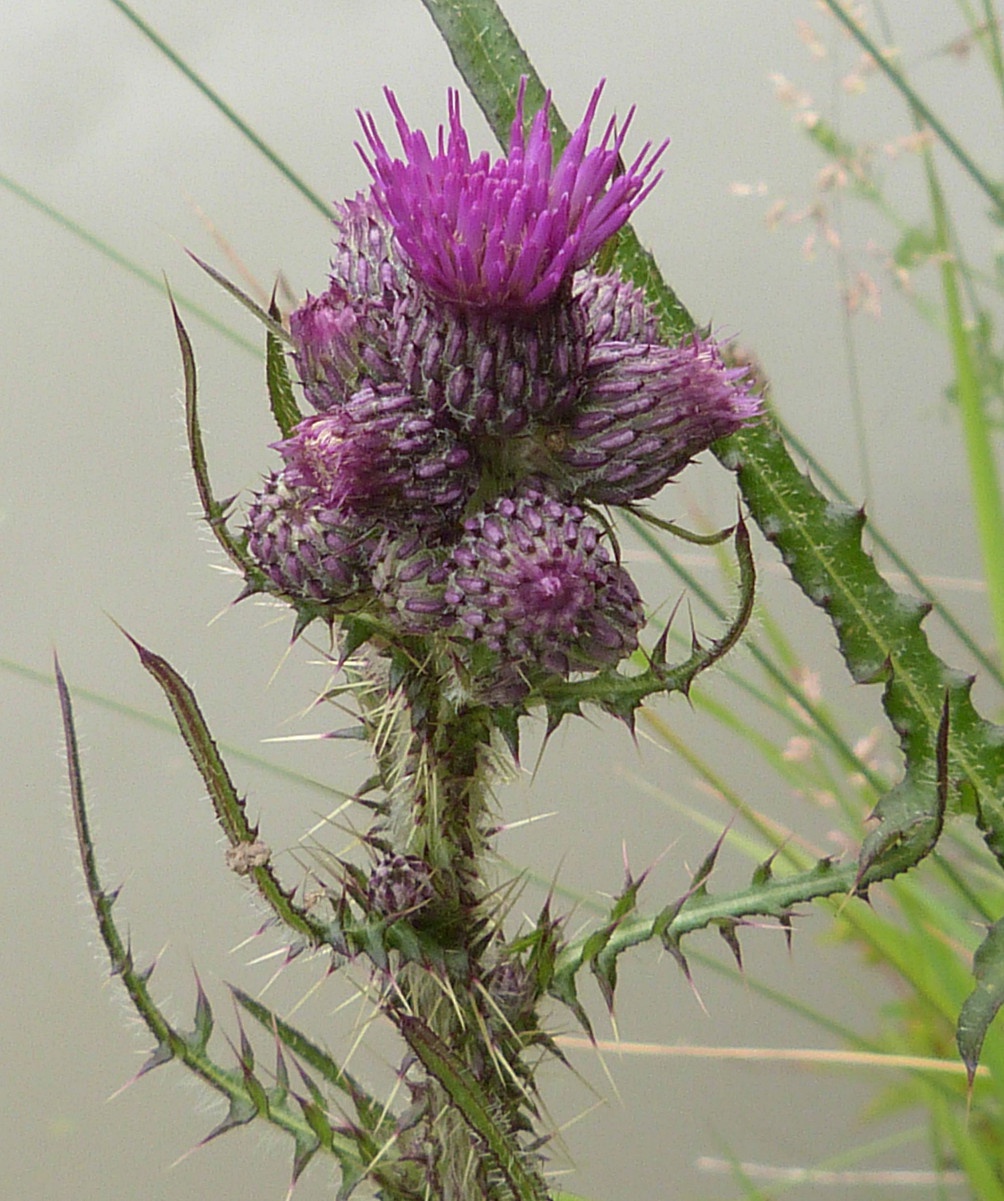
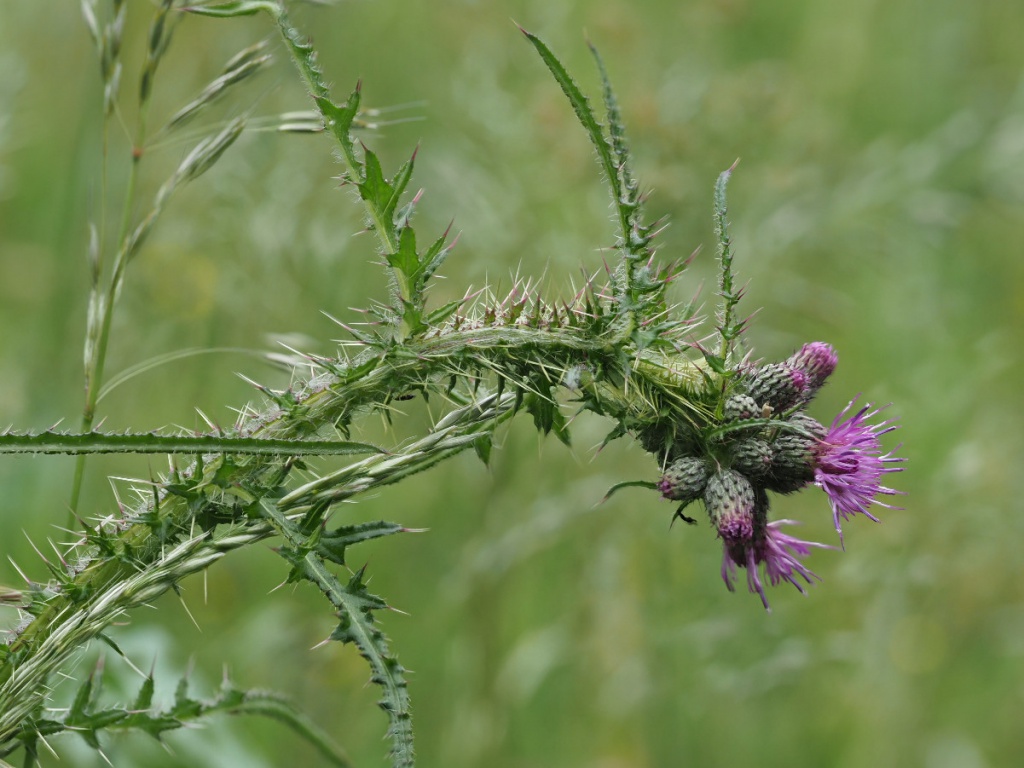
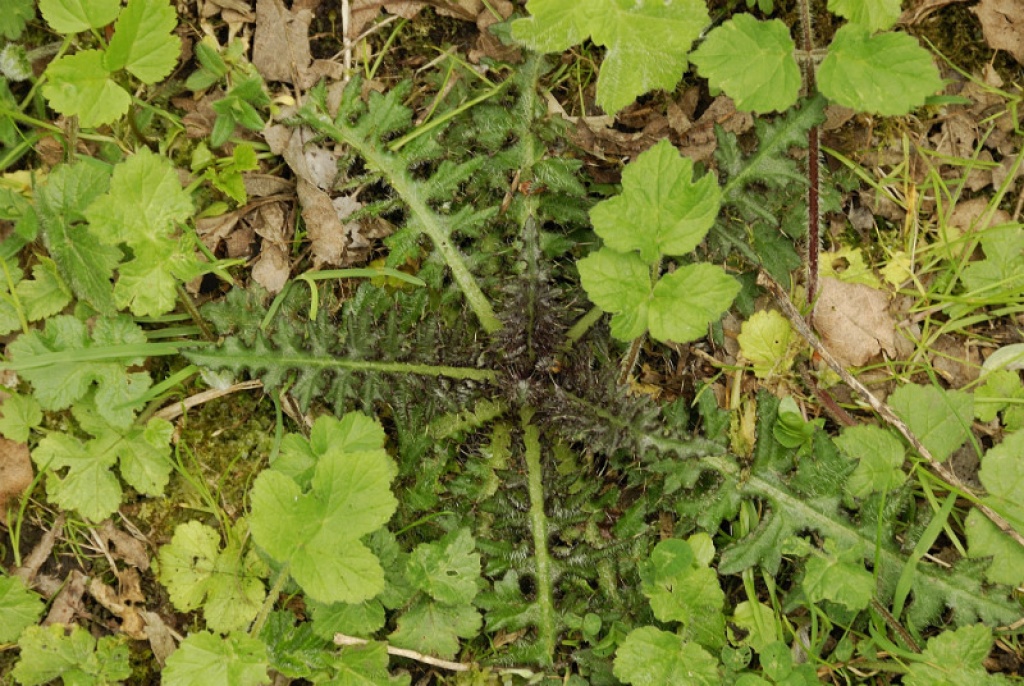
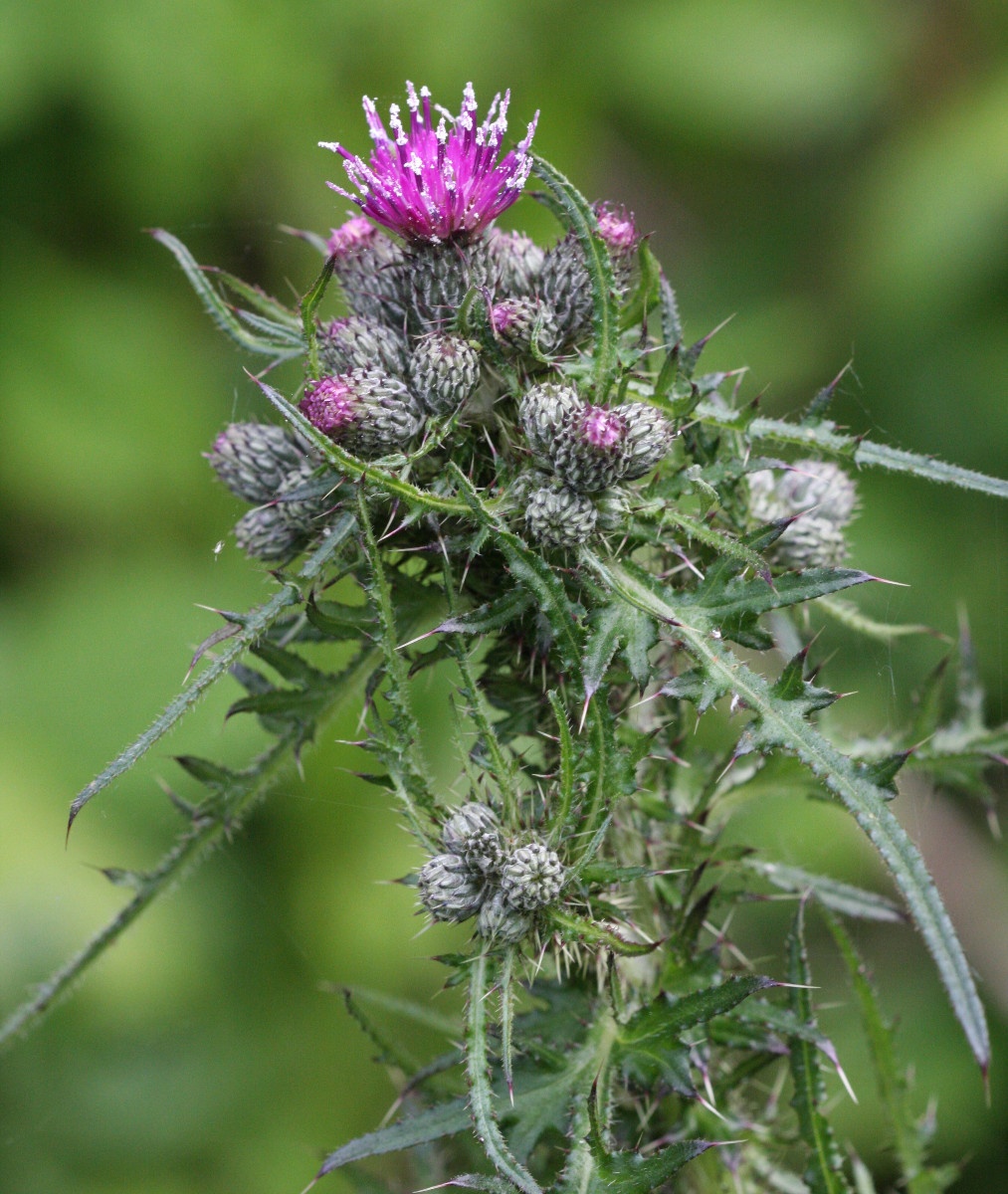
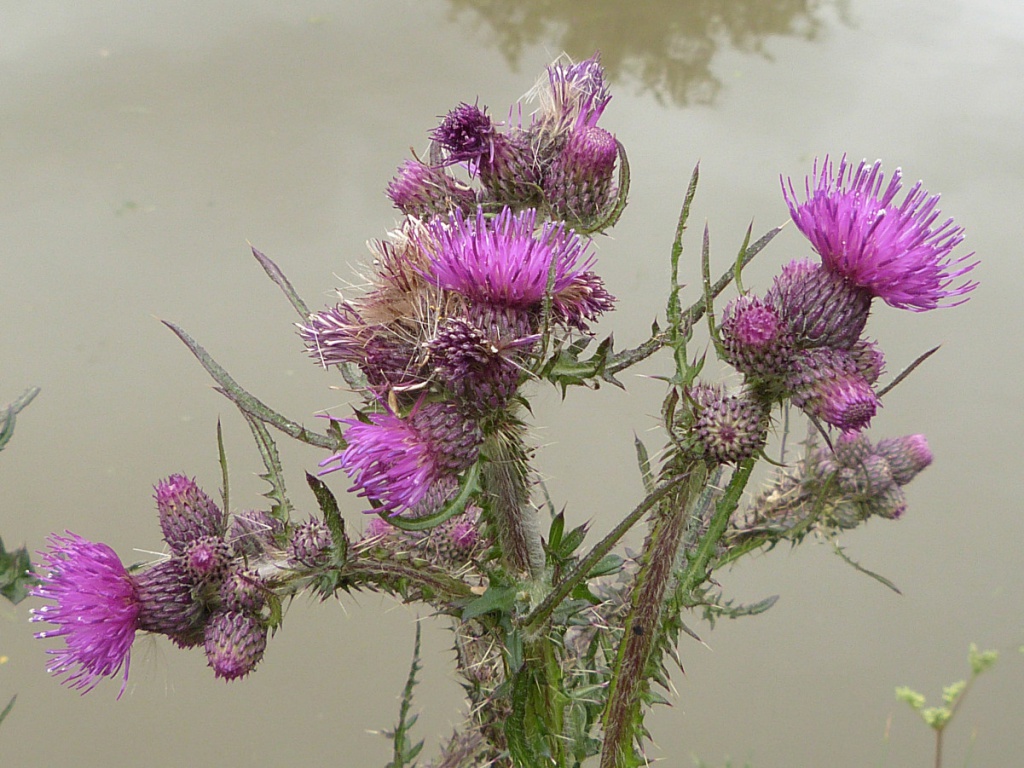
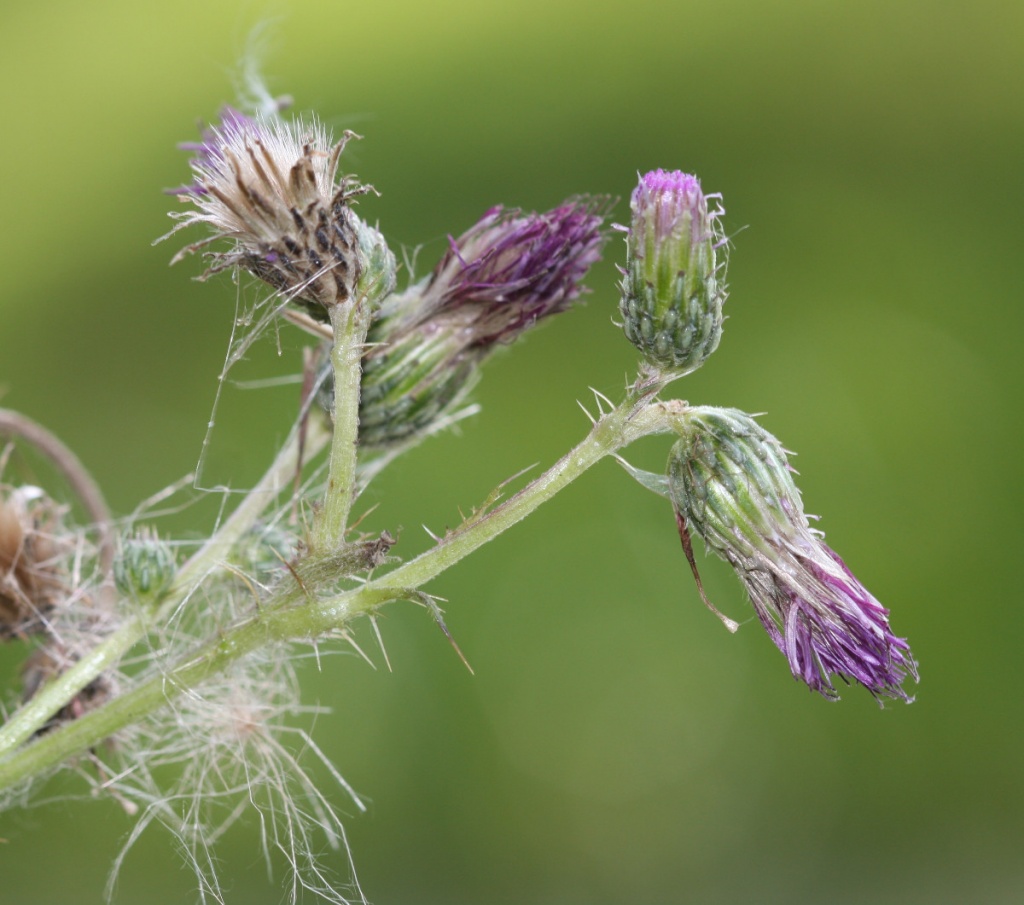
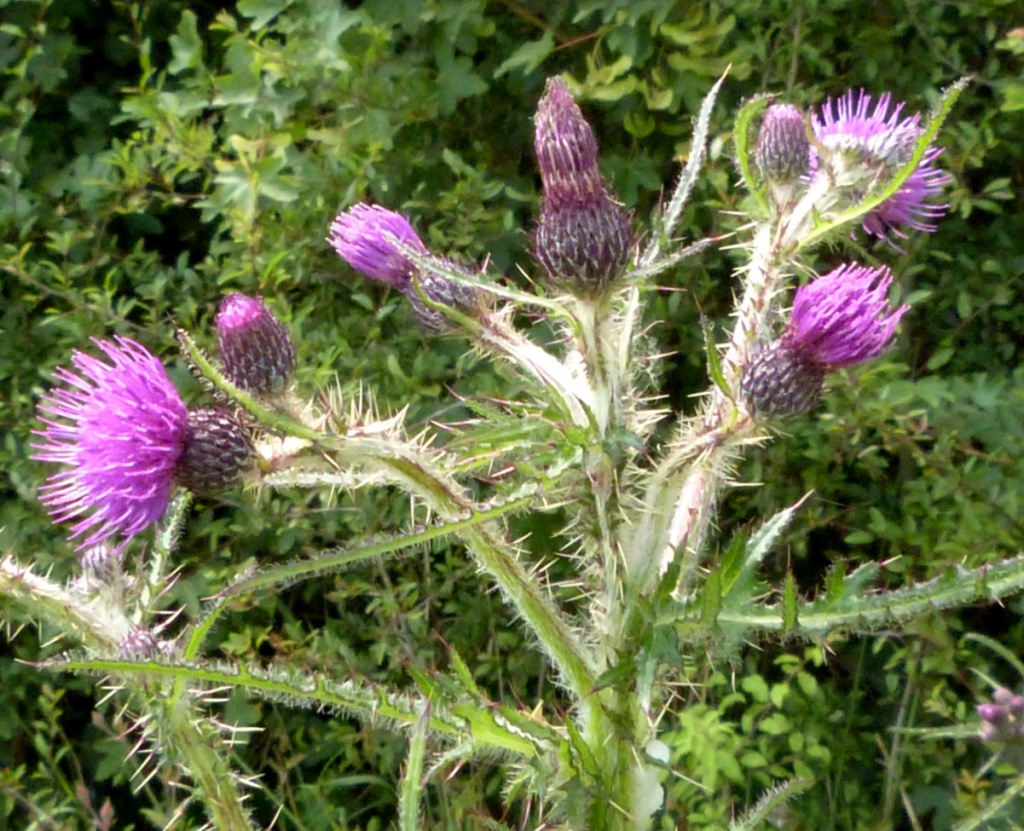
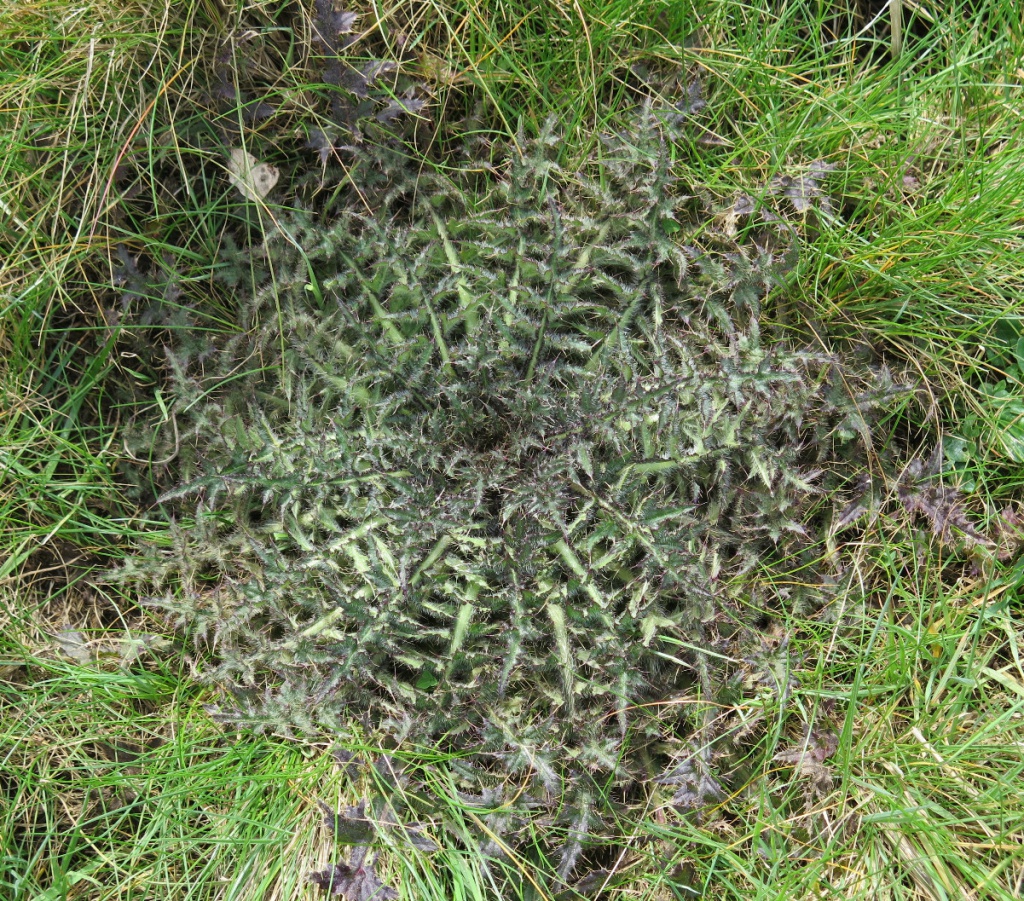
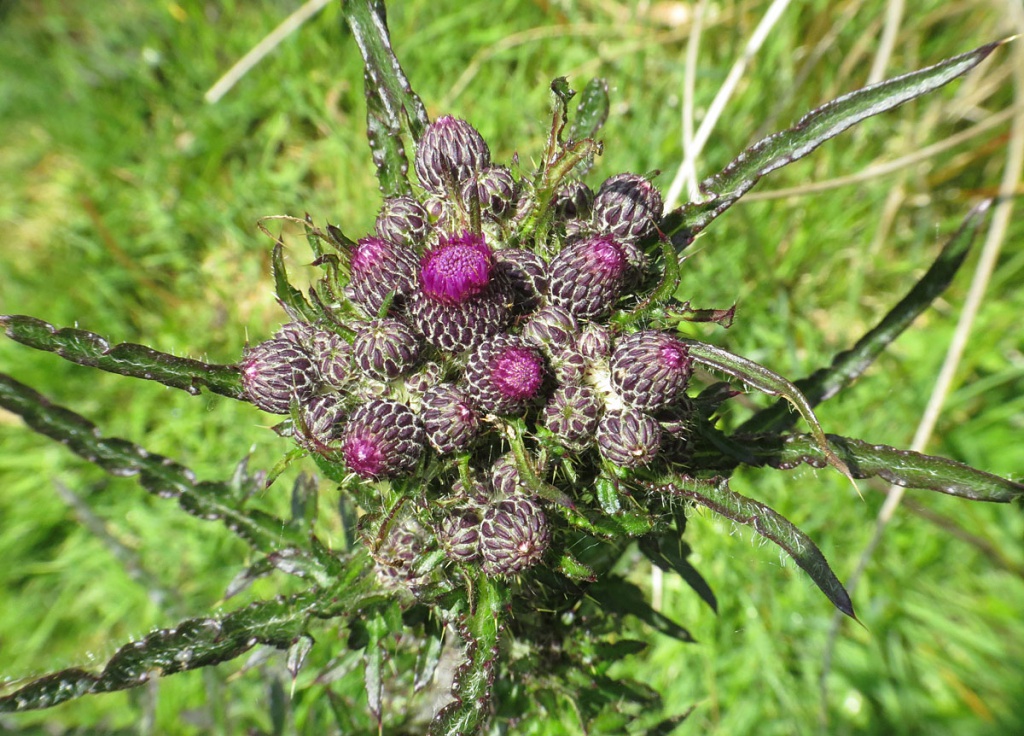
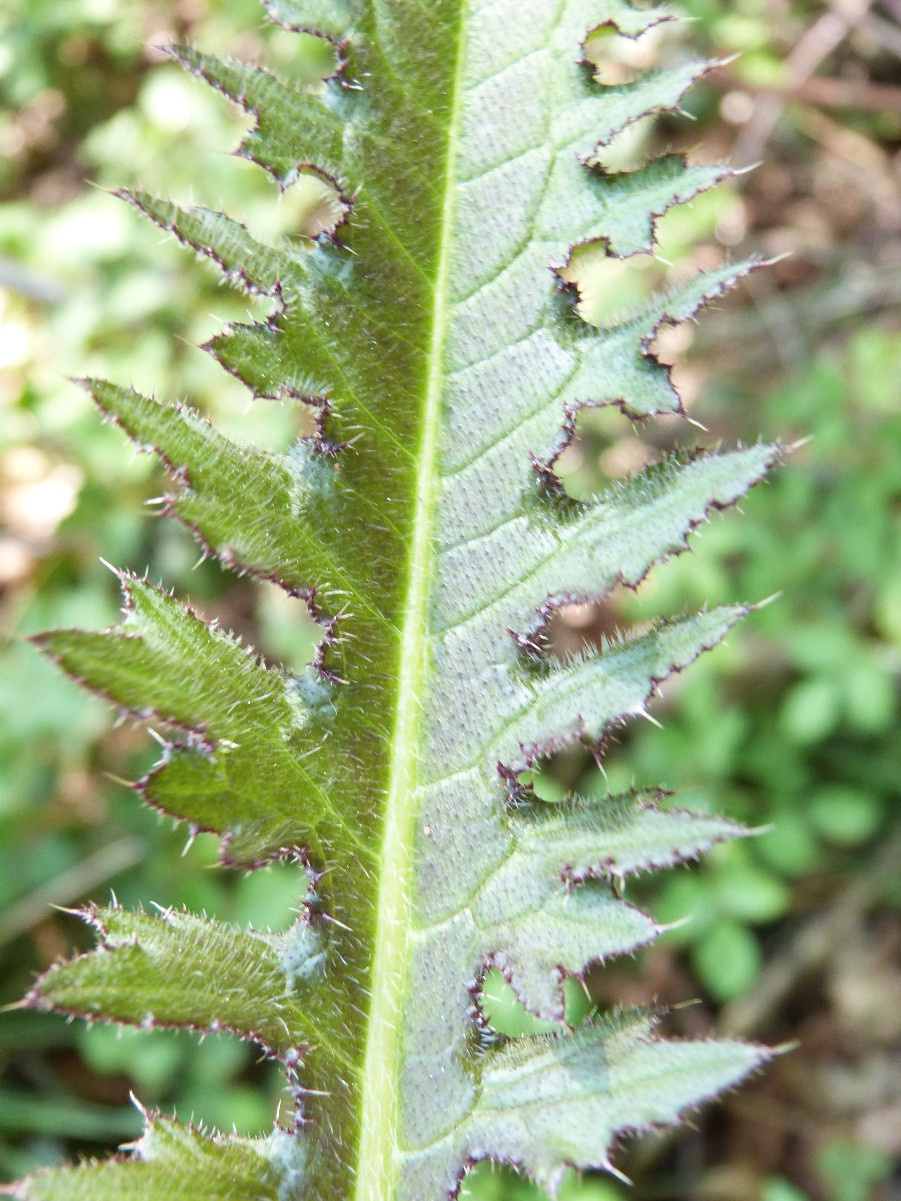
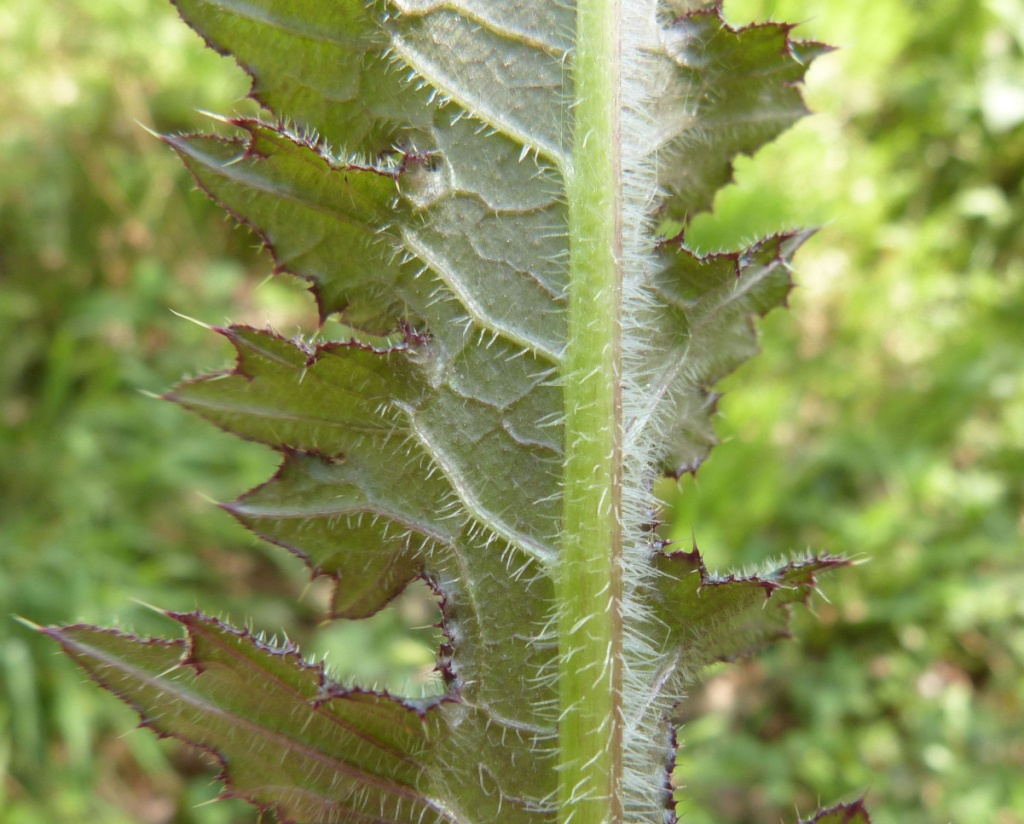
Medium to tall plant to 1.2 metres, stems spiny-winged to the top, sometimes branched above. Leaves linear lanceolate, pinnately lobed and very spiny, mostly unstalked, hairy above. Flowerheads usually purple, 10 to 12 mm in clusters of 2 to 8. Flower bracts purple tinged, erect, weakly spiny.
Welted Thistle (Carduus crispus) - but check the pappus hairs

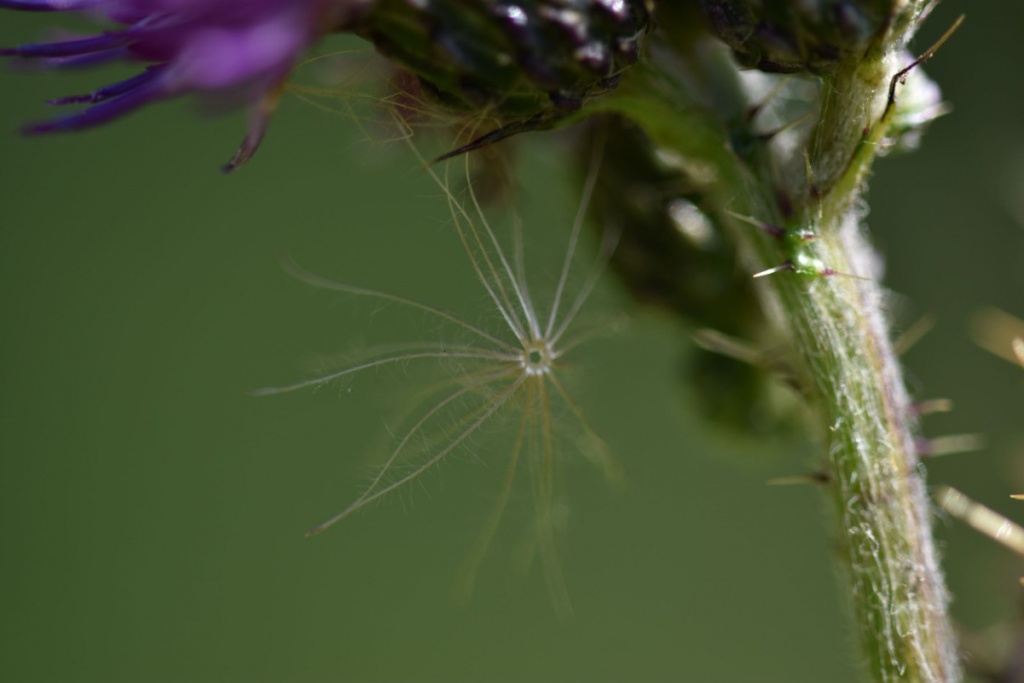
Stem spiny all the way up. As with all Cirsium, the pappus-hairs (the silky white hairs attached to the seed - the thistledown) are individually feathery or branched.
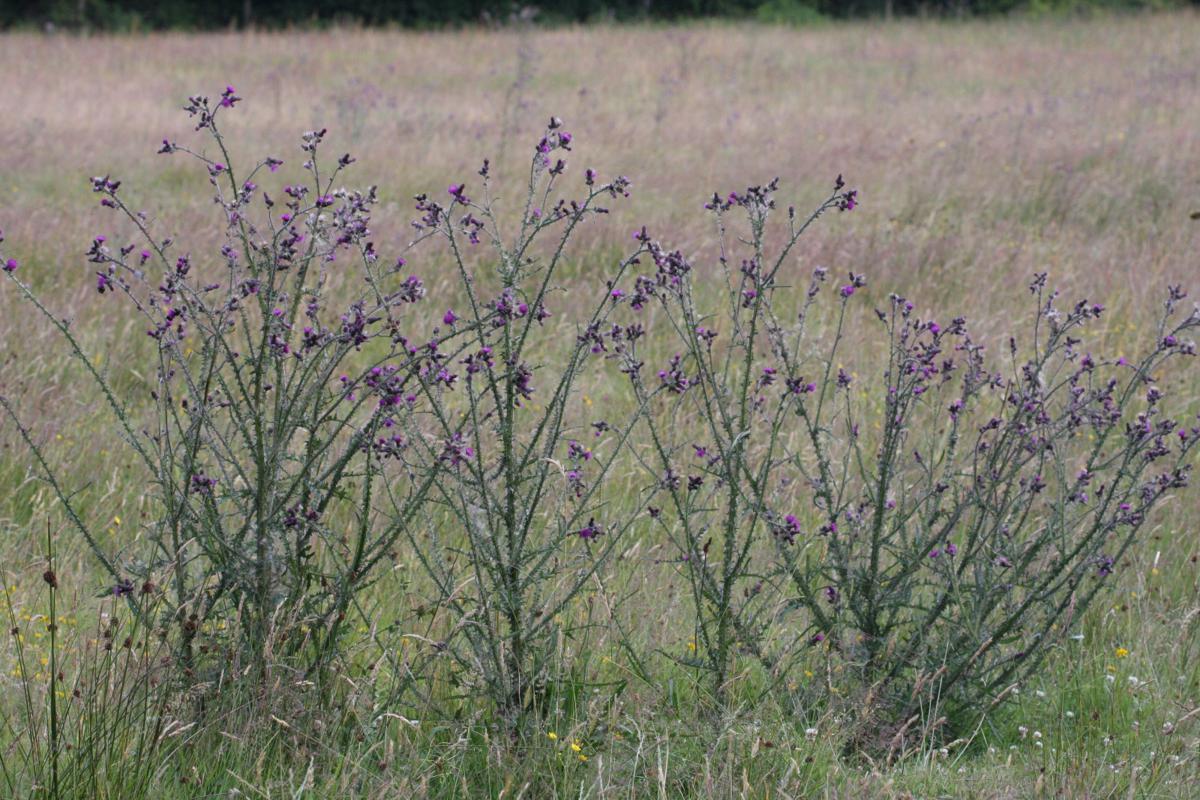
A photograph of the whole plant, showing stems and leaves as well as flowers
Wet habitats, woodland clearings, wet ditches and marshes.
July to September.
Biennial.
Common throughout Britain.
Quite common in Leicestershire and Rutland. In the 1979 Flora survey of Leicestershire it was found in 379 of the 617 tetrads.
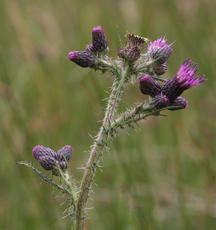 David Nicholls
Lea Meadows
07 July 2011 Graham Calow
Wykin Canal Towpath
26 June 2015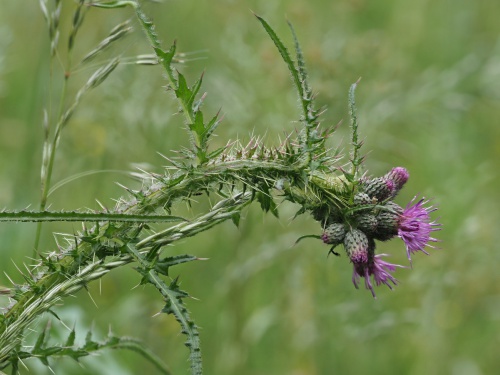 David Nicholls
Coalville Meadows
26 June 2021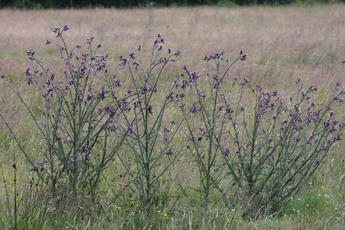 David Nicholls
Ulverscroft
14 July 2011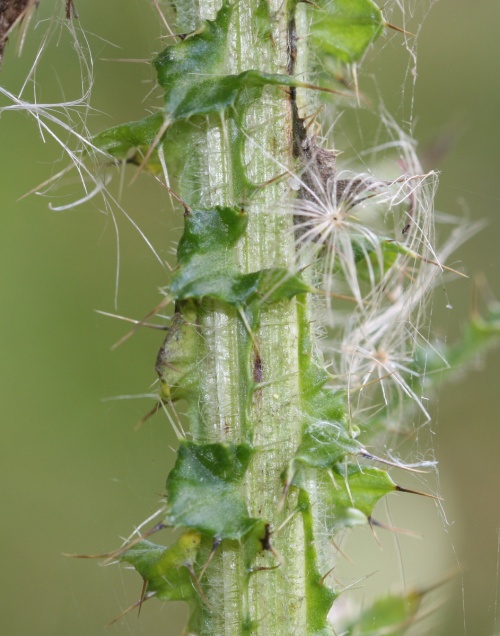 David Nicholls
Launde Fish Ponds
22 September 2012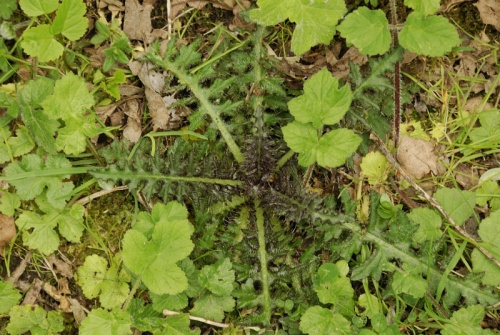 Barbara Cooper
Holwell Nature Reserve
17 May 2012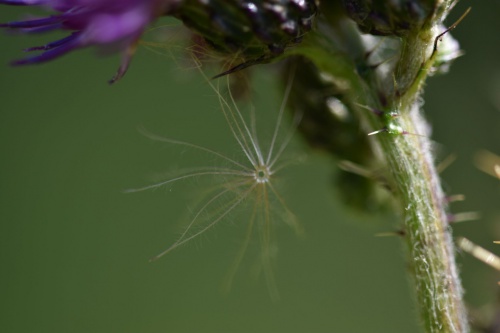 stepgray4
Wymeswold Meadows
26 July 2021
Pappus hairs are feathery

Leicestershire & Rutland Map
Enter a town or village to see local records
MAP KEY:
Yellow squares = NBN records (all known data)
Coloured squares = NatureSpot records: 2025+ | 2020-2024 | pre-2020
UK Map
Additional images
All NatureSpot records
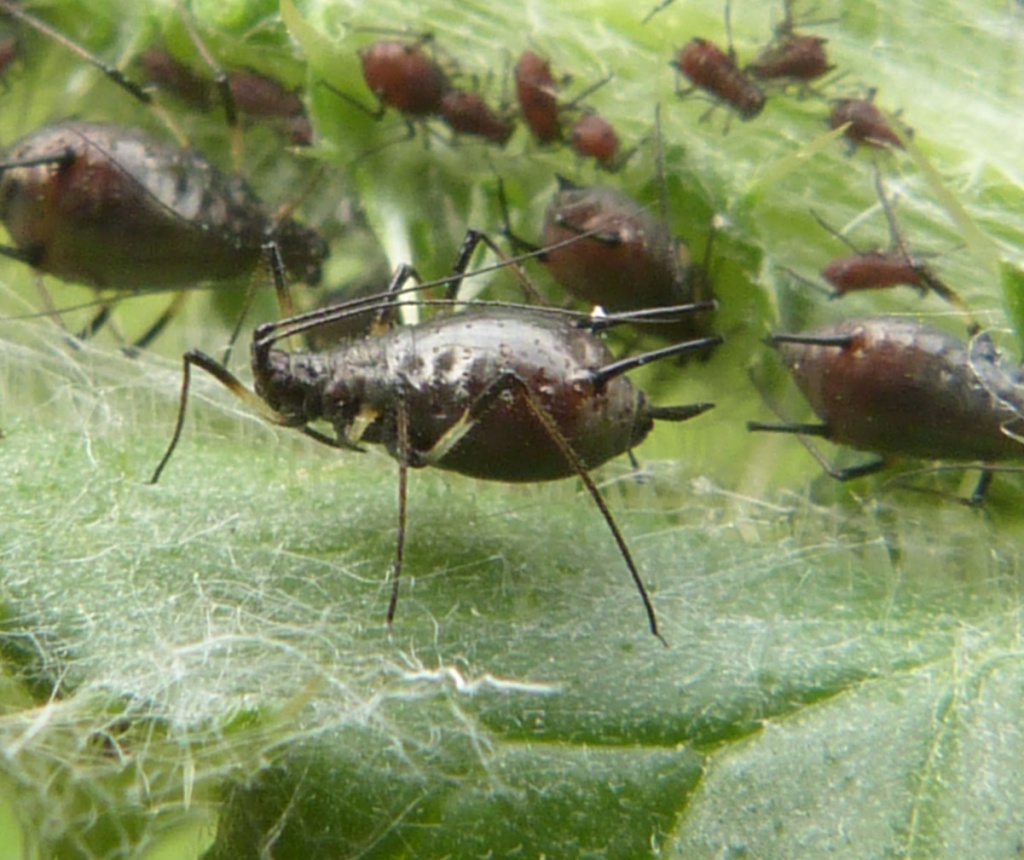
Uroleucon aeneum
The adult Uroleucon aeneum apterae has a body length of is 3.0 to 4.3 mm. The cauda (tail) in this species is black which helps to identify it. It is associated with Thistles.
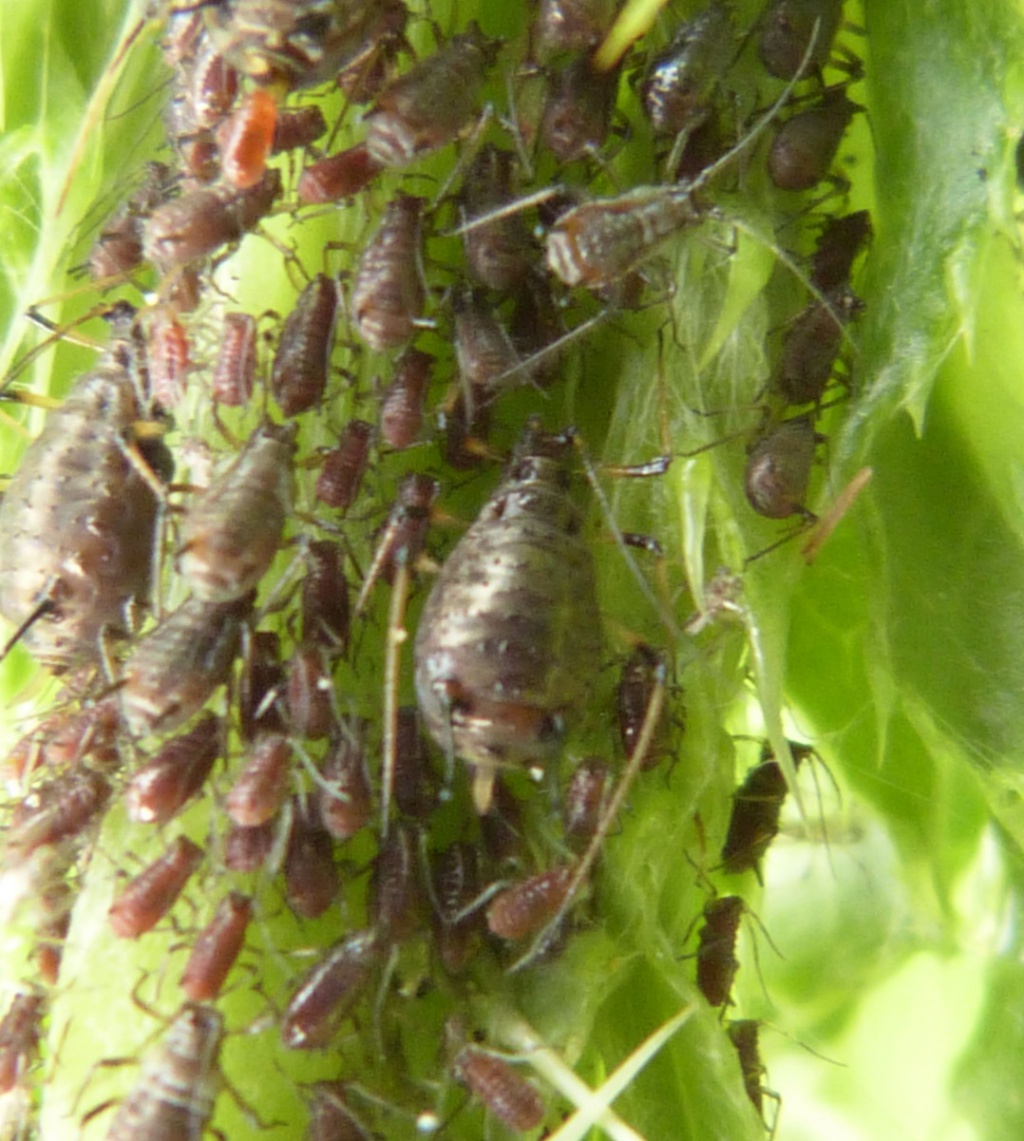
Large Thistle Aphid
The Large Thistle Aphid (Uroleucon cirsii) is found on Thistles, especially Creeping Thistle. It is between 4 and 5.2 mm in length and has characteristic two tone legs. The cauda (tail) is pale dusky yellow in this species which helps to distinguish it from other thistle feeding aphids.