Lucilia caesar
Lucilia caesar
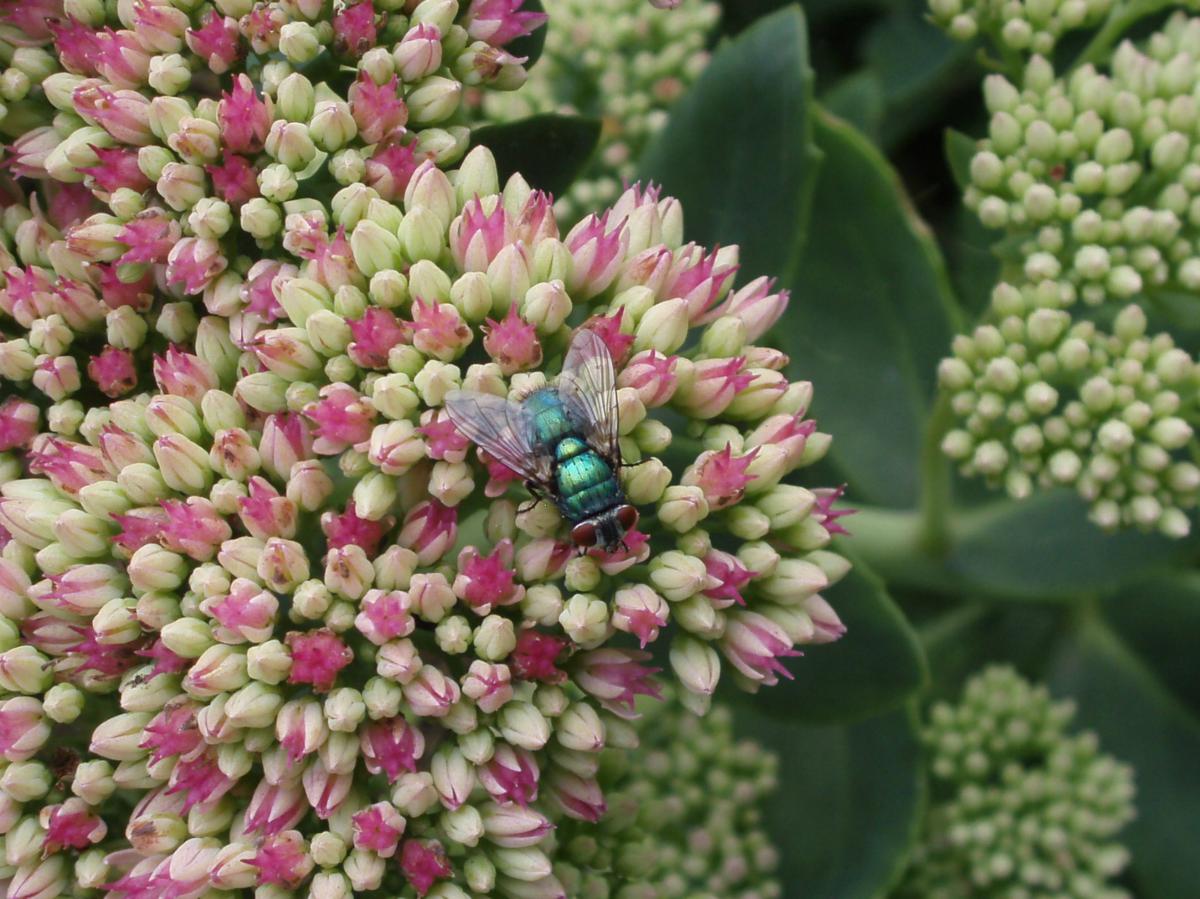
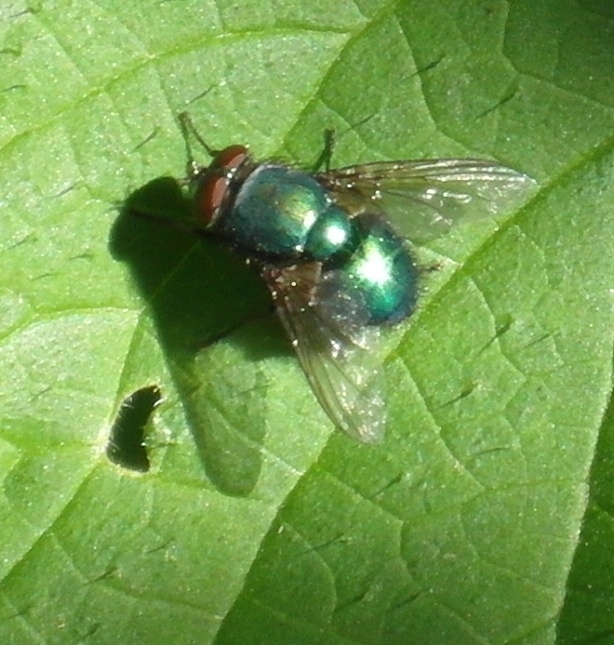
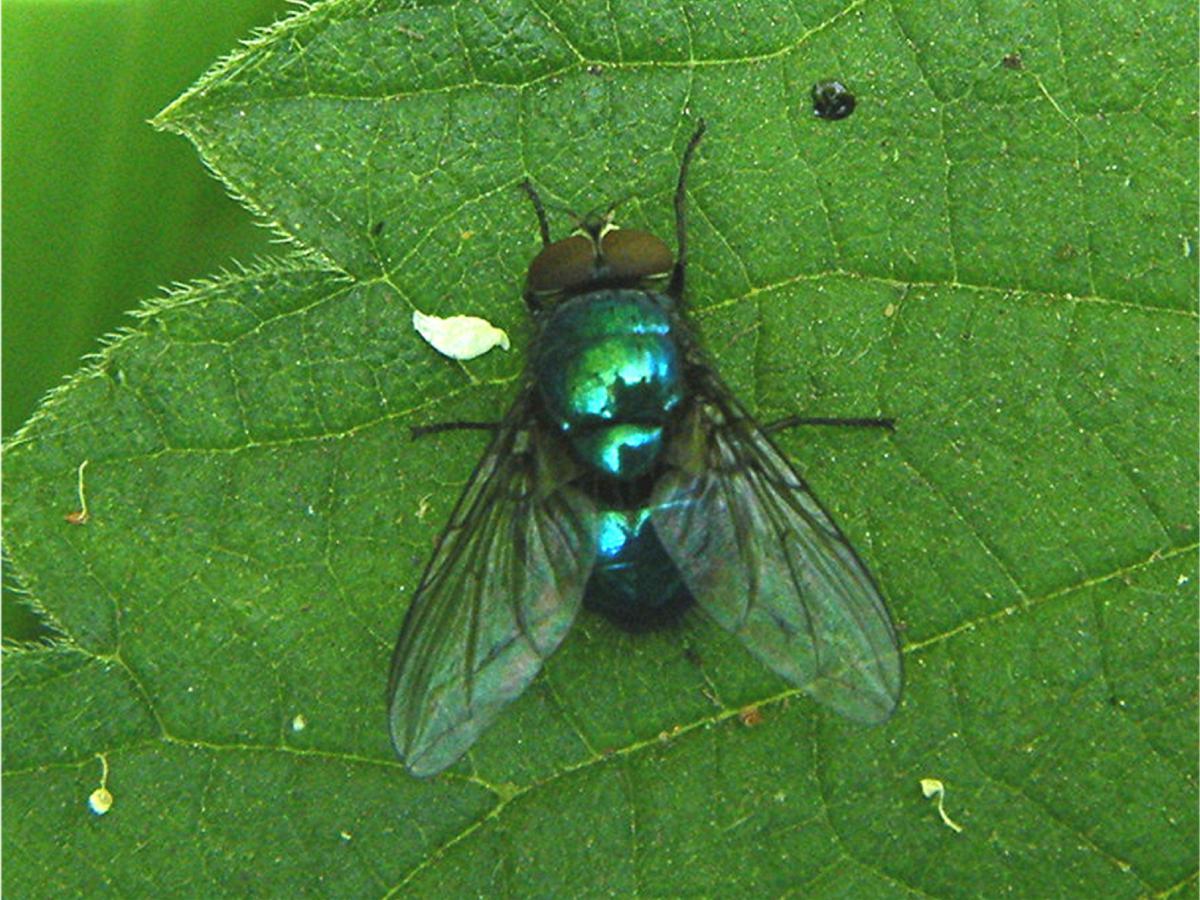
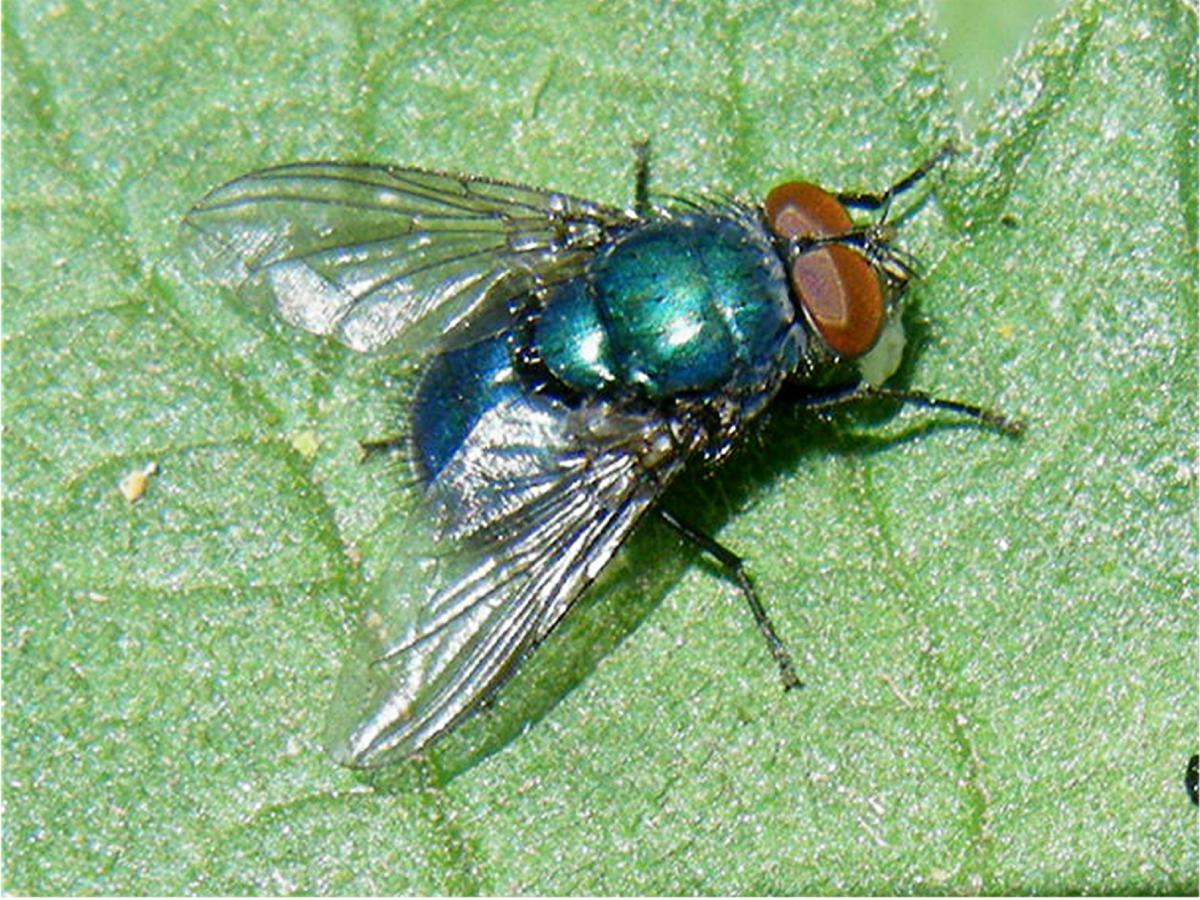
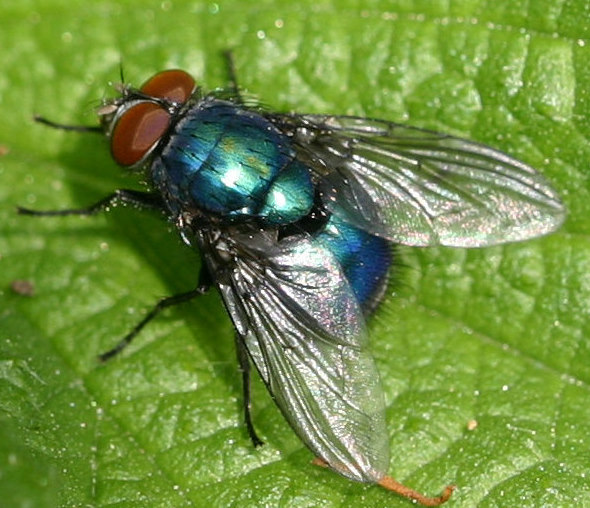
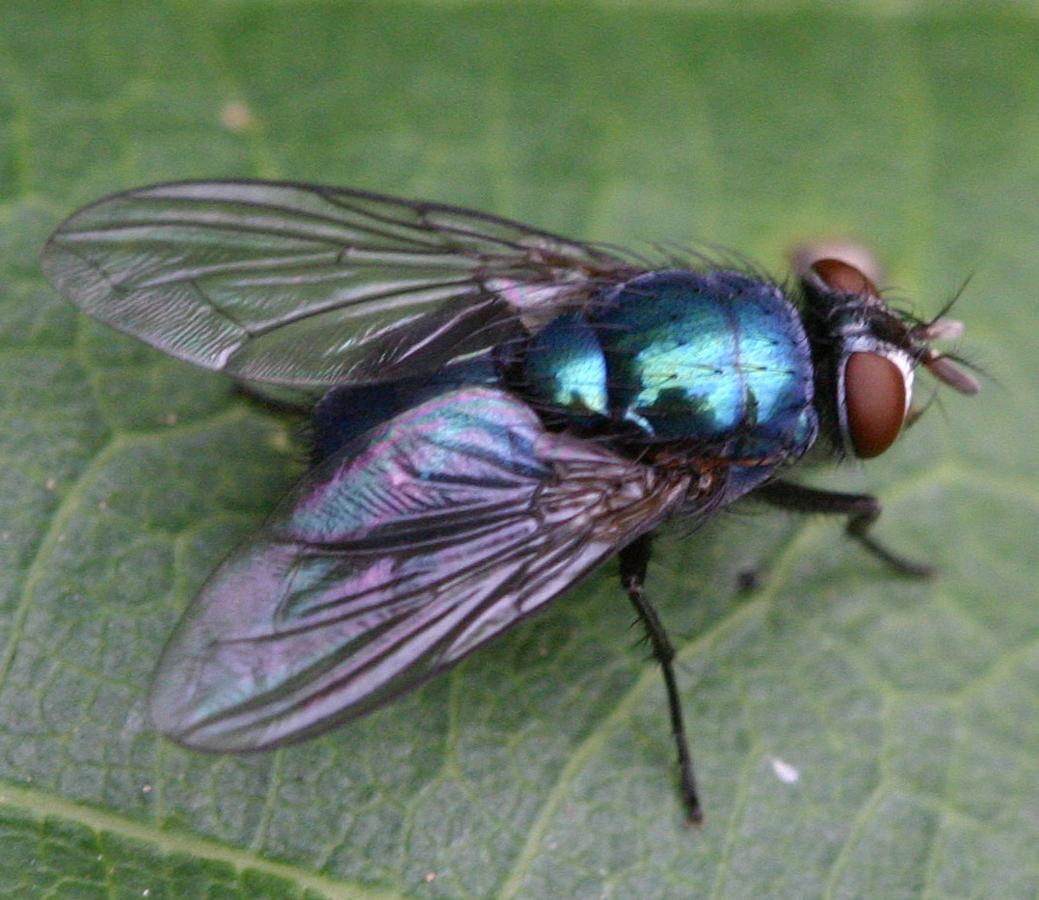
This blow fly is bright iridescent green though like all the 'greenbottles' is becomes more bronze with age. It is very similar to other Lucilia species but has just two pairs of acrostichal bristles behind the suture line on the thorax and a dark basicosta.
There are seven very similar Lucilia species that can be found in our region. They can only be separated by close examination of features such as bristles. L. caesar can be distinguished from the more common L. sericata by having only two pairs of post suture acrostichal bristles and a dark basicosta, but there are other Lucilia species with these features.

- dark basicosta
- presence of a coxopleural streak (see ID Aids above)
- 2 pairs of acrostichal bristles behind the suture line on the thorax
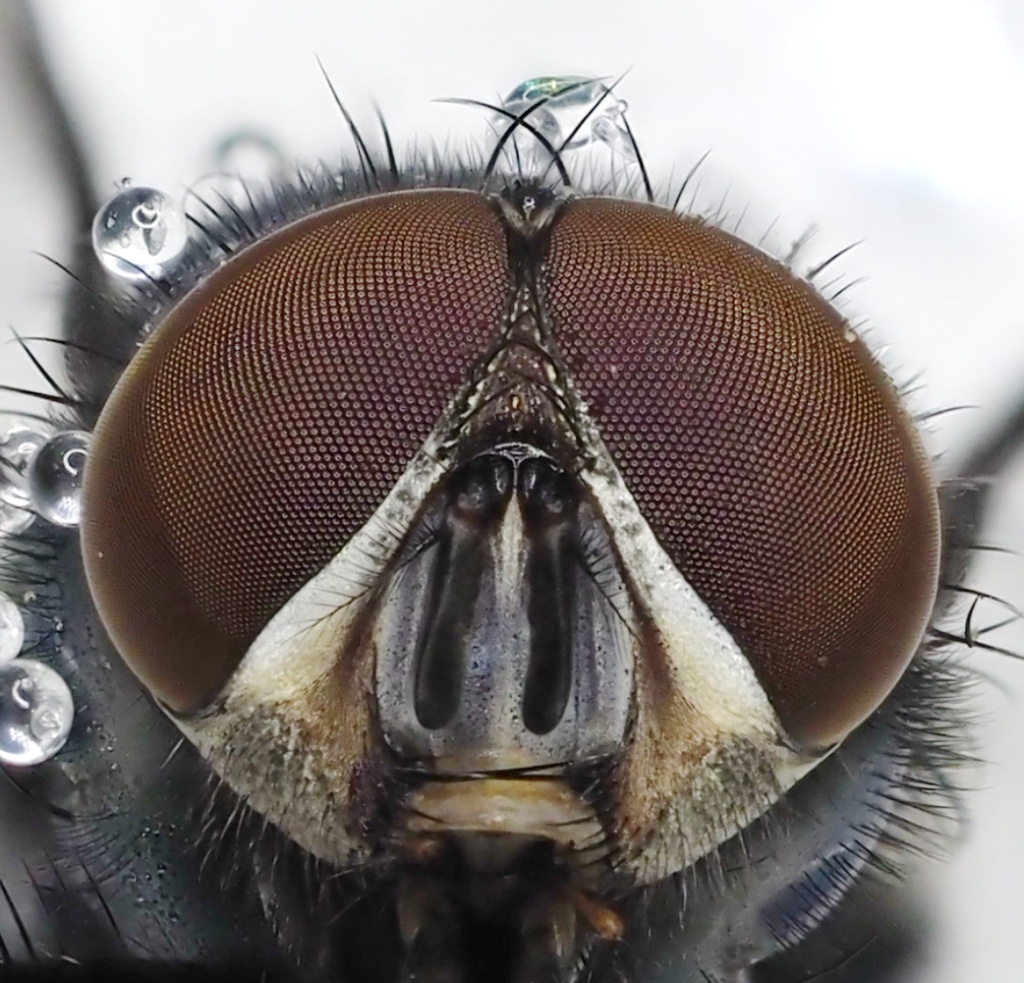
- males have a frons (between the eyes) that is narrower than the parafacialia (facial areas between the eyes and the antennae)
A key feature needed to identify Lucilia caesar is the presence of a coxopleural streak - a small and subtle pale, buff-coloured line on the side of the fly.
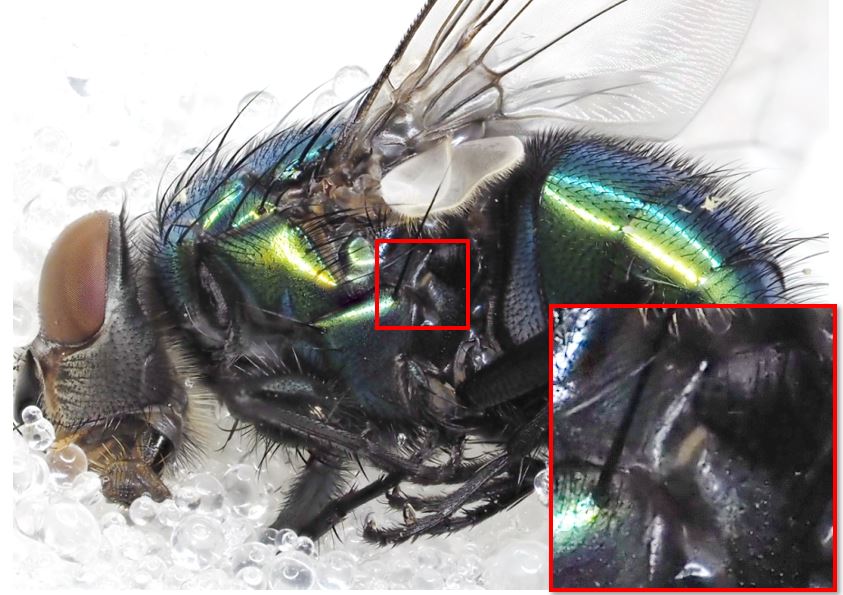
This can only be separated from other Lucilia species by microscopic examination.
Unlike its cousin the bluebottle, this species rarely comes into houses and is usually seen on flowers and vegetation, or sunning in a sheltered spot.
April to October peaking in June.
The female lays her eggs on carcasses, seeking the soft parts that are shaded from the sun. Larvae live in carrion and also in wounds on living animals, eating away the flesh with alarming rapidity, and so can be a problem in sheep-rearing areas.
Common and widespread in Britain.
Common but under-recorded in Leicestershire and Rutland
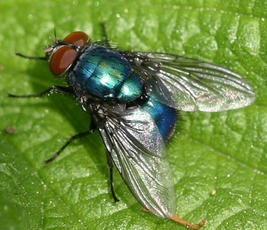 David Nicholls
Wirlybones Wood, Ratby
24 May 2008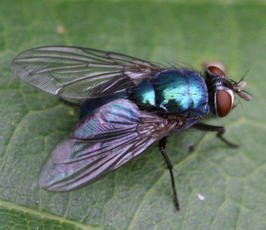 David Nicholls
Martinshaw Wood
14 October 2005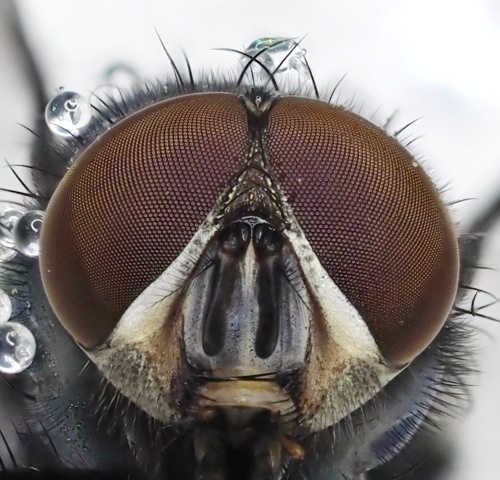 David Nicholls
Ratby
22 August 2022
male frons narrower than the parafacia
Leicestershire & Rutland Map
Enter a town or village to see local records
MAP KEY:
Yellow squares = NBN records (all known data)
Coloured squares = NatureSpot records: 2025+ | 2020-2024 | pre-2020
UK Map
Additional images