Long-horned Black Legionnaire
Long-horned Black Legionnaire - Beris geniculata
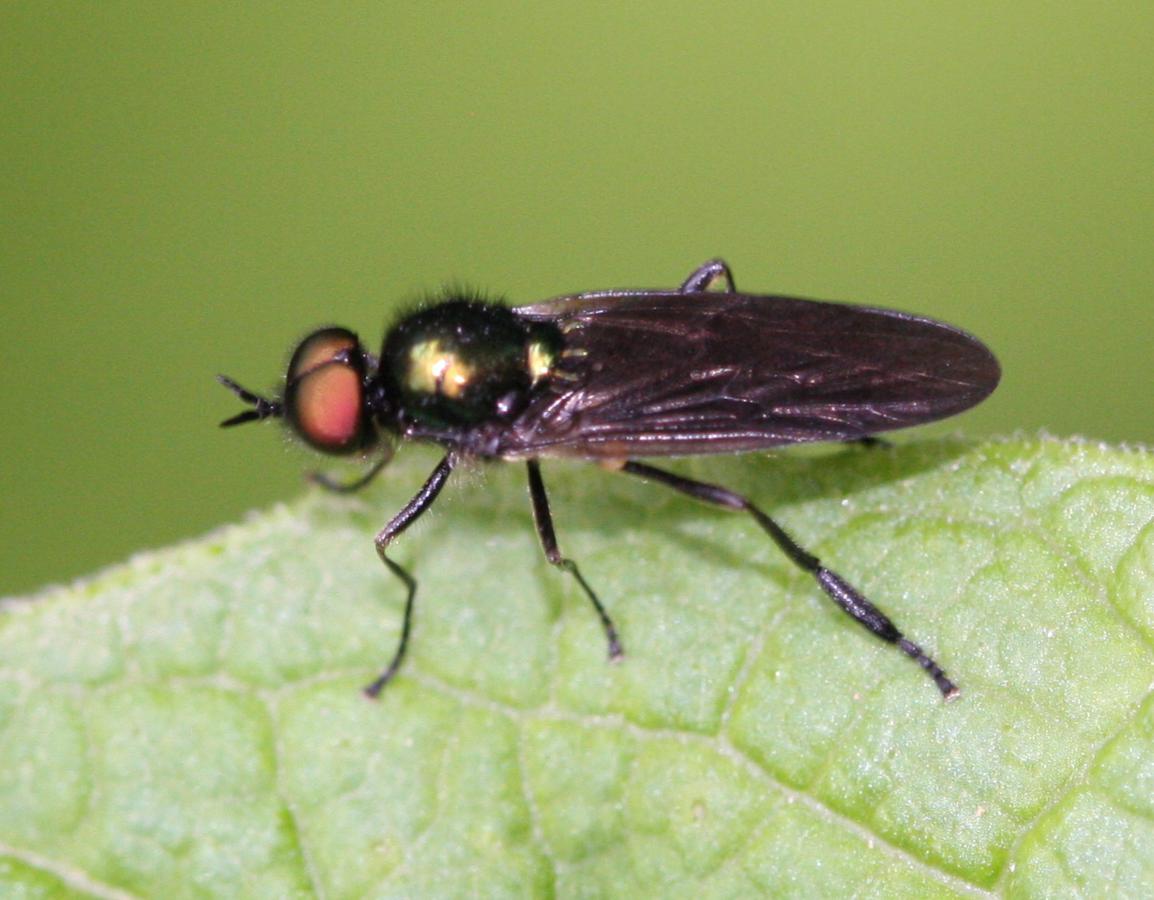
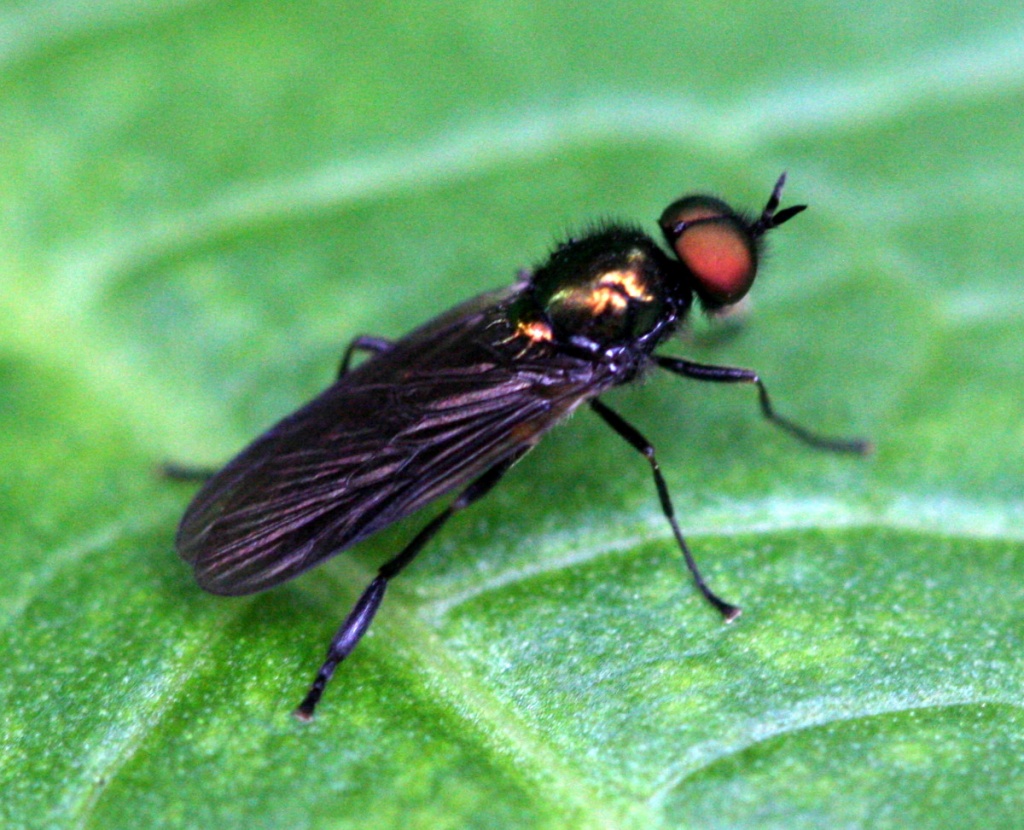
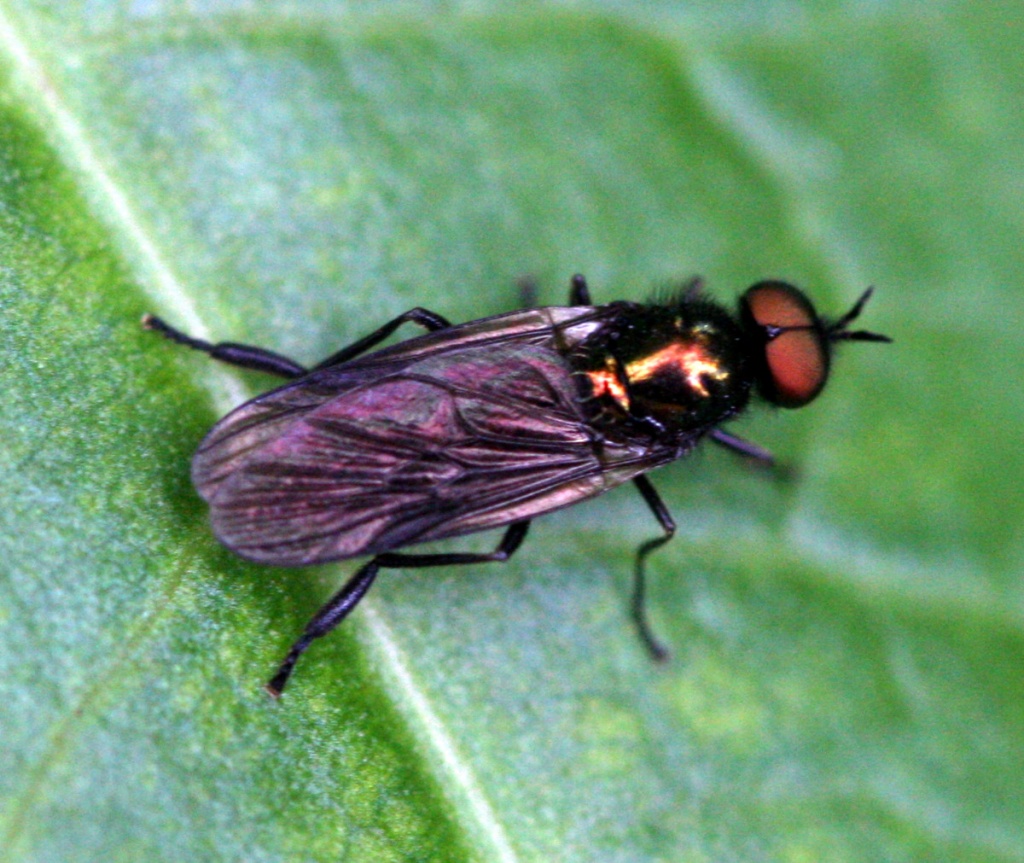
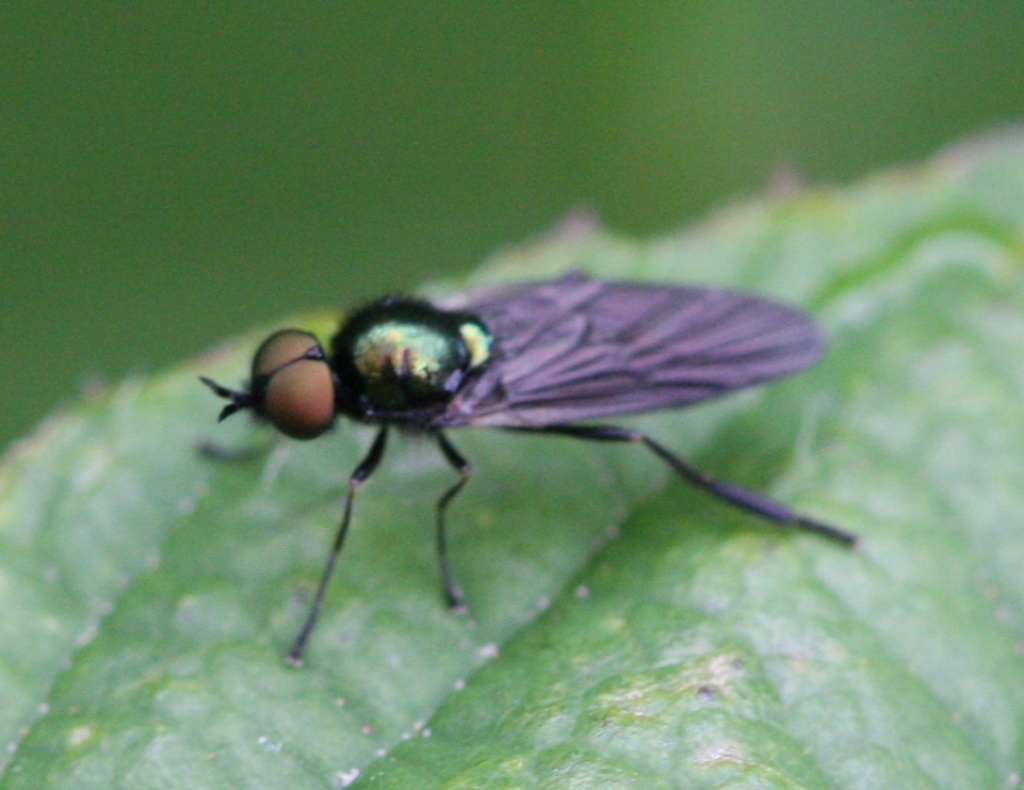
Like all flies in the Beris genus, this species has six spines at the base of the scutellum. B. geniculata has a black, or dark, abdomen and dark legs with yellow 'knees'.
There are 6 British species in the Beris genus and these can usually be distinguished by the combination of abdomen and leg colours. See ID Aids below.

- 6 spines at the base of the scutellum
- black/dark abdomen
- dark legs with yellow 'knees'
This genus of soldierflies are all of modest size with an elliptical abdomen. The abdomen is either blackish or mainly orange but without a striking pattern. They also have 6 spines projecting backwards from the scutellum. Note that flies in the related Chorisops genus have 4 spines.
There are 6 known species in Britain. It is not known if all can be found in Leicestershire and Rutland and the status descriptions are based on national records.
| Species | Abdomen | Legs | Status |
| B. chalybata | black | dull orange | common |
| B. fuscipes | black | dark with orange on tips of femora + base of tibiae | uncommon |
| B. geniculata | black | dark all over | common |
| B. morrisii | black | clear yellow | uncommon |
| B. clavipes | orange | hind tibiae orange | rare |
| B. vallata | orange | hind tibiae half black / half orange | common |
Note: as with many species there can be variation amongst specimens.
Unless identified by a recognised expert, a photo is required. If the photo doesn't show the key ID features then in the comments box describe the size and identifying characters you have observed.
Woodland and often near water.
Quite common and widespread in Britain.
Fairly frequent in Leicestershire and Rutland.
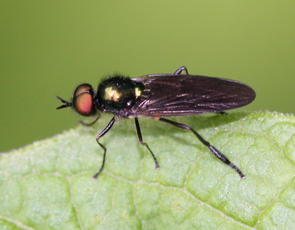 David Nicholls
Cloud Wood
24 June 2011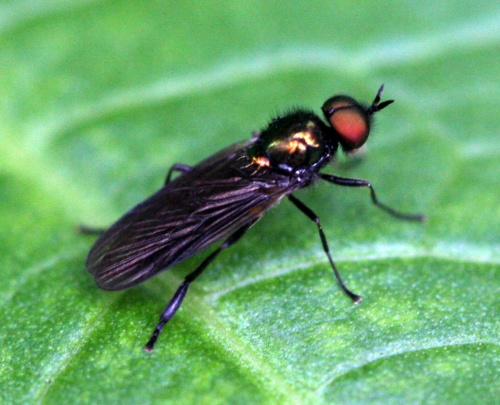 David Nicholls
Lea Meadows
29 June 2012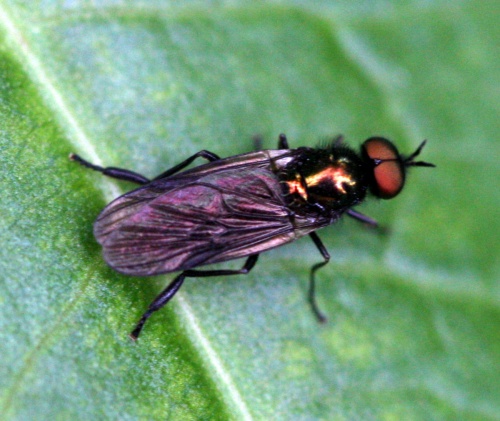 David Nicholls
Lea Meadows
29 June 2012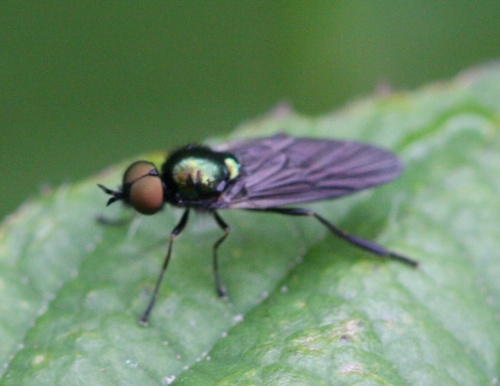 David Nicholls
Ratby
24 June 2012
Leicestershire & Rutland Map
Enter a town or village to see local records
MAP KEY:
Yellow squares = NBN records (all known data)
Coloured squares = NatureSpot records: 2025+ | 2020-2024 | pre-2020
UK Map
Additional images
No additional images available for this species.