Light Orange Underwing
Light Orange Underwing - Archiearis notha
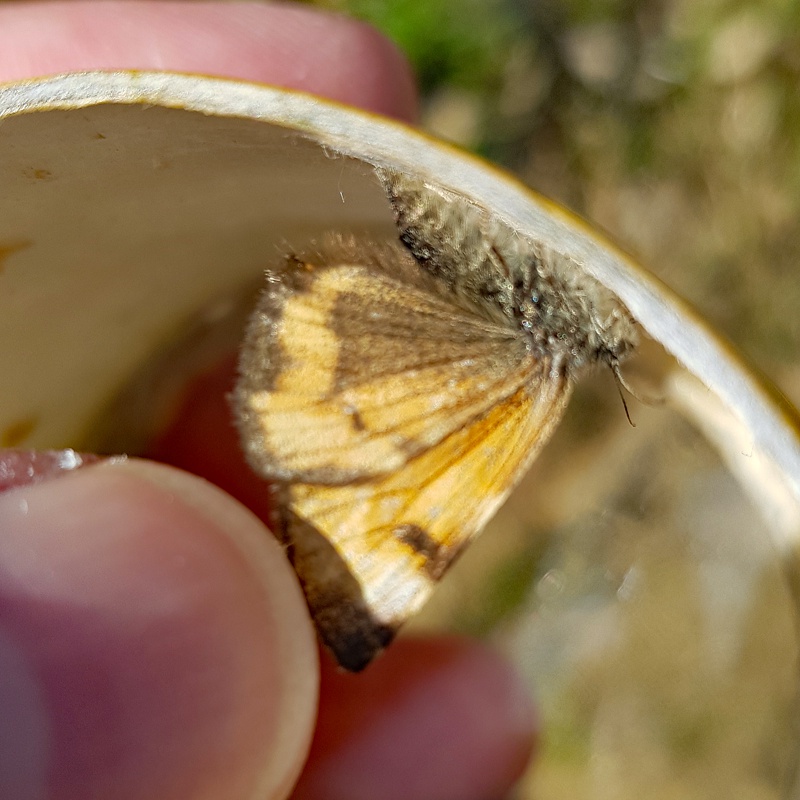
Wingspan about 35 mm. The adults have rather less variegated forewings than A. parthenias and subtle differences in the black suffusion of the hindwing, though these are difficult to establish in the field.
Orange Underwing (Archiearis parthenias)

Specimens need to be netted and examined closely including the hindwing – especially if taken where both Aspen and Birch are present. If the moth has bipectinate (feathery) antennae it will be a male Light Orange Underwing. If not, it could be either species and the wing markings will need to be carefully checked and either photographed or retained for closer examination.
Associated with Aspen, and most likely to be encountered where stands of Aspen occur.
From mid-March onwards into April.
The larvae feed on aspen (Populus tremula), hiding in the daytime between spun leaves.
A scarcer species than Orange Underwing A. parthenias, occurring locally in the southern half of England, although absent from the south-west. In a recent survey to determine the status of all macro moths in Britain this species was classified as Nationally scarce B.
Rarely recorded in Leicestershire and Rutland. The species had not been recorded in VC55 for many years until it was taken in Pickworth Great Wood on 19 Apr 2019.
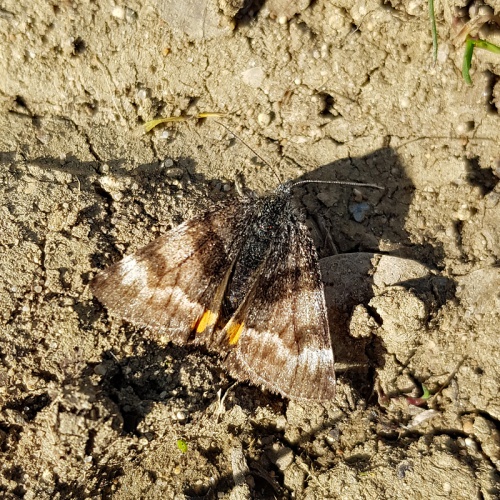 Mark Skevington
Pickworth Great Wood
19 April 2019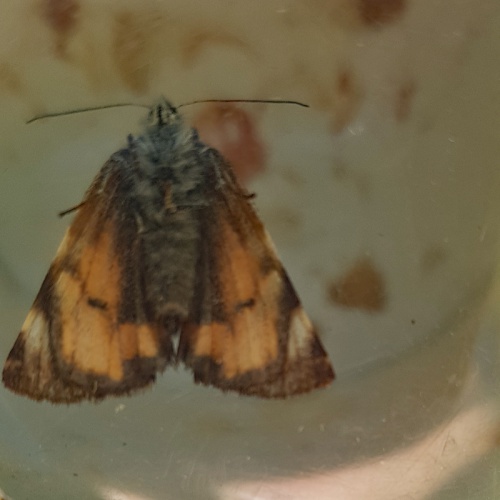 Mark Skevington
Pickworth Great Wood
19 April 2019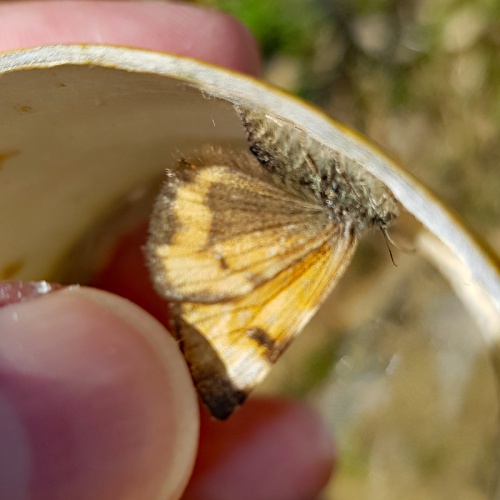 Mark Skevington
Pickworth Great Wood
19 April 2019
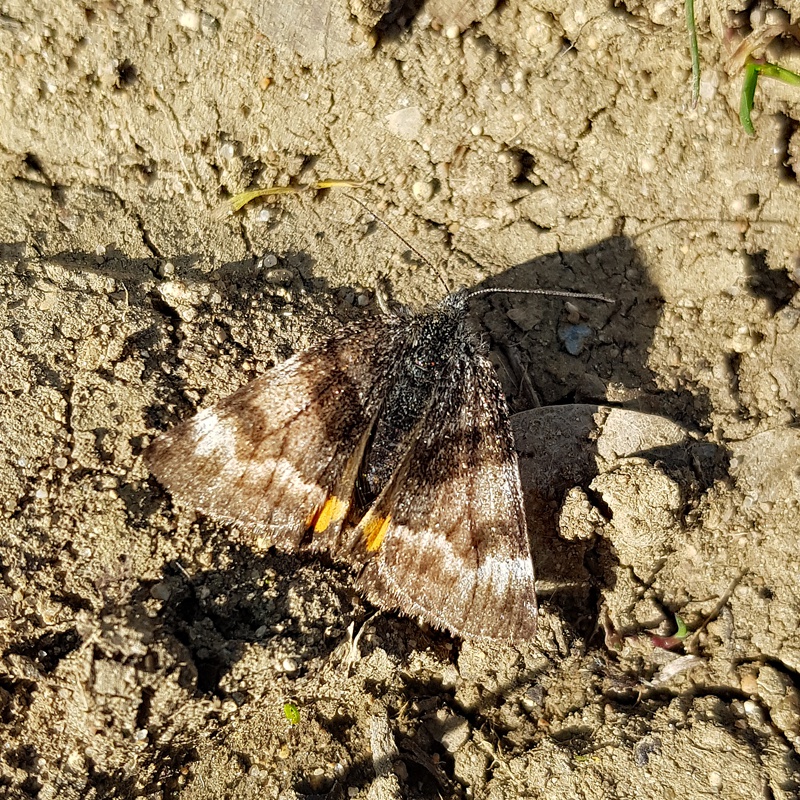

Leicestershire & Rutland Map
Enter a town or village to see local records
MAP KEY:
Yellow squares = NBN records (all known data)
Coloured squares = NatureSpot records: 2025+ | 2020-2024 | pre-2020
UK Map
Additional images
No additional images available for this species.