Leucophora obtusa
Leucophora obtusa
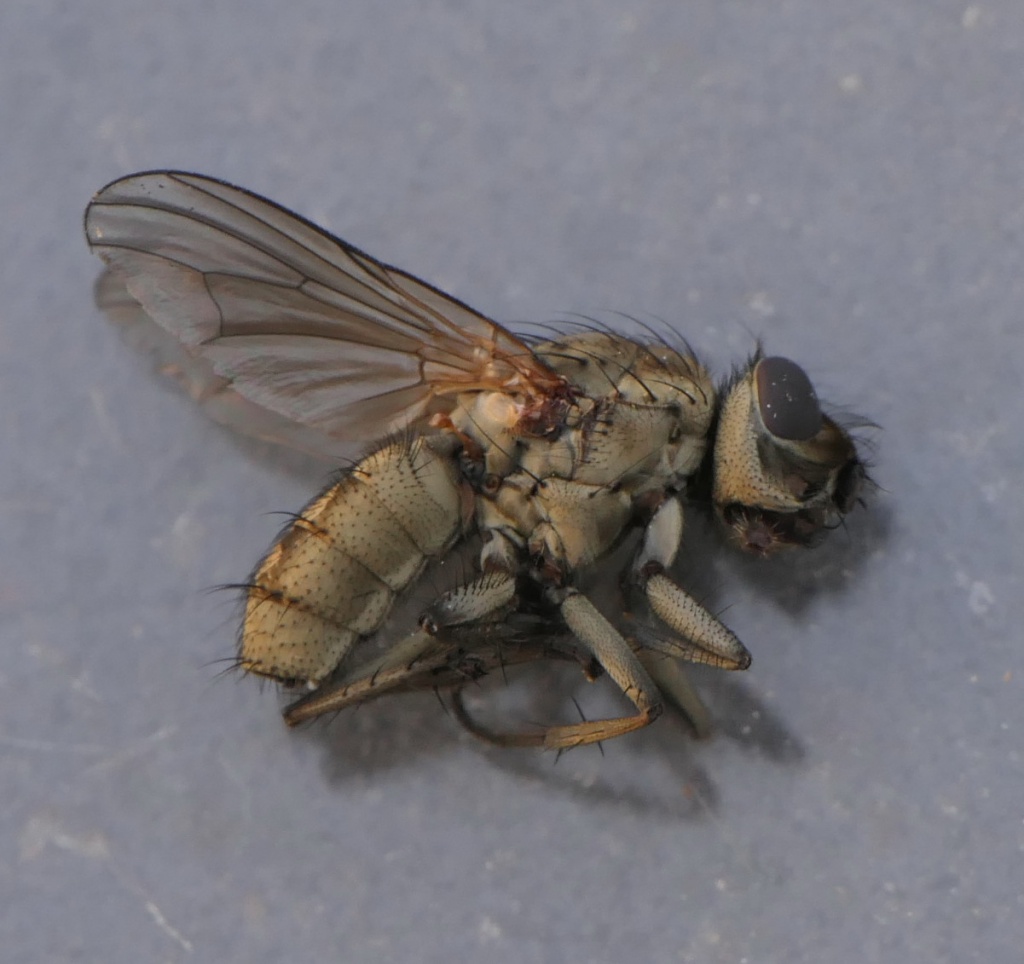
One of several almost identical species so great care is needed with identification. If detailed examination has not taken place it should be recorded as Leucophora sp.
The genus has a characteristically wide parafacial and gena (the area in front of and below the eyes). The eyes, even in males, are well separated. The mid tibia always has an ad seta.
Leucophora obtusa is the most recorded species in the genus. It is a hairy species and the abdominal sternites have long erect hairs. The hind femur also has numerous long fine hairs beneath. The lower margin of the gena has several rows of upwardly directed setae. The lateral margins of the scutellum have several rows of setulae
Other Leucophora species.

- arista with very short pubescence (hairs no wider than the arista base
- parafacials exceptionally wide, almost three times the width of the postpedicel
- mid tibia with a strong ventral seta
- notopleural depression lacks hairs and just has the two strong setae
- lower margin of the gena has several rows of upwardly directed setae
- lateral margins of the scutellum have several rows of setulae
Unless identified by a recognised expert, a photo is required and the specimen should be examined with a microscope. In the comments box, state the key or ID method used and describe the size and identifying characters.
Can be found near the nests of Andrena bees. Leucophora obtusa is known to parisitise the larvae of Andrena flavipes. Sometimes seen sunning on trunks and branches.
From as early as February through to late May.
Females will actively follow the host bee to its nest burrow, where the larvae are parasitic on the host’s brood.
Seems to be widespread in the southern half of Britain, but status is difficult to assess due to problems of identification.
Status in Leicestershire and Rutland not known.
 David Nicholls
Sheet Hedges Wood
08 April 2020
Leicestershire & Rutland Map
Enter a town or village to see local records
MAP KEY:
Yellow squares = NBN records (all known data)
Coloured squares = NatureSpot records: 2025+ | 2020-2024 | pre-2020
UK Map
Additional images
No additional images available for this species.