Lesser Hawkbit
Lesser Hawkbit - Leontodon saxatilis
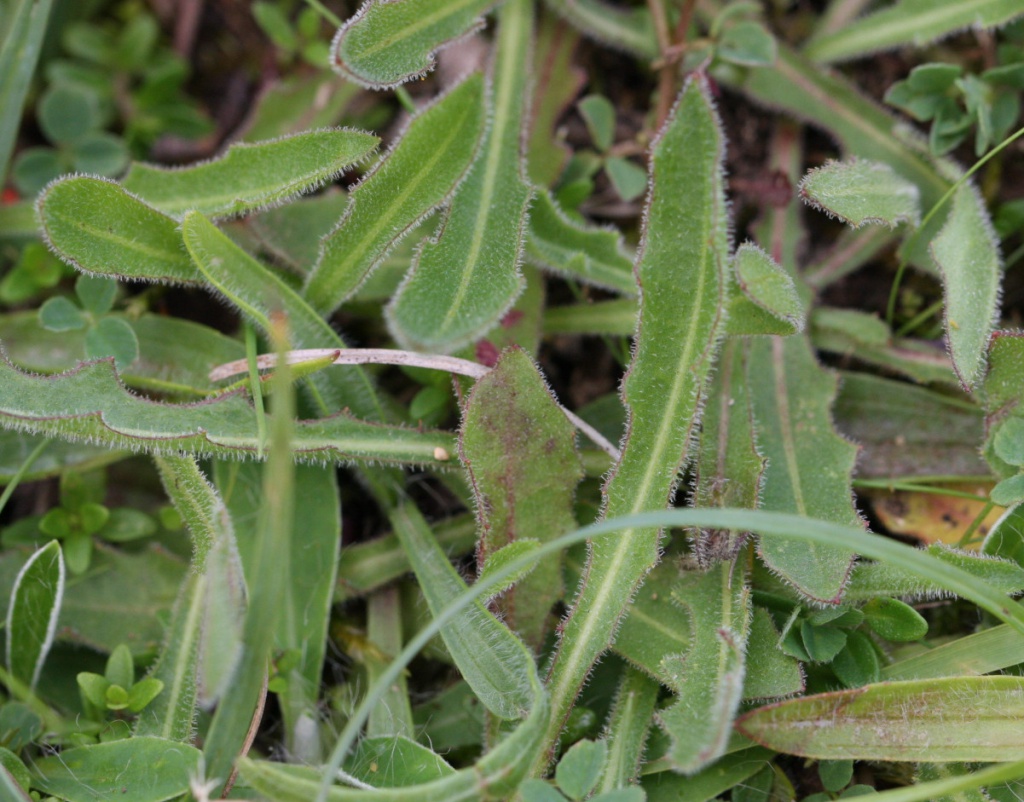
Low rosette-forming plant with unbranched stem usually with a few scale-like bracts. At least some hairs on the lobed leaves are forked, which distinguihes it from Hypochaeris (Cat's-ear) and Scorzoneroides (Autumnal Hawkbit). Flowerheads solitary, yellow, the outer rays usually greyish violet beneath. The phyllaries usually in two rows, but some bracts may be scale-like. Variable in degree of hairiness and in all characters.
According to Stace (4th edition), the outer row of achenes has pappus as a scaly ring; this character is consistent and serves to distinguish it from Leontodon hispidus which has all achenes with a pappus of simple hairs.
Other hawkbits (Leontodon and Scorzoneroides), Hawkweeds (Hieracium and Pilosella) and Cat's-ear (Hypochaeris)

Stems leafless but with a few bracts, leaves have forked hairs (Autumnal Hawkbit and Cat's-ear have simple hairs). Bracts glabrous or hairy, but plants usually much less hairy than Leontodon hispidus. Underside of petals is usually greyish-violet (L hispidus usually reddish)
The County Recorder has asked that a specimen is retained for verification. A side-on picture of the flowerhead and stem will help, plus close-up and side-on photo of hairs on leaves, and photos of outer row of achenes. Cannot be verified form a 'full-face' picture looking down onto the flowerhead; there are very many similar flowers.
Grassy habitats, usually on sandy or calcareous soils.
Flowers June to October.
Short lived perennial.
Widespread in the southern half of Britain, more coastal further north.
Local and possibly overlooked in Leicestershire and Rutland. In the Flora of Leicestershire (Primavesi and Evans 1988) it was found in 54 of the 617 tetrads.
In the VC55 checklist it is listed as Native; grassland. There are few recent records, but it is probably under-recorded.
It was on the 2011 VC55 Rare Plant Register (Jeeves, 2011) but improved recording since then has meant it is found in more sites than previously known, and does not meet the criteria for the current RPR (Hall and Woodward, 2022)
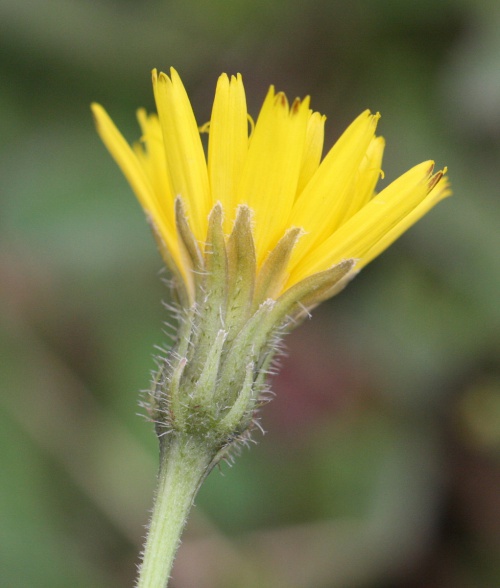 David Nicholls
Bloody Oaks Quarry
08 July 2016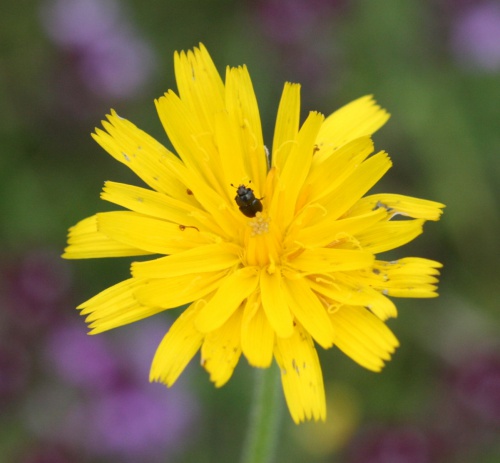 David Nicholls
Bloody Oaks Quarry
08 July 2016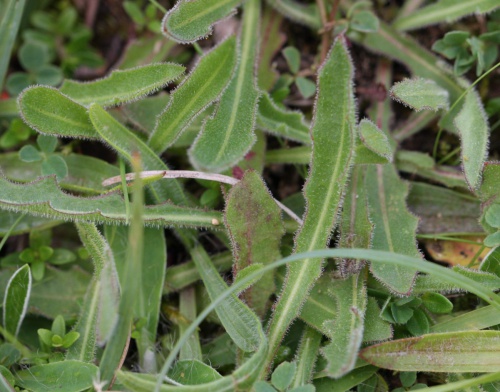 David Nicholls
Bloody Oaks Quarry
08 July 2016

Leicestershire & Rutland Map
Enter a town or village to see local records
MAP KEY:
Yellow squares = NBN records (all known data)
Coloured squares = NatureSpot records: 2025+ | 2020-2024 | pre-2020
UK Map
Additional images
No additional images available for this species.