Lesser Celandine
Lesser Celandine - Ficaria verna
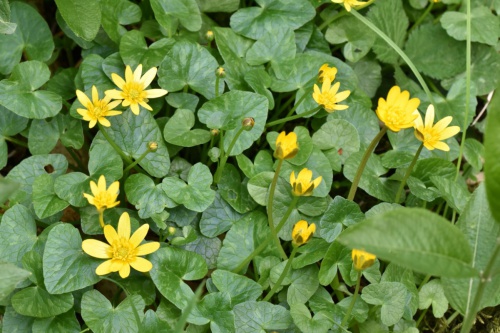
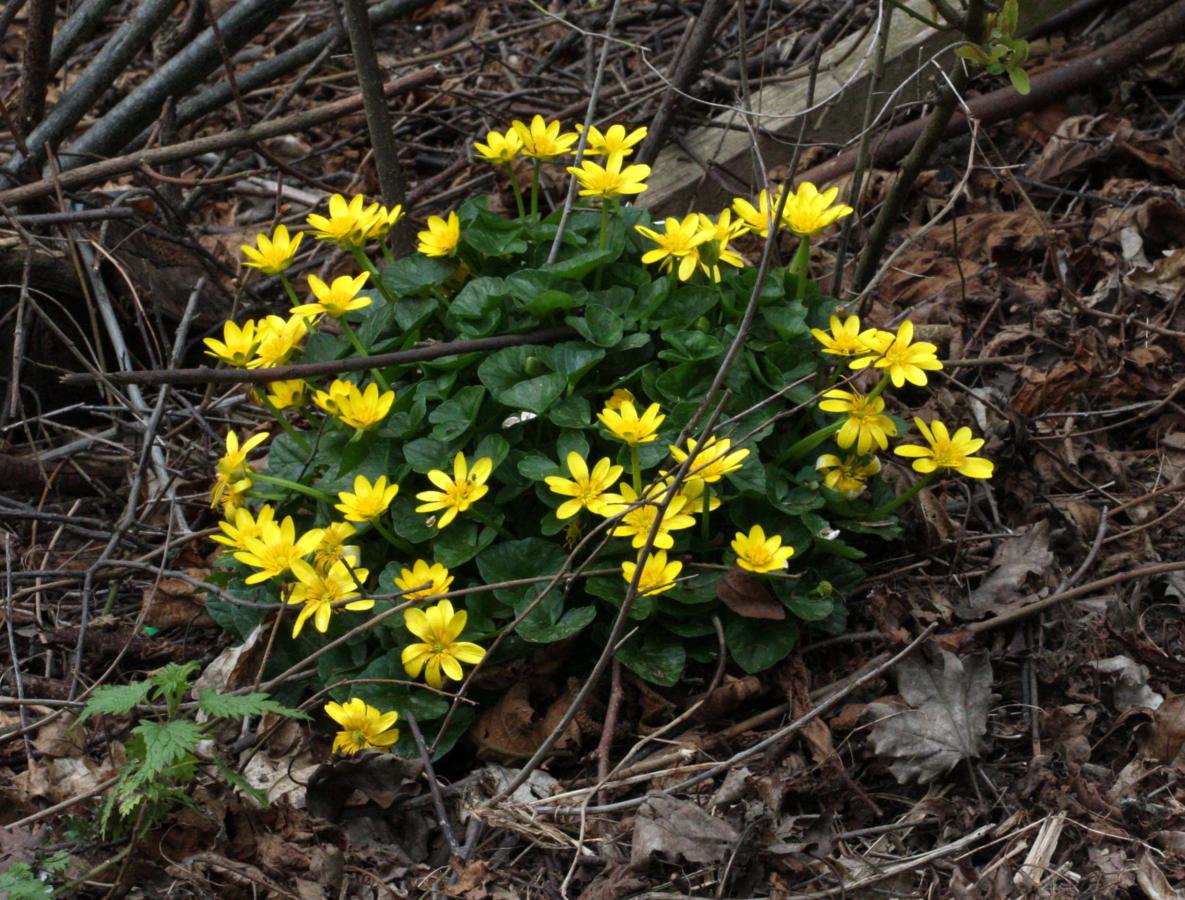
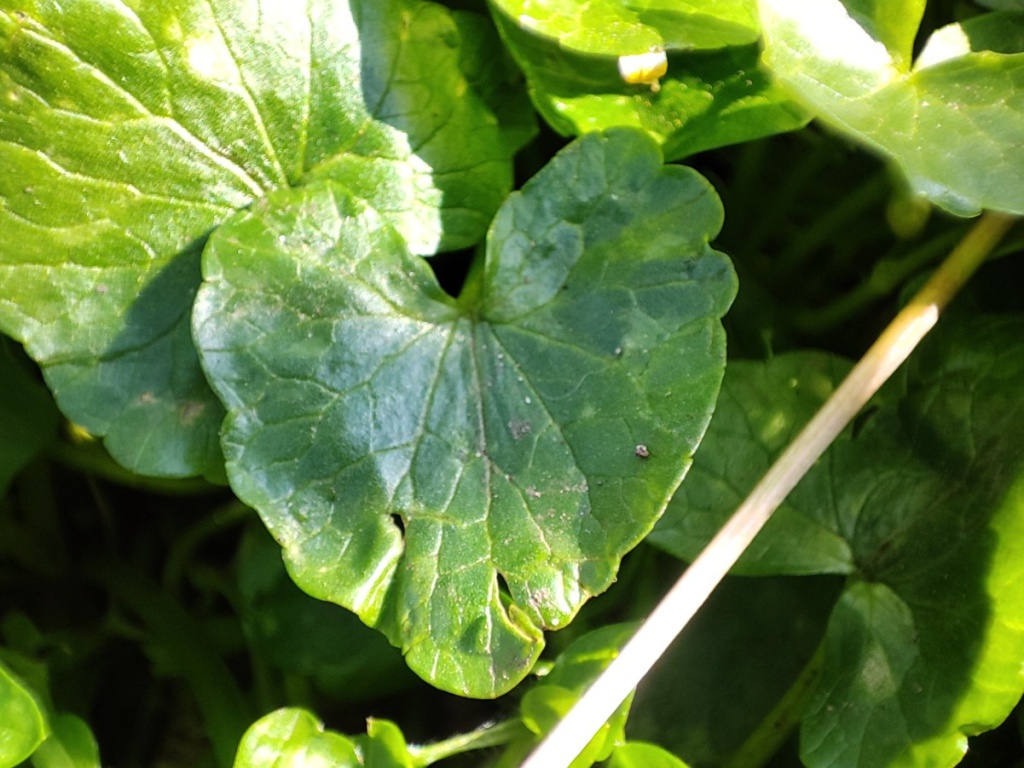
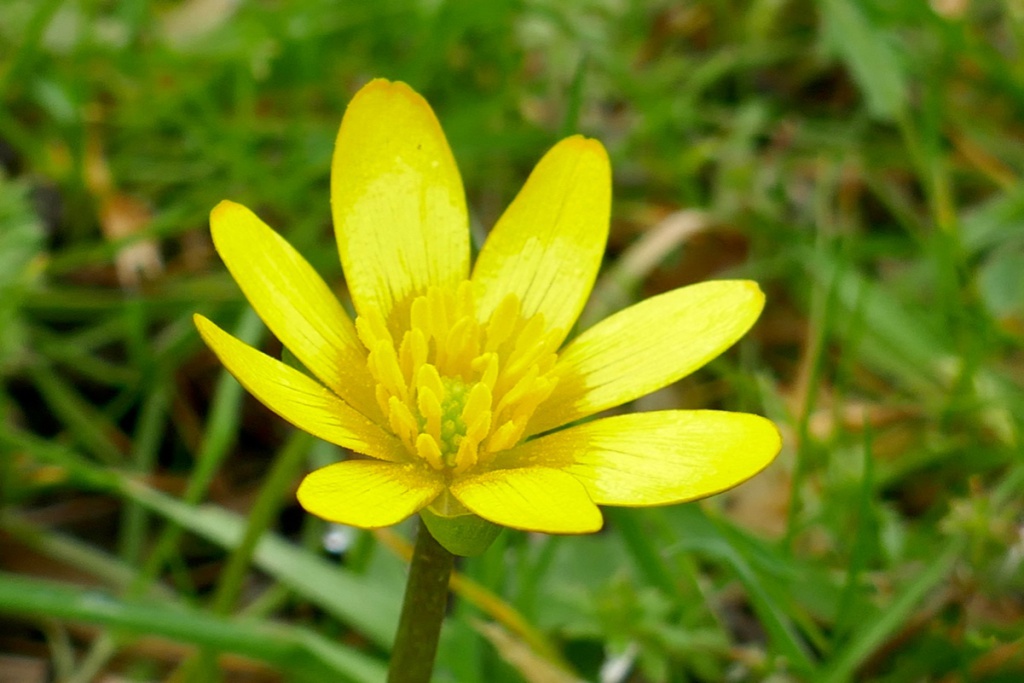
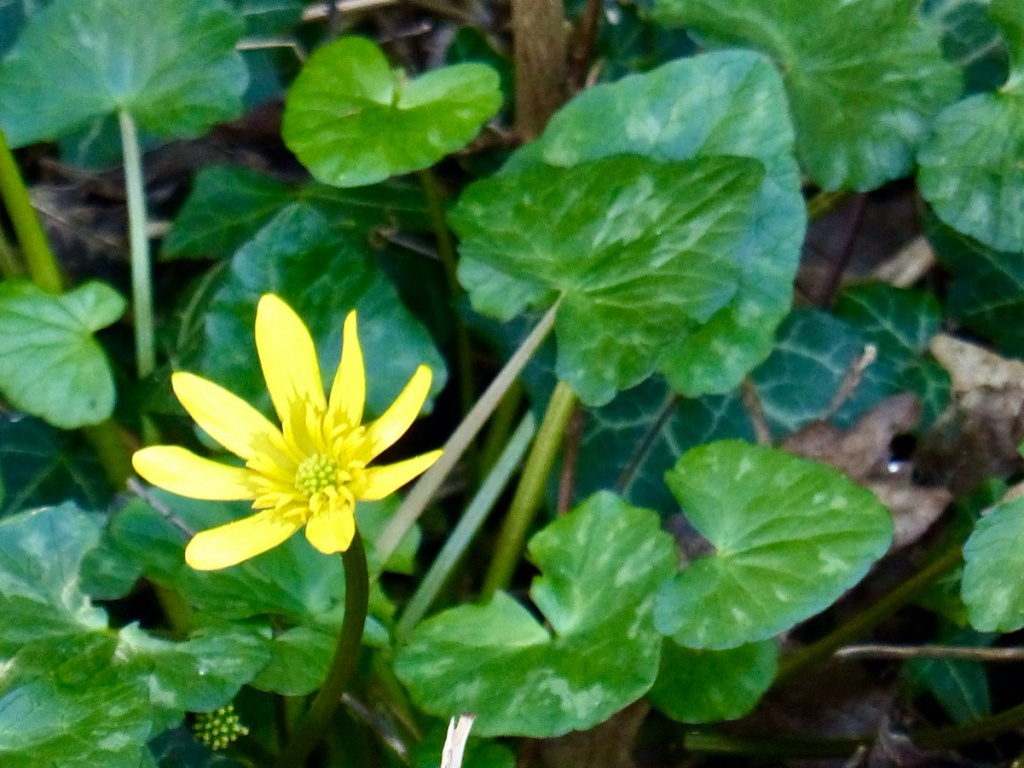
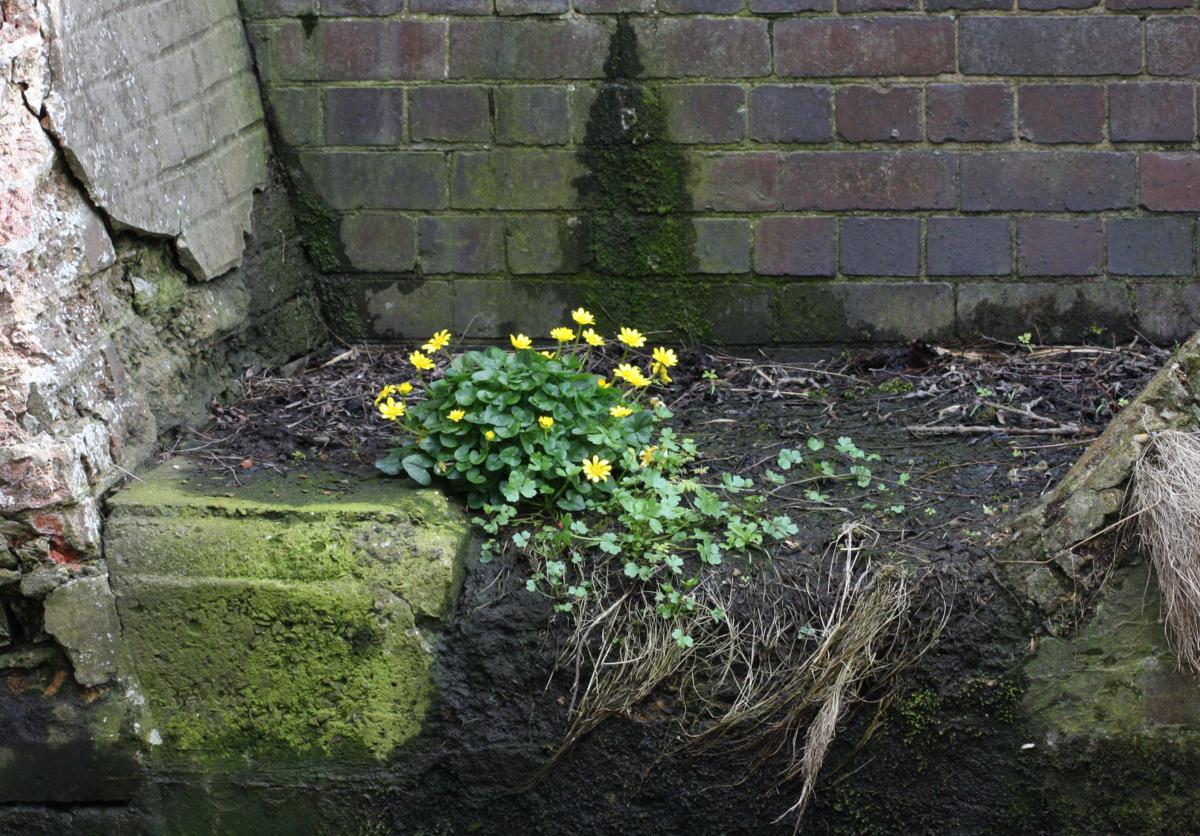
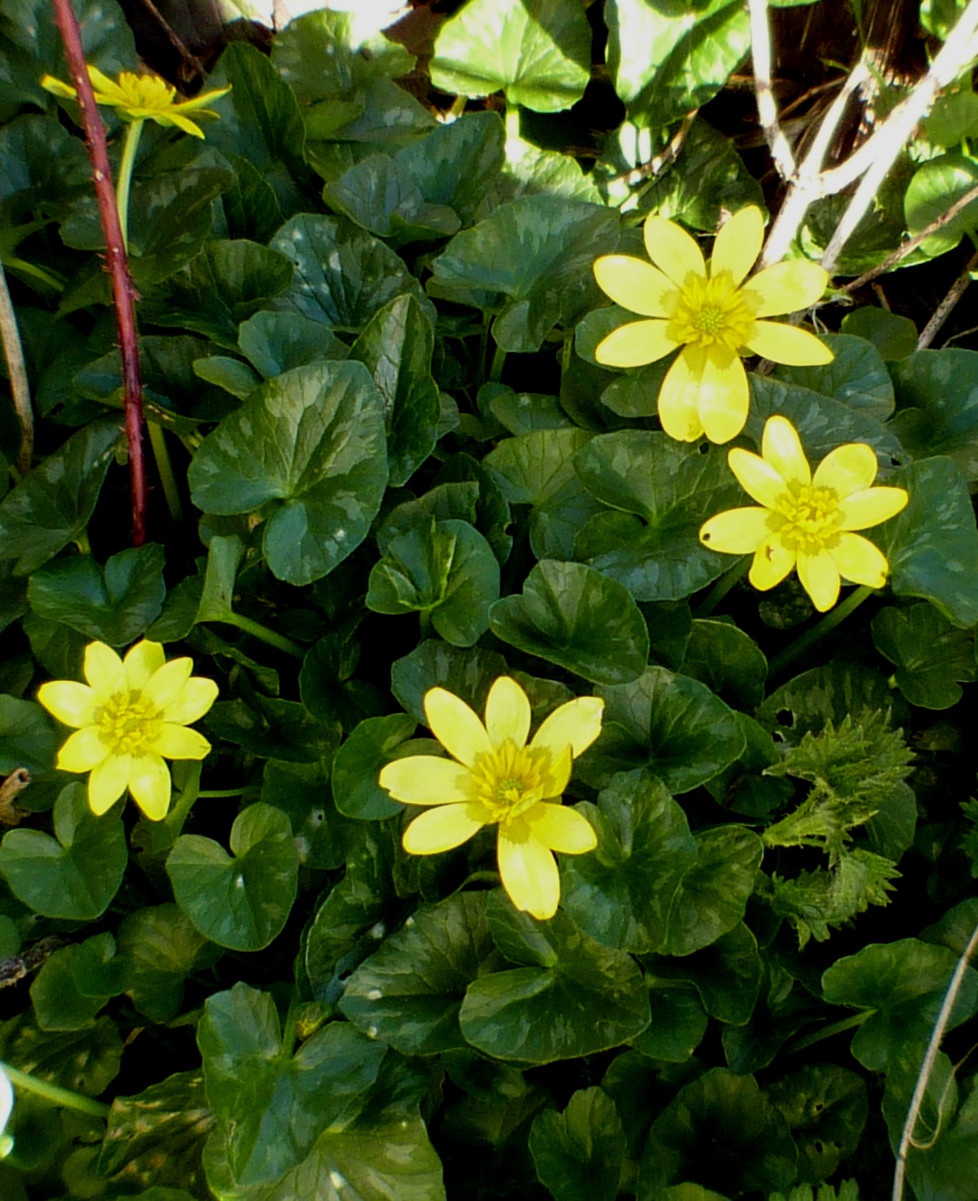
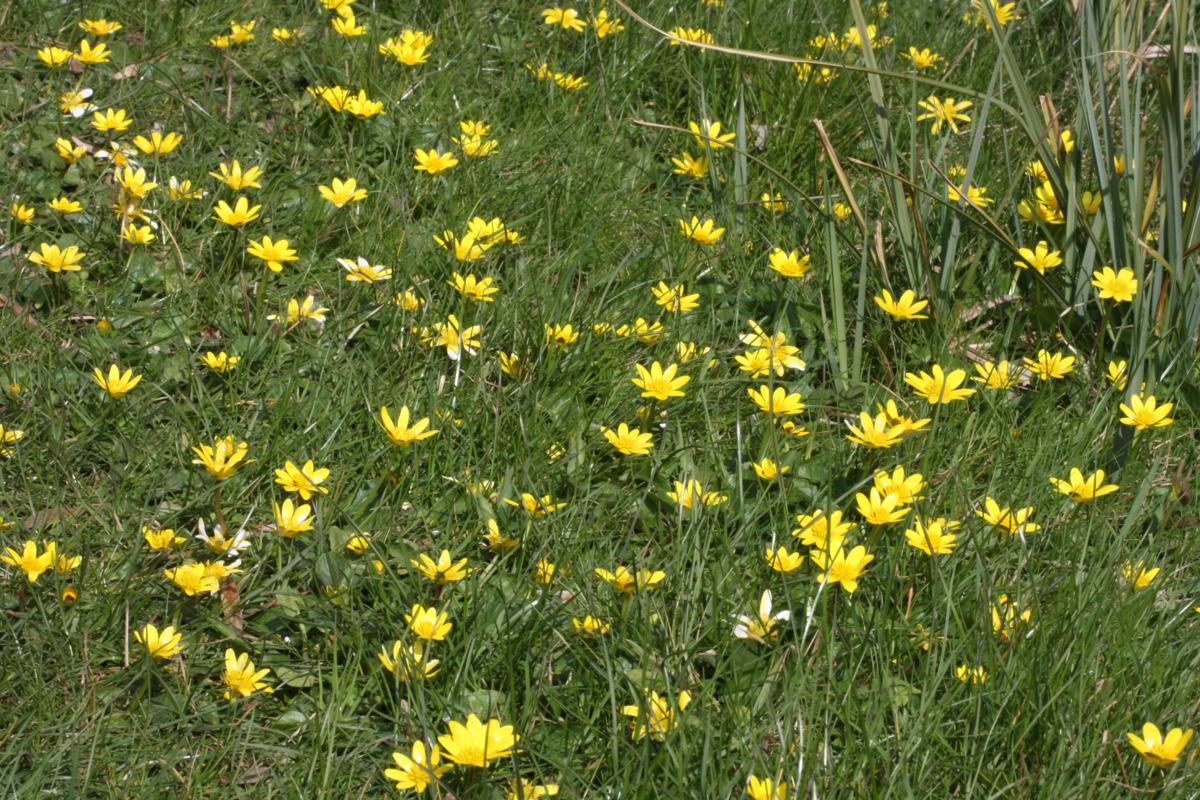
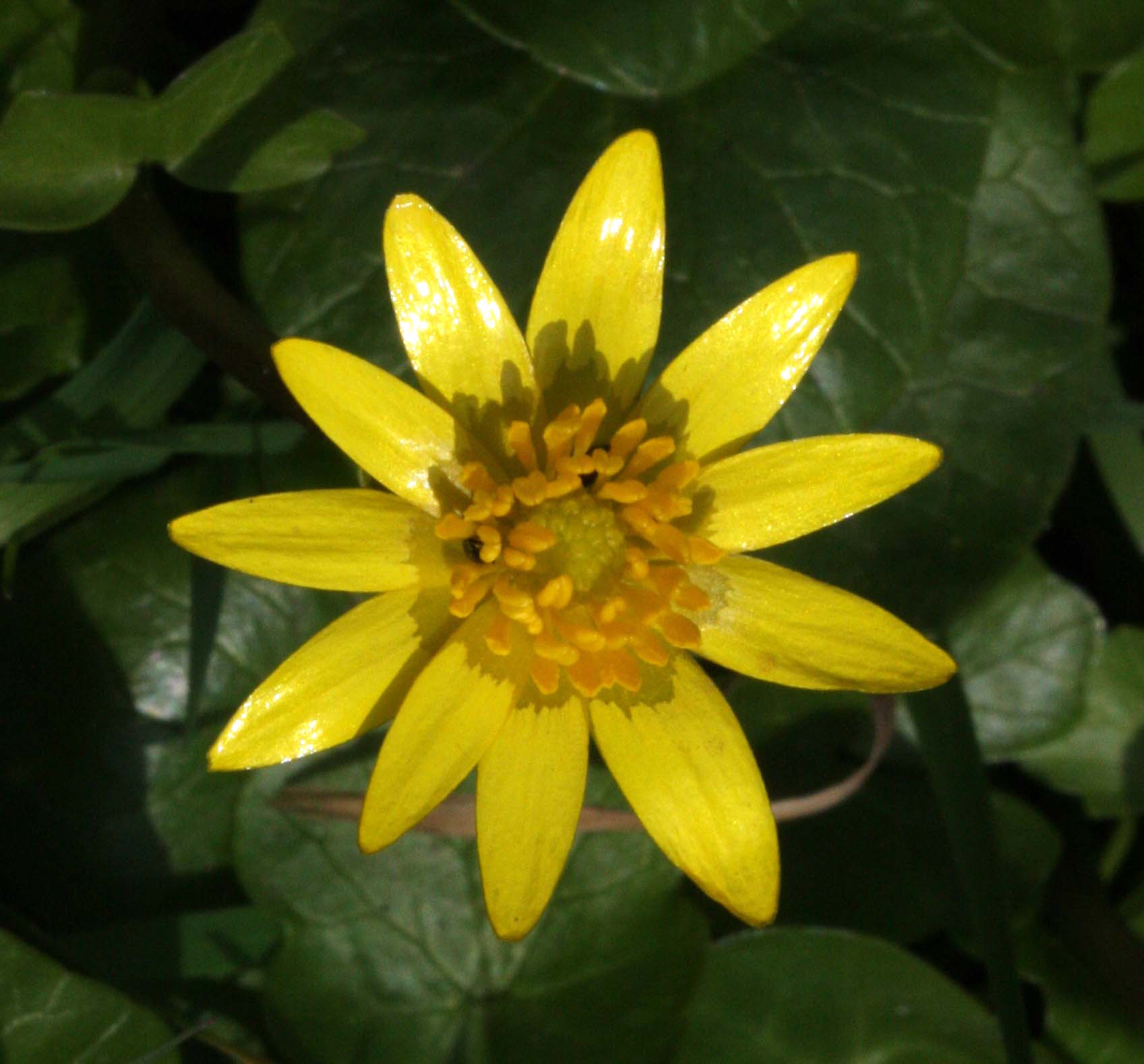
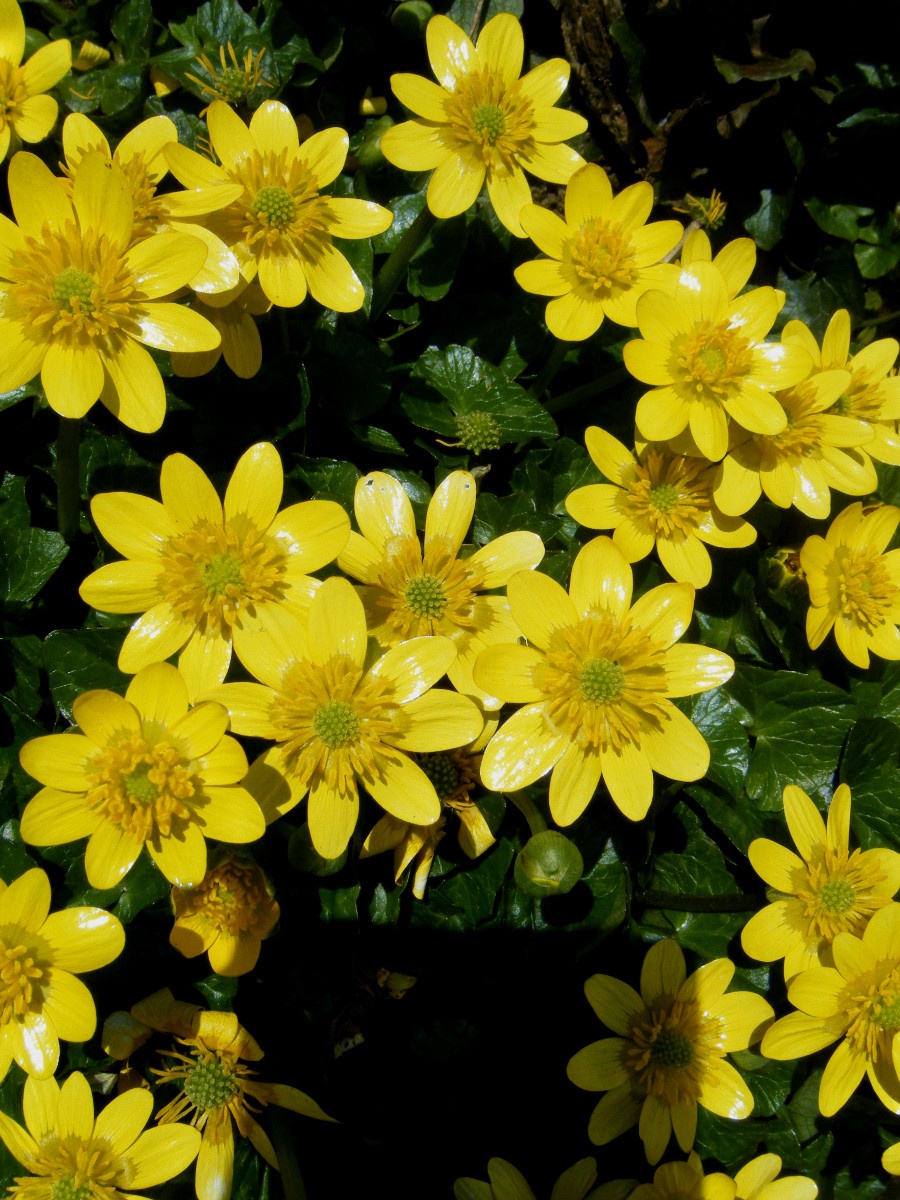
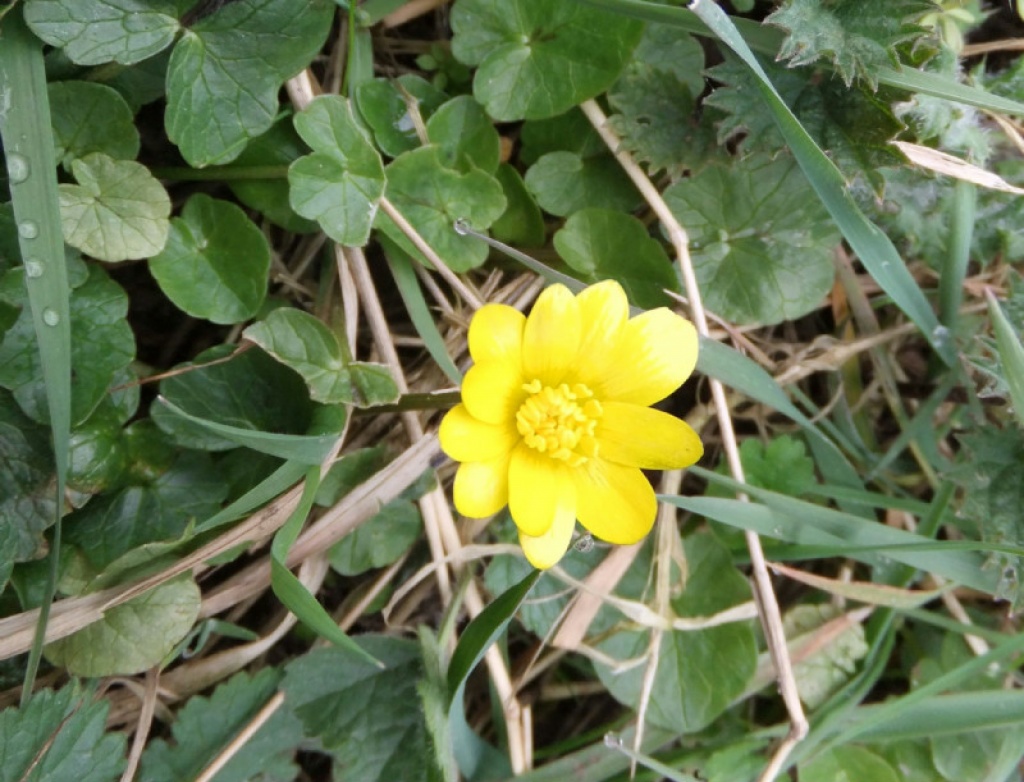
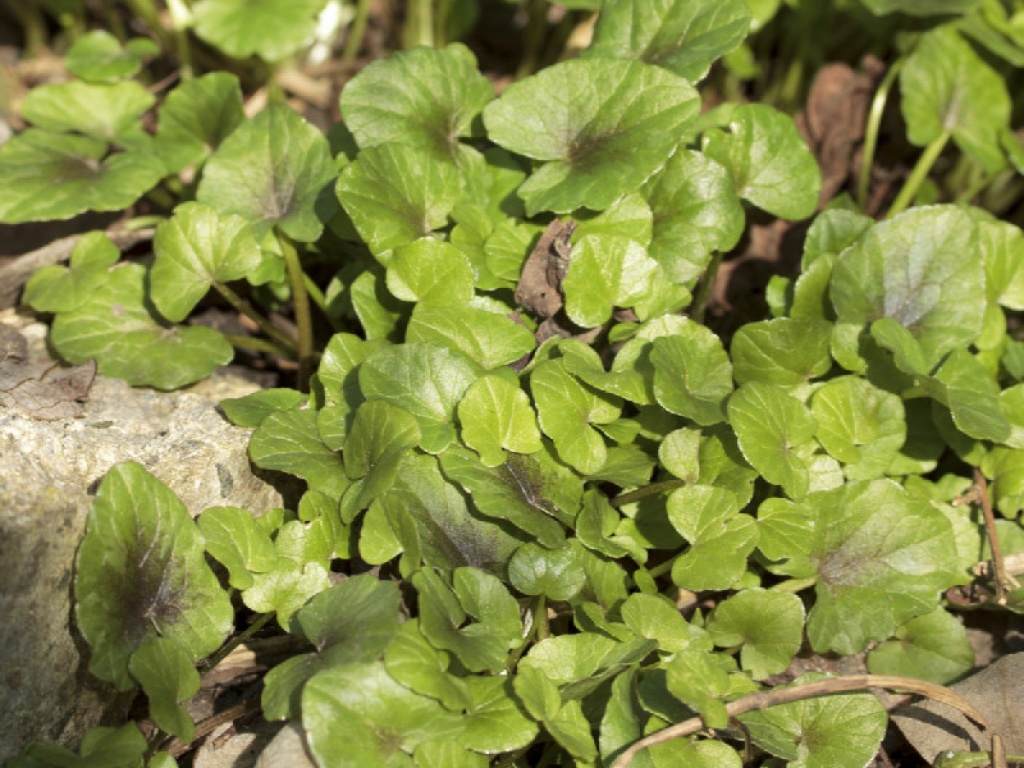
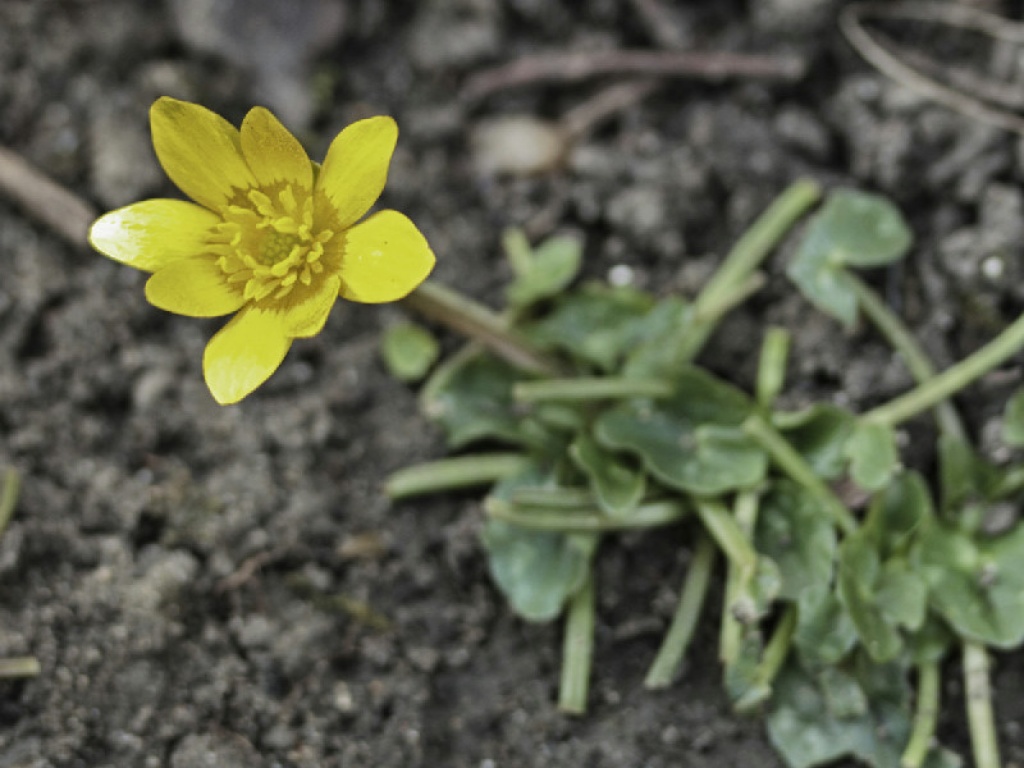
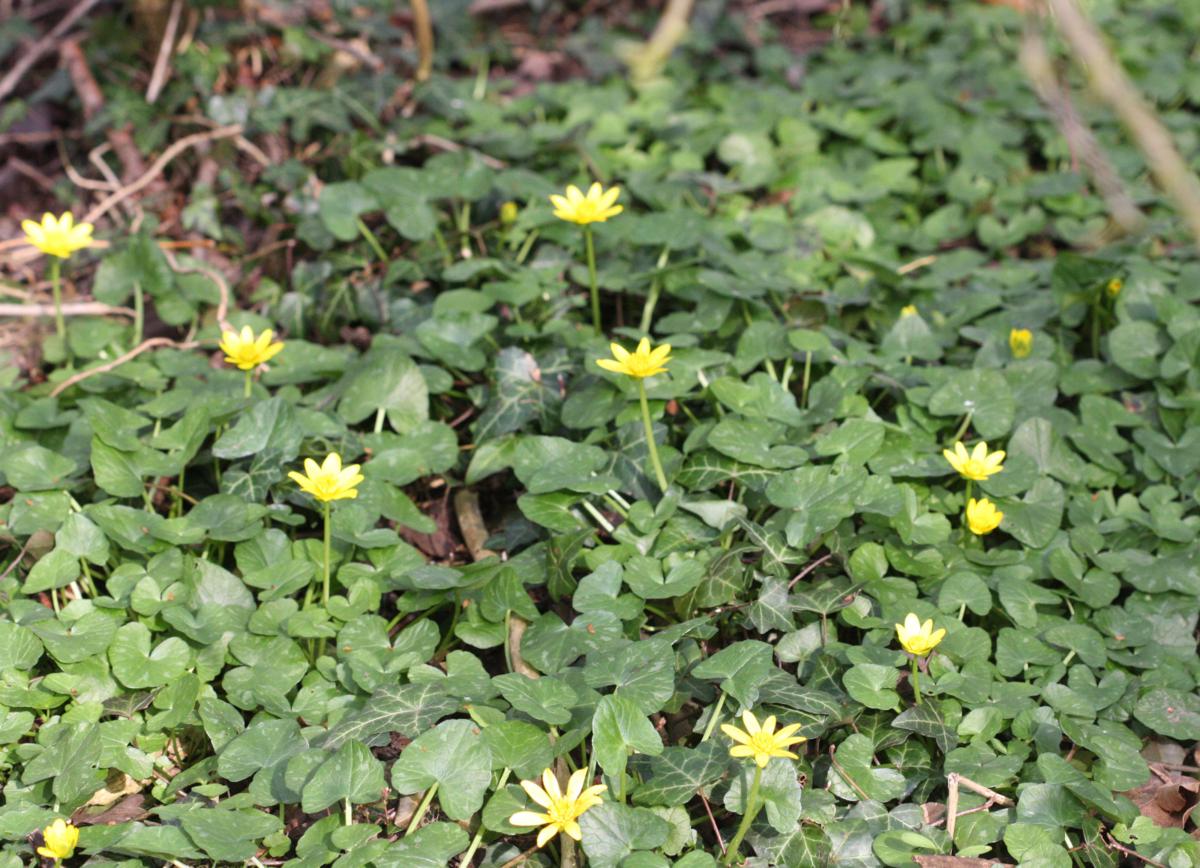
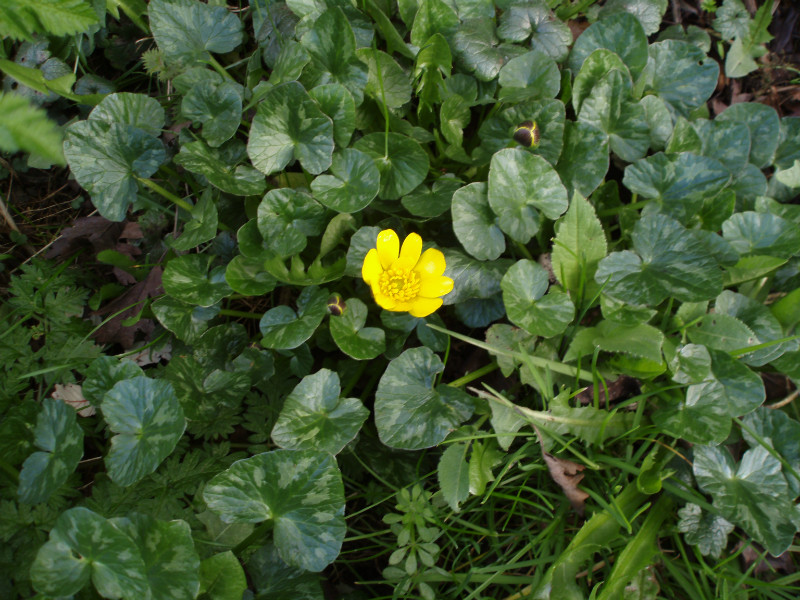
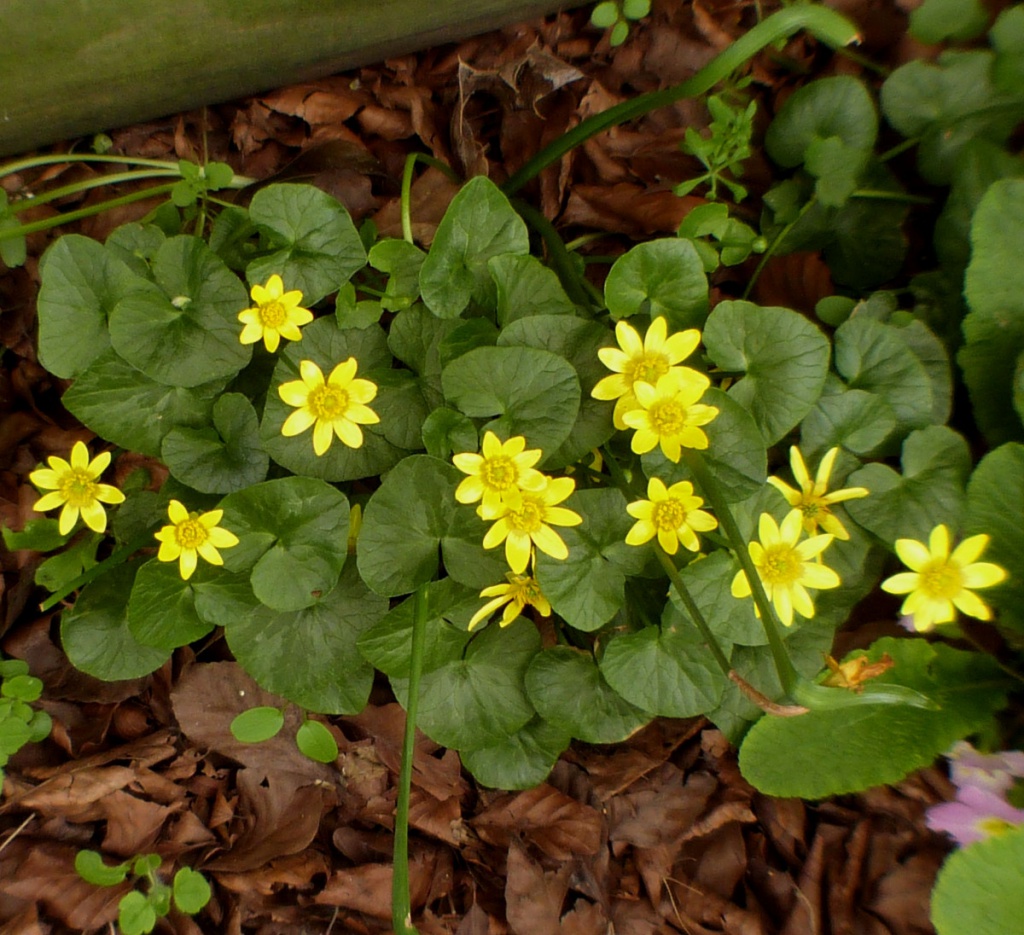
Low to short, tuberous rooted, hairless plant. Leaves heart shaped, rather fleshy, dark green. Flowers bright glistening yellow, turning whiter with age 20 to 30 mm, with 8 to 12 narrow elliptical petals.

Deciduous woodland, roadside verges, meadows and ditches.
March to May.
Perennial.
Very common throughout Britain.
Very common in Leicestershire and Rutland. In the 1979 Flora survey of Leicestershire it was found in 586 of the 617 tetrads.
Look out for the chocolate-brown telia of the rust fungus on the leaves of Lesser Celandine: Bitter Chocolate Rust (Uromyces ficariae)
 stepgray4
Cloud Wood
02 April 2021 All Saints Churchyard. Sapcote SP 4890 9320 (taken 15.3.2006).JPG) Graham Calow
Graham Calow
All Saints Chuch, Sapcote
15 March 2006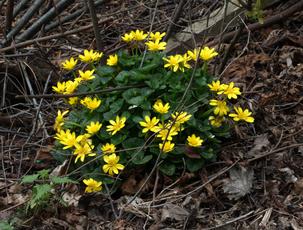 David Nicholls
Aylestone Meadows
31 March 2009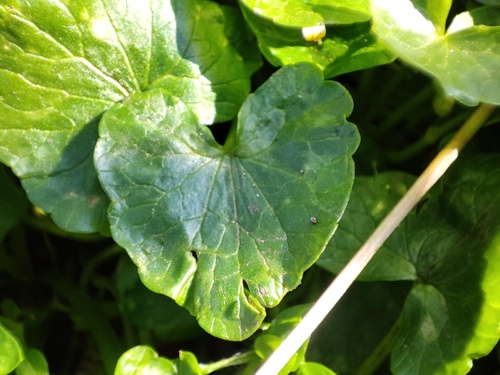 Rob Sayer
Leicester, Fosse Recreation Ground
26 March 2022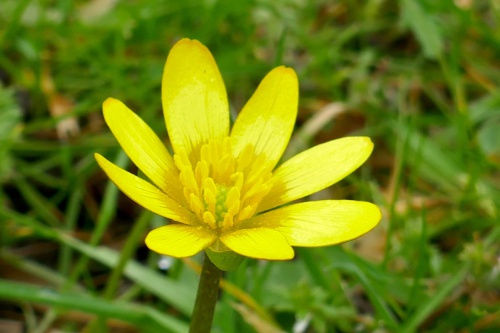 granniejo
Billesdon Woodland Pool
21 March 2023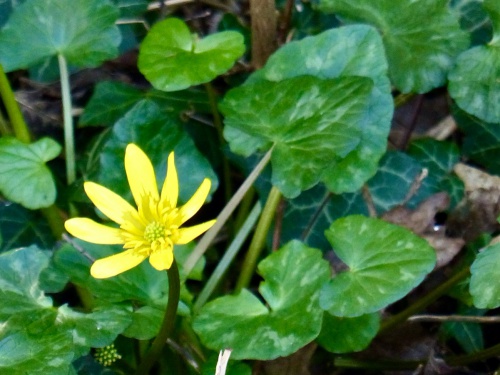 Ken Charity
Anstey. Summerfield Rd. Recreation Ground
31 March 2021
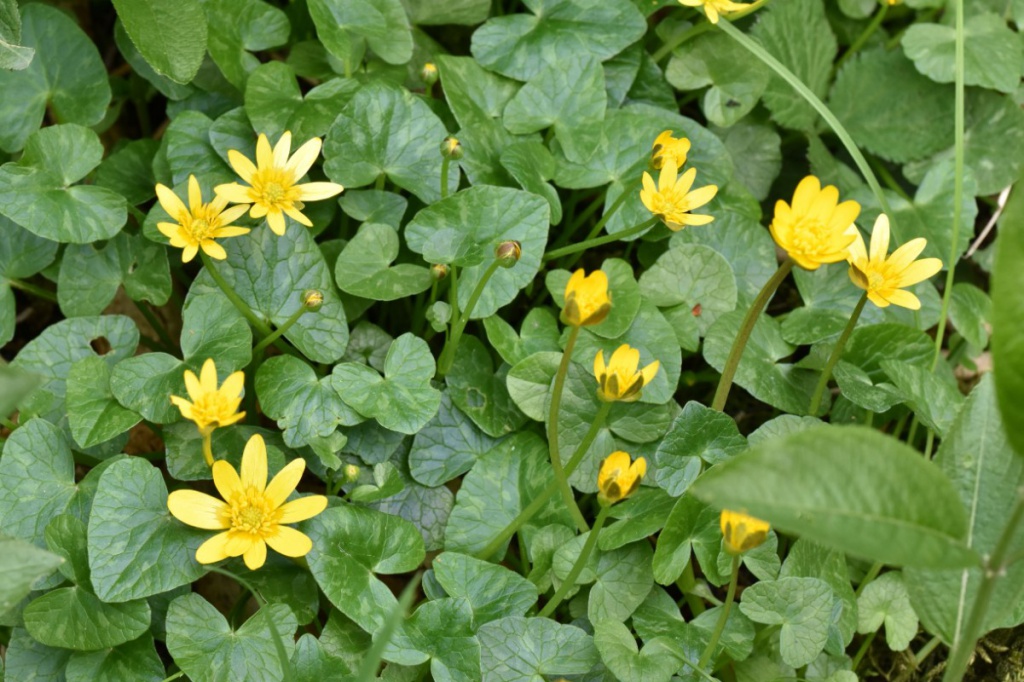
 All Saints Churchyard. Sapcote SP 4890 9320 (taken 15.3.2006).JPG)
Leicestershire & Rutland Map
Enter a town or village to see local records
MAP KEY:
Yellow squares = NBN records (all known data)
Coloured squares = NatureSpot records: 2025+ | 2020-2024 | pre-2020
UK Map
Additional images
 Old Fosse Sapcote SP 4994 9233 (taken 22.4.2006).JPG)

All NatureSpot records
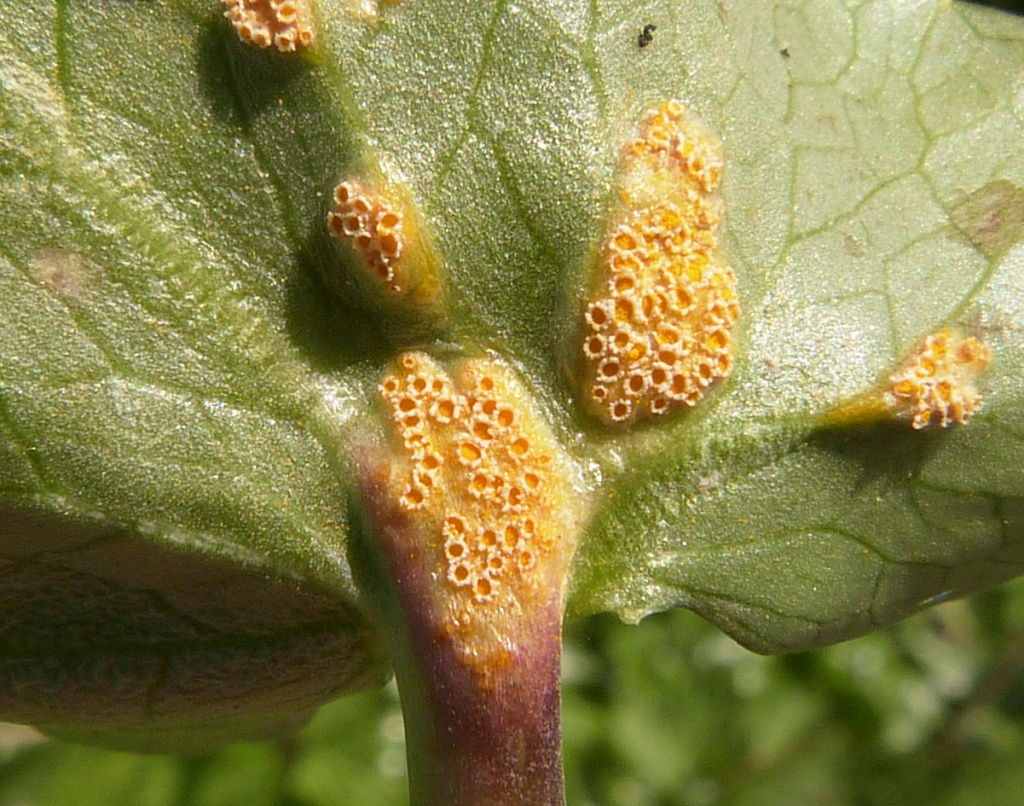
Celandine Clustercup Rust
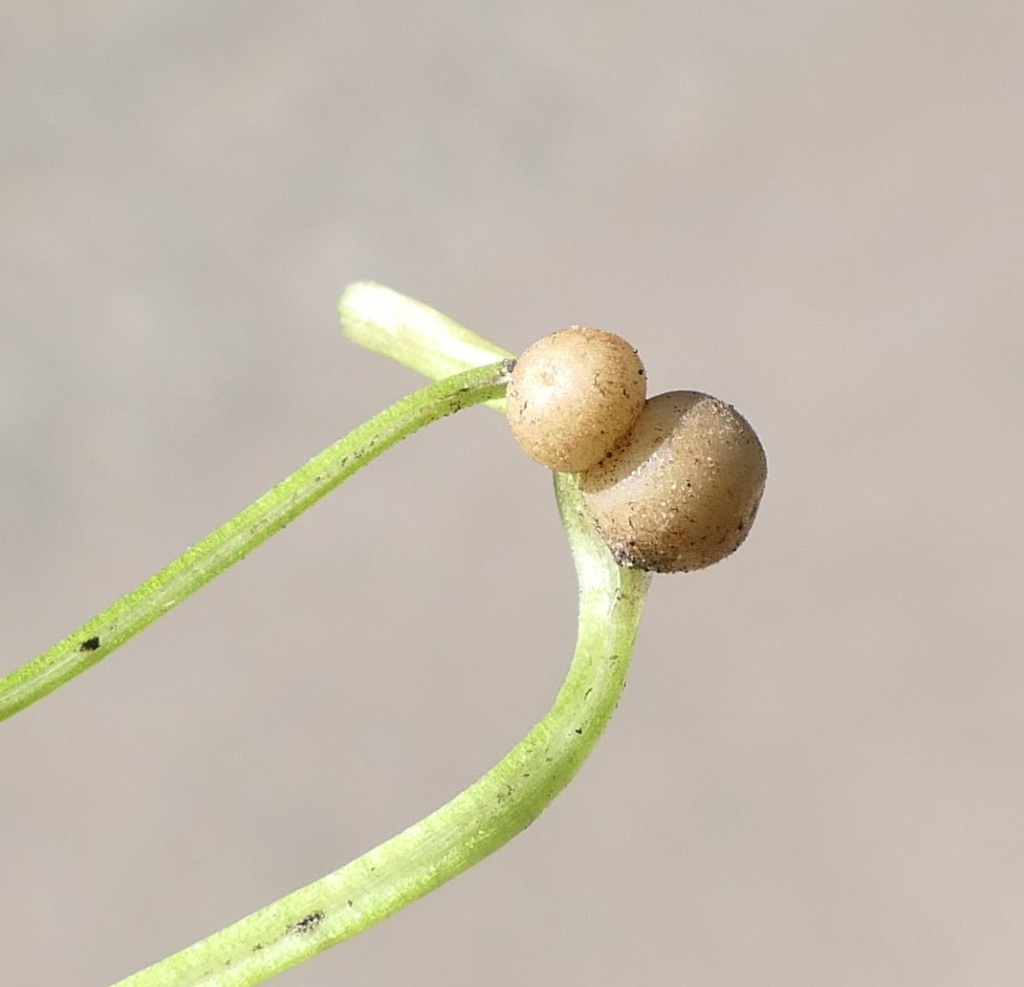
Celandine Clustercup Rust (Uromyces dactylidis) is most easily seen when the bright orange aecia appear on the leaves (underside) and petioles of Lesser Celandine, the alternate host-plant, causing galls.
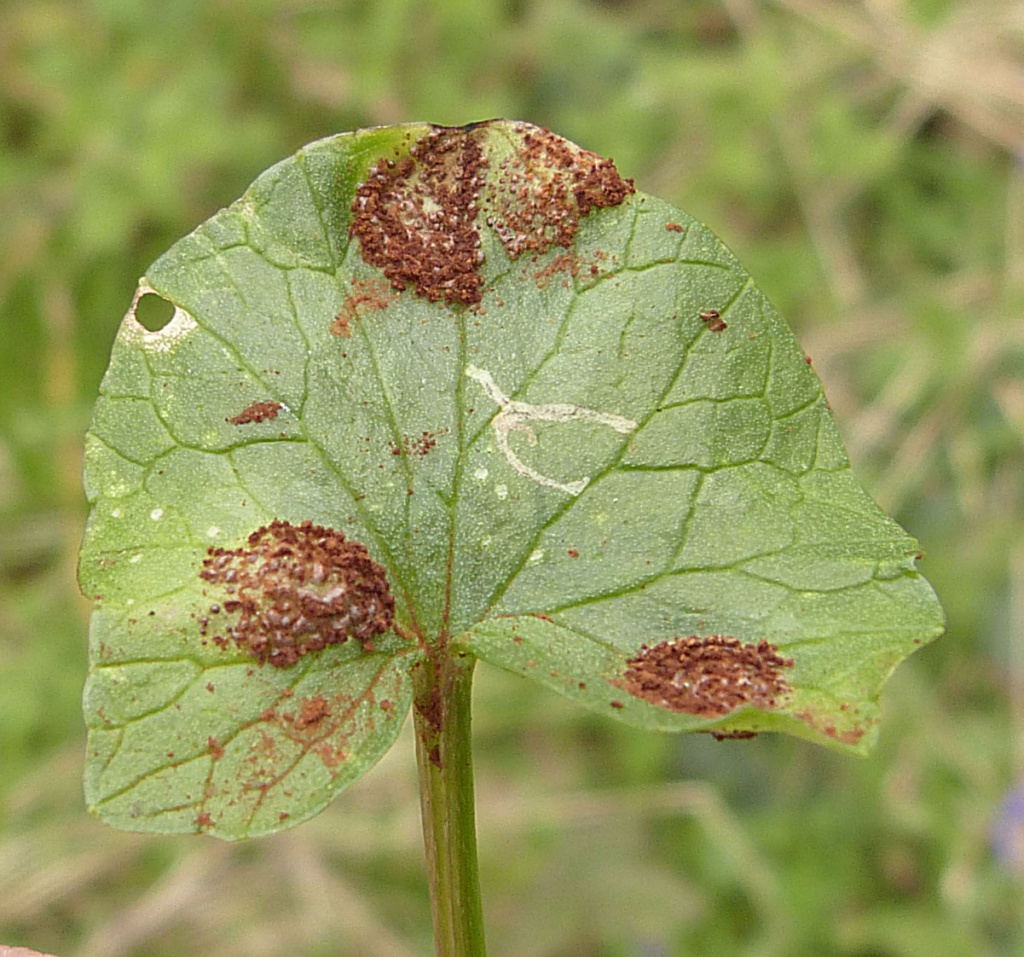
Bitter Chocolate Rust
Bitter Chocolate Rust (Uromyces ficaria) is a rust fungus affecting Lesser Celandine. There is no host plant alternation and only the chocolate-brown telia are present on raised swollen areas of leaves and petioles, causing galls.
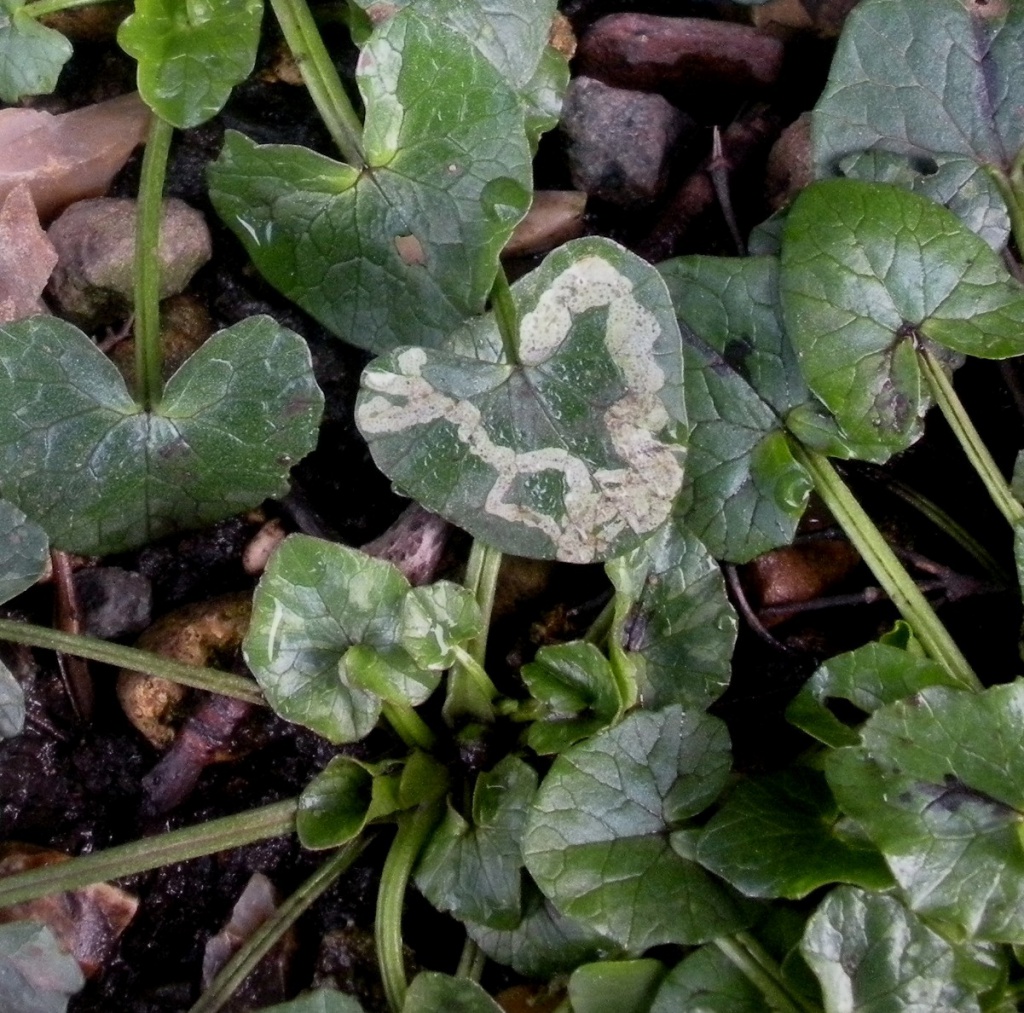
Phytomyza ranunculi
The larva of the Agromyzid fly Phytomyza ranunculi mines the leaves of various members of the Buttercup family including Lesser Celandine. In this species the grains of frass are closely adjoining or grouped. Identification is more difficult when the mine is in the stem.