Isochnus sequensi
Isochnus sequensi
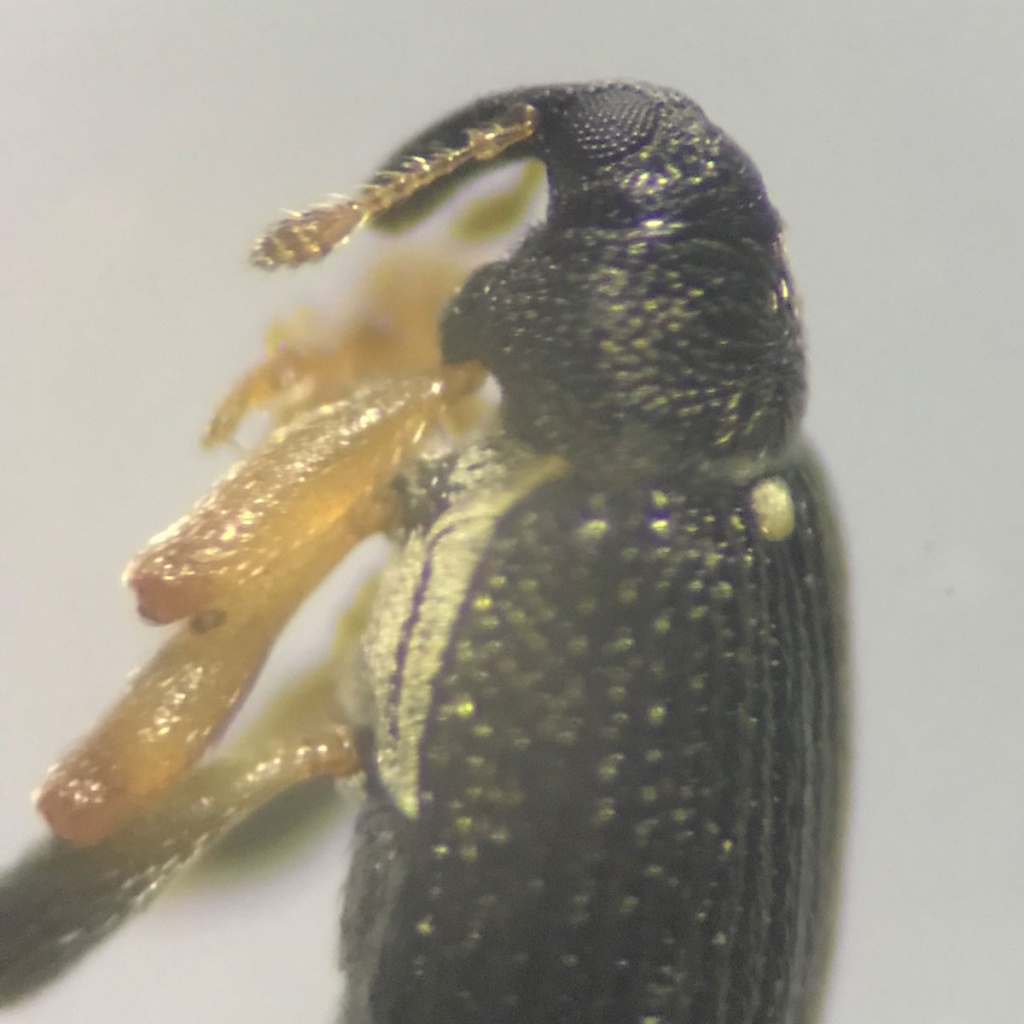
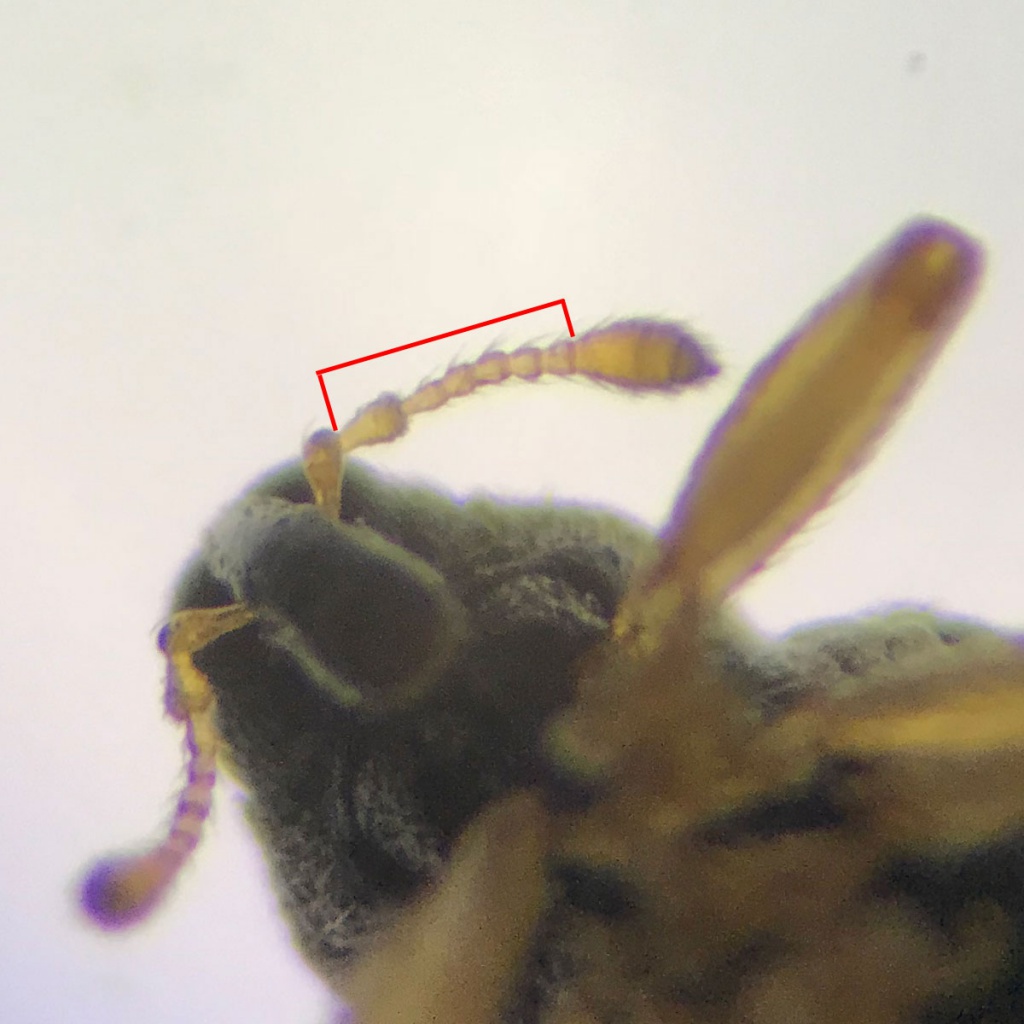
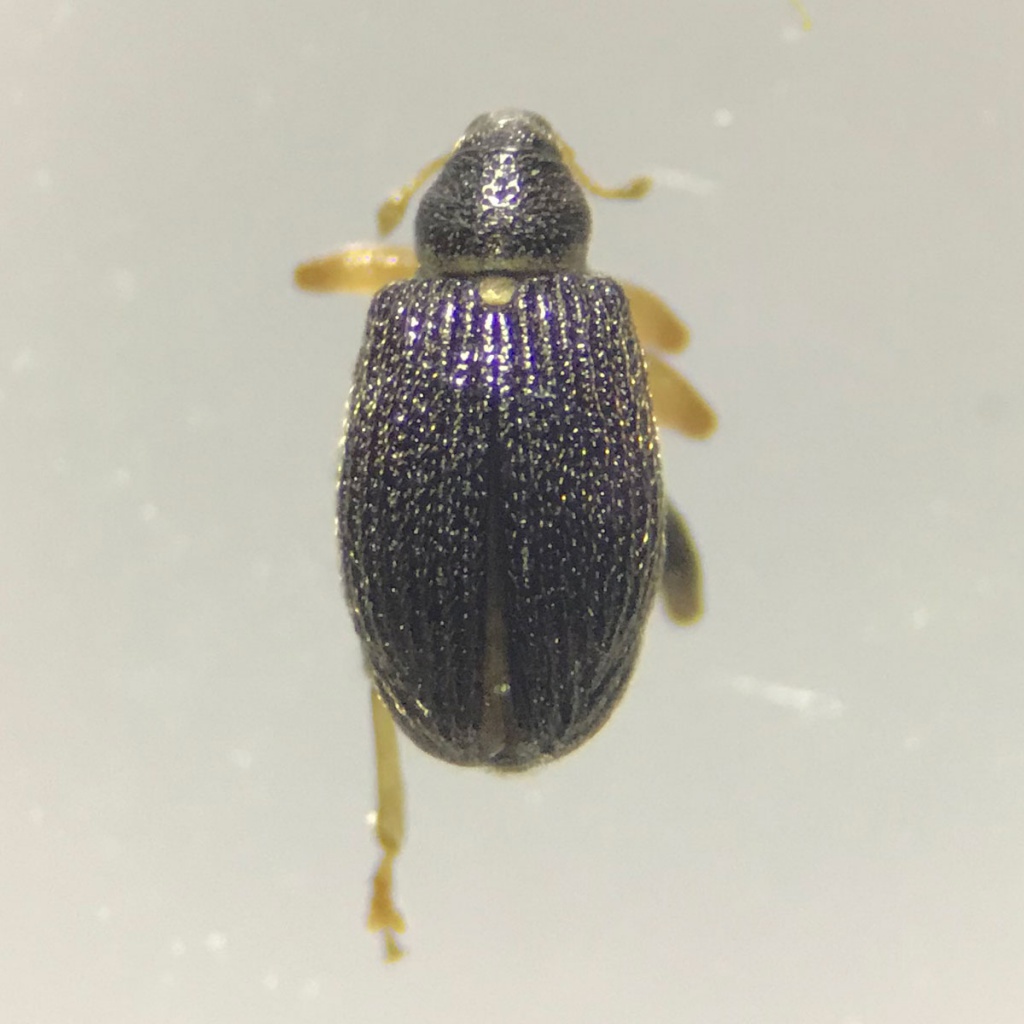
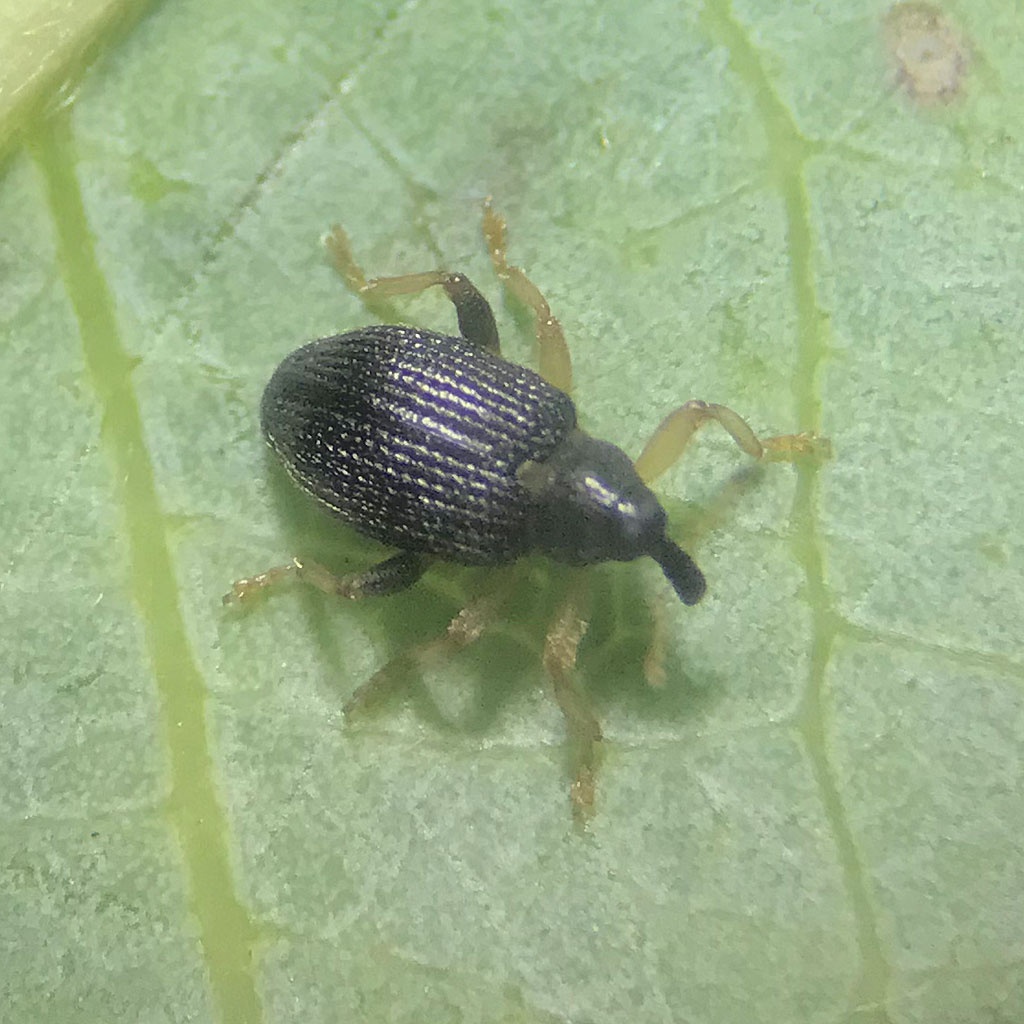
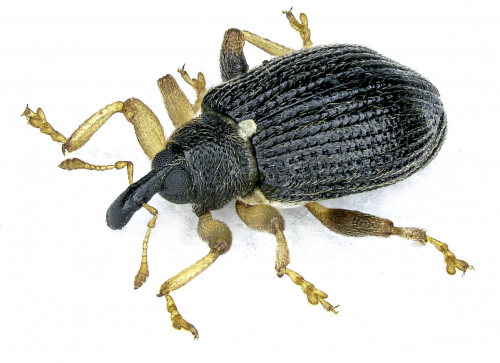
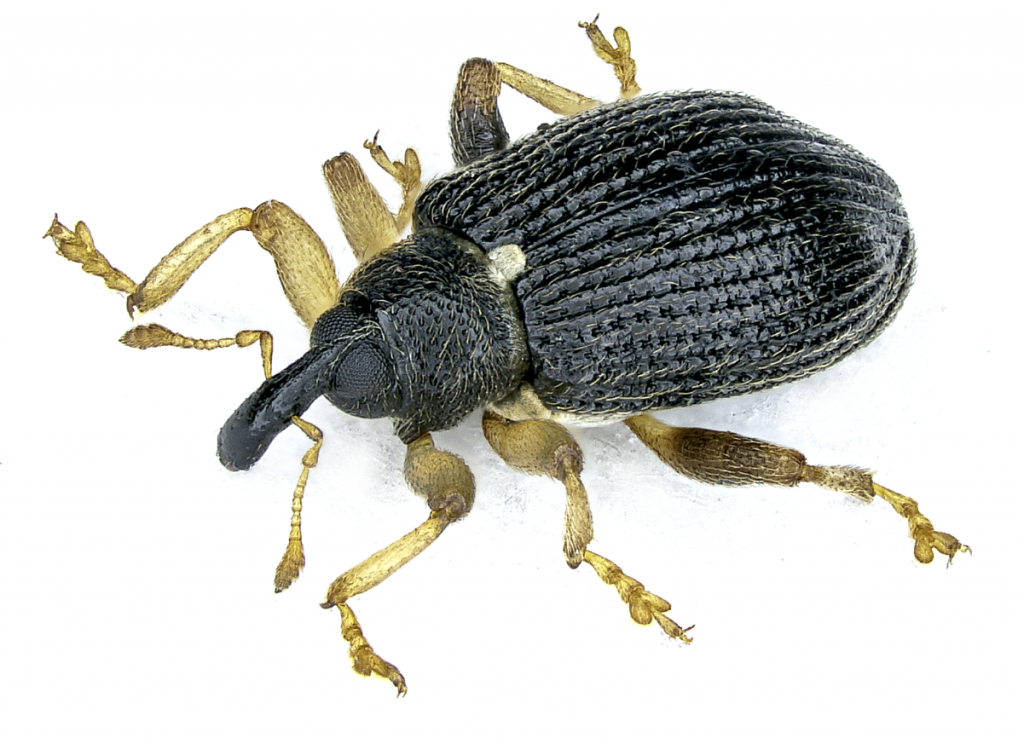
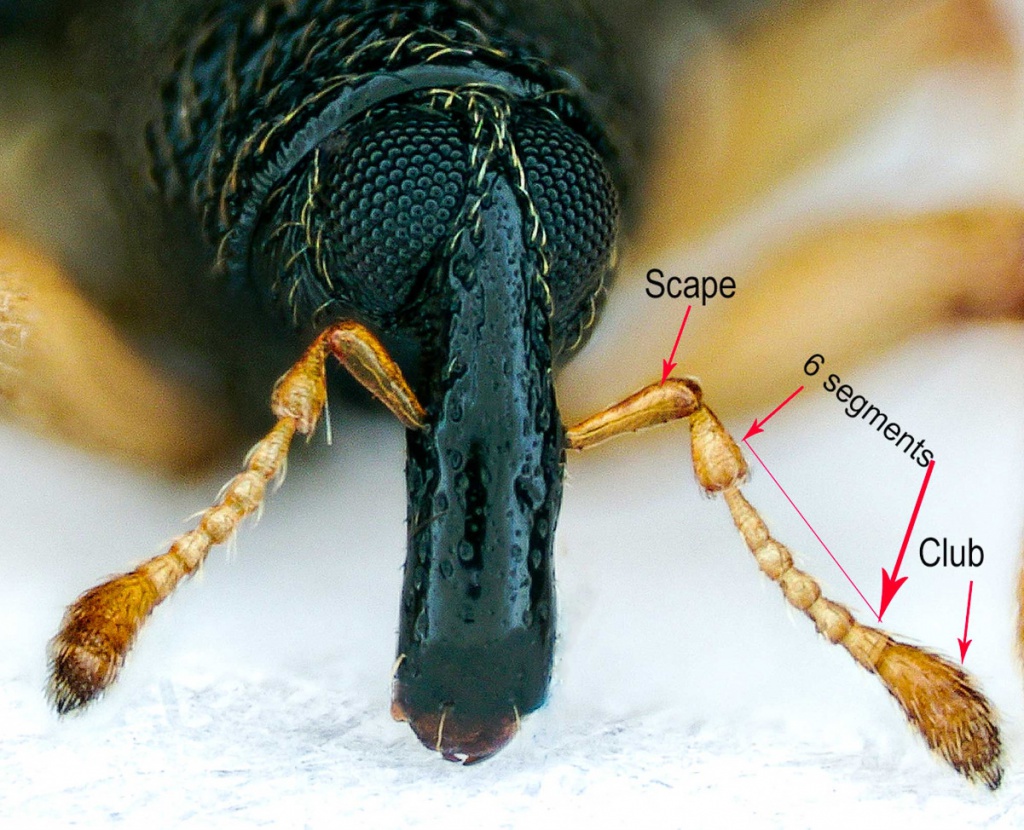
A tiny (2.0-2.5mm) black weevil with a white scutellum, pale tarsi and tibiae and yellow/red fore and mid femora. The antennal funiculus is six-segmented.
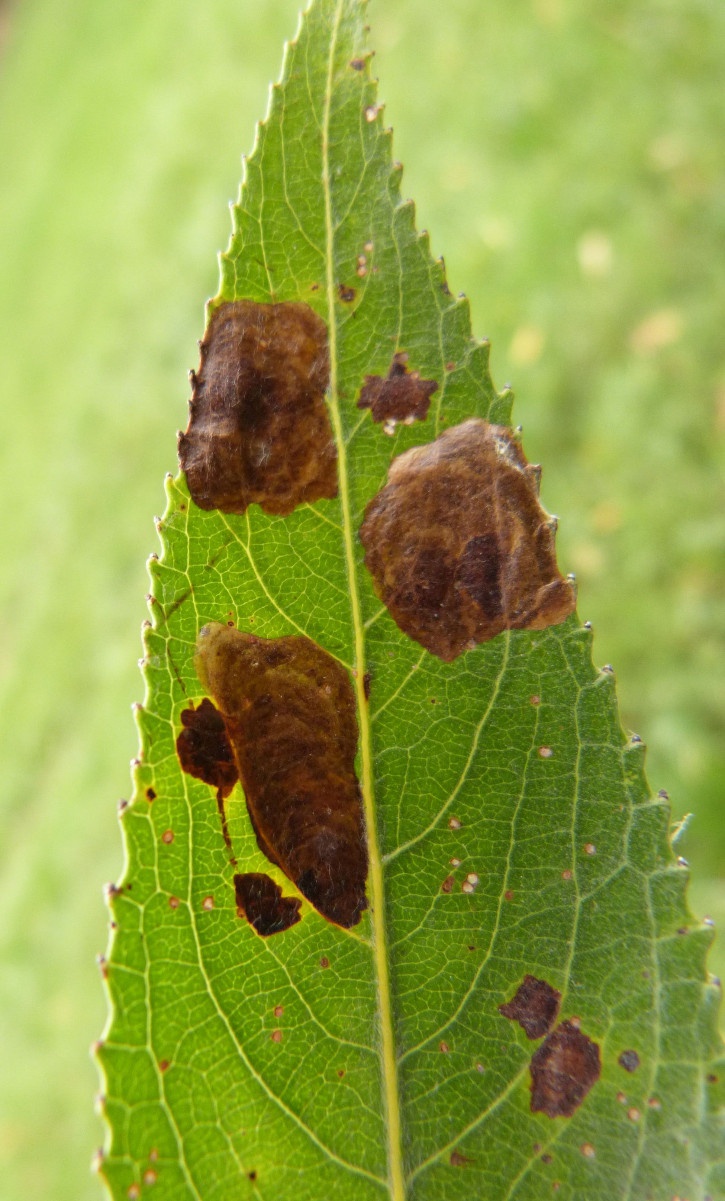
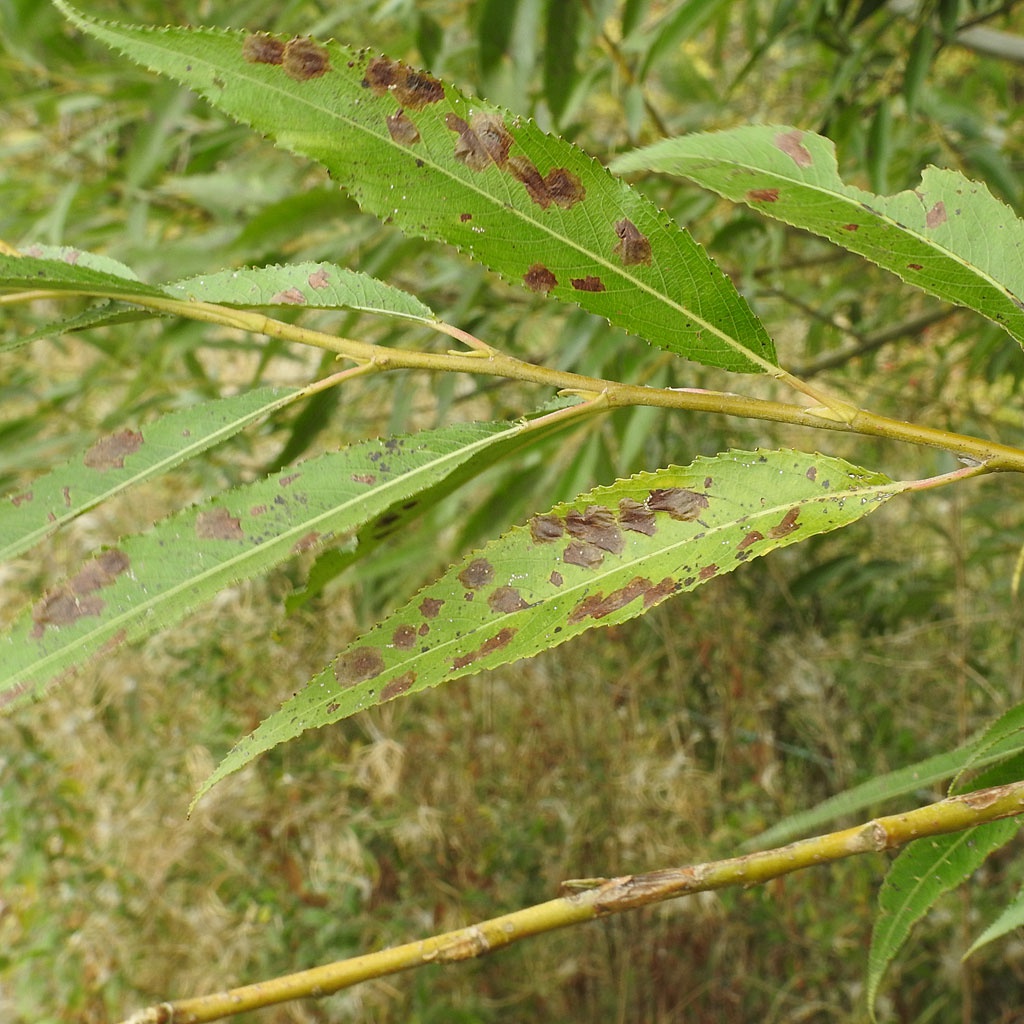
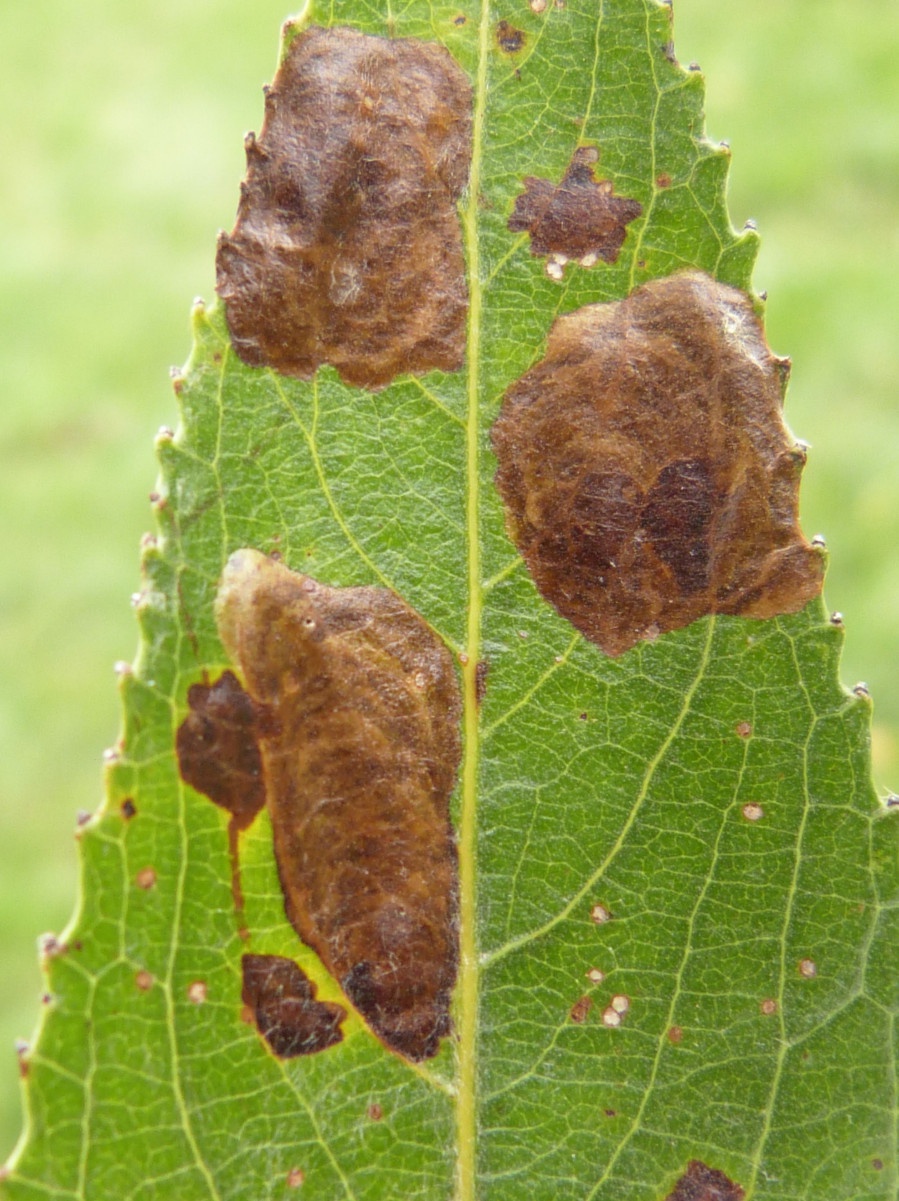
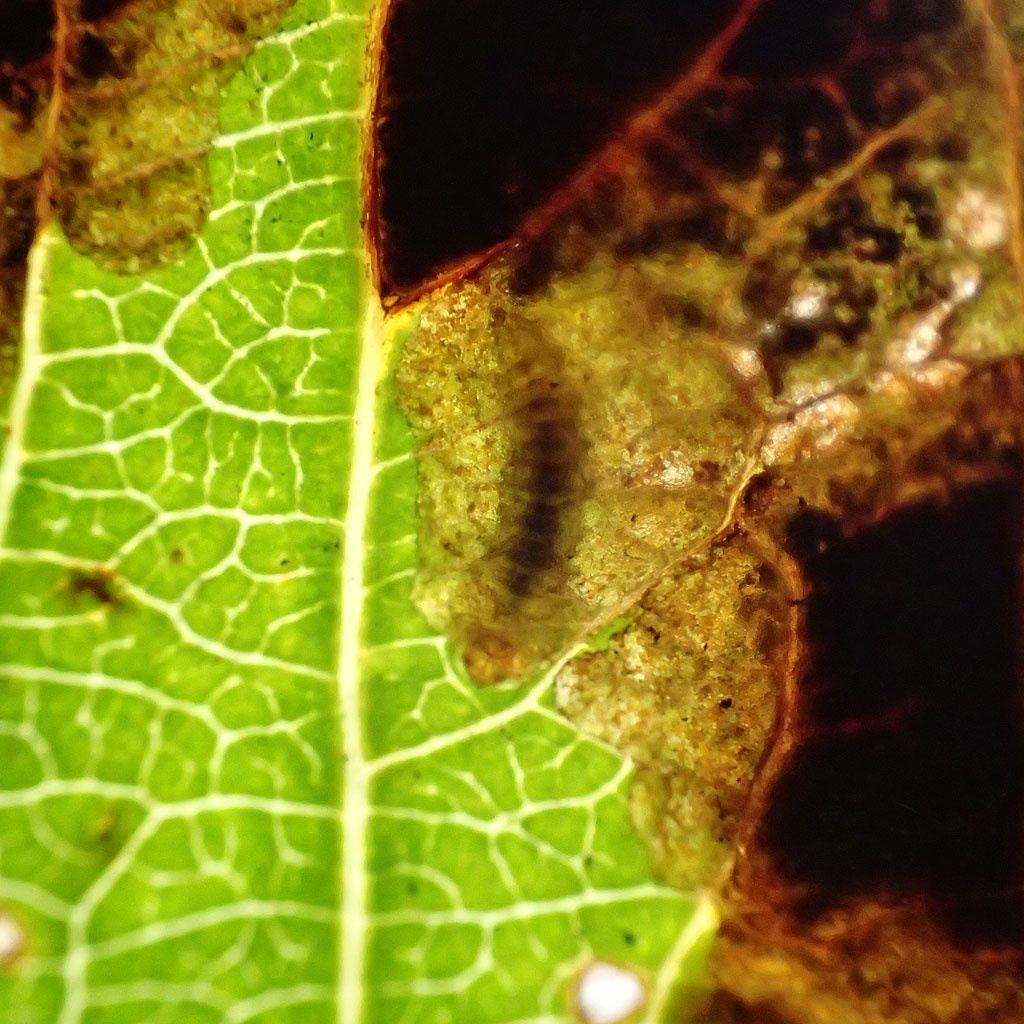
The larvae feed on willow leaves, forming brown blotch mines. The adult must be reared out to identify the mine
Mines are indistinguishable from the very similar but rarer Isochnus foliorum. Adults must be collected or reared to confirm identification. I. foliorum has pitchy fore and mid femora and seven segments in the antennal funiculus.
To rear the adults a leaf or two containing mines should be collected and kept in a tupperware box with a little damp kitchen-towel wrapped around the stem to keep the leaf green. This should be kept in a cool dark place and checked every day for adults and wiped clean to avoid mold. The adults will usually emerge after several days. To differentiate between species :-
The front and mid femora of I. sequensi are red to yellow.
The front and mid femora of I. foliorum are black to pitchy.
Attached photo shows 6 segmented funiculus (funiculus = segments between scape and club) as opposed to 7 segments for I. foliorum.Adult  leaf mine
Not identifiable from the mine. Adults must be collected/reared. Unless identified by a recognised expert, photographic evidence is required and the specimen should be examined with a microscope. In the comments box, state the key or ID method used. Note the beetle's size and describe the identifying characters. It is advisable to retain the specimen in case further checks are needed.
The larvae produce blotch mines in the leaves of Salix species, and sometimes Populus. The adults are usually found close by. The preferred species in Britain appears to be hybrid crack-willow, S. x fragilis.
Mines can be found when the hosts are in leaf.
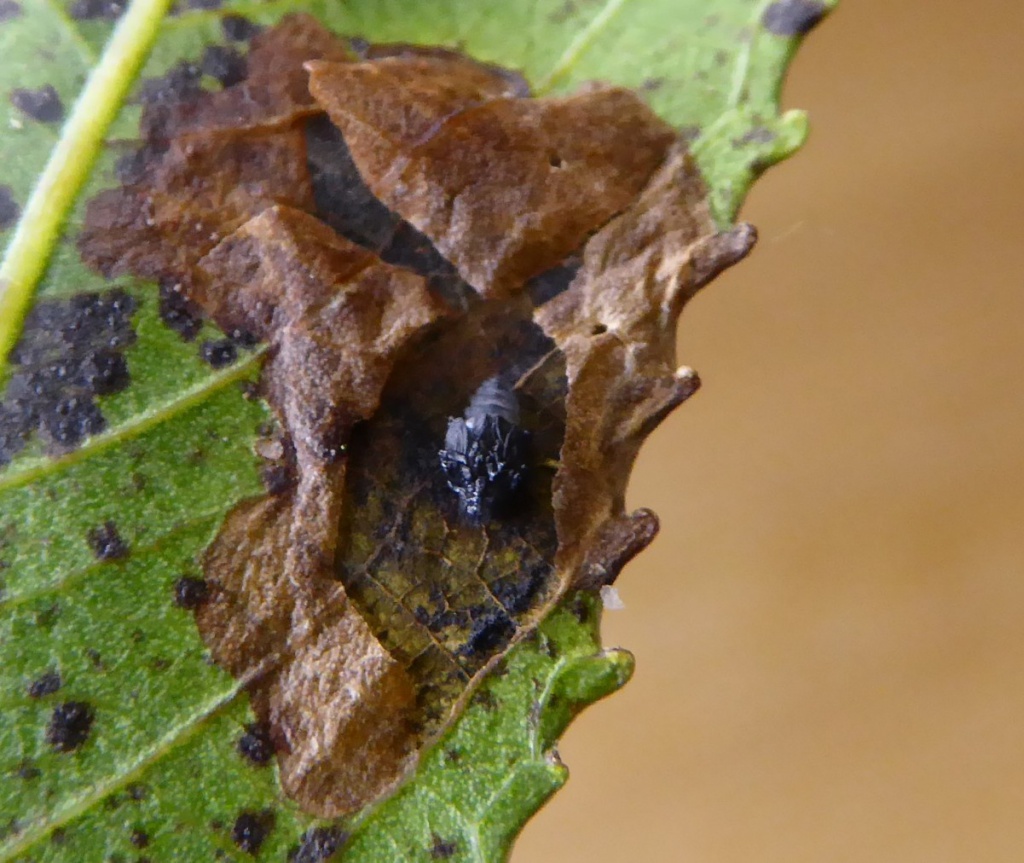
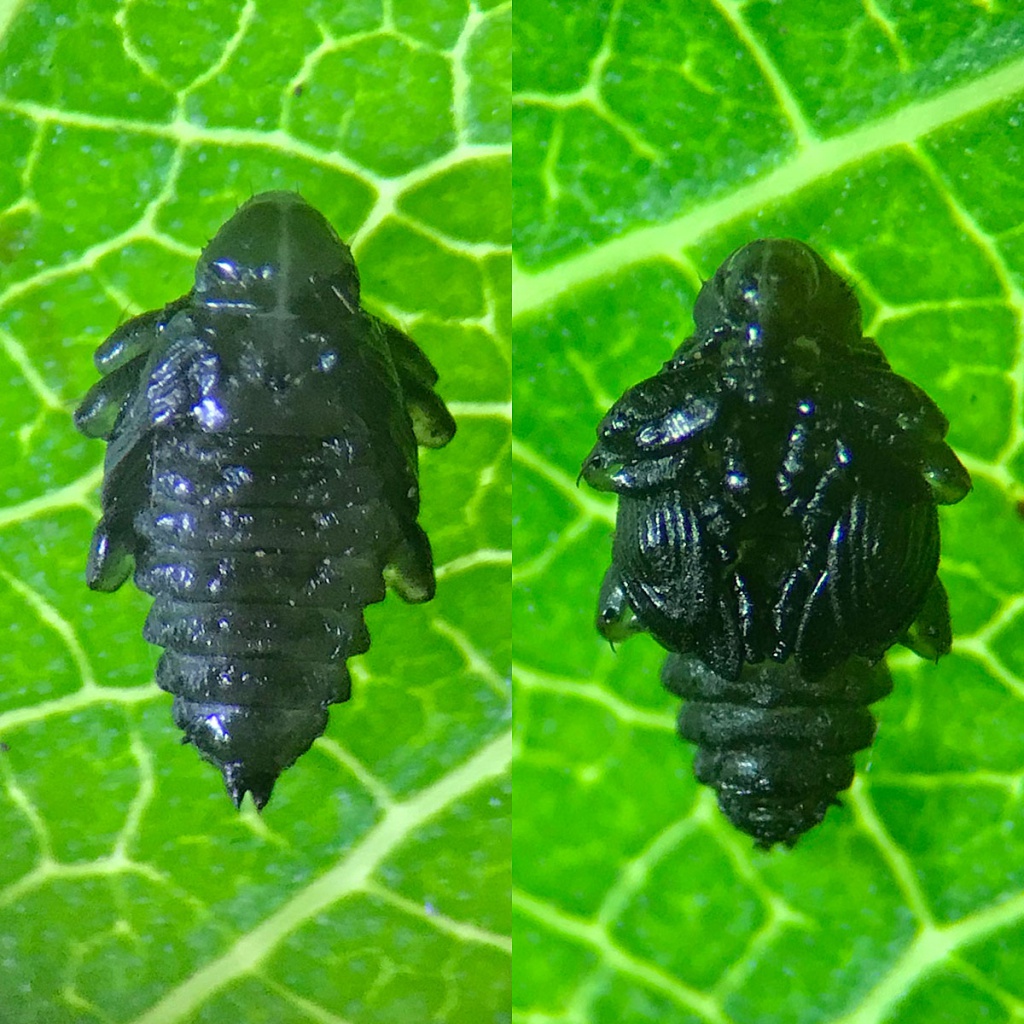
The larvae feed within a blotch mine and then pupate within the mine.
The species had been considered local and scarce but is spreading and increasing from its strongholds in south-eastern England. It can be abundant where it occurs.
First found in VC55 in August 2014 when it was discovered at two separate locations on the same day.
 Graham Calow
Field near Stoney Bridge, Sapcote
17 September 2018
Photo by Graham Finch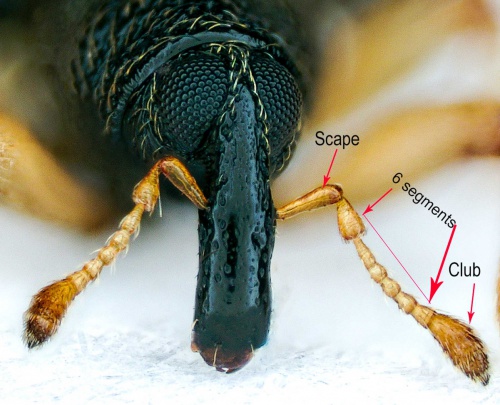 Graham Calow
Field near Stoney Bridge, Sapcote
17 September 2018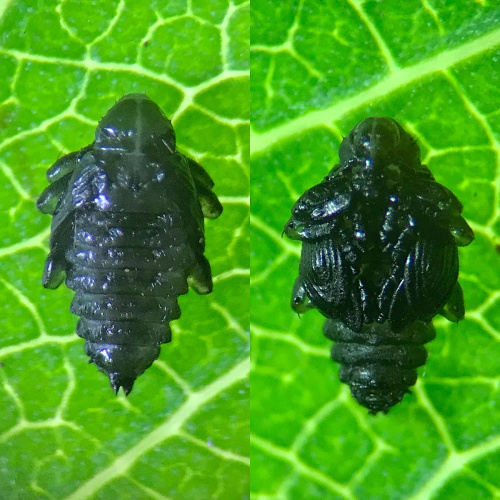 David Gould
G.U. Canal, Aylestone, Leicester.
29 September 2018
pupae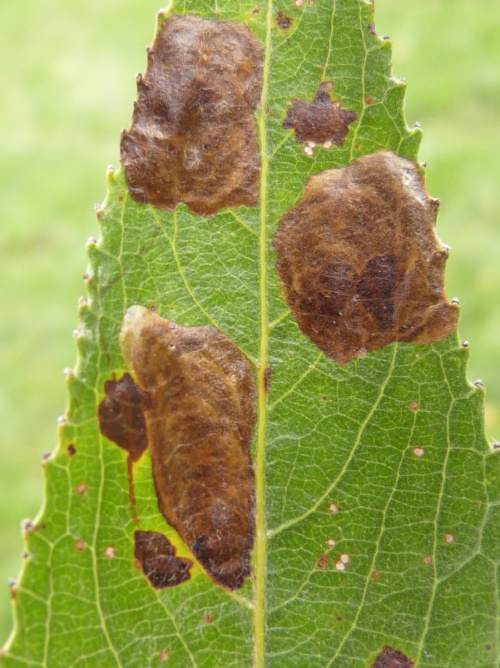 Graham Calow
Field near Stoney Bridge, Sapcote
17 September 2018
leafmine on Crack-willow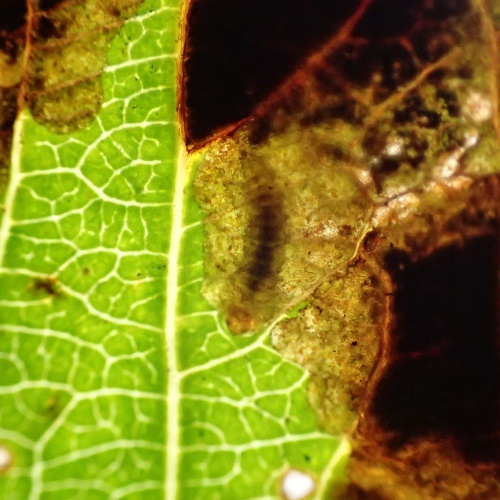 David Gould
G.U. Canal, Aylestone, Leicester.
29 September 2018
larva in mine David Gould
G.U. Canal, Aylestone, Leicester.
29 September 2018
pupa in mine

Leicestershire & Rutland Map
Enter a town or village to see local records
MAP KEY:
Yellow squares = NBN records (all known data)
Coloured squares = NatureSpot records: 2025+ | 2020-2024 | pre-2020
UK Map
Additional images