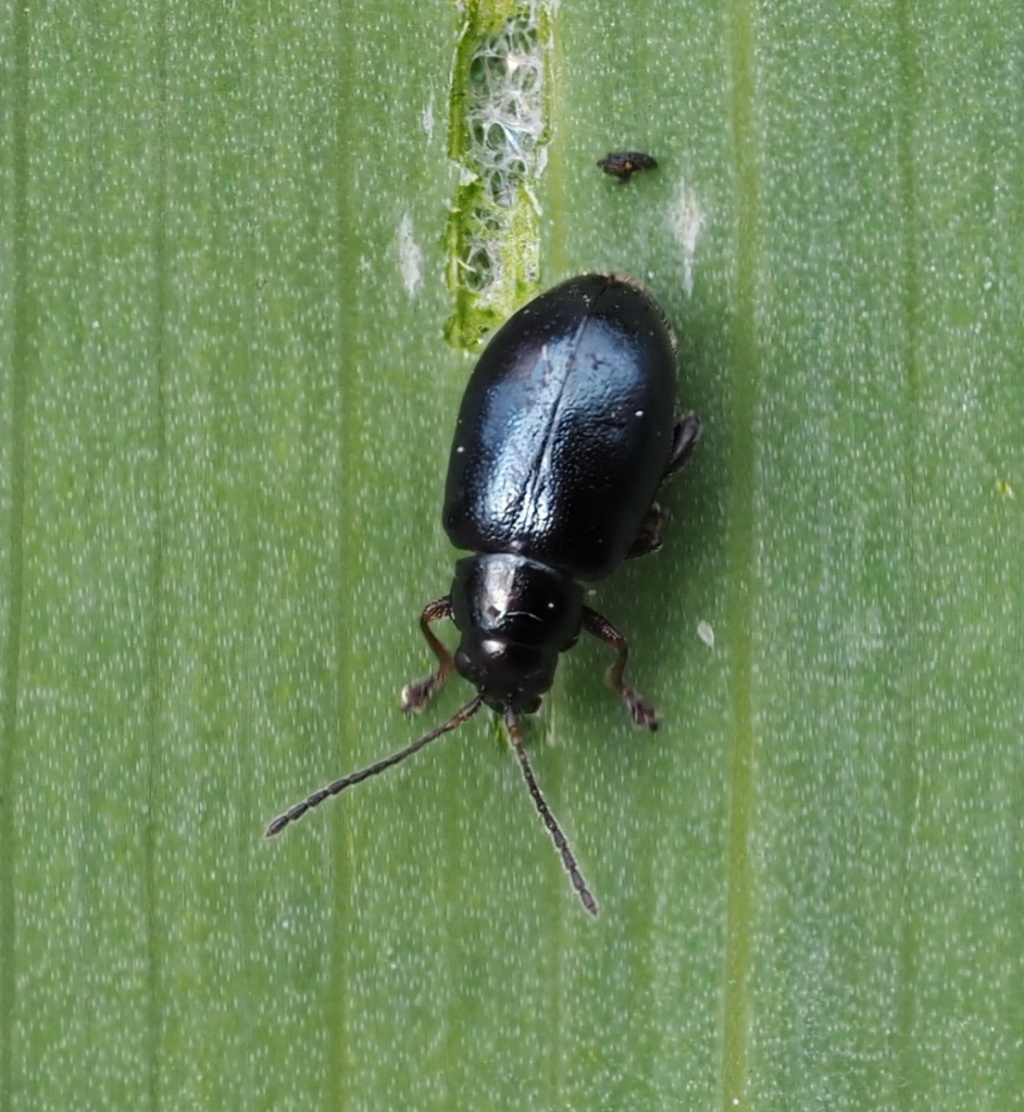
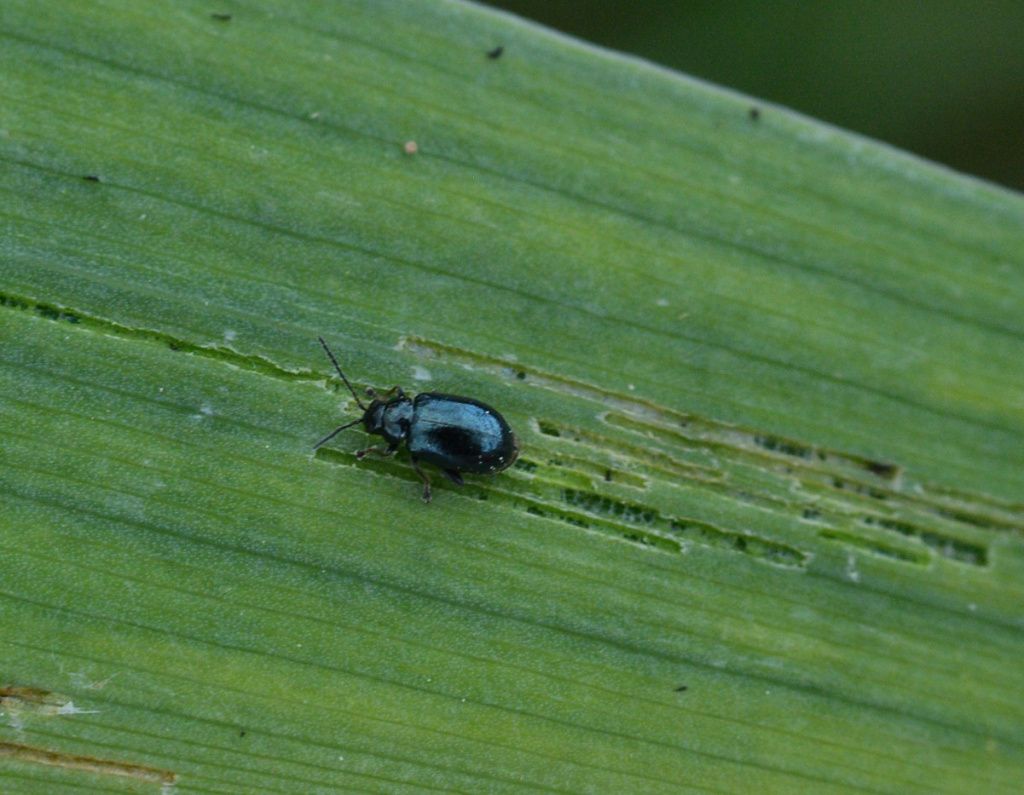
Iris Flea Beetle
Iris Flea Beetle - Aphthona nonstriata
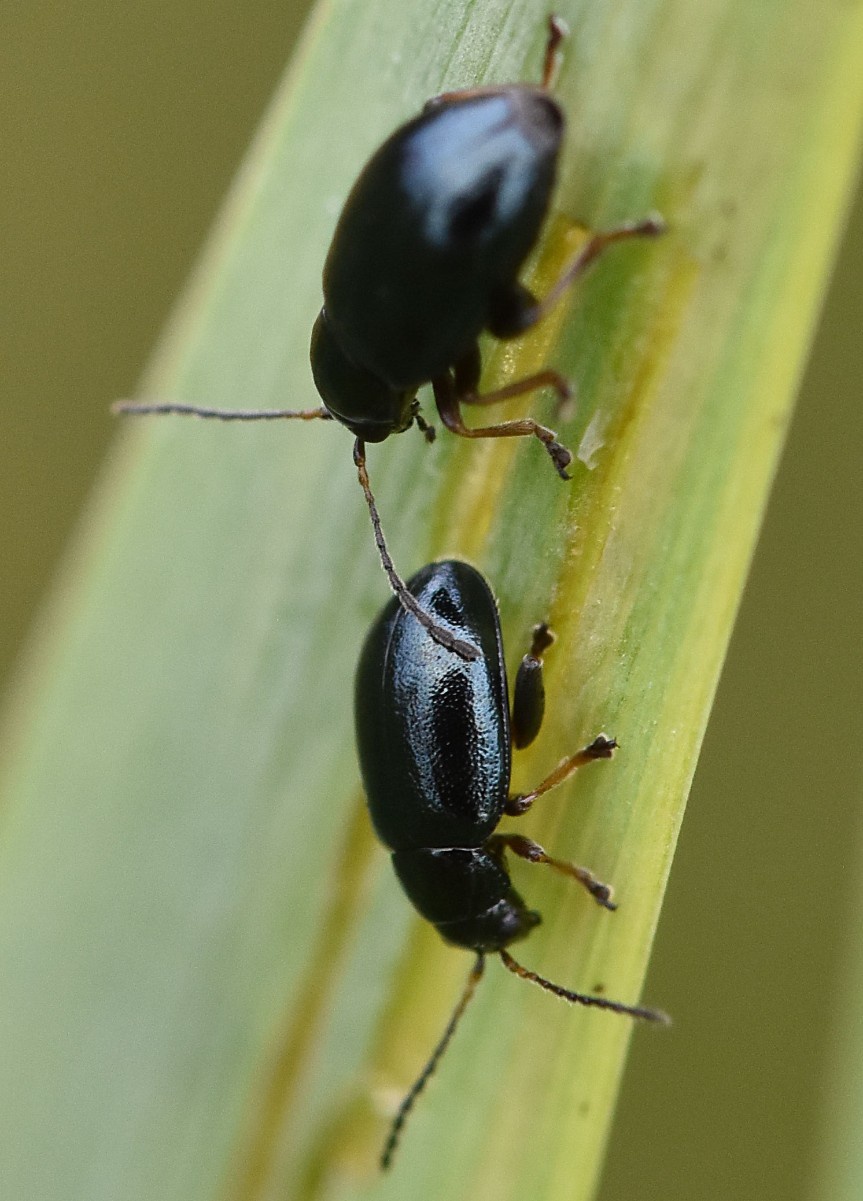
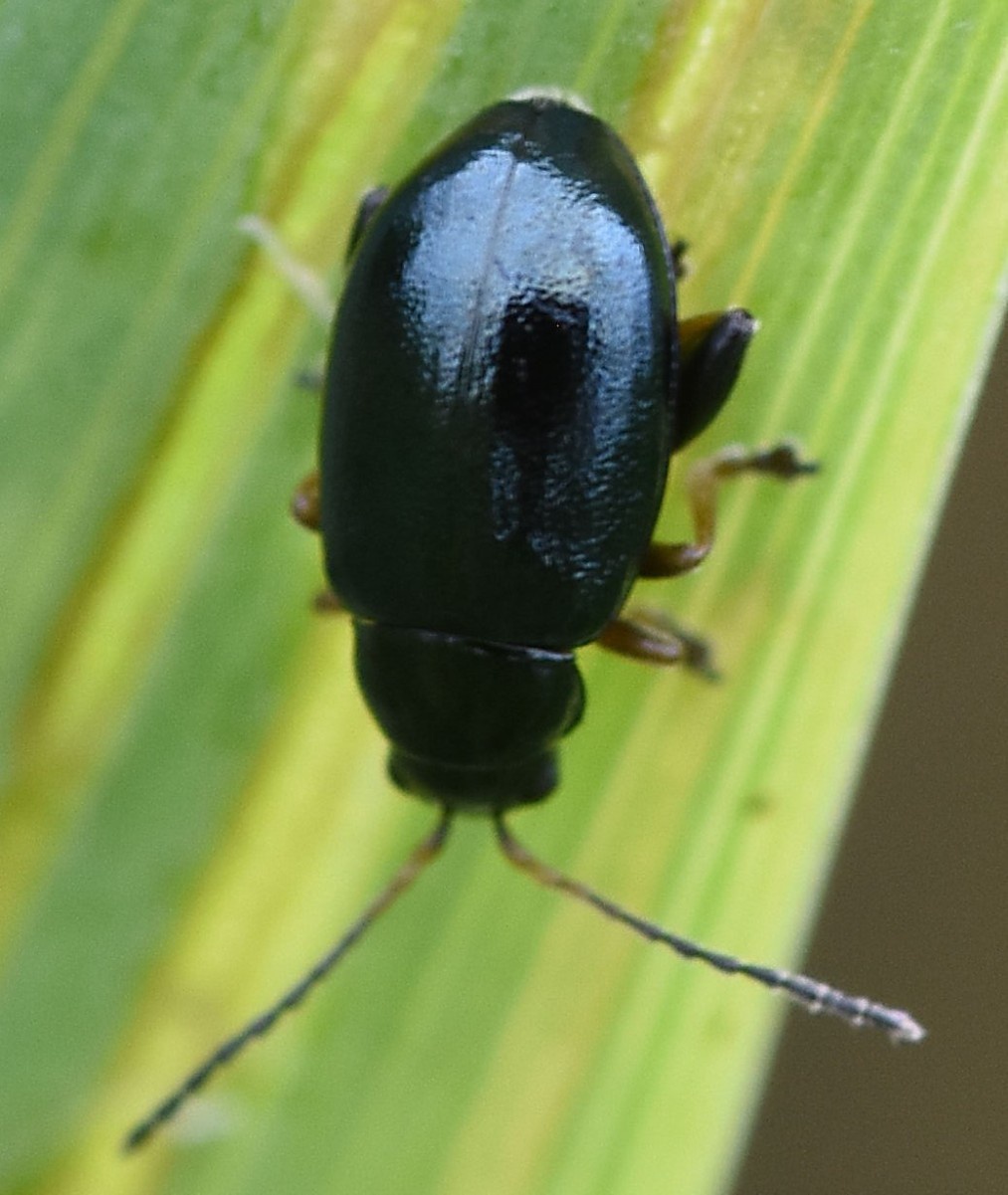
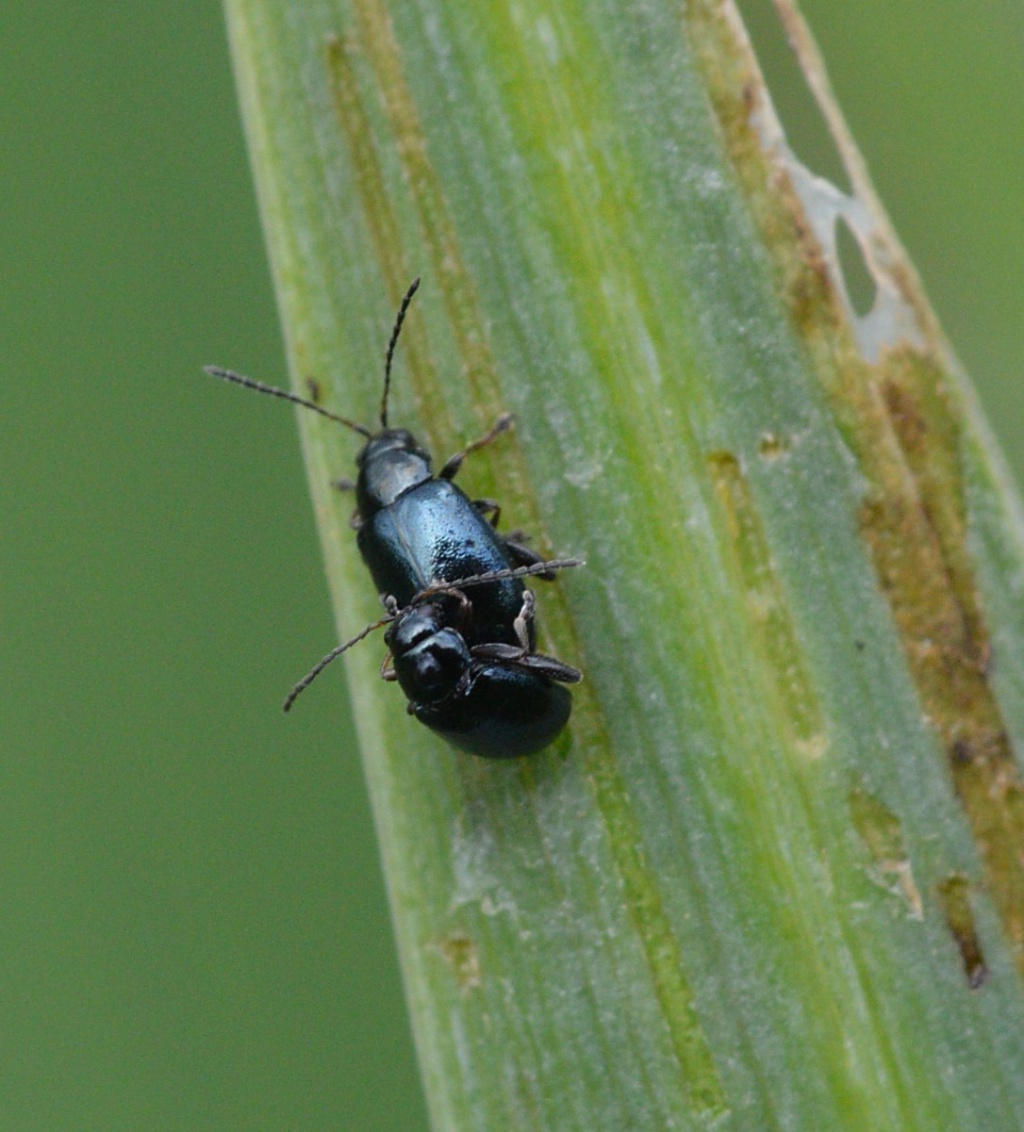
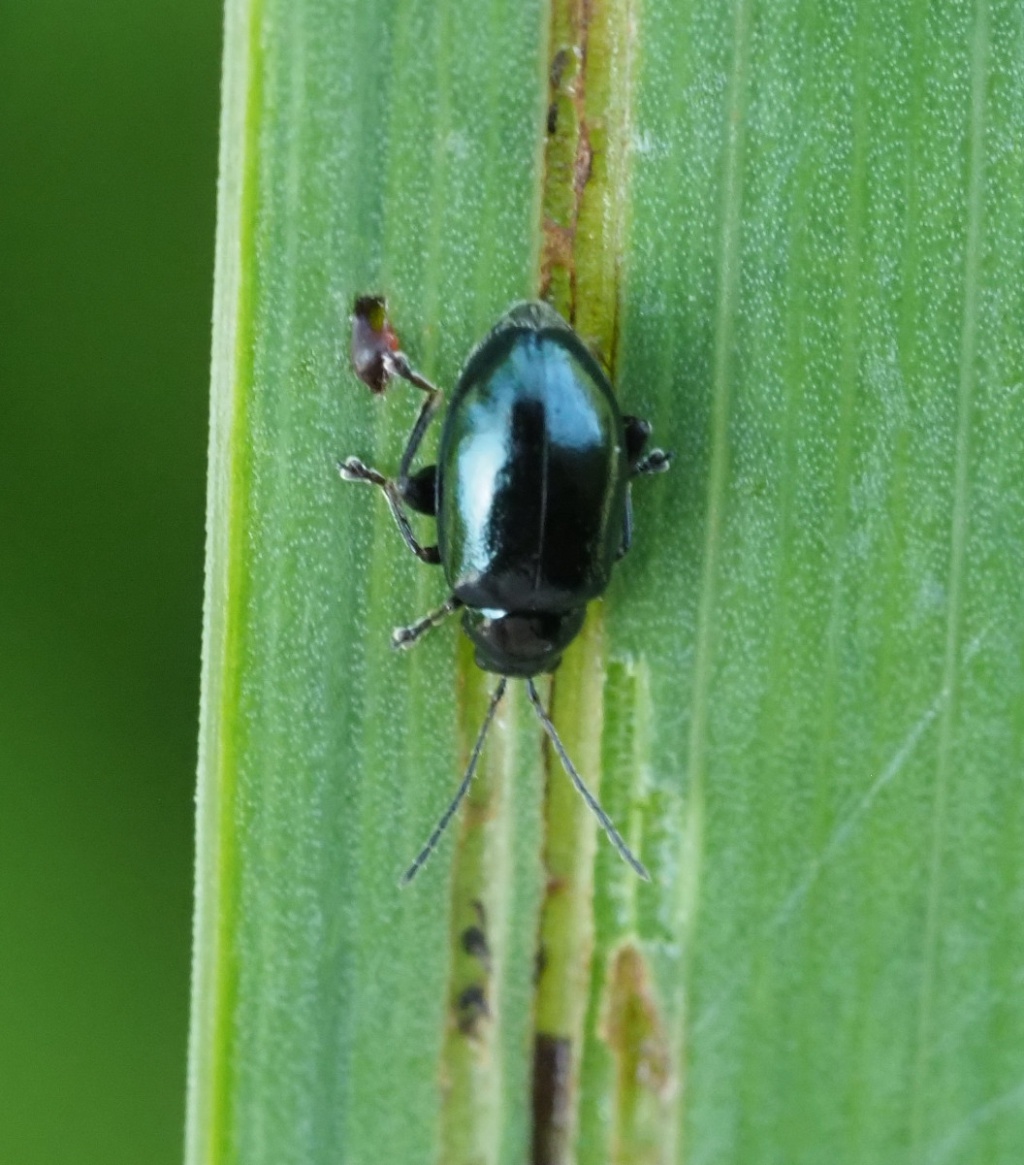
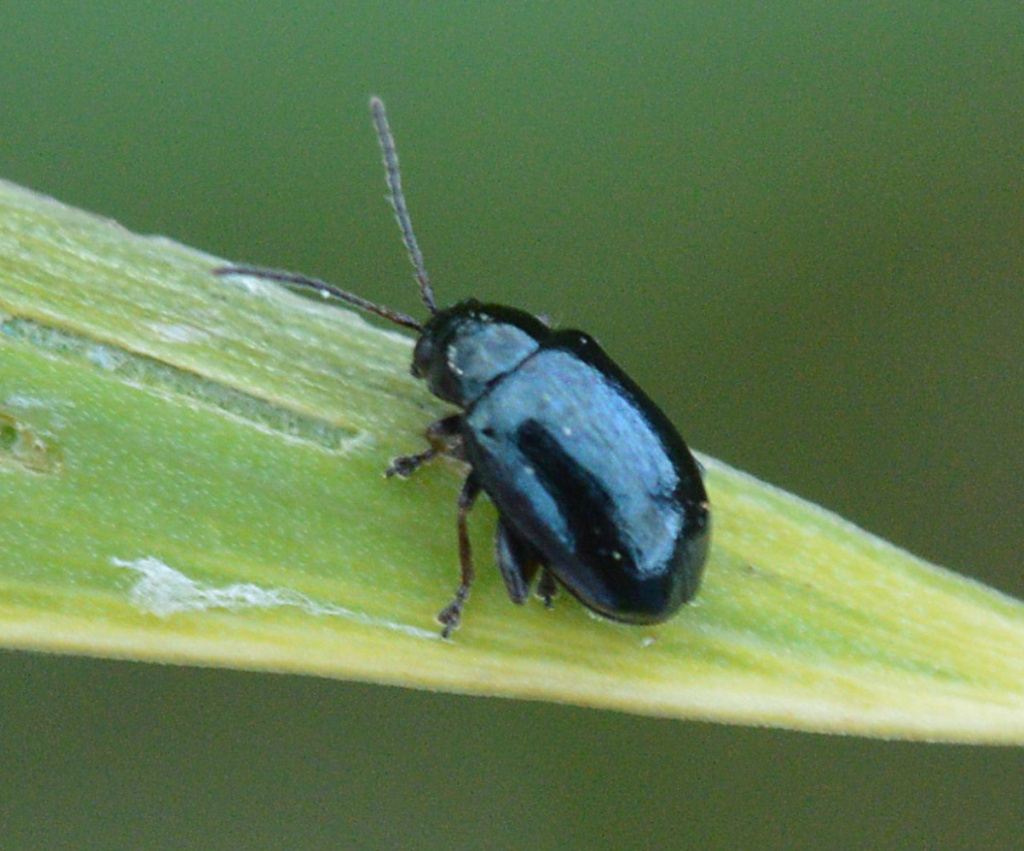
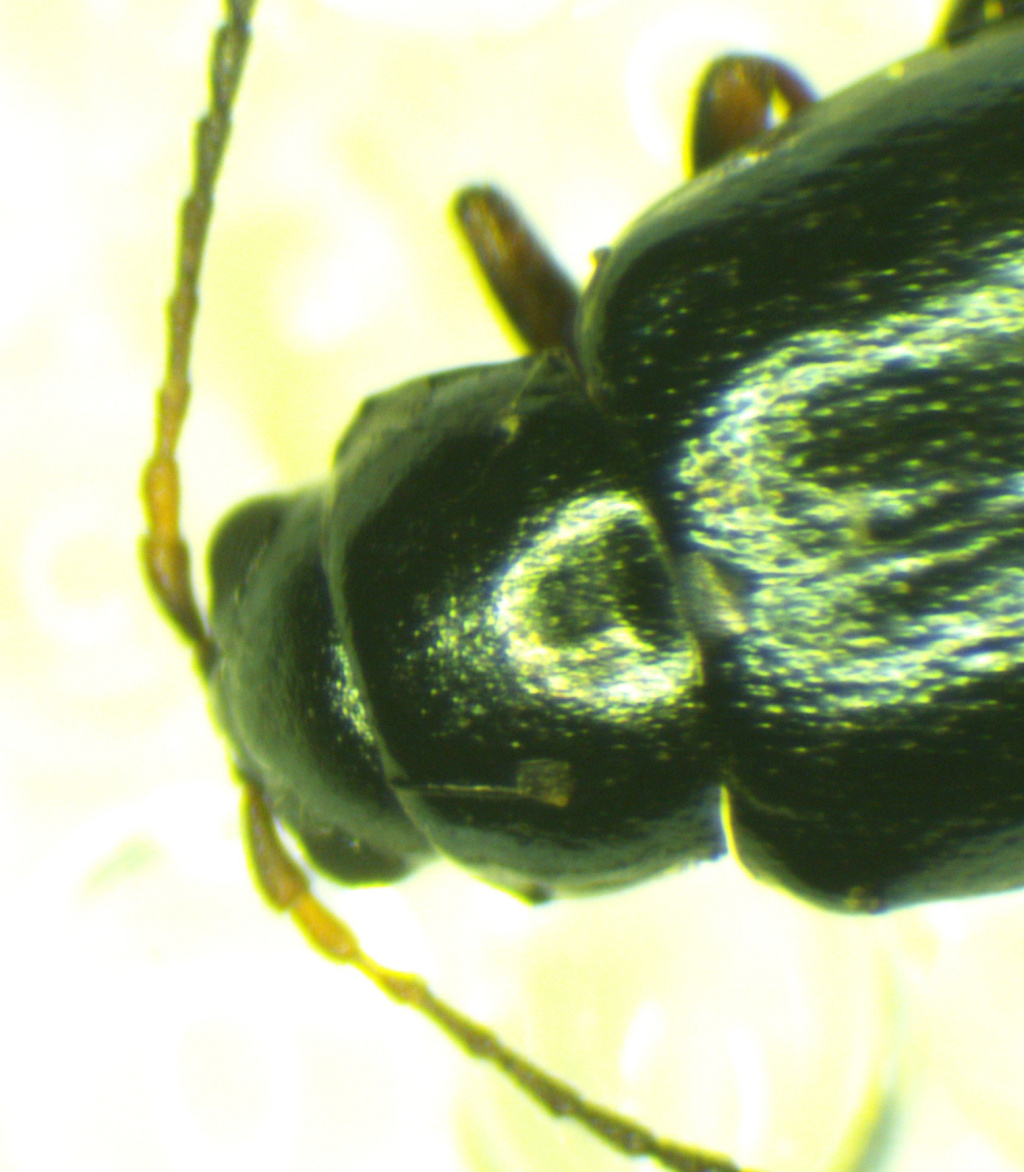
At 2.5 to 3 mm this is the largest member of the genus. It is more or less unicoloured - a dark metallic blue, green or bronze. The elytra have 'shoulders'. The antennae are dark apically but segments 2, 3 and the apical part of 1 are paler. The legs are tawny brown but with darker femora.

Please provide a photograph and state the host plant species.
Habitats include anywhere the host, Iris pseudacorus (Yellow Iris), grows in abundance, usually in wetlands but also permanently damp soil in woodlands, parks, gardens etc..
Most likely to be seen from March or April, peaking in abundance from May to July and remaining common into the autumn.
Overwintered adults feed in the spring, consuming strips of epidermis parallel to the leaf margins and leaving conspicuous pale lines, before mating and ovipositing on the host foliage.
Common and often abundant throughout England and Wales, becoming scattered further north and scarce in Scotland although there are plenty of records from the west and Western Isles.
Occasional in Leicestershire and Rutland.
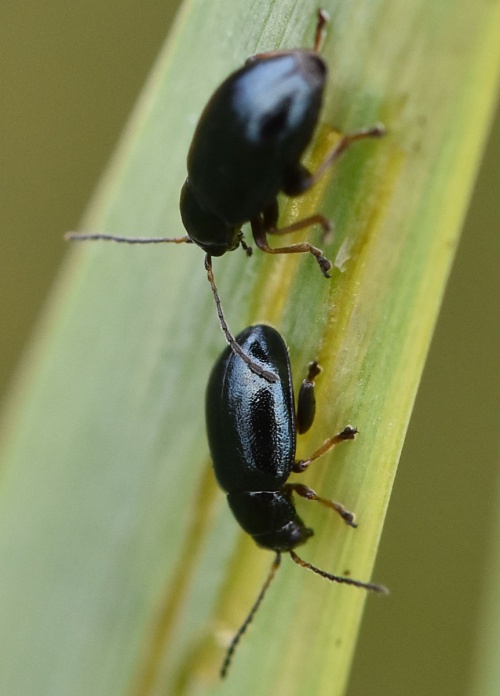 Barbara Cooper
Long Clawson
10 May 2023
on Iris pseudacorus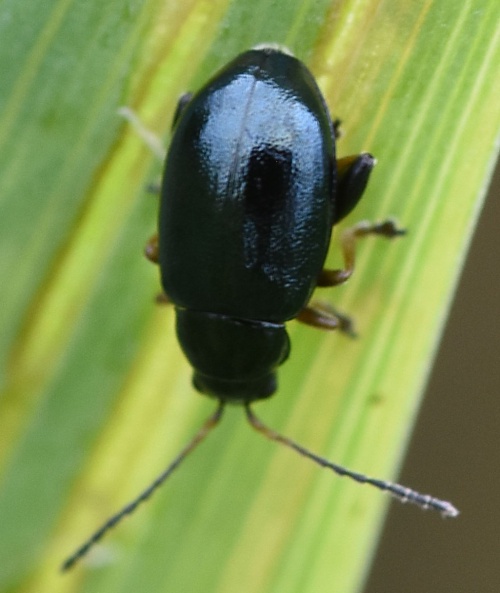 Barbara Cooper
Long Clawson
10 May 2023
on Iris pseudacorus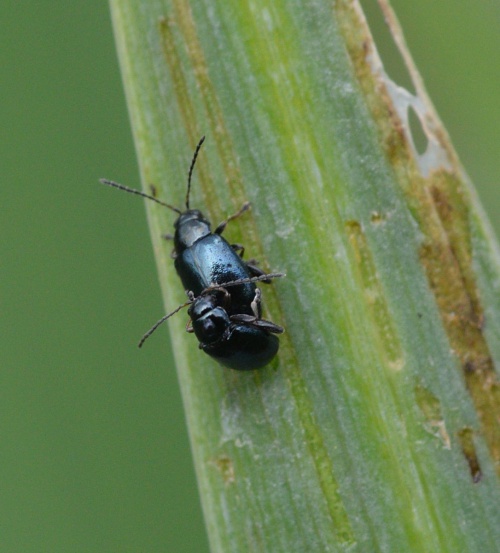 Barbara Cooper
Long Clawson
10 May 2023
on Iris pseudacorus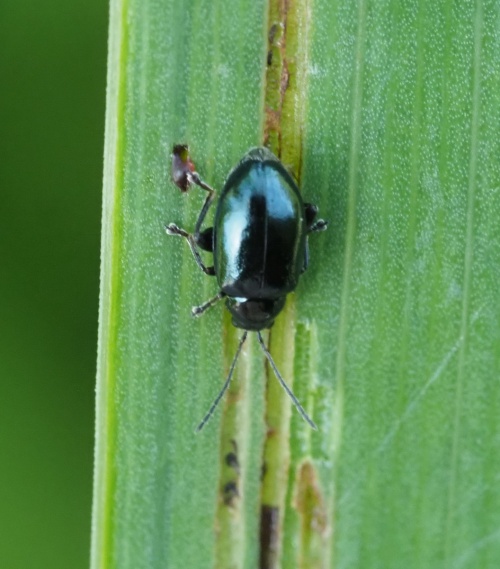 David Nicholls
Watermead Country Park
15 June 2023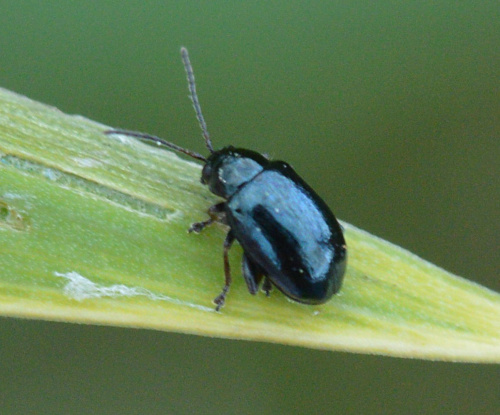 Barbara Cooper
Long Clawson
05 May 2024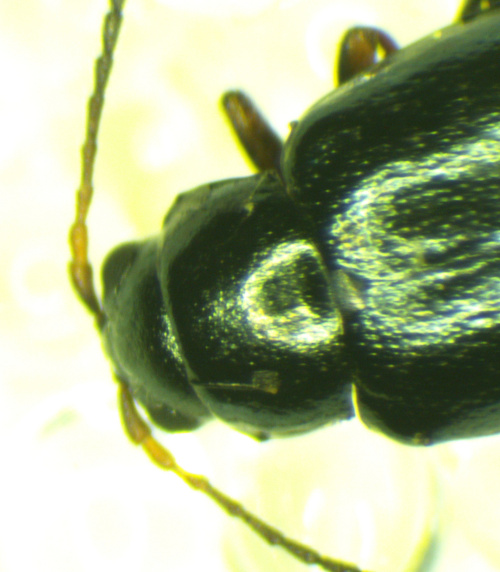 David Nicholls
Coalville, Nature Alive
19 April 2024
Leicestershire & Rutland Map
Enter a town or village to see local records
MAP KEY:
Yellow squares = NBN records (all known data)
Coloured squares = NatureSpot records: 2025+ | 2020-2024 | pre-2020
UK Map
Additional images