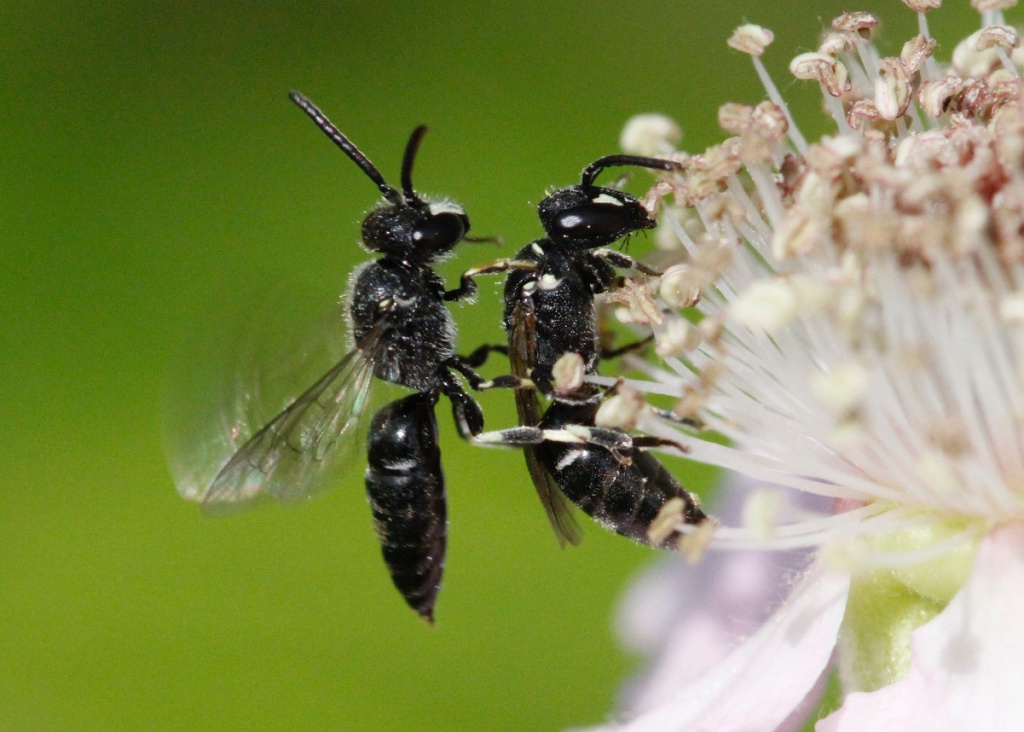
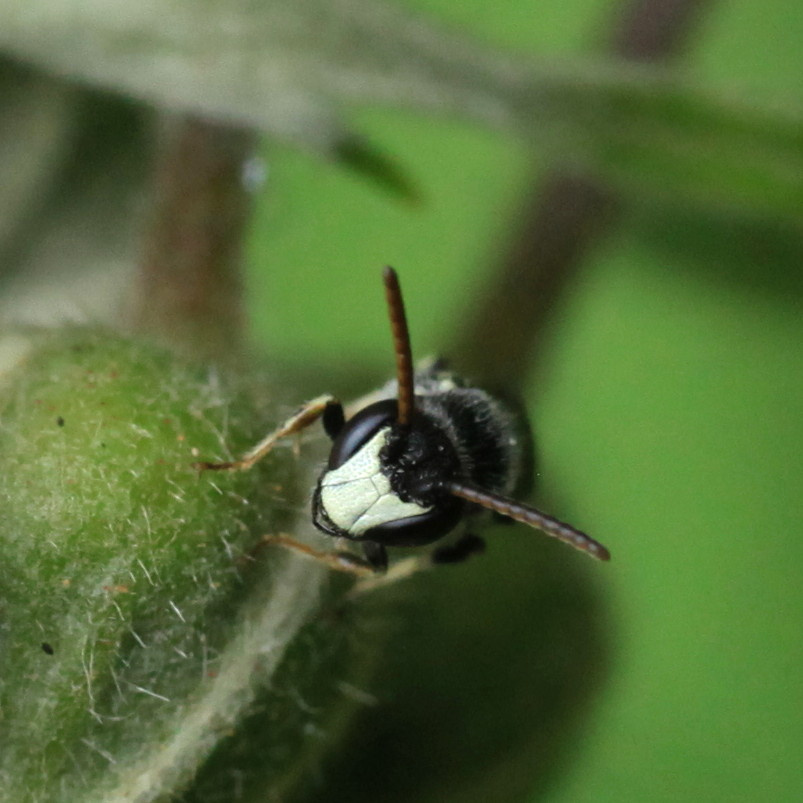
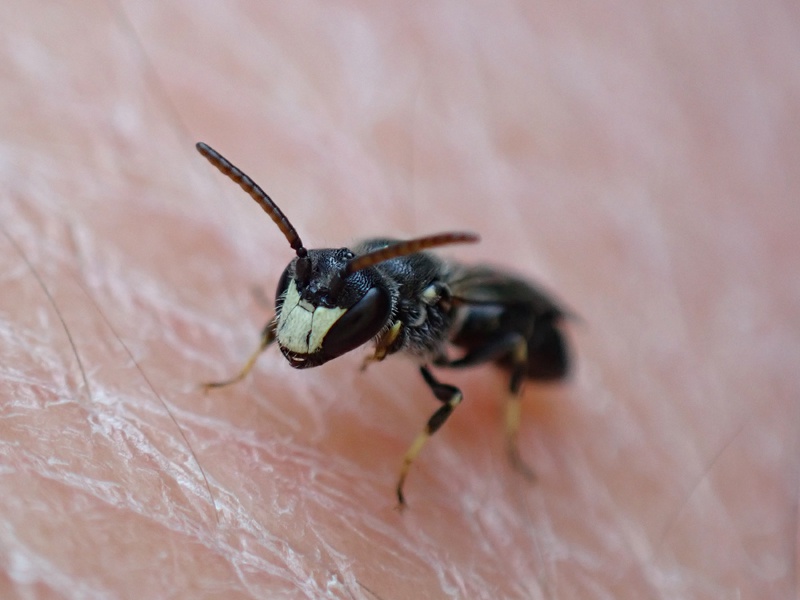
Hairy Yellow-face
Hairy Yellow-face - Hylaeus hyalinatus
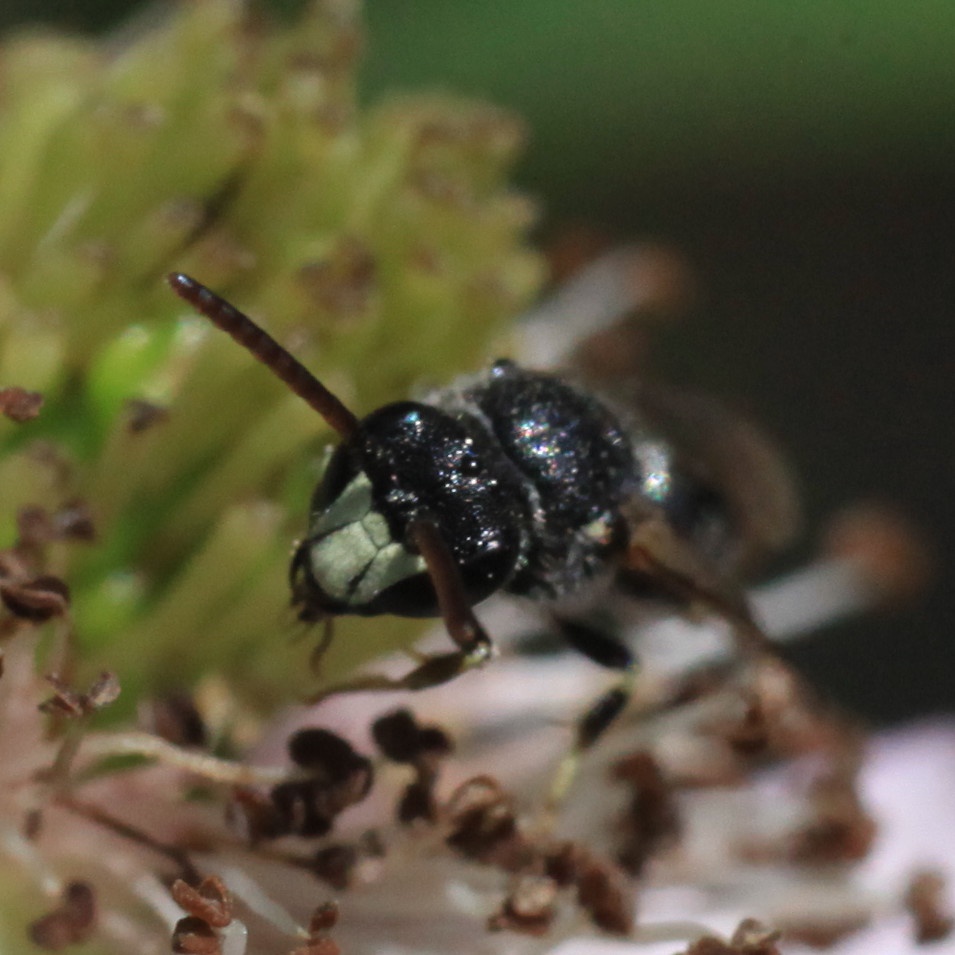
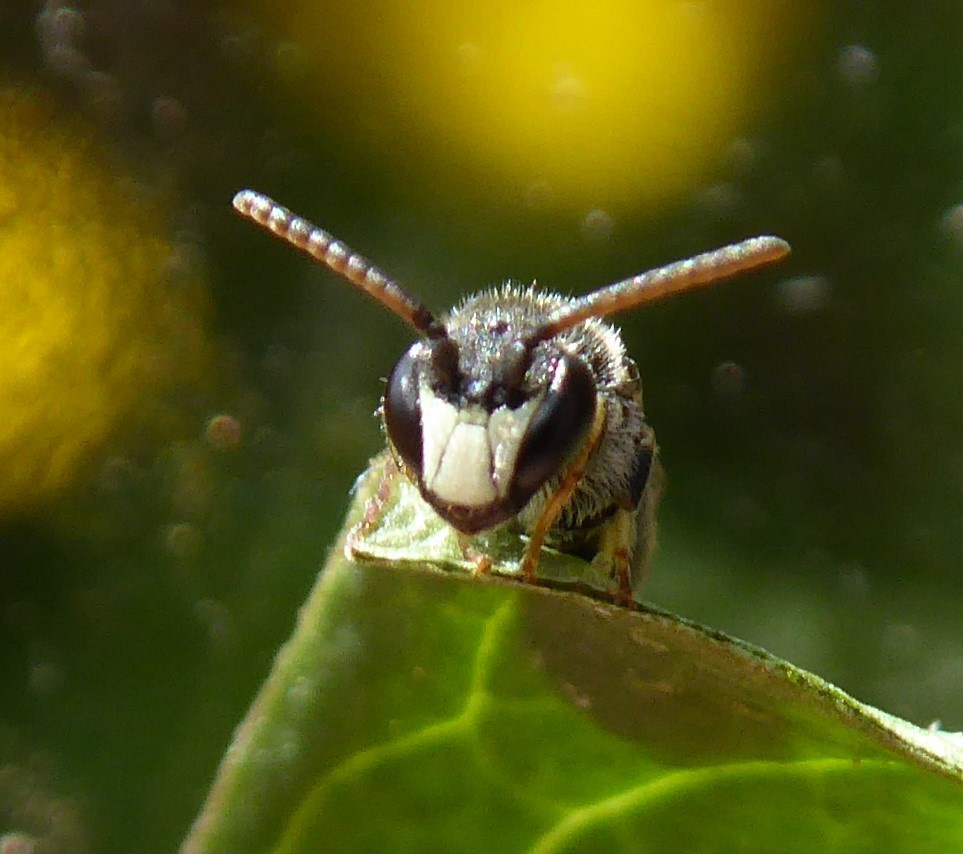
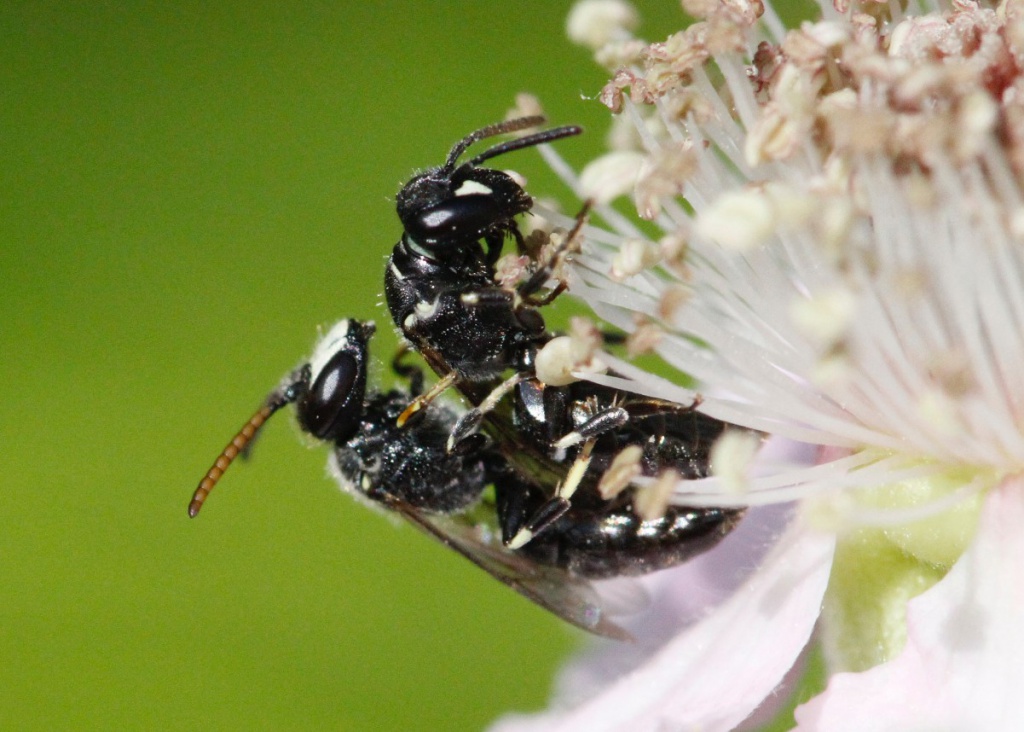
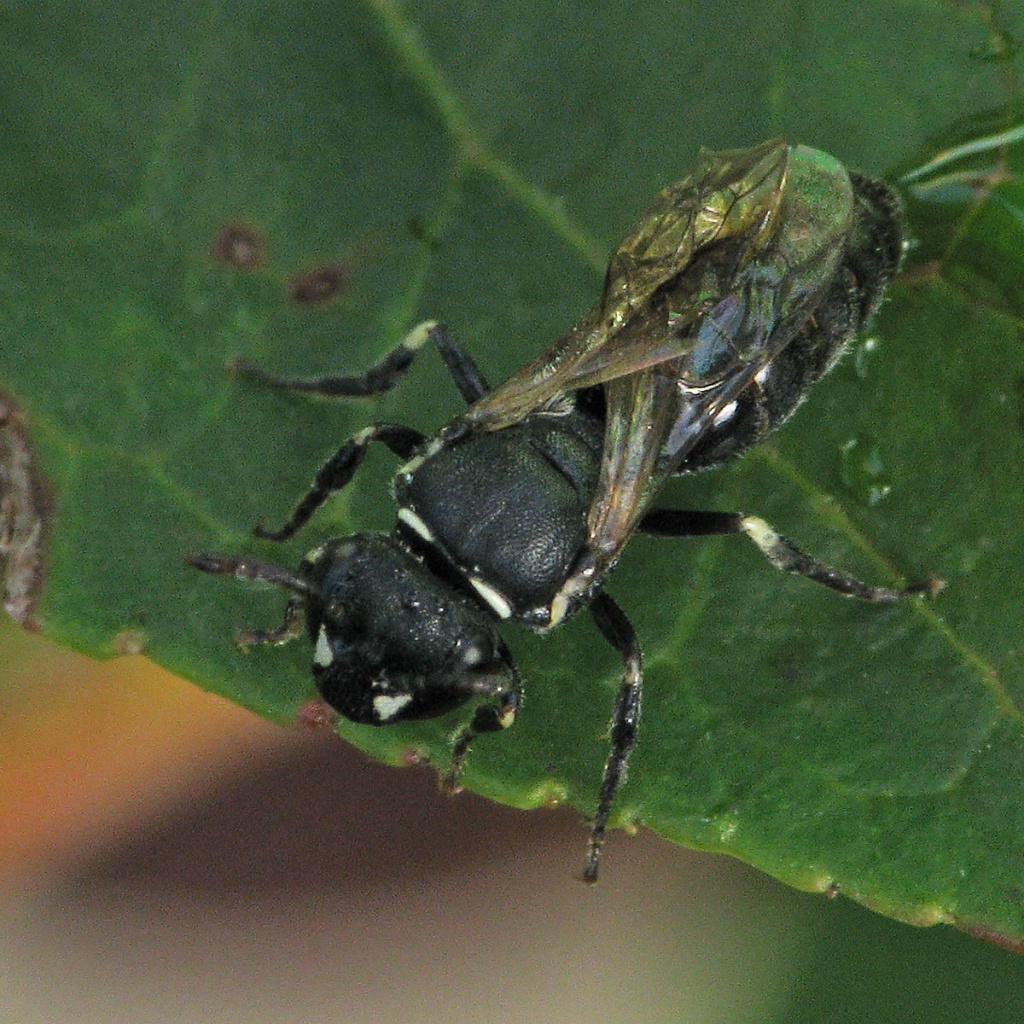
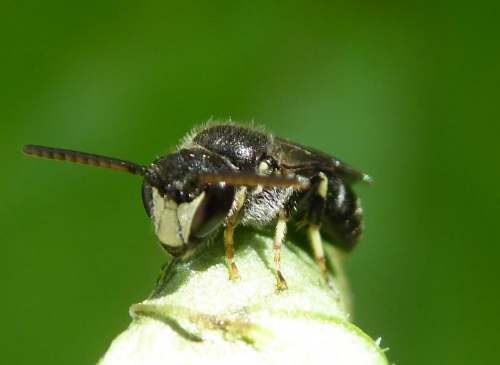
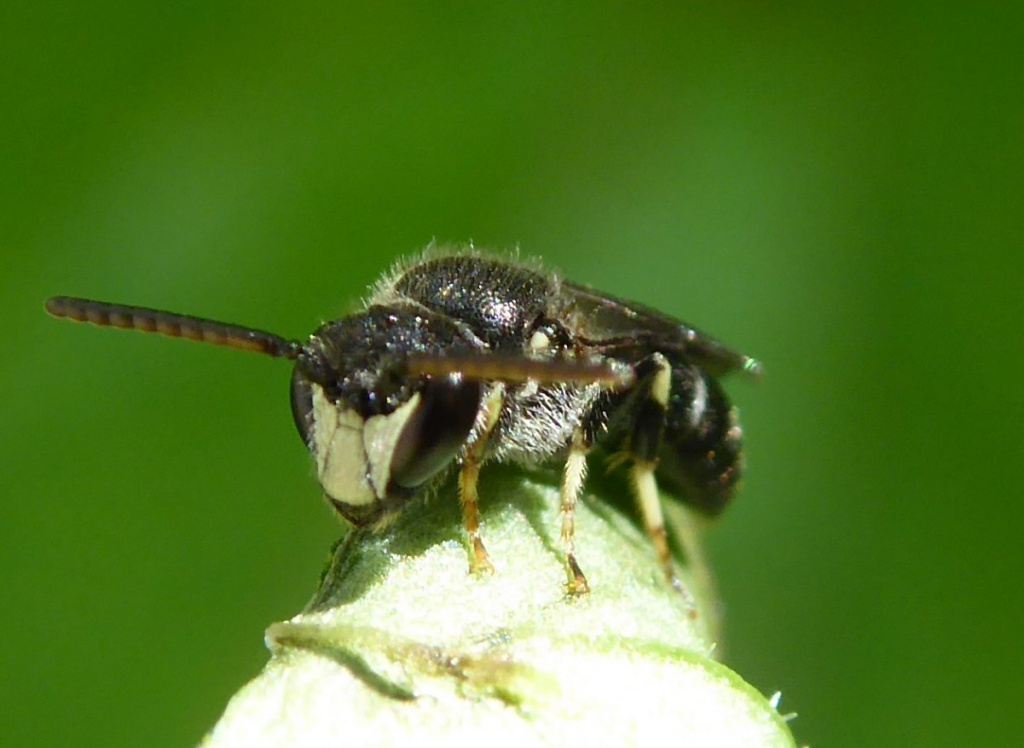
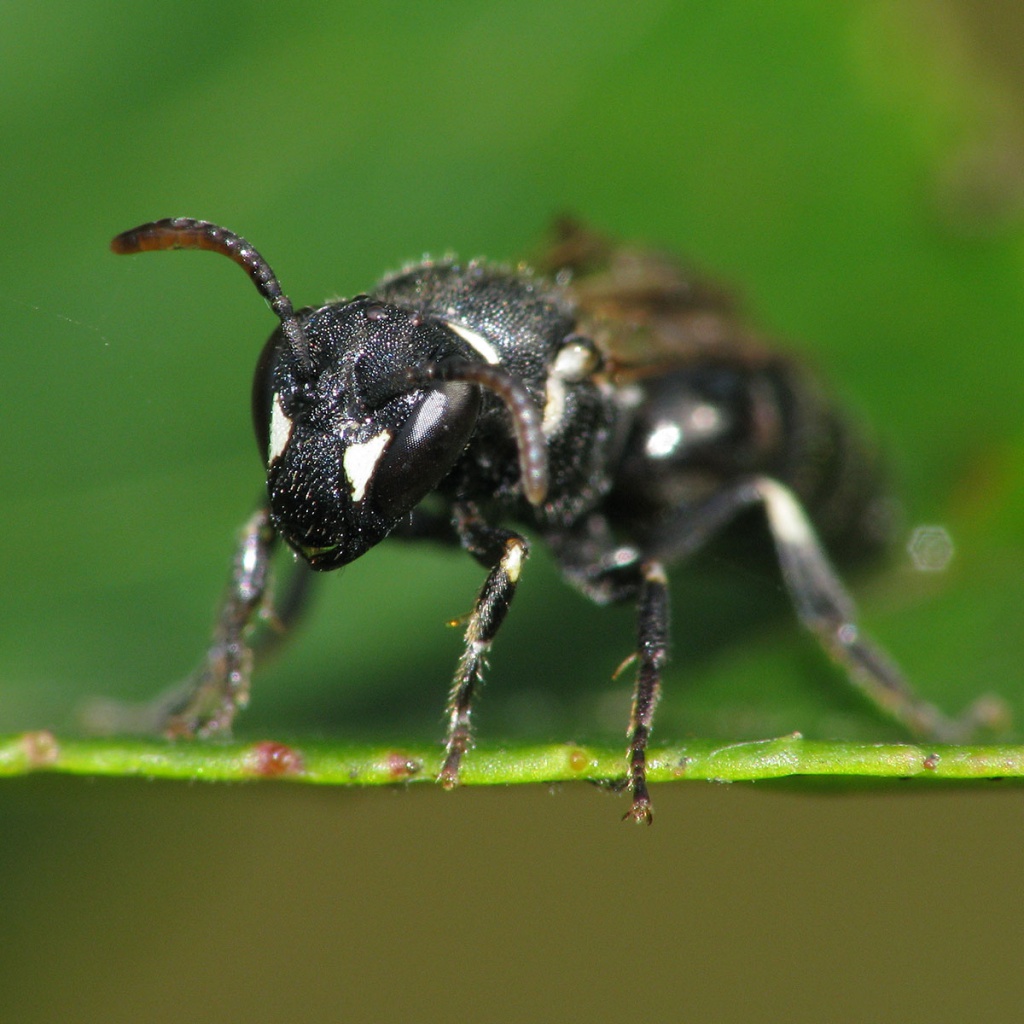
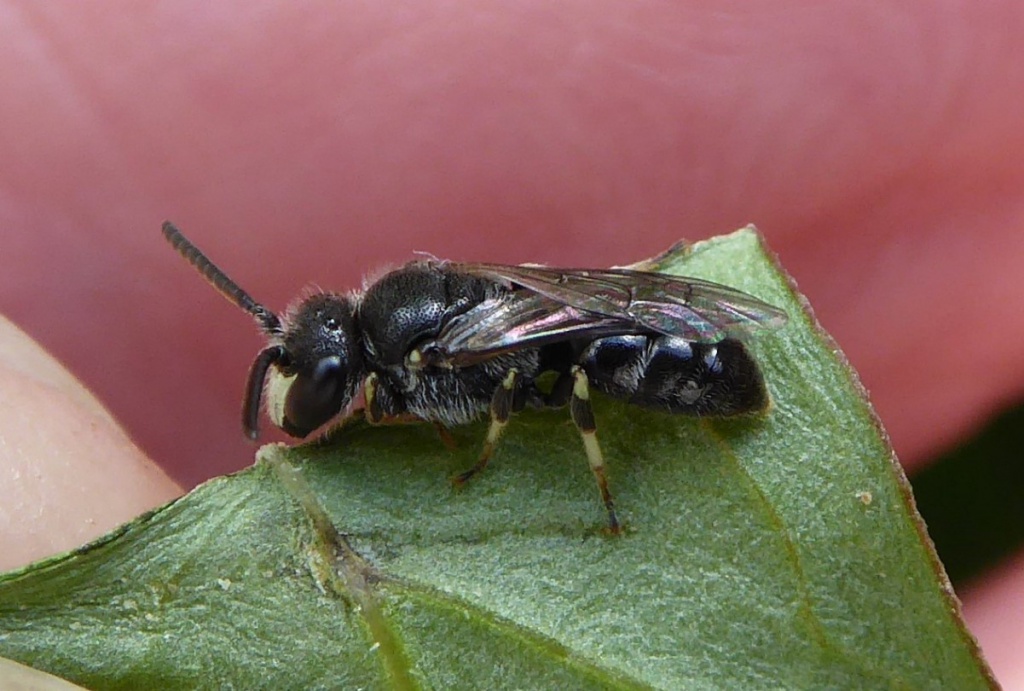
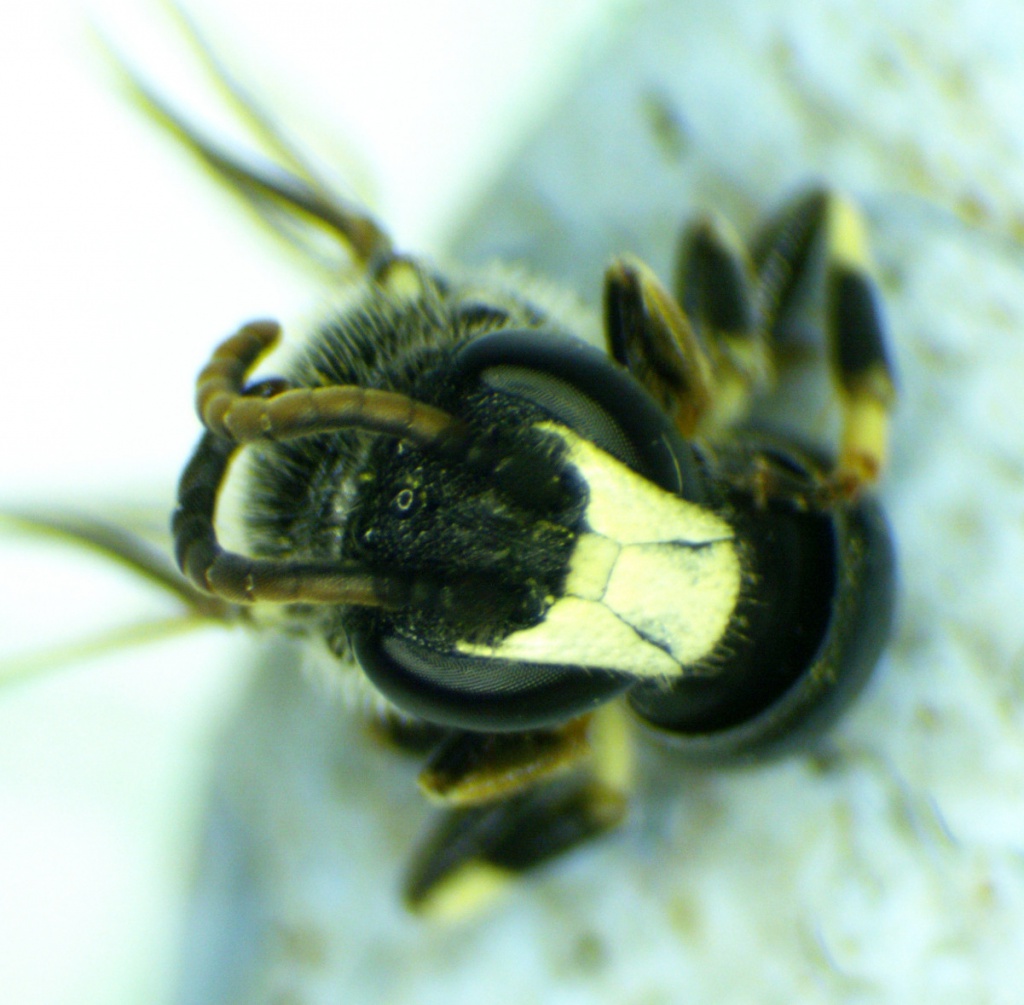
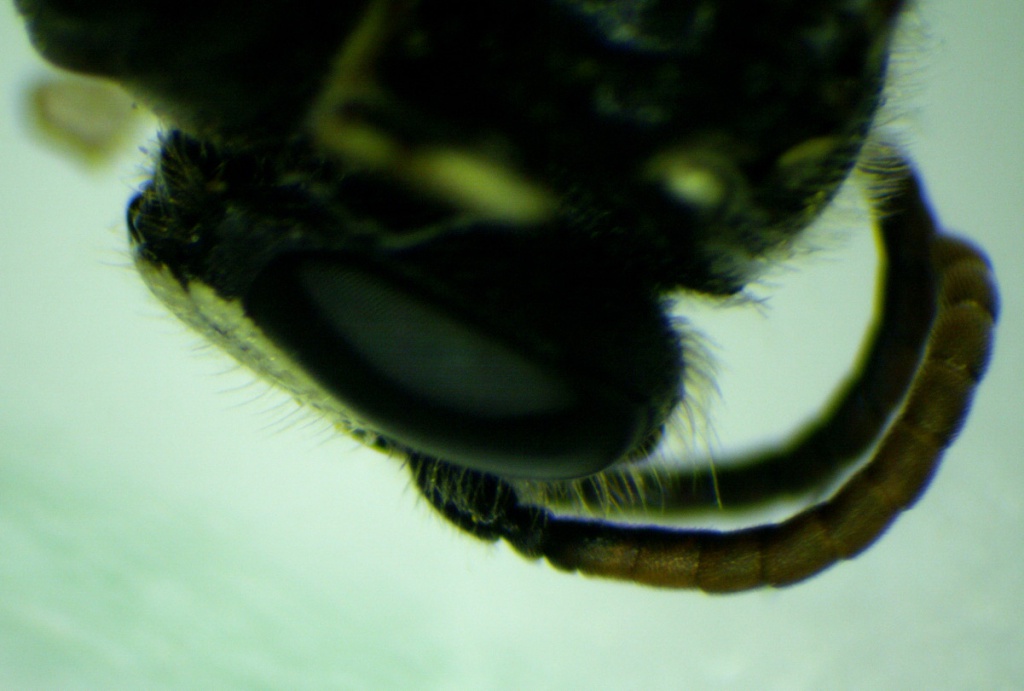
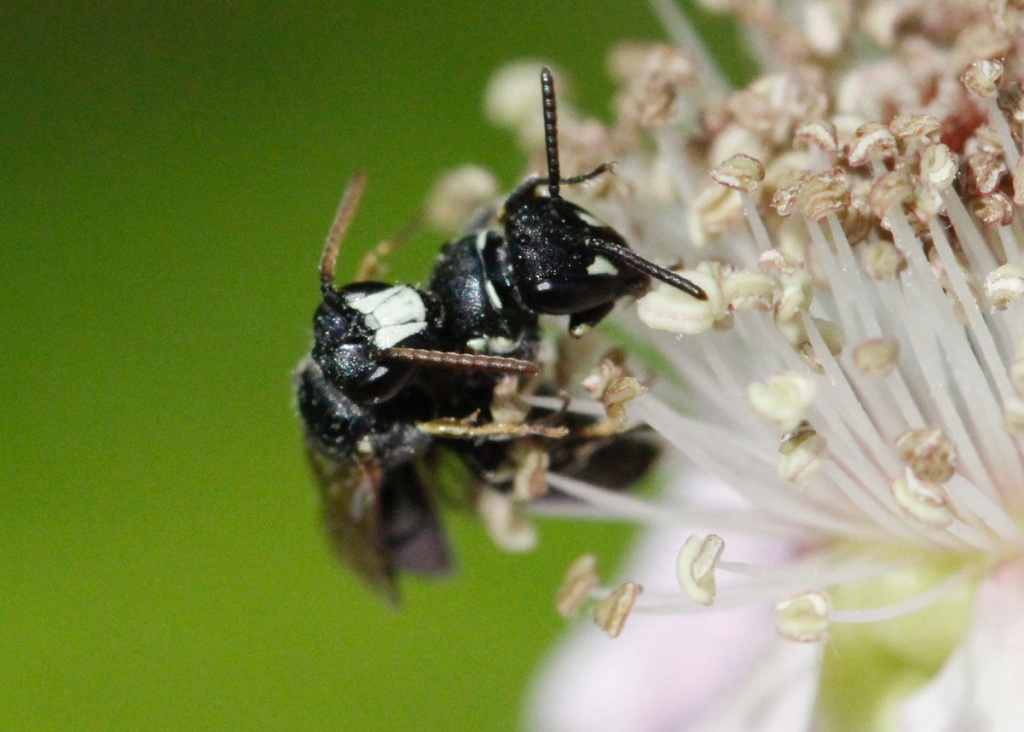
Length 5.5 to 7 mm. Males can be identified by the largely white (not really yellow) and hairy face. Females are harder to identify: they have a long face with two white triangles on the face, adjacent to the lower half of the eyes. The sides of tergite 1 are covered in dense punctures. Both sexes have antennae that are black above but orange below.
Other Hylaeus species.
Males  , Females
Most solitary bees and wasps are difficult to identify, and can rarely be identified from photos taken in the field. All red-rated records should include a photo, or set of photos, showing the key characters, which may require the specimen. Please include a face shot, side, top and wings. Note whether male or female, explain how the specimen met the key characters and the key used. We will accept records identified by a recognised local or national expert, or that have been identified via the BWARS’ Facebook noting the name of the person/organisation identifying the record (e.g. ‘Stuart Roberts, BWARS Facebook’).
Hedgerows and meadows.
May to September.
Takes pollen from various flowers. Plasterer bees smooth the walls of their nest cells with secretions applied with their mouthparts; these secretions dry into a cellophane-like lining.
Widespread and fairly frequent in England.
Status in Leicestershire and Rutland not known.
 sue
sue
Bagworth
11 May 2019
male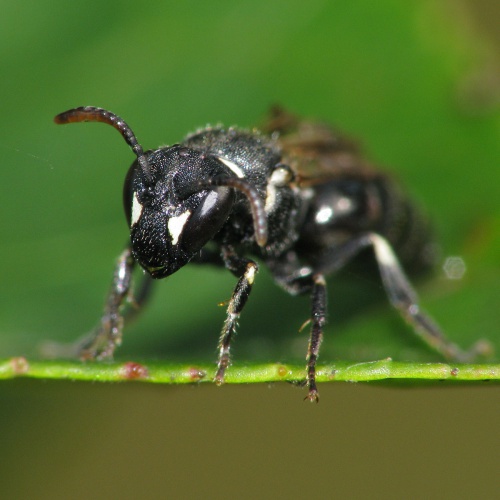 David Gould
Braunstone
13 September 2008
female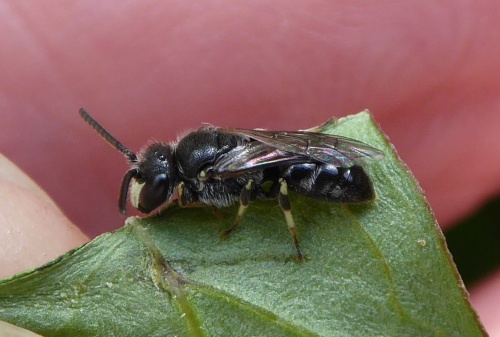 sue
sue
Bagworth
11 May 2019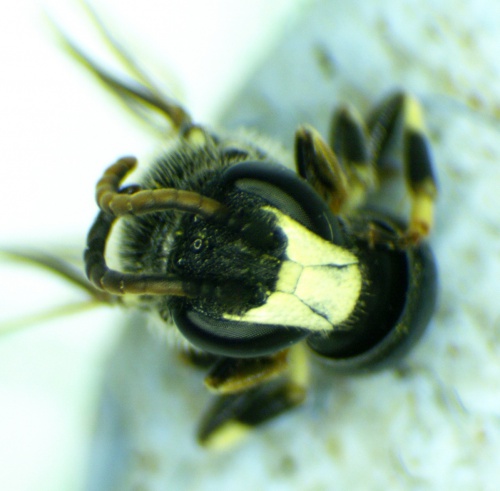 David Nicholls
Ratby garden
06 June 2018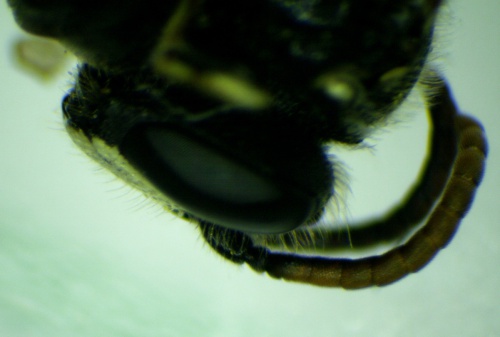 David Nicholls
Ratby garden
06 June 2018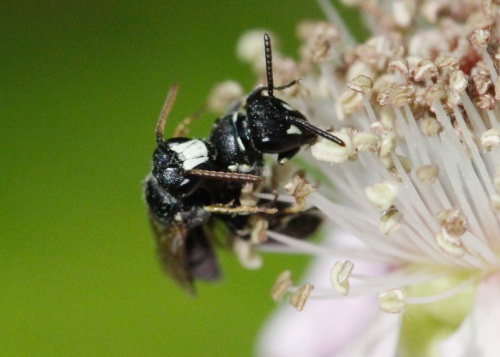 Matthew Berriman
Ketton Quarry NR
20 July 2019
Leicestershire & Rutland Map
Enter a town or village to see local records
MAP KEY:
Yellow squares = NBN records (all known data)
Coloured squares = NatureSpot records: 2025+ | 2020-2024 | pre-2020
UK Map
Additional images