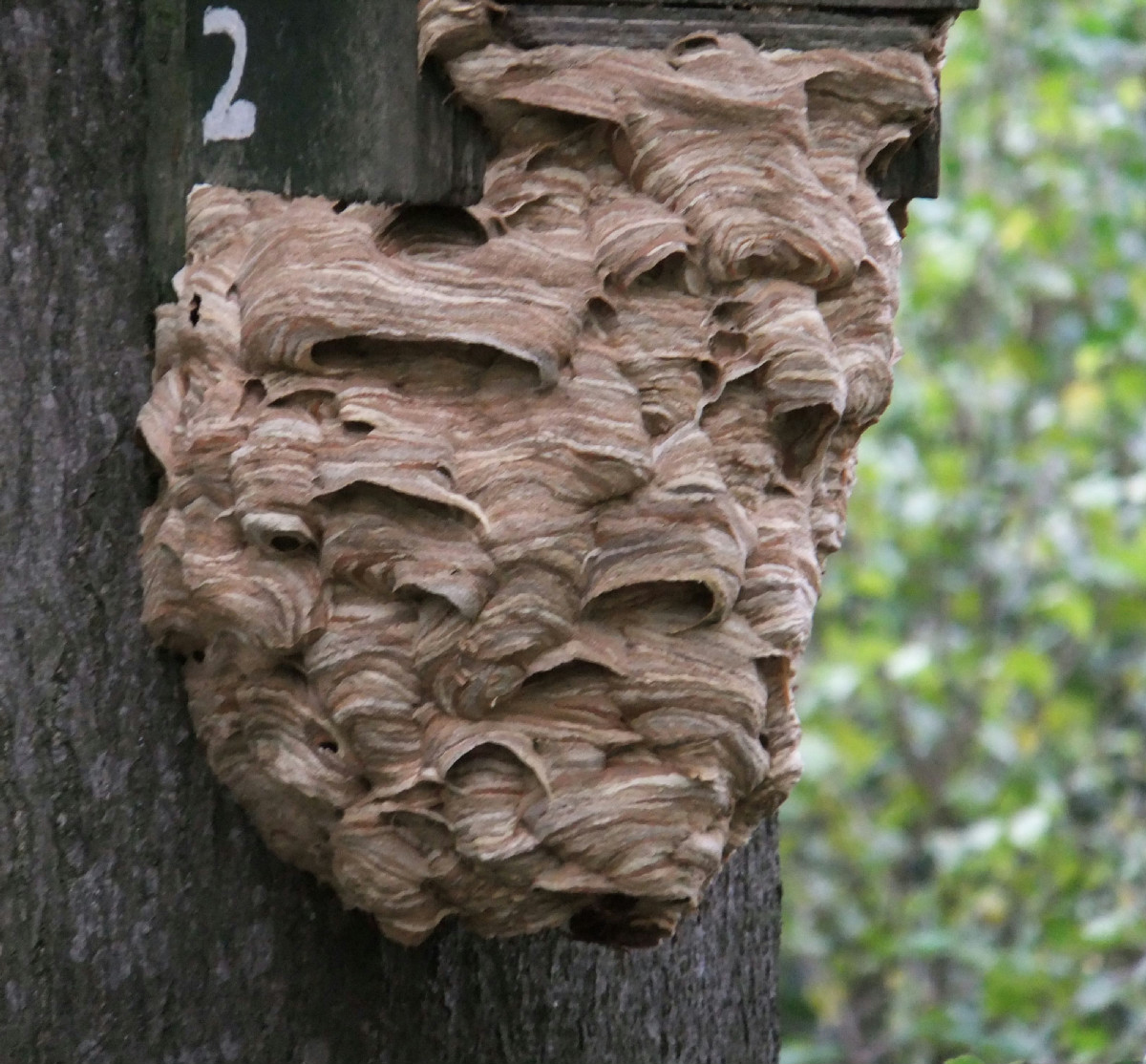
Hornet
Hornet - Vespa crabro
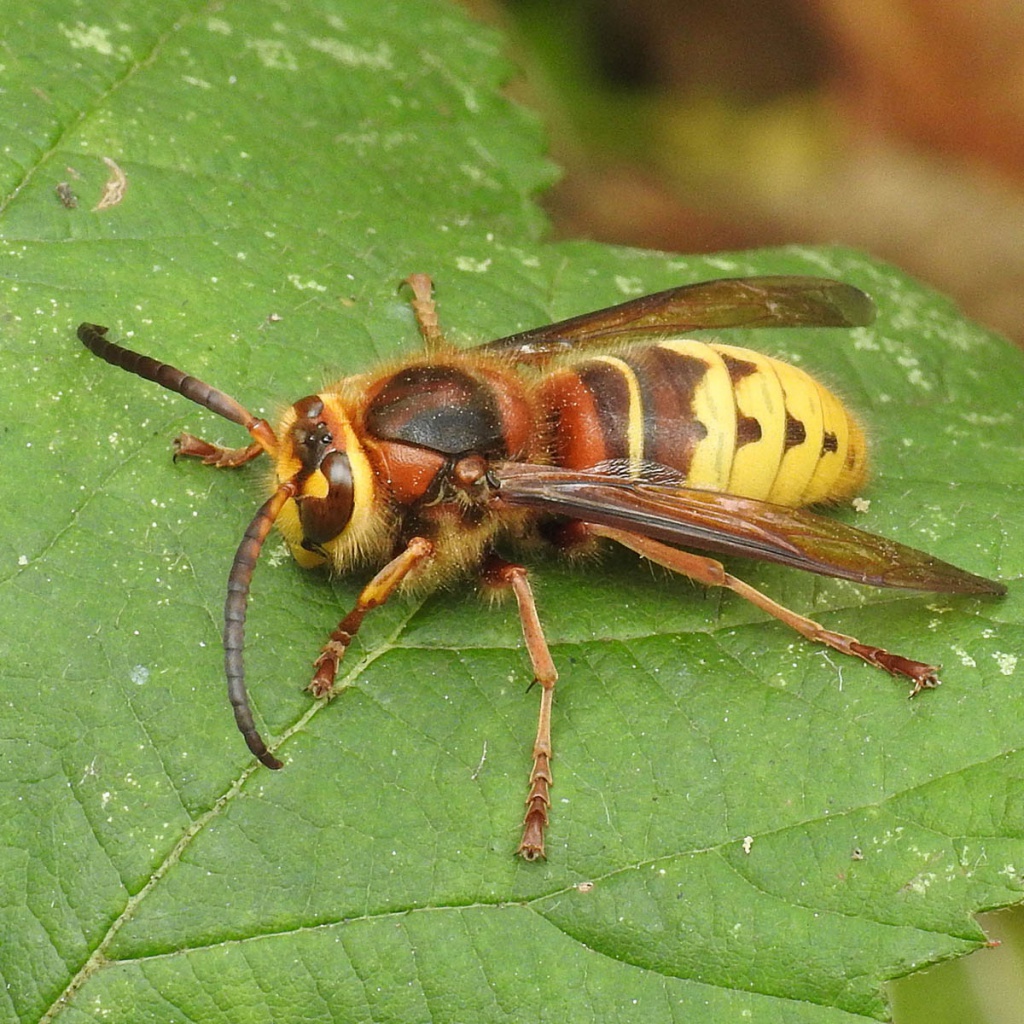
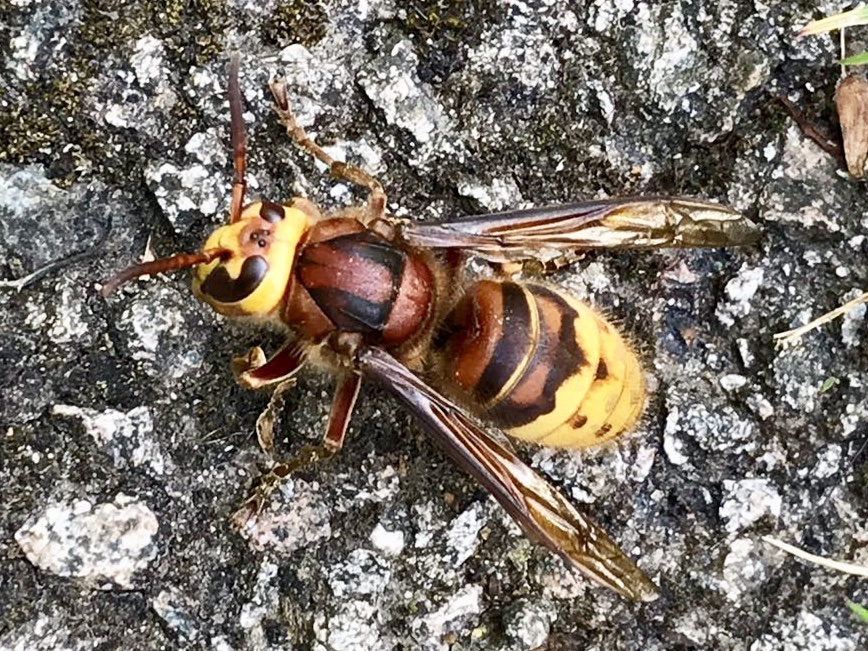
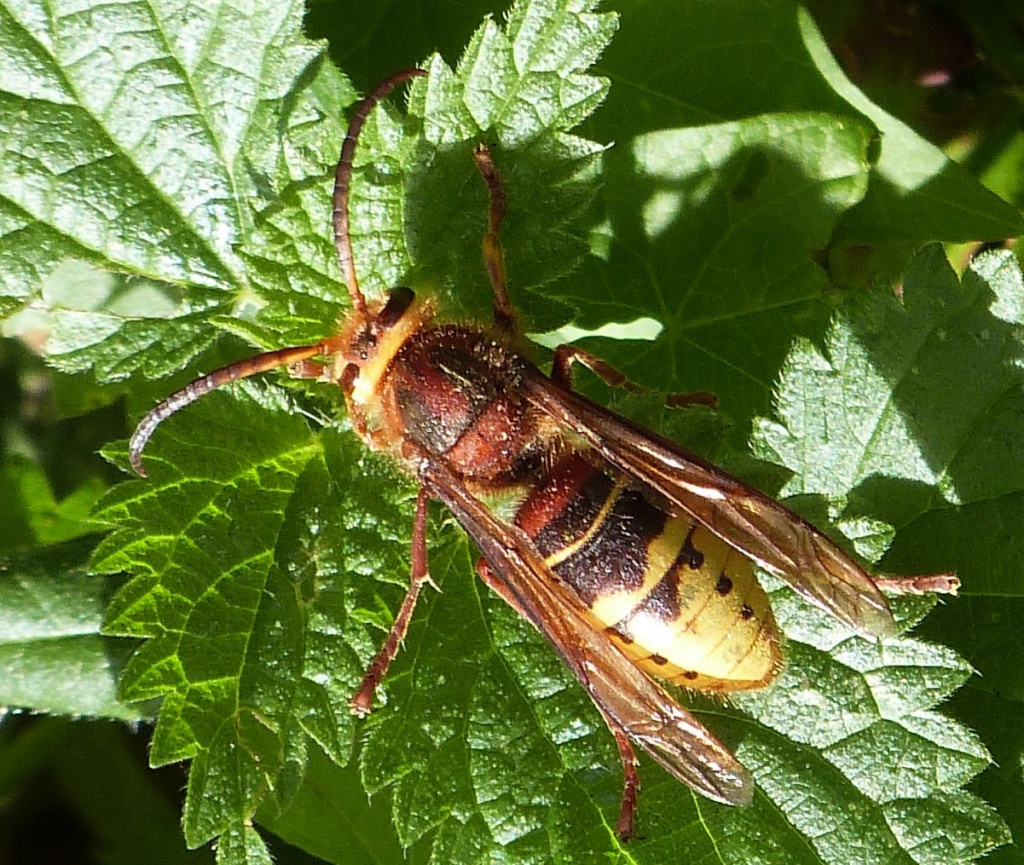
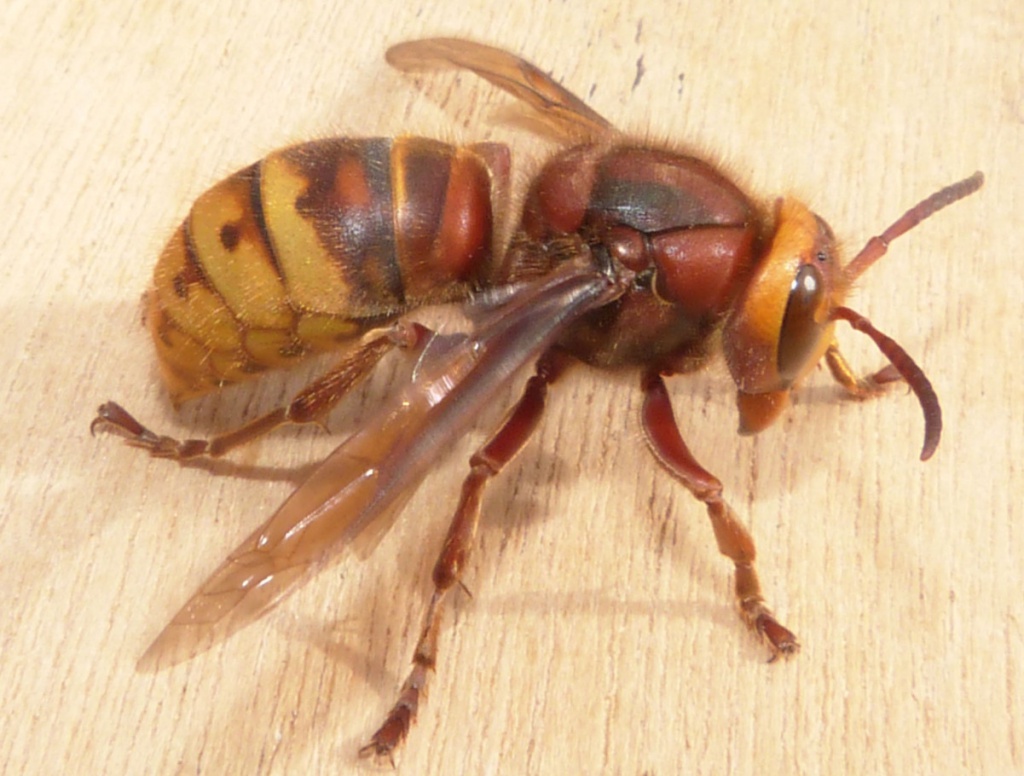
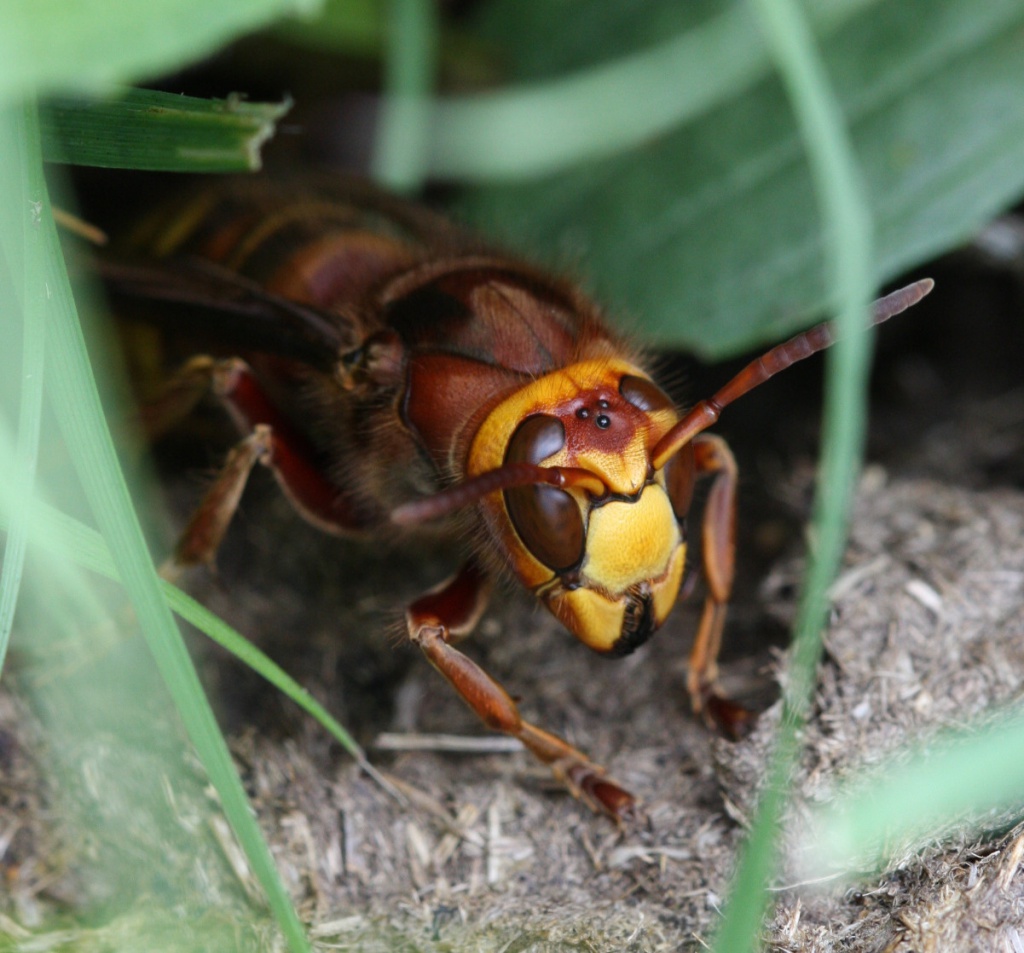
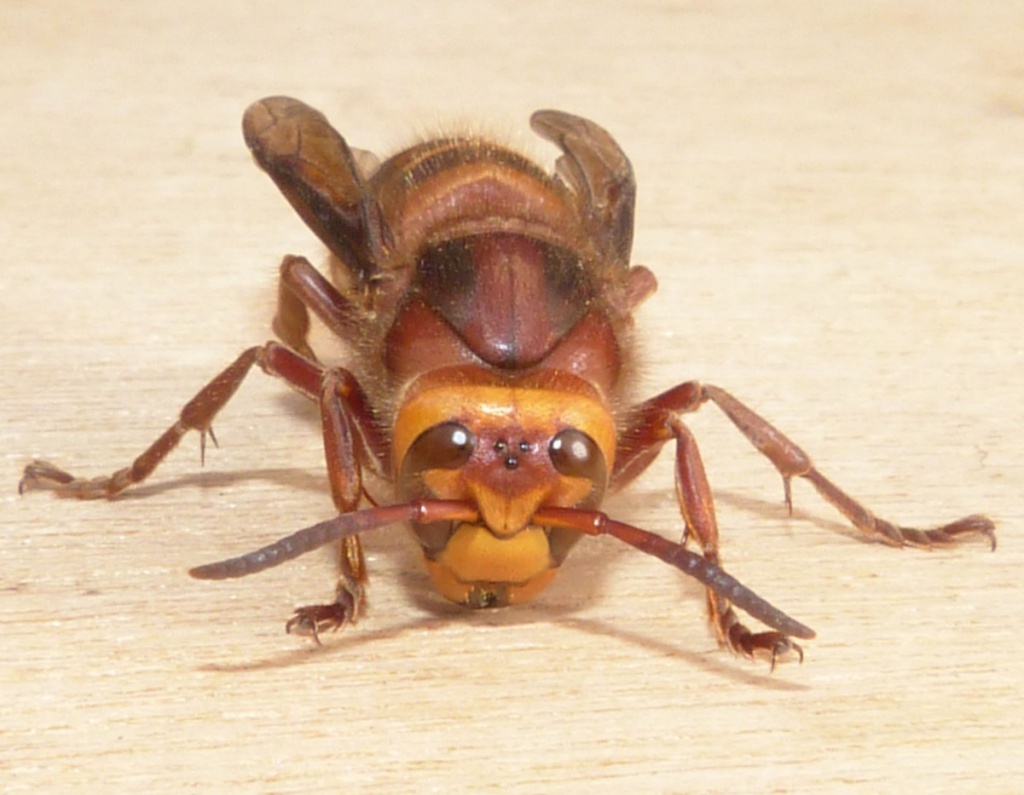
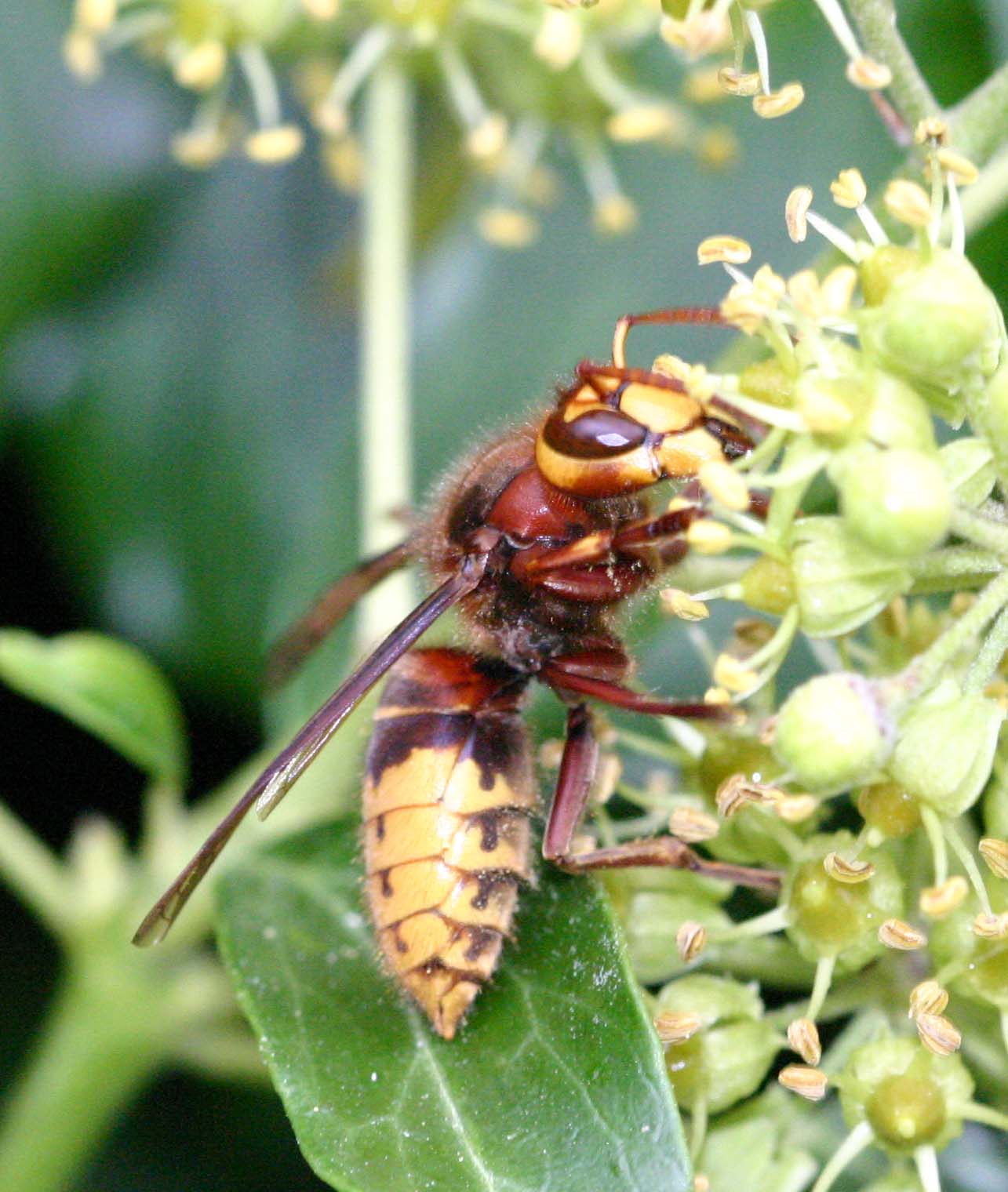
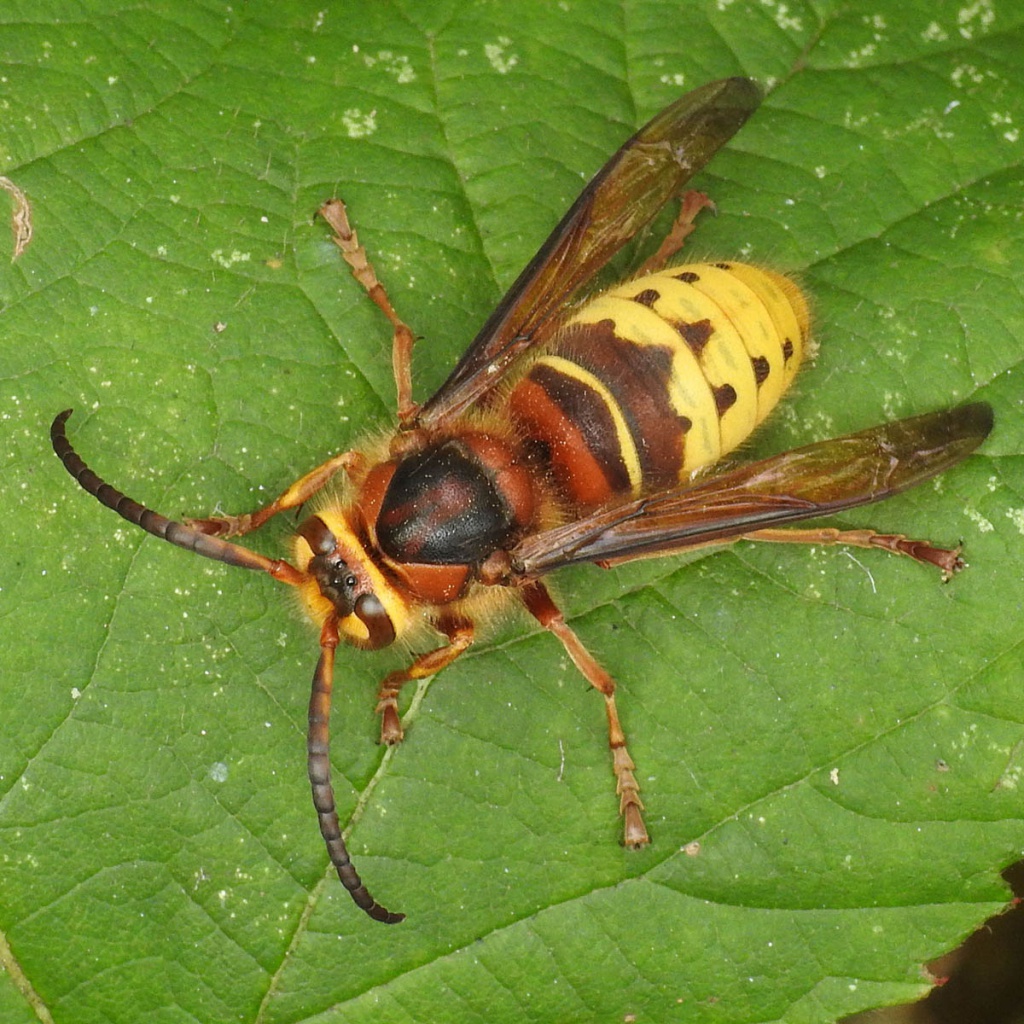
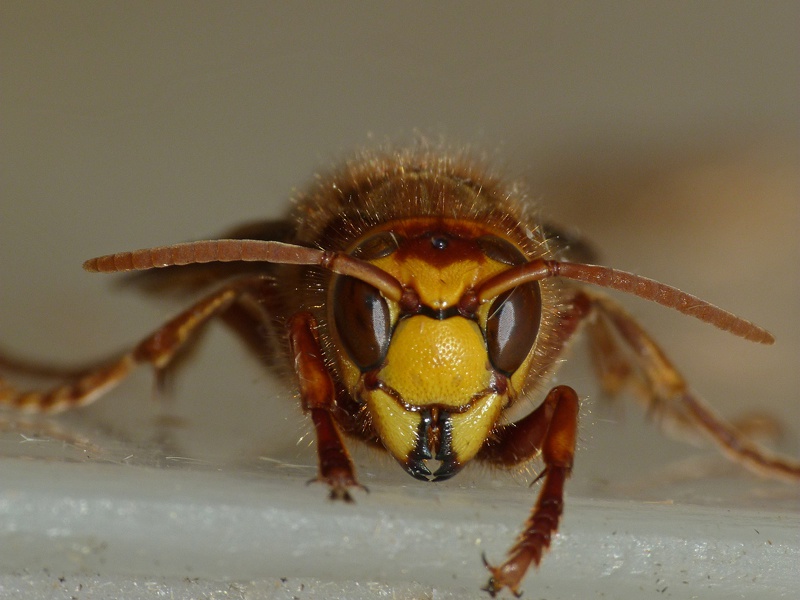
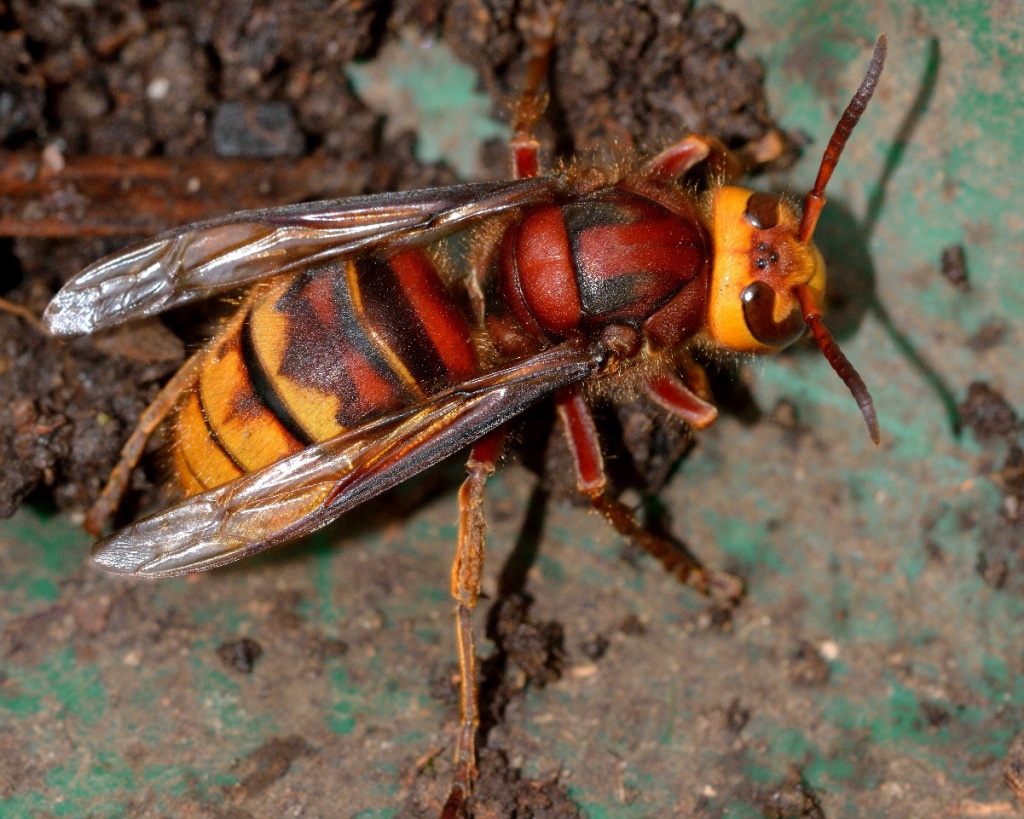
Size 25 to 35 mm. The hornet is an impressive insect and is Britain's largest social wasp. Queens (reproductive females) are larger than the males and workers (non-reproductive females). The thorax area is brown and it has alternating bright orange-yellow and brownish-black stripes along the abdomen.
Indicator Species - Leicestershire, Leicester & Rutland Local Nature Recovery Strategy.
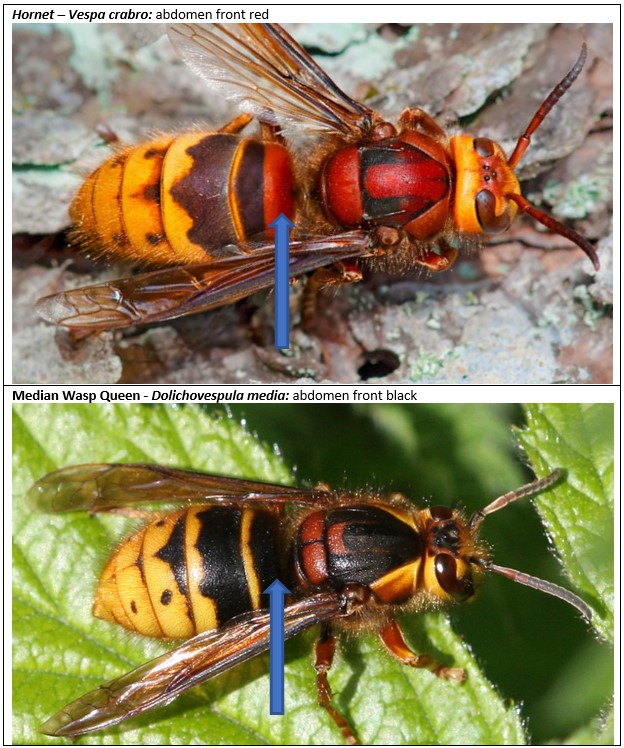
Can be distinguished from the invasive Asian Hornet, Vespa velutina (a.k.a. the Yellow Legged Hornet) by the dark legs. The only other likely confusion is with a queen Median Wasp, but the Hornet is larger and the front of the abdomen is red (see Identification Aids below).

Woodlands, parks and gardens
May to November.
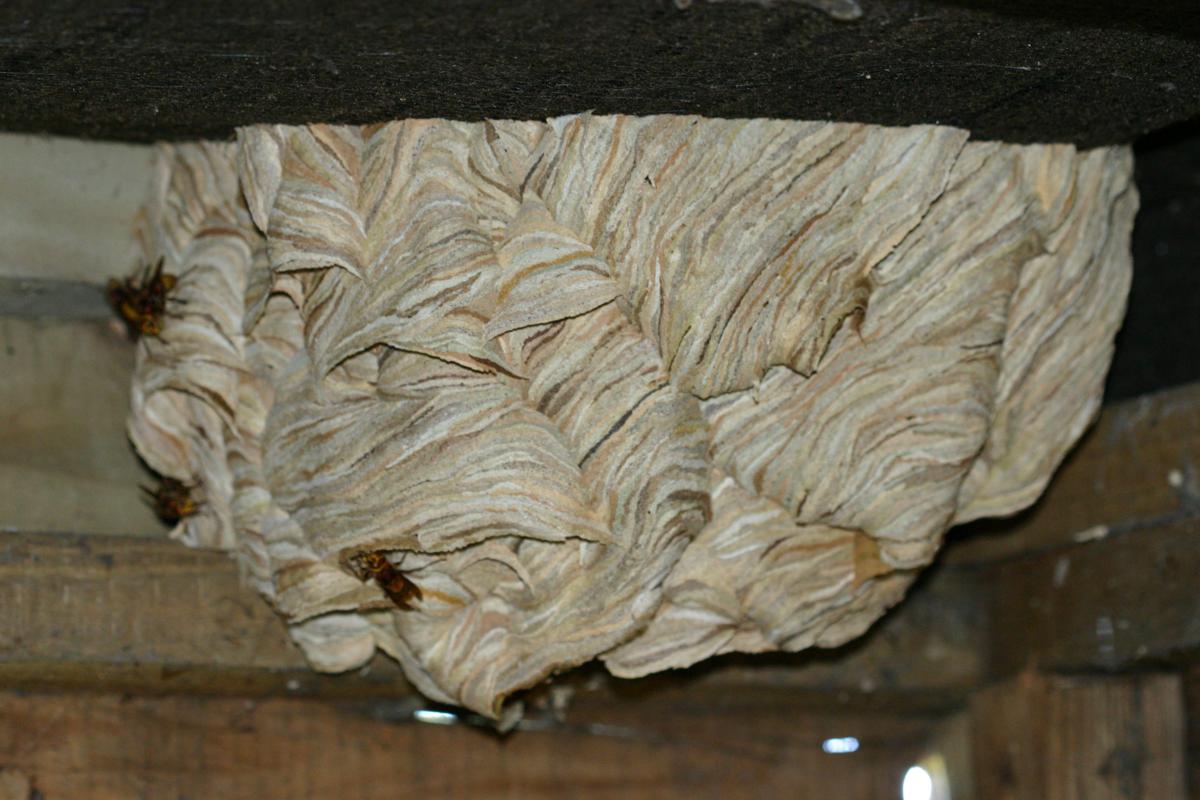
It is rarely aggressive unless the colony is threatened. Queens emerge from hibernation during the spring, and they search for a suitable location in which to start a new nest. The queen begins to build the nest with chewed wood pulp, and a few eggs are laid in individual paper cells; these eggs develop into non-reproductive workers. When 5-10 workers have emerged, they take over the care of the nest, and the rest of queen's life is devoted solely to egg laying. The nest grows throughout the summer, reaching its peak size towards mid September. At this time the queen lays eggs that develop into males (drones) and new queens, she then dies shortly after. The new queens and males mate during a 'nuptial flight', after which the males die, and the newly mated queens seek out suitable places in which to hibernate; the old nest is never re-used.
Fairly common in some parts of the south of England. It seems to be spreading northwards and has reached south Yorkshire.
Common in Leicestershire and Rutland.
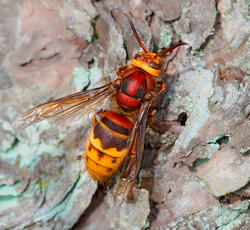 Clive Pearson
Charnwood Lodge
11 April 2011
queen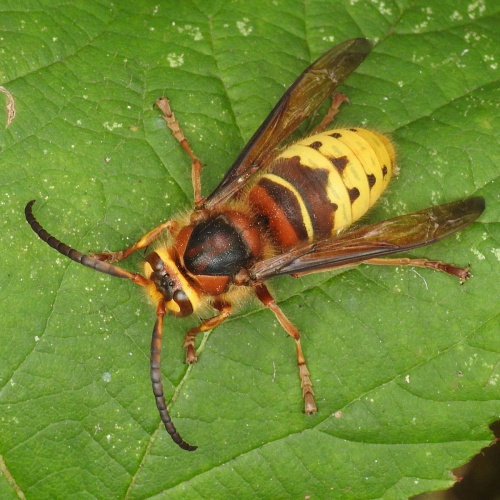 David Gould
Braunstone, Wood Close Plantation
27 September 2020
male Harecroft Crescent Sapcote SP49019371 (taken 10.7.2010),.JPG) Graham Calow
Graham Calow
Sapcote garden1
10 July 2010
attracted to light trap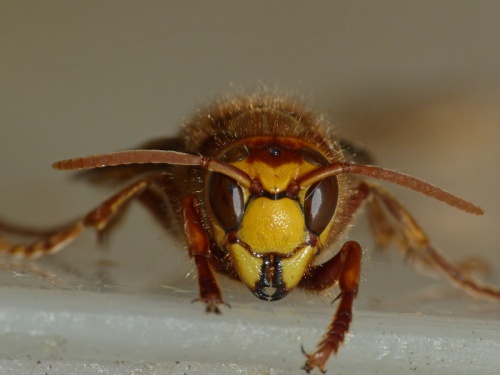 Mark Skevington
Pickworth Great Wood
20 July 2013
Attracted to moth trap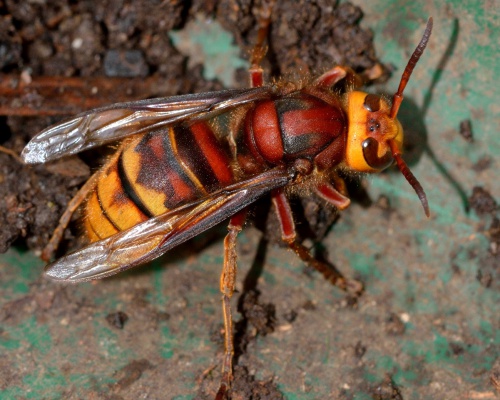 Barbara Cooper
Long Clawson
22 February 2017
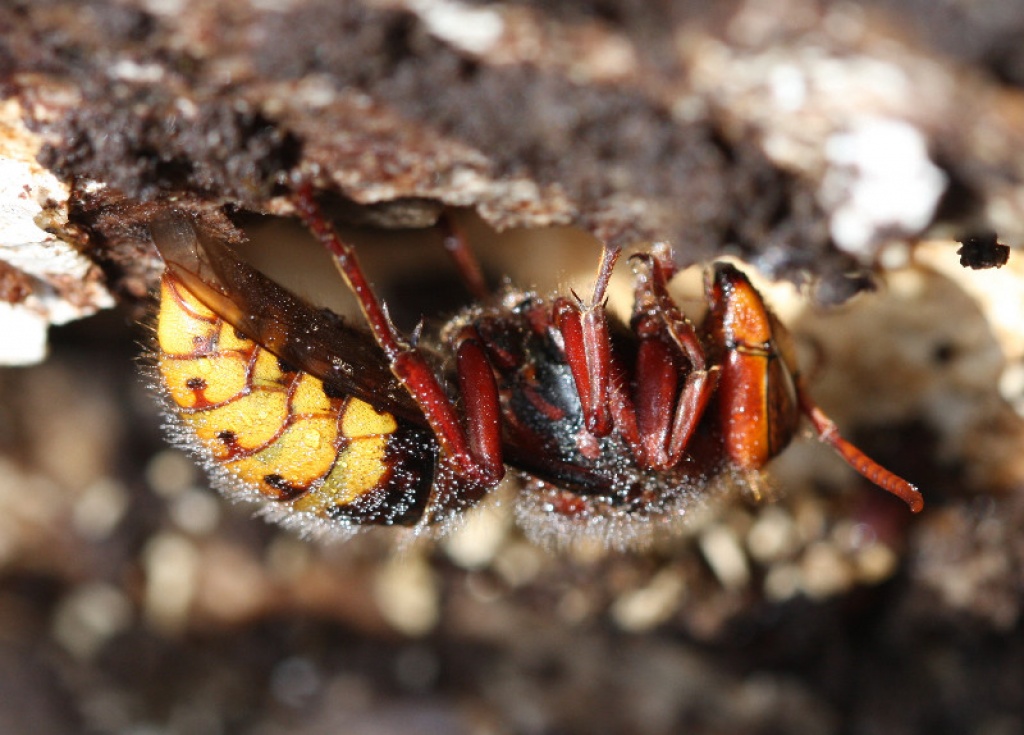
overwintering in compost heap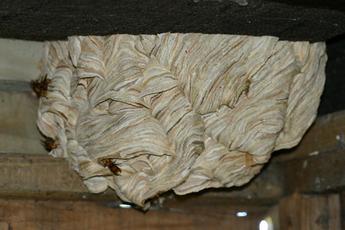 David Nicholls
Rutland Water, Egleton NR
02 September 2005
nest inside bird hide
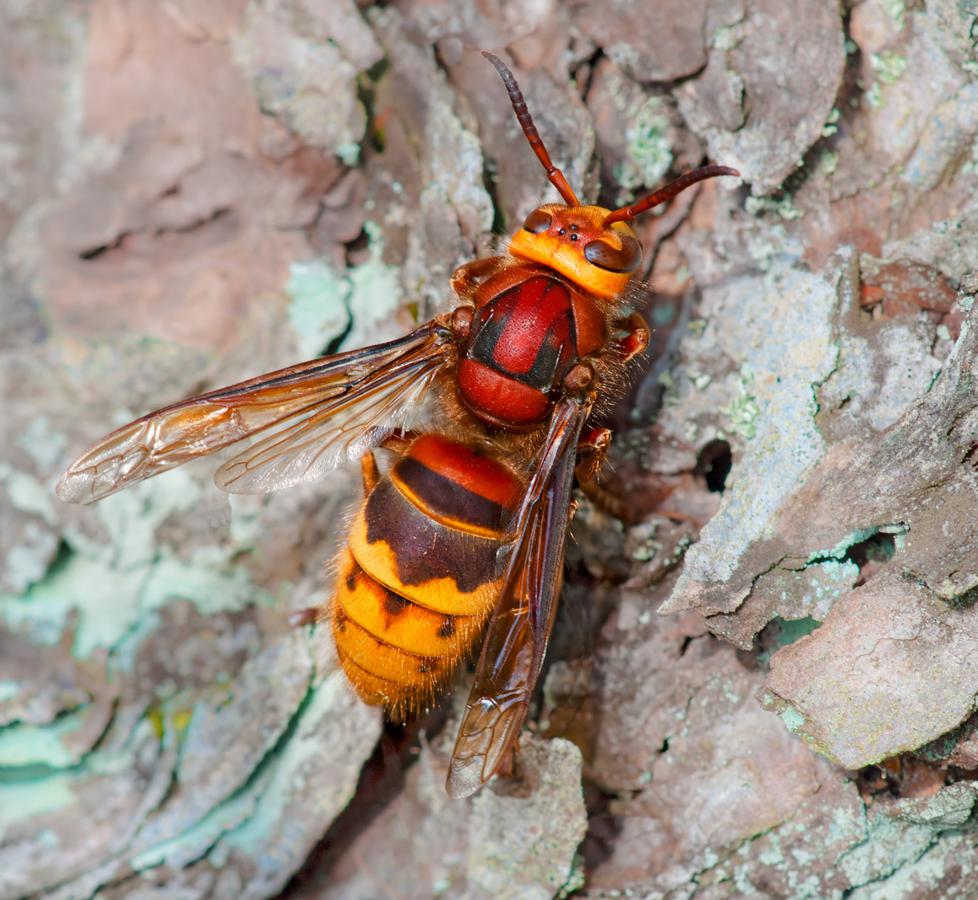
 Harecroft Crescent Sapcote SP49019371 (taken 10.7.2010),.JPG)
Leicestershire & Rutland Map
Enter a town or village to see local records
MAP KEY:
Yellow squares = NBN records (all known data)
Coloured squares = NatureSpot records: 2025+ | 2020-2024 | pre-2020
UK Map
Additional images