Honey Locust
Honey Locust - Gleditsia triacanthos
Thorny Honeylocust
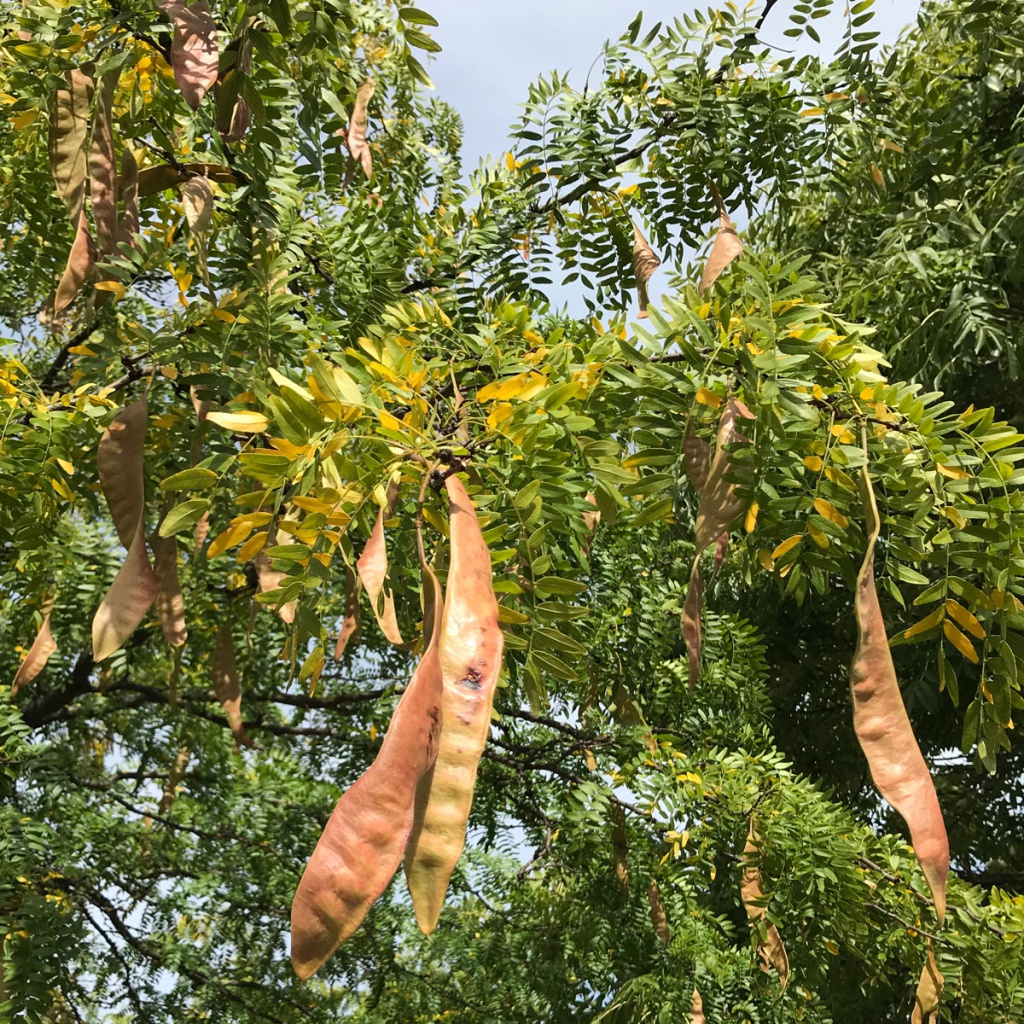
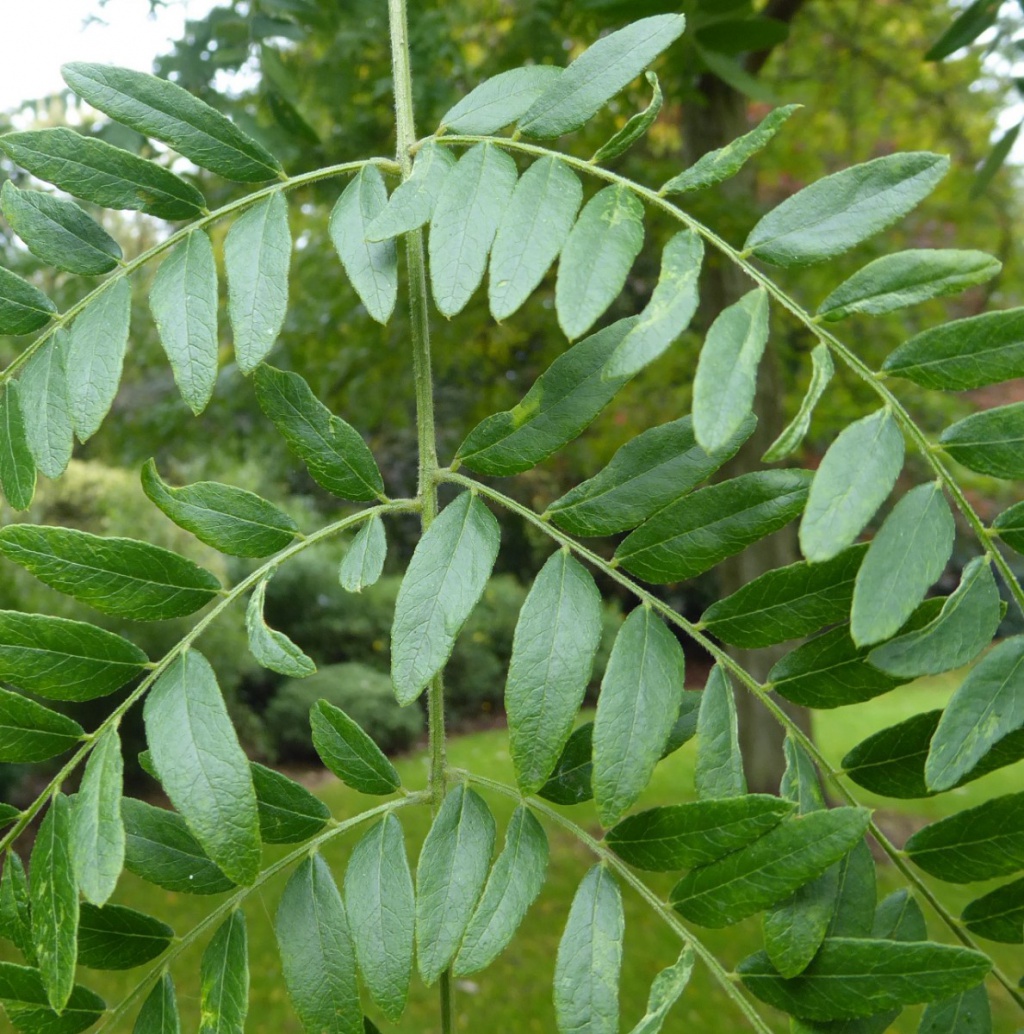
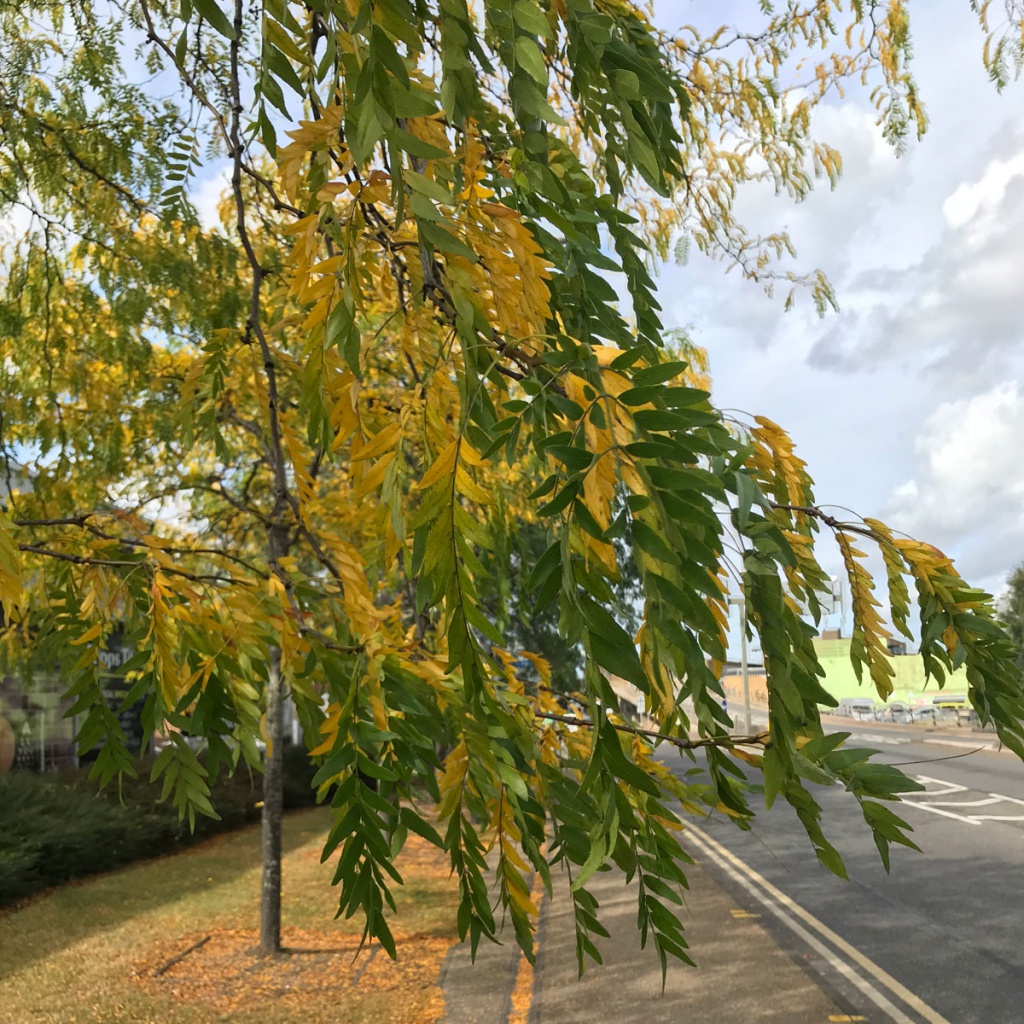
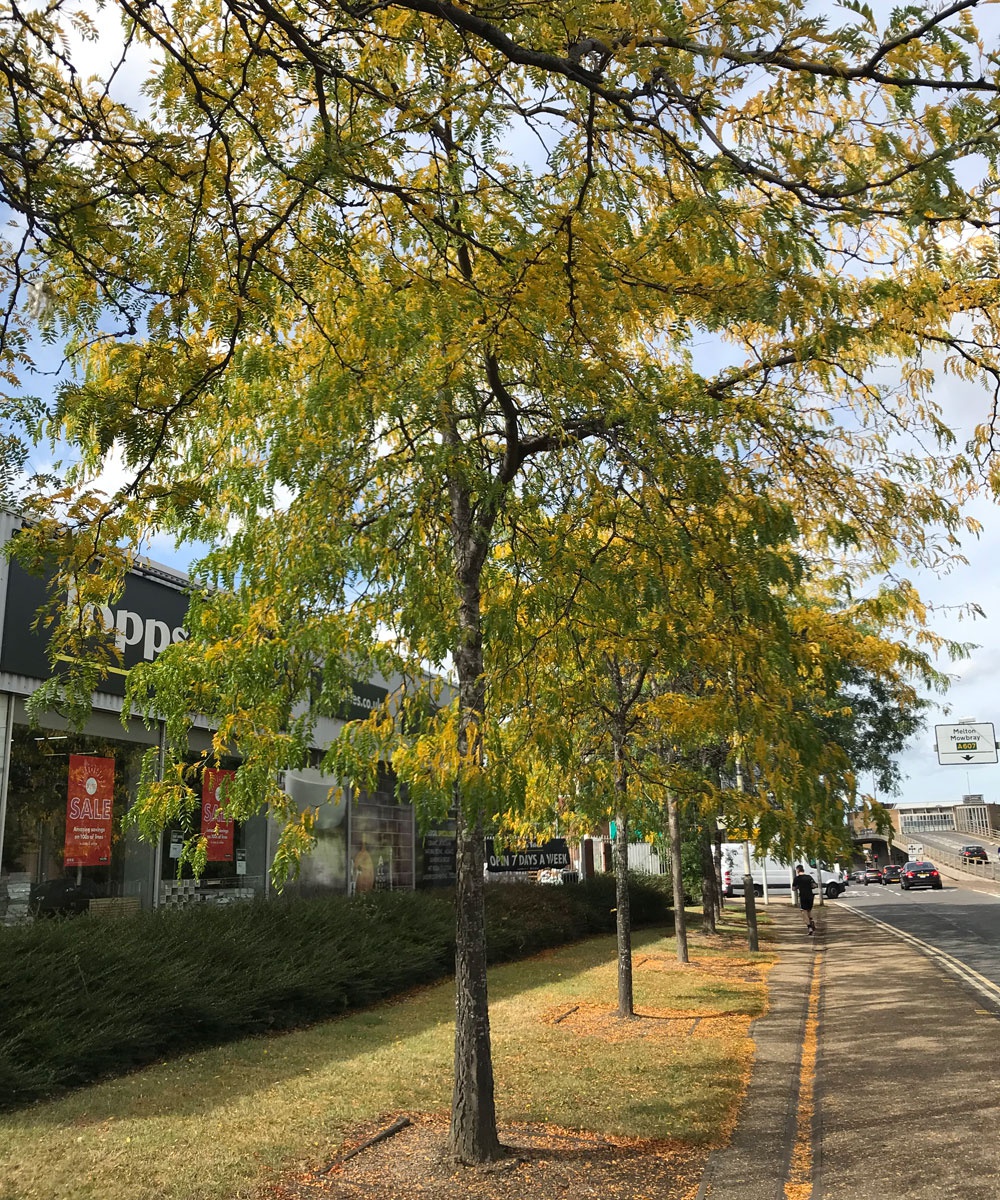
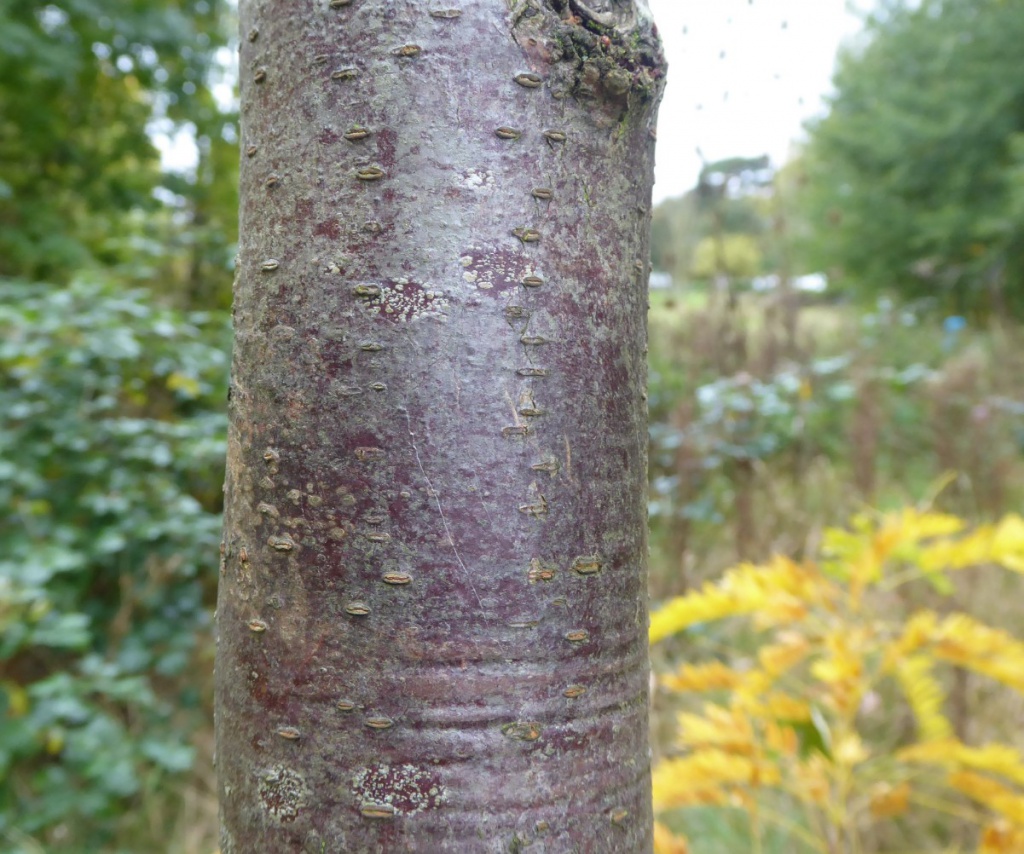
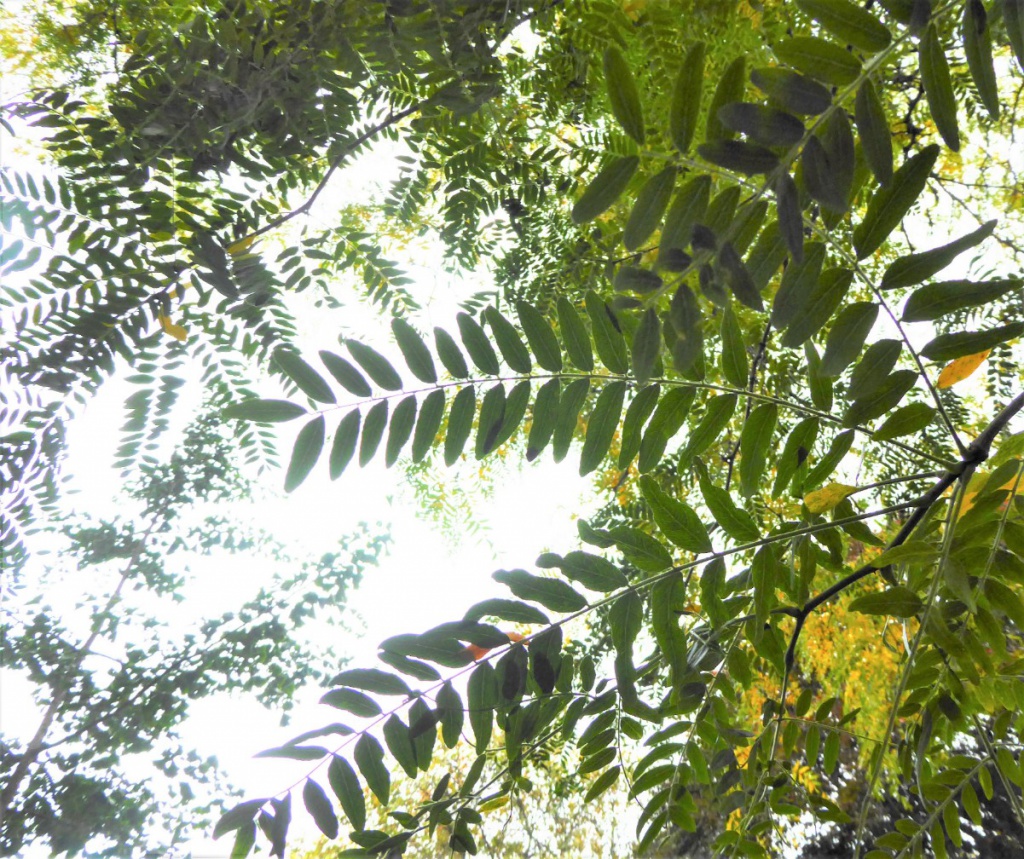
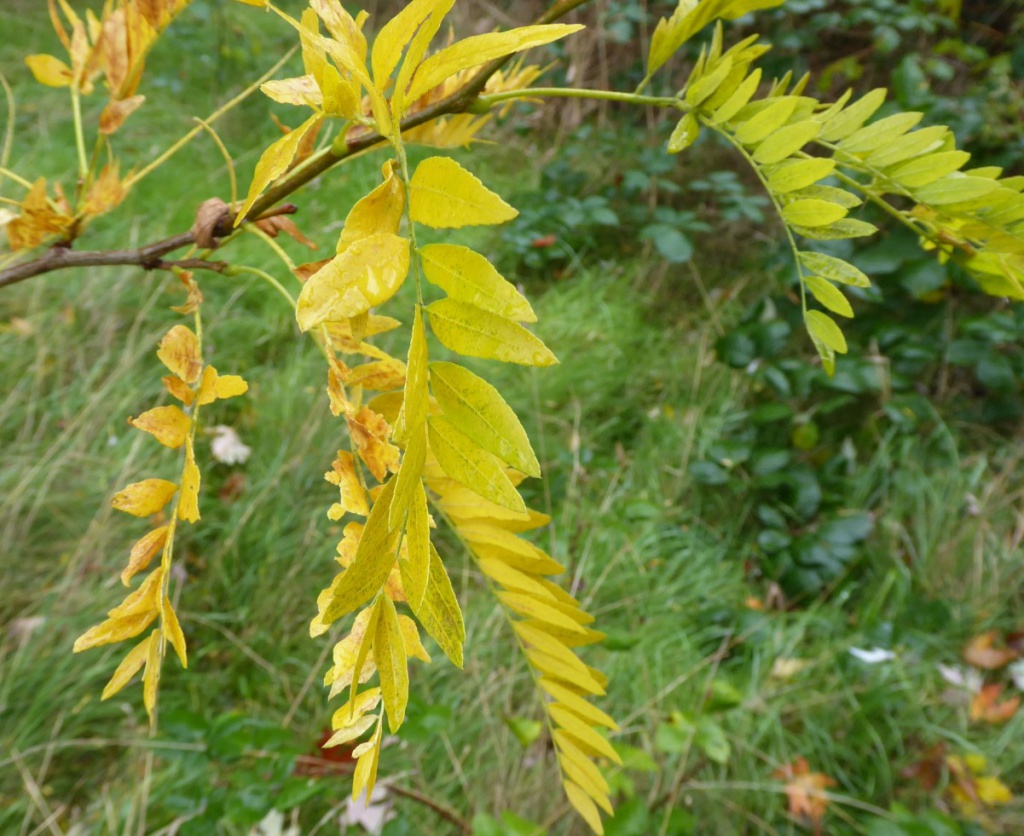
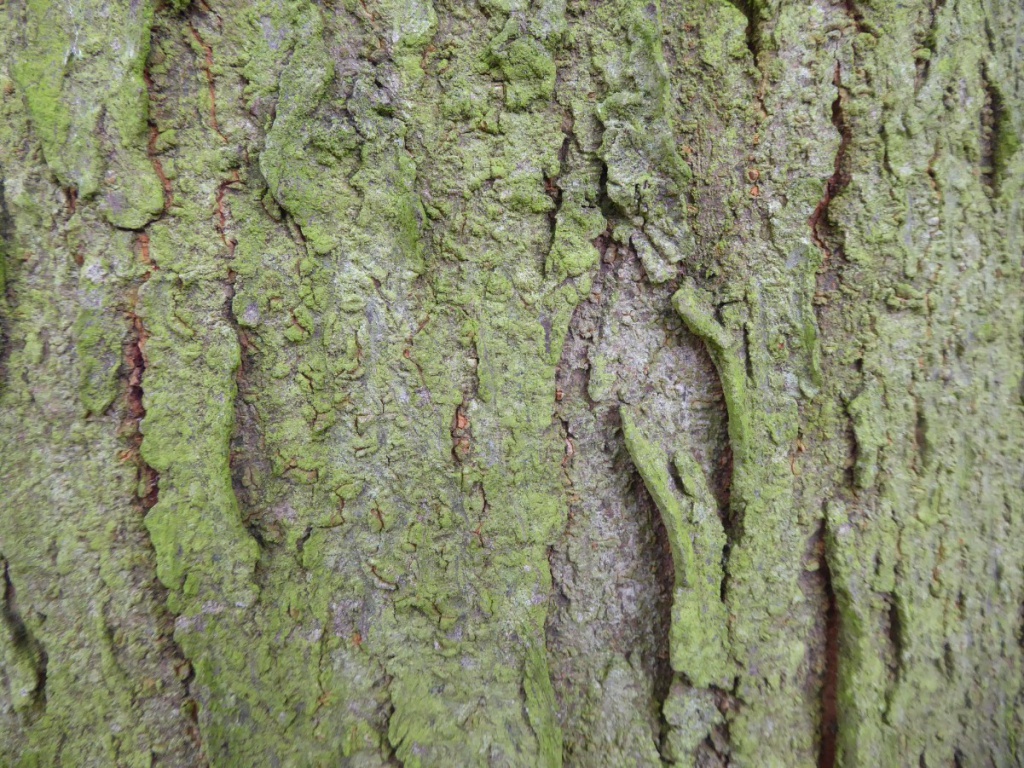
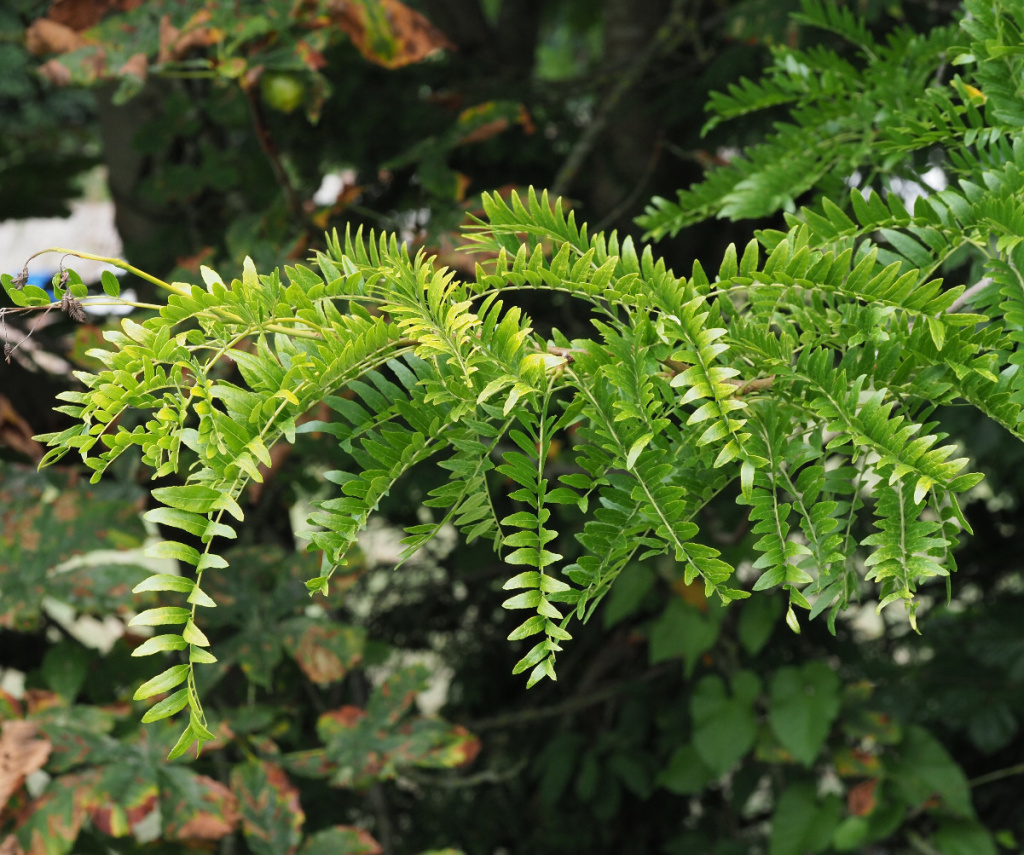
A deciduous tree reaching 20-30m in height and a 15m spread. It has an open habit, casting only a light shade beneath its canopy. The trunk is grey with elongated 'plates'. The leaves are pinnate, sometimes bipinnate on young trees, with leaflets 1.5-2.5cm in length. The foliage appears late, usually in May, and is bright yellow-green when it first appears, darkening as it matures, then turning yellow in autumn. Inconspicuous scented cream flowers can give rise to large, flattened seed pods 15-20cm in length but this is unusual in domesticated varieties.
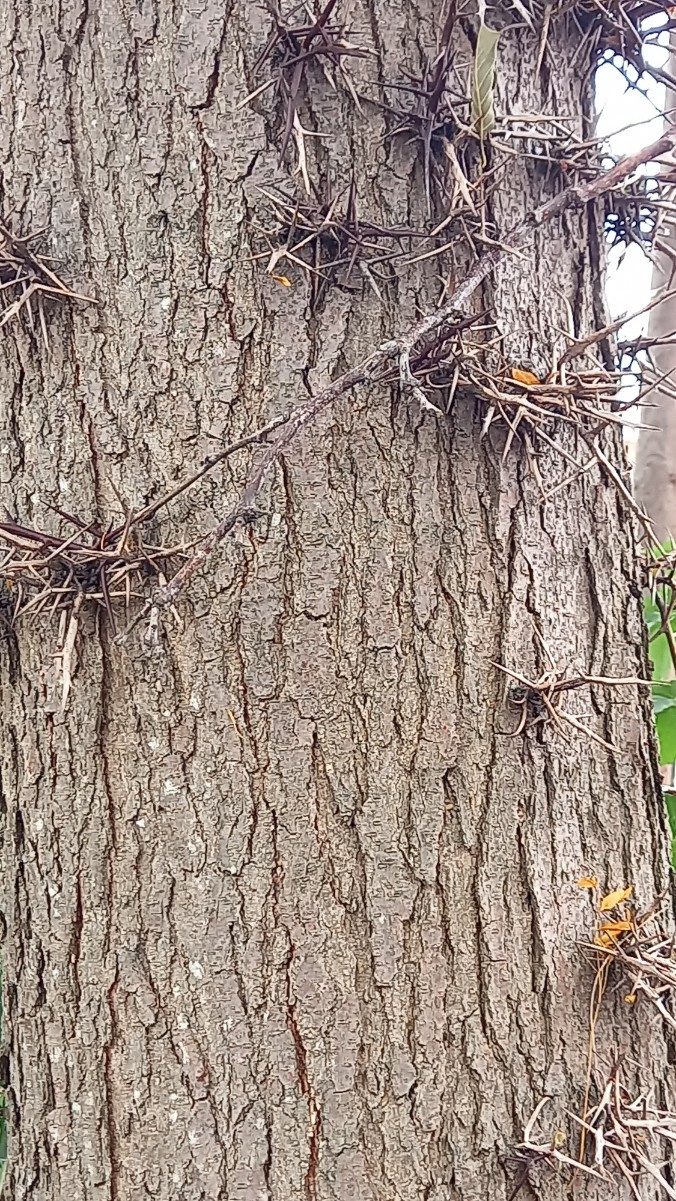
The wild species (of North America) has impressive thorns 3-10(20)cm long growing in clusters on the branches but these have usually been bred out in garden varieties.

Unless identified by a recognised expert, a photo is required. If the photo doesn't show the key ID features then in the comments box describe the size and identifying characters you have observed.
This species is native to central North America where it is mostly found in the moist soil of river valleys. It is highly adaptable to other conditions however, and has been introduced worldwide. It is sometimes classed as an invasive species. Tolerance of pollution makes it an ideal tree for urban planting.
All year.
A deciduous tree.
This species appears to be rarely recorded in the UK.
Rarely recorded in Leicestershire and Rutland.
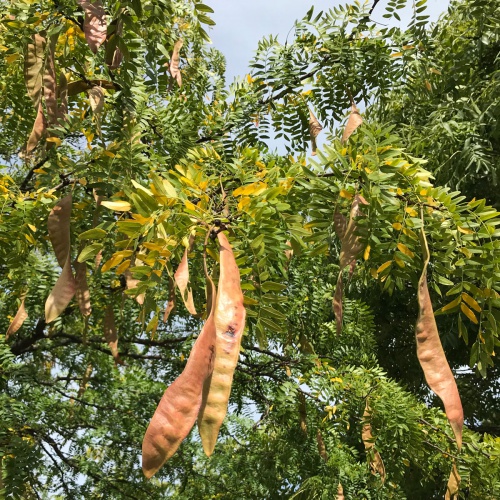 David Gould
Leicester, St Matthews Way
23 September 2019
seed pods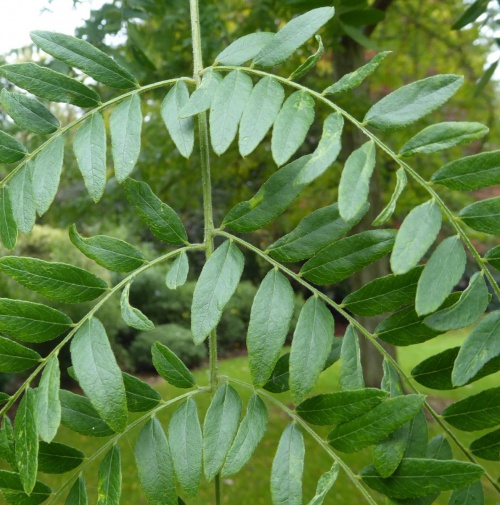 Saharima Roenisch
Leicester Abbey Park
14 October 2020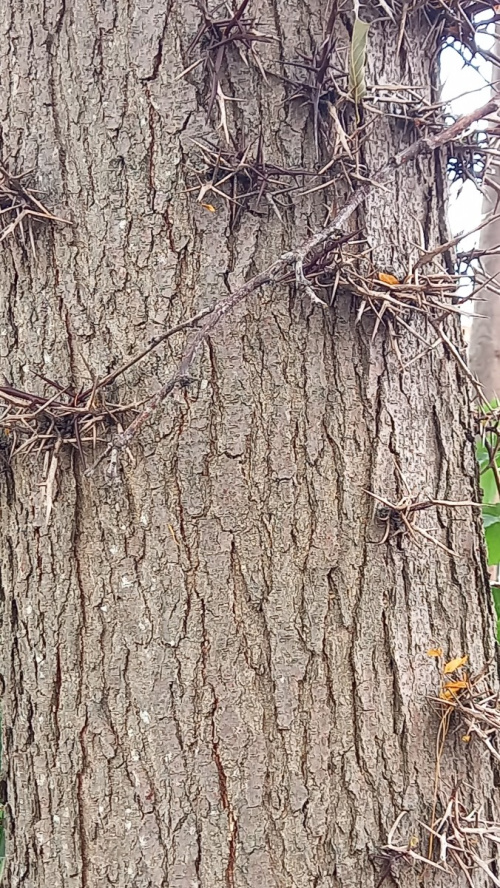 Kaye Axon
Aylestone, Aylestone Recreation Ground
15 August 2026
thorns often not present in garden varieties.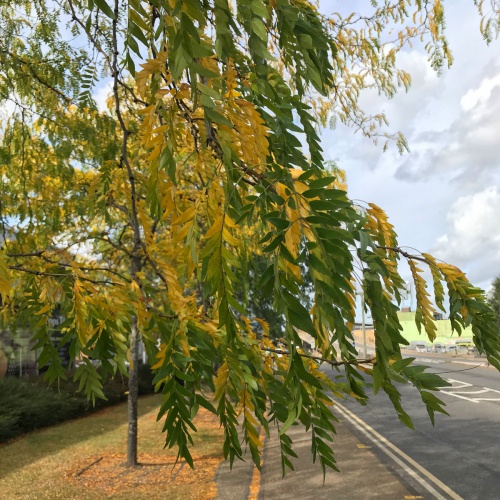 David Gould
Leicester, St Matthews Way
23 September 2019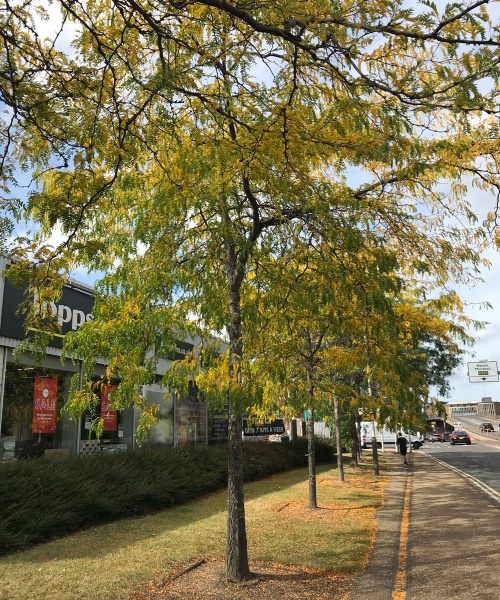 David Gould
Leicester, St Matthews Way
23 September 2019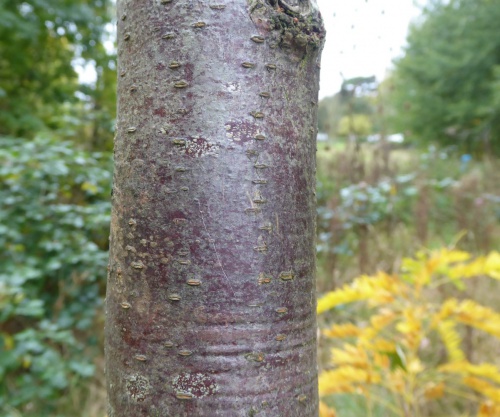 Saharima Roenisch
Evington Park
12 October 2020
Leicestershire & Rutland Map
Enter a town or village to see local records
MAP KEY:
Yellow squares = NBN records (all known data)
Coloured squares = NatureSpot records: 2025+ | 2020-2024 | pre-2020
UK Map
Additional images
All NatureSpot records
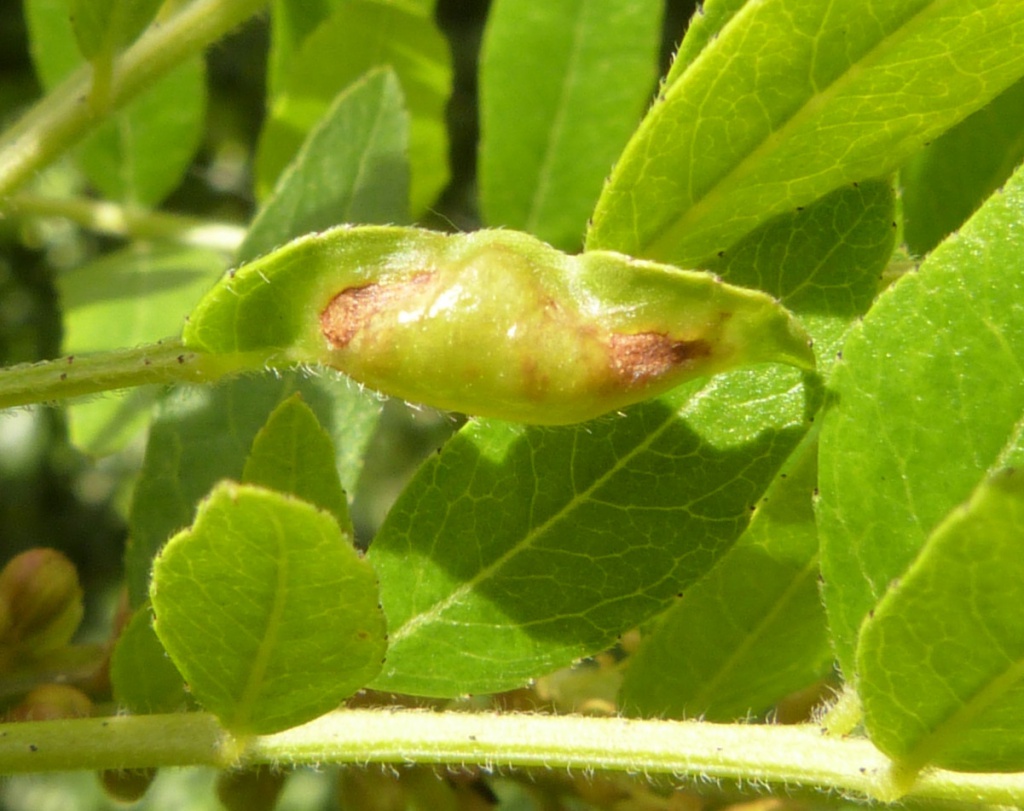
Dasineura gleditchiae
The larva of the gall midge Dasineura gleditchiae causes galls to form on the Honey Locust Tree. The leaflets become thickened and folded to form pods up to 10 mm long, often becoming reddened, each containing several orange larvae.