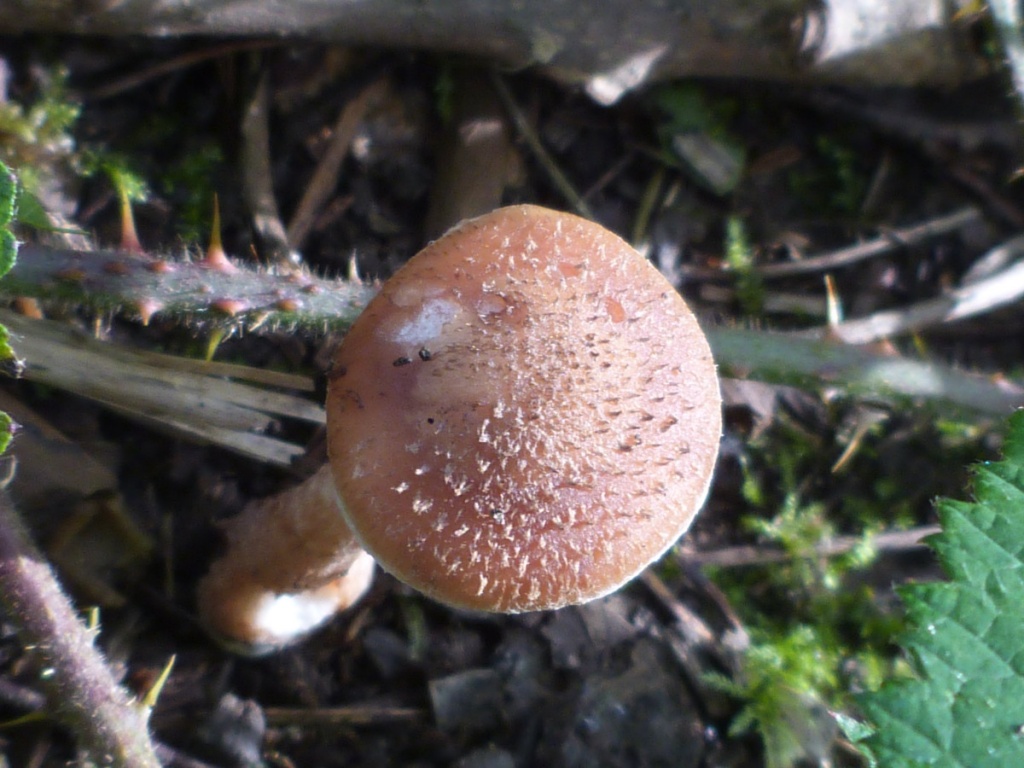
Honey Fungus
Honey Fungus - Armillaria mellea
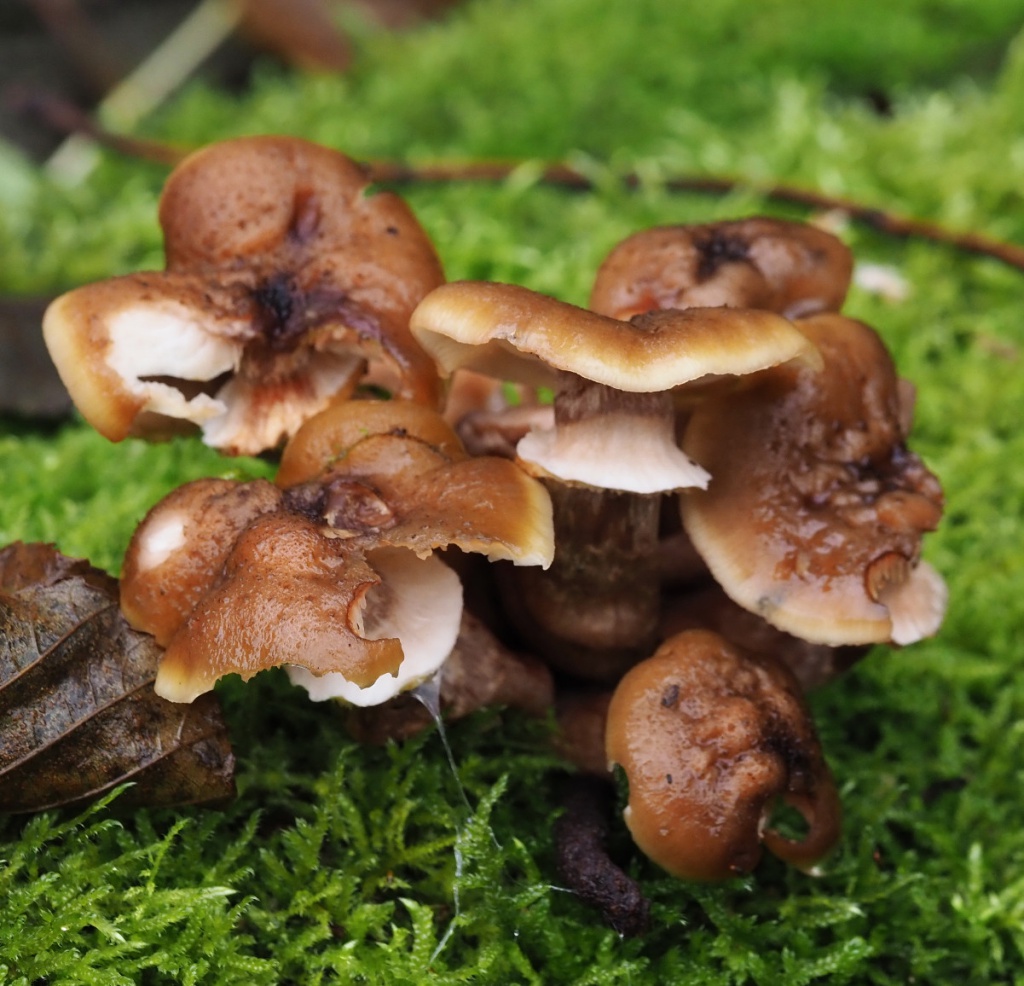
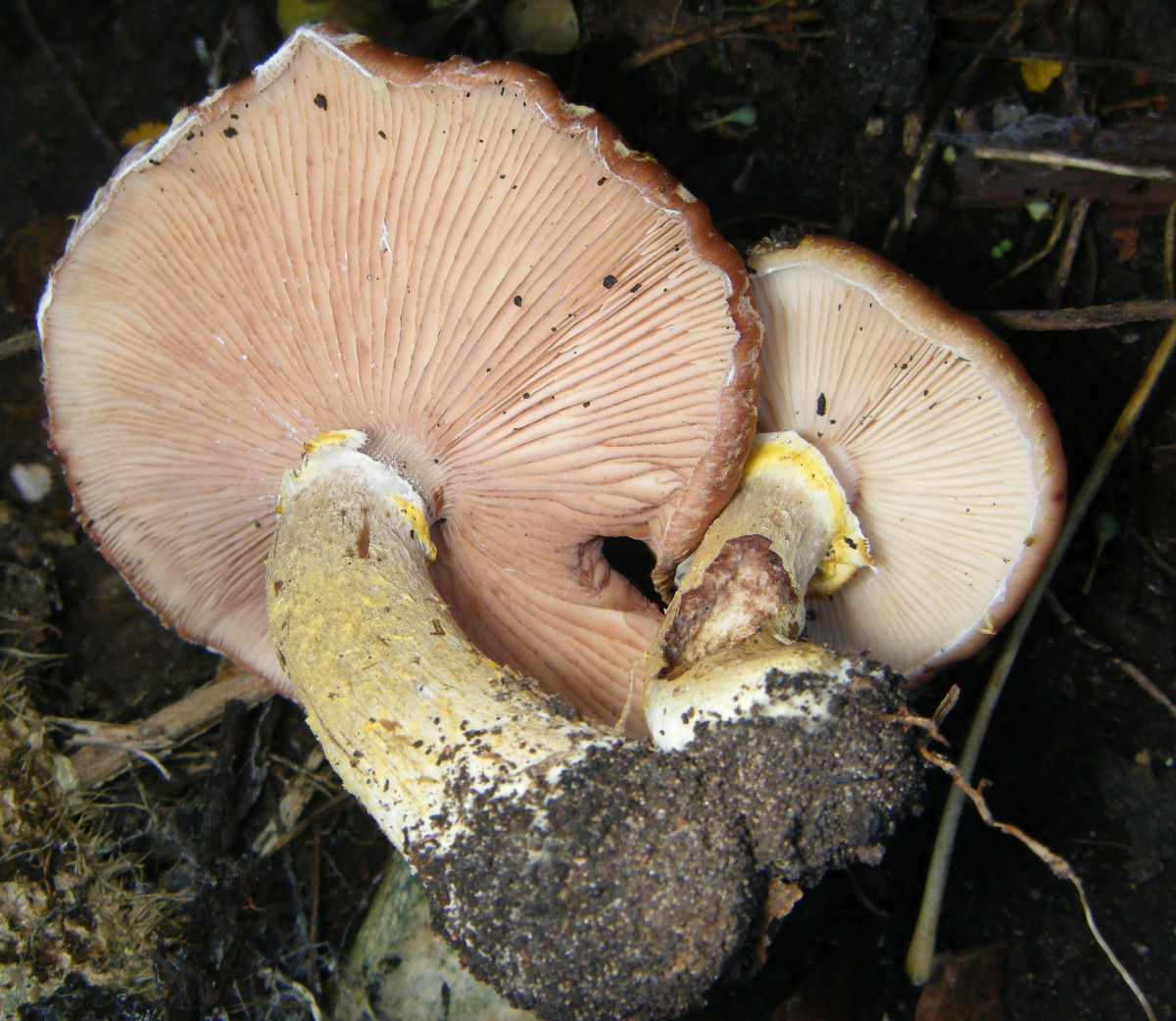
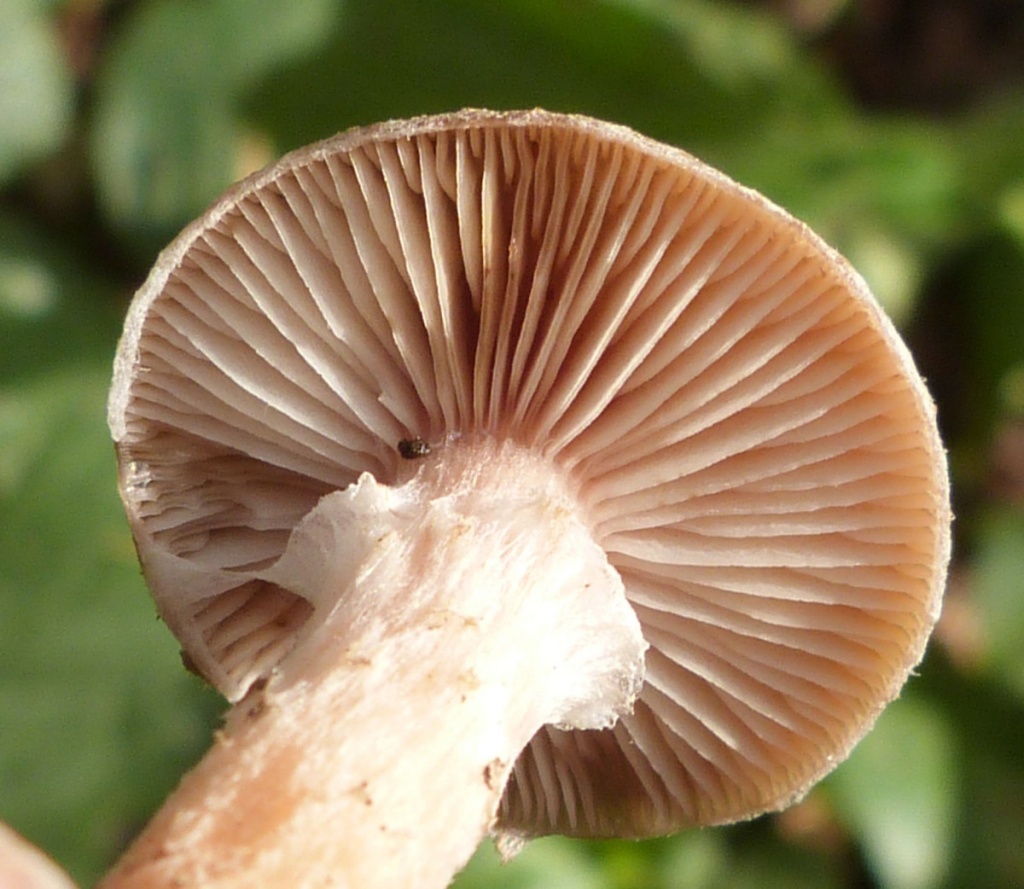
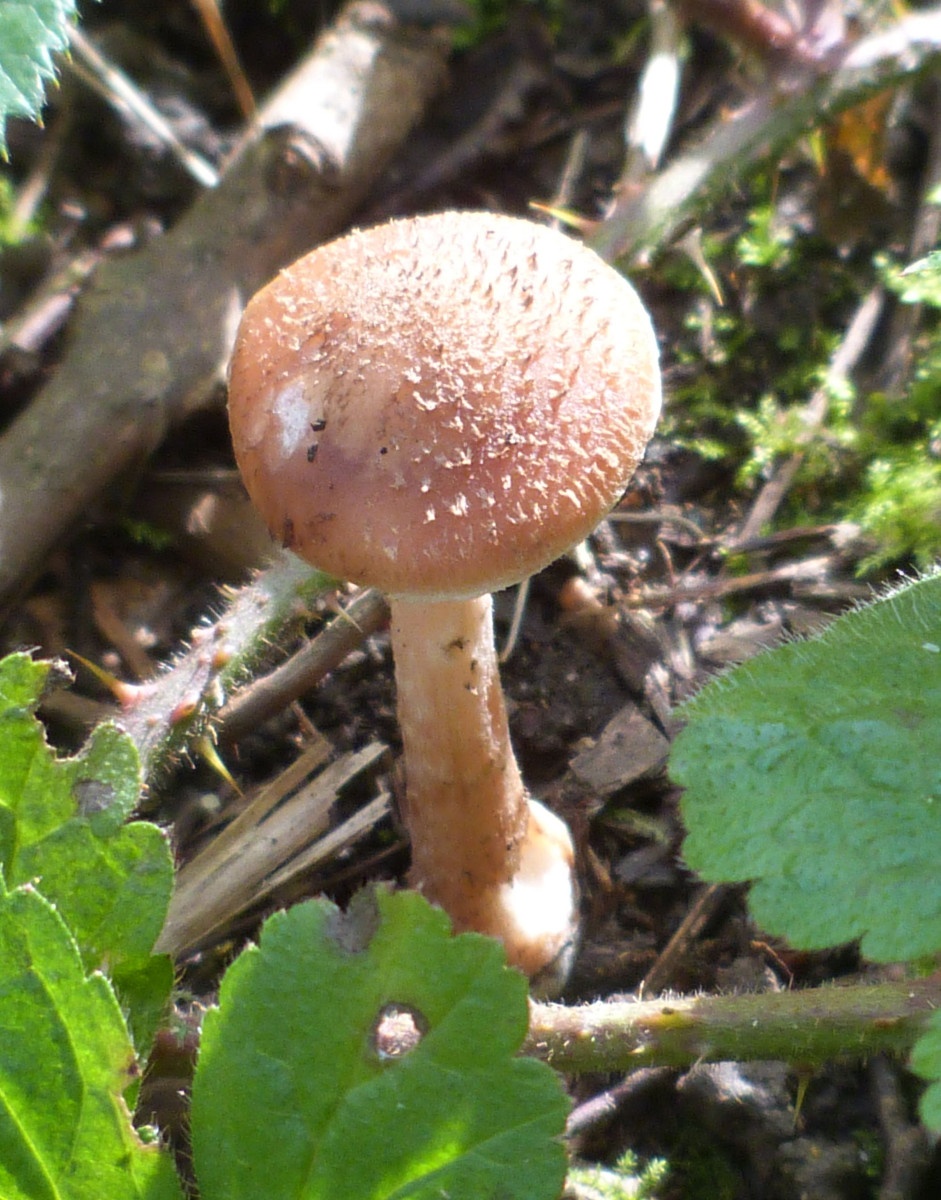
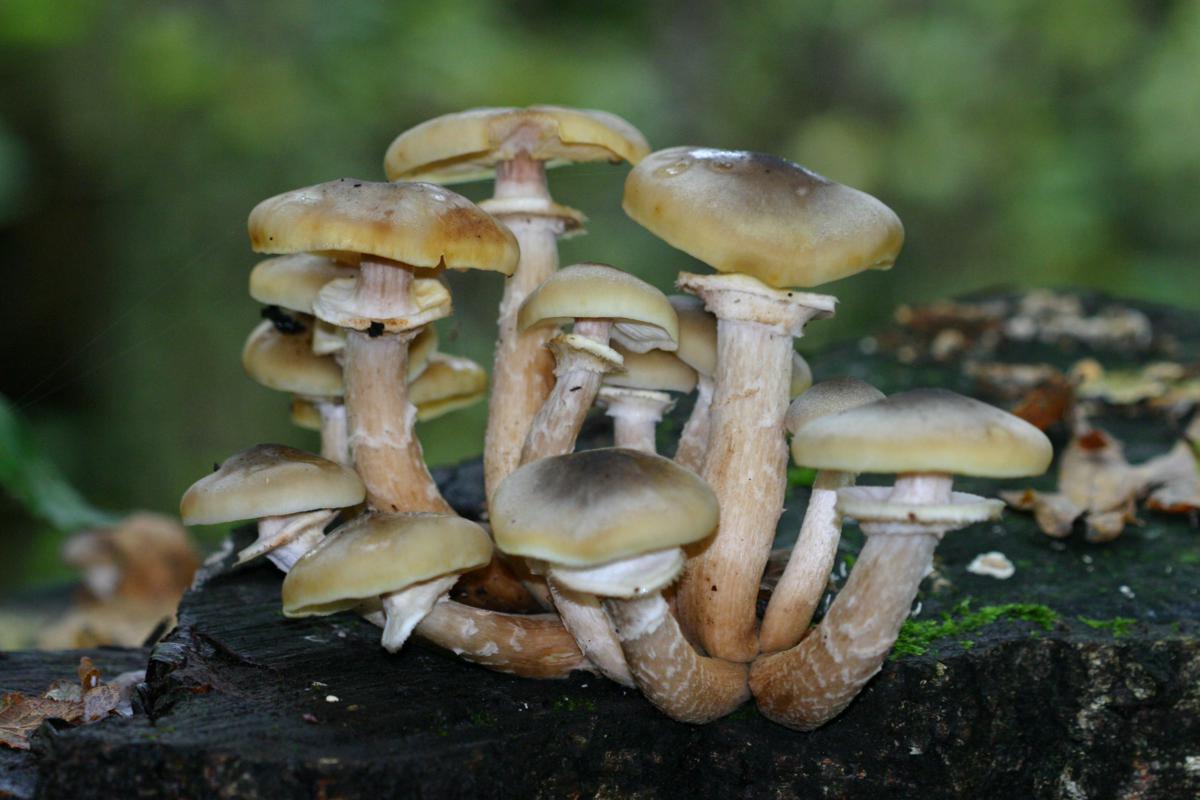
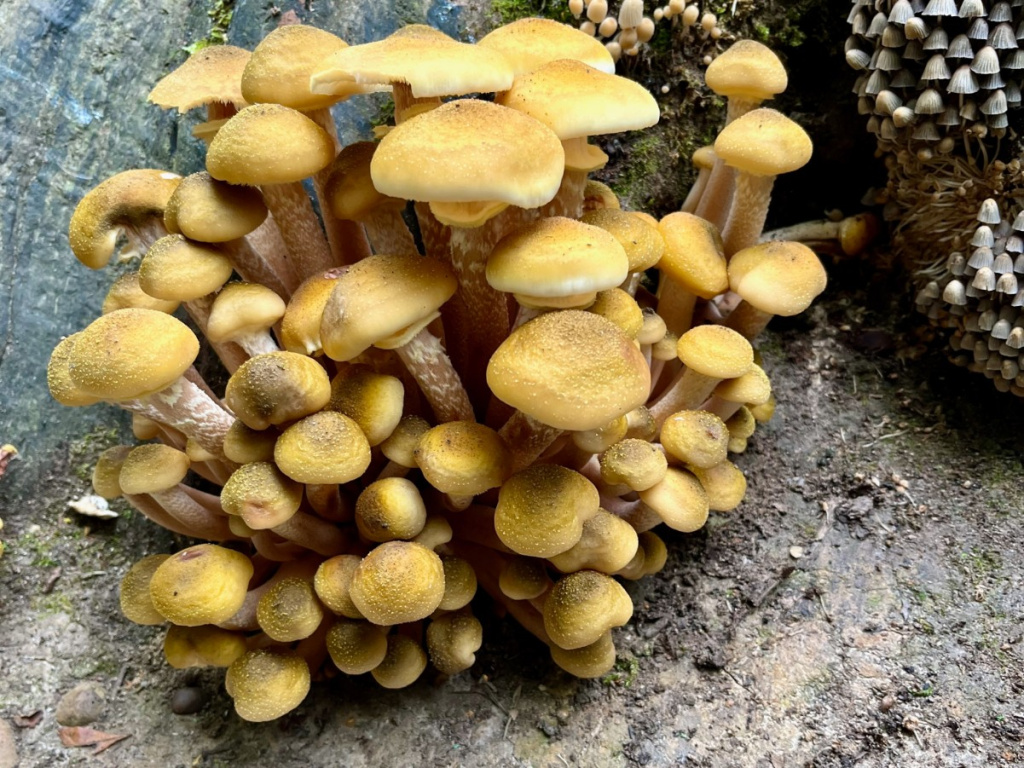
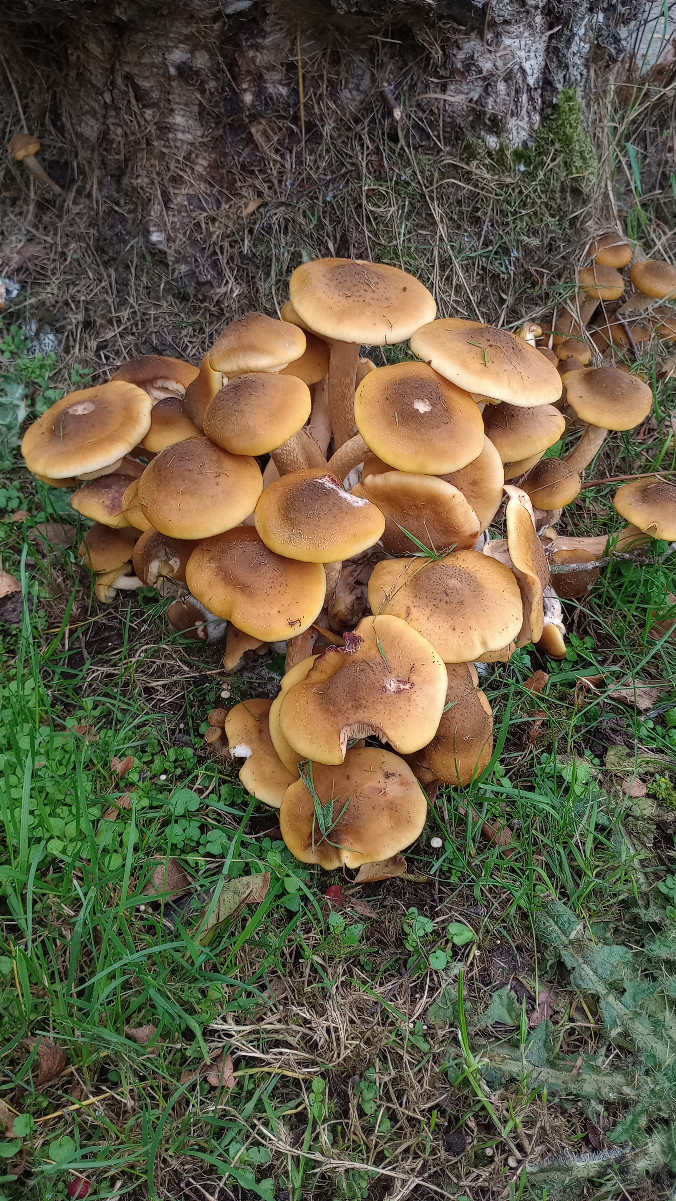
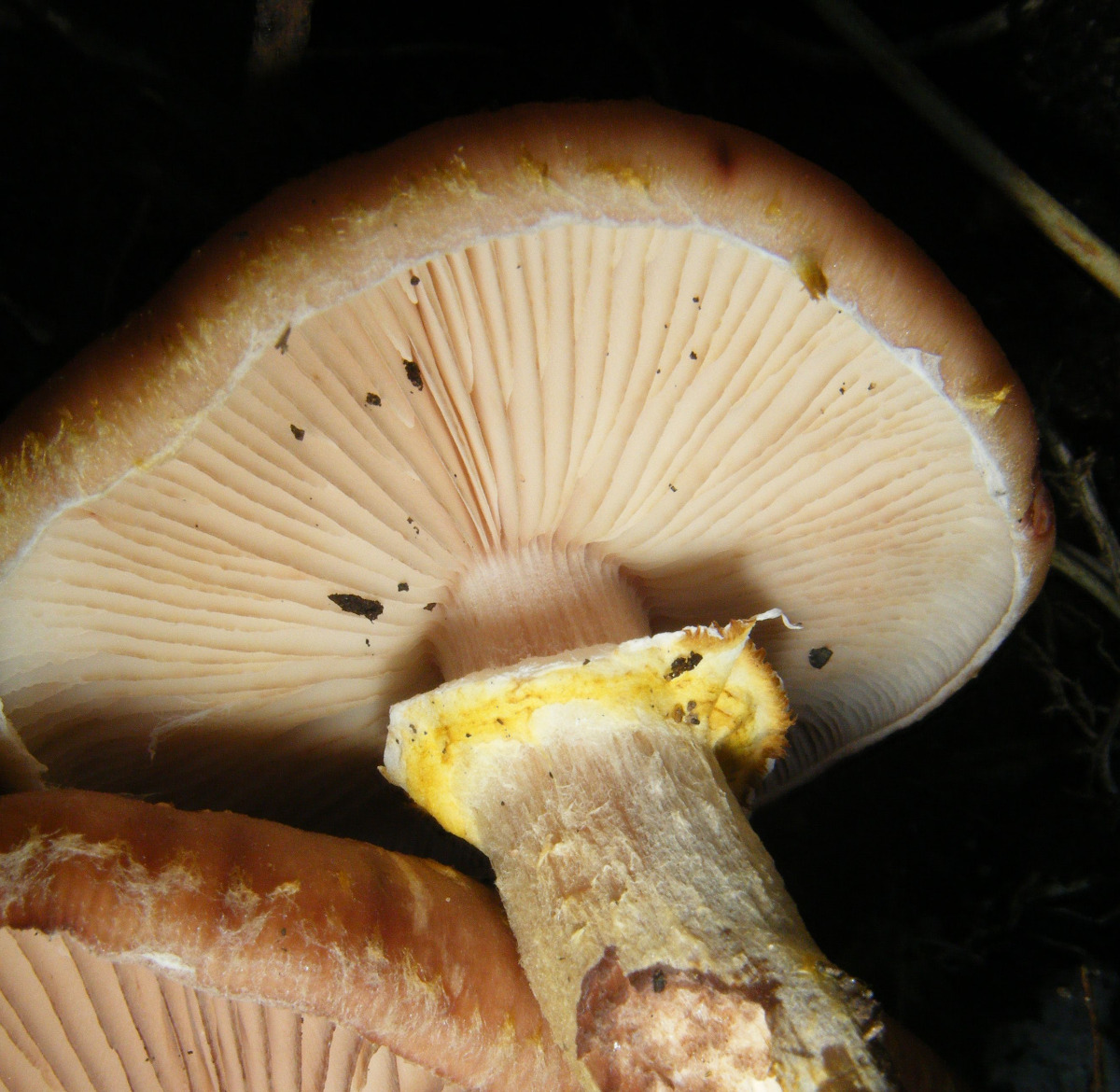
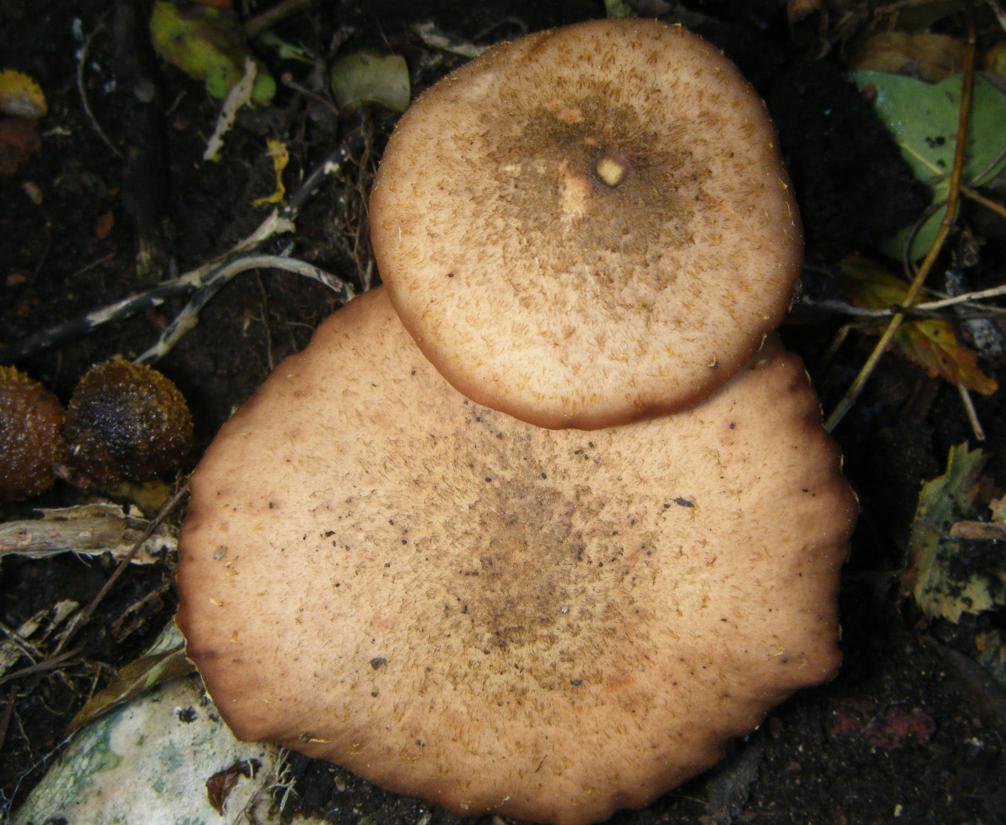
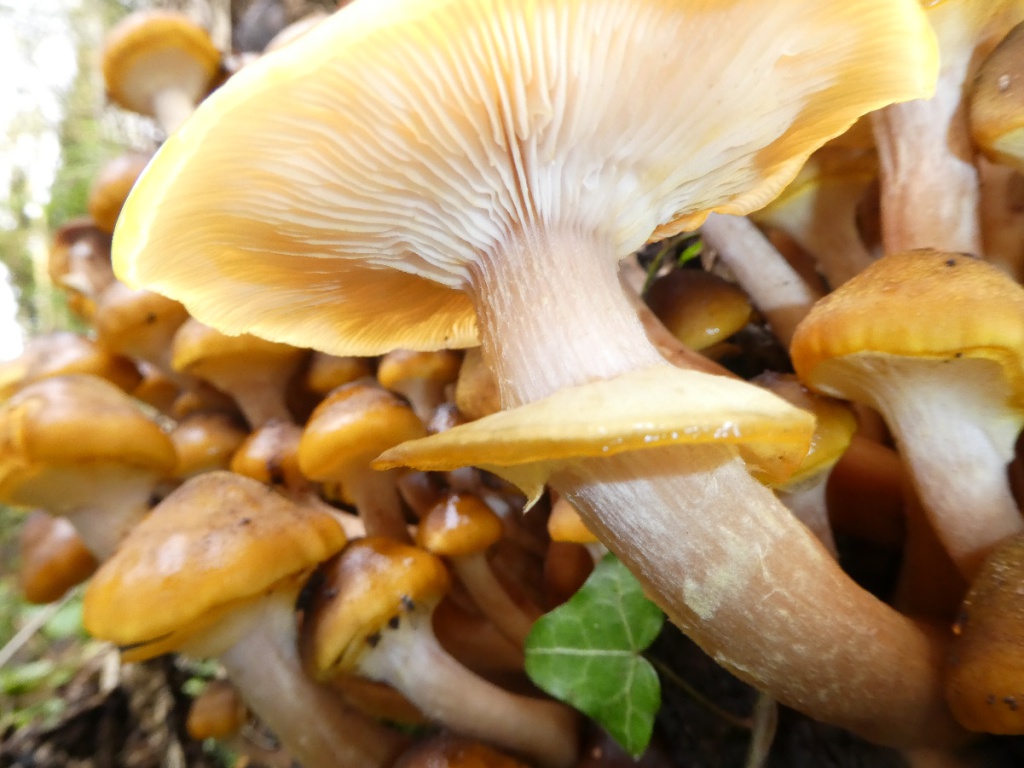
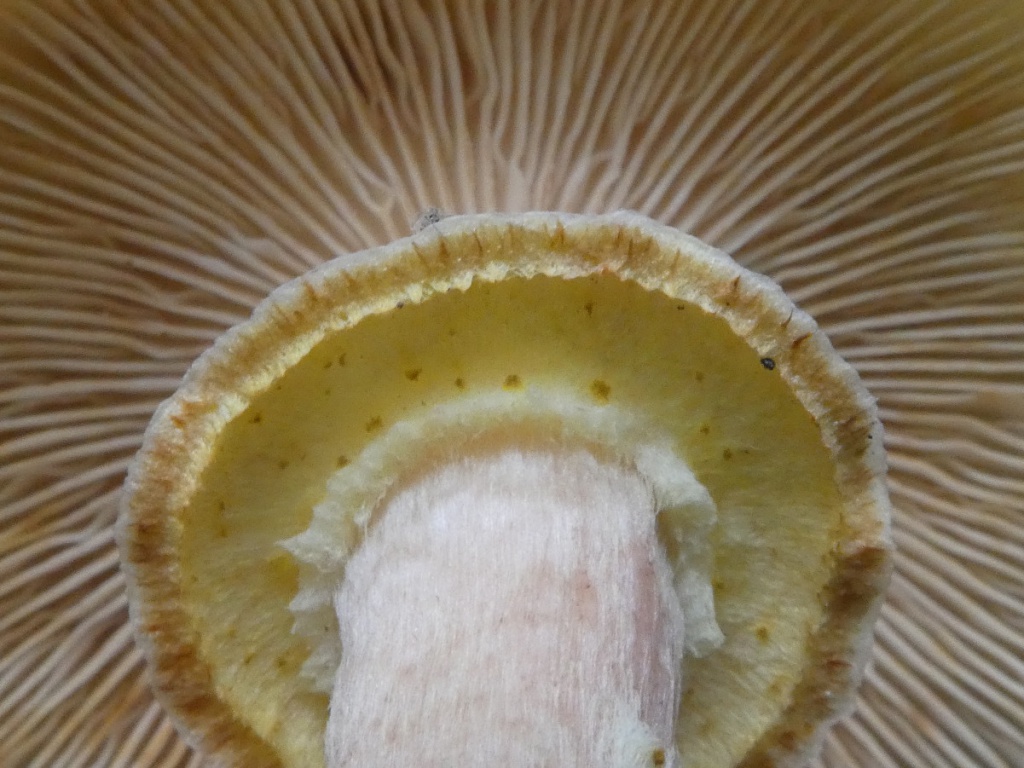
The caps are variable in colour from honey-coloured to brownish-yellow, sometimes with a greenish tint, through red-brown to a darker brown. The caps have small scattered darker squamules, especially in the centre. The gills are creamy or yellowish, sometimes with rusty spots. There is a persistent yellowish ring.
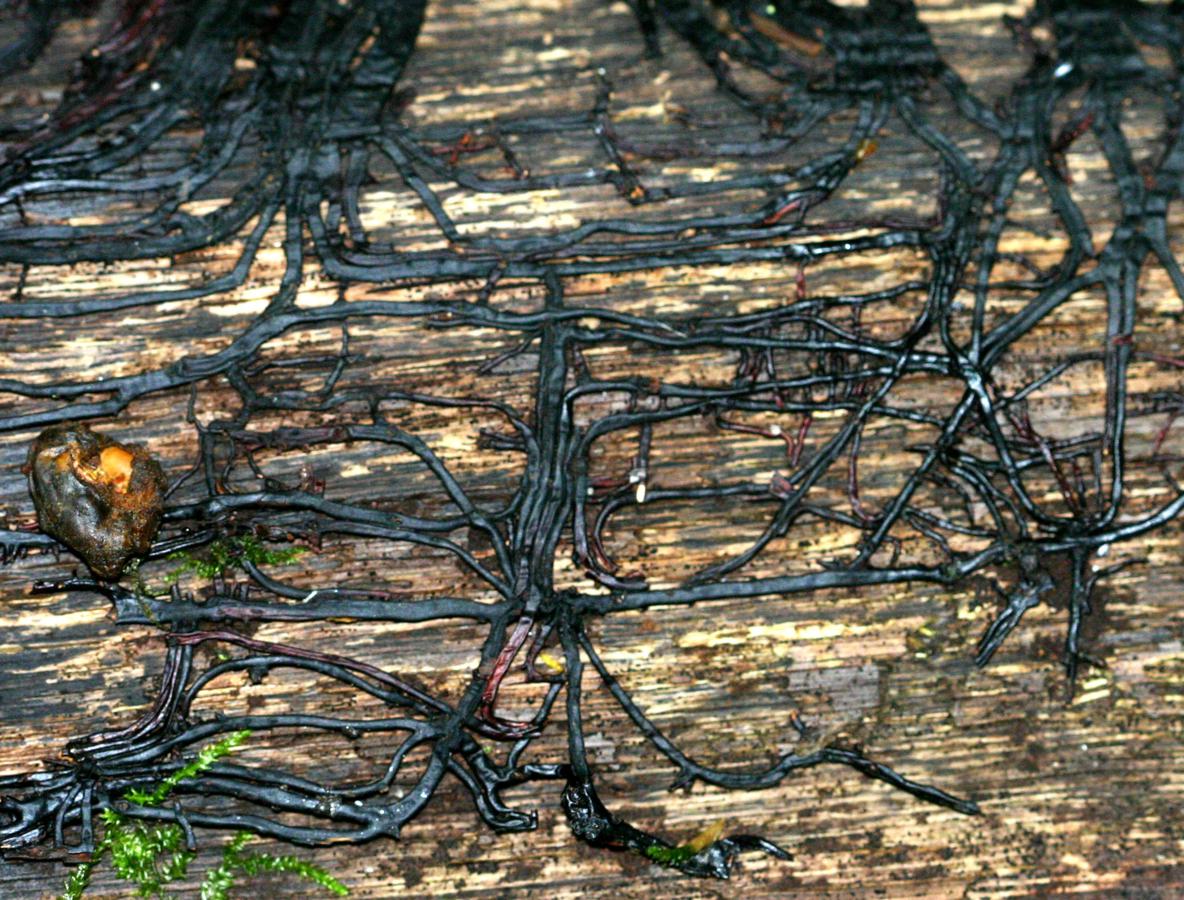
A serious parasite of many species of trees and shrubs, often responsible for the death of specimen trees, fruit trees, hedgrow shrubs etc. in parks and gardens. Long black 'bootlaces' or rhizomorphs can be found under the bark of dead and dying trees.
other Armillaria species: Dark Honey fungus Armillaria ostoyae and Bulbous Honey fungus Armillaria gallica. (In the past these have been considered to be varieties of A mellea, but are now treated as separate species)

Photograph from top down, in side view and from underneath to show gills and full length of stipe. Note habitat and substrate.
On or up against broad-leaf and conifer trees; also occurring on stumps and roots, and occasionally on fallen branches.
July to November
Common and widespread in Britain.
Very common in Leicestershire and Rutland.
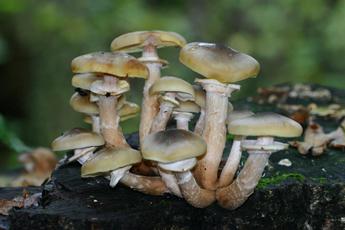 David Nicholls
Burbage Common
22 October 2005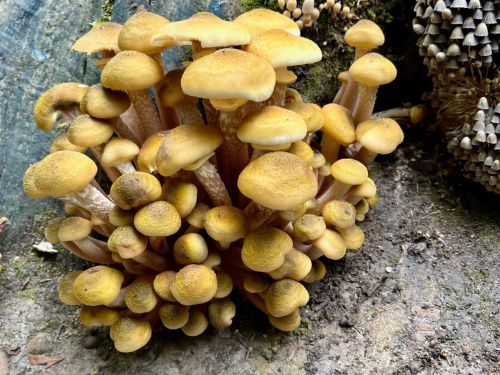 egaten
Burbage Common
10 October 2025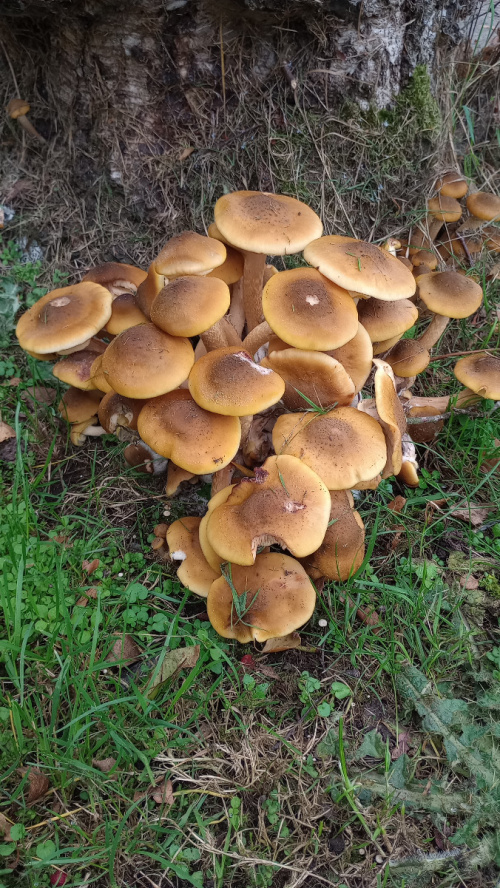 David Nicholls
Ratby, Desford Lane
14 October 2025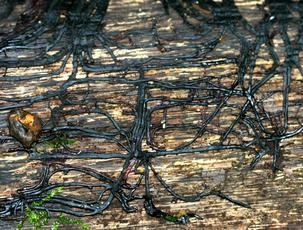 David Nicholls
Burbage Common
22 October 2005
'bootlaces'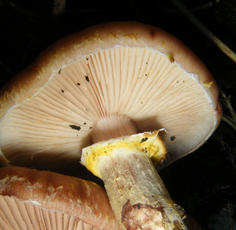 Graham Calow
Church Walk Sapcote
30 November 2011
yellow on ring helps with id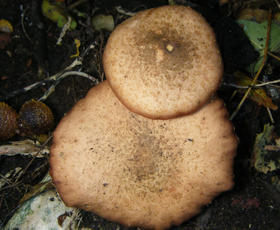 Graham Calow
Church Walk Sapcote
30 November 2011
mature specimens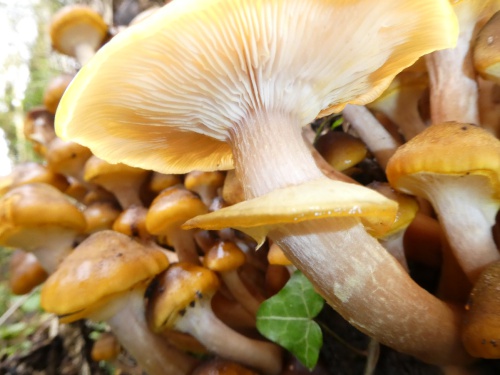 Melinda Bell
Dimminsdale Nature Reserve
05 November 2023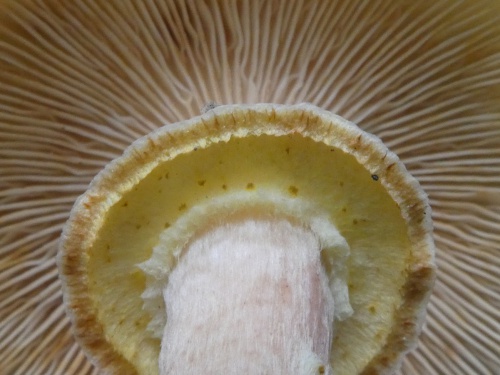 Melinda Bell
Calke,Southwood
27 October 2022
yellow ring
Leicestershire & Rutland Map
Enter a town or village to see local records
MAP KEY:
Yellow squares = NBN records (all known data)
Coloured squares = NatureSpot records: 2025+ | 2020-2024 | pre-2020
UK Map
Additional images