Herring Gull
Herring Gull - Larus argentatus
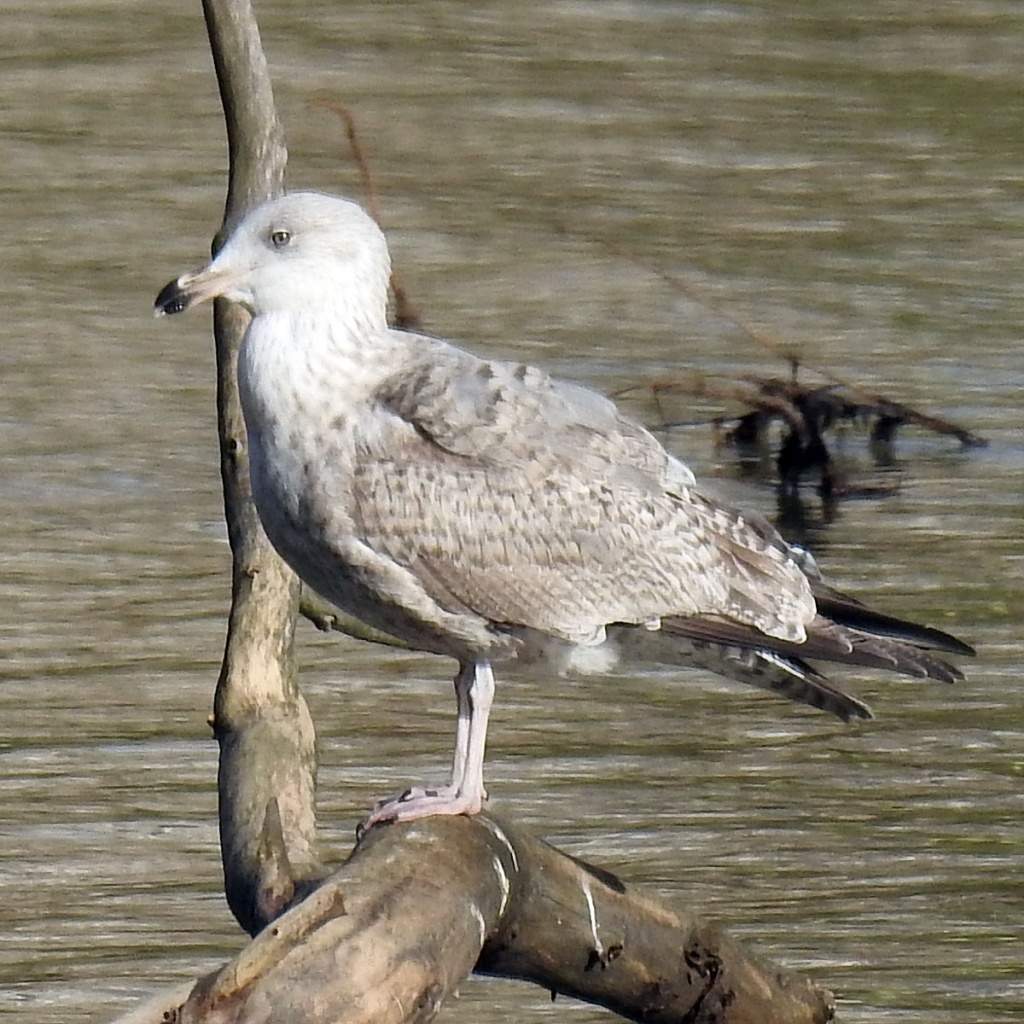
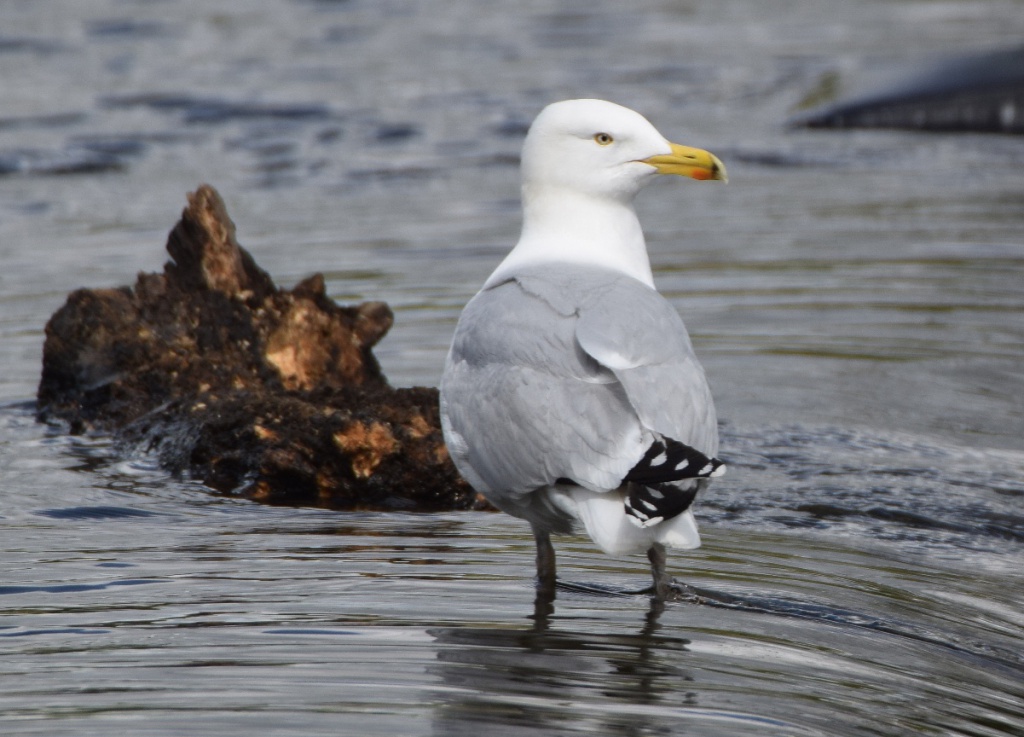
Herring Gulls are large, noisy gulls found throughout the year around our coasts and inland around rubbish tips, fields, large reservoirs and lakes, especially during the winter. Adults have light grey backs, white under parts and black wing tips with white 'mirrors'. Their legs are pink, with webbed feet and they have heavy, slightly hooked bills marked with a red spot near the tip. Young birds are mottled brown. Their loud laughing call is well-known.

Herring gulls are widespread and can easily be seen at virtually any seaside town in the breeding season, and inland all year round, especially at rubbish tips, playing fields and reservoir roosts.
All year round
They have suffered moderate declines over the past 25 years and over half of their UK breeding population is confined to fewer than ten sites. These are omnivores and opportunists like most Larus gulls, and will scavenge from garbage dumps, landfill sites, and sewage outflows, with refuse comprising up to half of the bird's diet.
Still fairly common and widespread in Britain, particularly in coastal areas
Common as a winter bird in Leicestershire and Rutland.
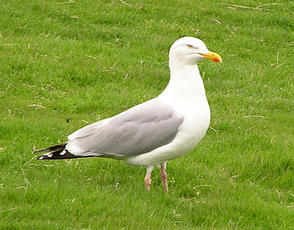 David Nicholls
Groby Pool
21 March 2006
adult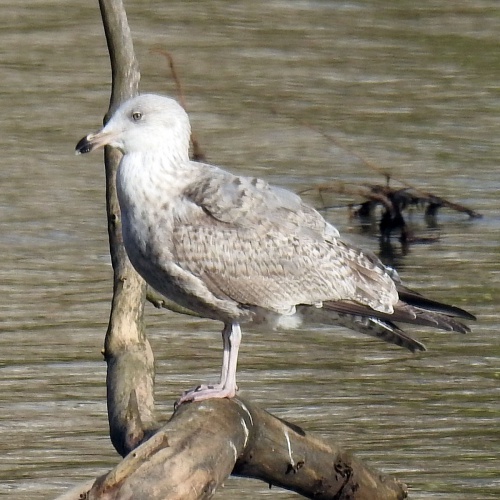 David Gould
Abbey Park, Leicester
10 February 2016
second winter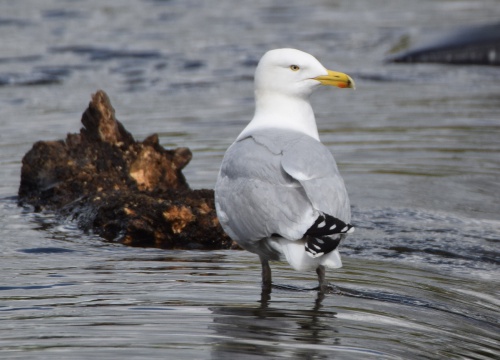 Steve Mathers
Abbey Park
26 April 2017
Leicestershire & Rutland Map
Enter a town or village to see local records
MAP KEY:
Yellow squares = NBN records (all known data)
Coloured squares = NatureSpot records: 2025+ | 2020-2024 | pre-2020
UK Map
Additional images
No additional images available for this species.