Hairy Violet
Hairy Violet - Viola hirta
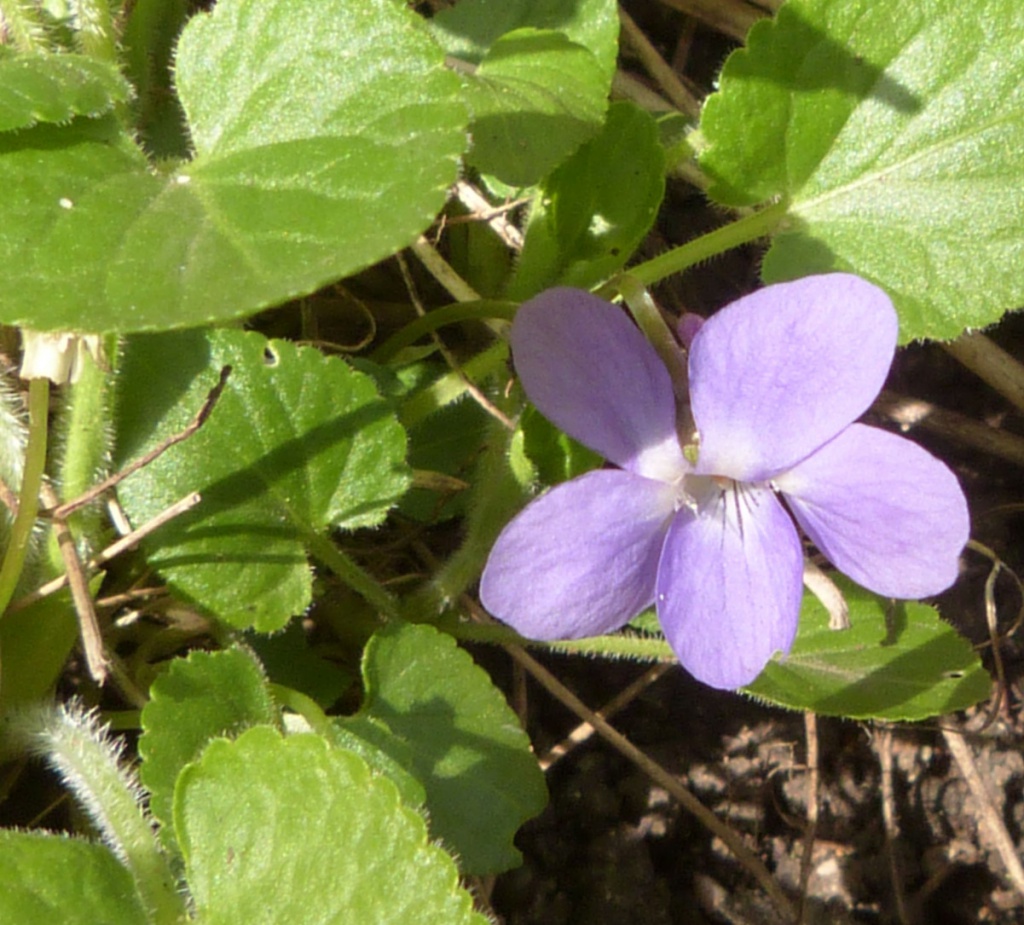
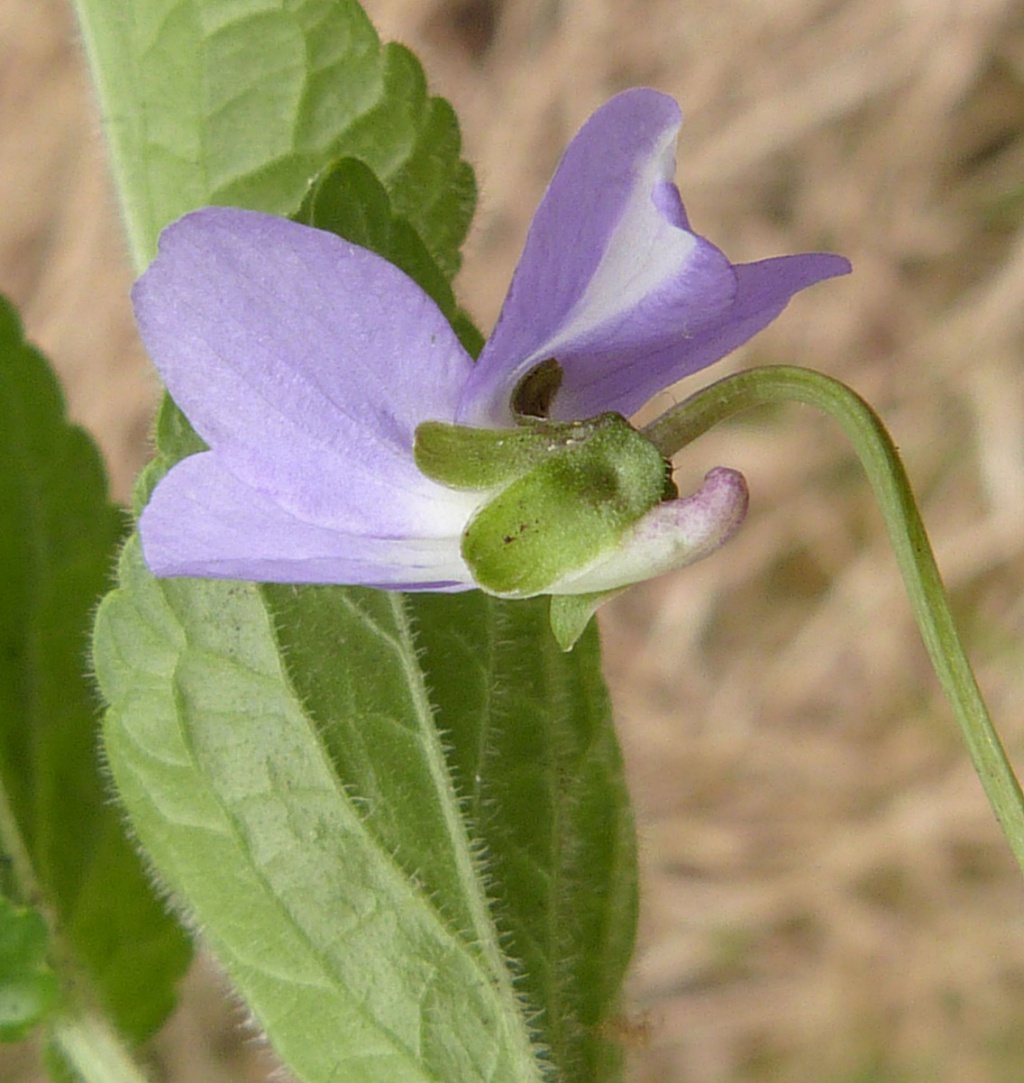
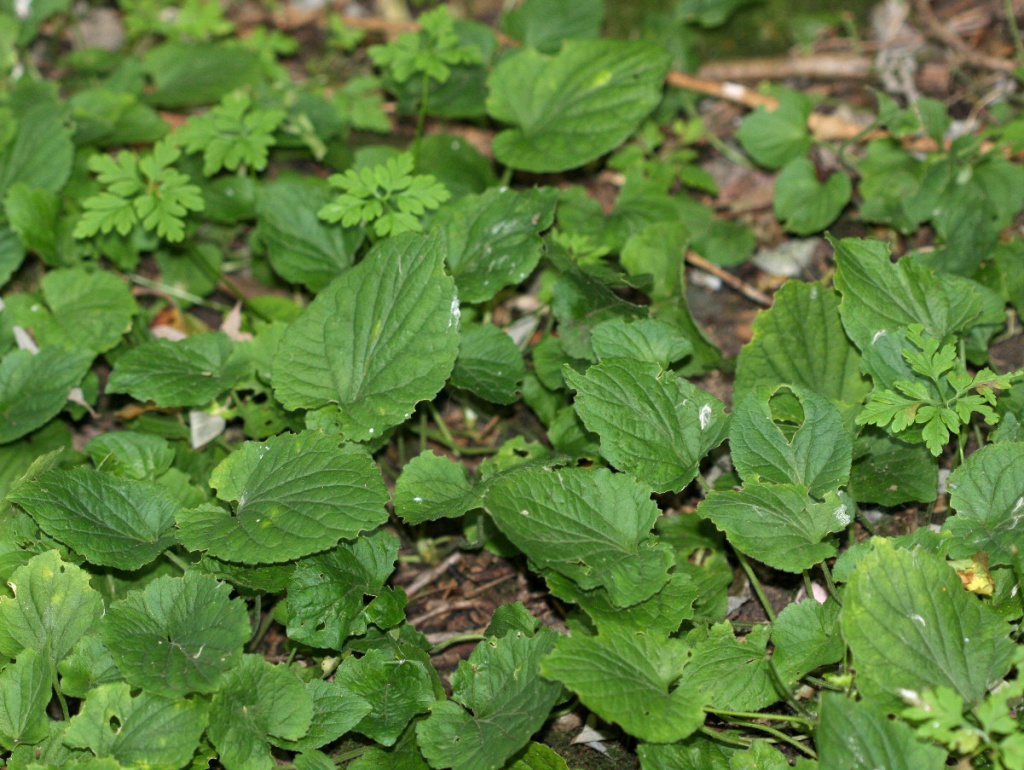
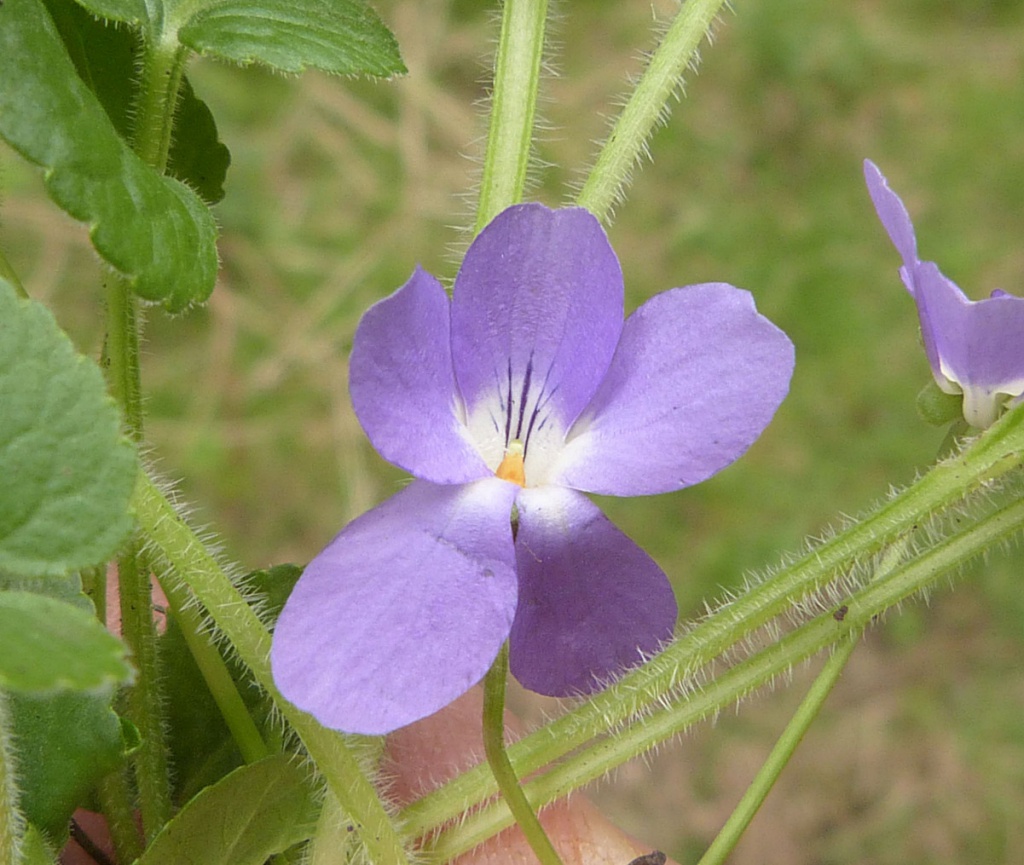
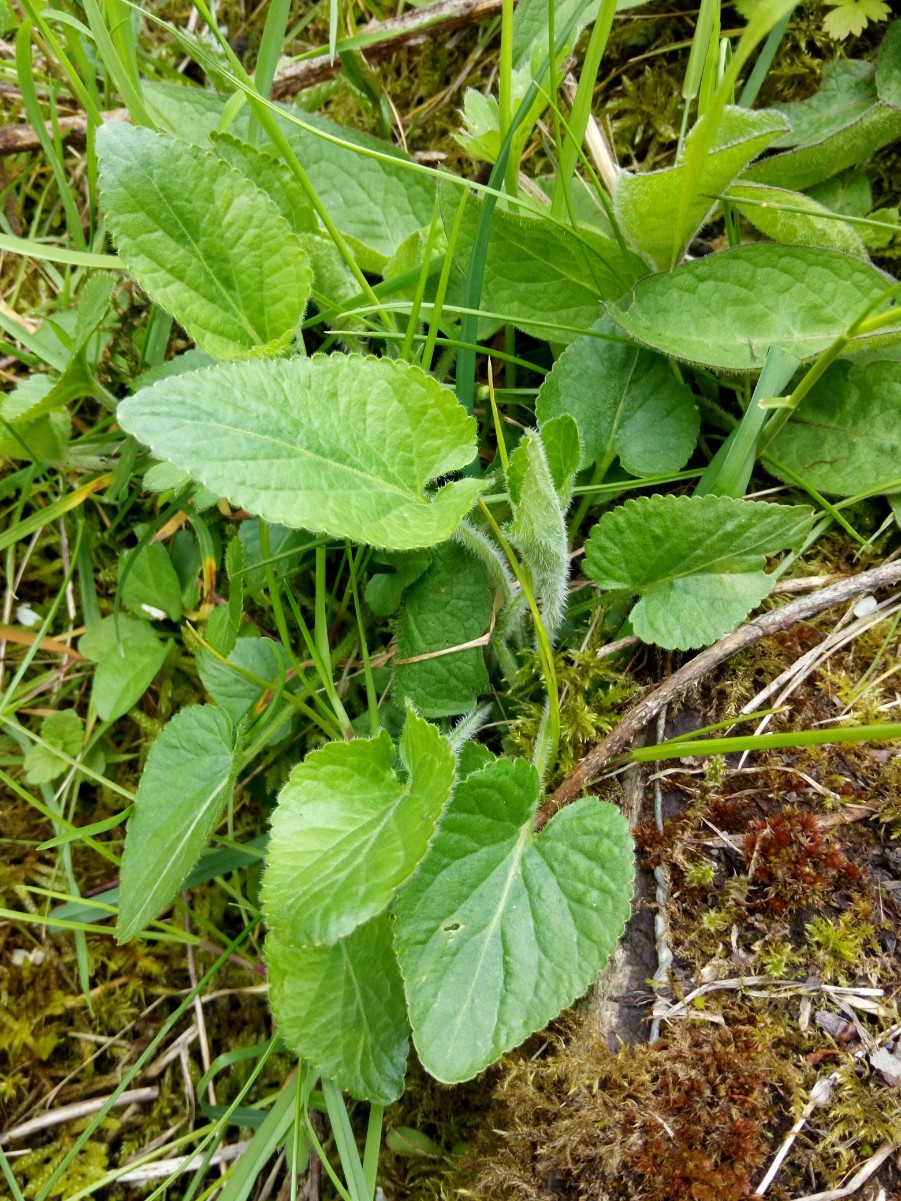
This rather shrubby plant has no runners but a short rhizome and a dense leaf rosette. Leaves pale green, oblong-oval with a heart shaped base, stipules bluntly rounded. Flowers violet, 10 to 15 mm, not scented, with a violet spur. Bracts below the middle of the flower stalk. Capsule hairy. Leaf stems and underside of leaves often hairy.
Viola odorata is also hairy

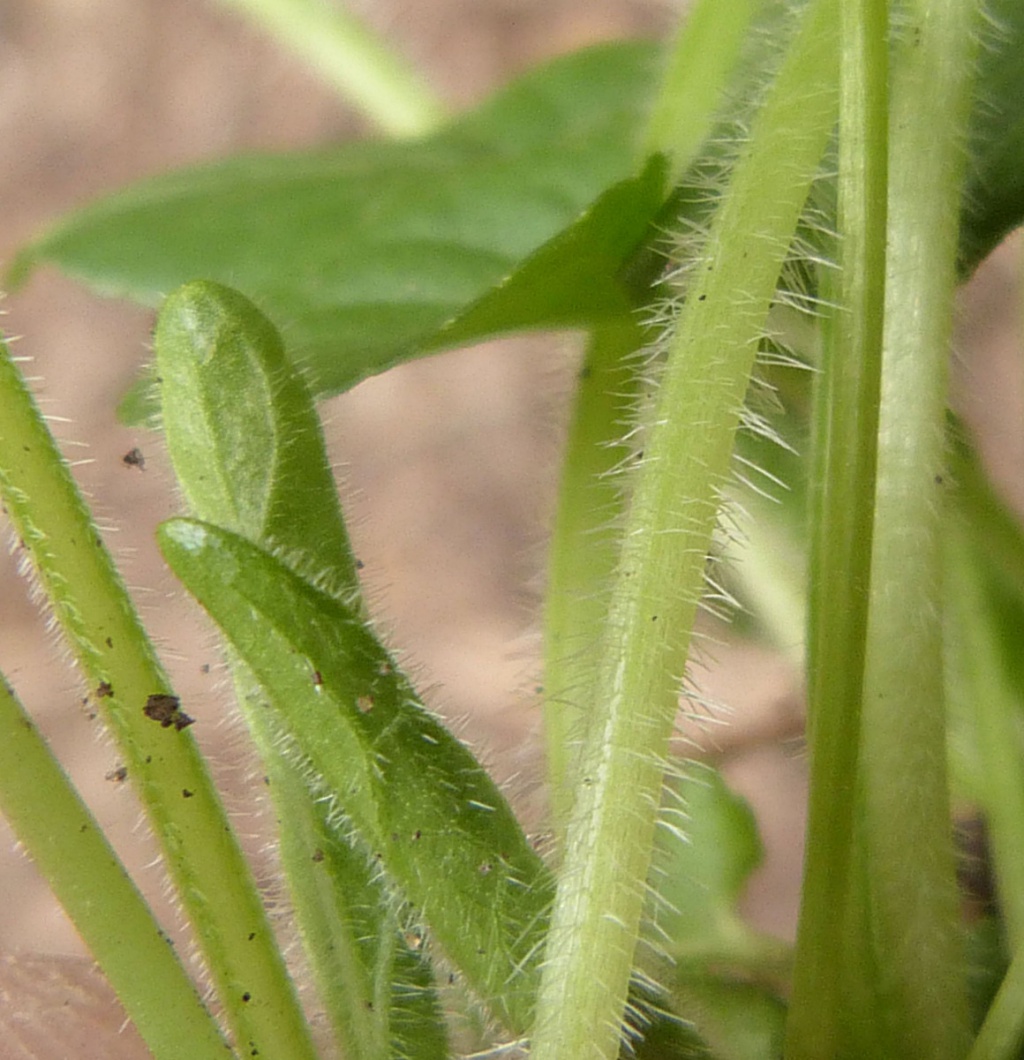
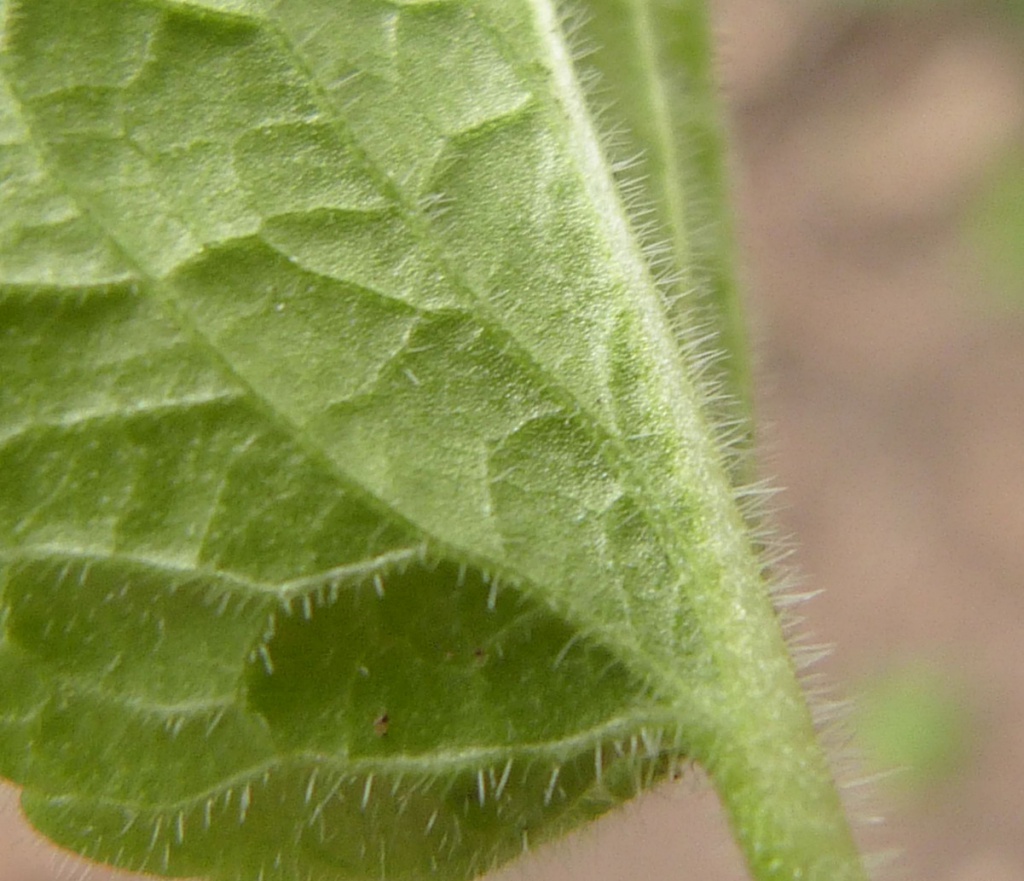
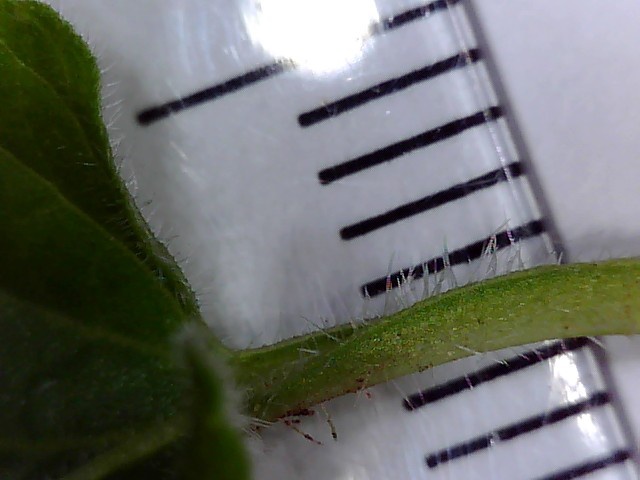
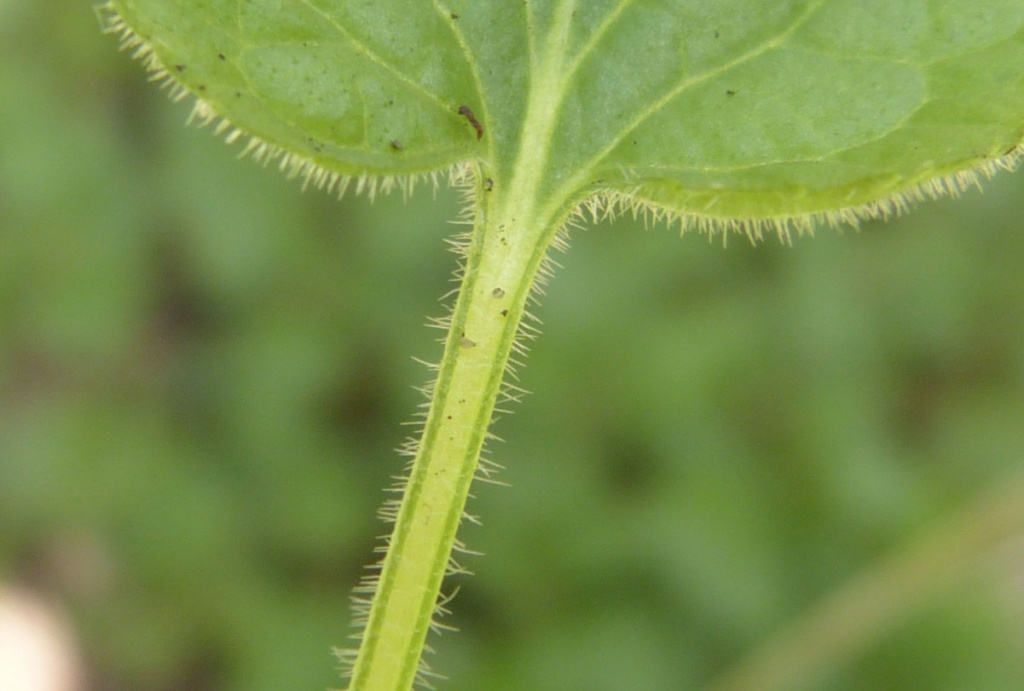
Leaves (stalks and blades) and capsule hairy; hairs long (c. 0.3mm - 1mm) and patent (i.e standing out); plants without stolons. Unlike V odorata, it is not fragrant.
This is not easy to identify from a photo of the flowers alone.
The County Recorder has asked for a specimen of this plant to be retained for verification.
Open woods and other well wooded areas, railway verges, coppices, scrub and grassland, usually on calcareous soils.
Flowers March to June.
Perennial.
Widespread in much of Britain except the north of Scotland and west Wales.
Occasional and local in Leicestershire and Rutland. In the 1979 Flora survey of Leicestershire it was found in 31 of the 617 tetrads with 56% of records received coming from railway verges.
In the current Checklist (Jeeves 2011), it is listed as Native and Locally Frequent.
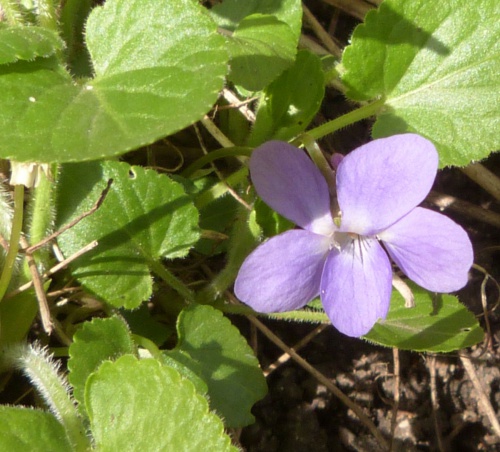 Graham Calow
Leire dismantled railway
10 April 2019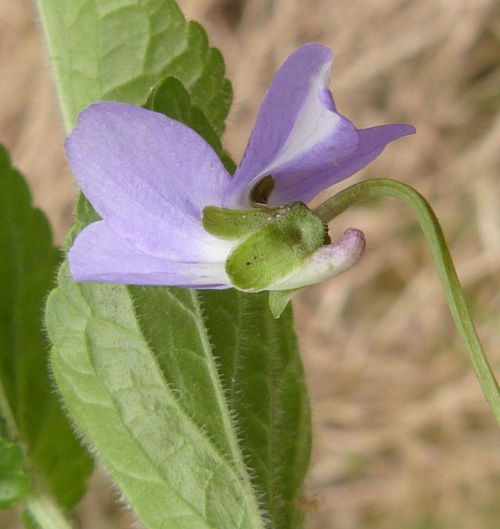 Graham Calow
Jubilee Walk, Leire
17 April 2015
blunt sepals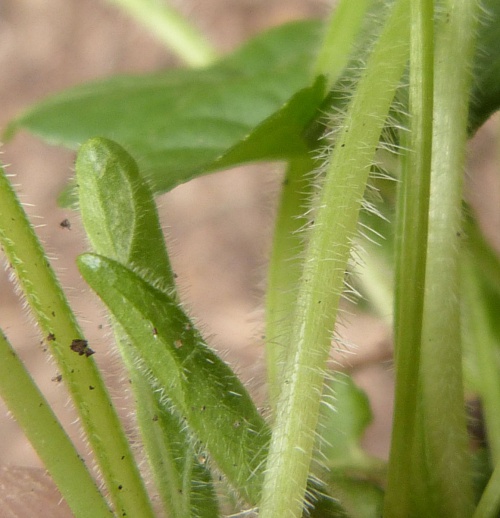 Graham Calow
Jubilee Walk, Leire
17 April 2015
hairy stems and leaves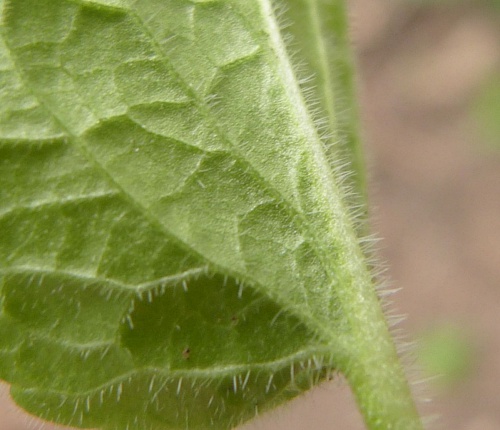 Graham Calow
Jubilee Walk, Leire
17 April 2015
hairy stems and leaves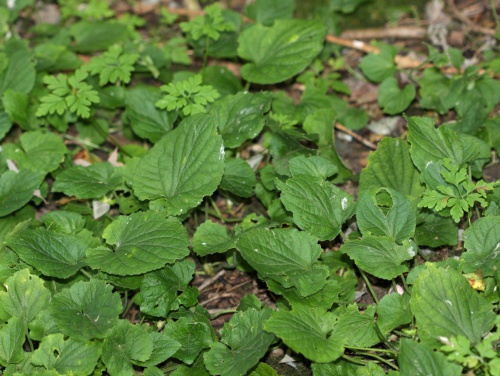 David Nicholls
Leire Cutting
30 July 2014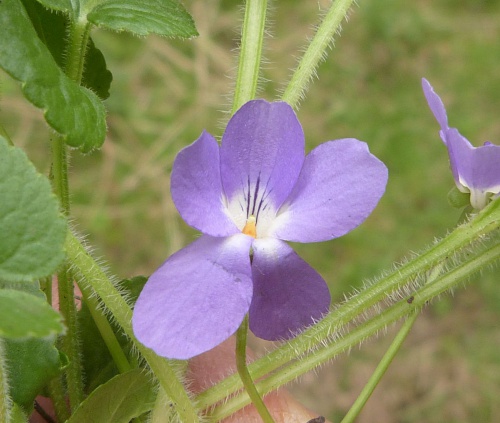 Graham Calow
Jubilee Walk, Leire
17 April 2015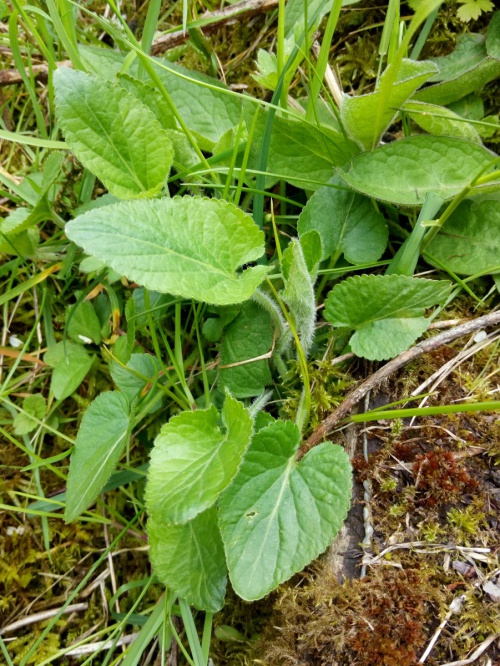 Peter Smith
Stretton, A1 embankment
01 May 2023
Leicestershire & Rutland Map
Enter a town or village to see local records
MAP KEY:
Yellow squares = NBN records (all known data)
Coloured squares = NatureSpot records: 2025+ | 2020-2024 | pre-2020
UK Map
Additional images
All NatureSpot records
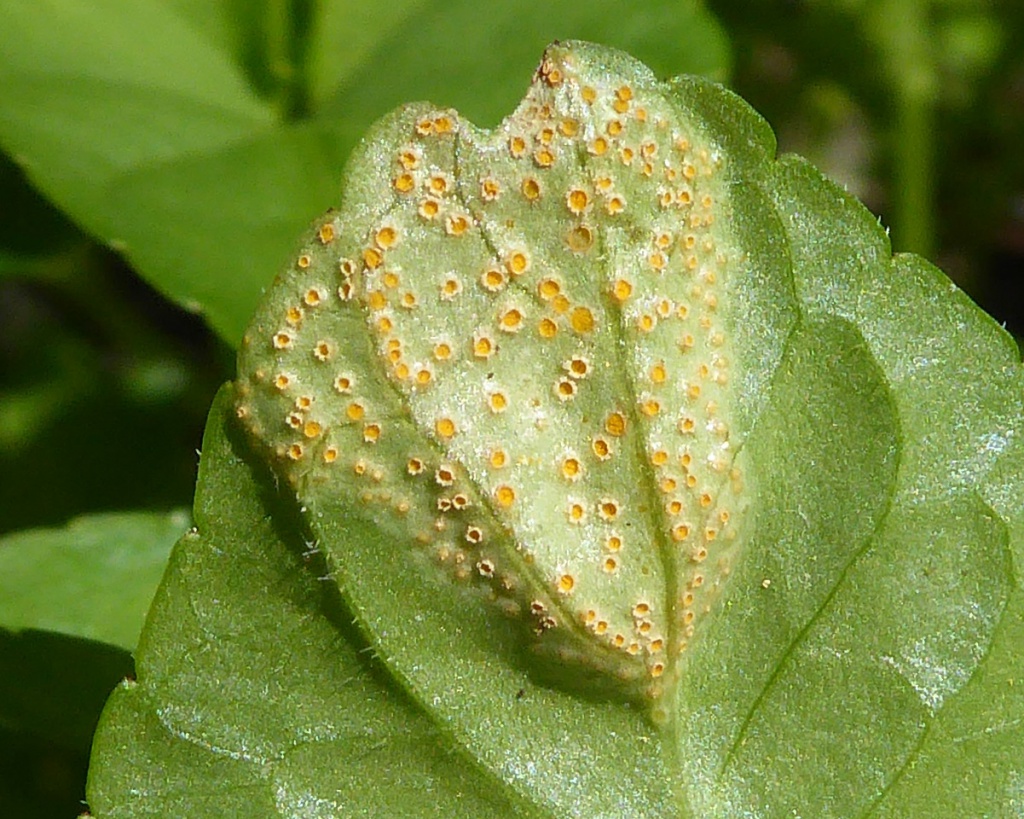
Puccinia violae
Puccinia violae is a rust that causes galls on members of the Viola family, including cultivated varieties. There is no host alternation. Orange aecia are borne on distorted, swollen areas on the leaves, stems and petioles. Uredinia and dark brown telia (non-galling) appear later.
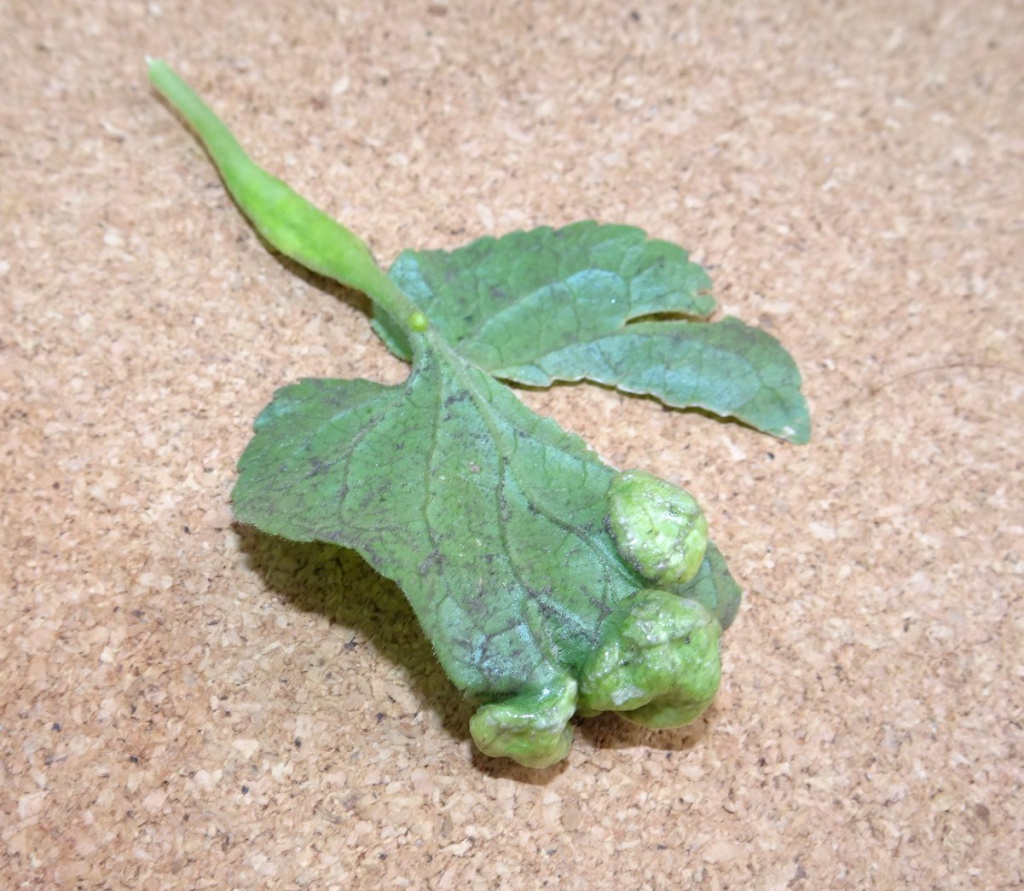
Violet Smut
The smut fungus Urocystis violae induces elongate swellings on the petioles and leaf veins, and/or leaves of Violet species (Viola sp.). Affected parts are usually swollen and strongly distorted and may also be recorded as a gall. The swellings open to release a black spore mass, composed of many individual balls of spores.